

17 Results for "

kidney development

" in MedChemExpress (MCE) Product Catalog:
Products (17)

17 Results for "kidney development" in MCE Product Catalog:

14
14 Publications Verification
Cat. No.: HY-18627A
CAS No.: 1627607-87-7
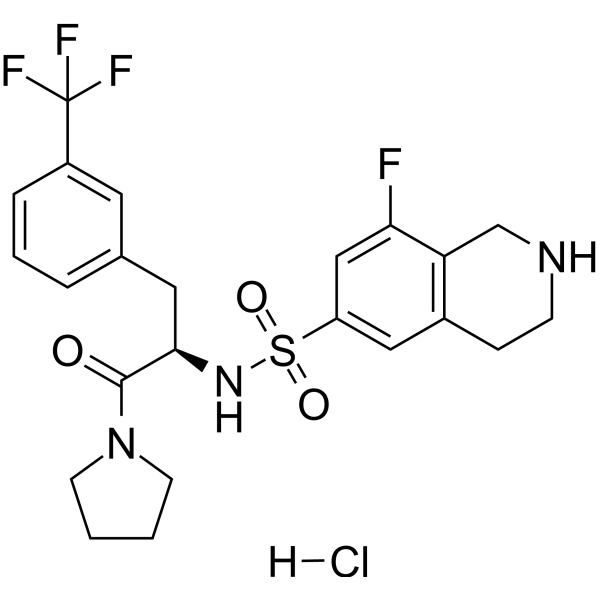
Synonyms: (R)-PFI-2 hydrochloride
PFI-2 ((R)-PFI-2 hydrochloride) hydrochloride is a potent and selective SET domain containing lysine methyltransferase 7 (SETD7) inhibitor. (R)-PFI-2 shows high inhibiting activity with IC50 value of 2.0  nM and (S)-PFI-2 shows inhibiting activity with IC50  value of 1.0  μM. PFI-2 hydrochloride can be used for the research of chronic kidney disease and inflammation response in the development of renal fibrosis .
loading...
    loading...
14
14 Publications Verification
Cat. No.: HY-18627
CAS No.: 1627676-59-8
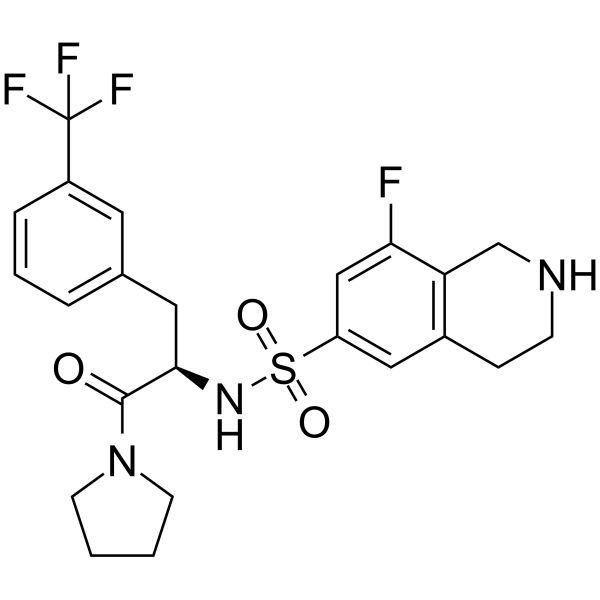
Synonyms: (R)-PFI-2
PFI-2 ((R)-PFI-2 hydrochloride) hydrochloride, a chemical probe, is a potent and selective SET domain containing lysine methyltransferase 7 (SETD7) inhibitor. (R)-PFI-2 shows high inhibiting activity with IC50 value of 2.0 nM and (S)-PFI-2 shows inhibiting activity with IC50 value of 1.0 μM. PFI-2 hydrochloride can be used for the research of chronic kidney disease and inflammation response in the development of renal fibrosis .
loading...
    loading...
2
2 Cited Publications
Cat. No.: HY-P0254
CAS No.: 374675-21-5
Target:  

Kisspeptin Receptor

Research Areas:  

Cardiovascular Disease Cancer

Kisspeptin-10, human is a potent vasoconstrictor and inhibitor of angiogenesis. Kisspeptin-10, human acts as a tumor metastasis suppressor via its receptor GPR54. Kisspeptin-10-GPR54 system plays an important role in embryonic kidney development. Kisspeptin-10/GPR54 signaling induces osteoblast differentiation via NFATc4-mediated BMP2 expression .
loading...
    loading...
2
2 Cited Publications
Cat. No.: HY-P0254A
Target:  

Kisspeptin Receptor

Research Areas:  

Cardiovascular Disease Cancer

Kisspeptin-10, human TFA is a potent vasoconstrictor and inhibitor of angiogenesis. Kisspeptin-10, human TFA acts as a tumor metastasis suppressor via its receptor GPR54. Kisspeptin-10-GPR54 system plays an important role in embryonic kidney development. Kisspeptin-10/GPR54 signaling induces osteoblast differentiation via NFATc4-mediated BMP2 expression .
loading...
    loading...
1
1 Cited Publications
Cat. No.: HY-124838
CAS No.: 693241-54-2
Purity:  98.26%
Target:  

DNA/RNA Synthesis

Research Areas:  

Cancer

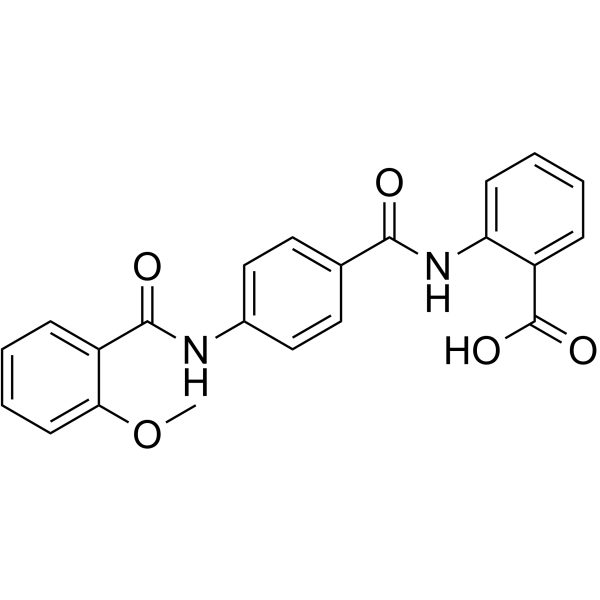
EG1, a specific Pax2 inhibitor, directly binds the paired domain of Pax2 (Kd=1.35-1.5 μM) and inhibits Pax2-DNA interactions. EG1 can inhibit embryonic kidney development, a process directly dependent on Pax2 activity .
loading...
    loading...
Cat. No.: HY-B2141
CAS No.: 621-72-7
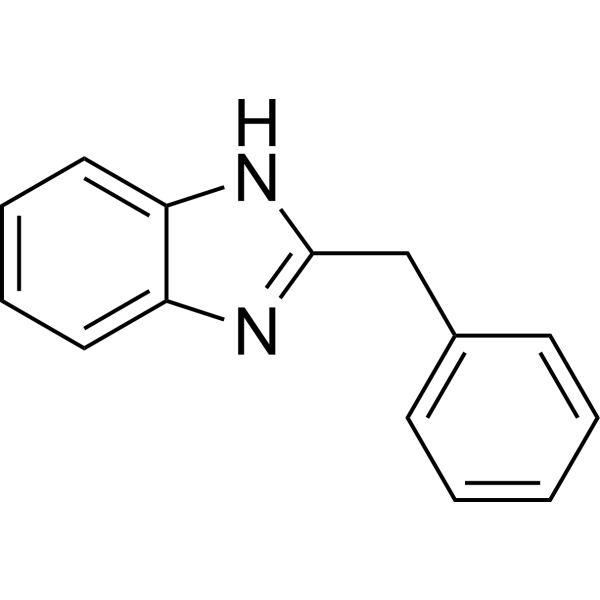
Bendazol is an orally effective antihypertensive agent. Bendazol acts directly on vascular smooth muscle to dilate blood vessels and reduce peripheral resistance, thereby improving blood circulation. Bendazol significantly inhibits the development of myopia in rabbit models. Bendazol can regulate kidney function by increasing the activity of NO synthase in the rat model of nephrogenic hypertension. In addition, Bendazol has an effect on sexual behavior and spermatogenesis in male rats .
loading...
    loading...
Cat. No.: HY-122940
CAS No.: 644-06-4
Purity:  99.95%
Synonyms: Ageratochromene
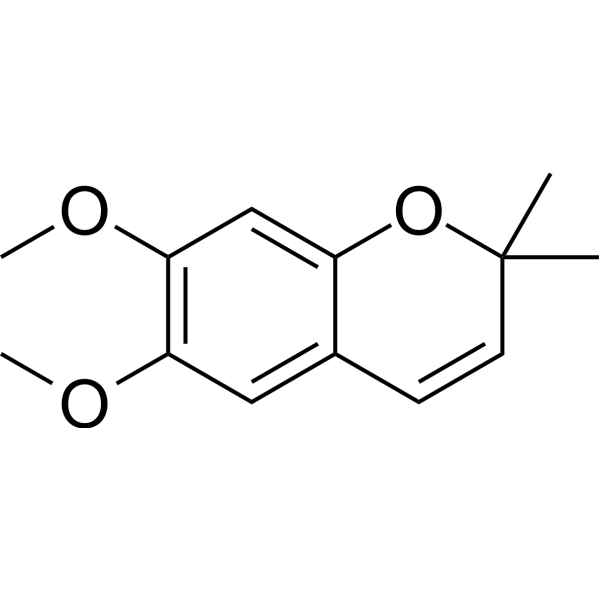
Precocene II (Ageratochromene) is a plant larva hormone antagonists that inhibits the biosynthesis of juvenile hormone. Precocene II inhibits corpora allata function and downregulates juvenile hormone levels, while exerting multiple effects including inducing precocious metamorphosis, forming macropterous morphs, inhibiting ovarian growth, producing cytotoxicity, disrupting insect development, and causing sterility and kidney damage. Precocene II blocks normal nymphal development, causes renal tubular damage and increases blood urea nitrogen levels, and also blocks juvenile hormone biosynthesis in vitro. Precocene II undergoes oxidative metabolism catalyzed by NADPH-dependent monooxygenase to generate a variety of metabolites. Precocene II can be applied in studies related to insect growth regulation and nephrotoxicity .
loading...
    loading...
Cat. No.: HY-103646
CAS No.: 507487-89-0
Purity:  99.72%
Target:  

NEKs CDK

Research Areas:  

Others

CK7, a Cdk2/9 inhibitor, can be used for the synthesis of Nek1 inhibitor BSc5231 and BSc5367 .
loading...
    loading...
Cat. No.: HY-W020788
CAS No.: 98730-04-2
Synonyms: CGA 154281
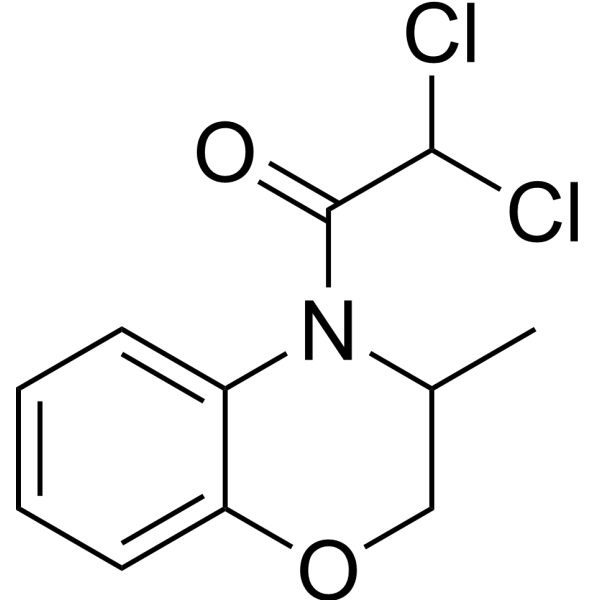
Benoxacor (CGA 154281) is a herbicide safener and xenobiotic metabolism regulator. Benoxacor protects maize from the toxicity of metolachlor mainly by inducing detoxifying enzymes such as Glutathione S-transferase. Benoxacor also activates FXR, PXR and ERRα, and inhibits aromatase (aromatase). However, Benoxacor exhibits potential subacute oral toxicity and a high risk of hepatotoxicity in animal models. Benoxacor induces reactive oxygen species accumulation, interferes with embryonic heart development, and causes increased liver and kidney weights as well as alterations in gut microbiota in mice. Benoxacor can be used in studies related to hepatic steatosis, infertility, breast cancer and developmental toxicity .
loading...
    loading...
Cat. No.: HY-146272
CAS No.: 2648650-50-2
Target:  

Vasopressin Receptor

Research Areas:  

Endocrinology

Vasopressin V2 receptor antagonist 1 is a vasopressin V2 receptor (V2R) antagonist with a Ki value of 3.8 nM. Vasopressin V2 receptor antagonist 1 inhibits renal cyst formation in embryonic renal cyst models and mouse models. Vasopressin V2 receptor antagonist 1 can be used in research related to autosomal dominant polycystic kidney disease .
loading...
    loading...
Cat. No.: HY-W020788R
CAS No.: 98730-04-2
Synonyms: CGA 154281 (Standard)
Benoxacor (Standard) is the analytical standard of Benoxacor. This product is intended for research and analytical applications. Benoxacor (CGA 154281) is a herbicide safener and xenobiotic metabolism regulator. Benoxacor protects maize from the toxicity of metolachlor mainly by inducing detoxifying enzymes such as Glutathione S-transferase. Benoxacor also activates FXR, PXR and ERRα, and inhibits aromatase (aromatase). However, Benoxacor exhibits potential subacute oral toxicity and a high risk of hepatotoxicity in animal models. Benoxacor induces reactive oxygen species accumulation, interferes with embryonic heart development, and causes increased liver and kidney weights as well as alterations in gut microbiota in mice. Benoxacor can be used in studies related to hepatic steatosis, infertility, breast cancer and developmental toxicity .
loading...
    loading...
Cat. No.: HY-174561
Target:  

mRNA

Research Areas:  

Neurological Disease

Human PAX2 mRNA encodes the human paired box 2 (PAX2) protein, a member of the paired box (PAX) family. PAX2 may have a role in kidney cell differentiation and the development of the urogenital tract, the eyes, and the CNS.
loading...
    loading...
Cat. No.: HY-143546
CAS No.: 2649418-11-9
Target:  

RET

Research Areas:  

Cancer

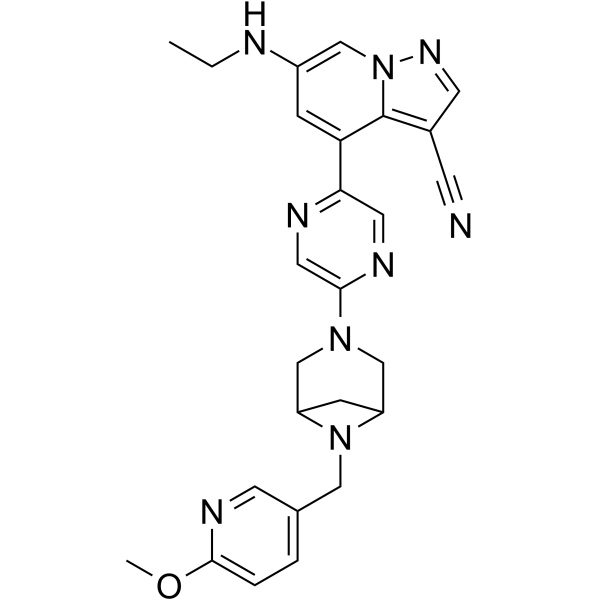
RET-IN-9 is a potent inhibitor of RET. RET kinase is a single-pass transmembrane receptor tyrosine kinase that plays an important role in the development of the kidney and enteric nervous system, and the maintenance of homeostasis in the nervous, endocrine, hematopoietic, and male reproductive systems. RET-IN-9 has the potential for the research of RET-related disease including non-small cell lung cancer and medullary thyroid cancer (extracted from patent WO2021115457A1, compound 29) .
loading...
    loading...
Cat. No.: HY-103646R
CAS No.: 507487-89-0
Research Areas:  

Others

CK7 (Standard) is the analytical standard of CK7 (HY-103646). This product is intended for research and analytical applications. CK7, a Cdk2/9 inhibitor, can be used for the synthesis of Nek1 inhibitor BSc5231 and BSc5367 .
loading...
    loading...
Cat. No.: HY-L229
159 compounds

Kidneys are one of the vital organs in the human body. Due to their exposure to higher concentrations of circulating drugs or metabolites, they are highly susceptible to drug-induced renal injury (DIRI). According to statistics, drug-induced kidney injury accounts for approximately 20% of nephrotoxicity reports and can lead to acute kidney injury (AKI), chronic kidney disease (CKD), or even end-stage renal disease (ESRD). Early detection of drug nephrotoxicity is crucial for preventing irreversible kidney damage. Research into its mechanisms can help optimize clinical medication by adjusting dosages or avoiding combinations of nephrotoxic drugs. Additionally, predicting drug-induced nephrotoxicity in early drug development can reduce the risk of late-stage R&D failure.

MCE offers 159 nephrotoxicity compounds that have been clearly reported by the FDA to be associated with kidney injury. This library can be used for studying molecular mechanisms of nephrotoxicity or developing novel biomarkers.

Cat. No.: HY-122940R
CAS No.: 644-06-4
Synonyms: Ageratochromene (Standard)
Precocene II (Standard) is the analytical standard of Precocene II (HY-122940). This product is intended for research and analytical applications. Precocene II (Ageratochromene) is a plant larva hormone antagonists that inhibits the biosynthesis of juvenile hormone. Precocene II inhibits corpora allata function and downregulates juvenile hormone levels, while exerting multiple effects including inducing precocious metamorphosis, forming macropterous morphs, inhibiting ovarian growth, producing cytotoxicity, disrupting insect development, and causing sterility and kidney damage. Precocene II blocks normal nymphal development, causes renal tubular damage and increases blood urea nitrogen levels, and also blocks juvenile hormone biosynthesis in vitro. Precocene II undergoes oxidative metabolism catalyzed by NADPH-dependent monooxygenase to generate a variety of metabolites. Precocene II can be applied in studies related to insect growth regulation and nephrotoxicity .
loading...
    loading...
Cat. No.: HY-L040
1,149 compounds

Diabetes mellitus, usually called diabetes, is a group of metabolic disorders characterized by a high blood sugar level over a prolonged period of time. The most common types are Type I and Type II. Type I diabetes (T1D), also called juvenile onset diabetes mellitus or insulin-dependent diabetes mellitus, is characterized by destruction of the β-cells of the pancreas and insulin is not produced, whereas type II diabetes (T2D), also called non-insulin-dependent diabetes mellitus, is characterized by a progressive impairment of insulin secretion and relative decreased sensitivity of target tissues to the action of this hormone. Type 2 diabetes accounts for the vast majority of all diabetes mellitus. Diabetes of all types can lead to complications in many parts of the body and can increase the overall risk of dying prematurely. Possible complications include kidney failure, leg amputation, vision loss and nerve damage.

The pathogenesis of diabetes is complicated, and development of the safe and effective drugs against diabetes is full of challenge. Increasing studies have confirmed that the pathogenesis of diabetes is related to various signaling pathways, such as insulin signaling pathway, AMPK pathway, PPAR regulation and chromatin modification pathways. These signaling pathways have thus become the major source of the promising novel drug targets to treat metabolic diseases and diabetes.

MCE Anti-diabetic Compound Library owns a unique collection of 1,149 compounds, which mainly target SGLT, PPAR, DPP-4, AMPK, Dipeptidyl Peptidase, Glucagon Receptor, etc. This library is a useful tool for discovery anti-diabetes drugs.

  • 1

