
19 Results for "

kidney stones

" in MedChemExpress (MCE) Product Catalog:
Products (19)

19 Results for "kidney stones" in MCE Product Catalog:

5
5 Cited Publications
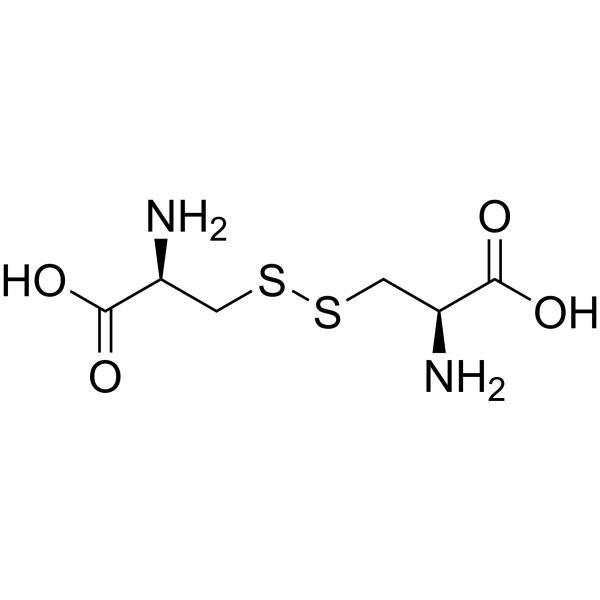
Cat. No.: HY-N0394
CAS No.: 56-89-3
L-Cystine is an orally active extracellular form of L-Cysteine (HY-Y0337), occurring in proteins of plants and animals. L-Cystine elevates Nrf2 protein expression and activates Nrf2 transcription factor. L-cystine reduces ROS generation and protects against oxidant- or Doxorubicin (HY-15142A)-induced apoptosis. L-Cystine combined with L-theanine (HY-15121) enhances the production of antigen-specific IgG by increasing glutathione (GSH) levels and T helper 2 (Th2) mediated responses in mice. L-Cystine is promising for research of cystinuria and kidney stones
loading...
    loading...
5
5 Cited Publications
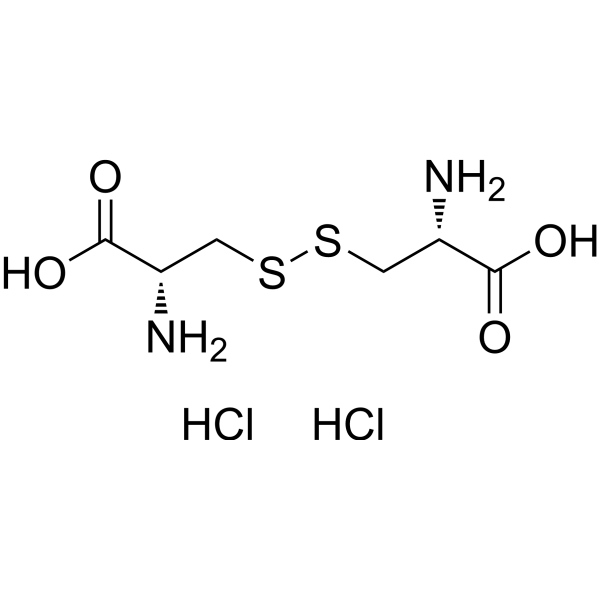
Cat. No.: HY-W009203
CAS No.: 30925-07-6
L-Cystine dihydrochloride is the dihydrochloride salt form of L-Cystine (HY-N0394). L-Cystine dihydrochloride elevates Nrf2 protein expression and activates Nrf2 transcription factor. L-cystine dihydrochloride reduces ROS generation and protects against oxidant- or Doxorubicin (HY-15142A)-induced apoptosis. L-Cystine dihydrochloride combined with L-theanine (HY-15121) enhances the production of antigen-specific IgG by increasing glutathione (GSH) levels and T helper 2 (Th2) mediated responses in mice. L-Cystine dihydrochloride is promising for research of cystinuria and kidney stones
loading...
    loading...
1
1 Cited Publications
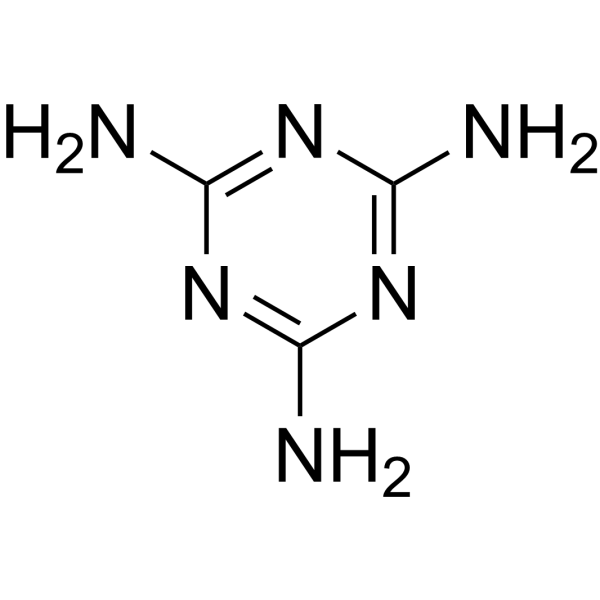
Cat. No.: HY-Y1117
CAS No.: 108-78-1
Melamine is an orally active inducer of Apoptosis. Melamine induces animal disease models. Melamine affects the activity of Sertoli cell and can be used for research on male reproductive function. Melamine also has neurotoxicity and nephrotoxicity. Melamine induces cognitive impairment and acute kidney injury models. Melamine can also be used to induce bladder cancer and urinary stone models .
loading...
    loading...
1
1 Cited Publications
Cat. No.: HY-142035
CAS No.: 58160-95-5
Purity:  99.70%
N-Propargylglycine is a brain-penetrant and orally active PRODH inhibitor. N-Propargylglycine covalently modifies enzyme-bound FAD and active site lysine, causing enzyme structural distortion, protein decay, and irreversible inhibition of proline and 4-hydroxyproline catabolism. N-Propargylglycine induces UPRmt, upregulates mitochondrial chaperones and YME1L1, enhances mitochondrial proteostasis, blocks astrocytic L-proline consumption, and abolishes L-proline’s ATP-maintaining and viability-protective effects. N-Propargylglycine stimulates neural processes, increases brain proline, hydroxyproline, and sarcosine levels, partially normalizes Huntington’s disease whole brain transcriptomes. N-Propargylglycine reduces hyperoxaluria, prevents calcium oxalate stone formation, reduces kidney tubular damage, and restores weight and survival in Grhpr knockout mice. N-Propargylglycine can be used for the research of breast cancer, neurodegenerative disorders, Huntington’s disease, and primary hyperoxaluria type 2 .
loading...
    loading...
1
1 Cited Publications
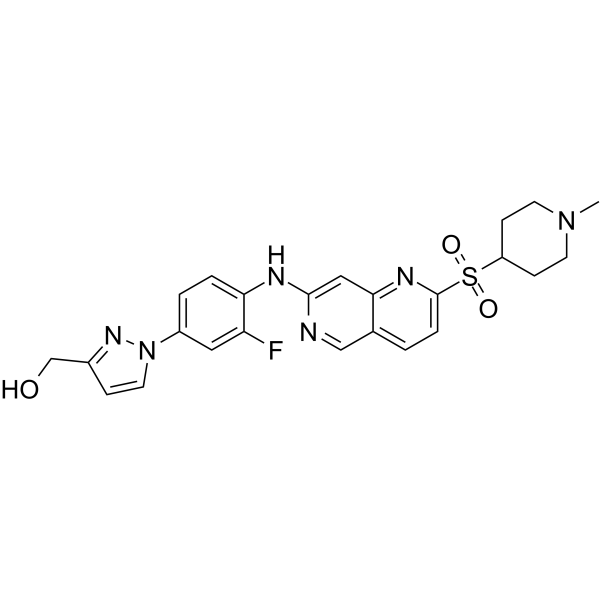
Cat. No.: HY-139725
CAS No.: 2639540-19-3
Purity:  98.47%
Target:  

CDK

Research Areas:  

Metabolic Disease

CDK5-IN-1 is a potent CDK5 inhibitor with an IC50 less than 10 nM. CDK5-IN-1 is greater than 100-fold more active against CDK5 than CDK2. CDK5-IN-1 is used for kidney diseases research .
loading...
    loading...
Cat. No.: HY-N9941
CAS No.: 30377-37-8
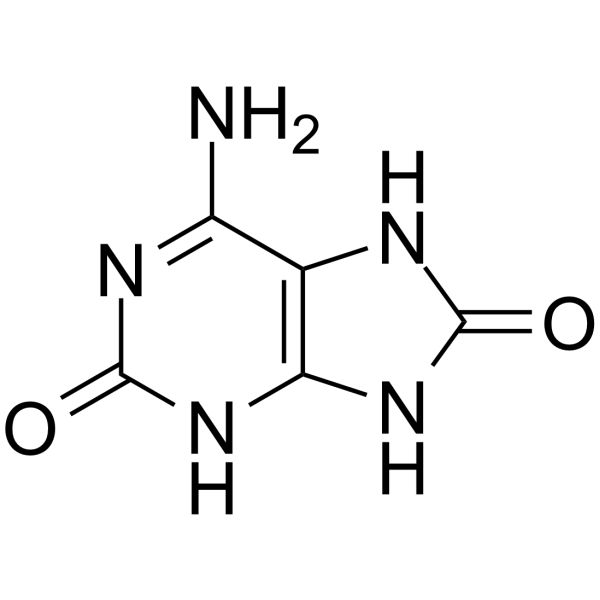
2,8-Dihydroxyadenine is an endogenous metabolite that forms crystals in urine, leading to kidney stone formation and crystal deposition in the kidney. 2,8-Dihydroxyadenine induces crystal-induced tubular injury, inflammation, and fibrosis through crystal deposition in renal tubules, where crystals are excreted in urine, internalized by tubular epithelial cells, and transported to the interstitium. 2,8-Dihydroxyadenine upregulates CD44 expression near crystals, TNF-α signaling through NF-κB, and mTORC1 signaling, while inducing actin stress fiber formation and cytoskeletal remodeling. 2,8-Dihydroxyadenine downregulates epithelial-mesenchymal transition pathways and oxidative phosphorylation, and induces changes affecting inflammation, metabolism, and cell cycle regulation. 2,8-Dihydroxyadenine can be used in research on kidney disease, adenine phosphoribosyltransferase deficiency, and kidney stone disease .
loading...
    loading...
Cat. No.: HY-W009356
CAS No.: 34760-60-6
L-Cystine hydrochloride is an orally active extracellular form of L-Cysteine (HY-Y0337), occurring in proteins of plants and animals. L-Cystine hydrochloride elevates Nrf2 protein expression and activates Nrf2 transcription factor. L-Cystine hydrochloride reduces ROS generation and protects against oxidant- or Doxorubicin (HY-15142A)-induced apoptosis. L-Cystine hydrochloride combined with L-theanine (HY-15121) enhances the production of antigen-specific IgG by increasing glutathione (GSH) levels and T helper 2 (Th2) mediated responses in mice. L-Cystine hydrochloride is promising for research of cystinuria and kidney stones
loading...
    loading...
Cat. No.: HY-Y0785
CAS No.: 107-22-2
Glyoxal (40% w/w in water) is an α-oxoaldehyde that inhibits Aldose Reductase, Glutathione Reductase, and NADPH synthase. Glyoxal (40% w/w in water) exhibits cytotoxicity, triggers oxidative stress, induces ROS accumulation, lipid peroxidation, mitochondrial membrane potential collapse, DNA damage, apoptosis, and massive production of advanced glycation end products (AGEs). Glyoxal (40% w/w in water) depletes glutathione and activates MAPK phosphorylation. It has lower toxicity as a fixative than paraformaldehyde (PFA) and serves as a precursor for the synthesis of oxalates and dietary carcinogens. Glyoxal (40% w/w in water) is suitable for research related to calcium oxalate kidney stones, diabetes, atherosclerosis, cardiovascular diseases, retinopathy, and cataracts .
loading...
    loading...
Cat. No.: HY-N0394R
CAS No.: 56-89-3
L-Cystine (Standard) is the analytical standard of L-Cystine. This product is intended for research and analytical applications. L-Cystine, the extracellular form of L-Cysteine (HY-Y0337), is a nutritionally dispensable semiessential sulfur-containing amino acid, occurring in proteins of plants and animals. L-Cystine induces Nrf2 protein elevation in a Keap1 (HY-P75897)-dependent manner and activates Nrf2 transcription factor. L-cystine can elicit cytoprotection by reducing ROS generation and protecting against oxidant- or doxorubicin-induced apoptosis. The reduced reabsorption of L-Cystine in renal tubules and its poor solubility in urine are the important causes of cystine precipitation and cystine crystal formation eventually leading to kidney stones. L-Cystine combined with L-theanine (HY-15121) enhances the production of antigen-specific IgG by increasing glutathione (GSH) levels and T helper 2 (Th2) mediated responses in mice. L-Cystine is promising for research of cystinuria and cystinosis
loading...
    loading...
Cat. No.: HY-117738
CAS No.: 143651-45-0
Purity:  95.79%
Benarthin is an orally active Pyroglutamyl peptidase inhibitor, THY1 inhibitor (with a Kd value of 5.13e-08 M) and competitive PGP-1 inhibitor (Ki = 1.2 µM). Benarthin is isolated from the culture broth of Streptomyces xanthophaeus MJ244-SF1. Benarthin disrupts the THY1-SFRP1 interaction, inhibits the activation of the GSK3α/β-β-catenin pathway, and reduces the upregulation of FASLG. Benarthin attenuates urothelial anoikis and reduces cell Apoptosis. Benarthin possesses iron-chelating activity. Benarthin maintains urothelial barrier integrity and blocks the pathological cascade of renal interstitial fibroblasts induced by HAP stimulation. Benarthin can be used in studies related to kidney stones .
loading...
    loading...
Cat. No.: HY-168434
Target:  

Urease

Research Areas:  

Metabolic Disease

Urease-IN-19 (Compound 3c) is a potent urease inhibitor with an IC50 value of 2.7 µM. Urease-IN-19 is promising for research of kidney stones and stomach ulcers .
loading...
    loading...
Cat. No.: HY-P4890
CAS No.: 1158181-62-4
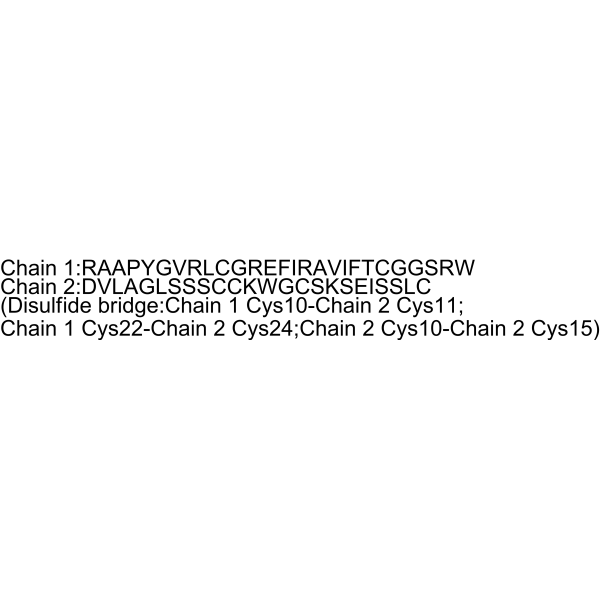
Relaxin H3 (human) is a relaxin peptide with anti-inflammatory, anti-apoptotic, anti-pyroptotic, anti-migratory, protective and anti-fibrotic activities. Relaxin H3 (human) acts on RXFP1 to generate cAMP and reduce the levels of ATP and ROS. Relaxin H3 (human) inhibits renal inflammatory pyroptosis (pyroptosis), NLRP3 inflammasome activation, caspase-1 activation, IL-1β/IL-18 secretion, collagen synthesis, TGF-β1 signaling pathway, Smad2 phosphorylation, myofibroblast differentiation, TIMP expression, and HRMEC migration. Relaxin H3 (human) activates AMPK, upregulates MFN2 expression, improves mitochondrial quality control and membrane potential, inhibits apoptosis (apoptosis) and pyroptosis, restores retinal ultrastructure, and reverses excessive left ventricular collagen expression. Relaxin H3 (human) can be used in studies related to kidney stones, nephrocalcinosis, diabetic cardiomyopathy, fibrotic cardiomyopathy, and diabetic retinopathy .
loading...
    loading...
Cat. No.: HY-156648
CAS No.: 2408241-62-1
Target:  

Others

Research Areas:  

Metabolic Disease

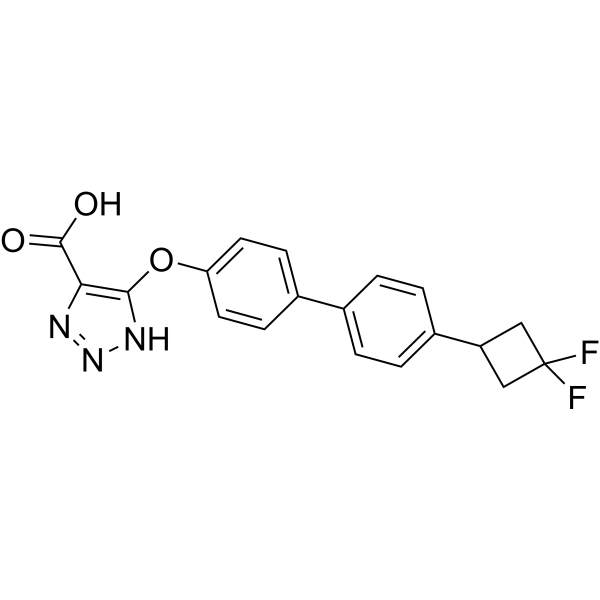
Vamagloxistat is glycolate oxidase inhibitor, used to inhibit hyperoxaluria and kidney stones .
loading...
    loading...
Cat. No.: HY-W772717
CAS No.: 199329-53-8
L-Cystine disodium monohydrate is an orally active extracellular form of L-Cysteine (HY-Y0337), occurring in proteins of plants and animals. L-Cystine disodium monohydrate elevates Nrf2 protein expression and activates Nrf2 transcription factor. L-Cystine disodium monohydrate reduces ROS generation and protects against oxidant- or Doxorubicin (HY-15142A)-induced apoptosis. L-Cystine disodium monohydrate combined with L-theanine (HY-15121) enhances the production of antigen-specific IgG by increasing glutathione (GSH) levels and T helper 2 (Th2) mediated responses in mice. L-Cystine disodium monohydrate is promising for research of cystinuria and kidney stones .
loading...
    loading...
Cat. No.: HY-P4890A
Relaxin H3 (human) TFA is a relaxin peptide with anti-inflammatory, anti-apoptotic, anti-pyroptotic, anti-migratory, protective and anti-fibrotic activities. Relaxin H3 (human) TFA acts on RXFP1 to generate cAMP and reduce the levels of ATP and ROS. Relaxin H3 (human) TFA inhibits renal inflammatory pyroptosis (pyroptosis), NLRP3 inflammasome activation, caspase-1 activation, IL-1β/IL-18 secretion, collagen synthesis, TGF-β1 signaling pathway, Smad2 phosphorylation, myofibroblast differentiation, TIMP expression, and HRMEC migration. Relaxin H3 (human) TFA activates AMPK, upregulates MFN2 expression, improves mitochondrial quality control and membrane potential, inhibits apoptosis (apoptosis) and pyroptosis, restores retinal ultrastructure, and reverses excessive left ventricular collagen expression. Relaxin H3 (human) TFA can be used in studies related to kidney stones, nephrocalcinosis, diabetic cardiomyopathy, fibrotic cardiomyopathy, and diabetic retinopathy .
loading...
    loading...
Cat. No.: HY-W009203R
CAS No.: 30925-07-6
L-Cystine (dihydrochloride) (Standard) is the analytical standard of L-Cystine (dihydrochloride) (HY-W009203). This product is intended for research and analytical applications. L-Cystine dihydrochloride is the dihydrochloride salt form of L-Cystine (HY-N0394). L-Cystine dihydrochloride elevates Nrf2 protein expression and activates Nrf2 transcription factor. L-cystine dihydrochloride reduces ROS generation and protects against oxidant- or Doxorubicin (HY-15142A)-induced apoptosis. L-Cystine dihydrochloride combined with L-theanine (HY-15121) enhances the production of antigen-specific IgG by increasing glutathione (GSH) levels and T helper 2 (Th2) mediated responses in mice. L-Cystine dihydrochloride is promising for research of cystinuria and kidney stones
loading...
    loading...
Cat. No.: HY-156648A
CAS No.: 2667602-26-6
Research Areas:  

Metabolic Disease

Vamagloxistat (sodium) is glycolate oxidase inhibitor, used to inhibit hyperoxaluria and kidney stones .
loading...
    loading...
Cat. No.: HY-N18737
CAS No.: 84775-91-7
Category:  

Extract

Target:  

Others

Phyllanthus niruri extract, extracted from the Phyllanthus niruri, is rich in bioactive compounds such as alkaloids, flavonoids, and tannins. Phyllanthus niruri extract has alkalizing properties, which may help prevent the formation of gallstones and acidic kidney stones.
loading...
    loading...
Cat. No.: HY-N0394S5
CAS No.: 1252803-65-8
L-Cystine- 13C6, 15N2 is the 13C- and 15N-labeled L-Cystine (HY-N0394). L-Cystine is an orally active extracellular form of L-Cysteine (HY-Y0337), occurring in proteins of plants and animals. L-Cystine elevates Nrf2 protein expression and activates Nrf2 transcription factor. L-cystine reduces ROS generation and protects against oxidant- or Doxorubicin (HY-15142A)-induced apoptosis. L-Cystine combined with L-theanine (HY-15121) enhances the production of antigen-specific IgG by increasing glutathione (GSH) levels and T helper 2 (Th2) mediated responses in mice. L-Cystine is promising for research of cystinuria and kidney stones.
loading...
    loading...
  • 1

