18 Results for "

lipopolysaccharide-induced macrophages

" in MedChemExpress (MCE) Product Catalog:
Products (18)

18 Results for "lipopolysaccharide-induced macrophages" in MCE Product Catalog:

1
1 Cited Publications
Cat. No.: HY-14648R
CAS No.: 50-02-2
Synonyms: Hexadecadrol(Standard); Prednisolone F (Standard)
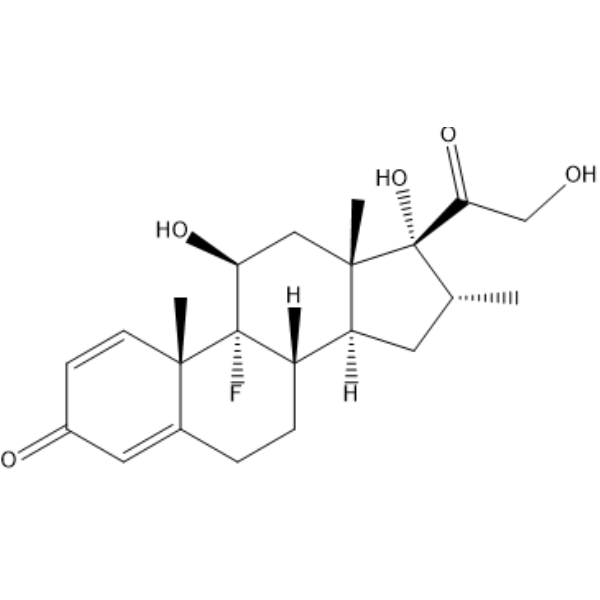
Dexamethasone (Standard) is the analytical standard of Dexamethasone. This product is intended for research and analytical applications. Dexamethasone (Hexadecadrol) is a glucocorticoid receptor agonist. Dexamethasone also significantly decreases CD11b, CD18, and CD62L expression on neutrophils, and CD11b and CD18 expression on monocytes. Dexamethasone is highly effective in the control of COVID-19 infection. Dexamethasone inhibits production of exosomes containing inflammatory microRNA-155 in lipopolysaccharide-induced macrophage inflammatory responses.
loading...
    loading...
1
1 Cited Publications
Cat. No.: HY-125531
CAS No.: 256459-34-4
Purity:  98.22%
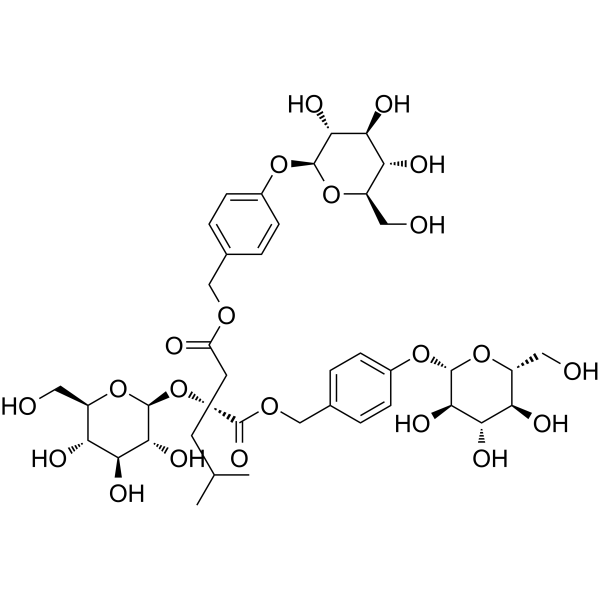
Dactylorhin A is a glucoside and succinate derivative ester inhibitor that can be found in Bletilla striata tubers and Gymnadenia conopsea rhizomes, with activity against nitric oxide production in macrophage cells .Dactylorhin A suppresses lipopolysaccharide-induced nitric oxide generation via a cytotoxicity-independent pathway .
loading...
    loading...
1
1 Cited Publications
Cat. No.: HY-N9447
CAS No.: 79595-97-4
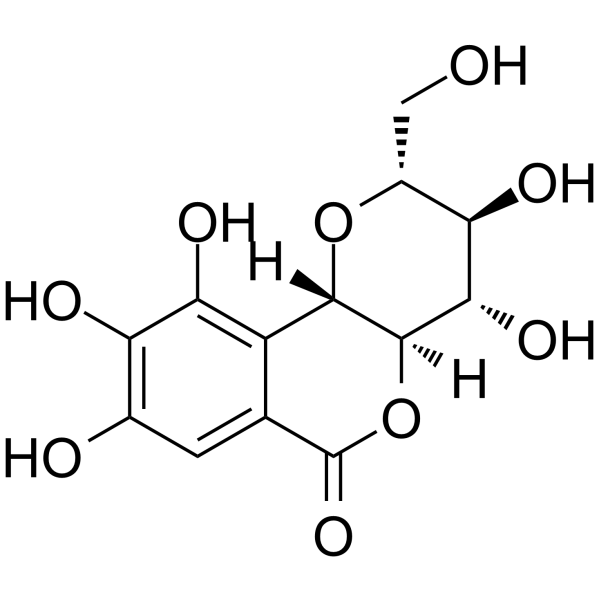
Norbergenin is a polyphenolic isocoumarin derivative. Norbergenin acts as a non-competitive inhibitor of bovine adrenal tyrosine hydroxylase (TH) with a Ki value of 69.6 μM. Norbergenin inhibits lipopolysaccharide-induced inflammatory responses in macrophages by suppressing the activation of NF-κB, MAPK and STAT3, as well as blocking metabolic reprogramming . Norbergenin inhibits aluminum chloride-induced oxidative stress and apoptosis and restores neurocognitive parameters. Norbergenin scavenges ROS through multiple mechanisms and protects cell membranes from lipid peroxidation damage. Norbergenin can be used in research related to Alzheimer's disease, peptic ulcer and arthritis .
loading...
    loading...
Cat. No.: HY-138989
CAS No.: 2349374-37-2
Purity:  98.81%
Target:  

Lipoxygenase

Research Areas:  

Inflammation/Immunology

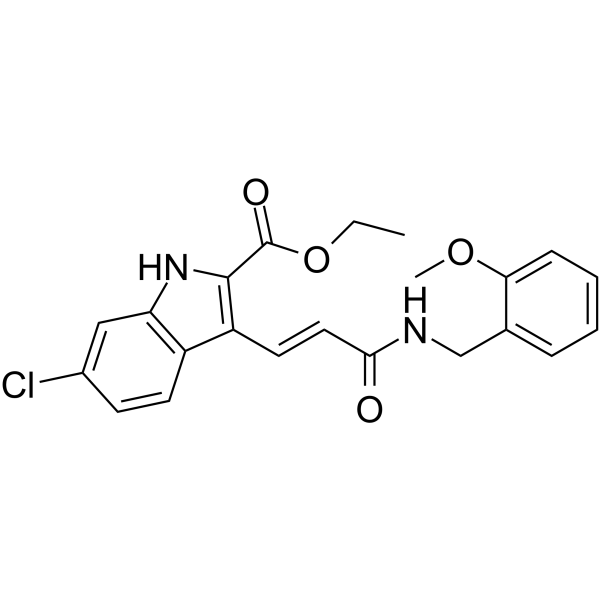
15-LOX-1 inhibitor 1 is a potent inhibitor of 15-LOX-1 (15-lipoxygenase-1) with an IC50 value of 0.19 μM. 15-LOX-1 inhibitor 1 protects macrophages from lipopolysaccharide-induced cytotoxicity. 15-LOX-1 inhibitor 1 inhibits NO formation and lipid peroxidation .
loading...
    loading...
Cat. No.: HY-14648S
CAS No.: 358731-91-6
Purity:  99.86%
Synonyms: Hexadecadrol-d5; Prednisolone F-d5
Dexamethasone-d5 is the deuterium labeled Dexamethasone. Dexamethasone (Hexadecadrol) is a glucocorticoid receptor agonist. Dexamethasone also significantly decreases CD11b, CD18, and CD62L expression on neutrophils, and CD11b and CD18 expression on monocytes. Dexamethasone is highly effective in the control of COVID-19 infection. Dexamethasone inhibits production of exosomes containing inflammatory microRNA-155 in lipopolysaccharide-induced macrophage inflammatory responses .
loading...
    loading...
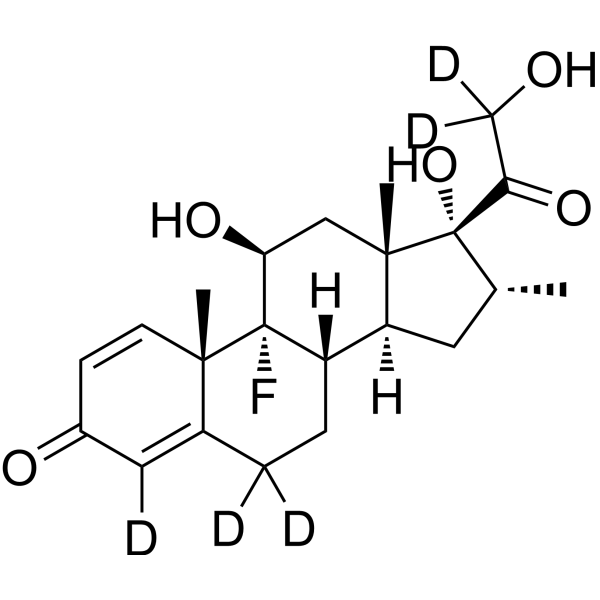
Cat. No.: HY-14648S3
CAS No.: 2483831-63-4
Purity:  ≥99.0%
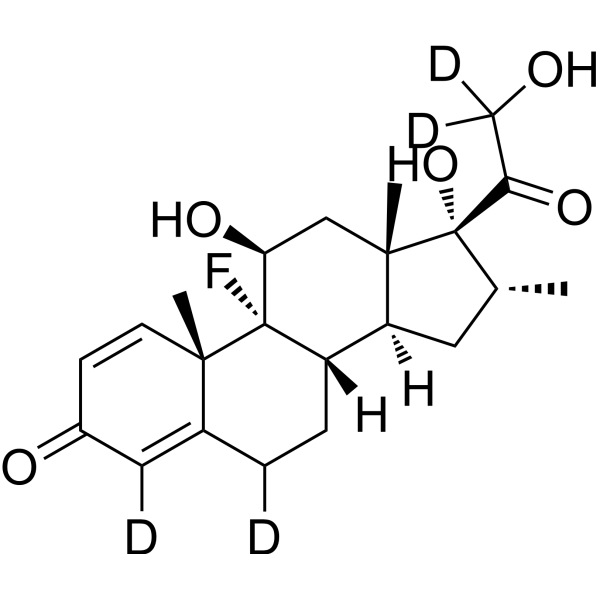
Dexamethasone-4,6α,21,21-d4 is the deuterium labeled Dexamethasone-4,6α,21,21. Dexamethasone (Hexadecadrol) is a glucocorticoid receptor agonist. Dexamethasone also significantly decreases CD11b, CD18, and CD62L expression on neutrophils, and CD11b and CD18 expression on monocytes. Dexamethasone is highly effective in the control of COVID-19 infection. Dexamethasone inhibits production of exosomes containing inflammatory microRNA-155 in lipopolysaccharide-induced macrophage inflammatory responses.
loading...
    loading...
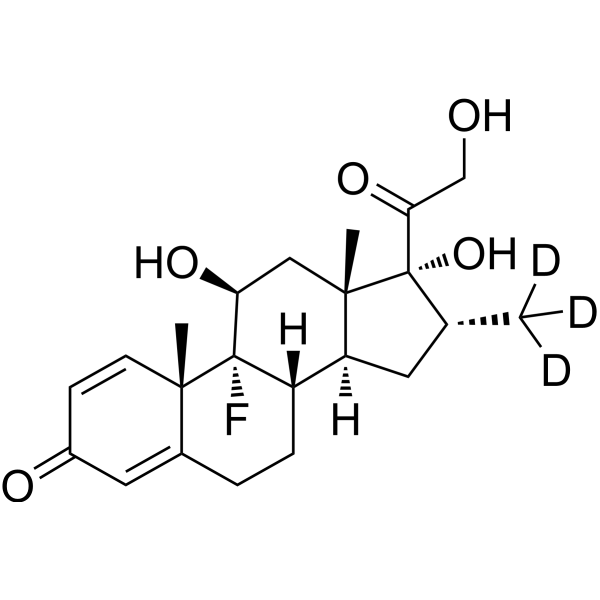
Cat. No.: HY-14648S5
Purity:  98.02%
Synonyms: Hexadecadrol-d3-1; Prednisolone F-d3-1
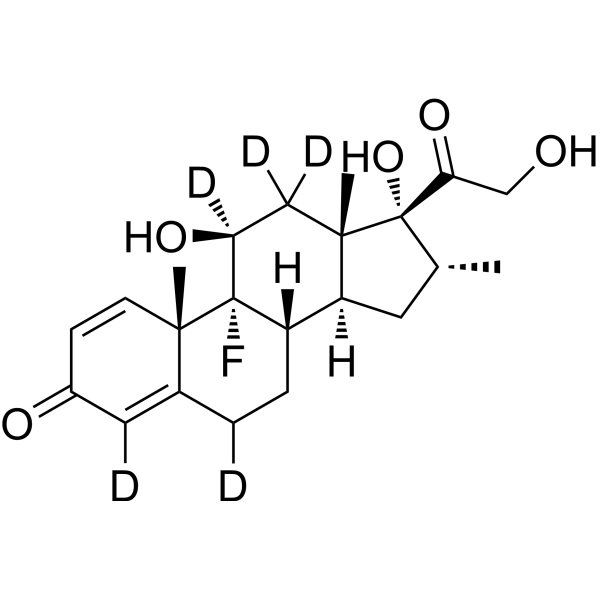
Dexamethasone-d3-1 (Hexadecadrol-d3-1; Prednisolone F-d3-1) is a deuterium labeled Dexamethasone (HY-14648). Dexamethasone (Hexadecadrol) is a glucocorticoid receptor agonist. Dexamethasone also significantly decreases CD11b, CD18, and CD62L expression on neutrophils, and CD11b and CD18 expression on monocytes. Dexamethasone is highly effective in the control of COVID-19 infection. Dexamethasone inhibits production of exosomes containing inflammatory microRNA-155 in lipopolysaccharide-induced macrophage inflammatory responses.
loading...
    loading...
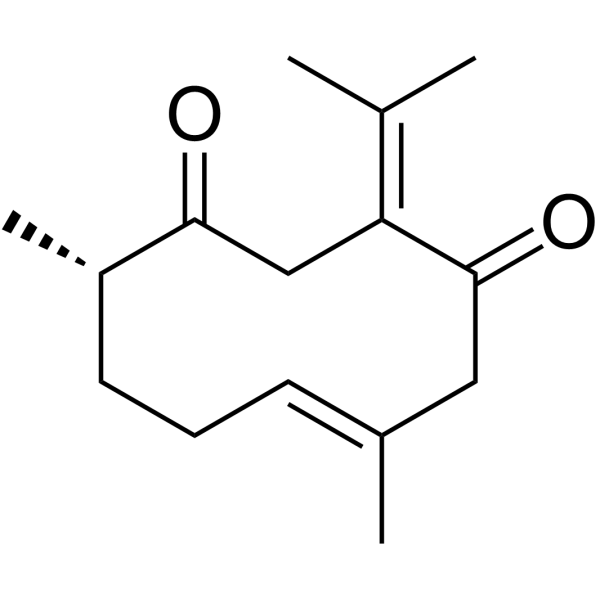
Cat. No.: HY-N8160
CAS No.: 38230-32-9
Dehydrocurdione, a zedoary-derived sesquiterpene, induces heme oxygenase (HO)-1, an antioxidative enzyme, in RAW 264.7 macrophages. Dehydrocurdione interacts with Keap1, resulting in Nrf2 translocation followed by activation of the HO-1 E2 enhancer. Dehydrocurdione suppresses lipopolysaccharide-induced NO release, a marker of inflammation. Anti-inflammatory activity .
loading...
    loading...
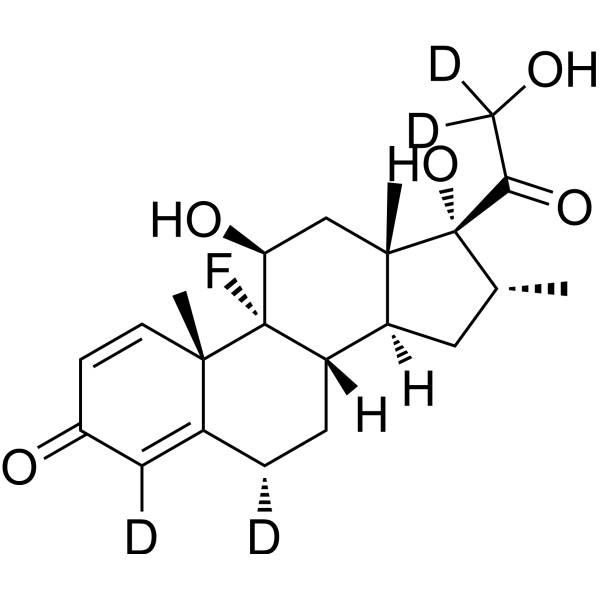
Cat. No.: HY-14648S2
CAS No.: 2305607-27-4
Synonyms: Hexadecadrol-d4; Prednisolone F-d4
Dexamethasone-d4 is deuterium labeled Dexamethasone. Dexamethasone (Hexadecadrol) is a glucocorticoid receptor agonist. Dexamethasone also significantly decreases CD11b, CD18, and CD62L expression on neutrophils, and CD11b and CD18 expression on monocytes. Dexamethasone is highly effective in the control of COVID-19 infection. Dexamethasone inhibits production of exosomes containing inflammatory microRNA-155 in lipopolysaccharide-induced macrophage inflammatory responses.
loading...
    loading...
Cat. No.: HY-14648S1
Synonyms: Hexadecadrol-d5-1; Prednisolone F-d5-1
Dexamethasone-d5-1 is deuterium labeled Dexamethasone. Dexamethasone (Hexadecadrol) is a glucocorticoid receptor agonist. Dexamethasone also significantly decreases CD11b, CD18, and CD62L expression on neutrophils, and CD11b and CD18 expression on monocytes. Dexamethasone is highly effective in the control of COVID-19 infection. Dexamethasone inhibits production of exosomes containing inflammatory microRNA-155 in lipopolysaccharide-induced macrophage inflammatory responses.
loading...
    loading...
Cat. No.: HY-121892
CAS No.: 1646795-60-9
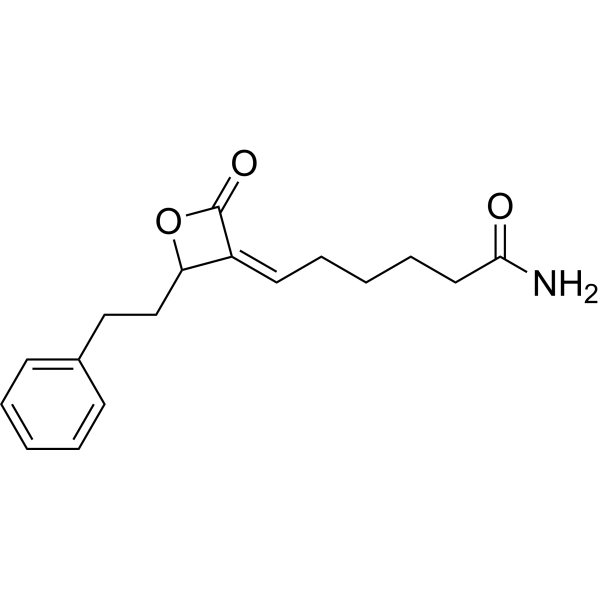
(Z)-KC02 is an inhibitor of ABHD16A, the phosphatidylserine (PS) lipase that produces lyso-PS. Lysophosphatidylserine (lyso-PS) is a signaling lipid that regulates immune and neurological processes. It is associated with several neurological disorders such as retinitis pigmentosa and cataracts (PHARC). (Z)-KC02 depletes lyso-PS in lymphoblasts from PHARC subjects. (Z)-KC02 also reduces lyso-PS and lipopolysaccharide-induced cytokine production in macrophages and modulates lyso-PS metabolism in vivo .
loading...
    loading...
Cat. No.: HY-187062
CAS No.: 209969-75-5
Paeonidanin is a monoterpenoid glycoside with an IC50 > 100 μM for nitric oxide production inhibition in lipopolysaccharide-activated microglia and macrophages. Paeonidanin suppresses lipopolysaccharide-induced production of nitric oxide, interleukin-6, and tumor necrosis factor alpha in macrophages and microglia.Paeonidanin can be used for the research of inflammation .
loading...
    loading...
Cat. No.: HY-184337
CAS No.: 143111-84-6
Dihydroparadol is a iNOS inhibitor with an IC50 of 7.24 μM, and it is found in ginger. Dihydroparadol partially inhibits the catalytic activity of iNOS, blocks the nuclear translocation of NF-κB p65, reduces NF-κB activity, and attenuates lipopolysaccharide-induced degradation of IκB-α, thereby inhibiting NF-κB-mediated iNOS gene expression and protein production. Dihydroparadol inhibits lipopolysaccharide-induced nitric oxide production in macrophages and exhibits anti-inflammatory activity. Dihydroparadol increases ABCA1 protein abundance by elevating mRNA levels and reducing proteasomal degradation, and also increases ABCG1 protein abundance by enhancing protein stability. Dihydroparadol promotes cholesterol efflux from cholesterol-loaded macrophages via apolipoprotein A1-mediated and plasma-mediated pathways. Dihydroparadol inhibits PDGF-induced vascular smooth muscle cell proliferation, shows no cytotoxicity to vascular smooth muscle cells within the tested concentration range, and does not interfere with endothelial cell proliferation. Dihydroparadol can be used in the research of inflammatory diseases, atherosclerosis and cardiovascular diseases .
loading...
    loading...
Cat. No.: HY-N19813
CAS No.: 1807855-01-1
Flaccidoside VI is an inhibitor of nitric oxide production belonging to oleanane-type triterpenoid saponins. Flaccidoside VI can be isolated from the rhizomes of Anemone flaccida. Flaccidoside VI exhibits significant inhibitory activity against lipopolysaccharide-induced nitric oxide production .
loading...
    loading...
Cat. No.: HY-182282
PI3K/AKT-IN-6 is an orally effective PI3K/AKT signaling pathway inhibitor and anti-inflammatory agent. PI3K/AKT-IN-6 inhibits the production of pro-inflammatory cytokines TNF-α and IL-6, and downregulates the expression of inflammatory mediators COX-2 and iNOS. PI3K/AKT-IN-6 improves related symptoms in colitis mice. PI3K/AKT-IN-6 can be used for the research of inflammatory diseases such as colitis .
loading...
    loading...
Cat. No.: HY-N21744
CAS No.: 54781-72-5
Rhodomollein XIII is a grayanane diterpenoid found in Rhododendron molle and is the 6-O-acetyl derivative of Grayanotoxin III .
loading...
    loading...
Cat. No.: HY-N7423A
CAS No.: 97966-29-5
Synonyms: (E)-Isoferulic acid methyl ester
(E)-Methyl isoferulate ((E)-Isoferulic acid methyl ester) is a derivative of Cinnamic acid (HY-N0610A) and NO inhibitor, with an IC50 > 100 μM against nitric oxide production. (E)-Methyl isoferulate is isolable from the solid cultures of the edible mushroom Neolentinus lepideus. (E)-Methyl isoferulate exerts mild anticancer effects against liver cancer and leukemia .
loading...
    loading...
Cat. No.: HY-N21746
CAS No.: 798558-82-4
Rhodomollein XI is a naturally occurring grayanane diterpenoid with anti-inflammatory and analgesic activities. Rhodomollein XI inhibits LPS-induced NO production in RAW264.7 mouse macrophages. Rhodomollein XI exhibits analgesic effects in the mouse acetic acid-induced writhing test. Rhodomollein XI can be used for pain- and inflammation-related research .
loading...
    loading...
  • 1

