12 Results for "

liposomal formulations

" in MedChemExpress (MCE) Product Catalog:
Products (12)

12 Results for "liposomal formulations" in MCE Product Catalog:

Cat. No.: HY-W440888
Research Areas:  

Cancer

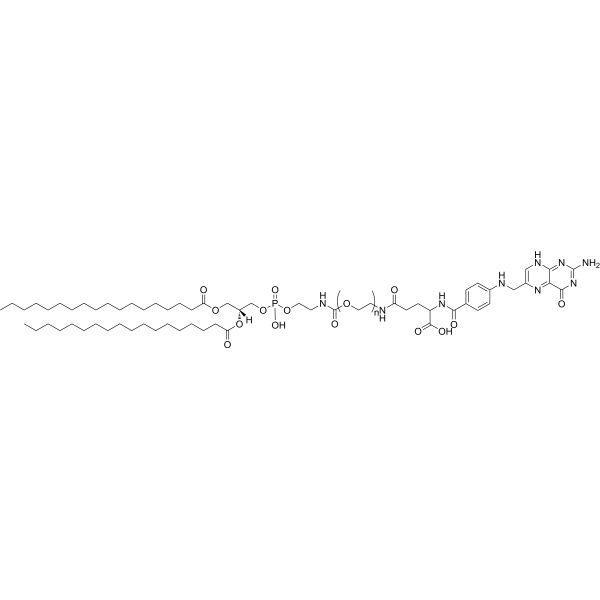
DSPE-PEG2000-Folate (DSPE-PEG2000 Folate) is a folate-containing PEG derivative. DSPE-PEG2000-Folate possesses targeting activity and binds to folate receptors in cancer cells. DSPE-PEG2000-Folate can be post-inserted into preformed liposomal bilayers to prepare folate-targeted liposomal formulations. DSPE-PEG2000-Folate forms micelles/lipid bilayers and can be used in studies of targeted drug delivery systems [2].
loading...
    loading...
Cat. No.: HY-W440911
Research Areas:  

Cancer

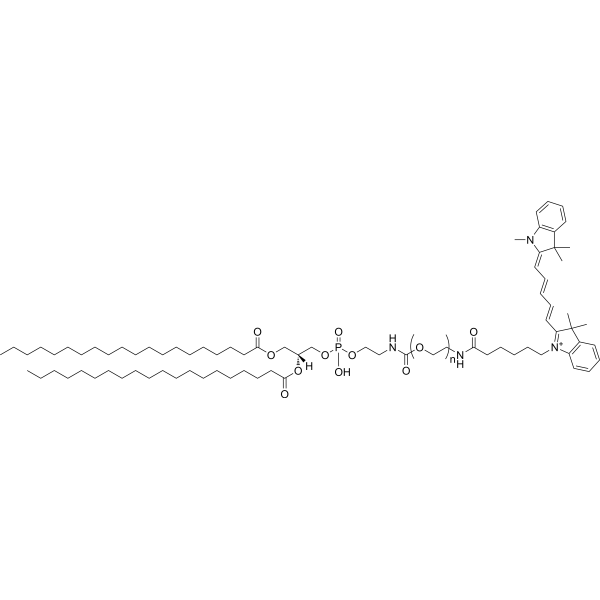
DSPE-PEG2000-Cy5 is a Cy5 (HY-D0821) fluorophore-labeled conjugate of distearoylphosphatidylethanolamine and polyethylene glycol, as well as a liposome component. The Cy5 fluorophore is commonly used for labeling proteins and nucleic acids in imaging, flow cytometry and genomic applications. DSPE-PEG2000-Cy5 supports cell membrane modification, in vivo tumor targeting research and long-term in vivo circulation of its liposomal formulations (Ex/Em=633/670 nm) .
loading...
    loading...
Cat. No.: HY-W010697
CAS No.: 604-33-1
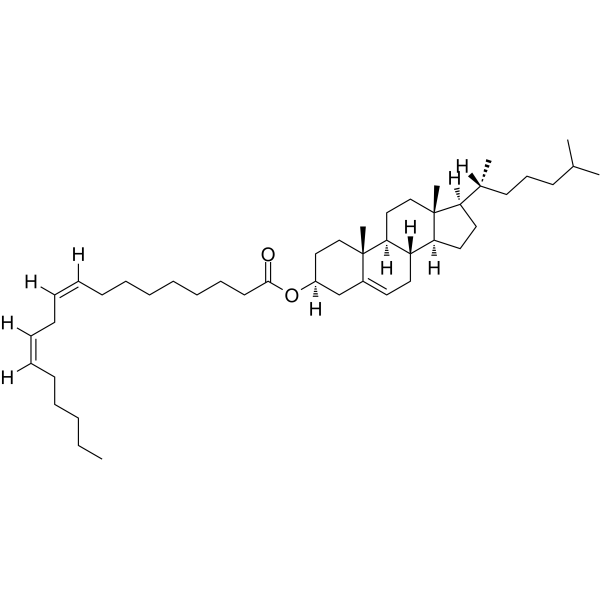
Cholesteryl linoleate is a cholesteryl ester with antibacterial activity that is present in low-density lipoprotein (LDL) particles, human nasal fluid, and respiratory epithelial secretions. Cholesteryl linoleate is oxidized by 12/15-lipoxygenase in macrophages and participates in selective uptake and efflux via LDL receptor-related protein. Cholesteryl linoleate does not induce endothelial adhesion molecule expression, nor does it induce monocyte binding to endothelial cells. Cholesteryl linoleate liposomal formulations inhibit the growth of multiple bacteria at physiological nasal fluid concentrations and act synergistically with antimicrobial peptides. Cholesteryl linoleate is useful for research related to atherosclerosis and bacterial infections .
loading...
    loading...
Cat. No.: HY-149037A
Purity:  98.60%
Synonyms: N4-Spermine cholesteryl carbamate pentahydrochloride
Research Areas:  

Others

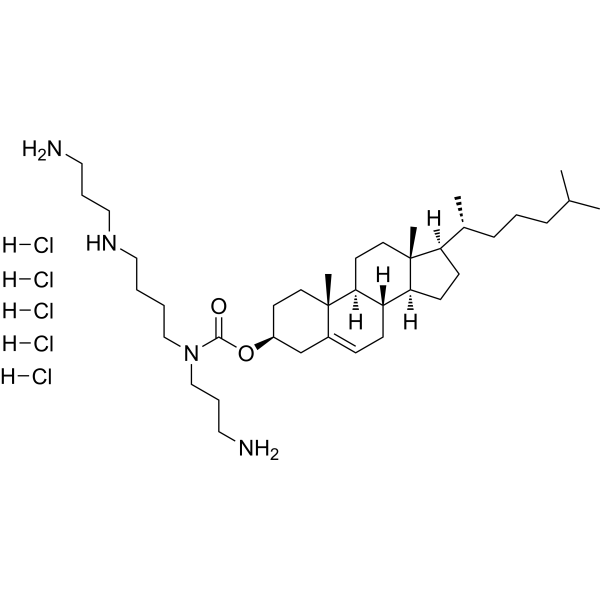
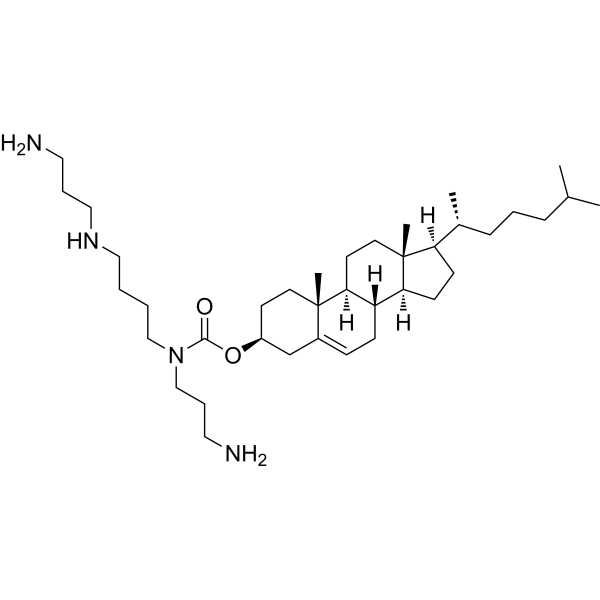
GL67 pentahydrochloride (N4-Spermine cholesteryl carbamate pentahydrochloride) is a cationic lipid that serves as a non-viral siRNA delivery vector and a non-viral gene transfer vector. GL67 pentahydrochloride enhances the encapsulation efficiency of siRNA in liposomal formulations and promotes the cellular uptake of siRNA across cancer cell membranes. GL67 pentahydrochloride mediates the transduction of plasmid DNA into cells. GL67 pentahydrochloride can be used in drug delivery-related research .
loading...
    loading...
Cat. No.: HY-160952
CAS No.: 1256639-86-7
Synonyms: CPX 351; Cytarabine-daunorubicin
Research Areas:  

Cardiovascular Disease Cancer

Cytarabine-daunorubicin (CPX 351) is a Liposomal formulation prepared from Cytarabine (HY-13605) and Daunorubicin (HY-13062A) at a fixed synergistic molar ratio of 5:1. Cytarabine-daunorubicin improves secondary acute myeloid leukemia. Cytarabine-daunorubicin can be used in research related to secondary acute myeloid leukemia, high-risk myelodysplastic syndrome, and chronic myelomonocytic leukemia .
loading...
    loading...
Cat. No.: HY-149037
CAS No.: 179075-30-0
Synonyms: N4-Spermine cholesteryl carbamate
Research Areas:  

Others

GL67 (N4-Spermine cholesteryl carbamate) is a cationic lipid that serves as a non-viral siRNA delivery vector and a non-viral gene transfer vector. GL67 enhances the encapsulation efficiency of siRNA in liposomal formulations and promotes the cellular uptake of siRNA across cancer cell membranes. GL67 mediates the transduction of plasmid DNA into cells. GL67 can be used in drug delivery-related research .
loading...
    loading...
Cat. No.: HY-177849
Synonyms: Amphotericin B liposome
Research Areas:  

Infection

Liposomal Amphotericin B (Amphotericin B liposome) is a liposomal formulation of Amphotericin B (HY-B0221) that can cross the blood-brain barrier. Liposomal Amphotericin B binds to fungal cell walls and releases Amphotericin B to bind Ergosterol (HY-N0181), inducing pore formation, ion leakage, and fungal cell death. Liposomal Amphotericin B exhibits fungicidal activity against a broad spectrum of fungal pathogens, also shows activity against Leishmania, and the liposomal formulation has lower acute and chronic toxicity as well as a lower risk of fungal resistance .
loading...
    loading...
Cat. No.: HY-19873
CAS No.: 925438-34-2
Target:  

Photosensitizer

Research Areas:  

Cancer

SL-052 is a hypocrellin-based photosensitizer that has recently shown promising results in clinical and preclinical testing for cancer photodynamic therapy (PDT). SL-052 is encapsulated in biodegradable polylactic-co-glycolic acid (PLGA) polymer nanoparticles optimized using single emulsion solvent evaporation technology. The SL-052-PLGA nanoparticles were more effective in PDT treatment of subcutaneous SCCVII squamous cell carcinoma compared to polyvinylpyrrolidone (PVP)-based and standard liposomal SL-052 formulations. A longer time interval between drug injection and tumor illumination can improve tumor cure rates, and SL-052-PLGA nanoparticles showed the best therapeutic effect among all SL-052 formulations.
loading...
    loading...
Cat. No.: HY-W010697S
Cholesteryl linoleate-d11 is the d11-labeled Cholesteryl linoleate (HY-W010697). Cholesteryl linoleate is a cholesteryl ester with antibacterial activity that is present in low-density lipoprotein (LDL) particles, human nasal fluid, and respiratory epithelial secretions. Cholesteryl linoleate is oxidized by 12/15-lipoxygenase in macrophages and participates in selective uptake and efflux via LDL receptor-related protein. Cholesteryl linoleate does not induce endothelial adhesion molecule expression, nor does it induce monocyte binding to endothelial cells. Cholesteryl linoleate liposomal formulations inhibit the growth of multiple bacteria at physiological nasal fluid concentrations and act synergistically with antimicrobial peptides. Cholesteryl linoleate is useful for research related to atherosclerosis and bacterial infections .
loading...
    loading...
Cat. No.: HY-W745334
CAS No.: 3800-86-0
Target:  

Interleukin Related

Research Areas:  

Others

Dexamethasone hemisuccinate is a glucocorticoid prodrug and an inhibitor of IL-6 release, and its liposomal formulation is internalized by retinal pigment epithelial cells. Dexamethasone hemisuccinate binds to retinal pigment epithelial cells in a time-dependent manner and exhibits no cytotoxicity toward these cells. Dexamethasone hemisuccinate can be used in research on age-related macular degeneration .
loading...
    loading...
Cat. No.: HY-187658
CAS No.: 3800-84-8
Target:  

Interleukin Related

Research Areas:  

Others

Dexamethasone hemisuccinate sodium is a glucocorticoid prodrug and an inhibitor of IL-6 release, and its liposomal formulation is internalized by retinal pigment epithelial cells. Dexamethasone hemisuccinate sodium binds to retinal pigment epithelial cells in a time-dependent manner and exhibits no cytotoxicity toward these cells. Dexamethasone hemisuccinate sodium can be used in research on age-related macular degeneration .
loading...
    loading...
Cat. No.: HY-185063
CAS No.: 102638-08-4
Target:  

Drug Derivative

Research Areas:  

Inflammation/Immunology Cancer

Budesonide 21-palmitate is a lipophilic ester prodrug of Budesonide (HY-13580), can be formulated into liposomal formulations. Budesonide 21-palmitate exhibts anti-inflammatory and anti-allergic activities. Budesonide 21-palmitate can achieve selective passive targeted delivery of drugs to tumor tissues (such as lung tumors). Budesonide 21-palmitate can be used for drug delivery in inflammatory and allergic research .
loading...
    loading...
  • 1

