1. Search Result
Search Result
Results for "

liver homogenate

" in MedChemExpress (MCE) Product Catalog:

31

Inhibitors & Agonists

1

Biochemical Assay Reagents

10

Natural
Products

1

Isotope-Labeled Compounds

Targets Recommended:
Cat. No. Product Name Target Research Areas Chemical Structure
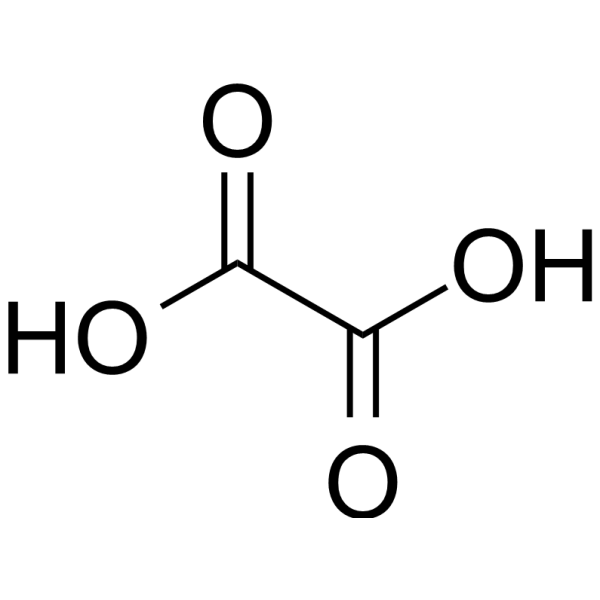
  • HY-Y0262
    Oxalic acid, 99%
    1 Publications Verification

    Ethanedioic acid

    Environmental Pollutants Endogenous Metabolite Infection Inflammation/Immunology
    Oxalic acid, 99% (Ethanedioic acid) is a dicarboxylic acid found in a wide variety of plants. Oxalic acid, 99% shows antioxidant acyivity and suppresses lipid peroxidation. Oxalic acid, 99% is a pathogenicity factor for sclerotinia sclerotiorum, and suppresses the oxidative burst of the host plant. Oxalic acid, 99% exerts acaricidal activity. Oxalic acid can be used for the researches of sclerotinia disease, varroatosis and inflammatory diseases .
    Oxalic acid, 99%
  • HY-113422

    Endogenous Metabolite Glucocorticoid Receptor Inflammation/Immunology
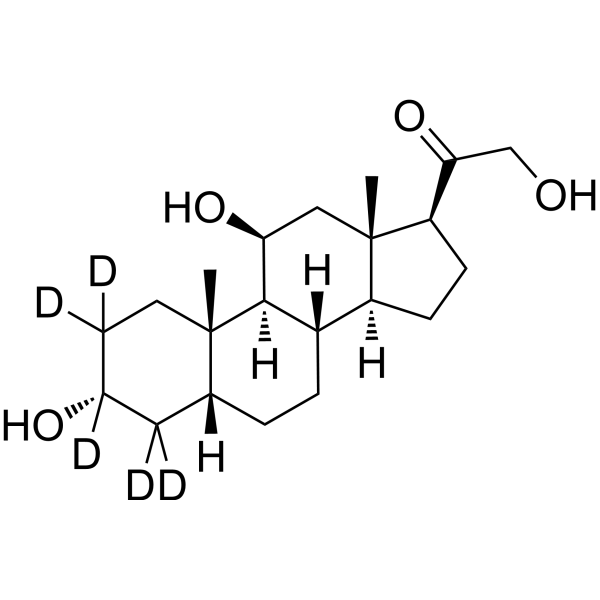
    Tetrahydrocorticosterone is a glucocorticoid. One of its active forms, 5α-Tetrahydrocorticosterone (HY-113364), exerts its effects by binding to the GC receptor and inhibiting inflammatory processes. Tetrahydrocorticosterone is naturally synthesized by the adrenal glands and plays a key role in regulating the metabolism of carbohydrates, proteins and fats .
    Tetrahydrocorticosterone
  • HY-114296

    Squalene oxide

    Drug Intermediate Endogenous Metabolite Others
    2,3-Oxidosqualene (Squalene oxide) is a sterol biosynthesis precursor intermediate.2,3-Oxidosqualene participates in cyclization pathways that form sterols and triterpenes, and contributes to introduction of their characteristic 3-hydroxyl group.2,3-Oxidosqualene forms metabolically from squalene in rat liver homogenates under sterol synthesis conditions.2,3-Oxidosqualene converts to sterols including cholesterol, lathosterol, and lanost-8-en-3β-ol in rat liver homogenates under anaerobic conditions .
    2,3-Oxidosqualene
  • HY-125954

    UDP-α-D-glucuronic acid

    Endogenous Metabolite Metabolic Disease
    Uridine diphosphate glucuronic acid (UDP-α-D-glucuronic acid) is a glucuronic acid donor. Uridine diphosphate glucuronic acid transfers its glucuronic acid moiety to acceptor molecules, thereby forming "ether" glucuronides, while being converted into uridine 5'-pyrophosphate. Uridine diphosphate glucuronic acid serves as a substrate for Arabidopsis UDP-GlcA 4-epimerase 1, and undergoes reversible 4-epimerization to generate UDP-α-D-galacturonic acid .
    Uridine diphosphate glucuronic acid
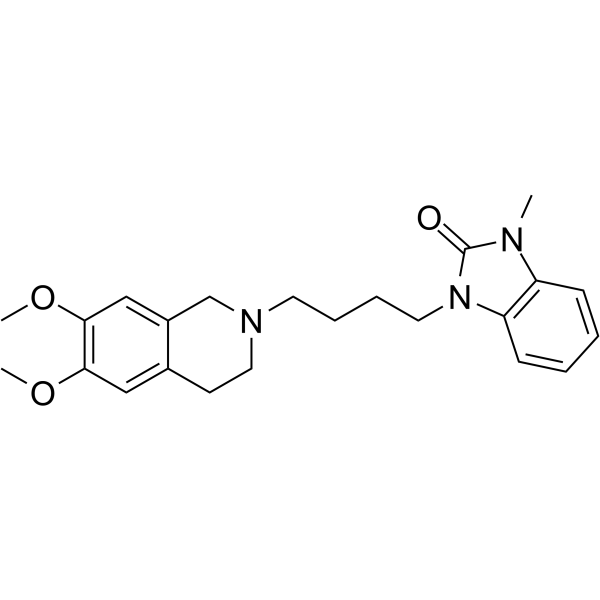
  • HY-145628

    Sigma Receptor Neurological Disease Inflammation/Immunology
    CM398 is a highly selective, orally active Sigma-2 receptor ligand with a Ki value of 0.43 nM. CM398 ameliorates age-related macular degeneration. CM398 exerts analgesic effects on visceral pain, inflammatory pain and neuropathic pain. CM398 can be used in research related to age-related macular degeneration, neuropathic pain and inflammatory pain .
    CM398
  • HY-N11424

    Drug Metabolite Glycosyltransferase Metabolic Disease
    Bilirubin diglucuronide is a bilirubin glycoside conjugate with a 1-O-acyl β-D-glucuronide structure. Bilirubin diglucuronide is the major conjugated bilirubin (HY-N0323) and predominant pigment excreted in the bile of adult humans, rats, dogs and cats. Bilirubin diglucuronide is mainly synthesized via UDP-glucuronosyltransferase-mediated transfer of glucuronic acid from UDP-glucuronic acid to bilirubin monoglucuronide, or via enzymatic disproportionation of two moles of bilirubin monoglucuronide (predominantly producing the IXα configuration). In addition, Bilirubin diglucuronide can also be synthesized from bilirubin or its monoglucuronide in a UDP-glucuronic acid-dependent manner. Pretreatment with phenobarbital significantly enhances the formation process of Bilirubin diglucuronide .
    Bilirubin diglucuronide
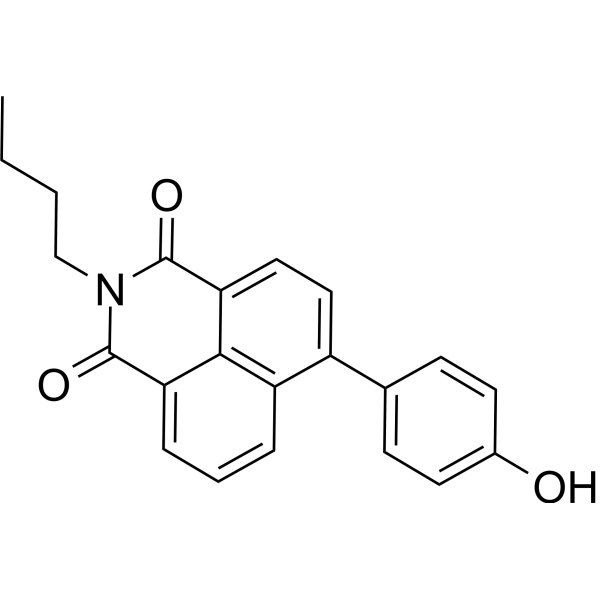
  • HY-160250

    Fluorescent Dye UGT Metabolic Disease
    UGT1A1-IN-1 is a UGT1A1 inhibitor and fluorescent probe (Ex=370 nm, Em=520 nm), with an IC50 of 1.33 μM and a Ki of 5.02 μM. UGT1A1-IN-1 is selectively glucuronidated by UGT1A1 at the bilirubin homologous binding site, and its PET effect is blocked along with this reaction, triggering fluorescence changes. UGT1A1-IN-1 can serve as a substitute for bilirubin to detect UGT1A1 activity and perform high-throughput screening of UGT1A1 modulators .
    UGT1A1-IN-1
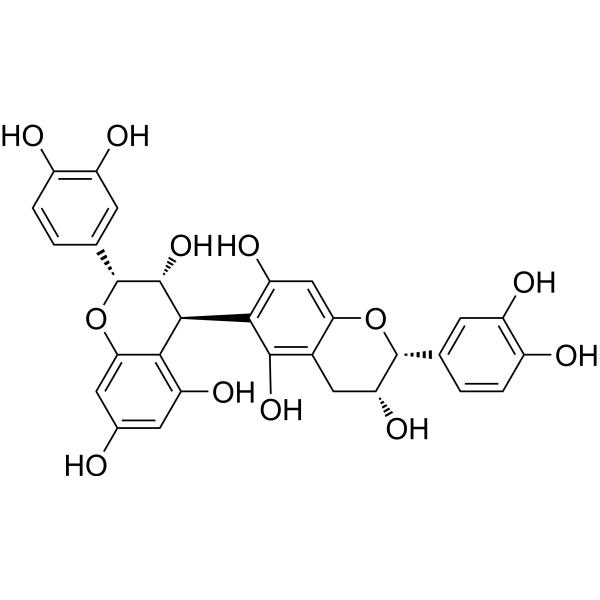
  • HY-N7935

    Reactive Oxygen Species (ROS) Cardiovascular Disease Infection Cancer
    Procyanidin B5 is an antioxidant with a IC50 of 0.1 mM in lipid peroxidation assays using mouse liver homogenates. Procyanidin B5 scavenges superoxide anions and hydroxyl radicals, and inhibits lipid peroxidation. Procyanidin B5 can be used in research related to cardiovascular diseases, cancer, and malaria .
    Procyanidin B5
  • HY-Y0262A
    Oxalic acid diammonium monohydrate
    1 Publications Verification

    Ethanedioic acid diammonium monohydrate

    Environmental Pollutants Endogenous Metabolite Infection Inflammation/Immunology
    Oxalic acid (Ethanedioic acid) diammonium monohydrate is a dicarboxylic acid found in a wide variety of plants.
    Oxalic acid diammonium monohydrate shows antioxidant acyivity and suppresses lipid peroxidation.
    Oxalic acid diammonium monohydrate is a pathogenicity factor for sclerotinia sclerotiorum, and suppresses the oxidative burst of the host plant. Oxalic acid diammonium monohydrate exerts acaricidal activity. Oxalic acid can be used for the researches of sclerotinia disease varroatosis and inflammatory diseases .
    Oxalic acid diammonium monohydrate
  • HY-114296S

    Squalene oxide-d6

    Isotope-Labeled Compounds Drug Intermediate Endogenous Metabolite Others
    2,3-Oxidosqualene-d6 (Squalene oxide-d6) is a deuterium labeled 2,3-Oxidosqualene (HY-114296). 2,3-Oxidosqualene (Squalene oxide) is a sterol biosynthesis precursor intermediate.2,3-Oxidosqualene participates in cyclization pathways that form sterols and triterpenes, and contributes to introduction of their characteristic 3-hydroxyl group.2,3-Oxidosqualene forms metabolically from squalene in rat liver homogenates under sterol synthesis conditions.2,3-Oxidosqualene converts to sterols including cholesterol, lathosterol, and lanost-8-en-3β-ol in rat liver homogenates under anaerobic conditions.
    2,3-Oxidosqualene-d6
  • HY-N8788

    Others Inflammation/Immunology Cancer
    Baicalein 7-O-β-D-ethylglucuronide is a natural flavone glycoside that can be extracted from Scutellaria baicalensis Georgi. Baicalein 7-O-β-D-ethylglucuronide has antioxidant activity. Baicalein 7-O-β-D-ethylglucuronide inhibits FeSO4-Cys-induced lipid peroxidation of liver homogenate. Baicalein 7-O-β-D-ethylglucuronide also shows strong cytoprotective effect on H2O2-induced oxidative damage of human umbilical vein endothelial cells .
    Baicalein 7-O-β-D-ethylglucuronide
  • HY-W150695

    N-(Naphthalen-1-yl)acetamide

    Bacterial Infection
    1-Acetamidonaphthalene (N-(Naphthalen-1-yl)acetamide) is a degradation product of Digitoxigenin (HY-B2151). 1-Acetamidonaphthalene is weakly mutagenic to Salmonella typhimurium TA98 with metabolic activation. 1-Acetamidonaphthalene can be used for the research of bacterial infection .
    1-Acetamidonaphthalene
  • HY-W009934

    α-Phenyl-2-pyridineacetonitrile

    Drug Metabolite Endocrinology
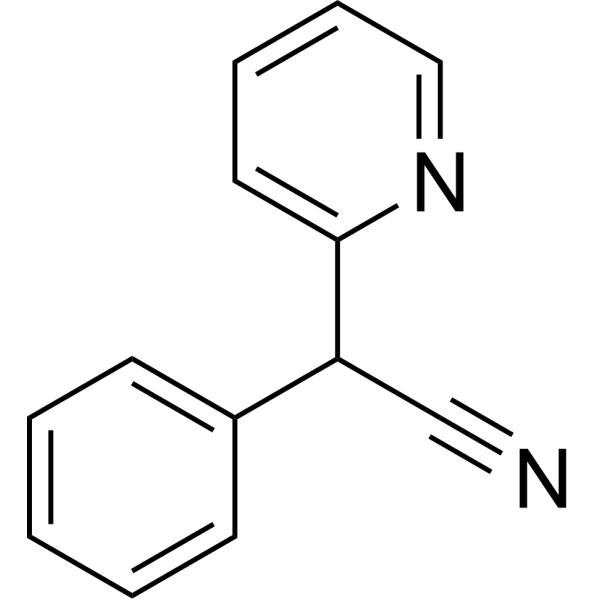
    2-Phenyl-2-(2-pyridyl)acetonitrile is the major metabolite of SC 15396 metabolized by the supernatant fraction of rat liver homogenate. SC 15396 is an antigastrin that inhibits gastric secretion .
    2-Phenyl-2-(2-pyridyl)acetonitrile
  • HY-B1370E

    (R)-HCQ phosphate

    Parasite Toll-like Receptor (TLR) SARS-CoV Autophagy Metabolic Disease
    (R)-Hydroxychloroquine ((R)-HCQ) phosphate is a (R)-isomer of Hydroxychloroquine (HY-W031727). (R)-Hydroxychloroquine inhibits the insulin metabolizing enzyme of cytosolic fraction of liver homogenates in healthy and diabetic rats .
    (R)-Hydroxychloroquine phosphate
  • HY-177148

    Biochemical Assay Reagents Cardiovascular Disease
    G256 (Compound 1) is an amidinohydrazone. G256 can also be considered as a Schiff’s base of aminoguanidine. G256 exhibits antiarrhythmic activity. G256 is the reduced form of NOH-G256 by microsomal enzyme preparation from rabbit and rat liver homogenates in the presence of NADPH and NADH .
    G256
  • HY-177148A

    Biochemical Assay Reagents Cardiovascular Disease
    G256 (Compound 1) (dihydrochloride) is an amidinohydrazone. G256 (dihydrochloride) can also be considered as a Schiff’s base of aminoguanidine. G256 (dihydrochloride) exhibits antiarrhythmic activity. G256 (dihydrochloride) is the reduced form of NOH-G256 by microsomal enzyme preparation from rabbit and rat liver homogenates in the presence of NADPH and NADH .
    G256 dihydrochloride
  • HY-145530

    (S)-HCQ sulfate

    Parasite Toll-like Receptor (TLR) SARS-CoV Autophagy Drug Isomer Infection Metabolic Disease Inflammation/Immunology
    (S)-Hydroxychloroquine ((S)-HCQ) sulfate is an isomer of Hydroxychloroquine (HY-W031727). (S)-Hydroxychloroquine sulfate (2.5-20 mg/mL) reduces the rate of insulin degradation in liver homogenates isolated from non-diabetic and diabetic rats. Formulations containing Hydroxychloroquine have been used in the study of malaria, rheumatoid arthritis, and systemic lupus erythematosus .
    (S)-Hydroxychloroquine sulfate
  • HY-W009934R

    α-Phenyl-2-pyridineacetonitrile (Standard)

    Drug Metabolite Reference Standards Endocrinology
    2-Phenyl-2-(2-pyridyl)acetonitrile (Standard) is the analytical standard of 2-Phenyl-2-(2-pyridyl)acetonitrile. This product is intended for research and analytical applications. 2-Phenyl-2-(2-pyridyl)acetonitrile is the major metabolite of SC 15396 metabolized by the supernatant fraction of rat liver homogenate. SC 15396 is an antigastrin that inhibits gastric secretion[1].
    2-Phenyl-2-(2-pyridyl)acetonitrile (Standard)
  • HY-19109

    Leukotriene Receptor Others
    RG-7152 is a tetrazolyl-substituted leukotriene D4 receptor antagonist that can induce peroxisomal β-oxidation and peroxisome bifunctional enzymes (PBEs) in hepatocytes in various animal models. It has been shown to significantly increase PBE levels and β-oxidation activity in rat and mouse liver homogenates, while smaller effects were observed in guinea pigs and monkeys and no effect in dogs. In vitro studies have also shown that it can induce PBEs comparable to clofibric acid, indicating its potential as a peroxisome proliferator .
    RG-7152
  • HY-105572

    MC-838 calcium

    Angiotensin-converting Enzyme (ACE) Cardiovascular Disease
    Moveltipril calcium (MC-838 calcium) is an orally active angiotensin converting enzyme (ACE) inhibitor with antihypertensive activity. Moveltipril calcium binds via a stable thioester bond and exhibits relative resistance to enzymatic hydrolysis in rat liver homogenate. Moveltipril calcium effectively inhibits ACE extracted from rabbit lung in a concentration-dependent manner. Moveltipril calcium is able to highly specifically inhibit the contractile response to angiotensin-I (AI) in free rat aortic rings and guinea pig ileum preparations, while enhancing the contractile response to calcitonin .
    Moveltipril calcium
  • HY-182251

    GSOAN

    Drug Derivative Others
    Glutathione sulfinanilide (GSOAN) is a derivative of Nitrosobenzene (HY-121641). Glutathione sulfinanilide can be generated by the reaction of Nitrosobenzene with GSH. Glutathione sulfinanilide is degradable in rat liver homogenate .
    Glutathione sulfinanilide
  • HY-N17833

    Kaempferol 3-O-2,4'''-acetylrhamninoside

    Reactive Oxygen Species (ROS) Cardiovascular Disease
    Actinoside E (Kaempferol 3-O-2,4'''-acetylrhamninoside) is a flavonoid triglycoside with antioxidant activity. Actinoside E scavenges DPPH, superoxide anion and hydroxyl radicals, and inhibits lipid peroxidation in mouse liver homogenate. Actinoside E can be used in studies related to myocardial ischemia .
    Actinoside E
  • HY-171478

    Drug Derivative Others
    SQ 11,447 is a methylurea analogue that demonstrates remarkable resistance to hydrolysis in both in vitro (rat, dog, and human liver homogenates) and in vivo (rat) experimental models.
    SQ 11,447
  • HY-W749297A

    Phleomycin D2 sulfate

    DNA/RNA Synthesis Bacterial Infection Cancer
    Bleomycin B2 (Phleomycin D2) sulfate is a selective antitumor and antibacterial agent that induces DNA strand breaks and inhibits DNA ligase activity. The optimal pH for the activity of Bleomycin B2 sulfate is 9.1, and its efficacy is enhanced by thiol compounds or hydrogen peroxide. Bleomycin B2 sulfate undergoes enzymatic inactivation via bleomycin-inactivating enzymes, exhibits selective retention in squamous cell carcinoma, and is inactivated most rapidly in liver and kidney homogenates. Bleomycin B2 sulfate can be applied in research related to squamous cell carcinoma and other relevant studies .
    Bleomycin B2 sulfate
  • HY-W725454

    Drug Metabolite Drug Intermediate Inflammation/Immunology
    Acetaminosalol, a merged ester NSAID–APAP hybrid, is a metabolite of Benorylate (HY-107795) and a prodrug of Acetaminophen (HY-66005) and Aalicylic acid (HY-B0167). Acetaminosalol can be used for the research of acute rheumatism .
    Acetaminosalol
  • HY-N17457

    Bacterial Infection
    N-Demethyl-N-formyldehydronuciferine is a dehydroaporphine alkaloid. N-Demethyl-N-formyldehydronuciferine induces mutations in Salmonella typhimurium TA98 and TA100 .
    N-Demethyl-N-formyldehydronuciferine
  • HY-169872

    Endogenous Metabolite Others
    17-Hydroxystearic acid isolable from Torulopsis magnoliae fermentation oil. 17-Hydroxystearic acid is a saturated C18 ω2-hydroxy fatty acid existing in D- and L-enantiomeric forms .
    17-Hydroxystearic acid
  • HY-123273

    11β-HSD Metabolic Disease
    Metyrapol is a steroid 11β-hydroxylase inhibitor. Metyrapol blocks the conversion of deoxycorticosterone to corticosterone in rat adrenal homogenates. Metyrapol can be used in the study of metabolic diseases .
    (Rac)-Metyrapol
  • HY-182268

    Bacterial Interleukin Related TNF Receptor Infection Inflammation/Immunology
    Antibiofilm agent-21 is an orally active prodrug of Antibiofilm agent-20 (HY-182268) with glucuronidation. Antibiofilm agent-21 avoids absorption in the small intestine via reduced membrane permeability, improving colon delivery rate, and converts to its active form in the colon. Antibiofilm agent-21 increases colon length and reduces IL-17 and TNF-α levels in a murine DSS (HY-116282C)-induced colitis model. Antibiofilm agent-21 can be used for the research of inflammatory bowel disease .
    Antibiofilm agent-21
  • HY-182893

    α-synuclein Reactive Oxygen Species (ROS) Tyrosine Hydroxylase Neurological Disease
    SK-129 is a blood-brain barrier-permeable inhibitor of α-synuclein (αS) oligomers with a Kd of 221 nM. SK-129 preferentially binds to neurotoxic αS oligomers over physiological αS monomers, inhibits αS aggregation, blocks the interaction and co-aggregation of αS with tau protein, and prevents the maturation of αS-tau condensates into amyloid aggregates. SK-129 reduces ROS production, rescues dopaminergic neuron degeneration, improves motor function, restores endogenous dopamine synthesis, increases the number of Tyrosine Hydroxylase-positive neurons, prevents brain histopathological changes, alleviates neuroinflammation, and improves survival rates in relevant models. SK-129 can be used in research related to Parkinson's disease (PD) and Lewy body dementia (LBD) .
    SK-129
  • HY-W051199

    o-Phosphohomoserine

    Endogenous Metabolite iGluR Others
    O-Phosphono-L-homoserine (o-Phosphohomoserine) is an intermediate in threonine synthesis in bacteria and plants, and can also be hijacked by MetM in some Streptomyces species to enter a novel methionine synthesis pathway. O-Phosphono-L-homoserine acts as a weak antagonist of the NMDA receptor. O-Phosphono-L-homoserine can be used as a substrate for studies on amino acid metabolism of the aspartate family, a control for mechanism studies of PLP enzymes, and a reference for structure-activity relationship studies of NMDA receptor ligands .
    O-Phosphono-L-homoserine

Inquiry Online

Your information is safe with us. * Required Fields.

Salutation


Country or Region *

Applicant Name *


Organization Name *

Department *


Email Address *


Product Name *

Cat. No.


Requested quantity *

Phone Number *


Remarks

Inquiry Online

Inquiry Information

Product Name:
Cat. No.:
Quantity:
MCE Japan Authorized Agent:

