
1. Search Result
Search Result
Results for "

neural development

" in MedChemExpress (MCE) Product Catalog:

16

Inhibitors & Agonists

1

Screening Libraries

2

Biochemical Assay Reagents

3

Peptides

4

Natural
Products

1

Isotope-Labeled Compounds

3

Oligonucleotides

Cat. No. Product Name Target Research Areas Chemical Structure
  • HY-Y0921
    (±)-1,2-Propanediol
    3 Publications Verification

    1,2-(RS)-Propanediol; 1,2-Propylene glycol; Propylene glycol

    Environmental Pollutants Endogenous Metabolite Neurological Disease
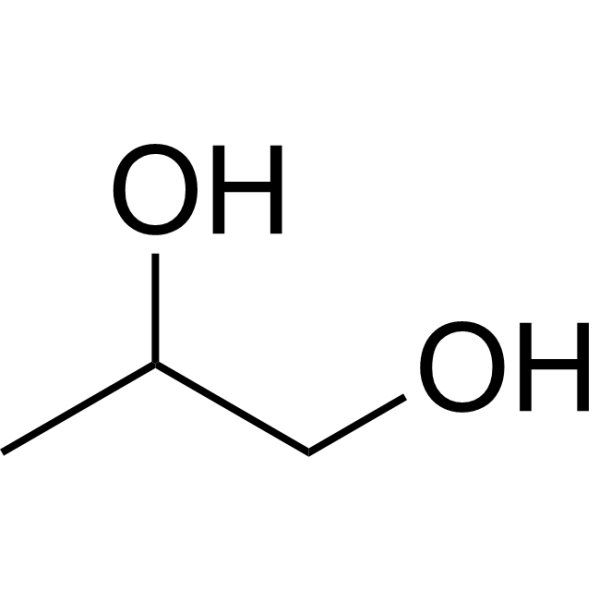
    (±)-1, 2-propanediol (1,2-(RS)-Propanediol) is an aliphatic alcohol that is often used as an excipient in many active molecular preparations to increase the solubility and stability of the active molecule. (±)-1, 2-propanediol can affect the neurobehavior of zebrafish .
    (±)-1,2-Propanediol
  • HY-B2167R

    DHA (Standard); Cervonic acid (Standard)

    Reference Standards Endogenous Metabolite Neurological Disease Cancer
    Docosahexaenoic acid (Standard) is the analytical standard of Docosahexaenoic acid. This product is intended for research and analytical applications. Docosahexaenoic Acid (DHA) is an omega-3 fatty acid abundantly present brain and retina. It can be obtained directly from fish oil and maternal milk. In Vitro: Docosahexaenoic acid (DHA) is essential for the growth and functional development of the brain in infants. DHA is also required for maintenance of normal brain function in adults. The inclusion of plentiful DHA in the diet improves learning ability and memory . DHA is an essential requirement in every step of brain development like neural cell proliferation, migration, differentiation, synaptogenesis. The multiple double bonds and unique structure allow DHA to impart special membrane characteristics for effective cell signaling. Many development disorders like dyslexia, autism spectrum disorder, attention deficit hyperactivity disorder, schizophrenia etc. are causally related to decreased level of DHA . DHA is a potent RXR ligand inducing robust RXR activation already at low micro molar concentrations. The EC50 for RXRα activation by DHA is about 5-10 μM fatty acid . In Vivo: Docosahexaenoic acid administration over 10 weeks significantly reduces the number of reference memory errors, without affecting the number of working memory errors, and significantly increases the docosahexaenoic acid content and the docosahexaenoic acid/arachidonic acid ratio in both the hippocampus and the cerebral cortex . DHA treatment exerts neuroprotective actions on an experimental mouse model of PD. There is a decrease tendency in brain lipid oxidation of MPTP mice but it does not significantly .
    Docosahexaenoic acid (Standard)
  • HY-P0204A

    Endothelin 3 (Rat,Human) TFA

    Endothelin Receptor Integrin Neurological Disease
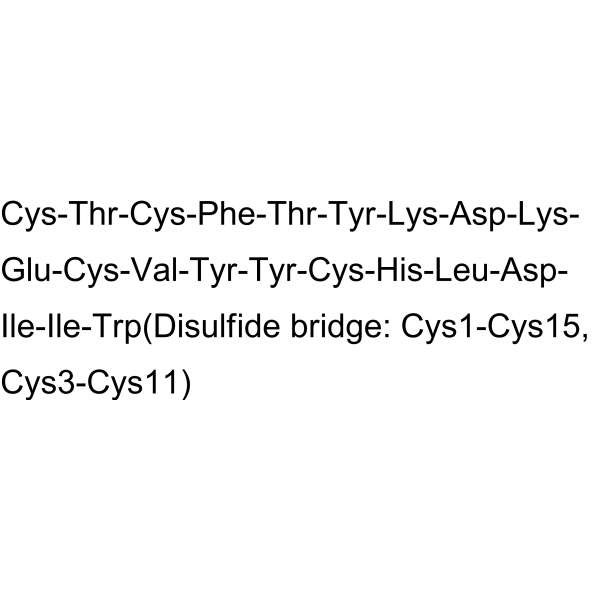
    Endothelin-3, human, mouse, rabbit, rat TFA (Endothelin 3 (Rat,Human) TFA) is an adhesion stimulant. Endothelin-3, human, mouse, rabbit, rat TFA stimulates the adhesion of enteric neural crest cells to various ECM components. Endothelin-3, human, mouse, rabbit, rat TFA plays an important role in the maintenance and self-renewal of intestinal progenitor cells, participates in the migration of enteric neural crest cells, and helps maintain a suitable environment for the colonization of enteric neural crest cells. Endothelin-3, human, mouse, rabbit, rat TFA acts synergistically with the β1-integrin signaling pathway during enteric nervous system development. Endothelin-3, human, mouse, rabbit, rat TFA can be used in studies related to distal aganglionosis .
    Endothelin-3, human, mouse, rabbit, rat TFA
  • HY-P0204
    Endothelin-3, human, mouse, rabbit, rat
    1 Publications Verification

    Endothelin 3 (Rat,Human)

    Endothelin Receptor Integrin Neurological Disease
    Endothelin-3, human, mouse, rabbit, rat (Endothelin 3 (Rat,Human)) is an adhesion stimulant. Endothelin-3, human, mouse, rabbit, rat stimulates the adhesion of enteric neural crest cells to various ECM components. Endothelin-3, human, mouse, rabbit, rat plays an important role in the maintenance and self-renewal of intestinal progenitor cells, participates in the migration of enteric neural crest cells, and helps maintain a suitable environment for the colonization of enteric neural crest cells. Endothelin-3, human, mouse, rabbit, rat acts synergistically with the β1-integrin signaling pathway during enteric nervous system development. Endothelin-3, human, mouse, rabbit, rat can be used in studies related to distal aganglionosis .
    Endothelin-3, human, mouse, rabbit, rat
  • HY-16637D
    Folic acid disodium
    20+ Cited Publications

    Vitamin B9 disodium; Vitamin M disodium

    Endogenous Metabolite DNA/RNA Synthesis Others Neurological Disease Cancer
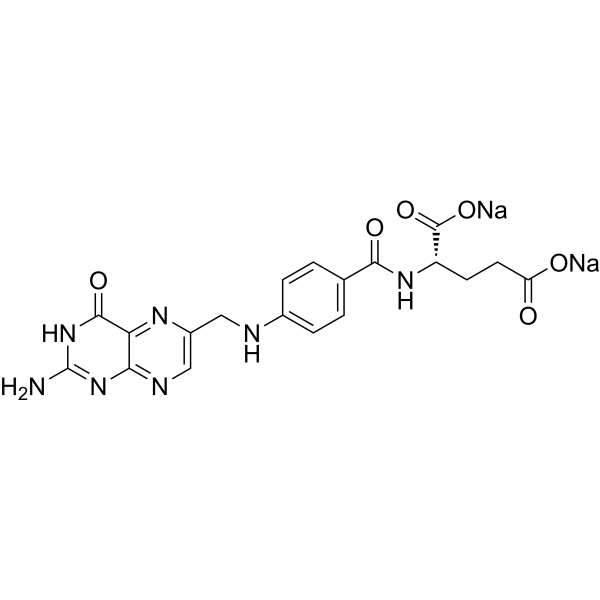
    Folic acid disodium (Vitamin B9 disodium; Vitamin M disodium) is an orally active disodium salt form of Folic acid (HY-16637) with an intrinsic dissolution rate (IDR) of 4.96·10 5 g/s . Folic acid disodium serves as cofactor in single-carbon transfer reactions and exhibits protective effects against neural tube defects, ischemic events, and cancer. Folate acid disodium overload leads to impaired brain development in embryogenesis and promotes growth of precancerous altered cells. Folic acid deficiency leads to megaloblastic anemia .
    Folic acid disodium
  • HY-134104

    D-erythro-Sphingosine-C20

    Others Neurological Disease
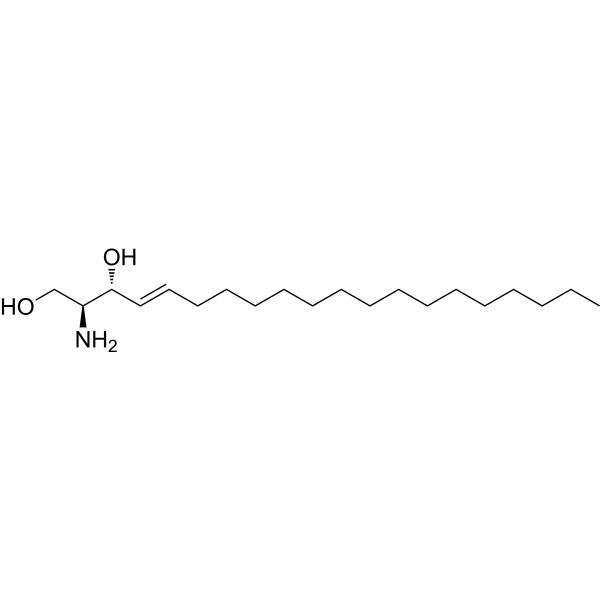
    C20-Sphingosine is a long-chain base (LCB) that can be used in the study of neural development .
    C20-Sphingosine
  • HY-Y0921R

    1,2-(RS)-Propanediol (Standard); 1,2-Propylene glycol (Standard); Propylene glycol (Standard)

    Endogenous Metabolite Reference Standards Neurological Disease
    (±)-1,2-Propanediol (Standard) is the analytical standard of (±)-1,2-Propanediol. This product is intended for research and analytical applications. (±)-1, 2-propanediol (1,2-(RS)-Propanediol) is an aliphatic alcohol that is often used as an excipient in many active molecular preparations to increase the solubility and stability of the active molecule. (±)-1, 2-propanediol can affect the neurobehavior of zebrafish .
    (±)-1,2-Propanediol (Standard)
  • HY-P11322

    Amino Acid Derivatives Neurological Disease
    NHIP peptide is a peptide segment containing 20 amino acids located in the nucleus of the cell. NHIP is highly expressed in neuronal derived cells such as LUHMES cells. NHIP peptide can promote the proliferation of 293T cells. NHIP peptide regulates gene networks related to neural development and autism spectrum disorder (ASD) .
    NHIP peptide
  • HY-E70657

    CDK Neurological Disease Cancer
    CDK10/CycQ Recombinant Human Active Protein Kinase is a cyclin-dependent kinase, which is important for neural development and can act as a tumour suppressor .
    CDK10/CycQ Recombinant Human Active Protein Kinase
  • HY-174560

    mRNA Cancer
    Human PAX3 mRNA encodes the human paired box 3 (PAX3) protein, a member of the paired box (PAX) family. PAX3 may regulate cell proliferation, migration and apoptosis and involve in neural development and myogenesis.
    Human PAX3 mRNA
  • HY-174558

    mRNA Cancer
    Human PAX5 mRNA encodes the human paired box 5 (PAX5) protein, a member of the paired box (PAX) family. PAX5 may play an important role in B-cell differentiation as well as neural development and spermatogenesis.
    Human PAX5 mRNA
  • HY-Y0921S3

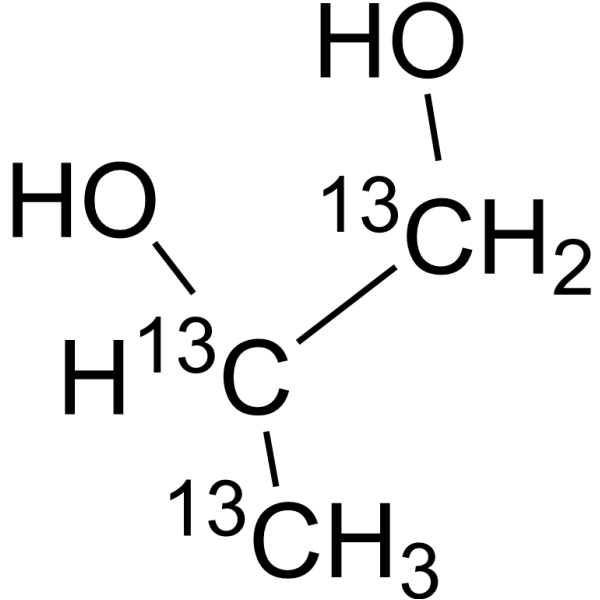
    1,2-(RS)-Propanediol-13C3; 1,2-Propylene glycol-13C3; Propylene glycol-13C3

    Isotope-Labeled Compounds Endogenous Metabolite Neurological Disease
    (±)-1,2-Propanediol- 13C3 is 13C labeled (±)-1,2-Propanediol (HY-Y0921). (±)-1, 2-propanediol (1,2-(RS)-Propanediol) is an aliphatic alcohol that is often used as an excipient in many active molecular preparations to increase the solubility and stability of the active molecule. (±)-1, 2-propanediol can affect the neurobehavior of zebrafish .
    (±)-1,2-Propanediol-13C3
  • HY-173413

    Insecticide Cholinesterase (ChE) nAChR Sodium Channel GABA Receptor Others
    Insecticidal agent 21 (Compound 6) is an insecticide that is effective against Culex pipiens larvae (LC50: 0.4 μg/mL). Insecticidal agent 21 achieves multi-target neurotoxicity by inhibiting acetylcholinesterase (AChE) and simultaneously targeting other neural receptors (nicotinic acetylcholine receptors (nAChR), voltage-gated sodium channels (VGSC), and γ-aminobutyric acid receptors (GABAAR)). Insecticidal agent 21 has a strong insecticidal effect and can be used in the development of new insecticides to address the problem of mosquito resistance to traditional insecticides .
    Insecticidal agent 21
  • HY-N18471

    5,7-DHP

    Monoamine Oxidase 5-HT Receptor Cardiovascular Disease Neurological Disease
    5,7-Dihydroxytryptamine (5,7-DHP) is an autofluorescent (λex≈365 nm), selective neurotoxin and a transport substrate for MAO-A and 5-HT. 5,7-Dihydroxytryptamine can specifically target and damage central and peripheral 5-HTergic neurons, while affecting 5-HT-related pathways and neurotransmitter balance. 5,7-Dihydroxytryptamine can be used to establish 5-HTergic neuron injury models for studies on neural development, neurodegenerative diseases, as well as mechanisms related to platelet function and retinal neurons .
    5,7-Dihydroxytryptamine
  • HY-N18471A

    5,7-DHP hydrobromide

    Monoamine Oxidase 5-HT Receptor Neurological Disease
    5,7-Dihydroxytryptamine (5,7-DHT) hydrobromide is an autofluorescent (Ex ≈ 365 nm), selective neurotoxin and a transport substrate for MAO-A and 5-HT. 5,7-Dihydroxytryptamine hydrobromide can specifically target and damage central and peripheral 5-HTergic neurons, while affecting 5-HT-related pathways and neurotransmitter balance. 5,7-Dihydroxytryptamine hydrobromide can be used to establish 5-HTergic neuron injury models for studies on neural development, neurodegenerative diseases, as well as mechanisms related to platelet function and retinal neurons .
    5,7-Dihydroxytryptamine hydrobromide
  • HY-N18471B

    5,7-DHP creatinine sulfate

    Monoamine Oxidase 5-HT Receptor Cardiovascular Disease Neurological Disease
    5,7-Dihydroxytryptamine creatinine sulfate (5,7-DHT) is an autofluorescent (Ex ≈ 365 nm), selective neurotoxin and a transport substrate for MAO-A and 5-HT. 5,7-Dihydroxytryptamine creatinine sulfate can specifically target and damage central and peripheral 5-HTergic neurons, while affecting 5-HT-related pathways and neurotransmitter balance. 5,7-Dihydroxytryptamine creatinine sulfate can be used to establish 5-HTergic neuron injury models for studies on neural development, neurodegenerative diseases, as well as mechanisms related to platelet function and retinal neurons .
    5,7-Dihydroxytryptamine creatinine sulfate

Inquiry Online

Your information is safe with us. * Required Fields.

Salutation


Country or Region *

Applicant Name *


Organization Name *

Department *


Email Address *


Product Name *

Cat. No.


Requested quantity *

Phone Number *


Remarks

Inquiry Online

Inquiry Information

Product Name:
Cat. No.:
Quantity:
MCE Japan Authorized Agent:

