
1. Search Result
Search Result
Results for "

nucleic acid red

" in MedChemExpress (MCE) Product Catalog:

13

Inhibitors & Agonists

7

Fluorescent Dyes

1

MCE Kits

Cat. No. Product Name Target Research Areas Chemical Structure
  • HY-D1055
    MitoSOX Red
    260+ Cited Publications

    Fluorescent Dye Reactive Oxygen Species (ROS) Mitochondrial Metabolism Cancer
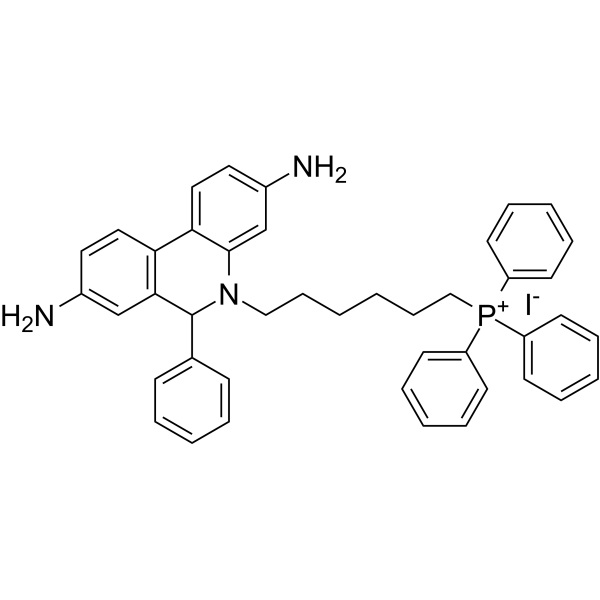
    MitoSOX Red is a live cell fluorescent probe that specifically targets mitochondria and is cell membrane permeable. MitoSOX Red enters mitochondria and is oxidized by superoxide but not by other ROS or RNS generating systems. The oxidized MitoSOX Red then binds to nucleic acids in mitochondria/nucleus, producing strong red fluorescence. MitoSOX Red can be used as a fluorescent indicator to specifically detect superoxide. In addition, superoxide dismutase (SOD) can prevent the oxidation of MitoSOX Red.
    Excitation/emission wavelength: 510/580 nm.
    MitoSOX Red
  • HY-D0093
    Ethidium homodimer
    4 Publications Verification

    EthD-1

    DNA Stain Others
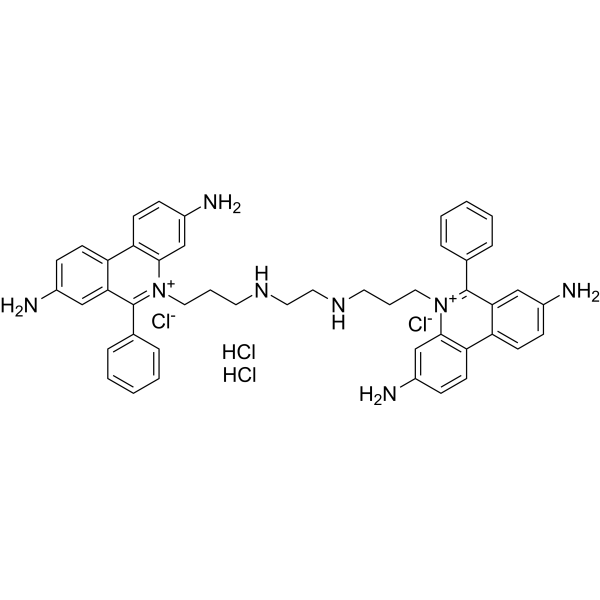
    Ethidium homodimer (EthD-1) is a high-affinity fluorescent nucleic acid dye commonly used to stain mammals, bacteria, yeast, and fungi. Ethidium homodimer binds to DNA or RNA, enhancing fluorescence more than 30 times. The Ethidium homodimer has a strong positive charge, so it cannot cross cell membranes and stain living cells; But the Ethidium homodimer can cross the disordered region of the dead cell membrane to reach the nucleus and embed the DNA double strand to produce red fluorescence. Therefore, Ethidium homodimer is a relatively sensitive nucleic acid stain that can accurately detect nucleic acids in solution or in decomposing cells. Ethidium homodimer binds DNA, Ex/Em=528/617 nm .
    Ethidium homodimer
  • HY-D0996

    DNA Stain Others
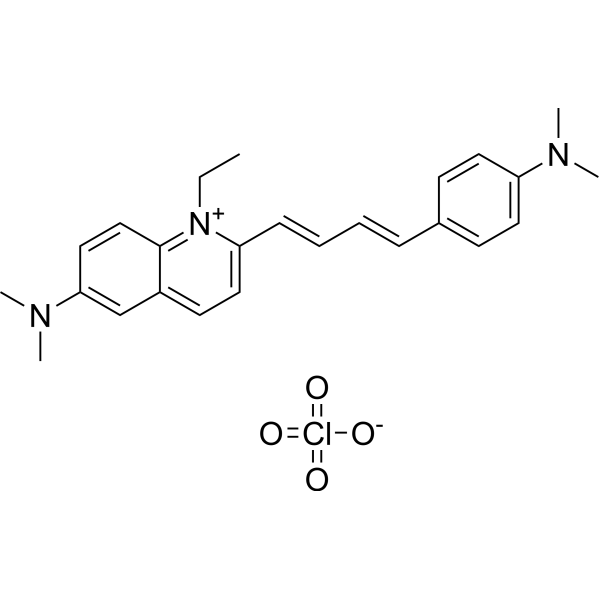
    Lds-751 is a nucleic acid stain that mainly detects DNA. Lds-751 is a nucleic acid stain that mainly detects DNA. Lds-751 has a high affinity for DNA and fluorescence is enhanced after binding, but the maximum emission wavelength is 670nm. Lds-751 and Thiazole orange can be used for the differentiation of red blood cells, platelets, reticulocytes, and nucleated cells and can be stimulated at 488nm. Studies have shown that LDS-751 binds almost exclusively to mitochondria when incubated with nucleated living cells. After nucleated Acridine Orange (HY-101879) staining and LDS-751 treatment of cells, confocal microscopy revealed almost no co-location of the cells. Staining with Rhodamine 123 (HY-D0816), a dye known to bind polarized mitochondria, was almost identical to the pattern observed with LDS-751 .
    LDS-751
  • HY-W088068

    Fluorescent Dye Others
    Wright's stain is a composite cell stain that mainly binds to intracellular nucleic acids, proteins and other components through thiazine dyes (such as methylene blue) and eosin. Wright's stain is pH-dependent (optimal pH 6.4-6.7) and achieves cell morphology resolution by differentially staining the cytoplasm and nucleus. Under alkaline conditions, thiazine dyes bind to nucleic acids to form purple, and acidic eosin binds to cytoplasmic proteins to form red, which can form contrasting cell morphological features. Wright's stain can clearly display the fine structures of blood cells and bone marrow cells (such as nuclear chromatin and granules) and quickly evaluate cell morphological abnormalities .
    Wright's stain
  • HY-106991A

    S-303 dihydrochloride

    HIV Bacterial CHIKV Infection
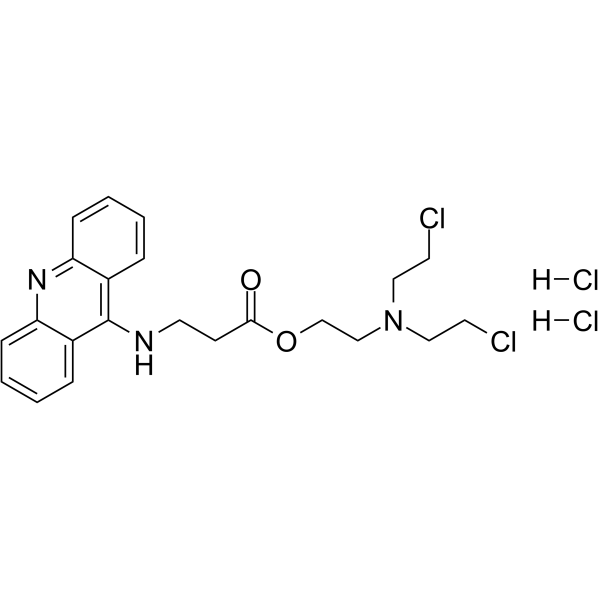
    Amustaline (S-303) dihydrochloride, a nucleic acid-targeted alkylator, is an efficient pathogen inactivation agent for blood components containing red blood cells. Amustaline dihydrochloride has three components: an acridine anchor (an intercalator that targets nucleic acids non-covalently), an effector (a bis-alkylator group that reacts with nucleophiles), and a linker (a small flexible carbon chain containing a labile ester bond that hydrolyzes at neutral pH to yield non-reactive breakdown products) .
    Amustaline dihydrochloride
  • HY-136247

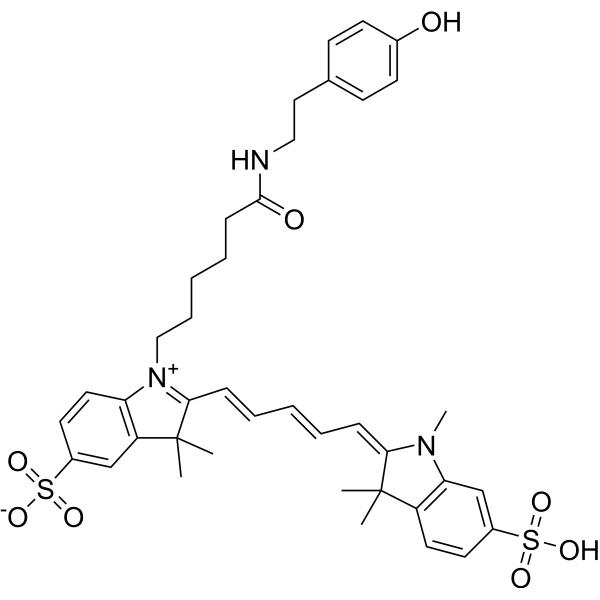
    Tyramide-Cy5

    DNA Stain Others
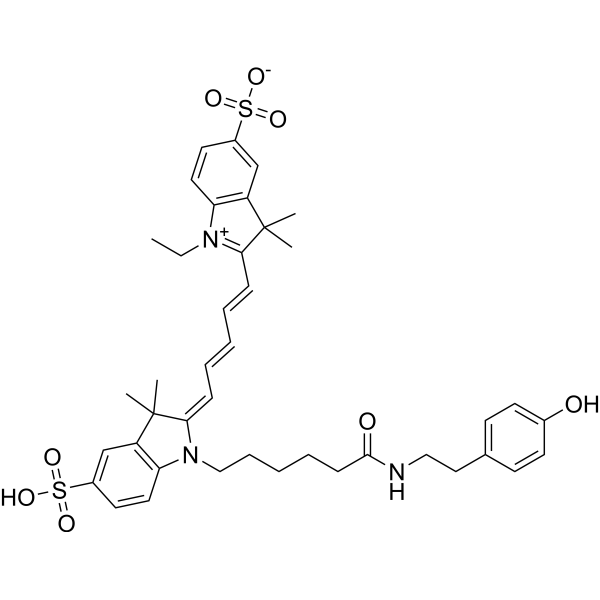
    Cyanine 5 Tyramide (Tyramide-Cy5), a red fluorescent dye, is utilized as reporter fluorescent substrate for horseradish peroxidase (HRP)-catalyzed deposition that is signal amplification technique in immunoassay and in situ hybridization of nucleic acids .
    Cyanine 5 Tyramide
  • HY-D1723
    EthD-III
    1 Publications Verification

    DNA Stain Others
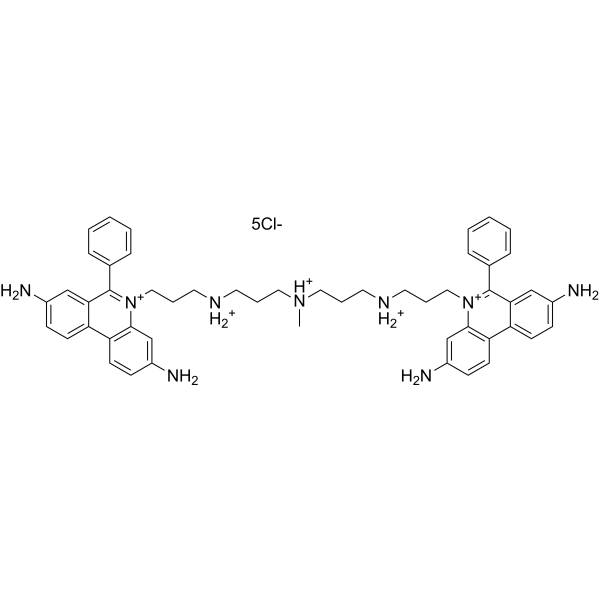
    EthD-III is a nucleic acid probe. EthD-III is a red fluorescent stain that can be used to detect dead cells. EthD-III enters cells with damaged membranes and binds to nucleic acids, resulting in bright red fluorescence in dead cells (Ex/Em=530/645 nm) .
    EthD-III
  • HY-D2205

    Cy7 TSA

    Fluorescent Dye Others
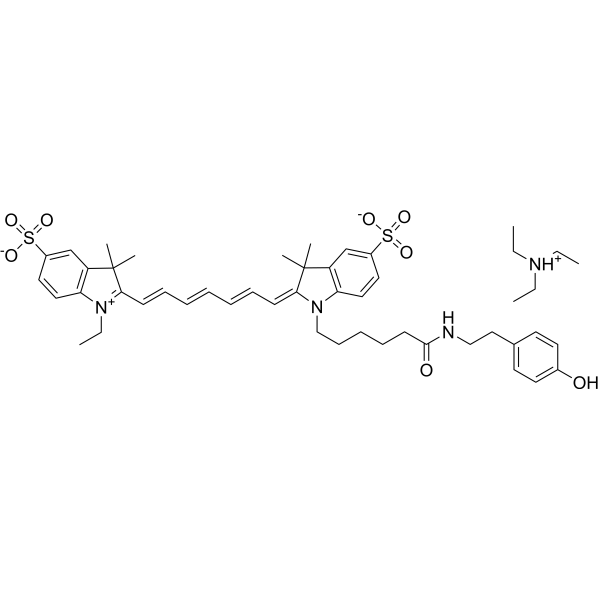
    Cy7 tyramide, a red fluorescent dye, is utilized as reporter fluorescent substrate for horseradish peroxidase (HRP)-catalyzed deposition that is signal amplification technique in immunoassay and in situ hybridization of nucleic acids.
    Cy7 tyramide
  • HY-136247A

    DNA Stain Others
    Cyanine 5 Tyramide (Tyramide-Cy5) methyl indole is a red fluorescent dye. Cyanine 5 Tyramide is utilized as reporter fluorescent substrate for horseradish peroxidase (HRP)-catalyzed deposition that is signal amplification technique in immunoassay and in situ hybridization of nucleic acids . Storage: protect from light.
    Cyanine 5 Tyramide methyl indole
  • HY-106991AR

    S-303 dihydrochloride (Standard)

    HIV Bacterial Reference Standards CHIKV Infection
    Amustaline (dihydrochloride) (Standard) is the analytical standard of Amustaline (dihydrochloride). This product is intended for research and analytical applications. Amustaline (S-303) dihydrochloride, a nucleic acid-targeted alkylator, is an efficient pathogen inactivation agent for blood components containing red blood cells. Amustaline dihydrochloride has three components: an acridine anchor (an intercalator that targets nucleic acids non-covalently), an effector (a bis-alkylator group that reacts with nucleophiles), and a linker (a small flexible carbon chain containing a labile ester bond that hydrolyzes at neutral pH to yield non-reactive breakdown products) .
    Amustaline dihydrochloride (Standard)
  • HY-106991

    S-303

    CHIKV Dengue Virus Flavivirus Infection
    Amustaline (S-303) is a compound used for inactivating pathogens in blood components and belongs to the category of nucleic acid-targeted chemical decontaminants. Amustaline has the ability to inactivate viruses and is effective against mosquito-borne viruses such as Chikungunya virus (CHIKV), Dengue virus (DENV), and Zika virus (ZIKV). When combined with glutathione (Glutathione, GSH), which acts as a neutralizer to counteract adverse reactions, Amustaline ensures the stability of red blood cell membranes. Amustaline is mainly used for inactivating pathogens in red blood cell concentrates (RBCC) to reduce the risk of transfusion-transmitted infections (TTI) .
    Amustaline
  • HY-183340

    Bacterial Infection
    Antibacterial agent 341 is an anti-bacterial agent. Antibacterial agent 341 shows broad-spectrum Gram-positive antibacterial activity. Antibacterial agent 341 targets phosphatidylglycerol (PG) and cardiolipin (CL) in bacterial cell membranes, induces sustained depolarization of membranes, and disrupts the cell membrane integrity. Antibacterial agent 341 exhibits anti-infection activity against S. aureus-induced subcutaneous abscesses in mice .
    Antibacterial agent 341
  • HY-D3404

    DNA Stain Others
    BODi-1 is a fluorescent modulator targeting dsDNA, which binds to dsDNA via a bis-intercalation mechanism (Ex=465 nm, Em=490 nm). BODi-1 exhibits a fluorescence enhancement effect upon binding to nucleic acids, but its fluorescence intensity, anisotropy and average lifetime decrease at higher dye/DNA ratios. When BODi-1 binds to DNA in liposome complexes, it also shows red-shifted emission spectra, along with reduced quantum yield and average lifetime. BODi-1 does not induce significant DNA conformational changes when the dye/DNA ratio is below 0.01. BODi-1 can be used as a fluorescent probe for the characterization of liposome complexes and FRET studies at this ratio .
    BODi-1

Inquiry Online

Your information is safe with us. * Required Fields.

Salutation


Country or Region *

Applicant Name *


Organization Name *

Department *


Email Address *


Product Name *

Cat. No.


Requested quantity *

Phone Number *


Remarks

Inquiry Online

Inquiry Information

Product Name:
Cat. No.:
Quantity:
MCE Japan Authorized Agent:

