

23 Results for "

p53 sequence

" in MedChemExpress (MCE) Product Catalog:
Products (23)

23 Results for "p53 sequence" in MCE Product Catalog:

3
3 Cited Publications
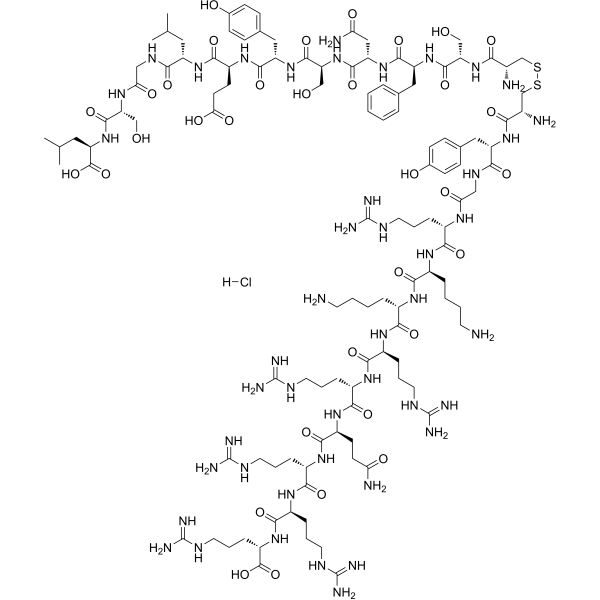
Cat. No.: HY-106262B
Purity:  99.73%
Synonyms: KAI-9803 hydrochloride; BMS-875944 hydrochloride
Target:  

PKC

Delcasertib (KAI-9803) hydrochloride is a potent and selective δ-protein kinase C (δPKC) inhibitor. Delcasertib (KAI-9803) hydrochloride could ameliorate injury associated with ischemia and reperfusion in animal models of acute myocardial infarction (MI) .
loading...
    loading...
1
1 Cited Publications
Cat. No.: HY-P1103
CAS No.: 1030384-98-5
Target:  

CXCR

Research Areas:  

Cancer

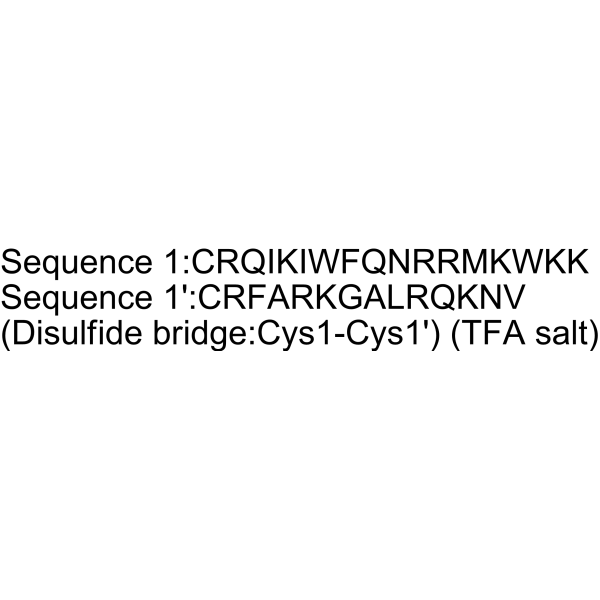
CTCE-9908 is a potent and selective CXCR4 antagonist. CTCE-9908 induces mitotic catastrophe, cytotoxicity and inhibits migration in CXCR4-expressing ovarian cancer cells .
loading...
    loading...
Cat. No.: HY-P3509
CAS No.: 392661-17-5
Target:  

MDM-2/p53

Research Areas:  

Cancer

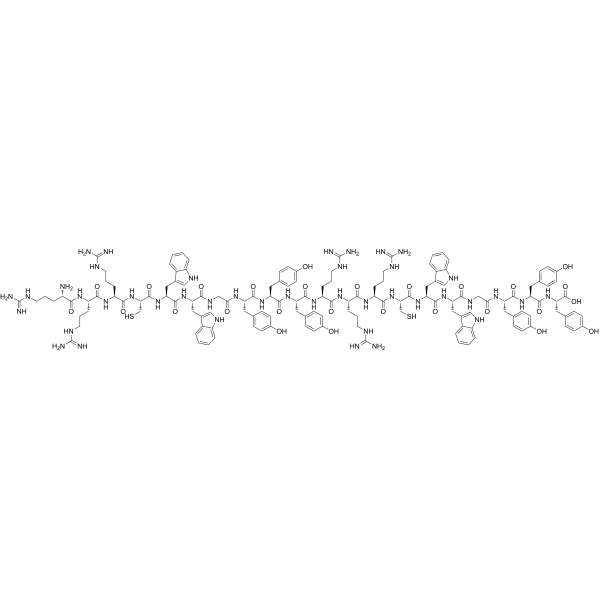
PNC-28 is a peptide from the mdm-2-binding domain (residues 17–26) of the p53 protein which contains a membrane crossing-penetratin sequence. PNC-28 can be used for pancreatic cancer research .
loading...
    loading...
Cat. No.: HY-P11212
CAS No.: 1193634-36-4
Target:  

Fluorescent Dye

Research Areas:  

Metabolic Disease Cancer

Ac-RHKK(Ac)-AMC (Compound S1) is a fluorescent substrate for SITR6, that is based on p53 sequence. Ac-RHKK(Ac)-AMC mimics H3K56 deacetylation site and significantly increases the deacetylation signal with low signal-to-background ratio. Ac-RHKK(Ac)-AMC can be used for ageing and cancers research .
loading...
    loading...
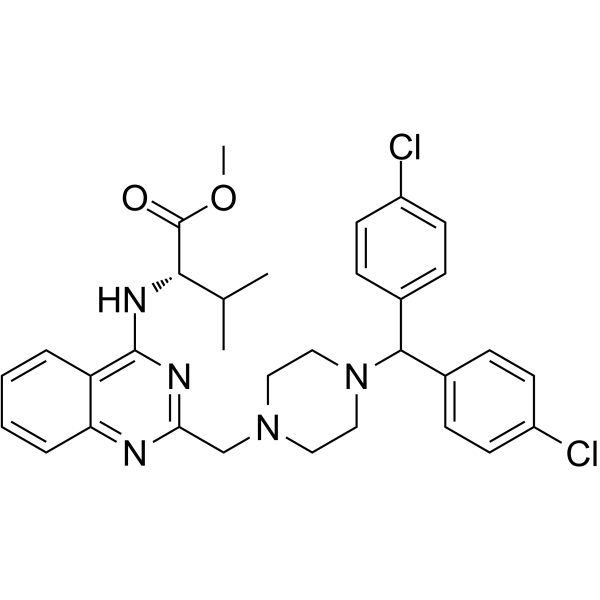
Cat. No.: HY-122578
CAS No.: 922150-12-7
Purity:  99.93%
Target:  

MDM-2/p53

Research Areas:  

Cancer

P53R3 is a potent p53 reactivator and restores sequence-specific DNA binding of p53 hot spot mutants, including p53 R175H, p53 R248W and p53 R273H. P53R3 induces p53-dependent antiproliferative effects with much higher specificity than PRIMA-1. P53R3 enhances the recruitment of wild-type p53 and p53 M237I to several target gene promoters. P53R3 strongly enhances the mRNA, total protein and cell surface expression of the death receptor death receptor 5 (DR5). P53R3 is used for cancer research .
loading...
    loading...
Cat. No.: HY-P3509A
Target:  

MDM-2/p53

Research Areas:  

Cancer

PNC-28 acetate is a peptide from the mdm-2-binding domain (residues 17–26) of the p53 protein which contains a membrane crossing-penetratin sequence. PNC-28 acetate can be used for pancreatic cancer research .
loading...
    loading...
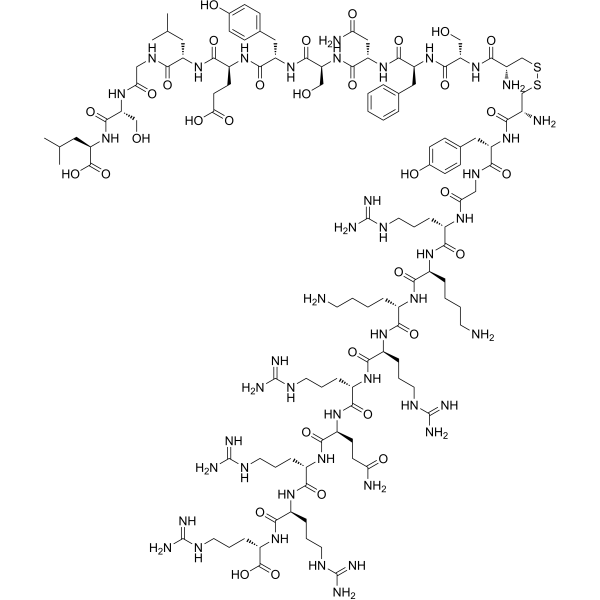
Cat. No.: HY-106262
CAS No.: 949100-39-4
Synonyms: KAI-9803; BMS-875944
Target:  

PKC

Delcasertib (KAI-9803) is a potent and selective δ-protein kinase C (δPKC) inhibitor. Delcasertib (KAI-9803) could ameliorate injury associated with ischemia and reperfusion in animal models of acute myocardial infarction (MI) .
loading...
    loading...
Cat. No.: HY-P5343
CAS No.: 721963-21-9
Synonyms: p53 Consensus binding sequence
Target:  

MDM-2/p53

Research Areas:  

Others

p53 CBS (p53 Consensus binding sequence) is a biological active peptide. (p53 consensus DNA binding site)
loading...
    loading...
Cat. No.: HY-P3215
CAS No.: 19645-28-4
Target:  

Oxytocin Receptor

Research Areas:  

Endocrinology

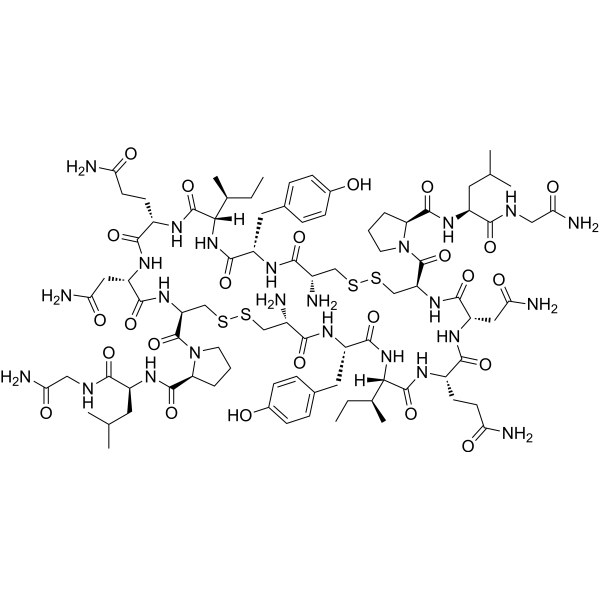
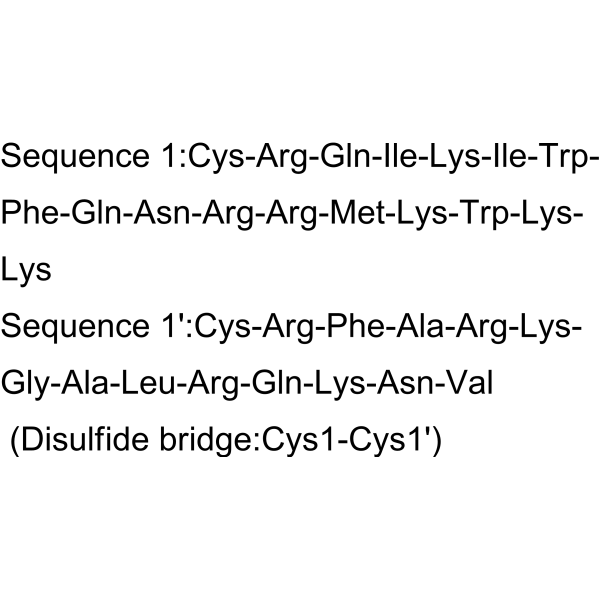
Oxytocin parallel dimer is the disulfide-bridged homo peptide dimer. Oxytocin dimer has oxytocin and vasopressin-like activity with less toxic than oxytocin .
loading...
    loading...
Cat. No.: HY-P3222
CAS No.: 20054-93-7
Target:  

Peptides

Research Areas:  

Endocrinology

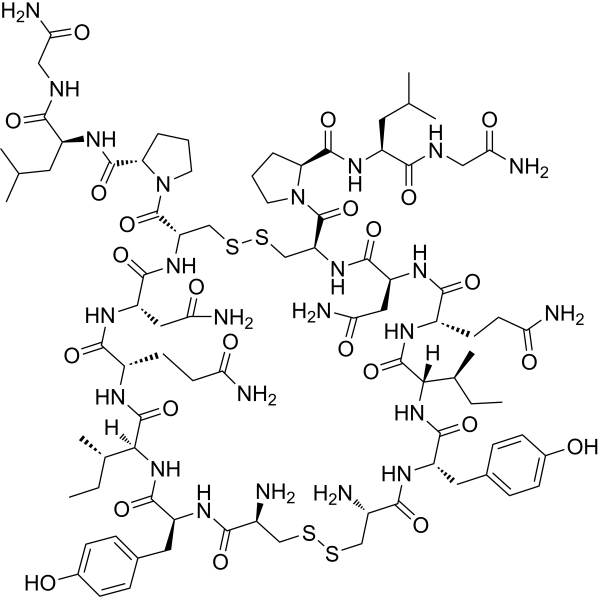
Oxytocin antiparallel dimer is the disulfide-bridged homo peptide dimer. Oxytocin dimer has oxytocin and vasopressin-like activity with less toxic than oxytocin .
loading...
    loading...
Cat. No.: HY-P5429
CAS No.: 146064-85-9
Target:  

Peptides

Research Areas:  

Others

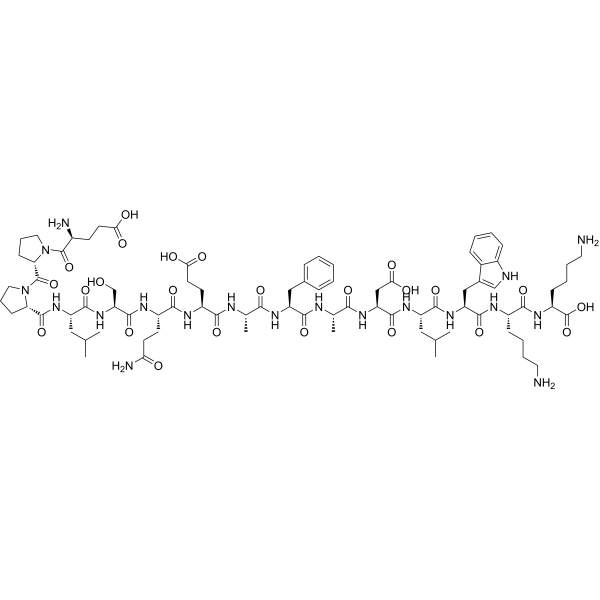
DNA-PK Substrate is a biological active peptide. (A substrate for DNA-dependent protein kinase (DNA-PK), phosphorylation. DNA-PK is essential for the repair of DNA double-strand breaks. This peptide corresponding to 11–24 amino acids of human p53 with threonine 18 and serine 20 changed to alanine is used as a substrate for the assay of DNA-PK activityPyroglutamyl (pGlu) peptides may spontaneously form when either Glutamine (Q) or Glutamic acid (E) is located at the sequence N-terminus. The conversion of Q or E to pGlu is a natural occurrence and in general it is believed that the hydrophobic γ-lactam ring of pGlu may play a role in peptide stability against gastrointestinal proteases. Pyroglutamyl peptides are therefore considered a normal subset of such peptides and are included as part of the peptide purity during HPLC analysis.)
loading...
    loading...
Cat. No.: HY-P10610A
Target:  

MDM-2/p53

Research Areas:  

Cancer

Peptide 234CM TFA is a peptide containing isoleucine at position 3, corresponding to the sequence of a point mutation in p53 codon 234. Peptide 234CM TFA induces potent cytotoxic T cell (CTL) and antitumor immune responses against mutant p53 .
loading...
    loading...
Cat. No.: HY-P1286
CAS No.: 172308-76-8
Target:  

PKC

Research Areas:  

Neurological Disease

PKC β pseudosubstrate is a selective cell-permeable inhibitor of PKC .
loading...
    loading...
Cat. No.: HY-P10610
CAS No.: 155314-25-3
Target:  

MDM-2/p53

Research Areas:  

Cancer

Peptide 234CM is a peptide containing isoleucine at position 3, corresponding to the sequence of a point mutation in p53 codon 234. Peptide 234CM induces potent cytotoxic T cell (CTL) and antitumor immune responses against mutant p53 .
loading...
    loading...
Cat. No.: HY-P10295
CAS No.: 155314-26-4
Target:  

MDM-2/p53

Research Areas:  

Cancer

p53 (232-240) is a peptide segment of the 232-240 amino acid sequence of the human tumor suppressor protein p53. p53 (232-240) enhances its binding affinity to the Major histocompatibility complex (MHC), thereby enhancing the immunogenicity of this peptide to enhance the immune system's response to tumor antigens. p53 (232-240) can be used in the development of cancer vaccines and in the study of tumor cell recognition and clearance by the immune system .
loading...
    loading...
Cat. No.: HY-P1103A
Target:  

CXCR

Research Areas:  

Cancer

CTCE-9908 TFA is a potent and selective CXCR4 antagonist. CTCE-9908 TFA induces mitotic catastrophe, cytotoxicity and inhibits migration in CXCR4-expressing ovarian cancer cells .
loading...
    loading...
Cat. No.: HY-155991
CAS No.: 2893777-88-1
Target:  

Apoptosis

Research Areas:  

Cancer

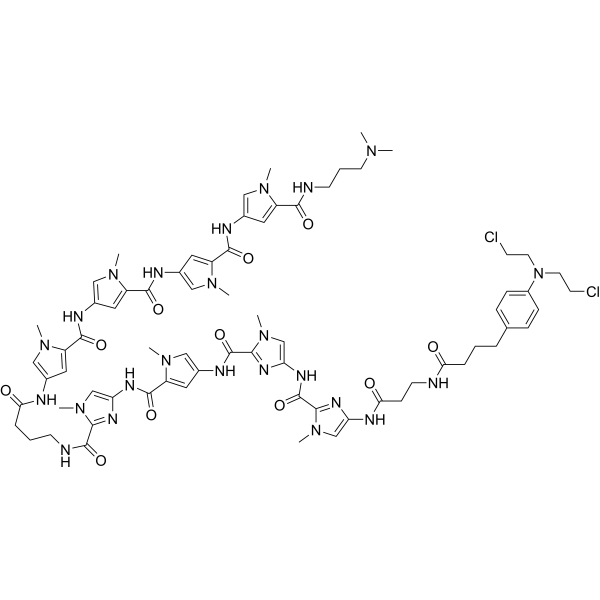
RUNX-IN-2 (Compound Conjugate 3) covalently binds to the RUNX-binding sequences, and inhibits the binding of RUNX proteins to their target sites. RUNX-IN-2 induces the p53-dependent apoptosis and inhibits cancer cell growth. RUNX-IN-2 inhibits tumor growth in PANC-1 xenograft mice. RUNX-IN-2 has high alkylation efficiency and specificity .
loading...
    loading...
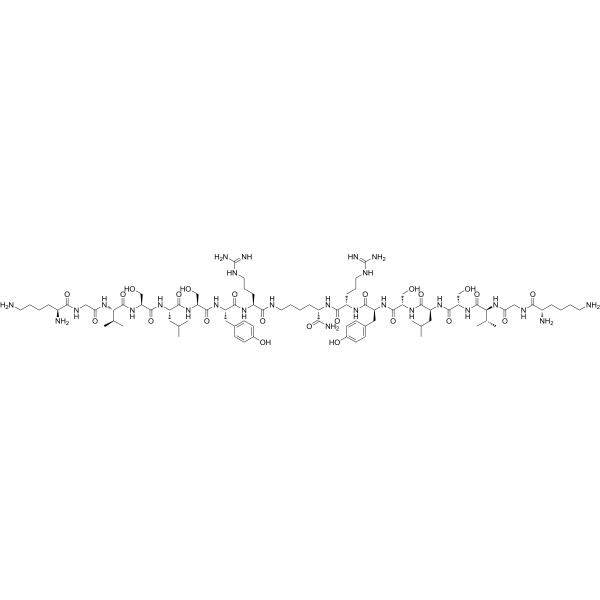
Cat. No.: HY-P1321
CAS No.: 158859-98-4
Synonyms: 1229U91; GW1229
Research Areas:  

Neurological Disease

GR231118, an analogue of the C-terminus of neuropeptide Y, is a potent , competitive and relative seletive antagonist at human neuropeptide Y Y receptor with a pKi of 10.4. GR231118 a potent agonist at the human neuropeptide Y Y4 receptor (pEC50=8.6; pKi=9.6) and a weak agonist at the human and rat neuropeptide YY2 and Y5 receptors. GR231118 also has high affinity for the mouse neuropeptide Y Y6 receptor (pKi= 8.8) .
loading...
    loading...
Cat. No.: HY-186151
CAS No.: 1372406-51-3
Target:  

MDM-2/p53 Apoptosis

Research Areas:  

Cancer

UCI-LC0019 is a mutant p53 reactivator. UCI-LC0019 binds to mutant p53, induces wild-type-like conformational change, restores sequence-specific DNA binding activity, activates p53-dependent transcription programs, and does not act via thiol reactivity or glutathione depletion. UCI-LC0019 inhibits proliferation and induces apoptosis in cancer cells harboring mutant p53, with no significant effect on p53 null or wild-type p53 tumors cells. UCI-LC0019 exhibits anti-tumor activity in xenograft mouse models carrying p53R175H mutant tumors. UCI-LC0019 can be used for the research of cancer, such as ovarian cancer .
loading...
    loading...
Cat. No.: HY-P1286A
Target:  

PKC

Research Areas:  

Neurological Disease

PKC β pseudosubstrate TFA is a selective cell-permeable inhibitor of PKC .
loading...
    loading...

