

1. Search Result
Search Result
Results for "

polystyrene

" in MedChemExpress (MCE) Product Catalog:

23

Inhibitors & Agonists

2

Fluorescent Dye

2

Biochemical Assay Reagents

1

Peptides

3

Natural
Products

2

Isotope-Labeled Compounds

1

Oligonucleotides

Cat. No. Product Name Target Research Areas Chemical Structure
  • HY-148163
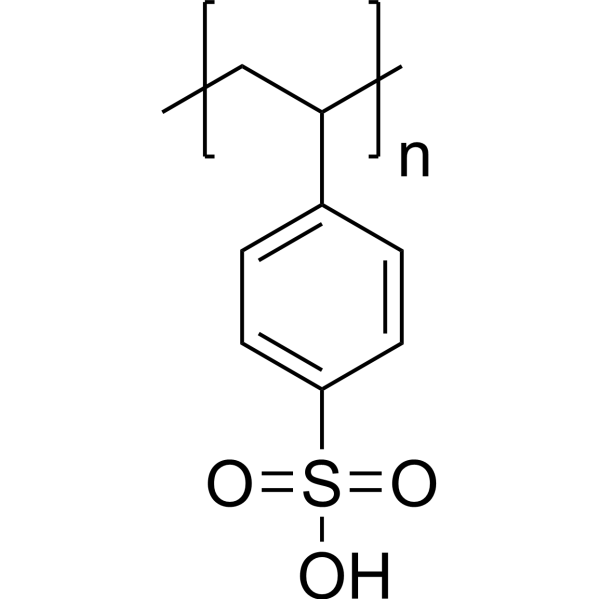
    Polystyrene sulfonic acid (30% in water)
    1 Publications Verification

    Biochemical Assay Reagents Others
    Polystyrene sulfonic acid (30% in water) is a potentially toxic hazardous substance. Polystyrene-derived microplastics (PS-MPs) are harmful to zebrafish hearts and induce male reproductive toxicity in mice. MCE offers Polystyrene products in solution packaging .
    Polystyrene sulfonic acid (30% in water)
  • HY-107929

    Poly(styrenesulfonic acid) calcium salt

    Potassium Channel Metabolic Disease
    Calcium polystyrene sulfonate (Poly(styrenesulfonic acid) calcium salt) is an orally active potassium-lowering agent. Calcium polystyrene sulfonate binds potassium in the distal colon in exchange for Ca 2+. Calcium polystyrene sulfonate can be used for the research of hyperkalemia in chronic kidney disease .
    Calcium polystyrene sulfonate
  • HY-W008270

    γ-Crotonolactone

    Endogenous Metabolite Bacterial Infection Neurological Disease
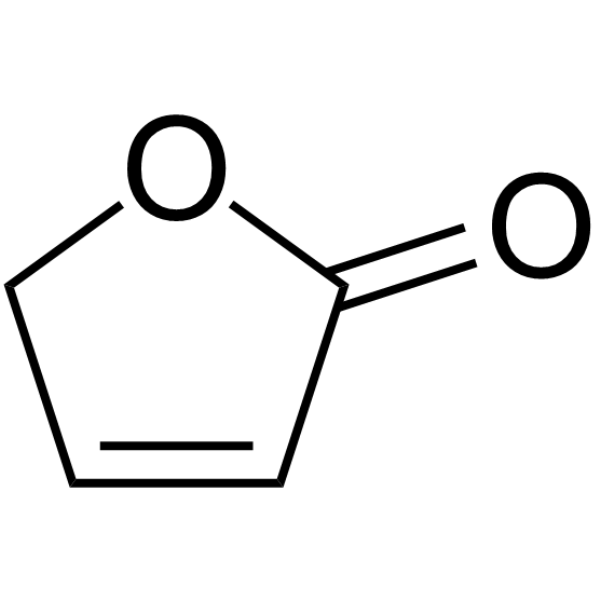
    2(5H)-Furanone (γ-Crotonolactone) is an endogenous metabolite. 2(5H)-Furanone mimics N-acyl homoserine lactone signals, occupies the binding site of LuxR homologs, and interferes with quorum sensing-mediated gene regulation. 2(5H)-Furanone inhibits quorum sensing mediated by AHLs with different acyl chain lengths. 2(5H)-Furanone inhibits biofilm formation of environmental Aeromonas hydrophila strains on polystyrene plates. 2(5H)-Furanone suppresses spike-and-wave discharges in a rat model of generalized absence seizures and exhibits selective activity against absence seizures. 2(5H)-Furanone can be used in studies related to bacteria infections and generalized absence seizures.
    2(5H)-Furanone
  • HY-D0980

    Biotinyl-3,6-dioxaoctanediamine; EZ-Link Amine-PEO2-Biotin

    Biochemical Assay Reagents Infection
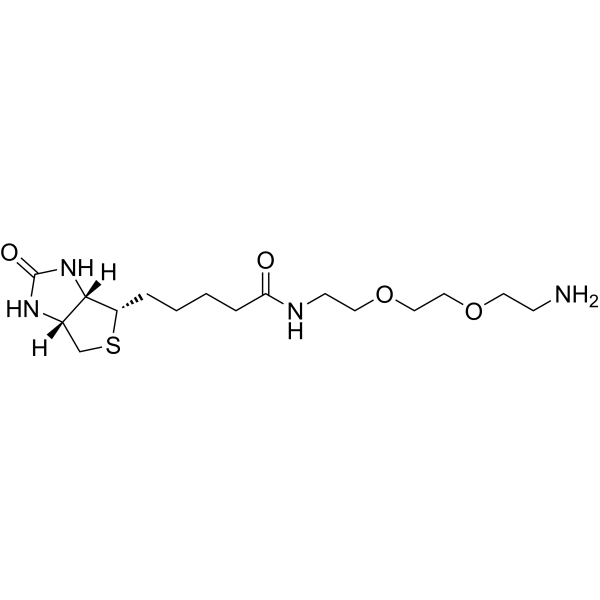
    Biotin-DADOO (Biotinyl-3,6-dioxaoctanediamine; EZ-Link Amine-PEO2-Biotin) is a biotin-containing amine compound and a biotinylation reagent. As an amino component, Biotin-DADOO participates in the nucleophilic ring-opening reaction of epoxidized ω-double bonds during the synthesis of biotinylated inhibitor derivatives. Biotin-DADOO can be conjugated with carboxymethyl cellulose derivatives. Biotin-DADOO is involved in the synthesis of biotin-estradiol conjugates for enzyme immunoassays. Biotin-DADOO can be used in the research of influenza A .
    Biotin-DADOO
  • HY-124701

    Fungal Infection
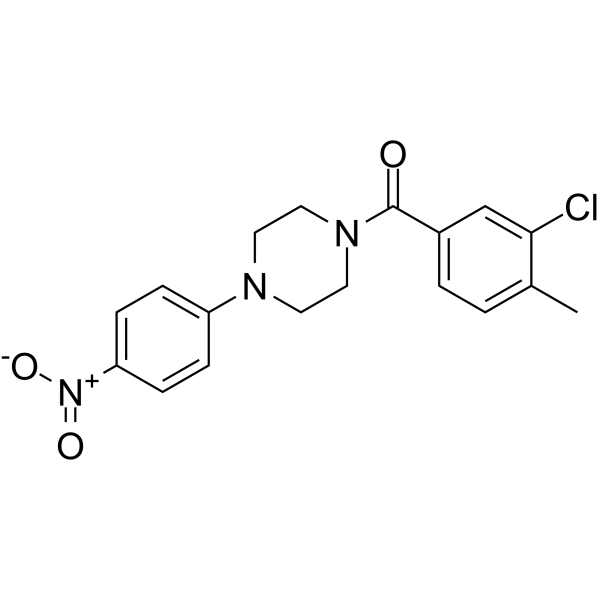
    Filastatin is a long-lasting inhibitor of Candida albicans filamentation. Filastatin inhibits adhesion by multiple pathogenic Candida species with an IC50 of ~3 μM in the GFP-based adhesion assay. Filastatin inhibits fungal adhesion to polystyrene and human cells, the yeast-to-hyphal morphological transition, induction of the hyphal-specific HWP1 promoter. Filastatin has potent antifungal effect .
    Filastatin
  • HY-D2401F

    Fluorescent Dye Others
    Cy5-Polystyrene microsphere (100 nm) is a Cy5 (HY-D0821)-labeled microsphere that can be used for bioimaging and drug delivery .
    Cy5-Polystyrene microsphere (100nm)
  • HY-D2401F1

    Fluorescent Dye Others
    Cy5-Polystyrene microsphere (20um) is a Cy5 (HY-D0821)-labeled microsphere that can be used for bioimaging and drug delivery .
    Cy5-Polystyrene microsphere (20um)
  • HY-W010875

    Biochemical Assay Reagents Others
    Didecyl phthalate is the primary plasticizer for vinyl resins and is also compatible with polystyrene and cellulose .
    Didecyl phthalate
  • HY-157236

    Biochemical Assay Reagents Others
    AEX Anion-exchange resin 1 is a strong anion exchange chromatography resin, based on monodisperse polystyrene/divinylbenzene (PS-DVB), with a particle size of 50 μm and an ionic ligand of –CH2N + (CH3)3. AEX Anion-exchange resin 1 can be used for the separation and purification of biological macromolecules such as proteins, antibodies, and viral vaccines.
    AEX Anion-exchange resin 1
  • HY-133673S

    MCPP-d4

    Isotope-Labeled Compounds Drug Metabolite Others
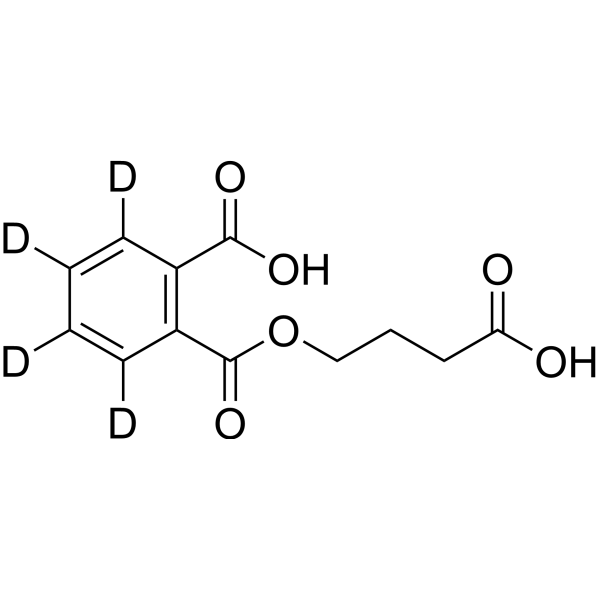
    Mono(3-carboxypropyl) phthalate-d4 (MCPP-d4) is a deuterium labeled Mono(3-carboxypropyl) phthalate (HY-133673). Mono(3-carboxypropyl) phthalate (MCPP) is a metabolite of Di-n-octyl phthalate. Di-n-octyl phthalate (DnOP) is a plasticizer used in polyvinyl chloride plastics, cellulose esters, and polystyrene resins .
    Mono(3-carboxypropyl) phthalate-d4
  • HY-150502

    pSAT

    Biochemical Assay Reagents Others
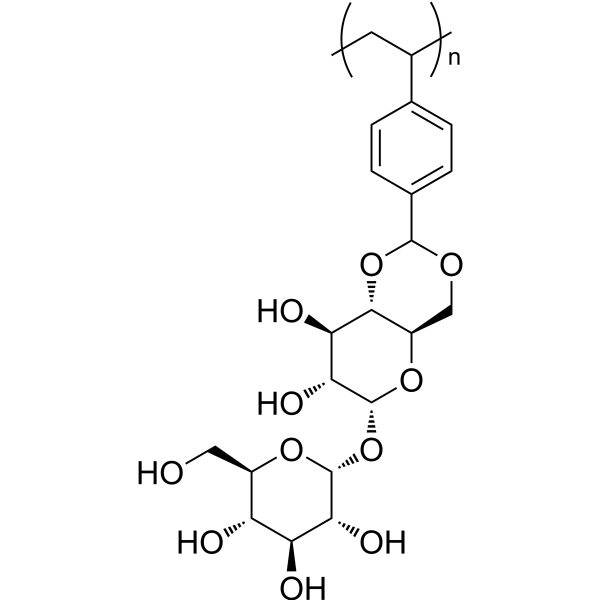
    Poly(styrenyl acetal trehalose) (pSAT) is composed of trehalose side chains linked to a polystyrene backbone via acetals. Poly(styrenyl acetal trehalose) stabilizes a variety of proteins and enzymes against fluctuations in temperature, and does not trigger the innate immune response. Poly(styrenyl acetal trehalose) can be used in synthesis of protein-polymer conjugates for reduced renal clearance of the biomolecule .
    Poly(styrenyl acetal trehalose)
  • HY-W709120

    Isotope-Labeled Compounds Drug Metabolite Others
    Mono(7-carboxyheptyl) phthalate-d4 is the deuterium labeled Mono(7-carboxyheptyl) phthalate (HY-133674). Mono(7-carboxyheptyl) phthalate is a oxidative metabolite of Di-n-octyl phthalate. Di-n-octyl phthalate (DnOP) is a plasticizer used in polyvinyl chloride plastics, cellulose esters, and polystyrene resins .
    Mono(7-carboxyheptyl) phthalate-d4
  • HY-157241

    Biochemical Assay Reagents Others
    CEX Cation-exchange resin 1 is an ion exchange chromatography resin based on monodisperse polystyrene/divinylbenzene (PS-DVB). The particle size of CEX Cation-exchange resin 1 is 50μm and the ligand is -CH2CH2CH2SO3-. CEX Cation-exchange resin 1 can be used for the separation and purification of antibodies, VLPs, viruses and proteins .
    CEX Cation-exchange resin 1
  • HY-W008270R

    γ-Crotonolactone (Standard)

    Reference Standards Endogenous Metabolite Others
    2(5H)-Furanone (Standard) is the analytical standard of 2(5H)-Furanone. This product is intended for research and analytical applications. 2(5H)-Furanone (γ-Crotonolactone) is an endogenous metabolite. 2(5H)-Furanone mimics N-acyl homoserine lactone signals, occupies the binding site of LuxR homologs, and interferes with quorum sensing-mediated gene regulation. 2(5H)-Furanone inhibits quorum sensing mediated by AHLs with different acyl chain lengths. 2(5H)-Furanone inhibits biofilm formation of environmental Aeromonas hydrophila strains on polystyrene plates. 2(5H)-Furanone suppresses spike-and-wave discharges in a rat model of generalized absence seizures and exhibits selective activity against absence seizures. 2(5H)-Furanone can be used in studies related to bacteria infections and generalized absence seizures.
    2(5H)-Furanone (Standard)
  • HY-N19664

    Others Cancer
    14-Deoxy-12-methoxyandrographolide, an ent-labdane-type diterpenoid found in the aerial parts of Andrographis paniculata, is a cell differentiation inducer. 14-Deoxy-12-methoxyandrographolide induces differentiation of myeloid leukemia cells via increased phagocytosis of polystyrene latex particles. 14-Deoxy-12-methoxyandrographolide can be used for the research of myeloid leukemia .
    14-Deoxy-12-methoxyandrographolide
  • HY-133673

    Drug Metabolite Others
    Mono (3-carboxypropyl) phthalate (MCPP) is a metabolite of Di-n-octyl phthalate. Di-n-octyl phthalate (DnOP) is a plasticizer used in polyvinyl chloride plastics, cellulose esters, and polystyrene resins .
    Mono(3-carboxypropyl) phthalate
  • HY-185069C

    Phosphoramidites DNA/RNA Synthesis Others
    Unylinker-OH Resin (Substitution:300±25 µmol/g) is a macroporous polystyrene resin functionalized with Unylinker active groups with uniform particle size and uniform active groups. It is used for oligonucleotides synthesis.
    Unylinker-OH Resin (Substitution:300±25 µmol/g)
  • HY-185069B

    DNA/RNA Synthesis Others
    Unylinker-OH Resin (Substitution:250±25 µmol/g) is a macroporous polystyrene resin functionalized with Unylinker active groups with uniform particle size and uniform active groups. It is used for oligonucleotides synthesis.
    Unylinker-OH Resin (Substitution:250±25 µmol/g)
  • HY-185069A

    DNA/RNA Synthesis Others
    Unylinker-OH Resin (Substitution:200±25 µmol/g) is a macroporous polystyrene resin functionalized with Unylinker active groups with uniform particle size and uniform active groups. It is used for oligonucleotides synthesis.
    Unylinker-OH Resin (Substitution:200±25 µmol/g)
  • HY-185069

    DNA/RNA Synthesis Others
    Unylinker-OH Resin (Substitution:150±25 mmol/g) is a macroporous polystyrene resin functionalized with Unylinker active groups with uniform particle size and uniform active groups. It is used for oligonucleotides synthesis.
    Unylinker-OH Resin (Substitution:150±25 µmol/g)
  • HY-185069D

    DNA/RNA Synthesis Others
    Unylinker-OH Resin (Substitution:350±25 µmol/g) is a macroporous polystyrene resin functionalized with Unylinker active groups with uniform particle size and uniform active groups. It is used for oligonucleotides synthesis.
    Unylinker-OH Resin (Substitution:350±25 µmol/g)
  • HY-185069E

    DNA/RNA Synthesis Others
    Unylinker-NH Resin (Substitution:150±25 mmol/g) is a macroporous polystyrene resin functionalized with Unylinker active groups with uniform particle size and uniform active groups. It is used for synthesis of oligonucleotides with 30-80 base sequences distribution.
    Unylinker-NH Resin (Substitution:150±25 mmol/g)
  • HY-79587

    Biochemical Assay Reagents Others
    Benzil is a 1,2-diketone compound with multiple functions including photo-peroxidation initiator, crosslinking initiator and pattern-forming agent, and is commonly used as a precursor for photodegradable network crosslinkers. In oxygen-purged polymer films or glassy matrices, Benzil reacts with molecular oxygen under illumination at wavelengths greater than 370 nm or 400 nm, and converts to benzoyl peroxide in nearly quantitative yield. Subsequently, the generated benzoyl peroxide groups produce free radicals via thermal or photochemical decomposition, thereby enabling crosslinking of polymer chains, grafting of new monomers, and preparation of patterned polymers on solid surfaces using mask irradiation. Benzil also induces crosslinking of photodegradable poly (phenyl vinyl ketone) to form a stable photodegradable polymer network .
    Benzil

Inquiry Online

Your information is safe with us. * Required Fields.

Salutation


Country or Region *

Applicant Name *


Organization Name *

Department *


Email Address *


Product Name *

Cat. No.


Requested quantity *

Phone Number *


Remarks

Inquiry Online

Inquiry Information

Product Name:
Cat. No.:
Quantity:
MCE Japan Authorized Agent:

