14 Results for "

protein engineering

" in MedChemExpress (MCE) Product Catalog:
Products (14)

14 Results for "protein engineering" in MCE Product Catalog:

9
9 Cited Publications
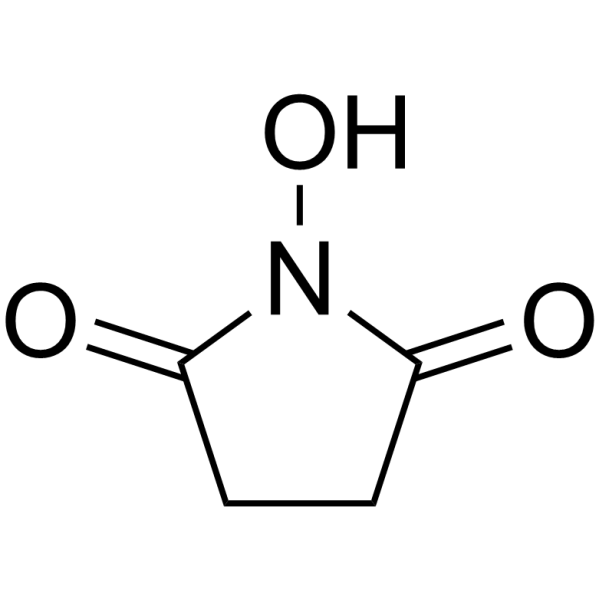
Cat. No.: HY-Y0623
CAS No.: 6066-82-6
Synonyms: HOSu; 1-Hydroxy-2,5-pyrrolidinedione
N-Hydroxysuccinimide (HOSu; 1-Hydroxy-2,5-pyrrolidinedione) is a covalent crosslinker commonly used in bioconjugation technology with a primary amine group. N-Hydroxysuccinimide reacts with amino groups (-NH2) to form a stable amide bond, which can modify amino-containing biomolecules. N-Hydroxysuccinimide can be used, for example, for protein labeling with fluorescent dyes and enzymes, surface activation of chromatography supports, microbeads, nanoparticles and microarray slides, and chemical synthesis of peptides. N-Hydroxysuccinimide has a wide range of applications in biomaterial synthesis (such as collagen, chitosan crosslinking), drug delivery systems (such as hydrogel preparation) and tissue engineering .
loading...
    loading...
2
2 Cited Publications
Cat. No.: HY-Y1168
CAS No.: 3945-69-5
Synonyms: 4-(4,6-Dimethoxy-1,3,5-triazin-2-yl)-4-methylmorpholinium chloride
DMTMM (4-(4,6-dimethoxy-1,3,5-triazine-2-yl)-4-methylmorpholinium chloride) is a coupling agent. DMTMM can activate carboxyl groups and promote the formation of amide bonds. DMTMM plays an important role in promoting the chemical modification of biomacromolecules such as polysaccharides and proteins. DMTMM can be used for research of tissue engineering, breast cancer, corneal regeneration, and biomaterials .
loading...
    loading...
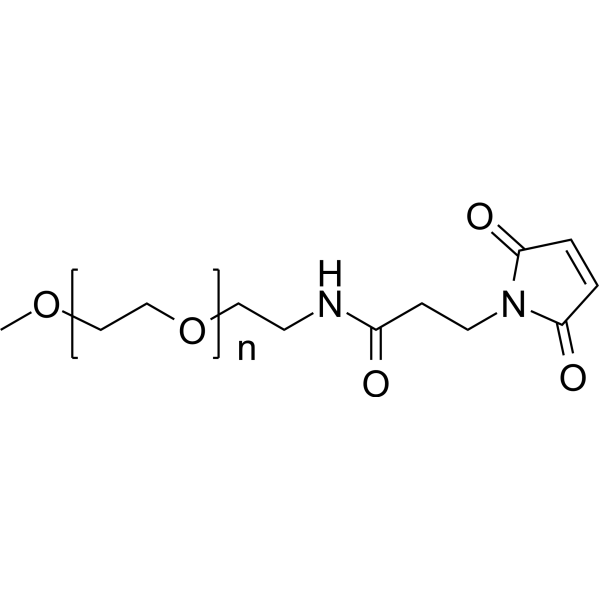
Cat. No.: HY-W020780
CAS No.: 724722-89-8
Synonyms: mPEG5000-Maleimide
mPEG5000-Mal (mPEG5000-Maleimide) is a PEG-derived selective covalent binding agent for sulfhydryl groups (RSGs), which can form irreversible thioether bonds with sulfhydryl groups under near-neutral conditions via the maleimide group. The mechanism of action of mPEG5000-Mal can be divided into two categories: firstly, as an enzyme modifier, it binds to target proteins through hydrophobic interactions, hydrogen bonds, and van der Waals forces, altering the protein's secondary structure; secondly, as a nanoparticle surface modifier, it covalently binds to sulfhydryl groups on the surface of red blood cells, changing the surface properties and morphology of the red blood cells, leading to their phagocytosis by macrophages of the reticuloendothelial system. mPEG5000-Mal can react with free cysteine in proteins, increasing the apparent molecular weight of the modified protein by 10-15 kDa for detection purposes. mPEG5000-Mal can enhance the thermal stability and catalytic activity of enzymes, and improve the macrophage targeting of nanoparticles, enabling targeted drug delivery. mPEG5000-Mal can be applied in enzyme engineering research in the food industry and in oncology, assisting radiotherapy by inhibiting tumor-associated macrophage infiltration and enhancing anti-tumor immune responses .
loading...
    loading...
Cat. No.: HY-W259767
CAS No.: 20846-39-3
Research Areas:  

Others

3-Iodo-L-phenylalanine is an unnatural amino acid that can be used for partial codon reassignment. 3-Iodo-L-phenylalanine shows high efficiency in Ser AGU codon reassignment, and also exhibits a certain reassignment effect on Ser UCG codon. 3-Iodo-L-phenylalanine can be applied to researches on genetic code expansion and protein engineering .
loading...
    loading...
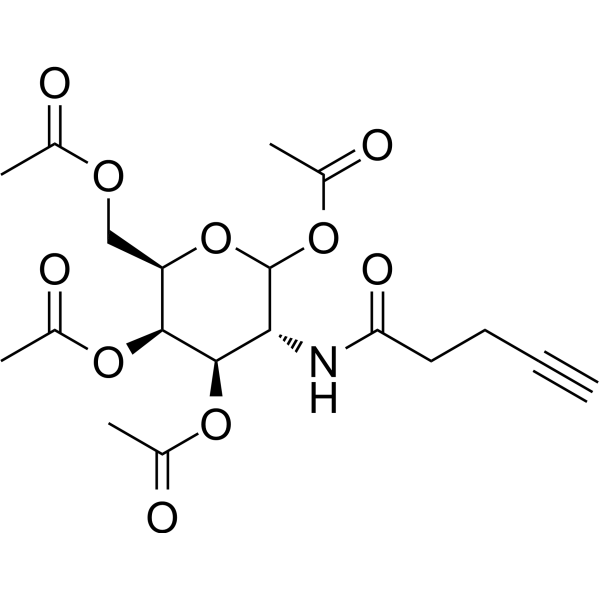
Cat. No.: HY-W415798
CAS No.: 1810852-60-8
Ac4GalNAlk is a weakly alkyne-labeled reagent for metabolic oligosaccharide engineering (MOE) that can be used to detect protein glycosylation. MOE reagents can be activated by cellular biosynthetic machinery into nucleotide sugars, which can be further traced through the introduction of glycoproteins in bioorthogonal chemistry. Ac4GalNAlk promotes nucleotide-sugar biosynthesis and increases bioorthogonal cell surface markers .
loading...
    loading...
Cat. No.: HY-174794
Target:  

mRNA

Research Areas:  

Others

The Cas9-T2A-GFP mRNA encodes a Cas9 nuclease gene with two nuclear localization signals (NLS) and a green fluorescent protein (GFP), which could be used in genome engineering experiments.
loading...
    loading...
Cat. No.: HY-174793
Target:  

mRNA

Research Areas:  

Others

The Cas9-T2A-GFP mRNA encodes a Cas9 nuclease gene with two nuclear localization signals (NLS) and a green fluorescent protein (GFP), which could be used in genome engineering experiments. The incorporation of N1-Methylpseudo-UTP can reduce the immunogenicity of the resulting mRNA.
loading...
    loading...
Cat. No.: HY-164076
Research Areas:  

Others

mPEG-Epoxide is an activated polyethylene glycol (mPEG) derivative, which is achieved by converting the hydroxyl groups of mPEG into reactive epoxy groups. mPEG-Epoxide is a mild PEGylation reagent that reacts with amino groups in peptides and proteins to form stable secondary amine bonds. mPEG-Epoxide can be used in protein engineering and biomaterials research .
loading...
    loading...
Cat. No.: HY-173606
CAS No.: 1938081-40-3
Research Areas:  

Others

DSPE-PEG2000-Azide ammonium is an azide-functionalized phospholipid and lipid-polyethylene glycol conjugate. DSPE-PEG2000-Azide ammonium serves as a component of azide-functionalized liposome nanoparticles, which enables conjugation with DBCO-modified antibodies and proteins via strain-promoted alkyne-azide cycloaddition, and can also passively insert into exosome membranes through hydrophobic interactions, thereby achieving modular surface engineering via azide-alkyne click chemistry. DSPE-PEG-Azide ammonium binds to bovine milk exosomes with a KD of 347 μM .
loading...
    loading...
Cat. No.: HY-L937
931 compounds

Unnatural amino acids (UAAs), also referred to as non-canonical amino acids (ncAAs) or non-proteinogenic amino acids, are a class of amino acids that are distinct from the 20 standard natural amino acids. They can be obtained through chemical synthesis, biosynthesis, and other approaches, with structural diversity far exceeding that of natural amino acids. UAAs are mainly including naturally occurring non-canonical amino acids, chemically synthesized amino acids, and biosynthetic amino acids, which provide a molecular basis for protein function design.

UAAs exhibit significant value in multiple fields. They can optimize the pharmacokinetic properties of peptide drugs and peptidomimetics, modify enzyme functions and endow them with new biological activities, thereby overcoming the limitations of traditional peptide drugs and expanding the chemical space . Meanwhile, UAAs can serve as molecular probes to analyze protein-protein interactions and investigate the regulatory mechanisms of protein functions.

MCE has compiled a UAAs Fragment Library comprising nearly a thousand unnatural amino acid fragments with extensive coverage of chemical space and enhanced structural diversity. This compound library can be widely applied in peptide synthesis, drug design, and protein engineering.

Cat. No.: HY-W190737
CAS No.: 1260247-51-5
NHS-SS-dPEG4-biotin (cleavable) is a biodegradable crosslinker with efficient bioconjugation activity. NHS-SS-dPEG4-biotin (cleavable) can effectively connect biomolecules, optimize the efficiency of biolabeling, and be used in targeted compound delivery systems. NHS-SS-dPEG4-biotin (cleavable) can also play an important role in protein engineering and fluorescence imaging.
loading...
    loading...
Cat. No.: HY-188110
Target:  

mRNA

Research Areas:  

Others

Cas9-T2A-GFP mRNA-LNP is a lipid nanoparticle (LNP) encapsulating Cas9-T2A-GFP mRNA. Cas9-T2A-GFP mRNA encodes a Cas9 nuclease gene with two nuclear localization signals (NLS) and green fluorescent protein (GFP), which can be used for genome engineering experiments.
loading...
    loading...
Cat. No.: HY-188108
Target:  

mRNA

Research Areas:  

Others

Cas9-T2A-GFP mRNA (N1-Methylpseudo-UTP)-LNP is a lipid nanoparticle (LNP) encapsulating Cas9-T2A-GFP mRNA (N1-Methylpseudo-UTP). Cas9-T2A-GFP mRNA (N1-Methylpseudo-UTP) encodes a Cas9 nuclease gene with two nuclear localization signals (NLS) and green fluorescent protein (GFP), which can be used for genome engineering experiments. N1-Methylpseudo-UTP can reduce the immunogenicity of the generated mRNA.
loading...
    loading...
Cat. No.: HY-188109
Target:  

mRNA

Research Areas:  

Inflammation/Immunology

Cas9-T2A-GFP mRNA (N1-Methylpseudo-UTP)-LNP is a lipid nanoparticle (LNP) encapsulating Cas9-T2A-GFP mRNA (N1-Methylpseudo-UTP). Cas9-T2A-GFP mRNA (N1-Methylpseudo-UTP) encodes a Cas9 nuclease gene with two nuclear localization signals (NLS) and green fluorescent protein (GFP), which can be used for genome engineering experiments. N1-Methylpseudo-UTP can reduce the immunogenicity of the generated mRNA.
loading...
    loading...
  • 1

