1. Search Result
Search Result
Pathways Recommended: Stem Cell/Wnt Cell Cycle/DNA Damage
Results for "

rat peritoneal mast cells

" in MedChemExpress (MCE) Product Catalog:

23

Inhibitors & Agonists

4

Peptides

9

Natural
Products

Cat. No. Product Name Target Research Areas Chemical Structure
  • HY-B0320A
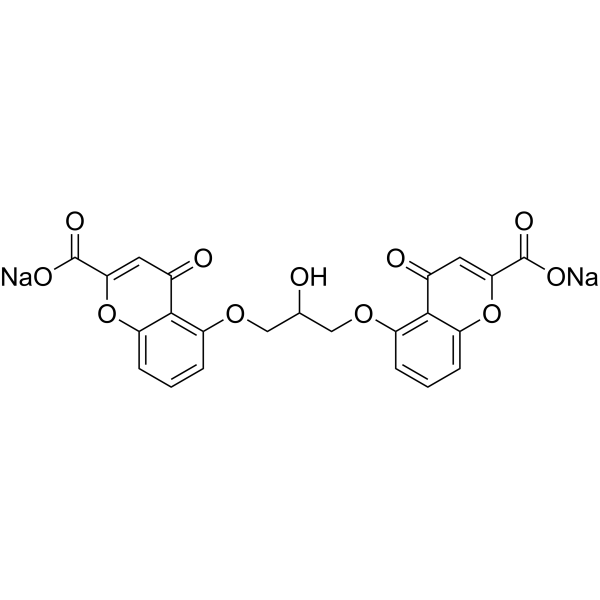
    Cromolyn disodium
    5+ Cited Publications

    Cromoglycate disodium; Cromoglicic acid disodium; FPL-670

    GSK-3 NF-κB Amyloid-β Neurological Disease Metabolic Disease Inflammation/Immunology Cancer
    Cromolyn (Cromoglycate) disodium is an orally active GSK-3β inhibitor with an IC50 of 2.0 μM. Cromolyn disodium is also a mast cell stabilizer that can inhibit the release of mediators from mast cells, regulate reflex bronchoconstriction, and reduce non-specific bronchial hyperreactivity, and Cromolyn disodium can be used in the research of bronchial asthma. In addition, Cromolyn disodium has multiple activities such as anti-inflammatory, anti-allergic, anti-histamine, anti-cancer, and neuroprotective effects .
    Cromolyn disodium
  • HY-B1619
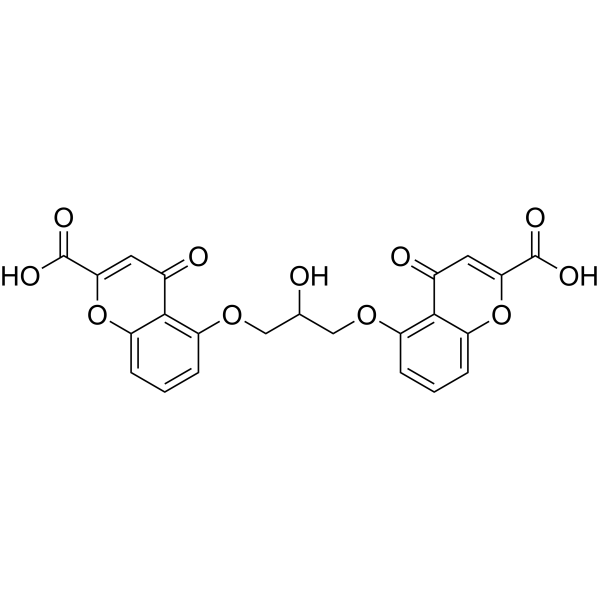
    Cromolyn
    5+ Cited Publications

    Cromoglycate; Cromoglicic acid; FPL-670 free acid

    GSK-3 NF-κB Amyloid-β Neurological Disease Metabolic Disease Inflammation/Immunology Cancer
    Cromolyn (Cromoglycate) is an orally active GSK-3β inhibitor with an IC50 of 2.0 μM. Cromolyn is also a mast cell stabilizer that can inhibit the release of mediators from mast cells, regulate reflex bronchoconstriction, and reduce non-specific bronchial hyperreactivity, and Cromolyn can be used in the research of bronchial asthma. In addition, Cromolyn has multiple activities such as anti-inflammatory, anti-allergic, anti-histamine, anti-cancer, and neuroprotective effects .
    Cromolyn
  • HY-135490

    Adrenergic Receptor Phosphodiesterase (PDE) Inflammation/Immunology
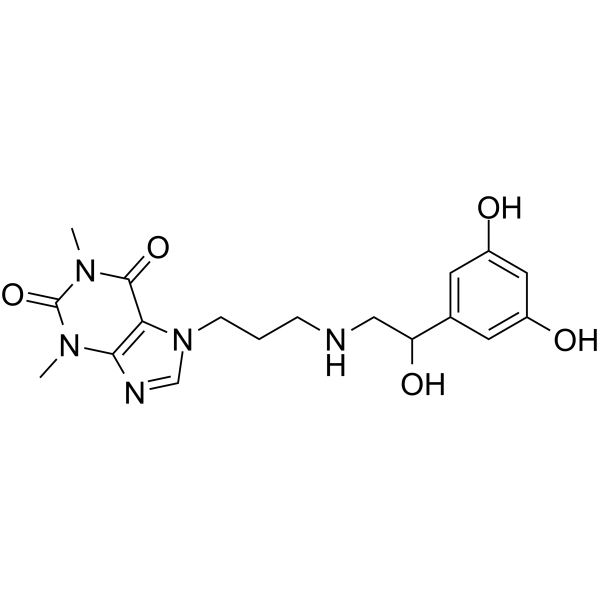
    Reproterol is a selective β2-adrenoceptor agonist and cAMP phosphodiesterase (PDE) inhibitor. Reproterol inhibits adenylate cyclase-induced phosphodiesterase activity. Reproterol inhibits histamine release from mast cells. Reproterol is applicable to research related to asthma .
    Reproterol
  • HY-P1793

    Opioid Receptor Biochemical Assay Reagents Neurological Disease Inflammation/Immunology Cancer
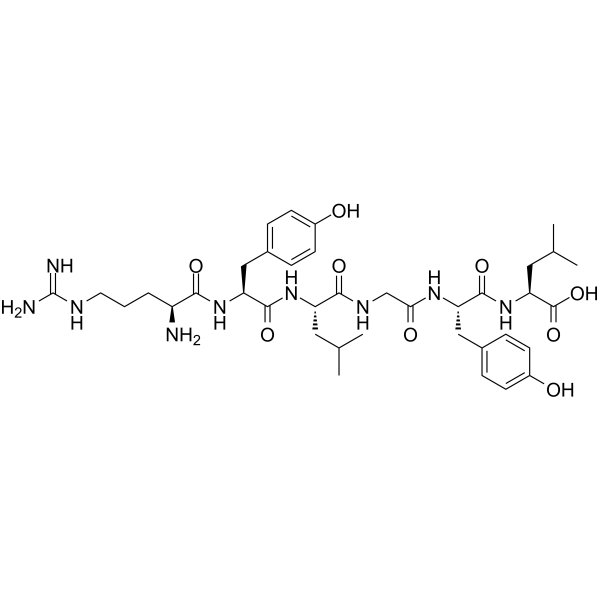
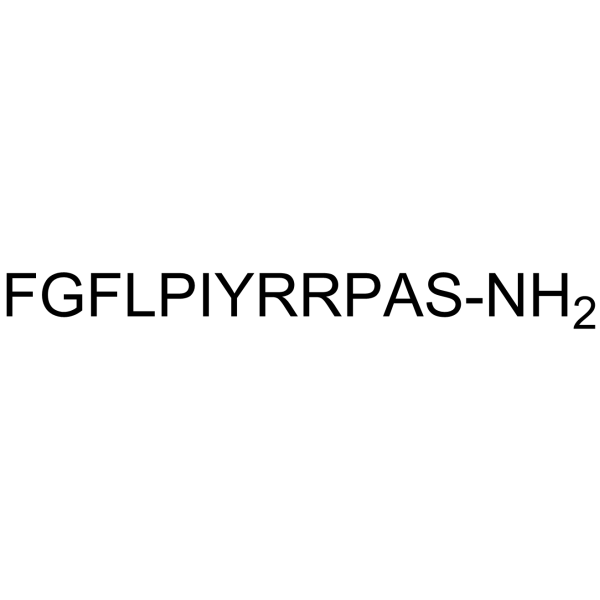
    α-Casein (90-95) is a partial agonist of opioid receptors and a copper ion ligand, with opioid activity. α-Casein (90-95) inhibits the secretion of β-hexosaminidase by rat peritoneal mast cells (PMC) with IC50= 0.1 μM. α-Casein (90-95) inhibits the proliferation of prostate cancer cells LNCaP, DU145, and PC3 with IC50 of 0.94 nM, 137 nM, and 6.92 nM, respectively. α-Casein (90-95) activates Gi-like proteins through a membrane-assisted, receptor-independent pathway, or reversibly binds to opioid receptors, inducing intracellular calcium release and conformational changes, and exerts the activity of promoting mast cell secretion and inhibiting tumor cell proliferation. α-Casein (90-95) can be used in the study of the mechanisms of allergic diseases and prostate cancer .
    α-Casein (90-95)
  • HY-N3007A

    Others Inflammation/Immunology
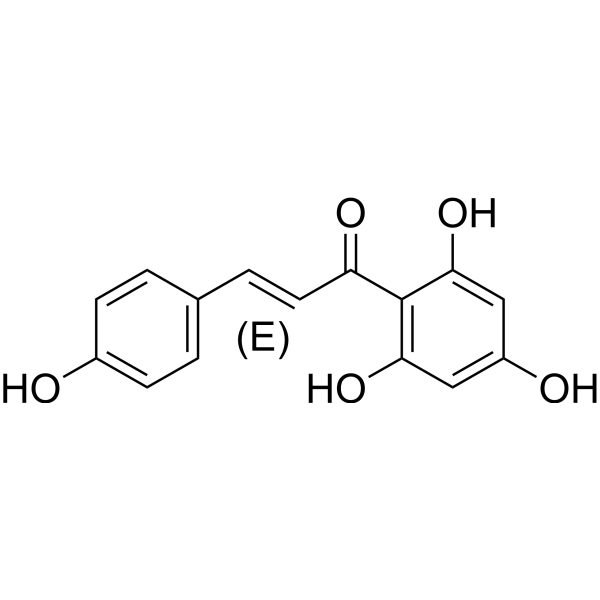
    (E)-Naringenin chalcone is an orally active anti-allergic agent. (E)-Naringenin chalcone also has antioxidant, anti-inflammatory activities. (E)-Naringenin chalcone can improve adipocyte functions. (E)-Naringenin chalcone inhibits histamine release from rat peritoneal mast cell .
    (E)-Naringenin chalcone
  • HY-P2706

    Histamine Receptor Endocrinology
    Granuliberin R is a new mast cell degranulating peptide comes from amphibian, can be isolated from the skin of frog Rana rugosa. Granuliberin R is a dodecapeptide, can act on rat peritoneal mast cell to liberate granules and release histamine .
    Granuliberin R
  • HY-P1793A

    Opioid Receptor Biochemical Assay Reagents Neurological Disease Inflammation/Immunology Cancer
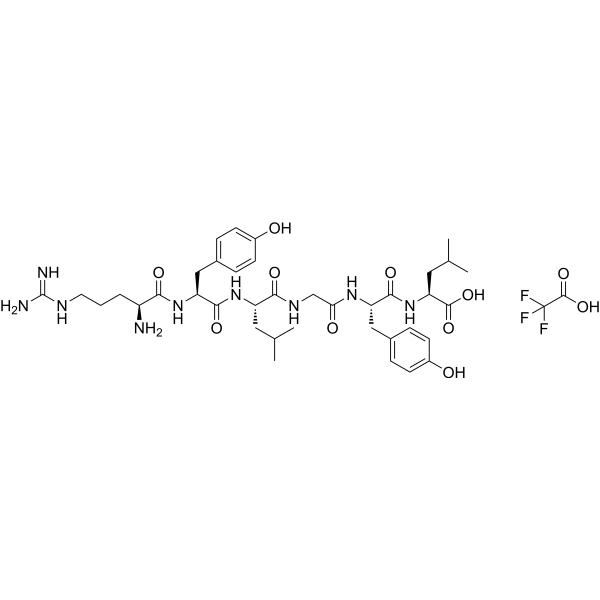
    α-Casein (90-95) TFA is a partial agonist of opioid receptors and a copper ion ligand, with opioid activity. α-Casein (90-95) TFA inhibits the secretion of β-hexosaminidase by rat peritoneal mast cells (PMC) with IC50= 0.1 μM. α-Casein (90-95) TFA inhibits the proliferation of prostate cancer cells LNCaP, DU145, and PC3 with IC50 of 0.94 nM, 137 nM, and 6.92 nM, respectively. α-Casein (90-95) TFA activates Gi-like proteins through a membrane-assisted, receptor-independent pathway, or reversibly binds to opioid receptors, inducing intracellular calcium release and conformational changes, and exerts the activity of promoting mast cell secretion and inhibiting tumor cell proliferation. α-Casein (90-95) TFA can be used in the study of the mechanisms of allergic diseases and prostate cancer .
    α-Casein (90-95) TFA
  • HY-B1619R

    Cromoglycate (Standard); Cromoglicic acid (Standard); FPL-670 free acid (Standard)

    GSK-3 NF-κB Amyloid-β Reference Standards Neurological Disease Metabolic Disease Inflammation/Immunology Cancer
    Cromolyn (Standard) is the analytical standard of Cromolyn. This product is intended for research and analytical applications. Cromolyn (Cromoglycate) is an orally active GSK-3β inhibitor with an IC50 of 2.0 μM. Cromolyn is also a mast cell stabilizer that can inhibit the release of mediators from mast cells, regulate reflex bronchoconstriction, and reduce non-specific bronchial hyperreactivity, and Cromolyn can be used in the research of bronchial asthma. In addition, Cromolyn has multiple activities such as anti-inflammatory, anti-allergic, anti-histamine, anti-cancer, and neuroprotective effects .
    Cromolyn (Standard)
  • HY-N12210

    Histamine Receptor Inflammation/Immunology
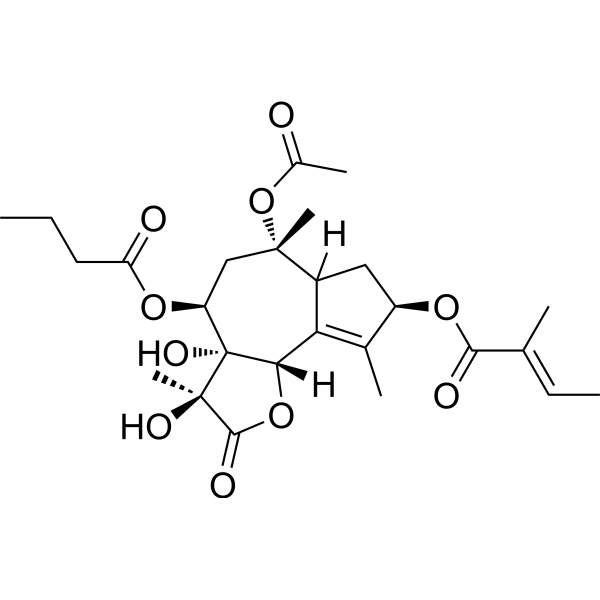
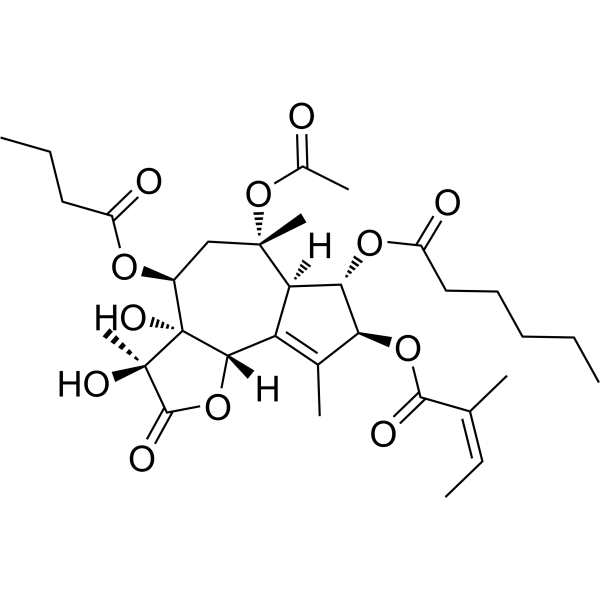
    Notrilobolide is a sesquiterpene lactone. Notrilobolide induces a potent histamine release from peritoneal rat mast cells .
    Notrilobolide
  • HY-N15230

    Leukotriene Receptor Inflammation/Immunology
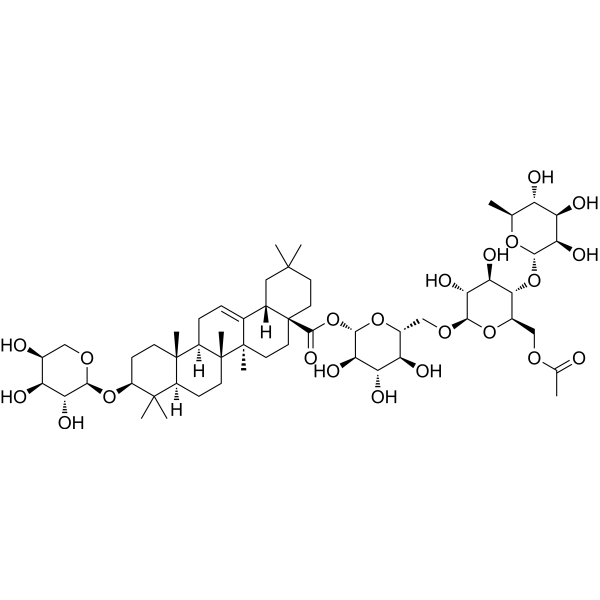
    Torososide B is an antiallergic compound that inhibits calcium ionophore A-induced leukotriene release from rat peritoneal mast cells .
    Torososide B
  • HY-N11691

    Thapsigargicine

    Others Inflammation/Immunology
    Thapsigargicin (Thapsigargicine) is a activator of mast cells and leukocytes. Thapsigargicin induces histamine release from rat peritoneal mast cells and human basophil leukocytes. Thapsigargicin increases the cytoplasmic free calcium level in intact human blood platelets .
    Thapsigargicin
  • HY-N12295

    Others Inflammation/Immunology
    Ciwujianoside D1 is a natural product that can inhibit histamine release induced by anti-immunoglobulin E from rat peritoneal mast cells .
    Ciwujianoside D1
  • HY-137614C

    Nucleoside Antimetabolite/Analog Others
    Rp-GTPαS tetrasodium is a phosphorothioate analogue of Guanosine triphosphate (GTP) (HY-113225) that can activate calcium release and secretion in single rat peritoneal mast cells .
    Rp-GTPαS tetrasodium
  • HY-N15704

    Histamine Receptor Inflammation/Immunology
    Cassiaside C2 is a naphthopyrone with a strong antiallergic activity. Cassiaside C2 inhibits the histamine release from rat peritoneal exudate mast cells induced by antigen-antibody reaction .
    Cassiaside C2
  • HY-137787R

    Drug Intermediate Reference Standards Others
    Nylidrin (hydrochloride) (Standard) is the analytical standard of Nylidrin (hydrochloride). This product is intended for research and analytical applications. Nylidrin hydrochloride is an inhibitor of IgE-mediated histamine release in passive sensitized rat peritoneal mast cells, and it has anti-allergic effects.
    Cyanosafracin B (Standard)
  • HY-126127

    Histamine Receptor Inflammation/Immunology
    BRL 22321 free base is a stabilizer with similar mast cell stabilizing activity to Cromolyn sodium (HY-B0320A) and also has some smooth muscle relaxant activity. BRL 22321 free base is more potent than Cromolyn sodium (HY-B0320A) in inhibiting rat passive cutaneous and peritoneal anaphylaxis and antigen-induced histamine release from passively sensitized rat peritoneal cells .
    BRL 22321 free base
  • HY-123432

    Histamine Receptor Inflammation/Immunology
    AHR-13268D is an oral active antiallergic and antihistaminic agent, with bioavailable approximately 88%. AHR-13268D is a potent inhibitor of histamine release from rat peritoneal mast cells, with the IC50 of 0.51 nM .
    AHR-13268D
  • HY-163061

    Histamine Receptor Inflammation/Immunology
    Quinotolast is an orally active antiallergic agent. Quinotolast inhibits histamine release from rat peritoneal cells. Quinotolast inhibits cutaneous cromoglycate in guinea pig model. Quinotolast has inhibitory effect on histamine and peptide leukotrienes release from guinea pig lung fragments and mouse cultured mast cells. Quinotolast can be studied in allergy-related research .
    Quinotolast
  • HY-P11163

    Bacterial Glycosidase Infection
    Eumenitin is an antibacterial peptide with strong membrane activity, broad-spectrum antibacterial activity, and almost no hemolytic toxicity. Eumenitin has inhibitory effects on various Gram positive and Gram negative bacteria. Eumenitin can induce the release of β-hexosaminidase from rat peritoneal mast cells and RBL-2H3 cells. Eumenitin can be used in the research of infectious conditions .
    Eumenitin
  • HY-N19243

    Histamine Receptor Inflammation/Immunology
    6-O-Senesioyl plenolin is a sesquiterpene lactone found in Centipeda minima with antiallergic activity. 6-O-Senesioyl plenolin inhibits histamine release from mast cells (IC50 = 18 μM) and suppresses pigment exudation in passive cutaneous anaphylaxis tests. 6-O-Senesioyl plenolin can be used in research related to allergy .
    6-O-Senesioyl plenolin
  • HY-182414

    Ser/Thr Protease Inflammation/Immunology
    NCO-650 free base is an antiallergic agent that acts by inhibiting tryptase, a key trypsin-like protease in mast cells. NCO-650 free base inhibits mast cell histamine release, increases intracellular cAMP levels in mast cells, suppresses bronchoconstriction, and prevents decreases in perfusion pressure and systemic blood pressure. NCO-650 free base is applicable to the research of allergic diseases and bronchial asthma .
    NCO-650 free base
  • HY-165395

    Phosphodiesterase (PDE) Inflammation/Immunology
    AY 25674 is an orally active antiallergic agent and a PDE inhibitor. AY 25674 inhibits the release of allergic histamine from mast cells. AY 25674 suppresses passive anaphylaxis induced by reaginic (IgE) antibodies. AY 25674 does not inhibit the increased vascular permeability caused by non-reaginic antibodies, serotonin or histamine. AY 25674 reaches its peak activity shortly after administration; rapid tolerance occurs at high doses. AY 25674 can be used in research related to passive anaphylaxis .
    AY 25674
  • HY-N17878

    Drug Derivative Others
    Guavinoside A is a benzophenone galloyl glycoside found in the leaves of Psidium guajava L. .
    Guavinoside A

Inquiry Online

Your information is safe with us. * Required Fields.

Salutation


Country or Region *

Applicant Name *


Organization Name *

Department *


Email Address *


Product Name *

Cat. No.


Requested quantity *

Phone Number *


Remarks

Inquiry Online

Inquiry Information

Product Name:
Cat. No.:
Quantity:
MCE Japan Authorized Agent:

