1114 Results for "

recruit CRBN

" in MedChemExpress (MCE) Product Catalog:
Products (1114)

1114 Results for "recruit CRBN" in MCE Product Catalog:

10
10 Publications Verification
Cat. No.: HY-123937
CAS No.: 2139287-33-3
Purity:  99.16%
Research Areas:  

Infection Cancer

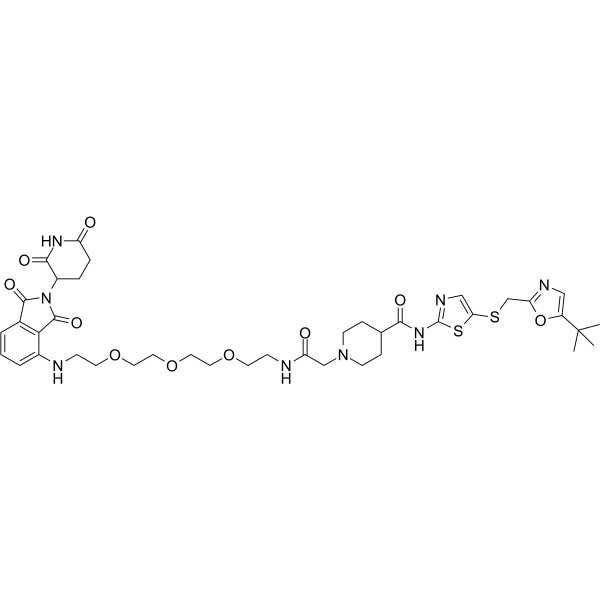
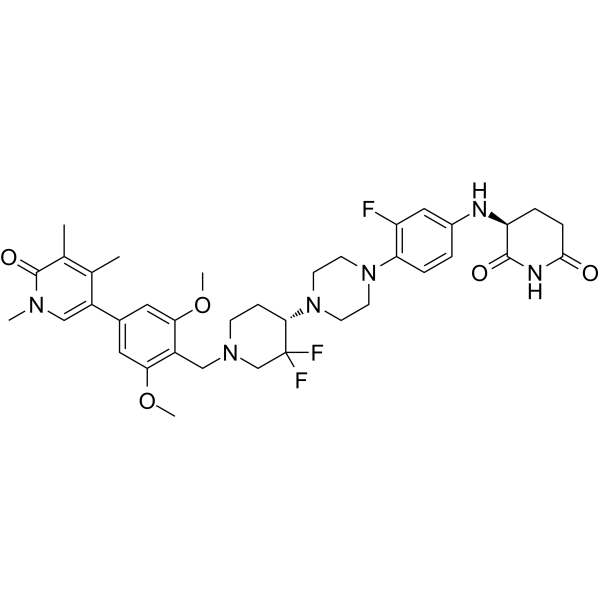
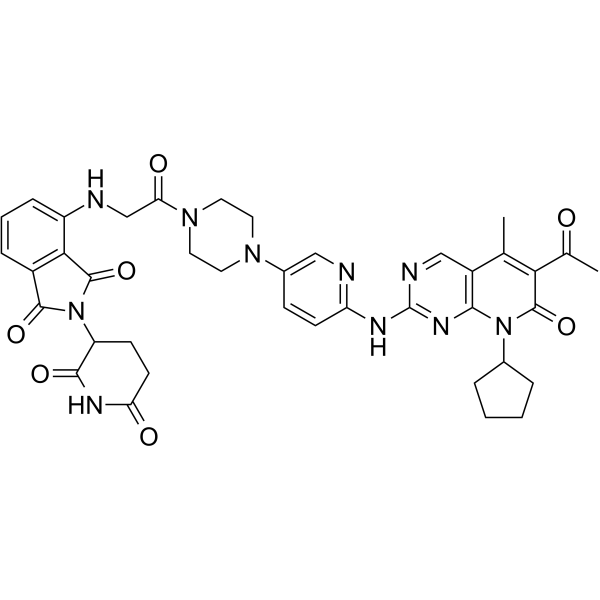
THAL-SNS-032 is a selective CDK9 PROTAC degrader. THAL-SNS-032 recruits CRBN to form a ternary complex with CDK9, thereby triggering ubiquitination and proteasomal degradation of CDK9. THAL-SNS-032 also induces the degradation of CDK1, CDK2 and CDK7. THAL-SNS-032 elevates pH2AX levels, reduces MCL1s expression, and activates caspase-3. THAL-SNS-032 induces cancer cell apoptosis, regulates transcription, and inhibits the replication of human cytomegalovirus (CMV) and SARS-CoV-2. THAL-SNS-032 can be used in research related to breast cancer, leukemia, cytomegalovirus infection and SARS-CoV-2 infection .
loading...
    loading...
7
7 Cited Publications
Cat. No.: HY-130800
CAS No.: 1860875-51-9
Purity:  99.76%
Synonyms: CC-90009
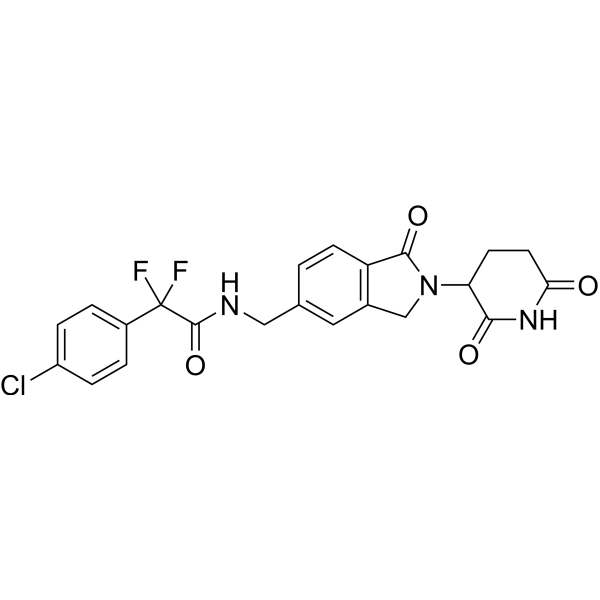
Eragidomide (CC-90009) is a GSPT1 Molecular Glue degrader. Eragidomide exhibits antiproliferative and pro-apoptotic (apoptosis) activities against acute myeloid leukemia cells. Eragidomide recruits the CRL4CRBN E3 ubiquitin ligase complex to selectively target GSPT1 for ubiquitination and proteasomal degradation. Eragidomide reduces leukemia cell engraftment and eliminates leukemia stem cells. Eragidomide promotes the activation of the GCN1/GCN2/ATF4 pathway and the integrated stress response pathway, inhibits global protein translation, promotes preferential translation of ATF4, and induces the accumulation of ATF4, CHOP and ATF3. The response to Eragidomide is regulated by the ILF2/ILF3 heterodimer complex, the mTOR signaling pathway and the integrated stress response. Eragidomide can be used in research related to acute myeloid leukemia and relapsed/refractory acute myeloid leukemia .
loading...
    loading...
4
4 Cited Publications
Cat. No.: HY-101519
CAS No.: 2093388-62-4
Purity:  99.59%
Synonyms: ZBC 260
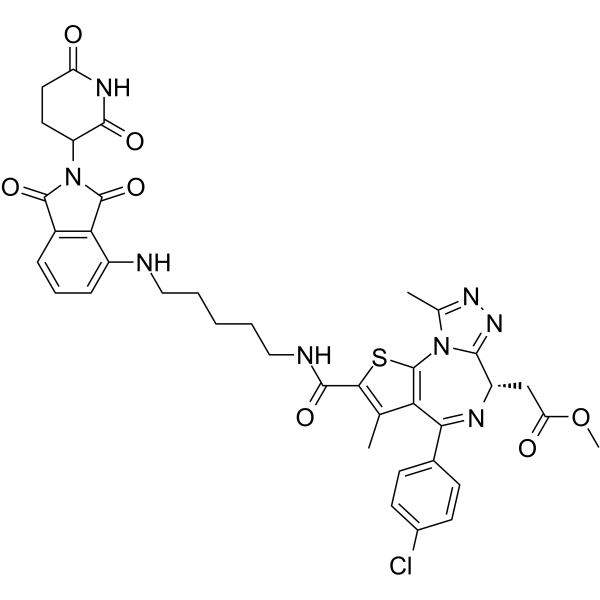
BETd-260 (ZBC 260) is a BET PROTAC degrader. BETd-260 recruits BRD2, BRD3, and BRD4 to the CUL4-RBX1-DDB1-CRBN E3 ubiquitin ligase complex, driving cereblon-, proteasome-, and NEDD8-activating enzyme-dependent ubiquitination and degradation, with a DC50 of approximately 30-100 pM in RS4;11 cells. BETd-260 induces cancer cell apoptosis via endogenous signaling pathways, regulates the expression of the Bcl-2 family, inhibits the oncogene c-Myc, and reduces cell viability. BETd-260 suppresses tumor growth in mouse xenograft models with good biosafety. BETd-260 can be used in research related to acute leukemia, hepatocellular carcinoma, osteosarcoma, and triple-negative breast cancer .
loading...
    loading...
3
3 Cited Publications
Cat. No.: HY-122826
CAS No.: 2243076-67-5
Purity:  98.90%
ZXH-3-26 is a CRBN-recruiting BRD4 PROTAC degrader with a DC50/5h of approximately 5 nM. ZXH-3-26 drives the ubiquitination and degradation of BRD4 by recruiting BRD4BD1 to the CRL4 CRBN E3 ubiquitin ligase complex, thereby inhibiting the dynamic distribution of super-enhancers. ZXH-3-26 reverses TNF-α-induced impairment of the immunosuppressive function of mesenchymal stem cells, and affects RNA synthesis and the transcriptional elongation process of Pol II. ZXH-3-26 can be used in studies related to inflammatory arthritis, malignant tumors, and HIV latency .
loading...
    loading...
3
3 Cited Publications
Cat. No.: HY-145925B
CAS No.: 2704617-96-7
Purity:  98.10%
Research Areas:  

Cancer

CFT8634 is an orally active BRD9 PROTAC degrader with a DC50 of 0.003 μM (HEK293T.166). CFT8634 recruits the CRBN E3 ubiquitin ligase to form a ternary complex, triggering CRBN-catalyzed BRD9 polyubiquitination and 26S proteasome-mediated degradation. CFT8634 induces sustained tumor regression and inhibits tumor growth in mouse models. CFT8634 can be used in research related to synovial sarcoma, SMARCB-1-deficient cancers, acute myeloid leukemia, malignant rhabdoid tumors, and multiple myeloma .
loading...
    loading...
2
2 Cited Publications
Cat. No.: HY-132857
CAS No.: 2711006-66-3
Target:  

PROTACs

Research Areas:  

Neurological Disease

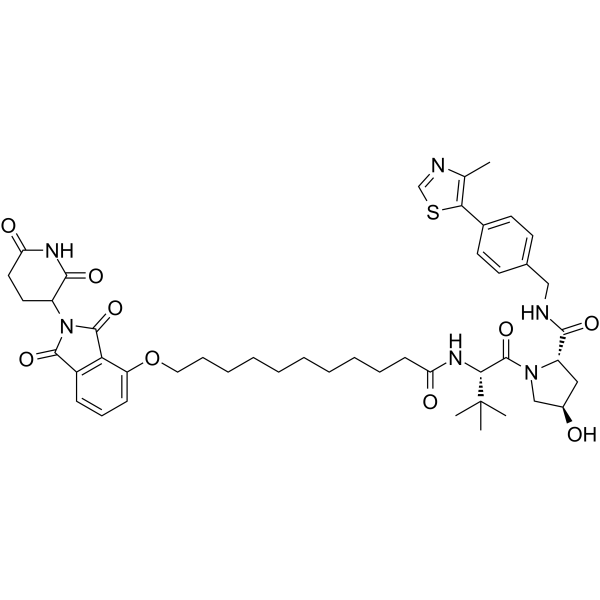
ZXH-4-130 is a potent and selective Cereblon (CRBN) degrader. ZXH-4-130 recruits the VHL E3 ligase to specifically target CRBN as a substrate for selective degradation as a hetero-PROTAC molecule. ZXH-4-130 can be applied in studies on the biological functions of CRBN and related research of frontotemporal dementia .
loading...
    loading...
2
2 Cited Publications
Cat. No.: HY-132857A
CAS No.: 2711006-67-4
Purity:  99.71%
Target:  

PROTACs

Research Areas:  

Neurological Disease

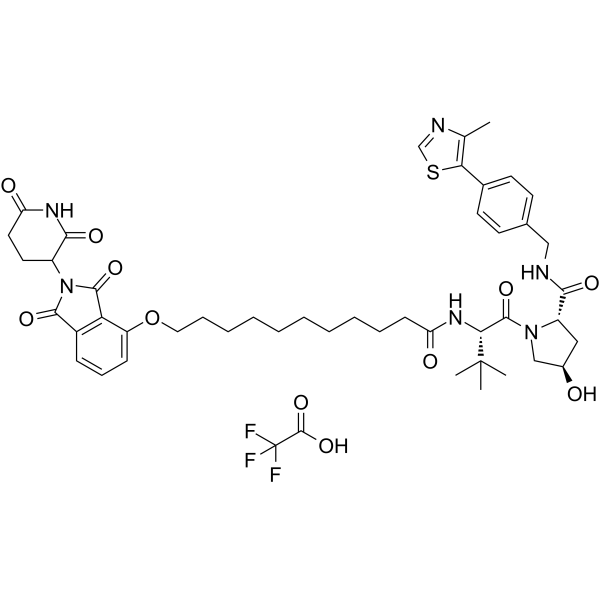
ZXH-4-130 TFA is a potent and selective Cereblon (CRBN) degrader. ZXH-4-130 TFA recruits the VHL E3 ligase to specifically target CRBN as a substrate for selective degradation as a hetero-PROTAC molecule. ZXH-4-130 TFA can be applied in studies on the biological functions of CRBN and related research of frontotemporal dementia .
loading...
    loading...
2
2 Cited Publications
Cat. No.: HY-103597
CAS No.: 1061605-21-7
Purity:  99.85%
Synonyms: Cereblon ligand 3; E3 ligase Ligand 3
Target:  

Ligands for E3 Ligase

Research Areas:  

Cancer

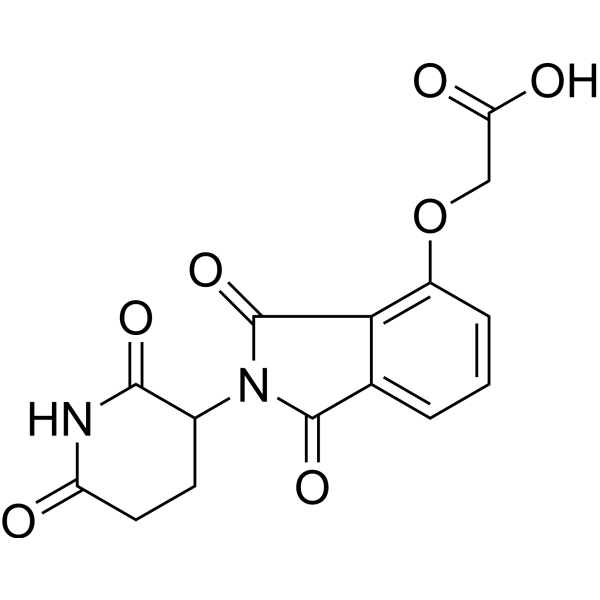
Thalidomide-O-COOH (Cereblon ligand 3) is the Thalidomide-based Cereblon ligand used in the recruitment of CRBN protein. Thalidomide-O-COOH (Cereblon ligand 3) can be connected to the ligand for protein by a linker to form PROTACs .
loading...
    loading...
2
2 Cited Publications
Cat. No.: HY-147098
CAS No.: 2265886-81-3
Purity:  99.23%
Target:  

PROTACs FKBP

Research Areas:  

Infection Cancer

dTAG-47 is a heterobifunctional PROTAC degrader that specifically binds to the FKBP12 F36V domain and Cereblon (CRBN). By recruiting the CRBN E3 ubiquitin ligase, dTAG-47 induces ubiquitination and proteasomal degradation of FKBP12 F36V-fused Cas9 and tagged KDM5A. dTAG-47 can induce upregulated expression of some endogenous retrovirus (ERV) genes and is suitable for cancer research .
loading...
    loading...
2
2 Cited Publications
Cat. No.: HY-115568
CAS No.: 2140289-17-2
Purity:  98.34%
Research Areas:  

Cancer

BETd-246 is a BRD2/3/4 PROTAC degrader targeting the BET family. BETd-246 induces ubiquitination and proteasomal degradation of BRD2, BRD3 and BRD4 by recruiting the CUL4-RBX1-DDB1-CRBN E3 ubiquitin ligase complex; it also inhibits TRAT1 expression and depletes BET proteins. BETd-246 suppresses cancer cell proliferation and invasion, disrupts the cell cycle and induces apoptosis. BETd-246 is applicable to research related to triple-negative breast cancer and T-cell acute lymphoblastic leukemia .
loading...
    loading...
2
2 Cited Publications
Cat. No.: HY-123919
CAS No.: 2229037-19-6
Purity:  98.15%
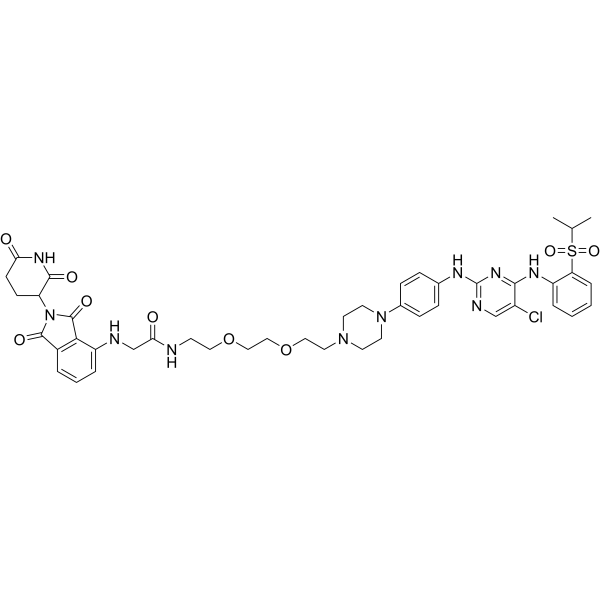
TL13-112 is a ALK PROTAC degrader. TL13-112 degrades the NPM-ALK protein by recruiting the CRBN E3 ligase, thereby blocking oncogenic signal transduction such as STAT3, ERK and AKT, and relieving the transcriptional repression of CD45, CCR7 and PI3Kδ. TL13-112 can be used in related research on anaplastic large cell lymphoma .
loading...
    loading...
1
1 Cited Publications
Cat. No.: HY-145282
CAS No.: 2376136-61-5
Purity:  99.72%
Target:  

PROTACs Akt

Research Areas:  

Cancer

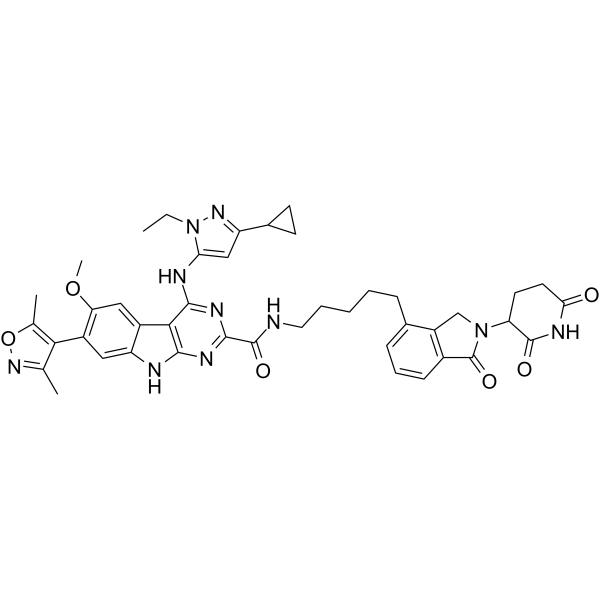
MS170 is a potent and selective PROTAC AKT degrader. MS170 depletes cellular total AKT (T-AKT) with the DC50 value of 32 nM. MS170 binds to AKT1, AKT2, and AKT3 with Kds of 1.3 nM, 77 nM, and 6.5 nM, respectively .
loading...
    loading...
1
1 Cited Publications
Cat. No.: HY-162318
CAS No.: 2946670-96-6
Research Areas:  

Cancer

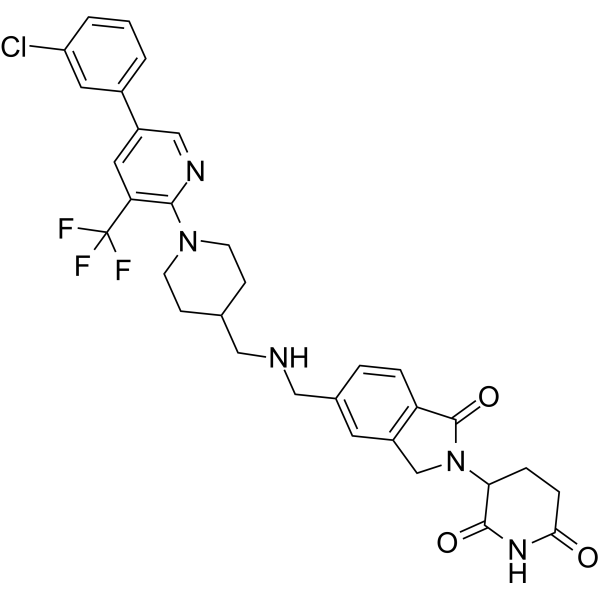
MYC degrader 1 is a MYC degrader that recruits Cereblon (CRBN), with a Kd value of 145 nM and oral activity. MYC degrader 1 specifically binds MYC and GSPT1, recruits the CRBN E3 ubiquitin ligase complex, and induces MYC degradation via the ubiquitin-proteasome pathway. MYC degrader 1 downregulates KLHL42 expression, restores pRB1 protein levels, and re-establishes the sensitivity of MYC-overexpressing cancer cells to CDK4/6 inhibitors. MYC degrader 1 combined with Palbociclib (HY-50767) shows significant inhibition of tumor growth. MYC degrader 1 can be used in studies related to bladder cancer, prostate cancer, and breast cancer .
loading...
    loading...
1
1 Cited Publications
Cat. No.: HY-162318A
Target:  

c-Myc

Research Areas:  

Cancer

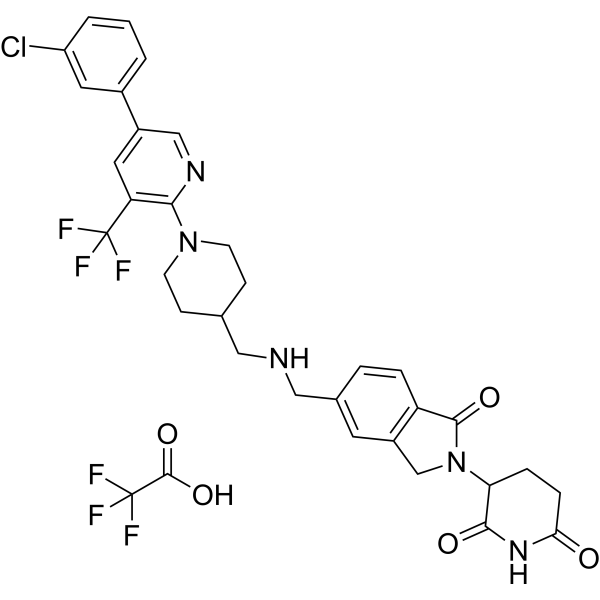
MYC degrader 1 TFA is a MYC degrader that recruits Cereblon (CRBN), with a Kd value of 145 nM and oral activity. MYC degrader 1 TFA specifically binds MYC and GSPT1, recruits the CRBN E3 ubiquitin ligase complex, and induces MYC degradation via the ubiquitin-proteasome pathway. MYC degrader 1 TFA downregulates KLHL42 expression, restores pRB1 protein levels, and re-establishes the sensitivity of MYC-overexpressing cancer cells to CDK4/6 inhibitors. MYC degrader 1 TFA combined with Palbociclib (HY-50767) shows significant inhibition of tumor growth. MYC degrader 1 TFA can be used in studies related to bladder cancer, prostate cancer, and breast cancer .
loading...
    loading...
1
1 Cited Publications
Cat. No.: HY-131717
CAS No.: 927670-97-1
Purity:  98.07%
Research Areas:  

Cancer

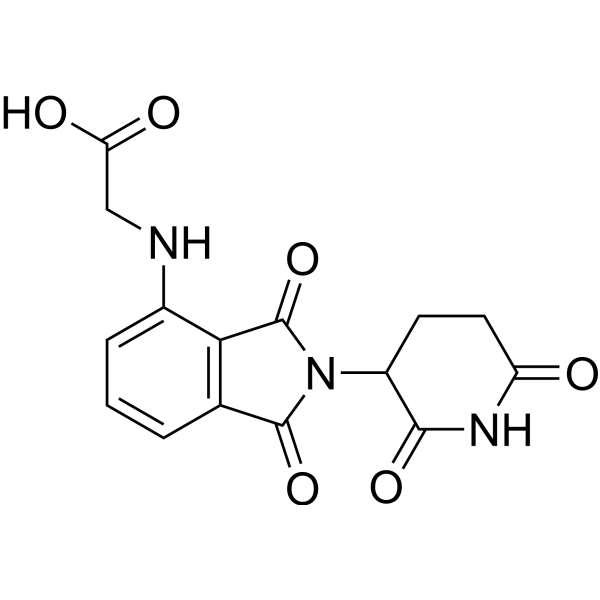
Thalidomide-NH-CH2-COOH is the Thalidomide-based cereblon ligand used in the recruitment of CRBN protein. Thalidomide-NH-CH2-COOH can be connected to the ligand for protein by a linker to form PROTACs, such as THAL-SNS-032 (HY-123937) .
loading...
    loading...
1
1 Cited Publications
Cat. No.: HY-134823
CAS No.: 2136246-72-3
Purity:  99.81%
Target:  

PROTACs MDM-2/p53

Research Areas:  

Cancer

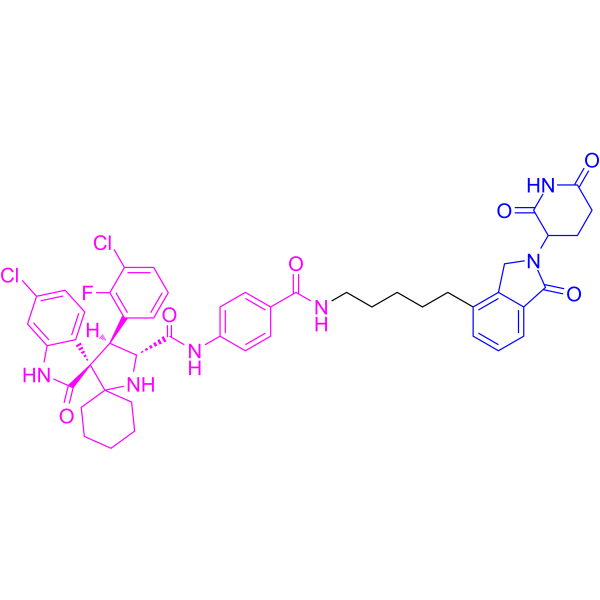
MD-222 is a potent MDM2 PROTAC degrader. MD-222 recruits the CRBN E3 ubiquitin ligase to target and degrade MDM2, and activates the wild-type p53 pathway in cells. MD-222 is used in relevant research on leukemia and breast cancer .
loading...
    loading...
1
1 Cited Publications
Cat. No.: HY-138946
CAS No.: 2229974-83-6
Purity:  98.52%
Target:  

PROTACs CDK

Research Areas:  

Cancer

XY028-140 is a PROTAC-type degrader targeting CDK4/6, which degrades CDK4/6 by recruiting CRBN-type E3 ligase. XY028-140 can be used in CDK4/6-mediated cancer-related research .
loading...
    loading...
1
1 Cited Publications
Cat. No.: HY-130665
CAS No.: 2250025-88-6
Purity:  99.63%
Research Areas:  

Cancer

TL12-186 is a multi-kinase PROTAC degrader. TL12-186 recruits the CRBN E3 ubiquitin ligase to target and degrade a variety of distinct kinases, including FLT3, BTK, AURKA, PTK2B, and multiple cyclin-dependent kinases (CDKs). TL12-186 can be used in leukemia-related research .
loading...
    loading...
1
1 Cited Publications
Cat. No.: HY-133557
CAS No.: 2365172-19-4
Purity:  98.84%
Research Areas:  

Cancer

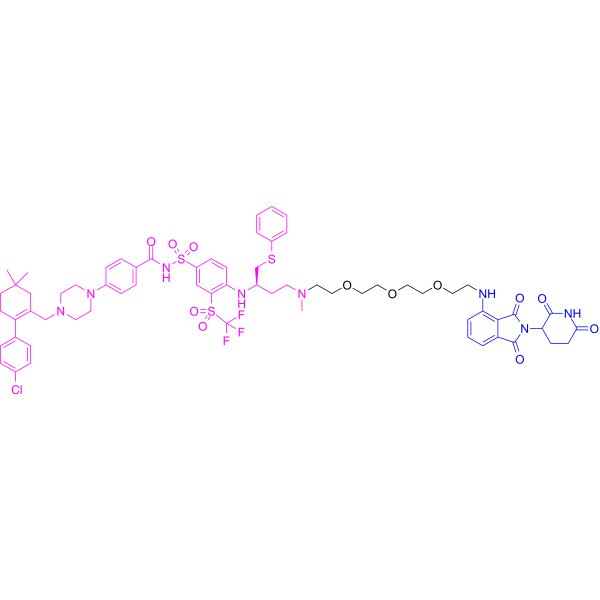
XZ739 is a potent and selective BCL-XL PROTAC degrader with a DC50 of 2.5 nM. XZ739 recruits CRBN to ubiquitinate and degrade BCL-XL via the ubiquitin-proteasome system. XZ739 also induces cell cycle arrest and caspase-mediated apoptosis. XZ739 can be used in research related to T-cell acute lymphoblastic leukemia and cholangiocarcinoma .
loading...
    loading...
1
1 Cited Publications
Cat. No.: HY-144998
CAS No.: 2291360-73-9
Purity:  98.86%
Research Areas:  

Inflammation/Immunology Cancer

NVP-DKY709 is an orally active and selective IKZF2 molecular glue degrader with the Dmax and DC50 of 53% and 4 nM, respectively. In addition, NVP-DKY709 can degrade IKZF4 (DC50: 13 nM) and SALL4 (DC50: 2 nM). NVP-DKY709 exerts anti-tumor activity by binding with CRBN to change conformation and recruit and degrade IKZF2 .
loading...
    loading...

