1. Search Result
Search Result
Results for "

renal blood flow

" in MedChemExpress (MCE) Product Catalog:

15

Inhibitors & Agonists

3

Peptides

4

Natural
Products

1

Oligonucleotides

Cat. No. 상품명 Target 연구분야 Chemical Structure
  • HY-P0083

    POR-8

    Vasopressin Receptor Cardiovascular Disease
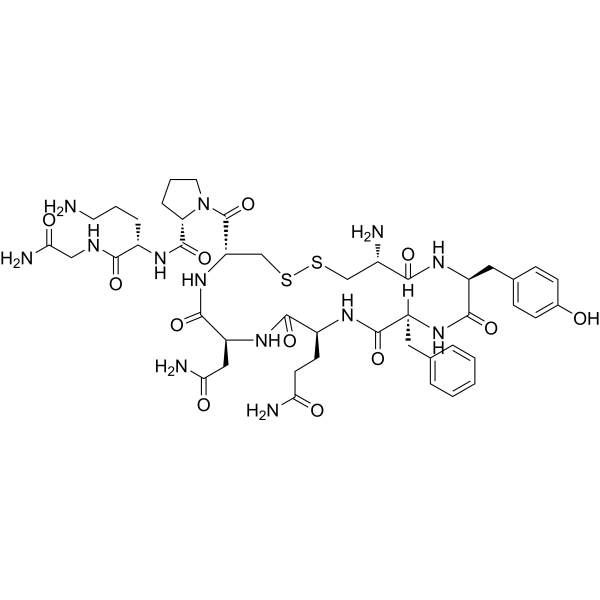
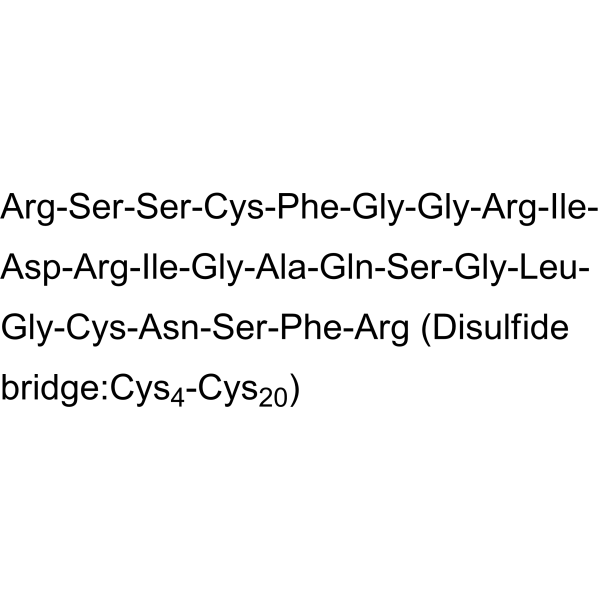
    Ornipressin (POR-8) is a vasopressin agonist specific for the V1 receptor. Ornipressin can be used as a local vasoconstrictor. Ornipressin can reverse the hypotension associated with combine general/epidural anesthesia. Ornipressin has antidiuretic activity. Ornipressin decreases renal vascular resistance and increases renal blood flow in renal failure model .
    Ornipressin
  • HY-130345

    Platelet-activating Factor Receptor (PAFR) Cardiovascular Disease
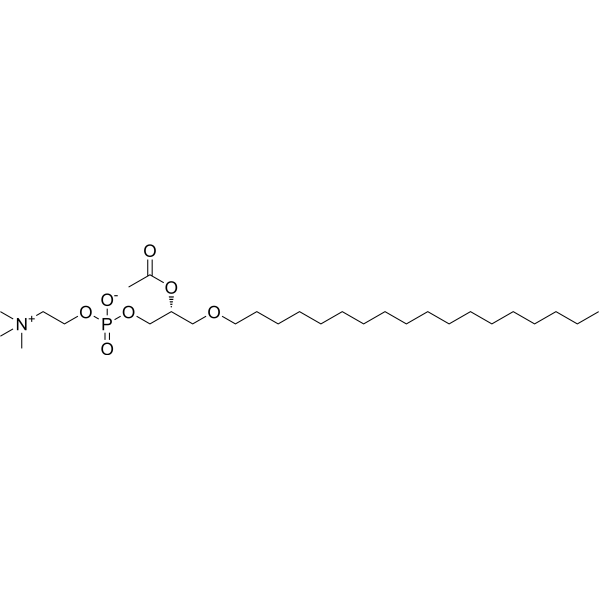
    C18-PAF, octadecane PAF, is the ligand of platelet-activating factor and PAF G protein-coupled receptor (PAFR). C18-PAF has renovasodilator properties and antihypertensive lipid properties. C18-PAF increases renal blood flow and causes dose-dependent systemic hypotension .
    PAF (C18)
  • HY-15195

    Ro 67-0565; SPP-301

    Endothelin Receptor Cardiovascular Disease Endocrinology
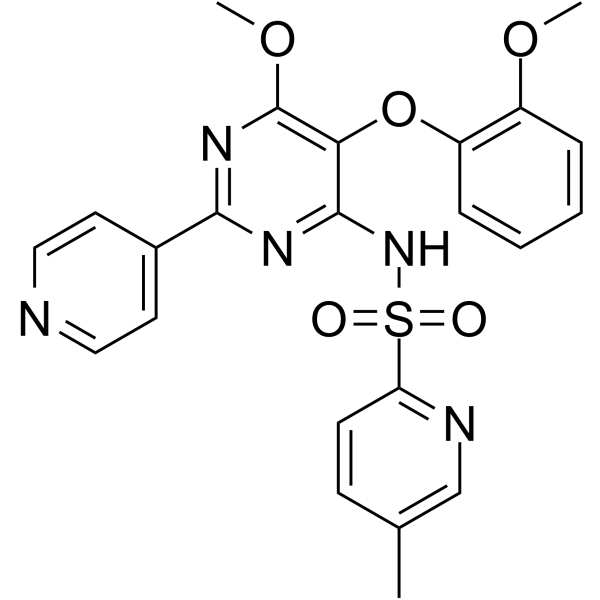
    Avosentan (Ro 67-0565; SPP-301) is an orally active endothelin (ETA) receptor antagonist. Avosentan can block the ETA receptor, thereby reducing vascular contraction and exerting a renal protective effect. Avosentan inhibits vascular contraction caused by ET-1 and alleviates the reduction in retinal and optic nerve head blood flow induced by it, lowering intraocular pressure in the glaucoma monkey model. Avosentan non-specifically blocks ETB receptors at high doses, inhibiting ETB-mediated diuresis and natriuresis, and may cause fluid retention. Avosentan can be used to reduce proteinuria with diabetic nephropathy, but induces significant fluid overload and congestive heart failure .
    Avosentan
  • HY-P0083A

    POR-8 acetate

    Vasopressin Receptor Cardiovascular Disease
    Ornipressin (POR-8) acetate is a potent vasoconstrictor, hemostatic and renal agent. Ornipressin acetate is a vasopressin agonist specific for the V1 receptor. Ornipressin acetate can be used as a local vasoconstrictor. Ornipressin acetate can reverse the hypotension associated with combine general/epidural anesthesia. Ornipressin acetate has antidiuretic activity. Ornipressin acetate decreases renal vascular resistance and increases renal blood flow in renal failure model .
    Ornipressin acetate
  • HY-W153159

    Adrenergic Receptor Inflammation/Immunology
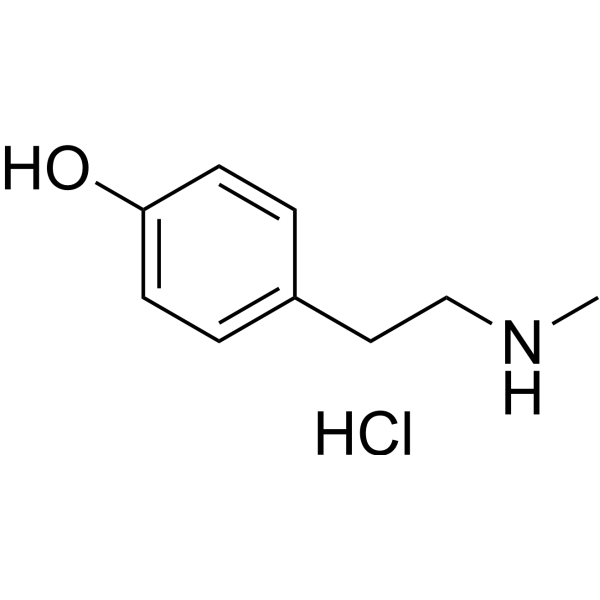
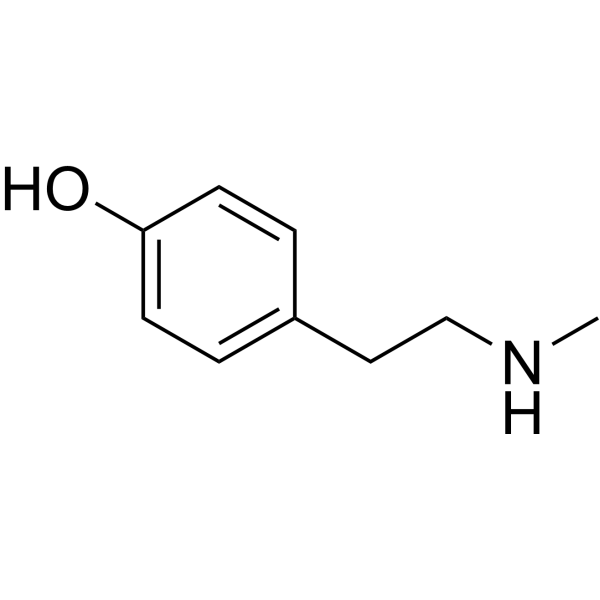
    N-Methyltyramine hydrochloride is an orally active α2-adrenoreceptor antagonist with an IC50 value of 5.53 μM against rat targets. N-Methyltyramine hydrochloride blocks α2-adrenoreceptors, while inhibiting lipolysis, hyperactivity responses and small intestinal peristalsis in mice. N-Methyltyramine hydrochloride promotes gastrin release and pancreatic juice secretion, upregulates appetite, blood pressure, myocardial contraction frequency and contraction intensity, and increases renal blood flow, renal vascular resistance and mean peripheral arterial resistance. N-Methyltyramine hydrochloride relaxes mouse small intestinal smooth muscle and undergoes biotransformation in vivo to produce adrenaline. N-Methyltyramine hydrochloride can be used in studies related to gastrointestinal diseases .
    N-Methyltyramine hydrochloride
  • HY-101554

    Guancidine

    Adrenergic Receptor Cardiovascular Disease
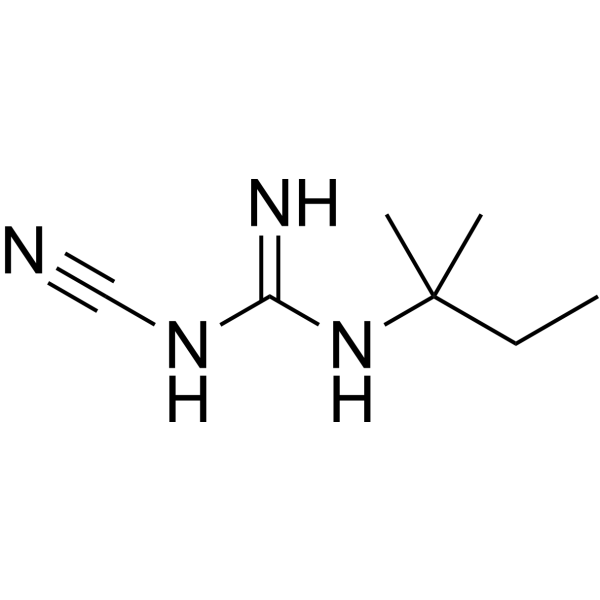
    Guancydine (Guancidine) is an orally active antihypertensive agent and vasodilator. Guancydine antagonizes the pressor effects of Angiotensin and Norepinephrine (HY-13715). Guancydine induces vasodilation in renal, mesenteric and cranial vascular beds, reduces peripheral resistance, increases cardiac output and lowers arterial blood pressure. Guancydine increases renal and forearm blood flow, reduces renal and forearm vascular resistance, alters cardiac systolic time, and reverses myocardial hypertrophy in hypertensive rats. Guancydine is applicable for research related to hypertension .
    Guancydine
  • HY-117805

    Angiotensin Receptor Cardiovascular Disease
    UR-7247 is a potent and orally active angiotensin II AT1 receptor antagonist. UR-7247 decreases arterial pressure and increases renal blood flow .
    UR-7247
  • HY-W153897

    Adrenergic Receptor Inflammation/Immunology
    N-Methyltyramine is an orally active α2-adrenoreceptor antagonist with an IC50 value of 5.53 μM against rat targets. N-Methyltyramine blocks α2-adrenoreceptors, while inhibiting lipolysis, hyperactivity responses and small intestinal peristalsis in mice. N-Methyltyramine promotes gastrin release and pancreatic juice secretion, upregulates appetite, blood pressure, myocardial contraction frequency and contraction intensity, and increases renal blood flow, renal vascular resistance and mean peripheral arterial resistance. N-Methyltyramine relaxes mouse small intestinal smooth muscle and undergoes biotransformation in vivo to produce adrenaline. N-Methyltyramine can be used in studies related to gastrointestinal diseases .
    N-Methyltyramine
  • HY-118991

    Adenosine Receptor Cardiovascular Disease
    KT-1 is a vasodilator. KT 1 can decrease aortic pressure, renal blood flow, left ventricular enddiastolic pressure and resistances of total peripheral, vertebral, coronary and renal vasculatures and increase aortic blood flow, vertebral blood flow, coronary blood flow, peak positive left ventricular dP/dt and heart rate in anesthetized open-chest dogs. KT-1 can be used for the research of cardiovascular disease .
    KT-1
  • HY-W153897R

    Reference Standards Adrenergic Receptor Inflammation/Immunology
    N-Methyltyramine (Standard) is the analytical standard of N-Methyltyramine (HY-W153897). This product is intended for research and analytical applications. N-Methyltyramine is an orally active α2-adrenoreceptor antagonist with an IC50 value of 5.53 μM against rat targets. N-Methyltyramine blocks α2-adrenoreceptors, while inhibiting lipolysis, hyperactivity responses and small intestinal peristalsis in mice. N-Methyltyramine promotes gastrin release and pancreatic juice secretion, upregulates appetite, blood pressure, myocardial contraction frequency and contraction intensity, and increases renal blood flow, renal vascular resistance and mean peripheral arterial resistance. N-Methyltyramine relaxes mouse small intestinal smooth muscle and undergoes biotransformation in vivo to produce adrenaline. N-Methyltyramine can be used in studies related to gastrointestinal diseases .
    N-Methyltyramine (Standard)
  • HY-15195R

    Ro 67-0565 (Standard); SPP-301 (Standard)

    Reference Standards Endothelin Receptor Cardiovascular Disease Endocrinology
    Avosentan (Standard) is the analytical standard of Avosentan (HY-15195). This product is intended for research and analytical applications. Avosentan is an orally active endothelin (ETA) receptor antagonist. Avosentan can block the ETA receptor, thereby reducing vascular contraction, and exerting a renal protective effect. Avosentan inhibits vascular contraction caused by ET-1 and alleviates the reduction in retinal and optic nerve head blood flow induced by it, lowering intraocular pressure in the glaucoma monkey model. Avosentan non-specifically blocks ETB receptors at high doses, inhibiting ETB-mediated diuresis and natriuresis, and may cause fluid retention. Avosentan can be used to reduce proteinuria with diabetic nephropathy, but induces significant fluid overload and congestive heart failure.
    Avosentan (Standard)
  • HY-118229

    DPMA; PD 125944

    Adenosine Receptor Cardiovascular Disease
    CGS 24012 (DPMA) is a selective adenosine A2 agonist. CGS 24012 produces significant increases in cardiac output. CGS 24012 reduces renal vascular resistance to the greatest extent and produces a concomitant significant increase in renal blood flow. CGS 24012 can be used in the research of hypertension .
    CGS 24012
  • HY-183954

    Adrenergic Receptor Cardiovascular Disease
    MDL-19744A is an orally active and selective α1-adrenergic receptor antagonist, with rat α1-adrenergic receptor IC50 of 8 nM. MDL-19744A increases renal blood flow, dose-related decreases mean arterial blood pressure, increases urinary sodium excretion, and mediates renal vasodilation. MDL-19744A can be used for the research of hypertension .
    MDL-19744A
  • HY-W153159R

    Reference Standards Adrenergic Receptor Inflammation/Immunology
    N-Methyltyramine (hydrochloride) (Standard) is the analytical standard of N-Methyltyramine (hydrochloride) (HY-W153159). This product is intended for research and analytical applications. N-Methyltyramine hydrochloride is an orally active α2-adrenoreceptor antagonist with an IC50 value of 5.53 μM against rat targets. N-Methyltyramine hydrochloride blocks α2-adrenoreceptors, while inhibiting lipolysis, hyperactivity responses and small intestinal peristalsis in mice. N-Methyltyramine hydrochloride promotes gastrin release and pancreatic juice secretion, upregulates appetite, blood pressure, myocardial contraction frequency and contraction intensity, and increases renal blood flow, renal vascular resistance and mean peripheral arterial resistance. N-Methyltyramine hydrochloride relaxes mouse small intestinal smooth muscle and undergoes biotransformation in vivo to produce adrenaline. N-Methyltyramine hydrochloride can be used in studies related to gastrointestinal diseases .
    N-Methyltyramine hydrochloride (Standard)
  • HY-183138

    Drug Metabolite Cardiovascular Disease
    N-Demethyldiltiazem is a metabolite of Diltiazem (HY-B0632). N-Demethyldiltiazem increases coronary blood flow, modulates cardiac function, decreases systemic blood pressure and heart rate, and alters papillary muscle developed tension .
    N-Demethyldiltiazem

온라인 문의

Your information is safe with us. * Required Fields.

호칭


Country or Region *

고객명 *


회사명 *

Department *


메일주소 *


상품명 *

Cat. No.


Requested quantity *

전화번호 *


비고

온라인 문의

Inquiry Information

상품명:
Cat. No.:
수량:
MCE Japan Authorized Agent:

