1. Search Result
Search Result
Results for "

salivation

" in MedChemExpress (MCE) Product Catalog:
Cat. No. Product Name Target Research Areas Chemical Structure
  • HY-70020B
    Cevimeline hydrochloride
    2 Publications Verification

    AF102B hydrochloride

    mAChR Neurological Disease Cancer
    Cevimeline hydrochloride (AF102B hydrochloride) is a quinuclidine derivative of acetylcholine and a selective and orally active muscarinic M1 and M3 receptor agonist. Cevimeline hydrochloride stimulates secretion by the salivary glands and can be used as a sialogogue for xerostomia . Cevimeline hydrochloride can cross the blood-brain barrier (BBB) .
    Cevimeline hydrochloride
  • HY-B0836
    λ-Cyhalothrin
    4 Publications Verification

    Environmental Pollutants Sodium Channel Parasite Infection Neurological Disease Endocrinology
    λ-Cyhalothrin is a high efficiency, broad-spectrum type II synthetic pyrethroid insecticide containing α-cyano group. λ-Cyhalothrin is used to control a wide range of pests in a variety of applications. λ-Cyhalothrin is a neurotoxin that targets sodium channels in the membranes of neurons in the central nervous system .
    λ-Cyhalothrin
  • HY-76772
    Cevimeline hydrochloride hemihydrate
    2 Publications Verification

    SNI-2011; AF102B hydrochloride hemihydrate

    mAChR Neurological Disease Cancer
    Cevimeline hydrochloride hemihydrate (SNI-2011) is a quinuclidine derivative of acetylcholine and a selective and orally active muscarinic M1 and M3 receptor agonist. Cevimeline hydrochloride hemihydrate stimulates secretion by the salivary glands and can be used as a sialogogue for xerostomia . Cevimeline hydrochloride hemihydrate can cross the blood-brain barrier (BBB) .
    Cevimeline hydrochloride hemihydrate
  • HY-70020
    Cevimeline
    2 Publications Verification

    AF102B

    mAChR Neurological Disease Cancer
    Cevimeline (AF-102B) is a quinuclidine derivative of acetylcholine and a selective and orally active muscarinic M1 and M3 receptor agonist. Cevimeline stimulates secretion by the salivary glands and can be used as a sialogogue for xerostomia . Cevimeline can cross the blood-brain barrier (BBB) .
    Cevimeline
  • HY-106584

    Clospipramine

    Drug Derivative Dopamine Receptor 5-HT Receptor Neurological Disease
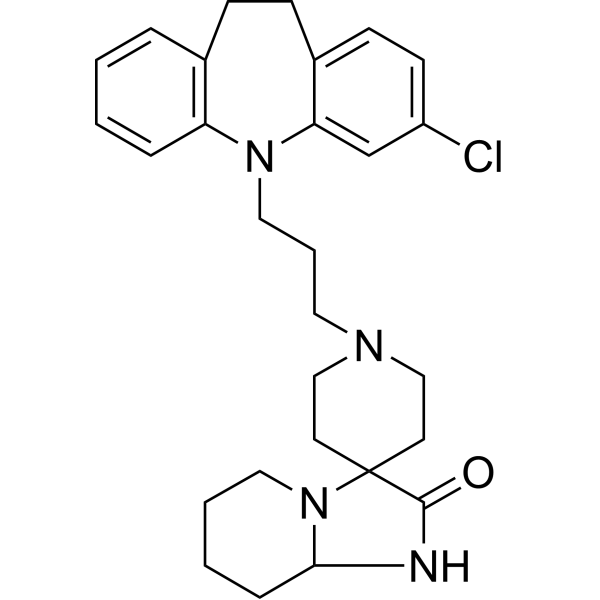
    Mosapramine (Clospipramine) is an orally active antipsychotic agent and one of the metabolites of Clocapramine (HY-B2073) after oral absorption. Mosapramine exerts its effects by specifically binding to striatal dopamine D2 receptors and frontal lobe 5-HT2 receptors, with a D2/5-HT2 receptor occupancy ratio of 7.4. Mosapramine induces typical neuropharmacological responses in rat brain regions, including extrapyramidal symptoms, hyperprolactinemia, increased salivation, constipation, and upregulated Fos protein expression. Mosapramine also features a reduced incidence of weight loss. Mosapramine is applicable to research related to schizophrenia .
    Mosapramine
  • HY-B0836R

    Reference Standards Parasite Sodium Channel Infection Neurological Disease Endocrinology
    λ-Cyhalothrin (Standard) is the analytical standard of λ-Cyhalothrin. This product is intended for research and analytical applications. λ-Cyhalothrin is a high efficiency, broad-spectrum type II synthetic pyrethroid insecticide containing α-cyano group. λ-Cyhalothrin is used to control a wide range of pests in a variety of applications. λ-Cyhalothrin is a neurotoxin that targets sodium channels in the membranes of neurons in the central nervous system .
    λ-Cyhalothrin (Standard)
  • HY-100265

    R5046

    Drug Derivative Neurological Disease
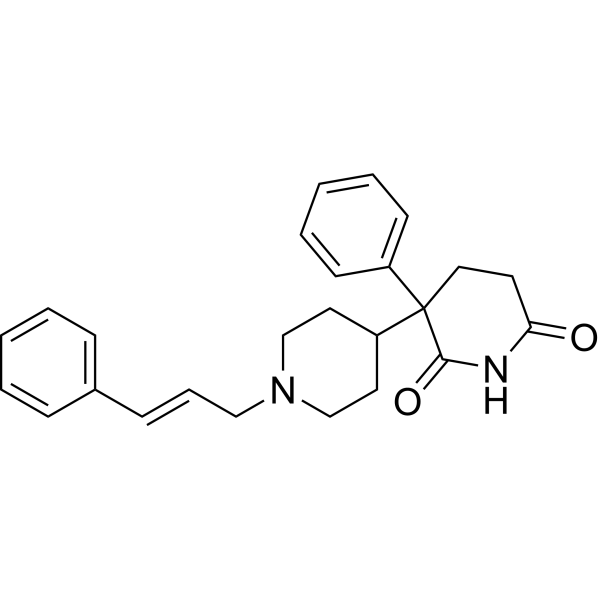
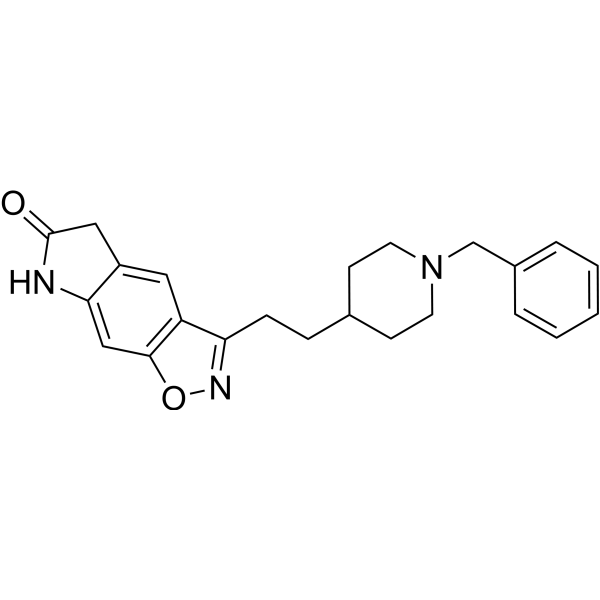
    Cinperene is an atropine-like agent which can block pilocarpine-induced lacrimation and salivation.
    Cinperene
  • HY-122548

    mAChR Endocrinology
    Butropium bromide is a competitive mAChR antagonist. Butropium bromide blocks acetylcholine-mediated glandular secretion and muscle contraction signals, suppressing salivary gland secretion and respiratory smooth muscle spasms. Butropium bromide is promising for research of excessive salivation .
    Butropium bromide
  • HY-N0584B

    6-Hydroxyhyoscyamine hydrochloride

    Adrenergic Receptor Inflammation/Immunology Cancer
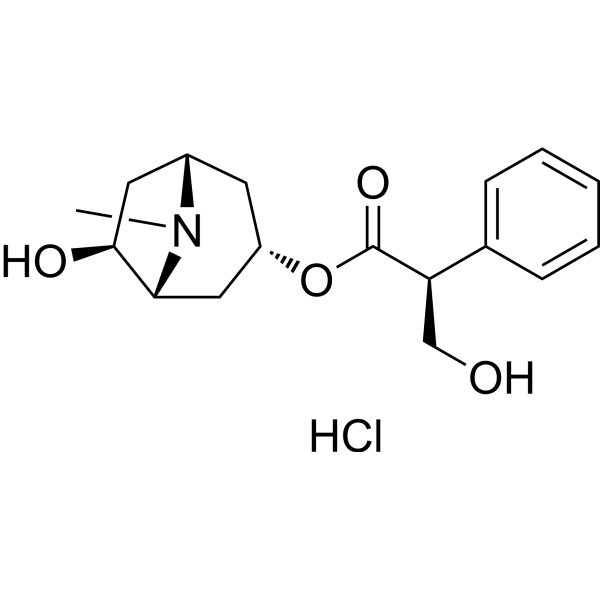
    Anisodamine hydrochloride is an anticholinergic and α1 adrenergic receptor antagonist. Anisodamine hydrochloride can be used for improving blood flow in circulatory disorders such as septic shock, Anisodamine hydrochloride displays a spectrum of pharmacological effects similar to Atropine (HY-B1205) and Sopolamine (HY-B2065) including inhibition of salivation, gastrointestinal and sweat secretion, gastrointestinal motility, respiratory secretion and urinary bladder contraction in vivo .
    Anisodamine hydrochloride
  • HY-122300B

    Levoprotiline

    Adrenergic Receptor Neurological Disease
    R-(-)-Oxaprotiline (Levoprotiline) is an antidepressant with anticholinergic and sympathostimulatory activities. R-(-)-Oxaprotiline exhibits different abilities to block norepinephrine uptake and anticholinergic activity compared to its enantiomer C 49802 B-Ba. R-(-)-Oxaprotiline in human studies shows physiological effects consistent with those in animals. Administration of R-(-)-Oxaprotiline results in a modest increase in heart rate and arterial blood pressure. Salivation is inhibited with R-(-)-Oxaprotiline, consistent with its anticholinergic properties. R-(-)-Oxaprotiline has similar effects to the established antidepressant compound Levoprotiline and has a shorter onset of action .
    R-(-)-Oxaprotiline
  • HY-70020BR

    AF102B hydrochloride (Standard)

    mAChR Reference Standards Neurological Disease Cancer
    Cevimeline (hydrochloride) (Standard) is the analytical standard of Cevimeline (hydrochloride). This product is intended for research and analytical applications. Cevimeline hydrochloride (AF102B hydrochloride) is a quinuclidine derivative of acetylcholine and a selective and orally active muscarinic M1 and M3 receptor agonist. Cevimeline hydrochloride stimulates secretion by the salivary glands and can be used as a sialogogue for xerostomia . Cevimeline hydrochloride can cross the blood-brain barrier (BBB) .
    Cevimeline hydrochloride (Standard)
  • HY-135754

    HSR-902

    mAChR Neurological Disease Inflammation/Immunology
    Tiquizium bromide is an orally active, atropine-type, nonselective muscarinic antagonist and novel spasmolytic agent. Tiquizium bromide inhibits the developments of gastric lesions and duodenal lesions. Tiquizium bromide induces the mydoriasis and inhibits the Pilocarpine (HY-B0726A)-induced salivation .
    Tiquizium bromide
  • HY-183144

    mAChR Neurological Disease Inflammation/Immunology
    Vedaclidine is an orally active muscarinic acetylcholine receptor (mAChR) modulator with mixed receptor activity, which activates muscarinic M2 and M4 receptors and blocks muscarinic M1, M3 and M5 receptors. Vedaclidine exerts its activity through interaction with spinal M4 muscarinic receptors, and does not induce hypothermia or excessive salivation. Vedaclidine can be used in research related to pain, neuropathic pain and inflammatory pain states .
    Vedaclidine
  • HY-76772R

    SNI-2011 (Standard); AF102B hydrochloride hemihydrate (Standard)

    mAChR Reference Standards Neurological Disease Cancer
    Cevimeline (hydrochloride hemihydrate) (Standard) is the analytical standard of Cevimeline (hydrochloride hemihydrate). This product is intended for research and analytical applications. Cevimeline hydrochloride hemihydrate (SNI-2011) is a quinuclidine derivative of acetylcholine and a selective and orally active muscarinic M1 and M3 receptor agonist. Cevimeline hydrochloride hemihydrate stimulates secretion by the salivary glands and can be used as a sialogogue for xerostomia . Cevimeline hydrochloride hemihydrate can cross the blood-brain barrier (BBB) .
    Cevimeline hydrochloride hemihydrate (Standard)
  • HY-W743773

    Parasite Infection
    γ-Cyhalothrin is an orally active, blood-brain barrier permeable Type II synthetic pyrethroid insecticide. γ-Cyhalothrin is the insecticidally active enantiomer of λ-Cyhalothrin (HY-B0836). γ-Cyhalothrin disrupts voltage-gated sodium channels, induces salivation and reduces spontaneous activity in rats. γ-Cyhalothrin exerts toxic effects on aquatic invertebrates and fish, triggers community-level effects in aquatic ecosystems, and inhibits host-seeking Ixodes scapularis nymphs in residential lawn ecotones. γ-Cyhalothrin is applicable to insecticidal-related research .
    γ-Cyhalothrin

Inquiry Online

Your information is safe with us. * Required Fields.

Salutation


Country or Region *

Applicant Name *


Organization Name *

Department *


Email Address *


Product Name *

Cat. No.


Requested quantity *

Phone Number *


Remarks

Inquiry Online

Inquiry Information

Product Name:
Cat. No.:
Quantity:
MCE Japan Authorized Agent:

