


1. Search Result
Search Result
Pathways Recommended: Stem Cell/Wnt
Results for "

stem region

" in MedChemExpress (MCE) Product Catalog:

15

Inhibitors & Agonists

2

Fluorescent Dyes

2

Biochemical Assay Reagents

2

Peptides

6

Inhibitory Antibodies

1

Oligonucleotides

1

GMP Molecules

Targets Recommended:
Cat. No. Nombre del producto Target Áreas de investigación Chemical Structure
  • HY-P99014
    Cusatuzumab
    1 Publications Verification

    ARGX-110

    Fc Receptor (FcR) NF-κB Inflammation/Immunology Cancer
    Cusatuzumab (ARGX-110) is a selective competitive blocker targeting CD70 (with an equilibrium dissociation constant of 17 pM for binding to human CD70). Cusatuzumab also possesses enhanced antibody-dependent cell-mediated cytotoxicity (ADCC) activity. It is a humanized IgG1 monoclonal antibody, artificially synthesized through humanization and genetic engineering modifications (CH2 region mutation to enhance effector function). Cusatuzumab has a dual mechanism of action: firstly, it competitively blocks the interaction between CD70 and CD27, inhibiting the CD27-NF-κB signaling pathway, reducing regulatory T cell (Treg) activation and tumor cell proliferation; secondly, by enhancing binding to FcγRIIIa, it mediates ADCC and antibody-dependent cellular phagocytosis (ADCP), directly lysing CD70-positive tumor cells. Cusatuzumab can efficiently eliminate leukemia stem cells (LSCs), induce tumor cell differentiation and apoptosis, restore immune surveillance, and target CD70-positive tumors. Cusatuzumab is used in the study of acute myeloid leukemia (AML) .
    Cusatuzumab
  • HY-145102

    HSP Apoptosis Cancer
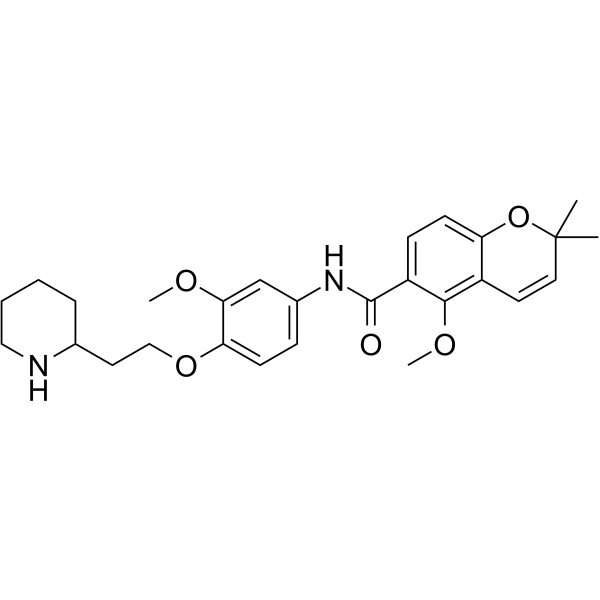
    NCT-58 is a potent inhibitor of C-terminal HSP90. NCT-58 does not induce the heat shock response (HSR) due to its targeting of the C-terminal region and elicits anti-tumor activity via the simultaneous downregulation of HER family members as well as inhibition of Akt phosphorylation. NCT-58 kills Trastuzumab-resistant breast cancer stem-like cells. NCT-58 induces apoptosis in HER2-positive breast cancer cells .
    NCT-58
  • HY-P99750

    CT-P23

    Influenza Virus Infection
    Navivumab (CT-P23) is a monoclonal antibody targeting the hemagglutinin (HA) of influenza A virus. Navivumab binds to the HA2 stem fusion domain and the low-variability HA2 region of influenza viruses. Navivumab neutralizes influenza A viruses of subtypes H1, H2, H5, and H9. Navivumab is applicable to research related to influenza and influenza A .
    Navivumab
  • HY-12854

    GRN163L

    Telomerase Apoptosis Cardiovascular Disease Cancer
    Imetelstat (GRN163L) is a 13-mer oligonucleotide and competitive Telomerase inhibitor. Imetelstat binds with high affinity to the template region of the RNA component of human telomerase. Imetelstat induces Apoptosis. Imetelstat is capable of selectively eliminating myelofibrosis hematopoietic stem cells. Imetelstat leads to the loss of a cancer cell's ability to maintain telomere length, resulting in the inhibition of cell proliferation .
    Imetelstat
  • HY-P99637

    MHAA4549A; RG7745

    Influenza Virus Infection
    Gedivumab (MHAA4549A; RG7745) is a human monoclonal antibody that targets influenza A virus (IAV) with high specificity and binds to the highly conserved stem region of the IAV haemagglutinin protein, thereby preventing haemagglutinin maturation and blocking haemagglutinin-mediated membrane fusion in the intranucleosome. Gedivumab can be used in IAV infection disease studies .
    Gedivumab
  • HY-P991059

    Influenza Virus Infection
    VIS-410 is an antibody inhibitor targeting the stem region of hemagglutinin (HA). VIS-410 inhibits influenza virus replication by blocking HA-mediated membrane fusion. VIS-410 exhibits broad-spectrum neutralization against influenza A viruses with group 1 and group 2 hemagglutinins, including subtypes such as H1N1, H3N2, H5N1, and H7N9 (H5N1 IC50 = 1.5 μg/mL). VIS-410 is applicable to research related to influenza A virus infection .
    VIS-410
  • HY-170781

    LIM Kinase (LIMK) Metabolic Disease
    MDI-114215 (compound 85) is an allosteric LIMK1/2 dual inhibitor with good in vivo tolerance. MDI-114215 can inhibit cofilin phosphorylation in mouse brain region-induced pluripotent stem cells (iPSCs), which can be used for Fragile X Syndrome (FXS) research .
    MDI-114215
  • HY-D0871

    N-Cyclohexyltaurine

    Biochemical Assay Reagents Influenza Virus Infection
    CHES (N-Cyclohexyltaurine) is a biological buffer reagent that binds to influenza virus hemagglutinin (HA). CHES mimics the binding mode of sialic acid to the HA receptor-binding site .
    CHES
  • HY-177980

    Nucleoside Antimetabolite/Analog Infection
    DNA-GAGA is a slow substrate for Ricin toxin A-chain (RTA). RTA depurinates a single adenylate on a GAGA stem-loop region of eukaryotic 28S RNA, making it a potent toxin .
    DNA-GAGA
  • HY-177979

    Nucleoside Antimetabolite/Analog Infection
    DNA-GAG is a slow substrate for Ricin toxin A-chain (RTA). RTA depurinates a single adenylate on a GAGA stem-loop region of eukaryotic 28S RNA, making it a potent toxin .
    DNA-GAG
  • HY-P10836

    Dengue Virus Infection
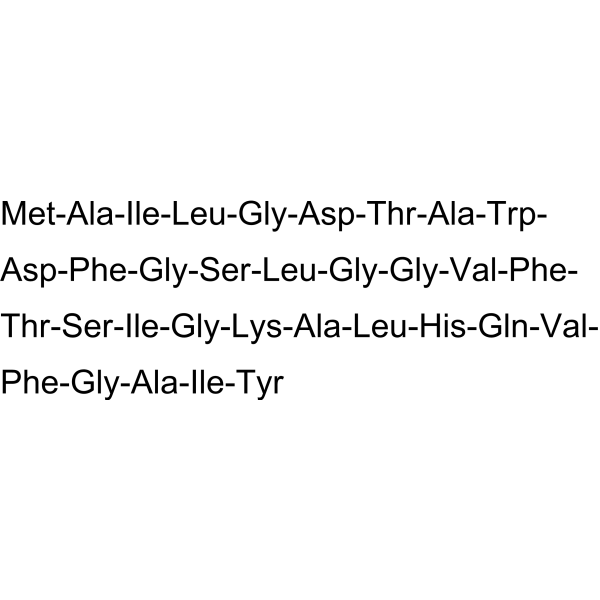
    DN59 is a 33 amino acid peptide that mimics the dengue virus type 2 E stem region. DN59 inhibits all four serotypes of dengue virus (IC50: 2-5 μM) as well as other flaviviruses. N59 causes the release of genomic RNA by interacting directly with viral particles. DN59 has antiviral activity .
    DN59
  • HY-149034

    S5

    Influenza Virus Infection Cancer
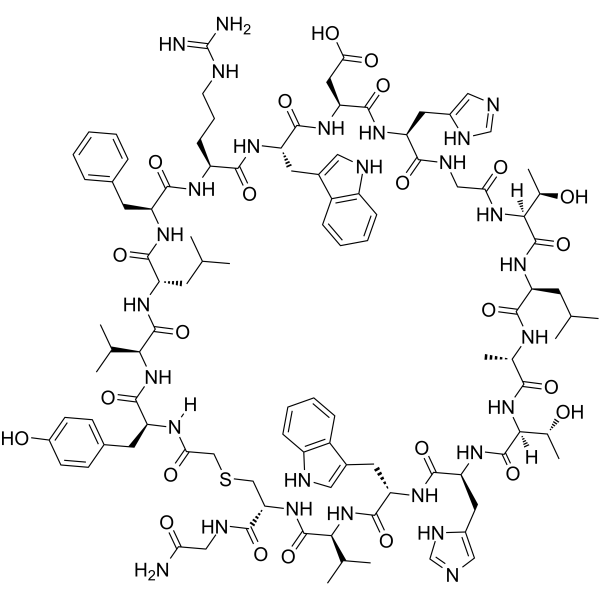
    Influenza A virus-IN-8 (S5) is a macrocyclic peptide with no cytotoxic. Influenza A virus-IN-8 is also a potent Influenza A Virus (IAV) inhibitor (with sufficient protease stability) with IC50s of 6.7 and 6.6 nM for H1 and H5 variants, respectively. Influenza A virus-IN-8 shows good affinitiescan to H1 variants, binds to a conserved region in the HA stem with a Kd of 1.0 nM .
    Influenza A virus-IN-8
  • HY-P992482

    Drug Derivative Influenza Virus Fc Receptor (FcR) Complement System Infection
    VIR-2482 is a monoclonal antibody targeting influenza A hemagglutinin (HA). VIR-2482 is generated by introducing LS mutations (M428L/N434S) into the Fc region of MEDI8852 (HY-P991446). VIR-2482 binds to the conserved HA stem epitope across all 18 influenza A HA subtypes, neutralizes a broad spectrum of H1N1 and H3N2 strains, binds to FcγRIIIa, FcγRIIa and C1q, and induces antibody-dependent cellular cytotoxicity and complement-dependent cytotoxicity. VIR-2482 reduces morbidity and mortality caused by seasonal influenza A strains and provides prophylactic protection in mice. VIR-2482 can be used in research related to influenza A disease .
    VIR-2482
  • HY-P992083

    Influenza Virus Infection
    Anti-Influenza HA Antibody (CR9114) is an antibody against influenza virus hemagglutinin. Anti-Influenza HA Antibody (CR9114) binds to the conserved hemagglutinin (HA) stalk region of influenza A and B viruses, and mediates cross-subtype neutralization. Anti-Influenza HA Antibody (CR9114) is applicable for influenza-related research .
    Anti-Influenza HA Antibody (CR9114)
  • HY-13689G

    PKC Histone Methyltransferase DNA Methyltransferase DNA/RNA Synthesis Inflammation/Immunology
    Go 6983 GMP is Go 6983 (HY-13689) produced by using GMP guidelines. GMP small molecules works appropriately as an auxiliary reagent for cell therapy manufacture. Go 6983 is a dual inhibitor targeting Suv39h1/2 (KMT1A/KMT1B) and PKC, as well as a transcriptional activator capable of inducing DNA hypomethylation. Go 6983 stimulates the transcription of Prdm14 by reducing Suv39h1/2 protein levels, decreasing histone modifications in the Prdm14 promoter region, and increasing the recruitment of RNA polymerase II. Go 6983 induces genome-wide DNA hypomethylation by inhibiting de novo methyltransferase expression and increasing Tet1/Tet2 levels, thereby promoting self-renewal and pluripotency maintenance of stem cells. Meanwhile, Go 6983 can block PKC-mediated signaling pathways to reduce the expression of EMT-related genes and eliminate the upregulation of antioxidant genes downstream of NRF2. Go 6983 is mainly used in mechanism studies related to myocardial ischemia/reperfusion injury .
    Go 6983

Consulta en línea

Your information is safe with us. * Required Fields.

Saludo


Country or Region *

Nombre del solicitante *


Nombre de la Organizaciòn *

Department *


Direcciòn del E-mail *


Nombre del producto *

Cat. No.


Requested quantity *

Número de teléfono *


Observaciones

Consulta en línea

Inquiry Information

Nombre del producto:
Cat. No.:
Cantidad:
MCE Japan Authorized Agent:

