1. Search Result
Search Result
Results for "

superoxide anion generation

" in MedChemExpress (MCE) Product Catalog:

24

Inhibitors & Agonists

2

Biochemical Assay Reagents

13

Natural
Products

Cat. No. Product Name Target Research Areas Chemical Structure
  • HY-101283
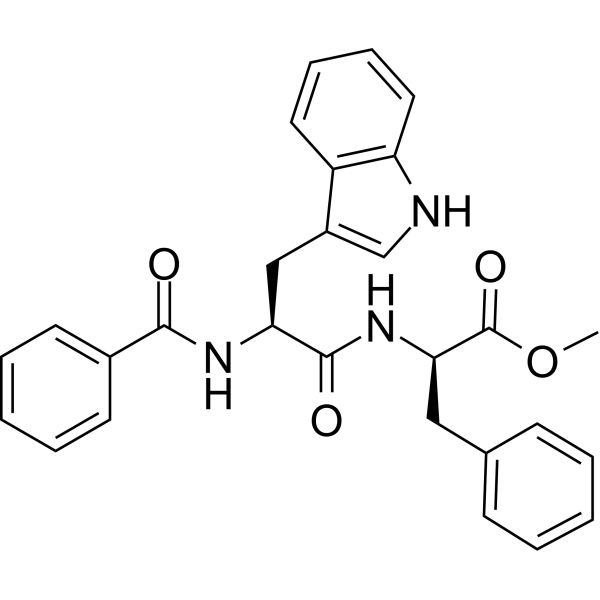
    HCH6-1
    5 Publications Verification

    Formyl Peptide Receptor (FPR) Inflammation/Immunology
    HCH6-1 is a potent and competitive dipeptide antagonist of Formyl peptide receptor 1 (FPR1). HCH6-1 inhibits chemotaxis, superoxide anion generation, and elastase release in human neutrophils specifically activated by fMLF (an FPR1 agonist). HCH6-1 has protective effects against acute lung injury (ALI) in vivo and can be used for the research of FPR1-involved inflammatory lung diseases .
    HCH6-1
  • HY-Y0651

    Environmental Pollutants Biochemical Assay Reagents Infection Inflammation/Immunology
    Sodium sulfite is an inorganic salt used as an antioxidant and preservative. Sodium sulfite is also used in sulfonation and sulfomethylation reactions. Sodium sulfite can also be used as a bleaching agent, desulfurizer, and dechlorinator. Sodium sulfite inhibits hepatocyte proliferation, promotes hepatocyte apoptosis and necrosis, and impairs mitochondrial integrity. Sodium sulfite induces superoxide anion production, primes neutrophils for enhanced superoxide anion generation, and induces neutrophil gene expression. Sodium sulfite can be used in studies related to pulmonary inflammation and gastric tissue injury .
    Sodium sulfite
  • HY-W115721

    Sodium rhodizonate dibasic

    Reactive Oxygen Species (ROS) DNA/RNA Synthesis Others
    Rhodizonic acid disodium (Sodium rhodizonate dibasic) is a transition metal-dependent pro-oxidant and lead detection agent that induces reactive oxygen species generation, DNA damage, and inhibits Aconitase activity. Rhodizonic acid disodium generates superoxide anion radicals in an iron (II)-dependent manner, leading to aconitase inactivation. Rhodizonic acid disodium also triggers hydroxyl radical-mediated DNA strand breaks and 8-OHdG formation via copper ion reduction. Rhodizonic acid disodium reacts with lead to form a scarlet precipitate, with the color intensity proportional to lead content, enabling qualitative or quantitative analysis of lead. Rhodizonic acid disodium can also be used for real-time visualization of the dynamic process of lead sequestration in the plant rhizosphere and evaluation of the effects of environmental factors such as soil type on the stability of lead-sequestering structures .
    Rhodizonic acid disodium
  • HY-N13250

    Apoptosis AMPK Elastase Bcl-2 Family Interleukin Related Caspase PI3K Akt SOD Cardiovascular Disease
    Hawthorn Extract is an orally active hawthorn extract. Hawthorn Extract decreases Bax expression and increases Bcl-2 expression in the aorta. Hawthorn Extract regulates the AMPK signaling pathway, induces apoptosis, enhances the hepatic antioxidant system, and ameliorates symptoms of liver injury, inflammation and cancer. Hawthorn Extract reduces plasma levels of pro-inflammatory factors, increases plasma levels of anti-inflammatory adiponectin, and alleviates atherosclerotic plaque lesions in the aorta. Hawthorn Extract improves symptoms associated with chronic heart failure . Hawthorn Extract inhibits FMLP-induced superoxide anion production, Elastase release, ILB4 generation and calcium signaling in neutrophils, and also reduces LPS-induced cytokine production in neutrophils. Hawthorn Extract induces autophagy and inhibits the proliferation of intestinal stem cells. Hawthorn Extract can be used in research related to atherosclerosis, hepatitis, alcoholic liver disease, non-alcoholic fatty liver disease, hepatocellular carcinoma, chronic heart failure and hypotension .
    Hawthorn Extract
  • HY-N10450

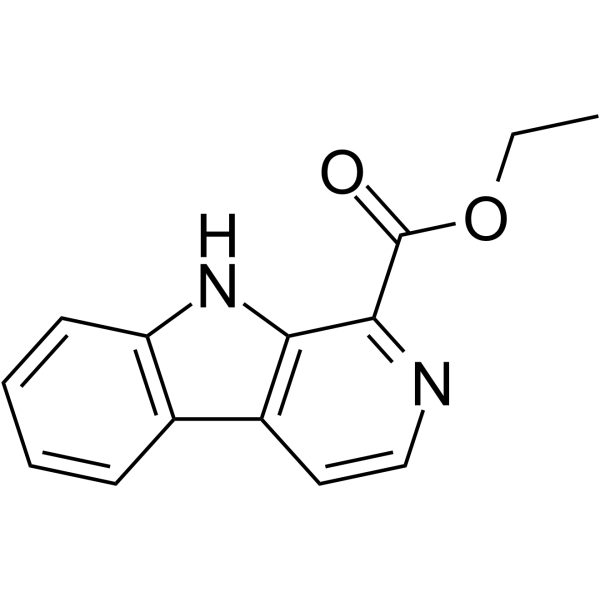
    1-Ethoxycarbonyl-β-carboline

    Reactive Oxygen Species (ROS) Inflammation/Immunology
    Kumujian A (1-Ethoxycarbonyl-β-carboline), an anti-inflammatory agent, inhibits both superoxide anion generation (IC50 = 4.87 μg/mL) and elastase release (IC50 = 6.29 μg/mL) .
    Kumujian A
  • HY-132132

    Elastase Inflammation/Immunology
    Neutrophil elastase inhibitor 3 (compound 13), a benzoxazinone analog, shows effects on superoxide anion generation and exhibits as a neutrophil elastase (NE) inhibitor, with an IC50 of 80.8 nM for NE release .
    Neutrophil elastase inhibitor 3
  • HY-N3388

    Stearoyl-CoA Desaturase (SCD) Infection Inflammation/Immunology Cancer
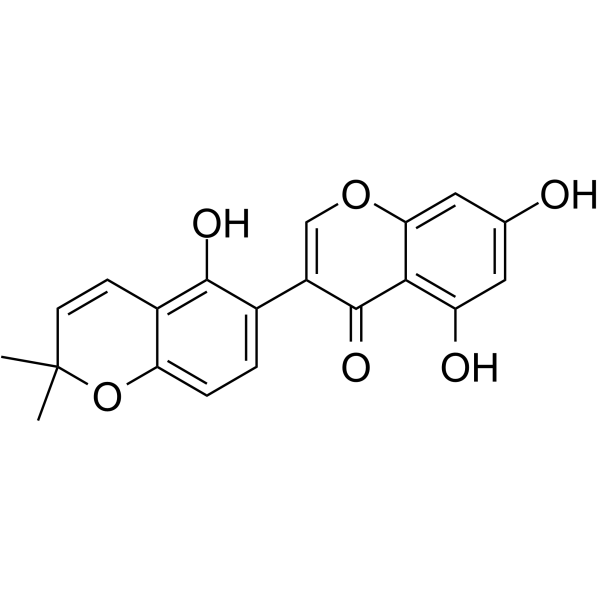
    Licoisoflavone B is an orally active flavonoid found in licorice. Licoisoflavone B alleviates psoriasis via SCD1-targeted lipid metabolism reprogramming and suppression of Th17/IL-17-mediated inflammation. Licoisoflavone B inhiibits superoxide anion generation and superoxide anion-induced lipid peroxidation. Licoisoflavone B binds tightly to Lassa virus nucleoprotein and can be used as a nucleoprotein antagonist of Lassa virus. Licoisoflavone B exhibits anti-mutagenic activity
    against carcinogenic mutagen, by preventing DNA damage. Licoisoflavone B can be used for the research of psoriasis, Lassa fever, inflammation and cancer .
    Licoisoflavone B
  • HY-156468

    Reactive Oxygen Species (ROS) Inflammation/Immunology
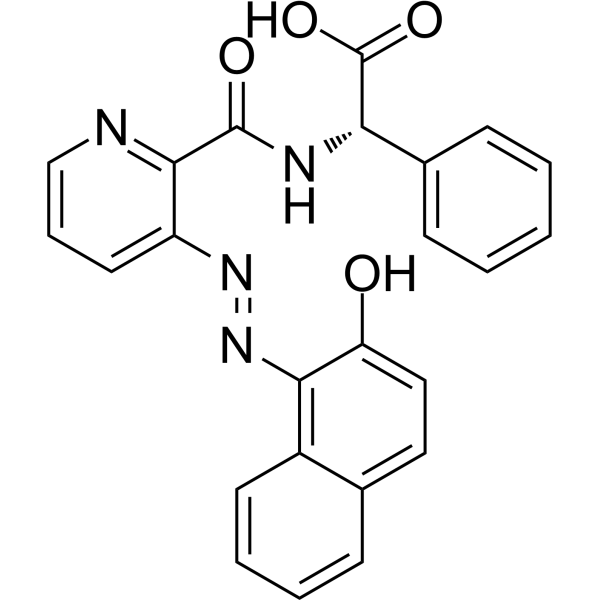
    Antioxidant agent-17 (compound 59) is a potent inhibitor of superoxide anion generation activity, with an IC50 of 9.06 nM .
    Antioxidant agent-17
  • HY-N8217

    Others Inflammation/Immunology
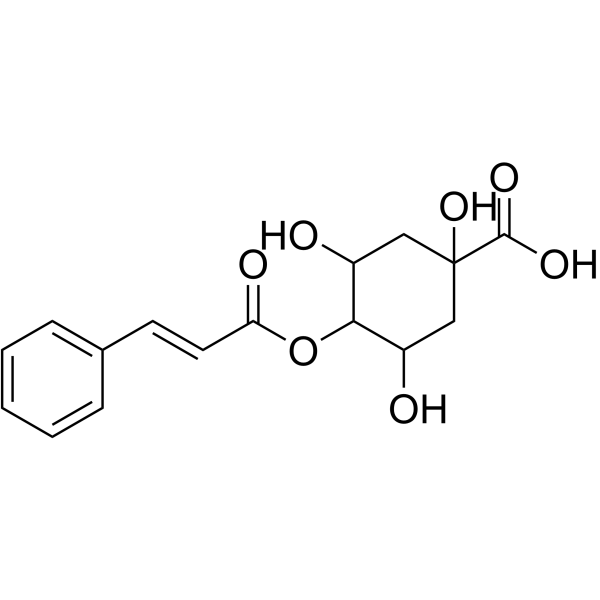
    4-O-Cinnamoylquinic acid could inhibit superoxide anion generation in human neutrophils .
    4-O-Cinnamoylquinic acid
  • HY-U00005

    Reactive Oxygen Species (ROS) Inflammation/Immunology
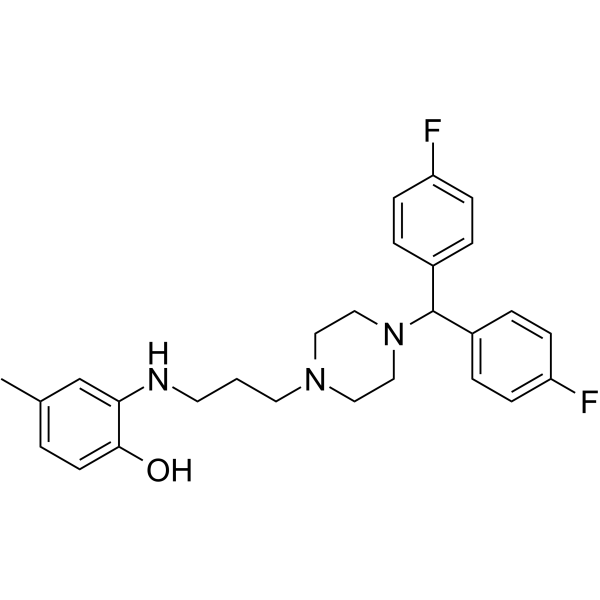
    AD 0261 is a radical scavenger which displays strong inhibitory action on the generation of lipid peroxides and superoxide anions.
    AD 0261
  • HY-N11564

    Elastase Inflammation/Immunology
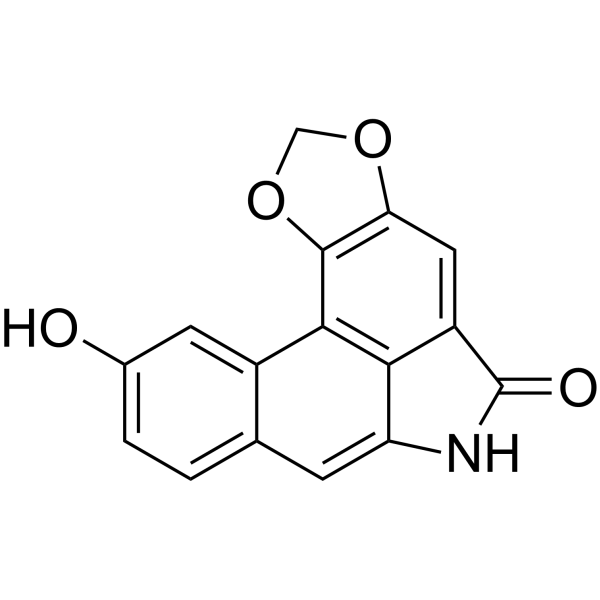
    Aristololactam IIIa exhibits significant inhibitory effects on superoxide anion generation and elastase release with IC50 values of 0.12 and 0.20 μg/mL, respectively .
    Aristololactam IIIa
  • HY-N8447

    Others Others
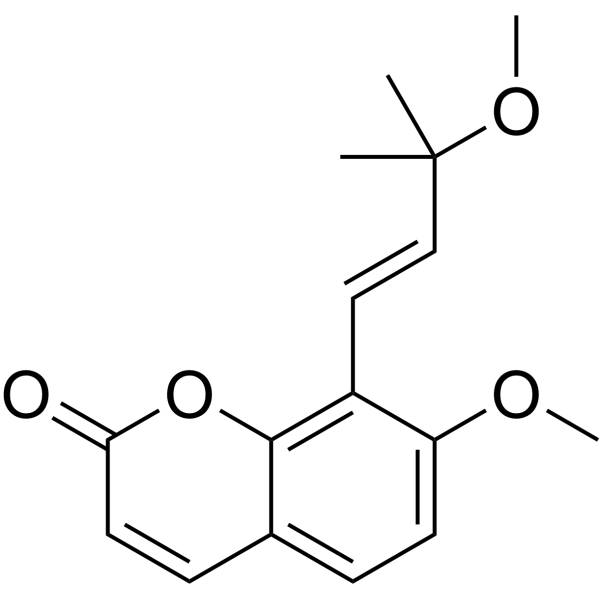
    3'-O-Methylmurraol is a coumarinthat can be found in Cnidium monnieri. 3'-O-Methylmurraol inhibits superoxide radical anion generation and elastase release .
    3'-O-Methylmurraol
  • HY-N18241

    Others Inflammation/Immunology
    Hibiscolactone A is a 2H-naphtho[2,3-b]furan-2-one derivative and a superoxide anion generation inhibitor, which can be isolated from the stems of Pachira aquatica. The IC50 value of Hibiscolactone A against fMLP (HY-P0224)-induced human neutrophil activity (inhibiting superoxide anion generation) is 63.22 μM .
    Hibiscolactone A
  • HY-176403

    Formyl Peptide Receptor (FPR) Inflammation/Immunology
    FPR1 antagonist 3 (compound 10) is a potent and selective FPR1 antagonist. FPR1 antagonist 3 inhibits superoxide anion generation and elastase release with IC50s of 0.33 and 0.84 μM, respectively .
    FPR1 antagonist 3
  • HY-116730

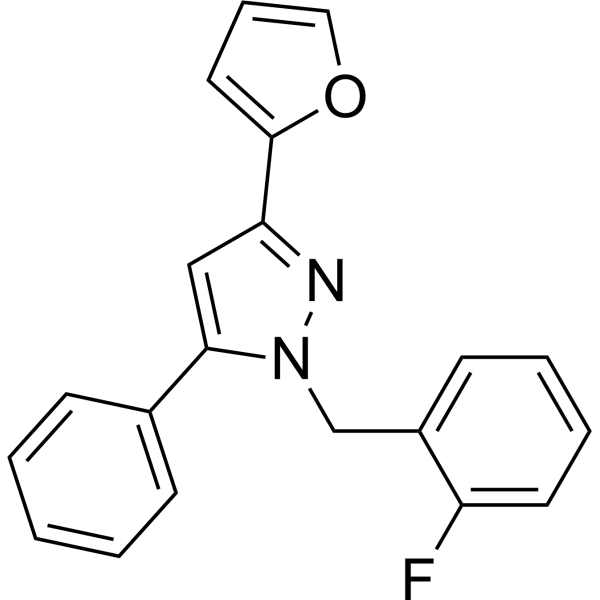
    Reactive Oxygen Species (ROS) Others
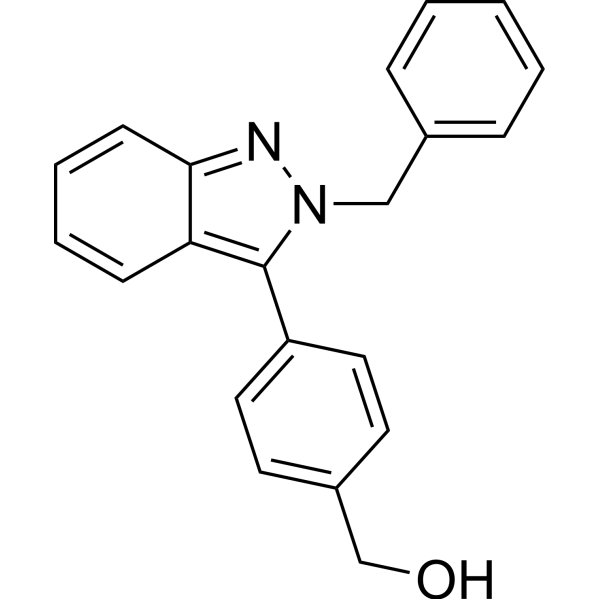
    CHS-111 is a benzyl indazole inhibitor of superoxide anion O 2- generation. CHS-111 inhibits the cell migration, and reduces the formyl-Met-Leu-Phe- but not phorbol ester-stimulated phospholipase D activity, with the IC50 of 3.9 μM .
    CHS-111
  • HY-156241

    NO Synthase Fungal Infection Inflammation/Immunology
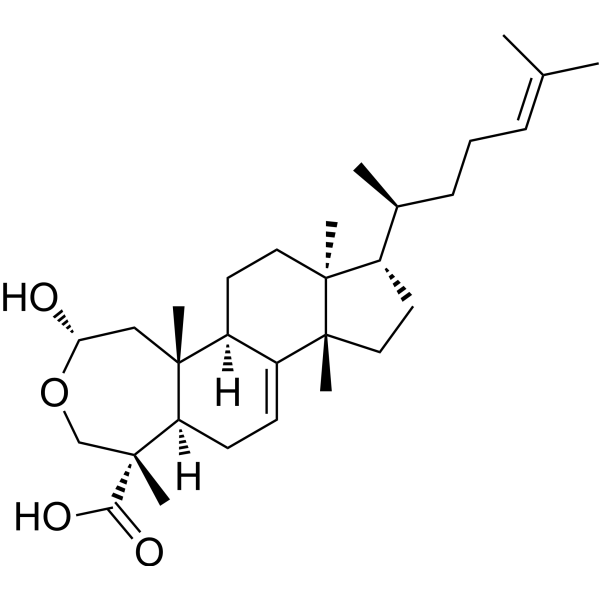
    Meliadubin B is a natural triterpenoid with significant inflammatory inhibition effect toward superoxide anion generation in human neutrophils (EC50 of 5.54 μM). Meliadubin B inhibits inducible nitric oxide synthase. Meliadubin B shows remarkable inhibition against the rice pathogenic fungus Magnaporthe oryzae with IC50 of 182.50 μM.
    Meliadubin B
  • HY-121586

    Bay g 6575

    Lipoxygenase Cardiovascular Disease
    Nafazatrom (Bay g 6575) is an orally active cardioprotective agent that protects against ischemic damage. Nafazatrom dose-dependently inhibits neutrophil aggregation, superoxide anion generation, arachidonic acid metabolism, and to a lesser extent the release of β-glucosidase, platelet aggregation or arachidonic acid in vitro. Acid metabolism has no significant effect. In a dog ischemia-reperfusion model, Nafazatrom (10 mg/kg; po) reduced infarct size and the occurrence of arrhythmias and rescued ischemic myocardial function without affecting any hemodynamic changes. The basis of Nafazatrom's cardioprotection may be inhibition of neutrophil function and cellular infiltration in vitro .
    Nafazatrom
  • HY-N19660

    Elastase Inflammation/Immunology
    (1'S,2'S)-1'-O-Methylvaginol, a coumarin found in the fruits of Cnidium monnieri, is an elastase inhibitor. (1'S,2'S)-1'-O-Methylvaginol exhibits 11.99% inhibition of superoxide anion generation and 6.42% inhibition of elastase release by human neutrophils at 10 µg/mL. (1'S,2'S)-1'-O-Methylvaginol can be used for research on inflammatory diseases .
    (1'S,2'S)-1'-O-Methylvaginol
  • HY-N17409

    Drug Derivative Others
    Eupatobenzofuran is a dihydrobenzofuran derivative that can be found in the aerial part of Eupatorium cannabinum subsp. asiaticum. Eupatobenzofuran inhibits fMLP/CB-induced elastase release by human neutrophils with an IC50 value of 11.3 μM .
    Eupatobenzofuran
  • HY-N17365

    Drug Derivative Others
    2-Hydroxy-2,6-dimethyl-3-benzofuranone (compound 4) is a benzofuranone derivative that can be found in the aerial part of Eupatorium cannabinum subsp. asiaticum .
    2-Hydroxy-2,6-dimethyl-3-benzofuranone
  • HY-183570

    Photosensitizer Reactive Oxygen Species (ROS) Cancer
    Antitumor photosensitizer-11 is a type-I carbazole/benzindolium photosensitizer with antitumor activity. Antitumor photosensitizer-11 induces ROS generation via a type-I pathway, forming superoxide anions and hydroxyl radicals. Antitumor photosensitizer-11 triggers immunogenic cell death in cancer cells via enhanced oxidative stress. Antitumor photosensitizer-11 exhibits antiproliferative activity in normoxic and hypoxic environments, inhibits breast cancer tumor growth in vivo, and promotes dendritic cell maturation and T cell infiltration. Antitumor photosensitizer-11 can be used for the research of cancer, such as breast cancer .
    Antitumor photosensitizer-11
  • HY-101283R

    Formyl Peptide Receptor (FPR) Reference Standards Inflammation/Immunology
    HCH6-1 (Standard) is the analytical standard of HCH6-1 (HY-101283). This product is intended for research and analytical applications. HCH6-1 is a potent and competitive dipeptide antagonist of Formyl peptide receptor 1 (FPR1). HCH6-1 inhibits chemotaxis, superoxide anion generation, and elastase release in human neutrophils specifically activated by fMLF (an FPR1 agonist). HCH6-1 has protective effects against acute lung injury (ALI) in vivo and can be used for the research of FPR1-involved inflammatory lung diseases .
    HCH6-1 (Standard)
  • HY-N17997

    Others Infection
    Pilosulyne D is a polyyne found in the roots of Codonopsis pilosula .
    Pilosulyne D
  • HY-N19297

    Prieurianin

    Elastase Inflammation/Immunology Cancer
    Endosidin1 (Prieurianin) is a Prieurianin with cleaved A and B rings. Endosidin1 is isolated from the roots of Aphanamixis polystachya. Endosidin1 inhibits superoxide anion production and Elastase release in neutrophils, with an IC50 >10 μg/mL. Endosidin1 exhibits mild cytotoxic activity against laryngeal cancer cells in vitro. Endosidin1 shows anti-inflammatory activity. Endosidin1 can be used in studies related to laryngeal cancer .\n

    Endosidin1

Inquiry Online

Your information is safe with us. * Required Fields.

Salutation


Country or Region *

Applicant Name *


Organization Name *

Department *


Email Address *


Product Name *

Cat. No.


Requested quantity *

Phone Number *


Remarks

Inquiry Online

Inquiry Information

Product Name:
Cat. No.:
Quantity:
MCE Japan Authorized Agent:

