

30 Results for "

tissue hypoxia

" in MedChemExpress (MCE) Product Catalog:
Products (30)

30 Results for "tissue hypoxia" in MCE Product Catalog:

17
17 Publications Verification
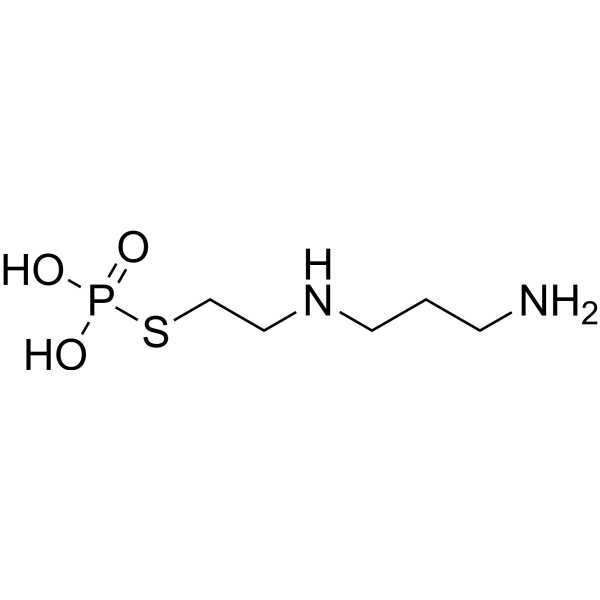
Cat. No.: HY-B0639
CAS No.: 20537-88-6
Synonyms: WR2721
Domaines de recherche:  

Cancer

Amifostine (WR2721) is a broad-spectrum cytoprotective agent and a radioprotector. Amifostine selectively protects normal tissues from damage caused by radiation and chemotherapy. Amifostine is potent hypoxia-inducible factor-α1 (HIF-α1) and p53 inducer. Amifostine protects cells from damage by scavenging oxygen-derived free radicals. Amifostine reduces renal toxicity and has antiangiogenic action .
loading...
    loading...
17
17 Publications Verification
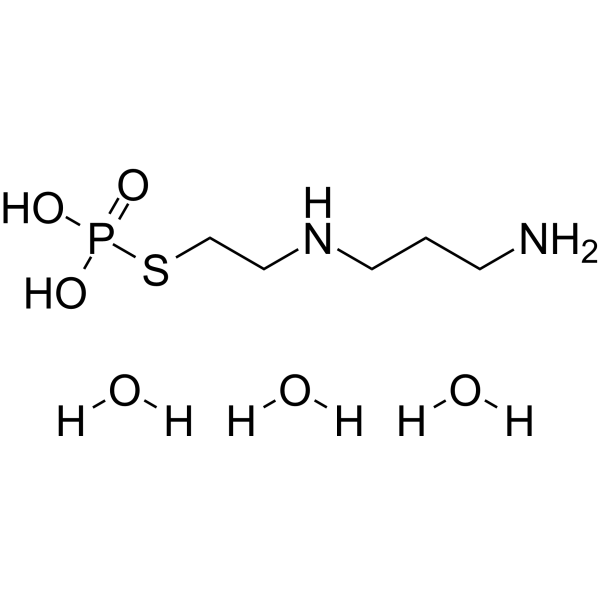
Cat. No.: HY-B0639A
CAS No.: 112901-68-5
Synonyms: WR2721 trihydrate
Domaines de recherche:  

Cancer

Amifostine trihydrate (WR2721 trihydrate) is a broad-spectrum cytoprotective agent and a radioprotector. Amifostine trihydrate selectively protects normal tissues from damage caused by radiation and chemotherapy. Amifostine trihydrate is potent hypoxia-inducible factor-α1 (HIF-α1) and p53 inducer. Amifostine trihydrate protects cells from damage by scavenging oxygen-derived free radicals. Amifostine trihydrate reduces renal toxicity and has antiangiogenic action .
loading...
    loading...
1
1 Cited Publications
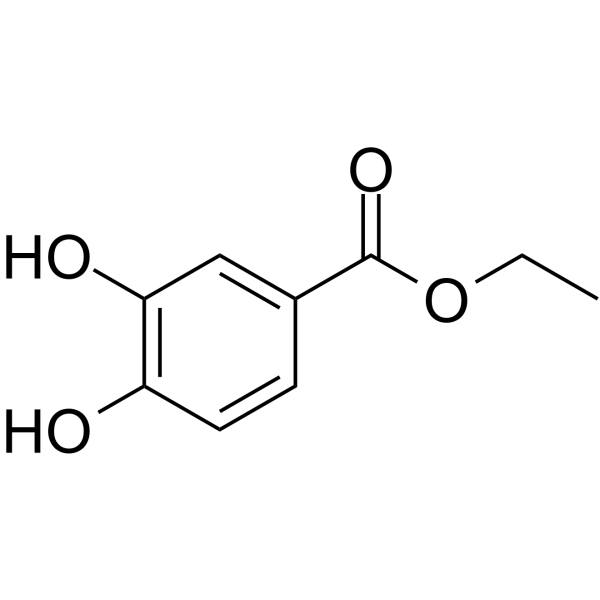
Cat. No.: HY-W016409
CAS No.: 3943-89-3
Synonyms: Protocatechuic acid ethyl ester
Ethyl 3,4-dihydroxybenzoate (Protocatechuic acid ethyl ester) is an orally effective, blood-brain barrier-permeable, competitive prolyl hydroxylase (PHD) inhibitor that inhibits the hydroxylation modification of hypoxia-inducible factor (HIF) by PHD. Ethyl 3,4-dihydroxybenzoate stabilizes HIF-1α by inhibiting PHD, activates downstream pathways to induce autophagy and apoptosis of tumor cells, and regulates inflammatory responses, inhibits the NF-κB pathway, improves vascular permeability, and promotes osteoblast differentiation. Ethyl 3,4-dihydroxybenzoate has anti-tumor, anti-hypoxic injury, and bone metabolism regulation effects. It can also be used in the research of cardiovascular protection (such as reducing myocardial ischemic damage), bone tissue engineering (promoting osteogenesis/inhibiting osteoclast differentiation), and prevention and treatment of high-altitude cerebral edema .
loading...
    loading...
Cat. No.: HY-172371
CAS No.: 2414508-40-8
Hypoxystat is an orally active hypoxia mimetic. HypoxyStat increases Hemoglobin’s oxygen affinity, limiting oxygen offloading to the tissues and inducing local tissue hypoxia. Hypoxystat reduces Iba1 + cells. HypoxyStat causes systemic hypoxia. Hypoxystat effectively rescues hyperglycemia in mouse models of type 1 and type 2 diabetes. HypoxyStat not only extends lifespan but also rescues key neuropathological and behavioral deficits in the premier mouse model of Leigh syndrome .
loading...
    loading...
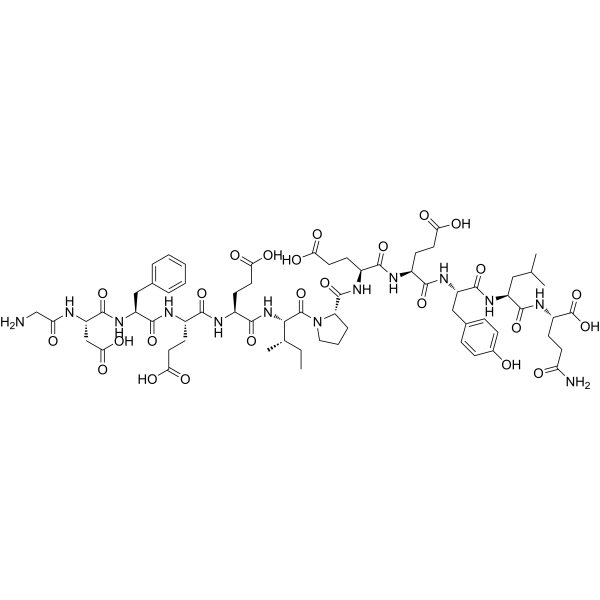
Cat. No.: HY-P1636
CAS No.: 113274-56-9
Domaines de recherche:  

Metabolic Disease

Hirudin (54-65) is a thrombin antagonist and YAP suppressor with anticoagulatory properties.Hirudin (54-65) blocks thrombin's anion binding site, acts on soluble and thrombus-bound thrombin.Hirudin (54-65) suppresses thrombin-induced profibrotic YAP activity, reduces YAP expression, nuclear translocation, and downstream effector signaling in vascular endothelial cells.Hirudin (54-65) ameliorates obstructive cholestasis, attenuates liver fibrosis symptoms, fibrosis-associated angiogenesis, and endothelial-to-mesenchymal transition.Hirudin (54-65) reduces liver inflammation and tissue hypoxia.Hirudin (54-65) promotes extracellular calcium influx through L-type calcium channels in canine coronary artery smooth muscle, mediates contraction.Hirudin (54-65) induces endothelium-independent contraction of canine coronary arterial segments; this response is not affected by indomethacin pretreatment.Hirudin (54-65) can be used for the research of liver obstructive cholestasis, liver fibrosis .
loading...
    loading...
Cat. No.: HY-B1237
CAS No.: 54767-75-8
Target:  

Calcium Channel Fungal

Domaines de recherche:  

Cardiovascular Disease Infection

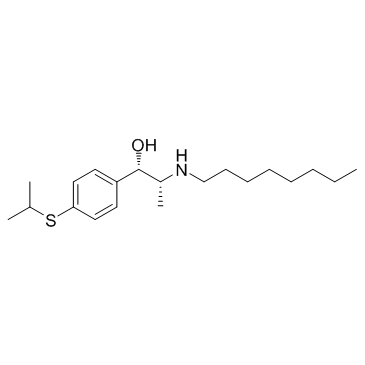
Suloctidil is an orally active calcium channel blocker and antifungal agent. Suloctidil antagonizes vasoconstriction induced by norepinephrine, angiotensin and serotonin. Suloctidil inhibits platelet function and exhibits neuroprotective effects. Suloctidil exerts inhibitory effects on Candida albicans biofilm and virulence. Suloctidil can be used in research on vasospasm relief, antithrombosis and superficial candidiasis .
loading...
    loading...
Cat. No.: HY-12760
CAS No.: 26844-12-2
Pureté:  99.80%
Synonyms: Indoramine; Wy 21901
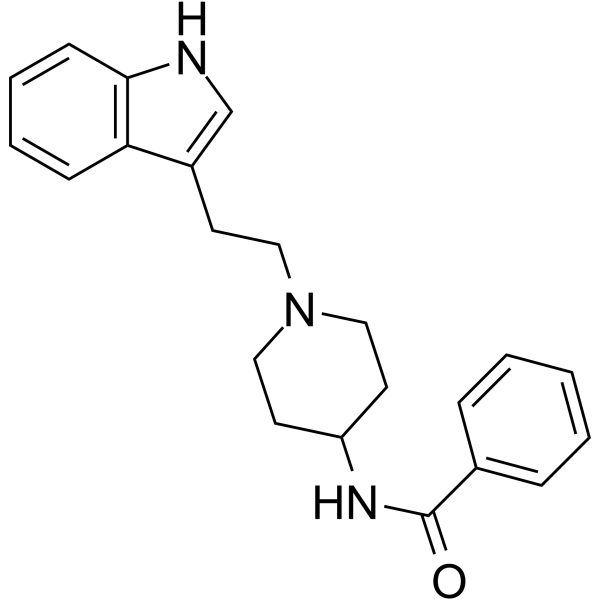
Indoramin (Wy 21901) is a competitive and selective α1-adrenoceptor antagonist. Indoramin reduces peripheral vascular resistance, blood pressure, heart rate and myocardial contractility in experimental animals. Under hypoxic conditions, Indoramin increases ATP synthesis in brain tissue, maintains cerebral ATP levels, and alleviates hypoxia-related swelling of synaptosomes, cerebral microvessels and the whole brain. Indoramin can be used in studies related to hypertension, cardiovascular regulation and cerebral hypoxia .
loading...
    loading...
Cat. No.: HY-W141392
CAS No.: 2245842-16-2
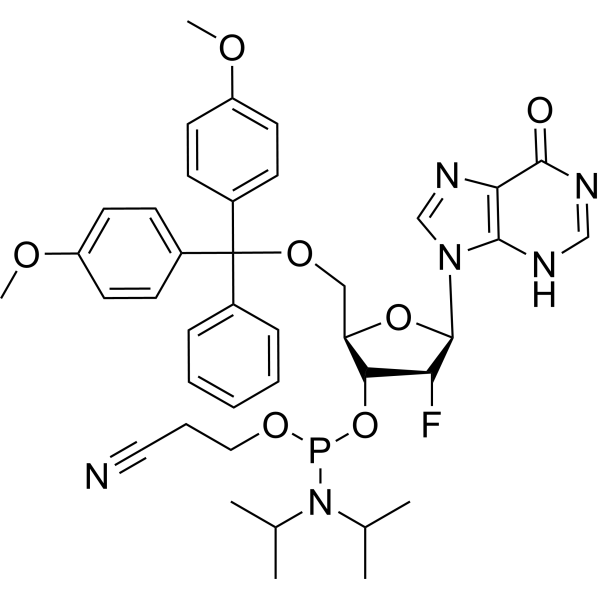
2'-Fluoro-5'-O-DMT-2'-deoxyinosine-3'-CE-phosphoramidite is a hypoxanthine analog. Hypoxanthine is a kind of purine base mainly present in muscle tissue. And it is a metabolite produced by purine oxidase acting on xanthine. Hypoxanthine has typical anti-inflammatory effects and is a potential endogenous poly(ADP-ribose) polymerase (PARP) inhibitor. It is cytoprotective by inhibiting PAPR activity, inhibiting peroxynitrite-induced mitochondrial depolarization and secondary superoxide production. Hypoxanthine can also be used as an indicator of hypoxia .
loading...
    loading...
Cat. No.: HY-P0316
CAS No.: 121341-81-9
Target:  

Thrombin NO Synthase

Domaines de recherche:  

Cardiovascular Disease

TP508 is a 23-amino acid nonproteolytic thrombin peptide that represents a portion of the receptor-binding domain of thrombin molecule. TP508 activates endothelial NO synthase (eNOS) and stimulates production of NO in human endothelial cells. TP508 activates endothelial cells and stem cells to revascularize and regenerate tissues .
loading...
    loading...
Cat. No.: HY-P0316A
Target:  

Thrombin NO Synthase

Domaines de recherche:  

Cardiovascular Disease

TP508 TFA is a 23-amino acid nonproteolytic thrombin peptide that represents a portion of the receptor-binding domain of thrombin molecule. TP508 TFA activates endothelial NO synthase (eNOS) and stimulates production of NO in human endothelial cells. TP508 TFA activates endothelial cells and stem cells to revascularize and regenerate tissues .
loading...
    loading...
Cat. No.: HY-106509
CAS No.: 77858-21-0
Pureté:  99.59%
Synonyms: BW 12C; 12C79; BW 12C79
Target:  

Hemoglobin

Domaines de recherche:  

Cardiovascular Disease Cancer

Velaresol (BW 12C) is a small molecule oxyhemoglobin stabilizer. Velaresol stabilizes hemoglobin’s oxy-conformation, shifts oxygen dissociation curves left, induces tumor hypoxia, alters radiosensitivity, protects normal tissues from radiation damage, and reduces sickled cell counts. Velaresol can be used for the research of cancer and sickle cell disease .
loading...
    loading...
Cat. No.: HY-152696
CAS No.: 5746-29-2
Domaines de recherche:  

Others

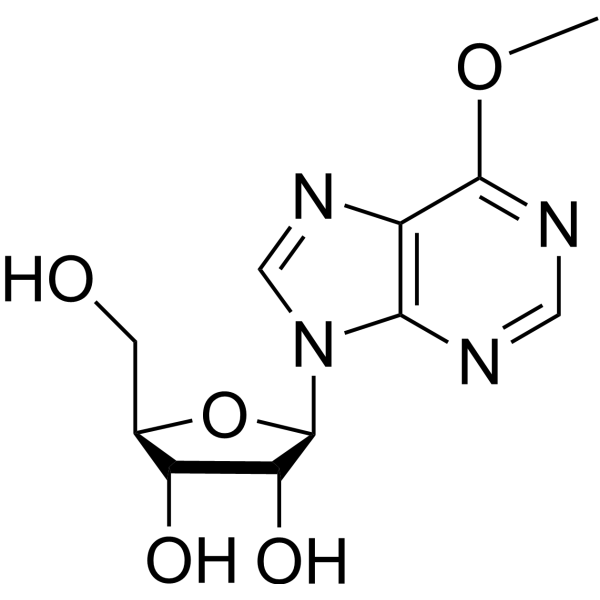
6-O-Methylinosine is a hypoxanthine analogue. Hypoxanthine is a kind of purine base mainly present in muscle tissue. And it is a metabolite produced by purine oxidase acting on xanthine. Hypoxanthine has typical anti-inflammatory effects and is a potential endogenous poly(ADP-ribose) polymerase (PARP) inhibitor. It is cytoprotective by inhibiting PAPR activity, inhibiting peroxynitrite-induced mitochondrial depolarization and secondary superoxide production. Hypoxanthine can also be used as an indicator of hypoxia .
loading...
    loading...
Cat. No.: HY-127022
CAS No.: 52646-92-1
Synonyms: Daturamine; α-Hydroxyscopolamine
Anisodine (Daturamine) is a neuroprotective compound that reduces exacerbated M1, M2, M4, and M5 receptor expression in brain tissues under hypoxia/reoxygenation conditions. Anisodine inhibits calcium ion influx and reactive oxygen species (ROS)levels. Anisodine leads to decreased aspartate levels during hypoxia .
loading...
    loading...
Cat. No.: HY-127022A
CAS No.: 76822-34-9
Synonyms: Daturamine hydrobromide; α-Hydroxyscopolamine hydrobromide
Anisodine (Daturamine) hydrobromide is a neuroprotective compound that reduces exacerbated M1, M2, M4, and M5 receptor expression in brain tissues under hypoxia/reoxygenation conditions. Anisodine hydrobromide inhibits calcium ion influx and reactive oxygen species (ROS)levels. Anisodine hydrobromide leads to decreased aspartate levels during hypoxia .
loading...
    loading...
Cat. No.: HY-123659
CAS No.: 861218-37-3
Domaines de recherche:  

Cardiovascular Disease Cancer

KR-33028 is a selective NHE1 inhibitor. KR-33028 reduces hypoxia-induced necrosis and apoptosis in H9c2 cells. KR-33028 inhibits hypoxia-induced increases in cytoplasmic and mitochondrial Ca 2+ levels and cytochrome c release. KR-33028 improves cardiac contractility, reduces lactate dehydrogenase release, and increases tissue ATP, creatine phosphate, and glycogen levels. KR-33028 can be used in research on cancers such as cardioblastoma and cardiovascular diseases such as ischemic stroke .
loading...
    loading...
Cat. No.: HY-W392836
CAS No.: 128219-85-2
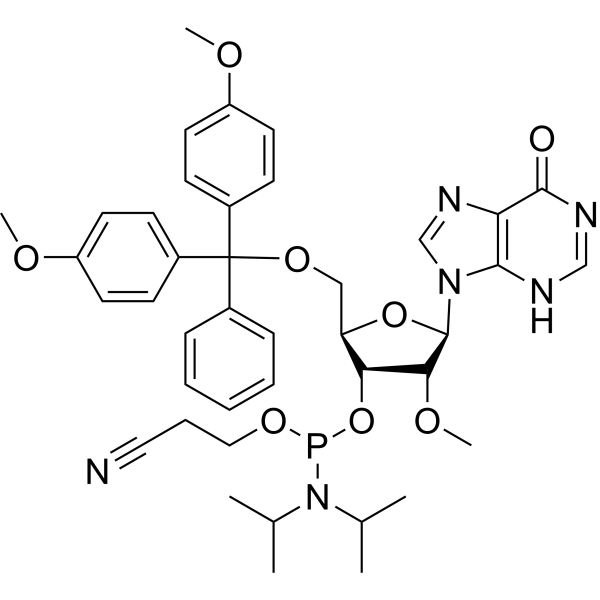
2'-O-Methyl-5'-O-dmt-inosine-3'-CE-phosphoramidite is a hypoxanthine analog. Hypoxanthine is a kind of purine base mainly present in muscle tissue. And it is a metabolite produced by purine oxidase acting on xanthine. Hypoxanthine has typical anti-inflammatory effects and is a potential endogenous poly(ADP-ribose) polymerase (PARP) inhibitor. It is cytoprotective by inhibiting PAPR activity, inhibiting peroxynitrite-induced mitochondrial depolarization and secondary superoxide production. Hypoxanthine can also be used as an indicator of hypoxia .
loading...
    loading...
Cat. No.: HY-106110
CAS No.: 101758-79-6
Domaines de recherche:  

Metabolic Disease

OP-2507 is a prostacyclin analog. OP-2507 can increase brain glucose levels in mice, suppress the breakdown of energy metabolism under hypoxic conditions, and has a protective effect against changes in cyclic nucleotides in hypoxic brain tissue (specifically, an increase in cyclic AMP and a decrease in cyclic GMP). OP-2507 provides protective effects against brain hypoxia and edema .
loading...
    loading...
Cat. No.: HY-149257
CAS No.: 2973282-50-5
Target:  

JAK STAT

Domaines de recherche:  

Cancer

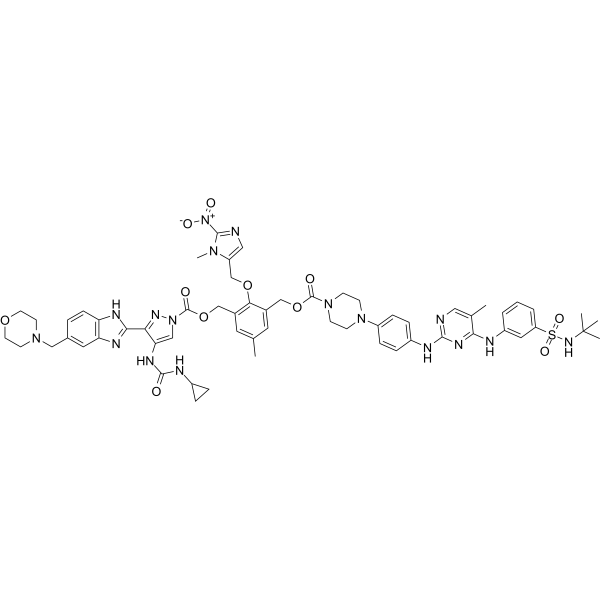
HAT-SIL-TG-1&AT is a Janus tyrosine kinase (JAK) inhibitor with antitumor effects. HAT-SIL-TG-1&AT is the hypoxia-activated prodrug, witch inhibits JAK-STAT signaling in tumor tissue. And HAT-SIL-TG-1&AT inhibits HEL cells proliferation and downregulated phosphorylated STAT3/5 under hypoxic conditions .
loading...
    loading...
Cat. No.: HY-154017
CAS No.: 565450-78-4
Domaines de recherche:  

Cancer

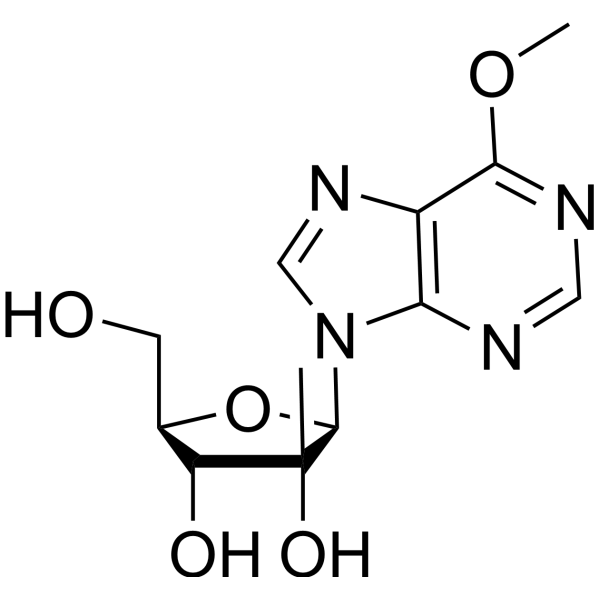
2′-C-Methyl-6-O-methylinosine is a hypoxanthine analog. Hypoxanthine is a kind of purine base mainly present in muscle tissue. And it is a metabolite produced by purine oxidase acting on xanthine. Hypoxanthine has typical anti-inflammatory effects and is a potential endogenous poly(ADP-ribose) polymerase (PARP) inhibitor. It is cytoprotective by inhibiting PAPR activity, inhibiting peroxynitrite-induced mitochondrial depolarization and secondary superoxide production. Hypoxanthine can also be used as an indicator of hypoxia .
loading...
    loading...
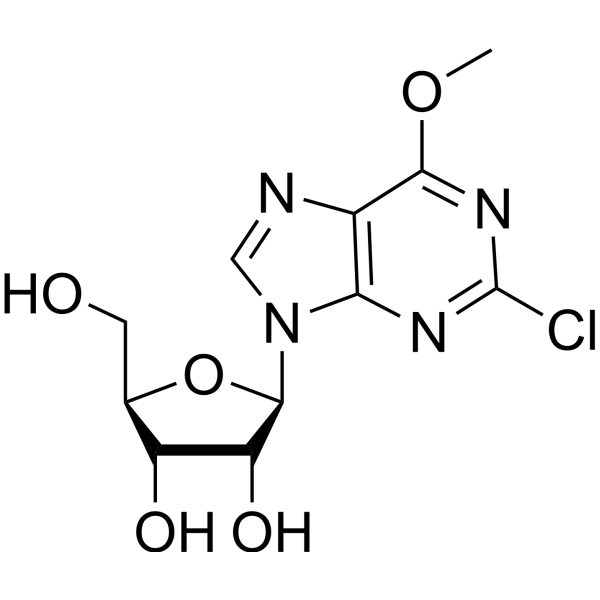
Cat. No.: HY-W039271
CAS No.: 15465-92-6
Synonyms: 2-Chloro-6-O-methyl-inosine
Domaines de recherche:  

Cancer

2-Chloro-6-methoxypurine riboside is a hypoxanthine analog. Hypoxanthine is a kind of purine base mainly present in muscle tissue. And it is a metabolite produced by purine oxidase acting on xanthine. Hypoxanthine has typical anti-inflammatory effects and is a potential endogenous poly(ADP-ribose) polymerase (PARP) inhibitor. It is cytoprotective by inhibiting PAPR activity, inhibiting peroxynitrite-induced mitochondrial depolarization and secondary superoxide production. Hypoxanthine can also be used as an indicator of hypoxia .
loading...
    loading...

