
1. Search Result
Search Result
Results for "

tumor burden

" in MedChemExpress (MCE) Product Catalog:

23

Inhibitors & Agonists

1

Peptides

8

Inhibitory Antibodies

Cat. No. Product Name Target Research Areas Chemical Structure
  • HY-156794

    DSP-5336

    Epigenetic Reader Domain FLT3 Cancer
    Enzomenib (DSP-5336) is an orally active Menin inhibitor (IC50=1.4 nM, Kd=6.0 nM). Enzomenib disrupts the interaction between Menin and KMT2A/MLL fusion proteins, specifically inhibits the expression of leukemia driver genes such as HOX/MEIS1, and upregulates ITGAM. Enzomenib effectively induces cell differentiation, inhibits tumor cell proliferation, and suppresses primitive cell colony formation. Enzomenib reduces disease burden and prolongs survival, but causes adverse reactions including differentiation syndrome and QTc interval prolongation. Enzomenib is used for research on relapsed/refractory acute myeloid leukemia, acute lymphoblastic leukemia, and other hematologic malignancies with mixed lineage leukemia (MLL) rearrangements or NPM1 mutations .
    Enzomenib
  • HY-P9983

    SGN-33; HuM-195; GLK-33 Antibody

    Transmembrane Glycoprotein Radionuclide-Drug Conjugates (RDCs) Inflammation/Immunology
    Lintuzumab (HUM-195) is an anti-CD33 humanized monoclonal antibody. Lintuzumab reduces the production of TNFα-induced pro-inflammatory cytokines and chemokines by AML cells. Lintuzumab promotes tumor cell killing through antibody-dependent cellular cytotoxicity (ADCC) and phagocytosis (ADCP) activities against MDR and MDR+ AML cell lines and primary AML patient samples. Lintuzumab enhances survival and reduces tumor burden in mice .
    Lintuzumab
  • HY-P991621

    EOS-215

    TREM receptor Cancer
    EOS006215 (EOS-215) is a humanized monoclonal antibody targeting TREM-2. EOS006215 competes with TREM2 ligands, prevents TREM2 multimerization, and blocks downstream signaling. EOS006215 inhibits efferocytosis, reprograms transcriptomic profiles of monocyte-derived macrophages, alters metabolism and immune response genes, and increases pro-inflammatory marker secretion. EOS006215 reduces metastasis burden, delays tumor growth, and reprograms the tumor microenvironment to overcome anti-PD-1 resistance. EOS006215 can be used for the research of triple negative breast cancer and colorectal cancer .
    EOS006215
  • HY-13032B
    Molibresib besylate
    Maximum Cited Publications
    21 Publications Verification

    GSK 525762C; I-BET 762 besylate

    Epigenetic Reader Domain ERK Cancer
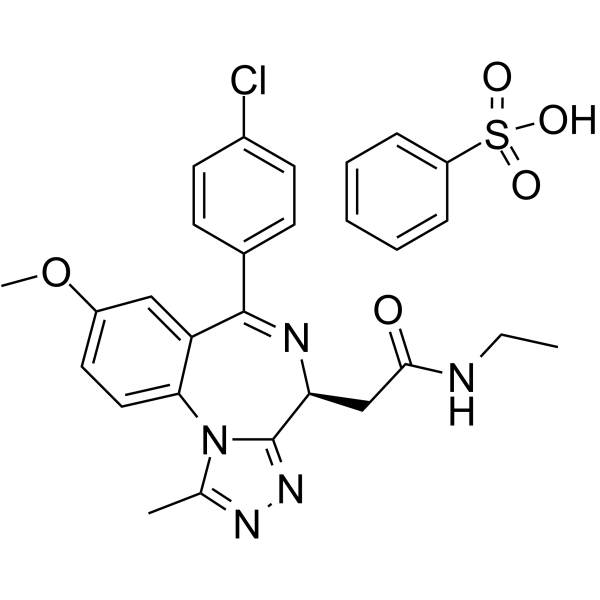
    Molibresib besylate (GSK 525762C; I-BET 762 besylate) is an orally active pan-BET inhibitor that targets and binds to BRD2, BRD3, BRD4 and BRDT. By competitively occupying acetylated lysine binding sites, Molibresib besylate disrupts the interaction between BET proteins and chromatin, thereby effectively inhibiting MYC expression and target gene transcription. Molibresib besylate exhibits broad antiproliferative activity, which not only inhibits cancer cell growth and induces growth arrest, but also downregulates mitosis-related genes and upregulates the level of p-ERK1/2. When combined with MEK inhibitors, Molibresib besylate shows a significant synergistic effect, reduces tumor burden in mouse models of leukemia, modulates the immune microenvironment and prolongs survival. Molibresib besylate is widely applicable to research related to acute myeloid leukemia, multiple myeloma, triple-negative breast cancer, small-cell lung cancer and various advanced refractory solid tumors .
    Molibresib besylate
  • HY-A0169A
    Methyl aminolevulinate hydrochloride
    1 Publications Verification

    Reactive Oxygen Species (ROS) Photosensitizer Cancer
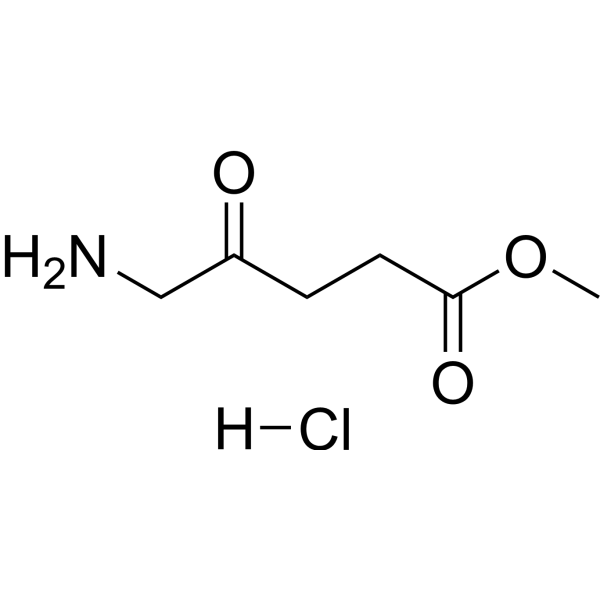
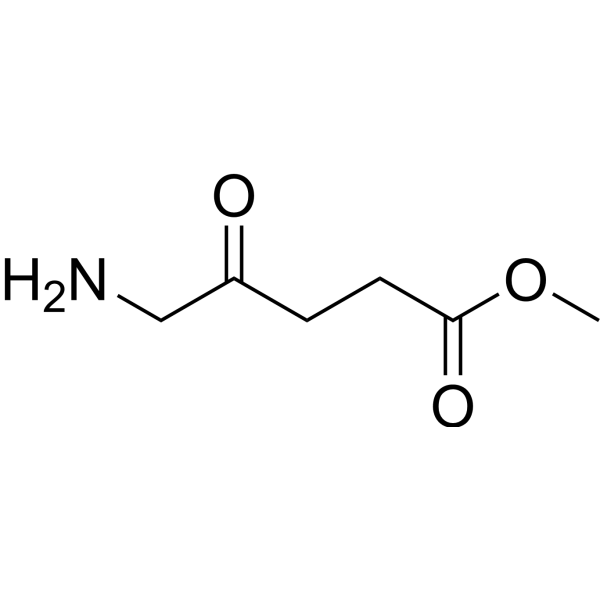
    Methyl aminolevulinate hydrochloride is a sensitizer used in photodynamic therapy (PDT). Methyl aminolevulinate hydrochloride penetrates the skin and induces the production of photoactive porphyrins including protoporphyrin IX in cells; upon exposure to appropriate light, it generates ROS, which triggers cellular oxidation and cell death. Methyl aminolevulinate hydrochloride acts as a photo-damage reversing agent through epidermal reconstruction, cytokine-mediated activation of dermal fibroblasts, elastin breakdown, new collagen formation, and compression of dilated capillaries. Methyl aminolevulinate hydrochloride reduces the expression of the proliferation marker Ki-67 and the early skin carcinogenesis marker TP53. Methyl aminolevulinate hydrochloride delays the onset of ultraviolet-induced skin tumors and reduces tumor burden in hairless mice. Methyl aminolevulinate hydrochloride is applicable to research related to actinic keratosis and basal cell carcinoma .
    Methyl aminolevulinate hydrochloride
  • HY-108894

    Ferroptosis Reactive Oxygen Species (ROS) Cardiovascular Disease Inflammation/Immunology Cancer
    Ferumoxytol is an FDA-approved ultrasmall superparamagnetic iron oxide preparation and iron replacement agent that exerts selective activity against leukemia cells with low ferroportin expression. Ferumoxytol increases intracellular iron levels, induces reactive oxygen species (ROS) production via the Fenton reaction, and triggers oxidative stress and cell death. Ferumoxytol reduces disease burden in mouse models and patient-derived leukemia models. As an MRI contrast agent, Ferumoxytol enables imaging of vascular lesions, tumors and lymph nodes. Ferumoxytol can be used in research related to acute myeloid leukemia and blast-phase chronic myeloid leukemia .
    Ferumoxytol
  • HY-P99759

    IL-15N72D

    Interleukin Related Inflammation/Immunology Cancer
    Nogapendekin alfa (his tag), a soluble protein subunit of a human interleukin (IL)-15 variant, is a superagonist of IL-15. Nogapendekin alfa (his tag) promotes the proliferation and viability of immune cells. Nogapendekin alfa (his tag) combines with Inbakicept (HY-P99661) at a ratio of 2:1, to form N-803 (Nogapendekin alfa inbakicept), an IL-15 cytokine antibody fusion protein. N-803 reduces tumor burden by activation of NK cells and CD8 + T cells .
    Nogapendekin alfa (his tag)
  • HY-176561

    Casein Kinase HDAC Cancer
    IOR-160 is a dual inhibitor of casein kinase 2 (CK2) and HDACs. IOR-160 exhibits high selectivity for CK2 (IC50 = 1.7 nM) and broad inhibitory activity against HDAC (HDAC 1, 2, 3, and 6 with IC50s of 3.3 nM, 24.0 nM, 3.9 nM, and 13.0 nM, respectively, with low activity for HDAC8). IOR-160 modulates key cellular signaling pathways by inhibiting AKT phosphorylation and increasing acetylated α-tubulin. IOR-160 inhibits tumor growth and reduces tumor burden through dual CK2/HDAC inhibition. IOR-160 is indicated for use in triple-negative breast cancer research .
    IOR-160
  • HY-123410

    Cannabinoid Receptor Cancer
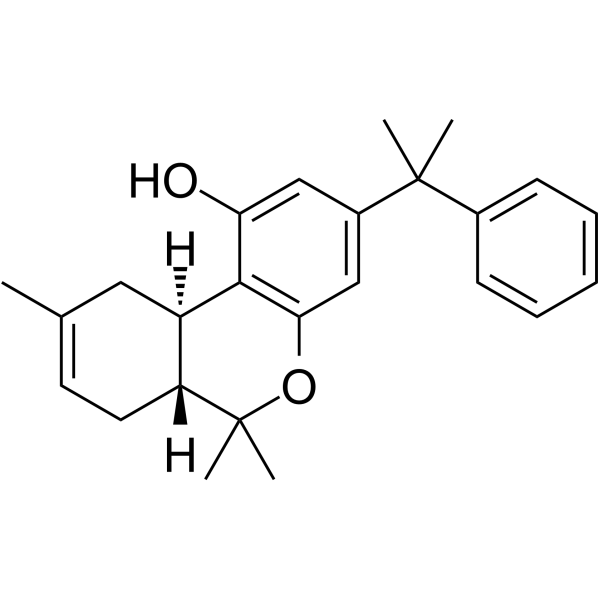
    KM-233 is a classical cannabinoid with good blood brain barrier penetration. KM-233 possesses a selective affinity for the CB2 receptors relative to THC. KM-233 is effective at reducing U87 glioma tumor burden, and can be used for glioma research .
    KM-233
  • HY-179391

    Telomerase Apoptosis Cancer
    Telomerase-IN-9 is a potent and selective telomerase inhibitor. Telomerase-IN-9 significantly reduces telomerase activity by binding to hTERT, leading to decreased telomerase function. Telomerase-IN-9 induces apoptosis and inhibits colony formation. Telomerase-IN-9 reduces tumor burden, restores antioxidantbalance, and preserves lung architecture in a Benzo[a]pyrene (HY-107377)-induced lung cancer mouse model. Telomerase-IN-9 can be used for the research of lung cancer .
    Telomerase-IN-9
  • HY-P990905

    SAR-443579

    Interleukin Related Cancer
    Bexatamig (SAR-443579) is a trifunctional natural killer cell engager targeting IL-3R α/CD123, NKp46/NCR1/CD335 and Fc gamma RIIIA/CD16a. Bexatamig forms a cytolytic synapse between natural killer cells and CD123-positive tumor cells. By activating natural killer cells to induce tumor cell death, Bexatamig effectively reduces the burden of CD123-positive acute myeloid leukemia (AML) blasts. Bexatamig has been granted FDA Fast Track designation, and is primarily investigated for relapsed or refractory acute myeloid leukemia, B-cell acute lymphoblastic leukemia, and high-risk myelodysplastic syndromes .
    Bexatamig
  • HY-145441

    Drug Derivative Cancer
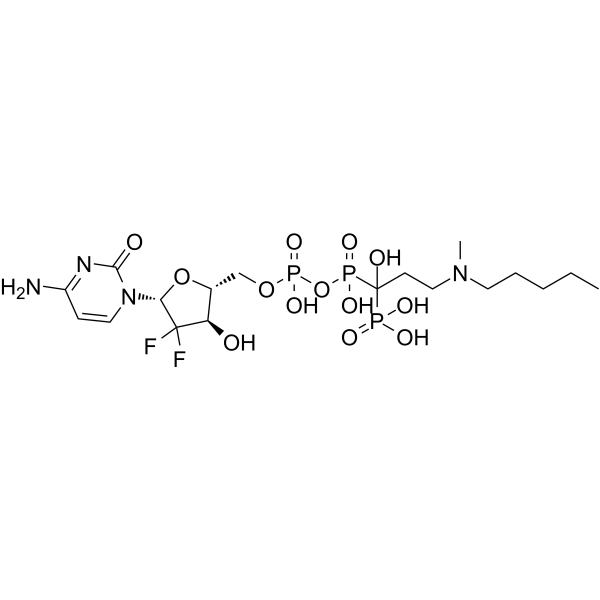
    GEM–IB is the conjugate of gemcitabine (GEM)-5'-phosphate with ibandronate (IB). GEM–IB as a single agent or in combination with Docetaxel (DTX) demonstrates reduced tumor burden, preservation of the bone architecture, and improved the survival in a murine model of osteosarcoma (OS) .
    GEM–IB
  • HY-P10057

    Apoptosis Cancer
    cpm-1285 induces apoptosis by functionally blocking intracellular Bcl-2 and related death antagonists. cpm-1285 shows strong binding potency to Bcl-2 with an IC50 value of 130 nM. cpm-1285 reduces tumor burden in mice .
    cpm-1285
  • HY-179525

    c-Myc Microtubule/Tubulin Apoptosis Cancer
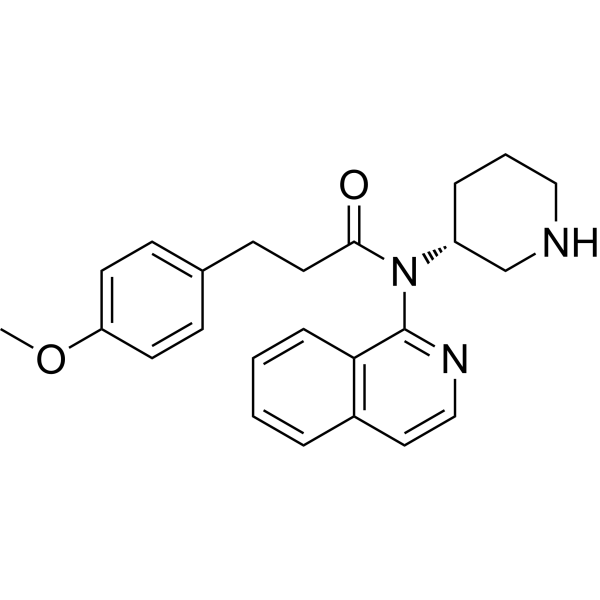
    DL78 is an effective anti-mitotic agent. DL78 induces mitotic arrest, mitotic catastrophe and apoptosis in cancer cells by disrupting the interaction between Myc and α-tubulin. DL78 exhibits broad anti-cancer activity, especially against cancer cells with chromosomal instability and excessive expression of MYC. DL78 significantly reduces tumor burden in the OV81.2 xenograft model. DL78 can be used for the study of ovarian cancer .
    DL78
  • HY-A0169

    Reactive Oxygen Species (ROS) Photosensitizer Cancer
    Methyl aminolevulinate is a sensitizer used in photodynamic therapy (PDT). Methyl aminolevulinate penetrates the skin and induces the production of photoactive porphyrins including protoporphyrin IX in cells; upon exposure to appropriate light, it generates ROS, which triggers cellular oxidation and cell death. Methyl aminolevulinate acts as a photo-damage reversing agent through epidermal reconstruction, cytokine-mediated activation of dermal fibroblasts, elastin breakdown, new collagen formation, and compression of dilated capillaries. Methyl aminolevulinate reduces the expression of the proliferation marker Ki-67 and the early skin carcinogenesis marker TP53. Methyl aminolevulinate delays the onset of ultraviolet-induced skin tumors and reduces tumor burden in hairless mice. Methyl aminolevulinate is applicable to research related to actinic keratosis and basal cell carcinoma .
    Methyl aminolevulinate
  • HY-P992338

    Mesothelin Constitutive Androstane Receptor Inflammation/Immunology Cancer
    CT-1119 is an autologous human anti-Mesothelin chimeric antigen receptor macrophage (CAR-M). CT-1119 mediates CAR-dependent, antigen-dependent functional activities. CT-1119 acts as a phagocytosis inducer, tumor cell killer, pro-inflammatory cytokine inducer, and M1 macrophage polarizer. CT-1119 exhibits stronger resistance to M2 repolarization and reduces tumor burden in a mouse lung cancer xenograft model. CT-1119 can be used for the research of mesothelin-expressing solid tumors .
    CT-1119
  • HY-P992439

    CXCR Cancer
    PF-06747143 is recombinant anti-human antibody targeting CXCR4. PF-06747143 blocks CXCL12-induced calcium flux, F-actin polymerization, chemotaxis, cell migration, and leukemic cell bone marrow homing. PF-06747143 reduces tumor burden and improves survival in mouse models of hematologic malignancies. PF-06747143 can be used for the research of chronic lymphocytic leukemia, acute myeloid leukemia, and hematologic malignancies .
    PF-06747143
  • HY-P992032

    BAY-943 antibody

    Interleukin Related Cancer
    TPP-9476 (BAY-943 antibody) is an anti-human IL3RA (CD123) monoclonal antibody with human IL3RA Kd of 11 nM and cynomolgus monkey IL3RA Kd of 16 nM. TPP-9476 binds specifically to human and cynomolgus monkey IL3RA, undergoes target-dependent internalization into lysosomes of IL3RA-positive cells.TPP-9476 exerts antiproliferative effects in IL3RA-expressing acute myeloid leukemia and classical Hodgkin lymphoma cells, reduces tumor burden, improves survival, and induces complete tumor remission in relevant xenograft mouse models .
    TPP-9476
  • HY-A0169AR

    Reactive Oxygen Species (ROS) Reference Standards Photosensitizer Inflammation/Immunology Cancer
    Methyl aminolevulinate hydrochloride (Standard) is the analytical standard of Methyl aminolevulinate hydrochloride. This product is intended for research and analytical applications. Methyl aminolevulinate hydrochloride is a sensitizer used in photodynamic therapy (PDT). Methyl aminolevulinate hydrochloride penetrates the skin and induces the production of photoactive porphyrins including protoporphyrin IX in cells; upon exposure to appropriate light, it generates ROS, which triggers cellular oxidation and cell death. Methyl aminolevulinate hydrochloride acts as a photo-damage reversing agent through epidermal reconstruction, cytokine-mediated activation of dermal fibroblasts, elastin breakdown, new collagen formation, and compression of dilated capillaries. Methyl aminolevulinate hydrochloride reduces the expression of the proliferation marker Ki-67 and the early skin carcinogenesis marker TP53. Methyl aminolevulinate hydrochloride delays the onset of ultraviolet-induced skin tumors and reduces tumor burden in hairless mice. Methyl aminolevulinate hydrochloride is applicable to research related to actinic keratosis and basal cell carcinoma .
    Methyl aminolevulinate hydrochloride (Standard)
  • HY-182774

    CXCR Cancer
    YU241279 is an orally active CXCR5 inhibitor. YU241279 inhibits CXCL13-mediated Gαq-dependent calcium influx and Gαi2-dependent cAMP reduction in CXCR5-expressing cells. YU241279 inhibits the proliferation of CXCR5-expressing lymphoma cells. YU241279 reduces tumor burden in the peripheral blood and bone marrow of mice implanted with lymphoma tissues. YU241279 is well tolerated during oral administration in mice, maintains stable plasma drug concentrations, and shows no metabolic changes. YU241279 can be used in the research of angioimmunoblastic T-cell lymphoma and Burkitt B-cell lymphoma .
    YU241279
  • HY-180277

    PROTACs CDK Apoptosis Cancer
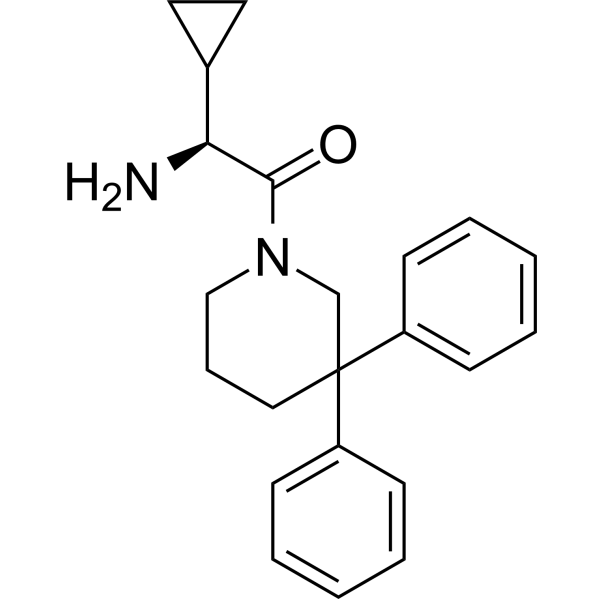
    PROTAC CDK6 Degrader 1 (compound 48a) is a potent and selective PROTAC CDK6 degrader with a DC50 of 0.037 μM. PROTAC CDK6 Degrader 1 exhibits selectivity over CDK4 (DC50 > 10 μM). PROTAC CDK6 Degrader 1 induces G0/G1 cell-cycle arrest and apoptosis through inhibition of CDK6 downstream signaling. PROTAC CDK6 Degrader 1 reduces tumor burden and CDK6 levels in a MOLM-14 xenograft mouse model. PROTAC CDK6 Degrader 1 can be used for CDK6-driven cancers research, such as acute myeloid leukemia (AML) .
    PROTAC CDK6 Degrader 1
  • HY-156794A

    DSP-5336 enantiomer

    Drug Isomer FLT3 Epigenetic Reader Domain Cardiovascular Disease Cancer
    Enzomenib enantiomer (DSP-5336 enantiomer) is an enantiomer of Enzomenib (HY-156794). Enzomenib (DSP-5336) is an orally active Menin inhibitor (IC50=1.4 nM, Kd=6.0 nM). Enzomenib disrupts the interaction between Menin and KMT2A/MLL fusion proteins, specifically inhibits the expression of leukemia driver genes such as HOX/MEIS1, and upregulates ITGAM. Enzomenib effectively induces cell differentiation, inhibits tumor cell proliferation, and suppresses primitive cell colony formation. Enzomenib reduces disease burden and prolongs survival, but causes adverse reactions including differentiation syndrome and QTc interval prolongation. Enzomenib is used for research on relapsed/refractory acute myeloid leukemia, acute lymphoblastic leukemia, and other hematologic malignancies with mixed lineage leukemia (MLL) rearrangements or NPM1 mutations .
    Enzomenib enantiomer
  • HY-P992065

    Interleukin Related Cancer
    Anti-Mouse CD124/IL4RA Antibody (REGN1103) is a mouse-specific monoclonal antibody and IL-4Rα antagonist.Anti-Mouse CD124/IL4RA Antibody (REGN1103) inhibits IL-4 signaling through Type I and Type II receptor complexes.Anti-Mouse CD124/IL4RA Antibody (REGN1103) can be used for the research of alveolar rhabdomyosarcoma .
    Anti-Mouse CD124/IL4RA Antibody (REGN1103)

Inquiry Online

Your information is safe with us. * Required Fields.

Salutation


Country or Region *

Applicant Name *


Organization Name *

Department *


Email Address *


Product Name *

Cat. No.


Requested quantity *

Phone Number *


Remarks

Inquiry Online

Inquiry Information

Product Name:
Cat. No.:
Quantity:
MCE Japan Authorized Agent:

