18 Results for "

tumor-related diseases

" in MedChemExpress (MCE) Product Catalog:
Products (18)

18 Results for "tumor-related diseases" in MCE Product Catalog:

2
2 Cited Publications
Cat. No.: HY-145443
CAS No.: 2734853-80-4
Purity:  99.71%
Synonyms: ZYS-1
Target:  

Adenosine Deaminase

Research Areas:  

Cancer

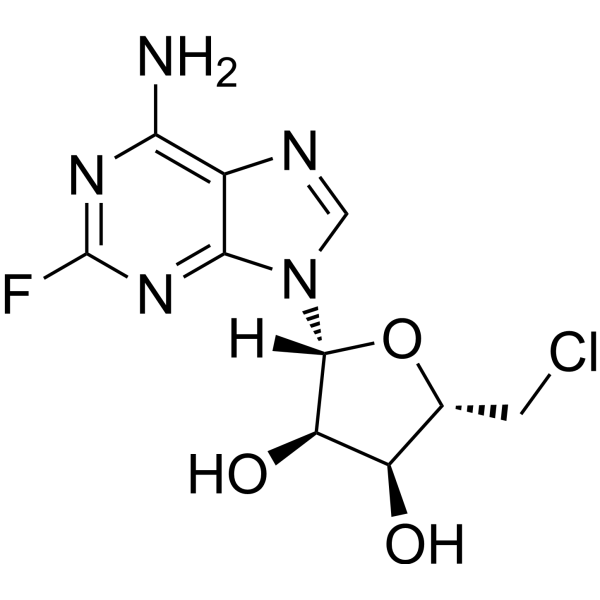
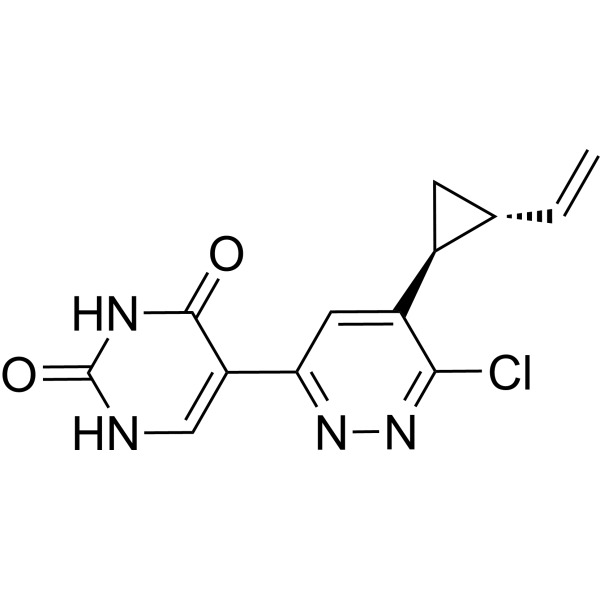
Fludarabine-Cl has an inhibitory effect on RNA adenosine deaminase 1 (ADAR1) with an IC50 of 0.87 μM and can be used to prevent and/or study cancer or tumor-related diseases .
loading...
    loading...
1
1 Cited Publications
Cat. No.: HY-16468
CAS No.: 148717-90-2
Synonyms: MSI-1256; ENT-01 free acid
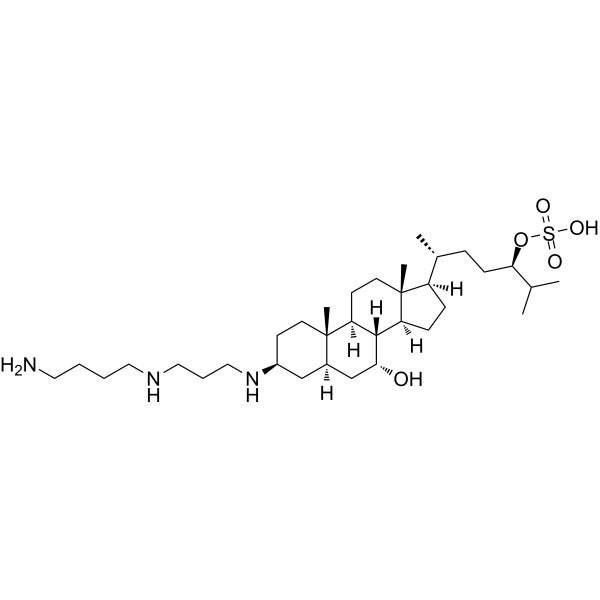
Squalamine (MSI-1256) is an aminosterol compound with broad-spectrum antiviral activity. Squalamine makes cells less conducive to certain viral replication by altering the electrostatic interactions in the inner membrane of host cells. Squalamine also has antibacterial and antitumor activities. Squalamine has broad-spectrum antibacterial activity against Gram-negative and Gram-positive bacteria, fungi and protozoa. Squalamine inhibits tumor-related angiogenesis and the growth of human breast cancer cells. Squalamine restores the function of enteric nervous system in Parkinson ,s disease mouse models .
loading...
    loading...
1
1 Cited Publications
Cat. No.: HY-N1461
CAS No.: 17238-05-0
Synonyms: (±)-Dihydrodaidzein
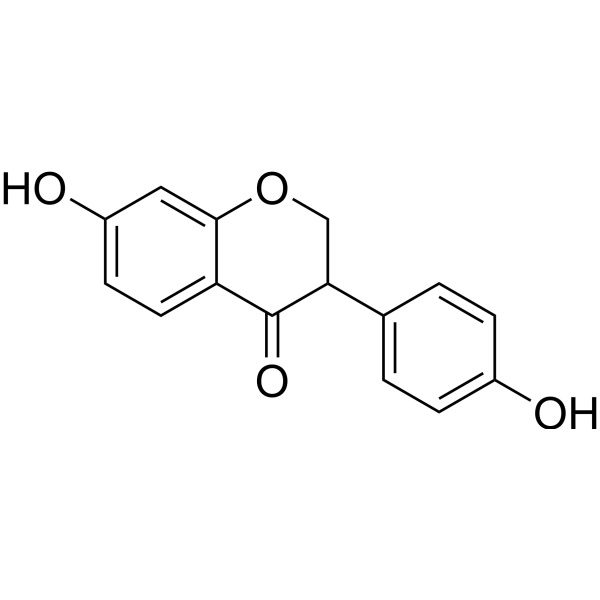
Dihydrodaidzein is a dietary phytoestrogen. Dihydrodaidzein possesses functions including antioxidation, inhibition of DNA oxidative damage, regulation of lipid metabolism and maintenance of intestinal flora stability. Dihydrodaidzein induces apoptosis, regulates immune responses, modulates tumor-related factors, activates the Bmp-2 signaling pathway, inhibits NF-κB and MAPK, and exhibits anti-inflammatory activity. Dihydrodaidzein can be used in research related to cancer, cardiovascular diseases, osteoporosis and inflammatory diseases .
loading...
    loading...
Cat. No.: HY-N1465
CAS No.: 17413-38-6
Synonyms: Aristolochic acid-IVa
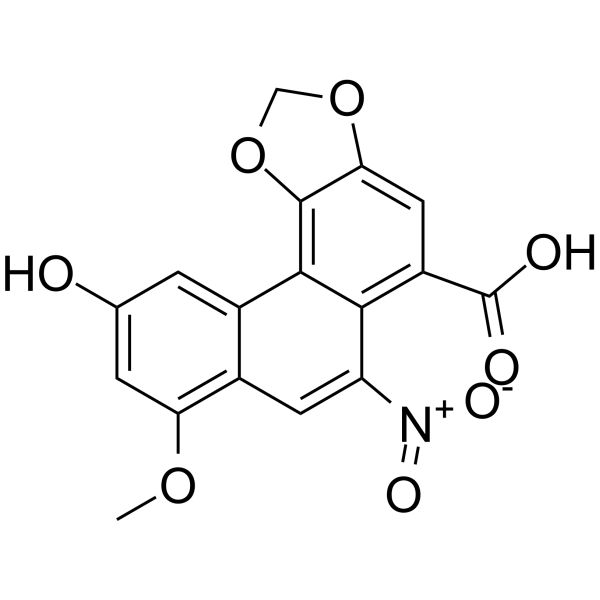
Aristolochic acid D (Aristolochic acid-IVa) is an orally active PDE2 (IC50: 4.673 μM) and CDK2 (IC50: 25 μM) inhibitor that can be isolated from Aristolochia indica L. Aristolochic acid D exhibits anti-inflammatory activity and is non-carcinogenic and non-nephrotoxic. Aristolochic acid D can be used in the research of inflammation and tumor-related diseases .
loading...
    loading...
Cat. No.: HY-141662
CAS No.: 2586047-11-0
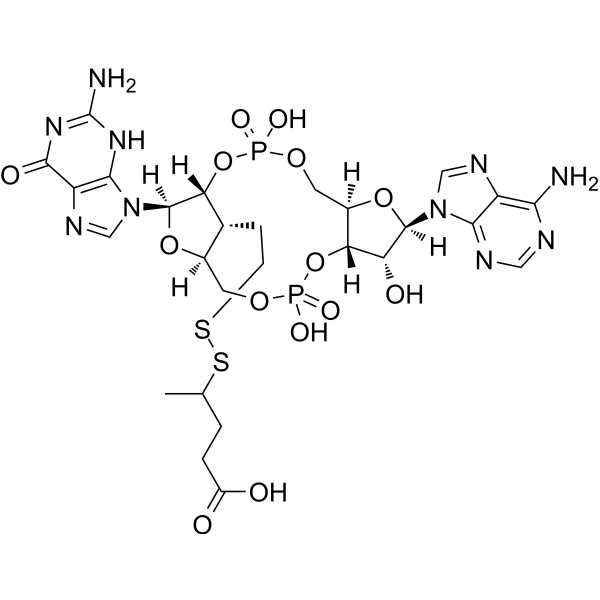
2’,3’-cGAMP-C2-PPA is a cyclic dinucleotide interferon gene-stimulating protein (STING) agonist. 2’,3’-cGAMP-C2-PPA is a drug conjugated conjugate used to target antibody-drug conjugated conjugate (ADC) for the treatment of cancer. 2’,3’-cGAMP-C2-PPA can be used in the study of immune and tumor-related diseases .
loading...
    loading...
Cat. No.: HY-129361
CAS No.: 1834516-06-1
Research Areas:  

Cancer

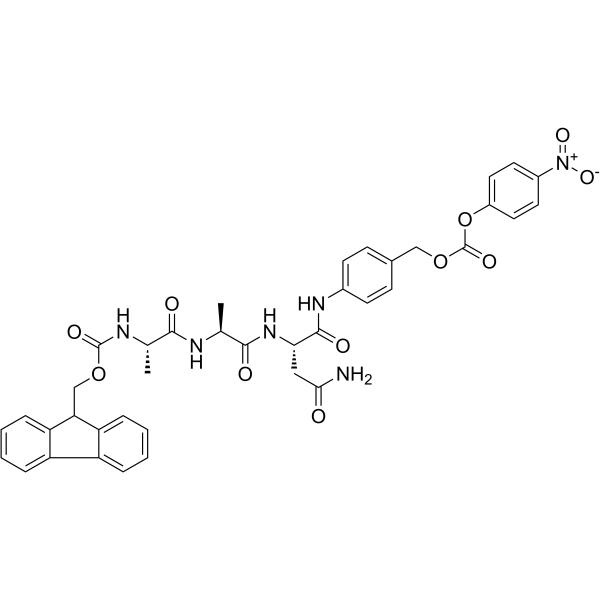
Fmoc-Ala-Ala-Asn-PABC-PNP is a peptide-based linker intermediate composed of Fmoc-protected Ala-Ala-Asn, PABC, and PNP. Fmoc-Ala-Ala-Asn-PABC-PNP can be used to prepare Auristatin antibody-drug conjugates (ADCs). Fmoc-Ala-Ala-Asn-PABC-PNP is applicable to tumor-related research .
loading...
    loading...
Cat. No.: HY-147590
CAS No.: 2766565-88-0
Target:  

CD73

Research Areas:  

Inflammation/Immunology

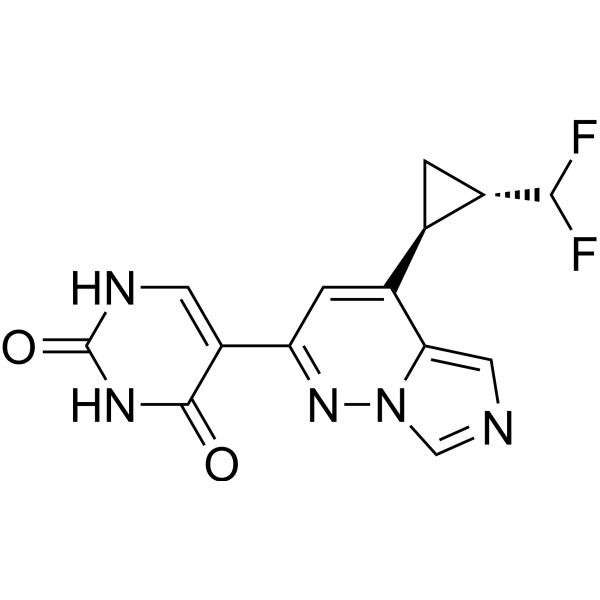
CD73-IN-9 (compound 2) is a potent inhibitor of CD73. CD73 can catalyze the production of adenosine from extracellular 5'-phosphate adenosine (5'-AMP), and adenosine can induce immunosuppressive effects and promote tumor proliferation and/or metastasis. CD73-IN-9 can be used for the study of tumor-related diseases .
loading...
    loading...
Cat. No.: HY-147594
CAS No.: 2773423-69-9
Target:  

CD73

Research Areas:  

Cancer

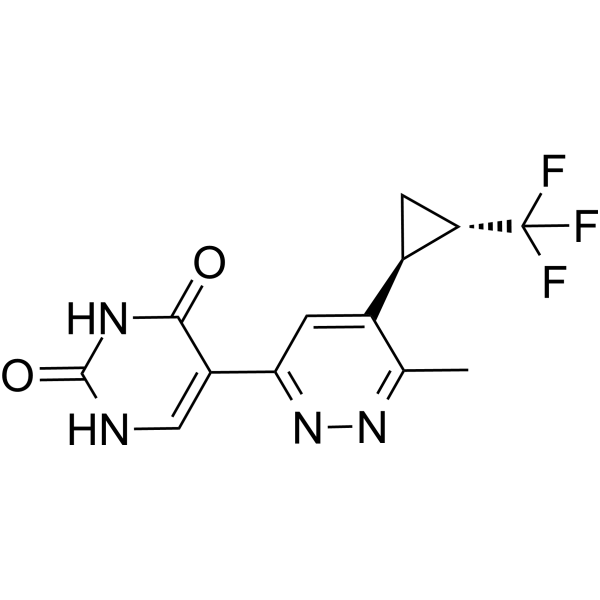
CD73-IN-13 (compound 7) is a potent inhibitor of CD73. CD73 is closely associated with tumor growth, angiogenesis and metastasis. CD73-IN-13 can be used for the study of tumor-related diseases .
loading...
    loading...
Cat. No.: HY-147588
CAS No.: 2763709-14-2
Target:  

CD73

Research Areas:  

Cancer

CD73-IN-7 (compound 13) is a potent inhibitor of CD73. CD73 can catalyze the production of adenosine from extracellular 5'-phosphate adenosine (5'-AMP), and adenosine can induce immunosuppressive effects and promote tumor proliferation and/or metastasis. CD73-IN-7 can be used for the study of tumor-related diseases .
loading...
    loading...
Cat. No.: HY-147589
CAS No.: 2763710-08-1
Target:  

CD73

Research Areas:  

Cancer

CD73-IN-8 (compound 57) is a potent inhibitor of CD73. CD73 can catalyze the production of adenosine from extracellular 5'-phosphate adenosine (5'-AMP), and adenosine can induce immunosuppressive effects and promote tumor proliferation and/or metastasis. CD73-IN-8 can be used for the study of tumor-related diseases .
loading...
    loading...
Cat. No.: HY-147591
CAS No.: 2766565-91-5
Target:  

CD73

Research Areas:  

Inflammation/Immunology Cancer

CD73-IN-10 (compound 4) is a potent inhibitor of CD73. CD73 can catalyze the production of adenosine from extracellular 5'-phosphate adenosine (5'-AMP), and adenosine can induce immunosuppressive effects and promote tumor proliferation and/or metastasis. CD73-IN-10 can be used for the study of tumor-related diseases .
loading...
    loading...
Cat. No.: HY-147592
CAS No.: 2766566-11-2
Target:  

CD73

Research Areas:  

Inflammation/Immunology Cancer

CD73-IN-11 (compound 24) is a potent inhibitor of CD73. CD73 can catalyze the production of adenosine from extracellular 5'-phosphate adenosine (5'-AMP), and adenosine can induce immunosuppressive effects and promote tumor proliferation and/or metastasis. CD73-IN-11 can be used for the study of tumor-related diseases .
loading...
    loading...
Cat. No.: HY-147593
CAS No.: 2773502-79-5
Target:  

CD73

Research Areas:  

Cancer

CD73-IN-12 (compound 9) is a potent inhibitor of CD73. CD73 is closely associated with tumor growth, angiogenesis and metastasis. CD73-IN-12 can be used for the study of tumor-related diseases . CD73-IN-12 is a click chemistry reagent, it contains an Alkyne group and can undergo copper-catalyzed azide-alkyne cycloaddition (CuAAc) with molecules containing Azide groups.
loading...
    loading...
Cat. No.: HY-N1461R
CAS No.: 17238-05-0
Synonyms: (±)-Dihydrodaidzein (Standard)
Dihydrodaidzein (Standard) ((±)-Dihydrodaidzein (Standard)) is the analytical standard of Dihydrodaidzein (HY-N1461). This product is intended for research and analytical applications. Dihydrodaidzein is a dietary phytoestrogen. Dihydrodaidzein possesses functions including antioxidation, inhibition of DNA oxidative damage, regulation of lipid metabolism and maintenance of intestinal flora stability. Dihydrodaidzein induces apoptosis, regulates immune responses, modulates tumor-related factors, activates the Bmp-2 signaling pathway, inhibits NF-κB and MAPK, and exhibits anti-inflammatory activity. Dihydrodaidzein can be used in research related to cancer, cardiovascular diseases, osteoporosis and inflammatory diseases .
loading...
    loading...
Cat. No.: HY-N1465R
CAS No.: 17413-38-6
Synonyms: Aristolochic acid-IVa (Standard)
Aristolochic acid D (Standard) (Aristolochic acid-IVa (Standard)) is the analytical standard of Aristolochic acid D (HY-N1465). This product is intended for research and analytical applications. Aristolochic acid D (Aristolochic acid-IVa) is an orally active PDE2 (IC50: 4.673 μM) and CDK2 (IC50: 25 μM) inhibitor that can be isolated from Aristolochia indica L. Aristolochic acid D exhibits anti-inflammatory activity and is non-carcinogenic and non-nephrotoxic. Aristolochic acid D can be used in the research of inflammation and tumor-related diseases .
loading...
    loading...
Cat. No.: HY-155577
CAS No.: 2927489-95-8
Target:  

Monoamine Oxidase HSP

Research Areas:  

Cancer

MAO A/HSP90-IN-1 (4-b) is a MAO A/HSP90 dual inhibitor with IC50 value of 1.77 μM and 0.019 μM in Glioblastoma (GBM) GL26 cells and HSP90α, respectively. MAO A/HSP90-IN-1 (4-b) can inhibit MAO A activity, HSP90 binding and the expression of HER2 and phospho-Akt to inhibit the growth of GBM, they also reduce PD-L1 expression, which inhibits T cell activation. MAO A/HSP90-IN-1 (4-b) have potential to inhibit tumor immune escape. MAO A/HSP90-IN-1 (4-b) can be used for brain tumor-related diseases research .
loading...
    loading...
Cat. No.: HY-W540123
CAS No.: 186046-82-2
Research Areas:  

Cancer

Fmoc-PNA-A(Bhoc)-OH is a protected peptide nucleic acid (PNA) monomer carrying an adenine base. Fmoc-PNA-A(Bhoc)-OH contains Fmoc and benzhydryloxycarbonyl (Bhoc) protecting groups, and serves as a standard building block designed specifically for solid-phase PNA synthesis. Fmoc-PNA-A(Bhoc)-OH can be efficiently used to synthesize PNA-based sequence-specific hybridization probes. These probes have broad applications in molecular biology research; for example, they can be used in HER2-expressing tumor-related studies, providing tools for disease diagnosis and mechanism exploration .
loading...
    loading...
Cat. No.: HY-P11698
CAS No.: 476667-31-9
Research Areas:  

Cancer

Guanidino-G-Clamp-PNA is a highly efficient sequence-specific RNA binder and gene silencer. Guanidino-G-Clamp-PNA precisely targets such targets as miR-155 or transthyretin (TTR) mRNA through base pairing: the former regulates tumor-related signaling pathways by reducing microRNA activity, while the latter inhibits the translation of harmful proteins via steric hindrance. Guanidino-G-Clamp-PNA effectively stabilizes DNA/RNA duplexes, induces cancer cell apoptosis, and suppresses tumor growth. In addition, Guanidino-G-Clamp-PNA can be conjugated with targeting ligands to improve tissue-specific delivery and reduce in vivo adverse reactions, and it can also enhance the splicing regulation efficacy of other oligonucleotide platforms (such as PMO) when integrated into them. Guanidino-G-Clamp-PNA is applicable to the research of various diseases including diffuse large B-cell lymphoma and hereditary transthyretin-related amyloidosis .
loading...
    loading...
  • 1

