20 Results for "

unfolded protein response pathway

" in MedChemExpress (MCE) Product Catalog:
Products (20)

20 Results for "unfolded protein response pathway" in MCE Product Catalog:

12
12 Publications Verification
Cat. No.: HY-139214
CAS No.: 1185329-96-7
Purity:  98.83%
Target:  

IRE1

Research Areas:  

Neurological Disease

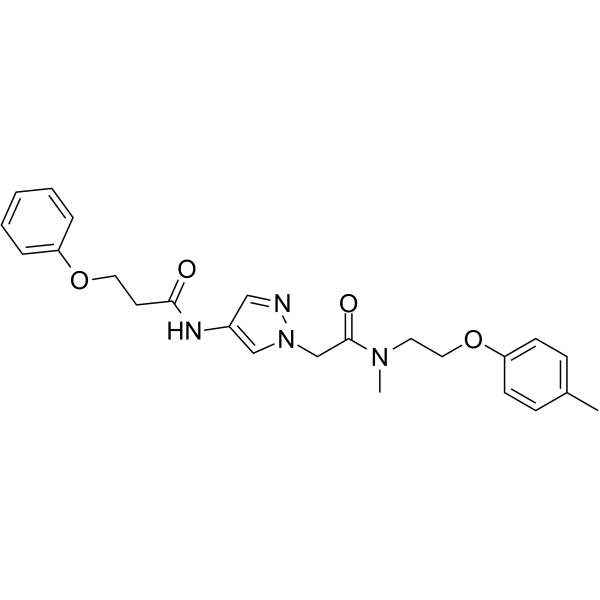
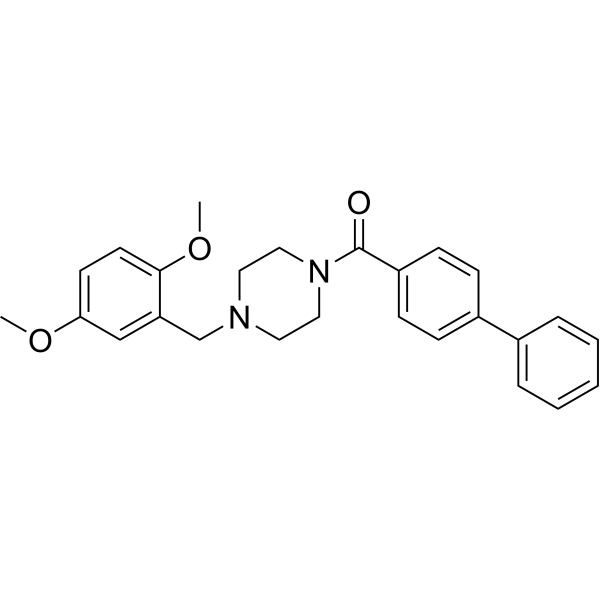
IXA4 is a highly selective, non-toxic IRE1/XBP1s activator. IXA4 activates IRE1/XBP1s signaling without globally activating the unfolded protein response (UPR) or other stress-responsive signaling pathways (e.g., the heat shock response or oxidative stress response). IXA4 reduces secretion of APP through IRE1 activation .
loading...
    loading...
1
1 Cited Publications
Cat. No.: HY-N1437
CAS No.: 6205-14-7
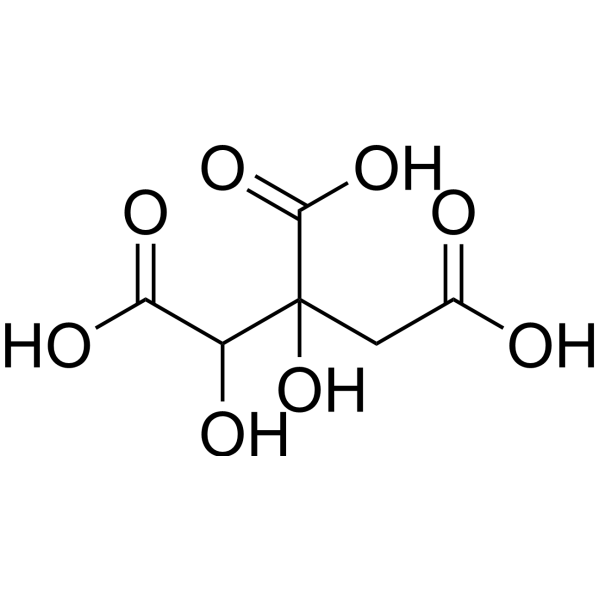
Hydroxycitric acid is an orally active, multi-target, multi-bioactive organic acid. activates Nrf2 and its downstream molecule GPX4, increases glutathione levels, and thereby inhibits ferroptosis. Hydroxycitric acid activates the Nrf2/Keap1 and ACLY/NF-κB signaling pathways, upregulates the activities of antioxidant enzymes such as superoxide dismutase, reduces MDA content, thereby alleviating oxidative stress and renal tubular epithelial cell apoptosis, and improves pulmonary vascular and right ventricular remodeling. Hydroxycitric acid activates both the AMPK and mTORC1/S6K pathways, triggers the unfolded protein response, arrests the cancer cell cycle, and induces DNA fragmentation .
loading...
    loading...
1
1 Cited Publications
Cat. No.: HY-W338584
CAS No.: 232281-44-6
Tripotassium hydroxycitrate is an orally active, multi-target, multi-bioactive organic acid. Tripotassium hydroxycitrate activates Nrf2 and its downstream molecule GPX4, increases glutathione levels, and thereby inhibits ferroptosis. Tripotassium hydroxycitrate activates the Nrf2/Keap1 and ACLY/NF-κB signaling pathways, upregulates the activities of antioxidant enzymes such as superoxide dismutase, reduces MDA content, thereby alleviating oxidative stress and renal tubular epithelial cell apoptosis, and improves pulmonary vascular and right ventricular remodeling. Tripotassium hydroxycitrate activates both the AMPK and mTORC1/S6K pathways, triggers the unfolded protein response, arrests the cancer cell cycle, and induces DNA fragmentation .
loading...
    loading...
1
1 Cited Publications
Cat. No.: HY-N0805A
CAS No.: 18649-93-9
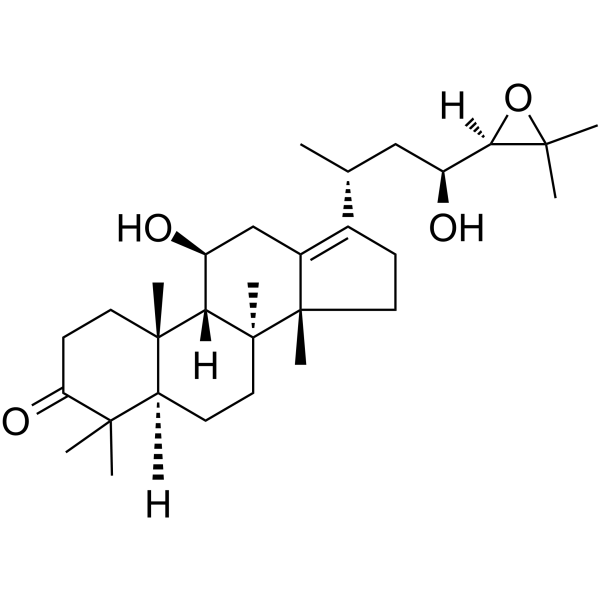
Alisol B is a triterpene with diverse biological activities. Alisol B binds human soluble epoxide hydrolase (sEH) with a Ki of 5.97 μM and reduces sEH activity. Alisol B inhibits RANKL-induced JNK phosphorylation, NFATc1 and c-Fos expression, osteoclast formation, mature osteoclast pit-forming and actin ring activity, and SERCA pump activity. Alisol B induces calcium mobilization, CaMKK-AMPK-mTOR pathway activation, autophagic flux, autophagosome formation, G1 phase cell cycle arrest, endoplasmic reticulum stress, unfolded protein responses, and cancer cell apoptosis. Alisol B can be used for the research of hypercalcemia, osteoporosis, rheumatoid arthritis, periodontitis, acute kidney injury, and breast cancer .
loading...
    loading...
Cat. No.: HY-13305
CAS No.: 869901-69-9
Research Areas:  

Infection

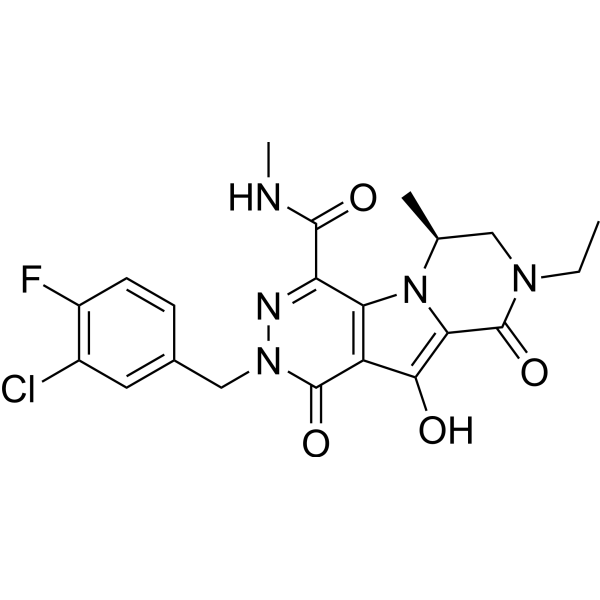
MK-2048 is a HIV-1 and HIV-1 integrase inhibitor. MK-2048 shows selective activity against HTLV-1-infected cells and retained potency against HIV-1 variants. MK-2048 induces apoptosis, inhibits cell growth, reduces proviral loads, and blocks HTLV-1 transmission and immortalization. MK-2048 can be used for the research of HIV-1 infection .
loading...
    loading...
Cat. No.: HY-121337
CAS No.: 61213-25-0
Purity:  99.61%
Synonyms: R-40244
Research Areas:  

Others

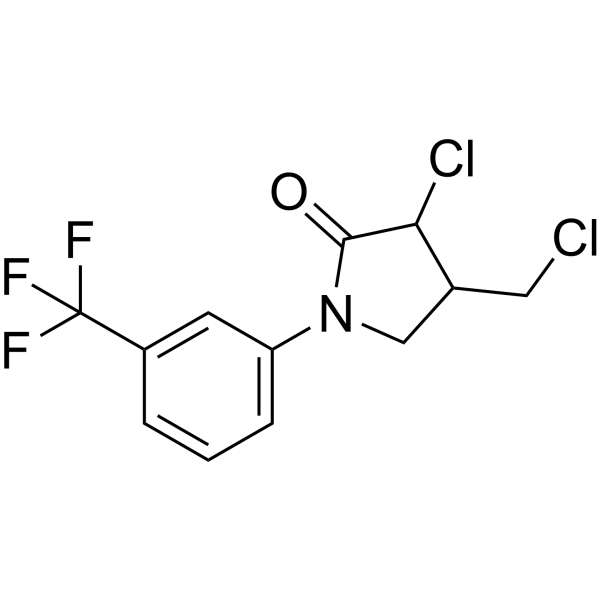
Flurochloridone (R-40244) is a selective preemergence and persistent herbicide. Flurochloridone induces endoplasmic reticulum (ER) stress and activated unfolded protein response (UPR) signaling pathways. Flurochloridone impairs cell viability and induces cytotoxicity and apoptosis mediated by ER stress via activating eIF2α-ATF4/ATF6-CHOP-Bim/Bax signaling pathways in TM4 cells .
loading...
    loading...
Cat. No.: HY-150280
CAS No.: 1884647-72-6
Ironomycin is a derivative of Salinomycin (HY-15597). Ironomycin exhibits selective inhibitory activity against mantle cell lymphoma (MCL) cells. Ironomycin blocks the cell cycle and induces apoptosis and ferroptosis. Ironomycin induces double-strand DNA breaks and activates the unfolded protein response (UPR), particularly the IRE1α signaling pathway accumulation. The combination of Ironomycin with Ibrutinib (HY-10997) shows a synergistic effect. Ironomycin can be used for the study of MCL.
loading...
    loading...
Cat. No.: HY-139903
CAS No.: 2572713-30-3
Purity:  98.08%
Research Areas:  

Infection

Antifungal agent 18 is an antifungal agent. Antifungal agent 18 shows a broad-spectrum antifungal activity against major human fungal pathogens. Antifungal agent 18 compromises fungal cell wall integrity by targeting the unfolded protein response (UPR), calcineurin, and MAPK pathways. Antifungal agent 18 shows antifungal activity in virto and vivo. Antifungal agent 18 can be used for the research of invasive fungal pathogens and cutaneous dermatophytes .
loading...
    loading...
Cat. No.: HY-17504C
CAS No.: 1094100-06-7
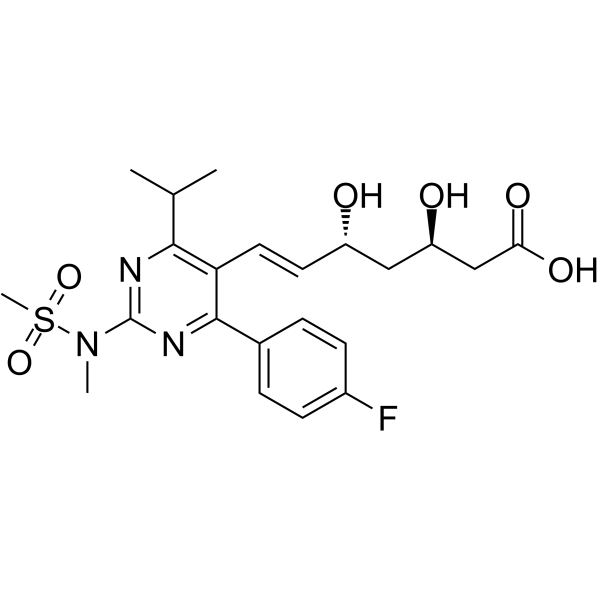
(3R,5R)-Rosuvastatin is a hERG potassium channel blocker and HMG-CoA reductase inhibitor that prolongs the action potential duration and QT interval by accelerating channel inactivation, impairing channel folding, reducing hERG mRNA transcription, and promoting the degradation of mature and immature hERG channels. (3R,5R)-Rosuvastatin can be used for research on long QT syndrome .
loading...
    loading...
Cat. No.: HY-176421
CAS No.: 3070438-85-3
PROTAC PI3K/110β degrader-1 is a VHL-recruiting PROTAC degrader targeting PI3K/110β, with DC50 values of 0.416 μM (MCF-7) and 19.66 μM (A549), respectively. PROTAC PI3K/110β degrader-1 recruits VHL to induce proteasomal degradation of PI3K/110β. It activates endoplasmic reticulum stress (ERS)-mediated mitochondrial apoptosis via the PERK/ATF4/CHOP unfolded protein response (UPR) pathway, downregulates p-AKT and Bcl-2, upregulates Bax, cleaved-caspase-9 and cleaved-caspase-3, inhibits the expression and activity of P-gp, and exerts synergistic anti-tumor effects with Doxorubicin (Adriamycin, ADM) (HY-15142A) and Cisplatin (DDP) (HY-17394). PROTAC PI3K/110β degrader-1 can be used in research related to multidrug-resistant cancers .
loading...
    loading...
Cat. No.: HY-171334A
Research Areas:  

Cancer

P1D-34 is a potent PIN1 PROTAC degrader with a DC50 of 177 nM. P1D-34 induces PIN1 degradation in a proteasome- and ubiquitination-like modification-dependent manner, thereby increasing intracellular ROS levels, downregulating the unfolded protein response pathway, and inducing DNA damage, cell cycle arrest and apoptosis. P1D-34 can be used in studies related to acute myeloid leukemia .
loading...
    loading...
Cat. No.: HY-28325
CAS No.: 792928-94-0
Research Areas:  

Cancer

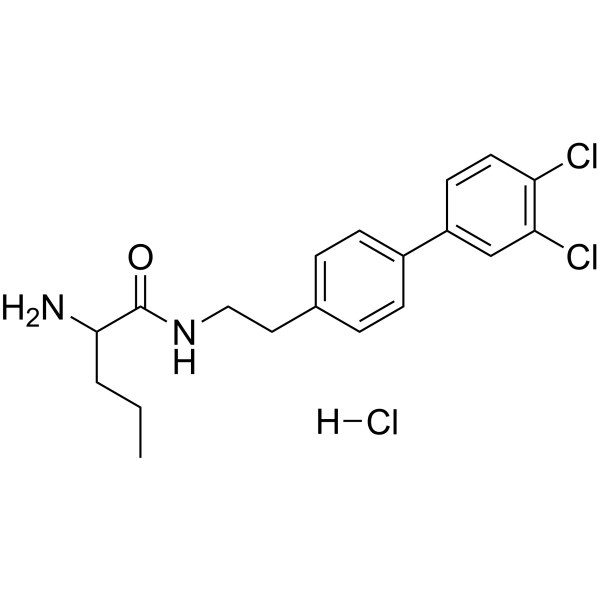
AMC-04 is an unfolded protein response (UPR) activator, which activates UPR pathway through ROS and p38 MAPK signaling and induces apoptotic cell death. AMC-04 can be used for cancer research .
loading...
    loading...
Cat. No.: HY-N12887
CAS No.: 114582-75-1
Mycothiazole is an inhibitor for mitochondrial electron transport chain (ETC) complex I. Mycothiazole exhibits cytotoxicity in cancer cells Huh7 (IC50 is 55.8 μM), U87 and MCF7. Mycothiazole induces apoptosis in Huh7. Mycothiazole utilizes the unfolded protein response (UPR) and heat shock response (HSR) pathway involved transcription factors ATFS-1 and HSF1, to extend the lifespan of C. elegans .
loading...
    loading...
Cat. No.: HY-121337R
CAS No.: 61213-25-0
Synonyms: R-40244 (Standard)
Research Areas:  

Others

Flurochloridone (Standard) is the analytical standard of Flurochloridone. This product is intended for research and analytical applications. Flurochloridone (R-40244) is a selective preemergence and persistent herbicide. Flurochloridone induces endoplasmic reticulum (ER) stress and activated unfolded protein response (UPR) signaling pathways. Flurochloridone impairs cell viability and induces cytotoxicity and apoptosis mediated by ER stress via activating eIF2α-ATF4/ATF6-CHOP-Bim/Bax signaling pathways in TM4 cells .
loading...
    loading...
Cat. No.: HY-N0805AR
CAS No.: 18649-93-9
Alisol B (Standard) is the analytical standard of Alisol B (HY-N0805A). This product is intended for research and analytical applications. Alisol B is a triterpene with diverse biological activities. Alisol B binds human soluble epoxide hydrolase (sEH) with a Ki of 5.97 μM and reduces sEH activity. Alisol B inhibits RANKL-induced JNK phosphorylation, NFATc1 and c-Fos expression, osteoclast formation, mature osteoclast pit-forming and actin ring activity, and SERCA pump activity. Alisol B induces calcium mobilization, CaMKK-AMPK-mTOR pathway activation, autophagic flux, autophagosome formation, G1 phase cell cycle arrest, endoplasmic reticulum stress, unfolded protein responses, and cancer cell apoptosis. Alisol B can be used for the research of hypercalcemia, osteoporosis, rheumatoid arthritis, periodontitis, acute kidney injury, and breast cancer.
loading...
    loading...
Cat. No.: HY-120825
CAS No.: 1527467-32-8
QD 232 is a quinazolinedione-based ROS inducer and an apoptosis inducer with cytotoxicity and redox regulatory activity. QD 232 promotes ROS accumulation, activates the NRF2-mediated oxidative stress response and unfolded protein response pathways, and upregulates downstream antioxidant and stress response genes. QD 232 inhibits mtDNA transcription driven by HSP2 and LSP promoters, and impairs mitochondrial oxidative phosphorylation function. QD 232 induces apoptosis of pancreatic ductal adenocarcinoma cells and exerts cytotoxicity against gemcitabine (HY-17026)-resistant pancreatic ductal adenocarcinoma cells. QD 232 delays tumor growth in a mouse pancreatic cancer xenograft model .
loading...
    loading...
Cat. No.: HY-W009929
CAS No.: 18979-55-0
Synonyms: 4-(Hexyloxy)phenol
Target:  

Apoptosis Caspase PARP

Research Areas:  

Cancer

AC-45594 (4-(Hexyloxy)phenol) is a UPR activator. AC-45594 induces endoplasmic reticulum stress, activates the unfolded protein response (UPR), and drives the transition from adaptive stress signaling to terminal stress signaling, ultimately leading to cell Apoptosis. AC-45594 activates Caspase-3, induces PARP cleavage, and increases the protein level of DR5. AC-45594 selectively inhibits the growth of Ewing sarcoma cells .
loading...
    loading...
Cat. No.: HY-L054
379 compounds

Endoplasmic reticulum (ER) contributes to the production and folding of approximately one third of cellular proteins, and is thus inextricably linked to the maintenance of cellular homeostasis and the fine balance between health and disease. However, some adverse factors negatively impact ER functions and protein synthesis, resulting in the activation of Endoplasmic reticulum stress (ER stress, ERS) and unfolded protein response (UPR) signaling pathways. The UPR is triggered when ER protein folding capacity is overwhelmed by cellular demand and the UPR initially aims to restore ER homeostasis and normal cellular functions. However, if this fails, then the UPR triggers cell death. Chronic ER stress and defects in UPR signaling are emerging as key contributors to a growing list of human diseases, including diabetes, neurodegeneration and cancer.

MCE Endoplasmic Reticulum Stress Compound Library contains 379 ER stress-related compounds that mainly target PERK, IRE1, ATF6, etc. MCE ER stress library is a useful tool for researching ER stress and related diseases.

Cat. No.: HY-182360
Cytisine-Platinum(IV) Prodrug-1 is a Pt(IV) prodrug incorporating the natural compound Cytisine (HY-N0175) with antiproliferative activity against tumor cells. Cytisine-Platinum(IV) Prodrug-1 promotes calcium transfer across the IP3R1-GRP75-VDAC1 axis to drive mitochondrial calcium overload. Cytisine-Platinum(IV) Prodrug-1 initiates unfolded protein response via PERK, eIF2α, ATF4, and CHOP to modulate Bcl-2 and Bax, triggering apoptosis. Cytisine-Platinum(IV) Prodrug-1 induces mitochondrial dysfunction, ROS production, reduced ATP synthesis, DNA damage, and S-phase cell cycle arrest. Cytisine-Platinum(IV) Prodrug-1 activates the cGAS-STING pathway, reduces PD-L1 expression, drives immunogenic cell death. Cytisine-Platinum(IV) Prodrug-1 exhibits high physiological stability, efficient cellular accumulation, and enhanced platinum-DNA binding, and inhibits tumor growth in mouse models with reduced systemic toxicity. Cytisine-Platinum(IV) Prodrug-1 can be used for the research of lung cancer .
loading...
    loading...
Cat. No.: HY-123996
CAS No.: 20041-64-9
3-Ethoxy-5,6-dibromosalicylaldehyde is an IRE1/ERN1 inhibitor, with an IC50 of 0.12 μM, a Ki of 71-88 nM, and a Kd of 100 nM against the ribonuclease activity of hIRE1α, as well as an IC50 of 4.8 μM against yeast Ire1. It shows selectivity toward IRE1 ribonuclease. 3-Ethoxy-5,6-dibromosalicylaldehyde blocks the IRE1/ERN1-mediated unfolded protein response (UPR) signaling pathway, including XBP-1 mRNA splicing, induction of XBP1 target genes, and activation of MAPK8/9/10, but does not alter the phosphorylation level of IRE1α or the PERK/ATF6 pathway. 3-Ethoxy-5,6-dibromosalicylaldehyde inhibits chikungunya virus replication, induces growth arrest, apoptosis and clonogenic inhibition in pancreatic cancer cells, reduces FB1 (Fumonisin B1) (HY-N6719)-induced autophagy and cell death, regulates PGG-induced senescence and apoptosis, and alleviates Sorafenib (HY-10201)-induced vacuolization and damage in hepatic stellate cells. 3-Ethoxy-5,6-dibromosalicylaldehyde can be used in research related to chikungunya virus infection, pancreatic cancer, FB1-induced nephrotoxicity, liver cancer, breast cancer, lung cancer and liver fibrosis .
loading...
    loading...
  • 1

