32 Results for "

uniformly

" in MedChemExpress (MCE) Product Catalog:
Products (32)

32 Results for "uniformly" in MCE Product Catalog:

119
119 Publications Verification
Cat. No.: HY-D0938
CAS No.: 150347-59-4
Synonyms: CFSE; 5(6)-Carboxyfluorescein diacetate succinimidyl ester; 5(6)-CFDA N-succinmidyl ester
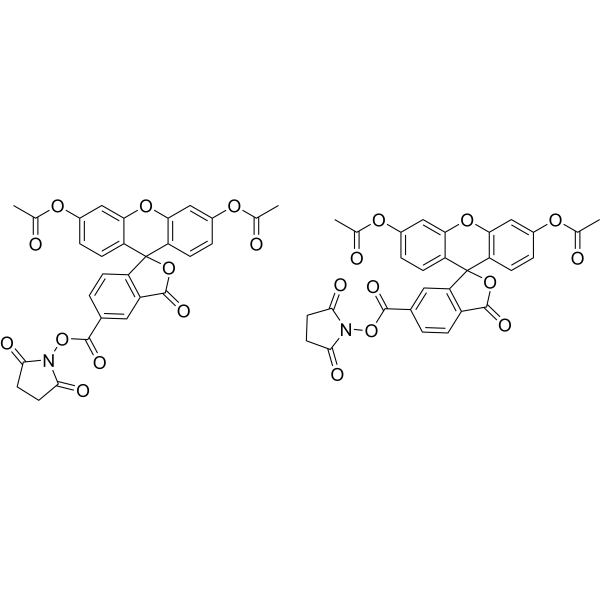
CFDA-SE is a fluorescent dye that can penetrate the cell membrane. It can react with the free amine group in the cytoskeleton protein inside the cell, and finally form a protein complex with fluorescence. After entering the cell, CFDA-SE locates in the cell membrane, cytoplasm and nucleus, and the fluorescence staining is strongest in the nucleus . CFDA-SE dye can be uniformly inherited by the cells with cell division and proliferation, and its attenuation is proportional to the number of cell divisions. This phenomenon can be detected and analyzed by flow cytometry under the excitation light of 488 nm, and can be used to detect the proliferation of cells .
loading...
    loading...
26
26 Cited Publications
Cat. No.: HY-129047E
CAS No.: 9002-07-7
Target:  

Ser/Thr Protease

Research Areas:  

Others

Trypsin, porcine pancreas (Cell culture grade) is a serine protease that hydrolyzes proteins at the carboxyl side of lysine or arginine residues. Trypsin, porcine pancreas (Cell culture grade) exhibits excellent protein digestibility for α-lactalbumin and β-casein. Trypsin, porcine pancreas (Cell culture grade) removes cellular components while preserving extracellular matrix structures to achieve uniform decellularization of porcine pancreas .
loading...
    loading...
3
3 Cited Publications
Cat. No.: HY-Y0850J
CAS No.: 9002-89-5
Synonyms: PVA (Mw 13000-23000, 87-89% hydrolyzed); Poly(Ethenol) (Mw 13000-23000, 87-89% hydrolyzed)
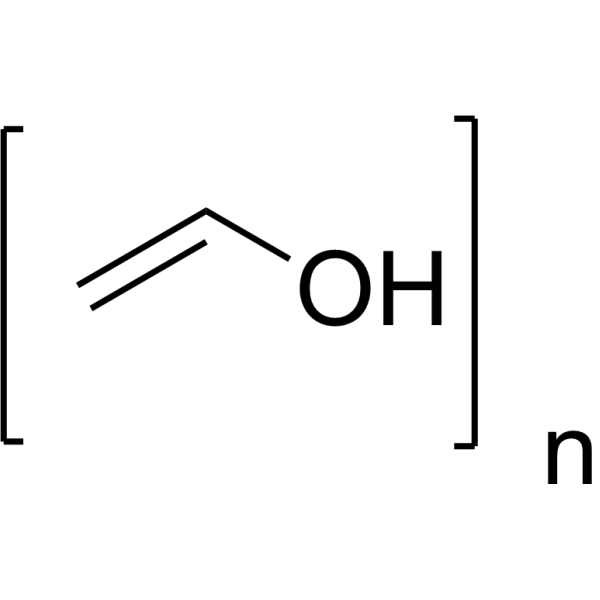
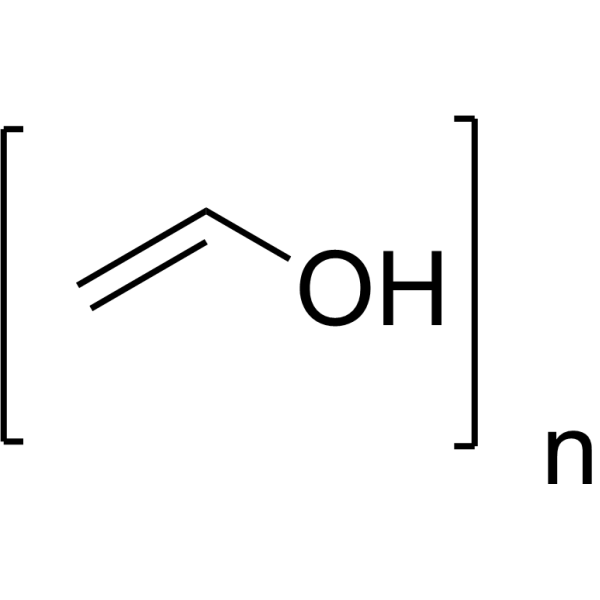
Polyvinyl alcohol (Mw 13000-23000, 87-89% hydrolyzed) is a polyvinyl alcohol with a molecular weight of 130000-23000 and hydrolytic properties. Polyvinyl alcohol (Mw 13000-23000, 87-89% hydrolyzed) is the hydrolysis and removal of acetate groups after the polymerization of ethylene acetate and polyvinyl alcohol is obtained. A degree of hydrolysis of 87-89% indicates that a large part of the acetate groups have been removed, resulting in a large number of hydroxyl groups in the PVA structure. Polyvinyl alcohol with different degrees of hydrolysis can be used to self-crosslink to form cryogel, which can be used as biological excipient. Polyvinyl alcohol can be used in tissue engineering by electrospinning. Polyvinyl alcohol can achieve high cellular density, infiltration, and uniform distribution, facilitating functional connections between cells. Polyvinyl alcohol can improve cell vitality through in vitro cultivation. Polyvinyl alcohol demonstrates promising inhibition of ostersarcoma cancer cells with Doxorubicin (HY-15142A) .
loading...
    loading...
3
3 Cited Publications
Cat. No.: HY-Y0850I
CAS No.: 9002-89-5
Synonyms: PVA (Mw 9000-10000, 80% hydrolyzed); Poly(Ethenol) (Mw 9000-10000, 80% hydrolyzed)
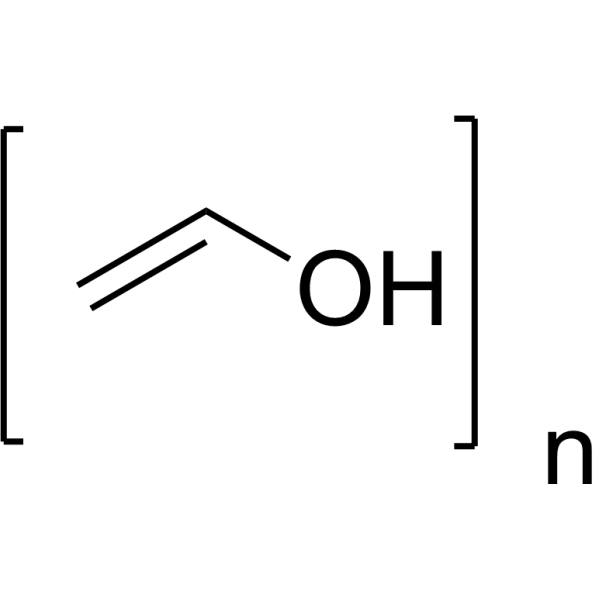
Polyvinyl alcohol (Mw 9000-10000, 80% hydrolyzed) also known as PVA, is a vinyl water-soluble polymer that can be used as a non-ionic surfactant. Polyvinyl alcohol (Mw 9000-10000, 80% hydrolyzed) can be used as a biodegradable polymer and can be used in adhesives, coatings, textiles, ceramics, and cosmetics. Polyvinyl alcohol can be used in tissue engineering by electrospinning. Polyvinyl alcohol can achieve high cellular density, infiltration, and uniform distribution, facilitating functional connections between cells. Polyvinyl alcohol can improve cell vitality through in vitro cultivation. Polyvinyl alcohol demonstrates promising inhibition of ostersarcoma cancer cells with Doxorubicin (HY-15142A) .
loading...
    loading...
3
3 Cited Publications
Cat. No.: HY-Y0850P
CAS No.: 9002-89-5
Synonyms: PVA (Mw 146000-186000, 87-89% hydrolyzed); Poly(Ethenol) (Mw 146000-186000, 87-89% hydrolyzed)
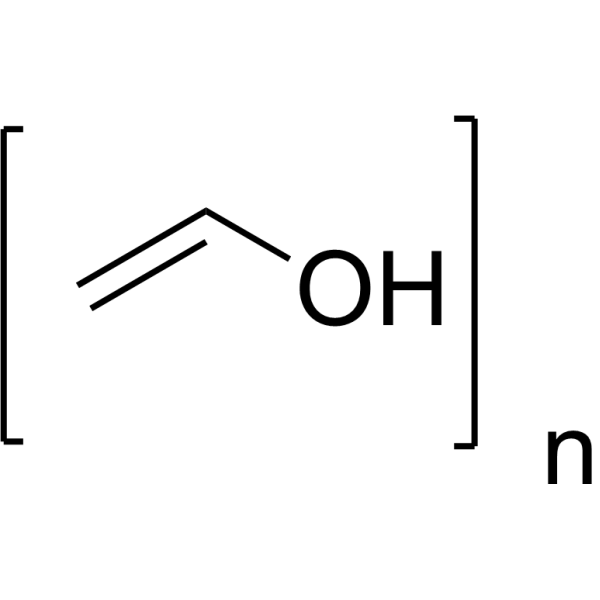
Polyvinyl alcohol (Mw 146000-186000, 87-89% hydrolyzed) is a polyvinyl alcohol with a molecular weight of 146000-186000 and hydrolytic properties. Polyvinyl alcohol (Mw 146000-186000, 87-89% hydrolyzed) is the hydrolysis and removal of acetate groups after the polymerization of ethylene acetate. And polyvinyl alcohol is obtained. Polyvinyl alcohol with different degrees of hydrolysis can be used to self-crosslink to form cryogel, which can be used as biological excipient. Polyvinyl alcohol can be used in tissue engineering by electrospinning. Polyvinyl alcohol can achieve high cellular density, infiltration, and uniform distribution, facilitating functional connections between cells. Polyvinyl alcohol can improve cell vitality through in vitro cultivation. Polyvinyl alcohol demonstrates promising inhibition of ostersarcoma cancer cells with Doxorubicin (HY-15142A) .
loading...
    loading...
3
3 Cited Publications
Cat. No.: HY-Y0850K
CAS No.: 9002-89-5
Synonyms: PVA (Mw 31000-50000, 98-99% hydrolyzed); Poly(Ethenol) (Mw 31000-50000, 98-99% hydrolyzed)
Polyvinyl alcohol (Mw 31000-50000, 98-99% hydrolyzed), also known as PVA, is a vinyl water-soluble polymer that can be used as a non-ionic surfactant. It can also be used as a biodegradable polymer and can be used in adhesives, coatings, textiles, ceramics and cosmetics. Polyvinyl alcohol can be used in tissue engineering by electrospinning. Polyvinyl alcohol can achieve high cellular density, infiltration, and uniform distribution, facilitating functional connections between cells. Polyvinyl alcohol can improve cell vitality through in vitro cultivation. Polyvinyl alcohol demonstrates promising inhibition of ostersarcoma cancer cells with Doxorubicin (HY-15142A) .
loading...
    loading...
1
1 Cited Publications
Cat. No.: HY-10533
CAS No.: 59989-18-3
Purity:  99.93%
Synonyms: 5-Ethynyluracil; GW776C85
Research Areas:  

Cancer

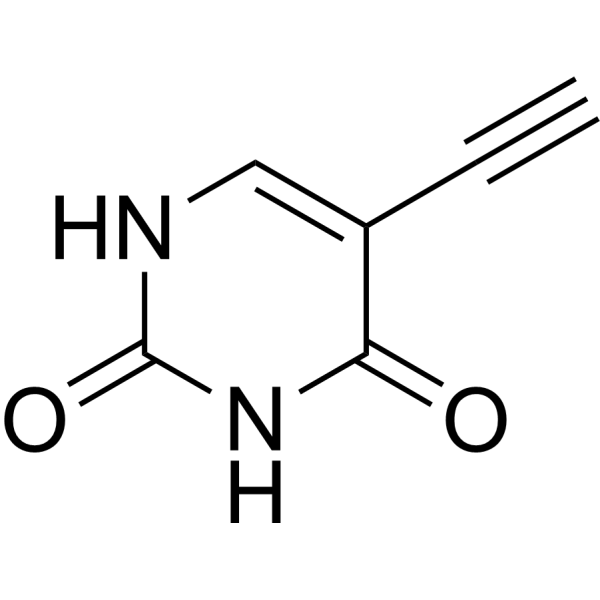
Eniluracil (5-Ethynyluracil) is an orally active dihydropyrimidine dehydrogenase (DPD) inhibitor. Eniluracil irreversibly inhibits DPD, increases the oral bioavailability of 5-fluorouracil to 100%, and facilitates the uniform absorption and toxicity of 5-fluorouracil. Eniluracil can be used in cancer research of combination with fluoropyrimidines (including 5-fluorouracil) . Eniluracil is a click chemistry reagent, it contains an Alkyne group and can undergo copper-catalyzed azide-alkyne cycloaddition (CuAAc) with molecules containing Azide groups.
loading...
    loading...
1
1 Cited Publications
Cat. No.: HY-B1607
CAS No.: 77-38-3
Chlorphenoxamine, an antihistamine and anticholinergic agent is a GPCR antagonist. Chlorphenoxamine inhibits multiple lethal viral diseases, such as SARS-CoV, MERS-CoV, EBOV and malaria. Chlorphenoxamine shows anti-filovirus activity against both EBOV and Marburg virus (MARV) with IC50s of 1.1 μM and 6.2 μM, respectively. Chlorphenoxamine is used for allergic conditions, urticaria, viral diseases and Parkinson’s disease .
loading...
    loading...
Cat. No.: HY-21997
CAS No.: 136834-22-5
DMT-2'fluoro-da(bz) amidite is a key intermediate for synthesizing antisense oligonucleotides with high nuclease resistance, high RNA binding affinity, and maintained base-pair specificity .
loading...
    loading...
Cat. No.: HY-W127776
CAS No.: 176736-49-5
Synonyms: Ethylenediaminetetraacetic acid zinc disodium tetrahydrate
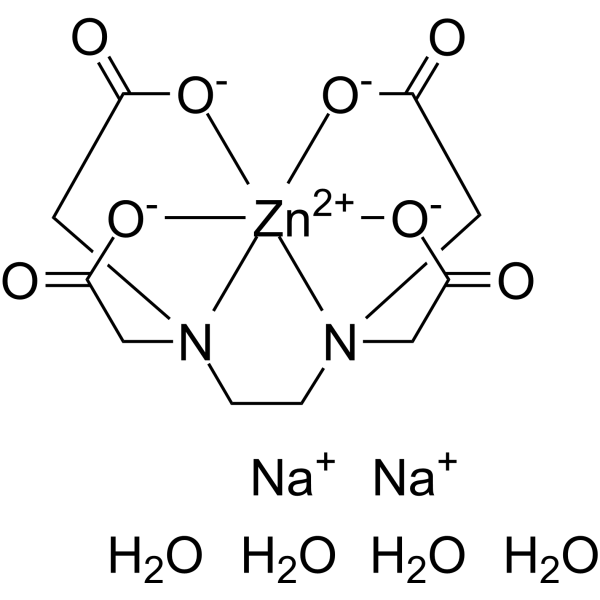
Zn(II)-EDTA (Ethylenediaminetetraacetic acid zinc) disodium tetrahydrate is a coordinating agent. Zn(II)-EDTA disodium tetrahydrate coordinates with Zn 2+ to modify its solvated structure, provides pre-synthesized EDTA-Zn complexes that release Zn 2+ to repair zinc anode defects under interfacial electric field, adsorbs onto zinc anode surface to block oxygen and water molecules, inhibits corrosion and hydrogen evolution reactions, promotes uniform Zn 2+ deposition, suppresses zinc dendrite formation, and modulates the hydrogen bonding network within the electrolyte. Zn(II)-EDTA disodium tetrahydrate acts as an electrolyte additive to enhance reversibility and stability of zinc anodes in aqueous zinc-ion batteries .
loading...
    loading...
Cat. No.: HY-112766
CAS No.: 201036-16-0
Purity:  ≥98.0%
Target:  

Liposome

Research Areas:  

Others

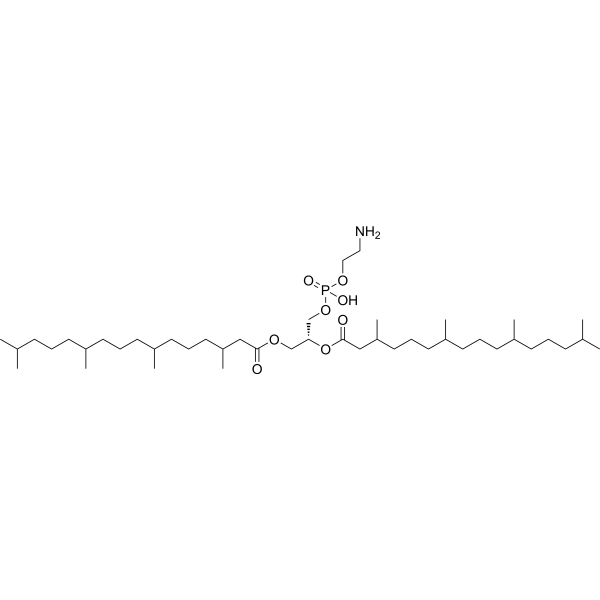
DPyPE is a neutral phosphatidylethanolamine lipid composed of a polyisoprene alkyl chain with two pyridine-containing phosphine ligands. DPyPE is mainly used in liposome formulations and to enhance the efficiency of gene delivery in vitro and in vivo. For example, DPyPE can be mixed with cationic lipids such as VC1052 (HY-156616) (in a 1:1 ratio) to form the vaccine adjuvant Vaxfectin (HY-142998). DPyPE assists VC1052 in binding to negatively charged pDNA to form a uniform liposome complex by regulating the fluidity and stability of the liposome membrane .
loading...
    loading...
Cat. No.: HY-150220
CAS No.: 125401-63-0
Purity:  ≥97.0%
1,5-Dihexadecyl N-(3-carboxy-1-oxopropyl)-L-glutamate is a lipid used in the synthesis of phospholipid vesicles. 1,5-Dihexadecyl N-(3-carboxy-1-oxopropyl)-L-glutamate works with other lipids to convert polydisperse vesicles into vesicles of uniform size by freeze-thaw and extrusion techniques. 1,5-Dihexadecyl N-(3-carboxy-1-oxopropyl)-L-glutamate can enhance protein encapsulation efficiency for drug delivery and biochemical applications .
loading...
    loading...
Cat. No.: HY-DY1009
CAS No.: 150347-59-4
CFDA-SE (solution) is a fluorescent dye that can penetrate the cell membrane. It can react with the free amine group in the cytoskeleton protein inside the cell, and finally form a protein complex with fluorescence. After entering the cell, CFDA-SE locates in the cell membrane, cytoplasm and nucleus, and the fluorescence staining is strongest in the nucleus . CFDA-SE dye can be uniformly inherited by the cells with cell division and proliferation, and its attenuation is proportional to the number of cell divisions. This phenomenon can be detected and analyzed by flow cytometry under the excitation light of 488 nm, and can be used to detect the proliferation of cells .
Solvent and concentration: DMSO: 5 mM
loading...
    loading...
Cat. No.: HY-120976
CAS No.: 157230-67-6
Purity:  99.84%
Research Areas:  

Others

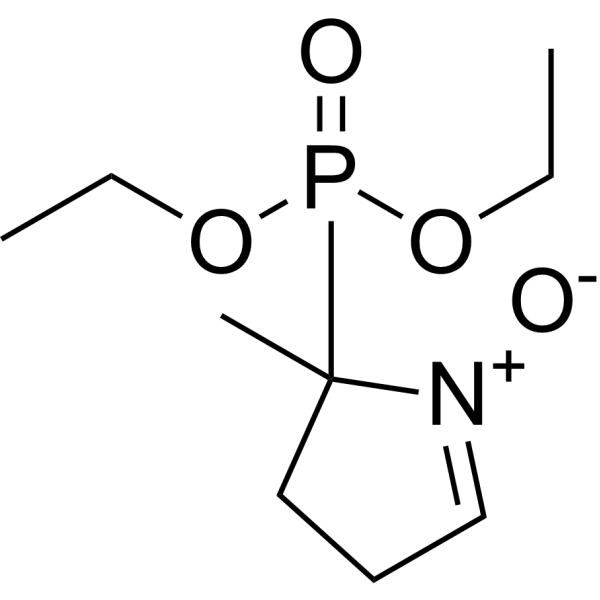
DEPMPO is a phosphorus-substituted nitrone spin trap probe that can capture superoxide anions and hydroxyl radicals. DEPMPO forms stable spin adducts with hydroxyl, aryl, sulfite and superoxide radicals, and the formation of these adducts can be inhibited by catalase or superoxide dismutase. DEPMPO is rapidly absorbed after intraperitoneal injection and distributes uniformly in the liver, heart and blood of mice. DEPMPO can be used in studies related to oxygen radical detection .
loading...
    loading...
Cat. No.: HY-P6299
CAS No.: 944792-75-0
Research Areas:  

Neurological Disease Cancer

MAX8 is a synthetic β-hairpin peptide that folds rapidly and self-assembles into a β-sheet-rich fibrous hydrogel network via non-covalent crosslinking. MAX8 hydrogel exhibits excellent shear-thinning and self-healing properties, enabling precise delivery via syringe and maintaining local retention after implantation. MAX8 hydrogel can uniformly encapsulate cells while preserving their viability and morphology, and protect growth factors (e.g., NGF) and chemotherapeutic drugs from degradation. MAX8 is applicable for spinal cord injury repair, medulloblastoma treatment, and three-dimensional high-throughput drug screening .
loading...
    loading...
Cat. No.: HY-P10699
CAS No.: 487036-63-5
Research Areas:  

Neurological Disease Cancer

MAX1 is a synthetic β-hairpin peptide that folds rapidly and self-assembles into a β-sheet-rich fibrous hydrogel network via non-covalent crosslinking. MAX1 hydrogel exhibits excellent shear-thinning and self-healing properties, enabling precise delivery via syringe and maintaining local retention after implantation. MAX1 hydrogel can uniformly encapsulate cells while preserving their viability and morphology, and protect growth factors (e.g., NGF) and chemotherapeutic drugs from degradation. MAX1 is applicable for spinal cord injury repair, medulloblastoma treatment, and three-dimensional high-throughput drug screening .
loading...
    loading...
Cat. No.: HY-103467
CAS No.: 223759-19-1
Target:  

Fluorescent Dye

Research Areas:  

Others

NPE-caged-HPTS sodium is a caged fluorophore that fluoresces upon uncaged fluorophore release, releasing the free highly polar fluorophore HPTS (Exc=470/40 nm, Em=525/50 nm). HPTS releases the fluorophore rapidly and uniformly, allowing for measurement of diffusion within tissues, with a diffusion coefficient of μm 2s -1, similar to that of synaptic L-glutamate .
loading...
    loading...
Cat. No.: HY-W611263
CAS No.: 113816-36-7
Synonyms: MBTFP
Methyl 2-bromo-3,3,3-trifluoropropionate (MBTFP) is a surfactant with excellent miscibility and can be used as a solvent in organic reactions. Methyl 2-bromo-3,3,3-trifluoropropionate exhibits good reactivity in chemical synthesis and is suitable for the preparation of a variety of organic compounds. Methyl 2-bromo-3,3,3-trifluoropropionate can also be used to improve the uniformity of the reaction mixture and effectively promote the reaction process.
loading...
    loading...
Cat. No.: HY-10533R
CAS No.: 59989-18-3
Synonyms: 5-Ethynyluracil (Standard); GW776C85 (Standard)
Research Areas:  

Cancer

Eniluracil (Standard) is the analytical standard of Eniluracil. This product is intended for research and analytical applications. Eniluracil (5-Ethynyluracil) is an orally active dihydropyrimidine dehydrogenase (DPD) inhibitor. Eniluracil irreversibly inhibits DPD, increases the oral bioavailability of 5-fluorouracil to 100%, and facilitates the uniform absorption and toxicity of 5-fluorouracil. Eniluracil can be used in cancer research of combination with fluoropyrimidines (including 5-fluorouracil) . Eniluracil is a click chemistry reagent, it contains an Alkyne group and can undergo copper-catalyzed azide-alkyne cycloaddition (CuAAc) with molecules containing Azide groups.
loading...
    loading...
Cat. No.: HY-185069C
Research Areas:  

Others

Unylinker-OH Resin (Substitution:300±25 µmol/g) is a macroporous polystyrene resin functionalized with Unylinker active groups with uniform particle size and uniform active groups. It is used for oligonucleotides synthesis.
loading...
    loading...

