1. Search Result
Search Result
Isoforms Recommended: USP30
Results for "

usp30

" in MedChemExpress (MCE) Product Catalog:

18

Inhibitors & Agonists

1

Fluorescent Dye

1

Peptides

2

Recombinant Proteins

1

Antibodies

3

Oligonucleotides

Cat. No. Product Name Target Research Areas Chemical Structure
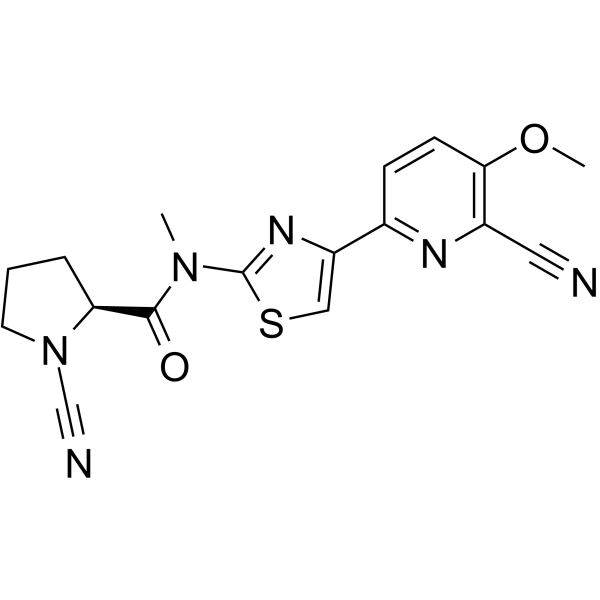
  • HY-160019

    Deubiquitinase Mitophagy Neurological Disease
    MTX115325 (Example 1) is an orally active, brain-penetrating USP30 inhibitor (IC50=12 nM) with neuroprotective activity. MTX115325 increases ubiquitination (EC50=32 nM) of the mitochondrial outer membrane protein TOM20 (a USP30 substrate), increasing mitophagy. MTX115325 prevents dopaminergic neuron loss and preserves striatal dopamine .
    MTX115325
  • HY-112438
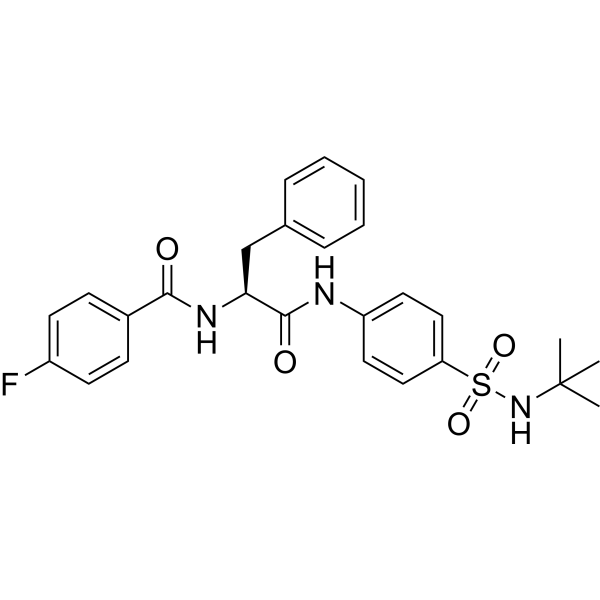
    MF-094
    5+ Cited Publications

    Deubiquitinase Cancer
    MF-094 is a potent and selective USP30 inhibitor with an IC50 of 120 nM. MF-094 increases protein ubiquitination and accelerates mitophagy .
    MF-094
  • HY-141659
    CMPD-39
    3 Publications Verification

    Mitophagy Deubiquitinase Neurological Disease
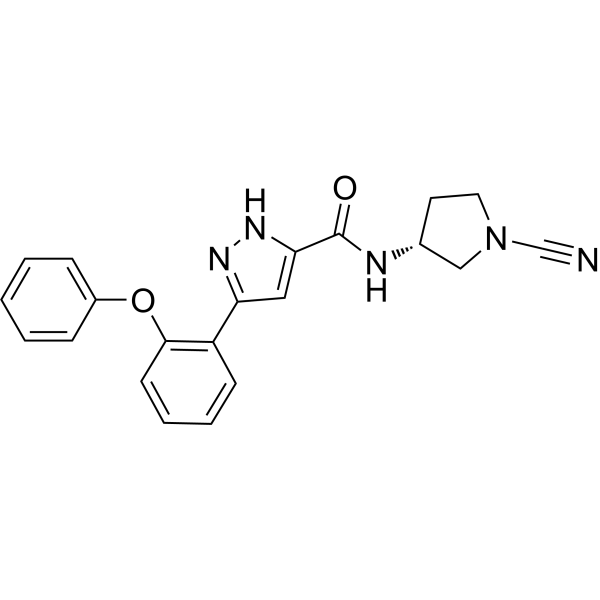
    CMPD-39 is a selective non-covalent inhibitor of the ubiquitin-specific protease USP30 (IC50=~20 nM), with high selectivity over other DUB family members (1-100 μM). CMPD-39 inhibits the deubiquitinating activity of USP30, enhances the ubiquitination of mitochondrial proteins TOMM20 and SYNJ2BP; thus, CMPD-39 promotes phosphoubuitin accumulation, thereby accelerating mitochondrial autophagy (mitophagy) and peroxisomal autophagy (pexophagy). CMPD-39 significantly restores impaired mitochondrial function in dopaminergic neurons derived from Parkinson's disease patients .
    CMPD-39
  • HY-111623

    Deubiquitinase Cancer
    USP30 inhibitor 11 is a selective and potent ubiquitin specific peptidase 30 (USP30) inhibitor with an IC50 of 0.01 μΜ, the example 83 extracted from patent WO2017009650A1. USP30 inhibitor 11 is used for the study of cancer and conditions involving mitochondrial dysfunction .
    USP30 inhibitor 11
  • HY-145337

    FT385

    Deubiquitinase PINK1/Parkin Neurological Disease Cancer
    FT3967385 (FT385) is a selective covalent inhibitor that targets the outer mitochondrial membrane deubiquitinase (Deubiquitinase) USP30 (IC50 = 1.5 nM, Ki = 0.014 μM). By inhibiting the enzymatic activity of USP30, FT3967385 relieves its negative regulation of the PINK1-Parkin mediated mitochondrial ubiquitination cascade, thereby enhancing mitophagy. FT3967385 can be used for mechanistic studies of neurodegenerative diseases associated with mitochondrial dysfunction, such as Parkinson's disease .
    FT3967385
  • HY-RS15541

    Small Interfering RNA (siRNA) Others

    USP30 Human Pre-designed siRNA Set A contains three designed siRNAs for USP30 gene (Human), as well as a negative control, a positive control, and a FAM-labeled negative control.

    USP30 Human Pre-designed siRNA Set A
    USP30 Human Pre-designed siRNA Set A
  • HY-161909

    Deubiquitinase Cardiovascular Disease Neurological Disease
    USP30-IN-1 is a selective inhibitor of USP30 with an IC50 value of 94 nM. USP30-IN-1 can be used in the research of diseases with impaired mitophagy by targeting USP30 .
    USP30-IN-1
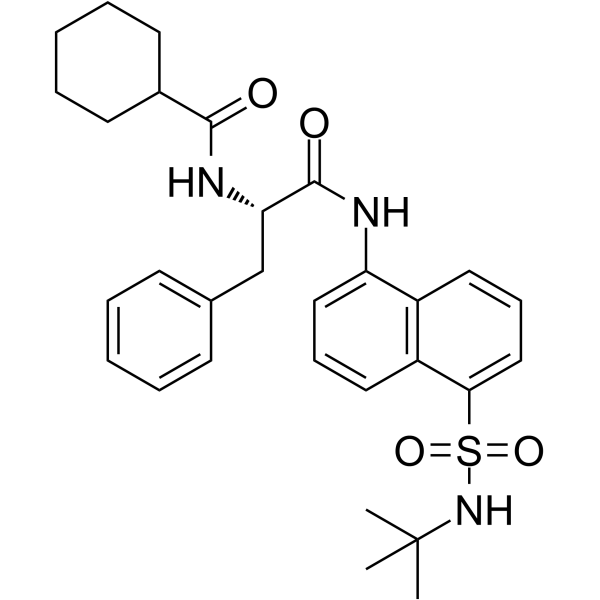
  • HY-138978

    Mitophagy Deubiquitinase Neurological Disease
    MF-095 is a USP30 inhibitor. MF-095 promotes mitochondrial autophagy. MF-095 can be used in neurological disease-related research .
    MF-095
  • HY-175826

    Deubiquitinase Ferroptosis Reactive Oxygen Species (ROS) Glutathione Peroxidase Cancer
    USP30-IN-20 is an orally active USP30 inhibitor (Kd = 1.61 μM, IC50 = 12.8 μM). USP30-IN-20 induces ferroptosis by promoting ubiquitination-mediated degradation of GPX4. USP30-IN-20 inhibits the proliferation, migration, invasion, and stemness of prostate cancer cells. USP30-IN-20 induces G0/G1 cell cycle arrest and ROS levels in prostate cancer cells. USP30-IN-20 exhibits significant anti-tumor efficacy in PC3 cell subcutaneous xenografts in mice. USP30-IN-20 can be used for the study of advanced prostate cancer .
    USP30-IN-20
  • HY-114383

    Deubiquitinase Autophagy Neurological Disease
    ST-539 is the inhibitor for deubiquitinase USP30 with IC50 of 0.37 μM. ST-539 promotes the ubiquitination of mitochondrial proteins, and induces mitochondrial autophagy, thereby regulating mitochondrial homeostasis. ST-539 can be used in research of neurodegenerative diseases .
    ST-539
  • HY-D2188

    Deubiquitinase Cancer
    IMP-2373 is a low-toxicity activity-based probe targeting covalent pan-deubiquitinase (DUB), which modulates and monitors DUB activity via covalent binding to the catalytic cysteine and active site of DUB. IMP-2373 enables real-time tracking of dynamic intracellular DUB activity in physiologically relevant living cell systems, and quantitative analysis of activity changes induced by pharmacological inhibition or MYC dysregulation. IMP-2373 can be used for research on related diseases such as B-cell lymphoma .
    IMP-2373
  • HY-141659A

    Mitophagy Deubiquitinase Neurological Disease
    (R)-CMPD-39 is the R enantiomer of CMPD-39 ( HY-141659 ). CMPD-39 is a selective non-covalent inhibitor of the ubiquitin-specific protease USP30 (IC50 =~20 nM), with high selectivity over other DUB family members (1-100 μM). CMPD-39 inhibits the deubiquitinating activity of USP30, enhances the ubiquitination of mitochondrial proteins TOMM20 and SYNJ2BP; thus, CMPD-39 promotes phosphoubuitin accumulation, thereby accelerating mitochondrial autophagy (mitophagy) and peroxisomal autophagy (pexophagy). CMPD-39 significantly restores impaired mitochondrial function in dopaminergic neurons derived from Parkinson's disease patients .
    (R)-CMPD-39
  • HY-P10416

    Q14 peptide

    Deubiquitinase Mitophagy Others Neurological Disease
    Q14 is a polypeptide derived from the USP30 (ubiquitin specific peptidase 30) transmembrane (TM) domain with the ability to inhibit the deubiquitination activity of USP30 (IC50=57.2 nM). Q14 reduces USP30 activity by inhibiting the interaction between the USP30 transmembrane domain and its catalytic domain. Q14 peptide contains the LC3 interaction region (LIR) motif, which enables it to bind to the LC3 and accelerate the formation of autophagosomes, thereby promoting mitophagy. Q14 can be used in the study of neurodegenerative diseases as well as mitochondrial quality control and cell metabolism .
    Q14
  • HY-RS23272

    Small Interfering RNA (siRNA) Others

    Usp30 Rat Pre-designed siRNA Set A contains three designed siRNAs for Usp30 gene (Rat), as well as a negative control, a positive control, and a FAM-labeled negative control.

    Usp30 Rat Pre-designed siRNA Set A
    Usp30 Rat Pre-designed siRNA Set A
  • HY-RS16830

    Small Interfering RNA (siRNA) Others

    Usp30 Mouse Pre-designed siRNA Set A contains three designed siRNAs for Usp30 gene (Mouse), as well as a negative control, a positive control, and a FAM-labeled negative control.

    Usp30 Mouse Pre-designed siRNA Set A
    Usp30 Mouse Pre-designed siRNA Set A
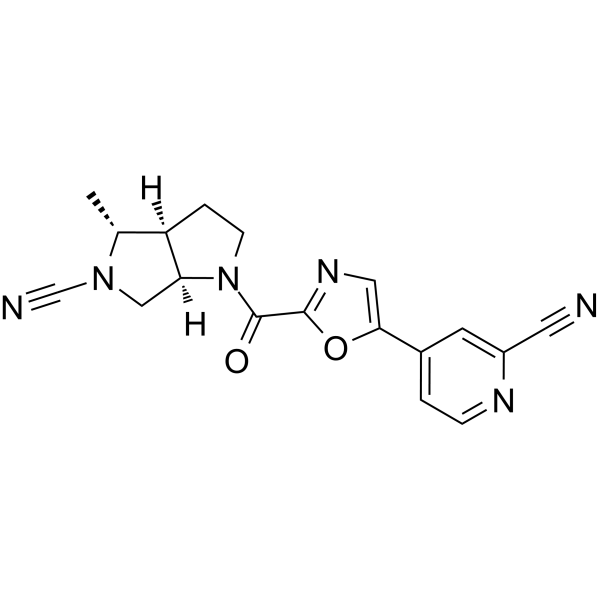
  • HY-182553

    Deubiquitinase Mitophagy Neurological Disease
    USP30-IN-2, a fused pyrroline, is an USP30 inhibitor with an IC50 <0.1 μM. USP30-IN-2 is expected to promote mitophagy and restore mitochondrial health. USP30-IN-2 can be used for research on Parkinson's disease .
    USP30-IN-2
  • HY-112438A

    Deubiquitinase Cancer
    rac-MF-094 is the racemic mixture of MF-094 (HY-112438). MF-094 is a potent and selective USP30 inhibitor with an IC50 of 120 nM. MF-094 increases protein ubiquitination and accelerates mitophagy .
    rac-MF-094
  • HY-182636

    Deubiquitinase Aldehyde Dehydrogenase (ALDH) Metabolic Disease Inflammation/Immunology Cancer
    MT16-001 is a cell-permeable UCHL1 inhibitor with an IC50 value of 580 nM. MT16-001 also exhibits considerable inhibitory activity against USP30, and shows selectivity for other UCH family deubiquitinases (DUBs) as well as the broader proteome. MT16-001 binds covalently to the cysteine residue at the active site of UCHL1, and forms covalent interactions with ALDH2, ALDH9A1 and GATD3A in intact cells. Meanwhile, as a cytotoxic agent, it displays a steep dose-response curve in human embryonic kidney cells. MT16-001 can be used for research on various cancers, liver fibrosis and pulmonary fibrosis .
    MT16-001

Inquiry Online

Your information is safe with us. * Required Fields.

Salutation


Country or Region *

Applicant Name *


Organization Name *

Department *


Email Address *


Product Name *

Cat. No.


Requested quantity *

Phone Number *


Remarks

Inquiry Online

Inquiry Information

Product Name:
Cat. No.:
Quantity:
MCE Japan Authorized Agent:

