14 Results for "

ventricular conduction

" in MedChemExpress (MCE) Product Catalog:
Products (14)

14 Results for "ventricular conduction" in MCE Product Catalog:

1
1 Cited Publications
Cat. No.: HY-135121
CAS No.: 57530-40-2
Purity:  98.45%
Synonyms: Ethacizin; NIK-244
Target:  

Sodium Channel

Research Areas:  

Cardiovascular Disease

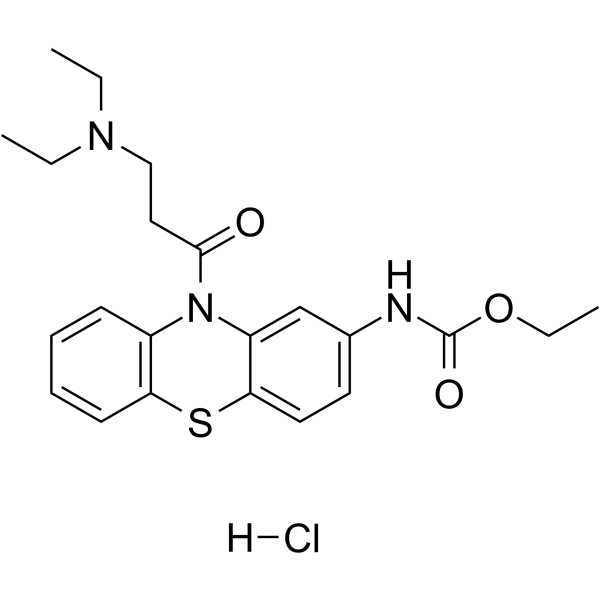
Ethacizine hydrochloride (Ethacizin; NIK-244) is a longer-lasting Class Ic antiarrhythmic agent than Flecainide . Ethacizine hydrochloride (Ethacizin; NIK-244) inhibits the depolarizing current responsible for the intraatrial and His-Purkinje-ventricular conduction .
loading...
    loading...
1
1 Cited Publications
Cat. No.: HY-A0079
CAS No.: 94-24-6
Synonyms: Amethocaine
Research Areas:  

Neurological Disease

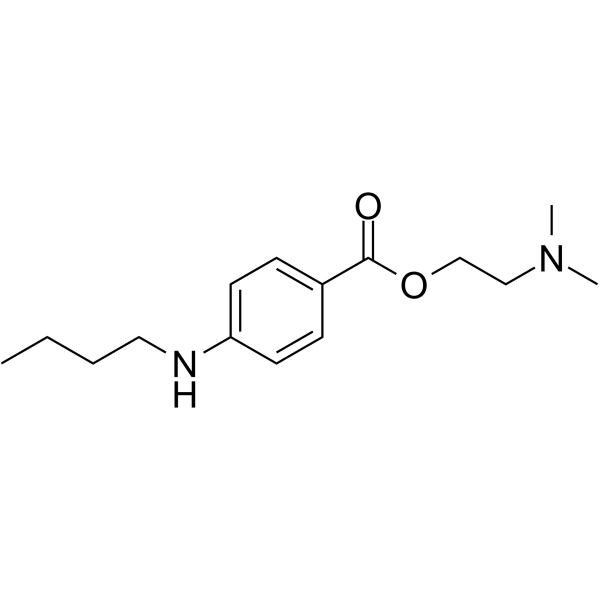
Tetracaine (Amethocaine) is a sodium channel inhibitor and ryanodine receptor (RyR) inhibitor. Tetracaine blocks sodium conduction across nerve cell membranes, preventing rapid sodium ion influx and depolarization. Tetracaine exhibits biphasic effects on spontaneous sarcoplasmic reticulum Ca 2+ release in Ca 2+-overloaded ventricular myocytes, and increases sarcoplasmic reticulum Ca 2+ load. Tetracaine can be used in research related to eye diseases .
loading...
    loading...
Cat. No.: HY-100634
CAS No.: 14133-90-5
Synonyms: (±)-4-hydroxy Propranolol hydrochloride
Target:  

Adrenergic Receptor

Research Areas:  

Cardiovascular Disease

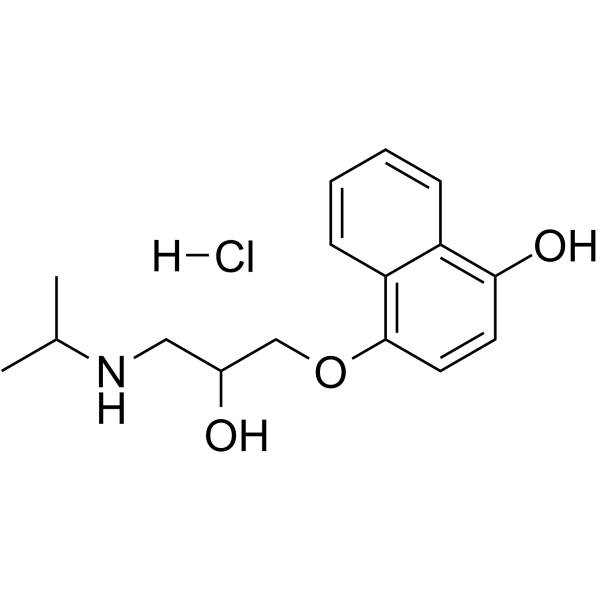
4-Hydroxypropranolol hydrochloride is a non-cardiac selective β-adrenergic receptor antagonist and a metabolite produced after oral administration of Propranolol (HY-B0573B). 4-Hydroxypropranolol hydrochloride also acts as a membrane stabilizer and possesses intrinsic sympathomimetic inhibitory activity. 4-Hydroxypropranolol hydrochloride blocks β-adrenergic receptors to antagonize the effects of catecholamines, acts as a partial β-adrenergic receptor agonist, and induces membrane stabilization. 4-Hydroxypropranolol hydrochloride alters heart rate, left ventricular contractility, and atrioventricular conduction time. 4-Hydroxypropranolol hydrochloride can be used in research related to cardiovascular and cerebrovascular diseases .
loading...
    loading...
Cat. No.: HY-A0236
CAS No.: 37640-71-4
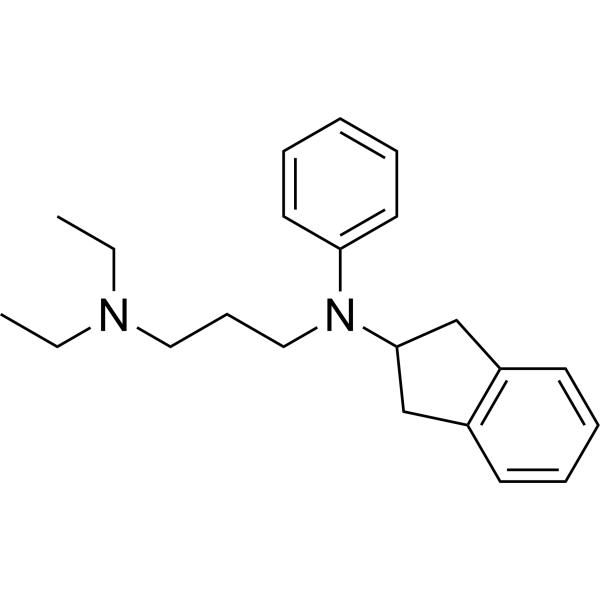
Aprindine is an Ib-class anti-arrhythmic agent. Aprindine mainly exerts its effect by blocking sodium channels (INa), thereby reducing the excitability and conduction velocity of cardiac muscle cells. Aprindine significantly inhibits delayed potassium currents, which helps to prolong the atrial effective refractory period (AERP) and inhibit the occurrence of atrial fibrillation. Aprindine can also regulate intracellular calcium ion concentration by inhibiting Na +/Ca 2+ exchange current (INCX), thereby further stabilizing cardiac electrical activity. Aprindine can be used for the study of atrial fibrillation (AF) and ventricular arrhythmias .
loading...
    loading...
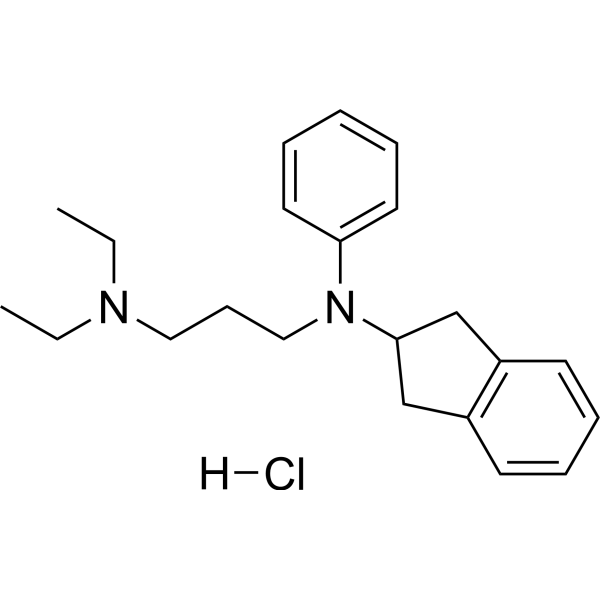
Cat. No.: HY-A0236A
CAS No.: 33237-74-0
Aprindine hydrochloride is an Ib-class anti-arrhythmic agent. Aprindine hydrochloride mainly exerts its effect by blocking sodium channels (INa), thereby reducing the excitability and conduction velocity of cardiac muscle cells. Aprindine hydrochloride significantly inhibits delayed potassium currents, which helps to prolong the atrial effective refractory period (AERP) and inhibit the occurrence of atrial fibrillation. Aprindine hydrochloride can also regulate intracellular calcium ion concentration by inhibiting Na +/Ca 2+ exchange current (INCX), thereby further stabilizing cardiac electrical activity. Aprindine hydrochloride can be used for the study of atrial fibrillation (AF) and ventricular arrhythmias .
loading...
    loading...
Cat. No.: HY-118833
CAS No.: 25360-99-0
Target:  

Calcium Channel

Research Areas:  

Cardiovascular Disease

RAC 109 is a local anesthetic. RAC 109 reduces ventricular conduction velocity and myocardial contractility in rabbits in a stereospecific manner (EC50=30 μM) .
loading...
    loading...
Cat. No.: HY-113841
CAS No.: 107707-38-0
RS-87337 is an orally active piperazine-amidine hybrid class Ia (inhibiting Vmax, IC50 = 17 μM)/class III (prolonging ADP90, EC15 = 2 μM) antiarrhythmic agent with selectivity for ventricular conduction . RS-87337 inhibits cardiac sodium channel, thereby reducing the maximum depolarization rate of action potential, with moderate onset and recovery kinetics. RS-87337 reduces cardiac outward potassium conductance (I_K), thus prolonging action potential duration. RS-87337 is applicable to research related to arrhythmia, ventricular arrhythmia, ventricular fibrillation, and myocardial ischemia-reperfusion injury .
loading...
    loading...
Cat. No.: HY-178082
CAS No.: 36386-71-7
Target:  

Others

Research Areas:  

Cardiovascular Disease

MK-251 is an orally active anti-arrhythmic agent. MK-251 prevents or modifies ventricular arrhythmias induced in dogs and baboons by tetrafluorethylbutylamine. MK-251 antagonizes the arrhythmias caused by Digoxin (HY-B1049) in cats. MK-251 at effective doses has little effect on basic cardiovascular parameters such as blood pressure, cardiac output, myocardial contractility and ventricular conduction, thus demonstrating its unique advantages .
loading...
    loading...
Cat. No.: HY-135121R
CAS No.: 57530-40-2
Synonyms: Ethacizin (Standard); NIK-244 (Standard)
Ethacizine (hydrochloride) (Standard) is the analytical standard of Ethacizine (hydrochloride). This product is intended for research and analytical applications. Ethacizine hydrochloride (Ethacizin; NIK-244) is a longer-lasting Class Ic antiarrhythmic agent than Flecainide . Ethacizine hydrochloride (Ethacizin; NIK-244) inhibits the depolarizing current responsible for the intraatrial and His-Purkinje-ventricular conduction .
loading...
    loading...
Cat. No.: HY-108998
CAS No.: 96480-44-3
Research Areas:  

Cardiovascular Disease

Bisaramil hydrochloride is an antiarrhythmic compound with activity in inhibiting free radical generation. Bisaramil hydrochloride directly blocks sodium currents and exhibits enhanced sodium channel blocking ability. Bisaramil hydrochloride inhibits isoproterenol-induced slow calcium action potentials in cardiomyocytes. Bisaramil hydrochloride reduces heart rate and prolongs the PR, QRS, and QT intervals in the electrocardiogram, showing blocking effects on sodium and potassium channels. Bisaramil hydrochloride reduces cardiac conduction velocity, increases the threshold current for capture and atrial fibrillation, and prolongs the effective refractory period. Bisaramil hydrochloride reduces ventricular arrhythmias and eliminates mortality caused by ventricular fibrillation in ischemic rat hearts .
loading...
    loading...
Cat. No.: HY-123196
CAS No.: 342419-09-4
Target:  

Adenosine Receptor

Research Areas:  

Cardiovascular Disease

CVT-2759 is a potent inhibitor of A1-ADOR, with the IC50 values of 0.18 μM and 9.5 μM to reduce the binding of [3H]CPX in the absence and presence of 1 mM GTP. CVT-2759 plays an important role in slowing AV nodal conduction and thereby ventricular rate without causing AV block, bradycardia, atrial arrhythmias, or vasodilation .
loading...
    loading...
Cat. No.: HY-115839
CAS No.: 47719-70-0
Synonyms: Tachmalcor free base
Target:  

Sodium Channel

Research Areas:  

Others

Detajmium (Tachmalcor free base) is a Na?-channel blocker with activity to inhibit ventricular conduction and refractoriness. Detajmium (0.3μM) prolongs intraventricular conduction time comparable to propafenone (0.3μM) during sinus rhythm, but the time constant for reaching steady state during rapid ventricular pacing is significantly longer for Detajmium, indicating a unique temporal profile for its heart rate-dependent effects.
loading...
    loading...
Cat. No.: HY-184190
ERG-IN-7 is a Nav1.5, Cav1.2 and Kv11.1 inhibitor with IC50 values of 10.34 μM, 21.01 μM, and 16.385 μM for human Nav1.5, Cav1.2, and Kv11.1, respectively. ERG-IN-7 prolongs action potentials, reduces conduction velocity, and restores cardiac function. ERG-IN-7 can be used for the research of ventricular arrhythmia .
loading...
    loading...
Cat. No.: HY-A0236AR
CAS No.: 33237-74-0
Aprindine hydrochloride (Standard) is the analytical reference standard of Aprindine hydrochloride (HY-A0236A). This product is used for research and analytical applications. Aprindine hydrochloride is an Ib-class anti-arrhythmic agent. Aprindine hydrochloride mainly exerts its effect by blocking sodium channels (INa), thereby reducing the excitability and conduction velocity of cardiac muscle cells. Aprindine hydrochloride significantly inhibits delayed potassium currents, which helps to prolong the atrial effective refractory period (AERP) and inhibit the occurrence of atrial fibrillation. Aprindine hydrochloride can also regulate intracellular calcium ion concentration by inhibiting Na +/Ca 2+ exchange current (INCX), thereby further stabilizing cardiac electrical activity. Aprindine hydrochloride can be used for the study of atrial fibrillation (AF) and ventricular arrhythmias.
loading...
    loading...
  • 1

