1. Search Result
Search Result
Results for "

weak base

" in MedChemExpress (MCE) Product Catalog:

22

Inhibitors & Agonists

2

Screening Libraries

1

Fluorescent Dyes

1

Biochemical Assay Reagents

4

Natural
Products

1

Isotope-Labeled Compounds

Cat. No. Product Name Target Research Areas Chemical Structure
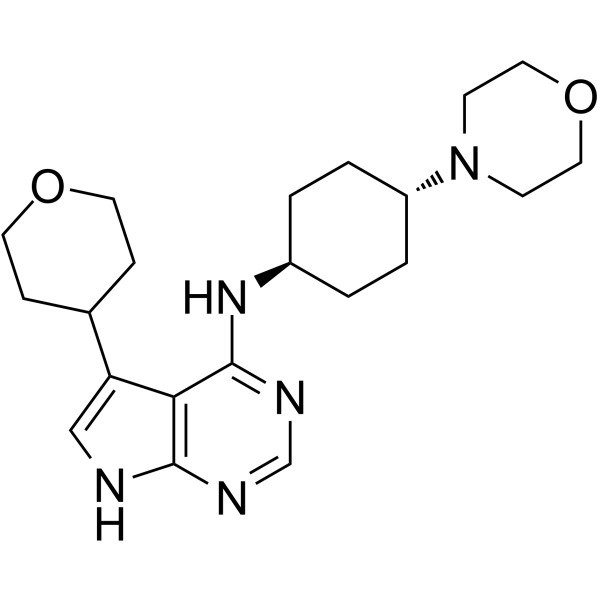
  • HY-111101

    IRAK Cancer
    AZ1495, a weak base, is a potent orally active interleukin-1 receptor associated kinase 4 (IRAK4) inhibitor. AZ1495 has a favorable physicochemical and kinase selectivity for IRAK4 and IRAK1 with IC50 values of 0.005 μM and 0.023 μM, respectively. AZ1495 has IRAK4 inhibition with a Kd value of 0.0007 μM. AZ1495 can be used for the research of diffuse large B-cell lymphoma (DLBCL) .
    AZ1495
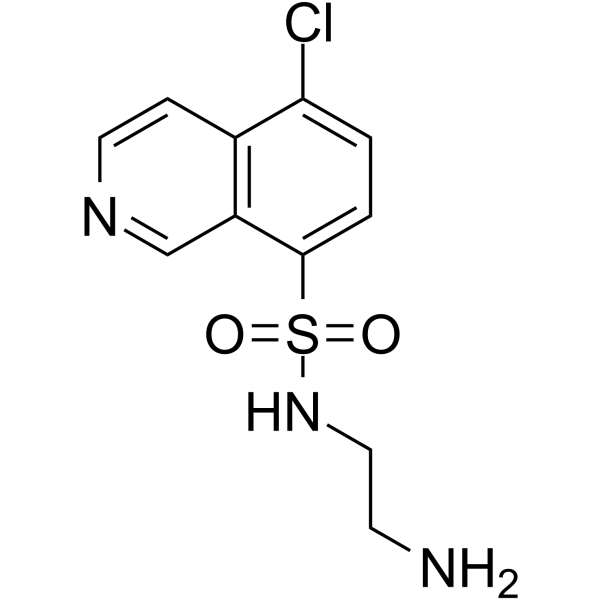
  • HY-133028
    CKI-7 free base
    1 Publications Verification

    Casein Kinase CDK SGK Ribosomal S6 Kinase (RSK) Cancer
    CKI-7 free base is a potent and ATP-competitive casein kinase 1 (CK1) inhibitor with an IC50 of 6 μM and a Ki of 8.5 μM. CKI-7 free base is a selective Cdc7 kinase inhibitor. CKI-7 free base also inhibits SGK, ribosomal S6 kinase-1 (S6K1) and mitogen- and stress-activated protein kinase-1 (MSK1). CKI-7 free base has a much weaker effect on casein kinase II and other protein kinases .
    CKI-7 free base
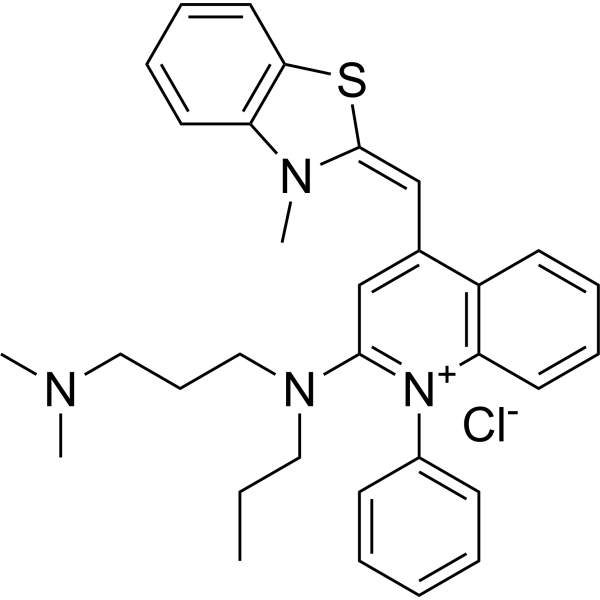
  • HY-D1191
    SYBR green I chloride
    3 Publications Verification

    Fluorescent Dye DNA/RNA Synthesis Others
    SYBR Green I chloride is a highly sensitive fluorescent nucleic acid dye that binds specifically to the minor groove of double-stranded DNA or intercalates between base pairs. SYBR Green I chloride exhibits weak fluorescence in the unbound state but emits bright fluorescence upon binding, and it preferentially binds to large-fragment DNA and DNA with high G+C content. SYBR Green I chloride is suitable for real-time PCR technology; its fluorescence intensity correlates with the amount and size of amplification products, enabling accurate quantification of gene expression and discrimination of amplicons via melting curve analysis without additional post-processing. SYBR Green I chloride is widely used in preclinical in vitro nucleic acid detection .
    SYBR green I chloride
  • HY-B0383A

    PNU180638 free base

    5-HT Receptor Neurological Disease
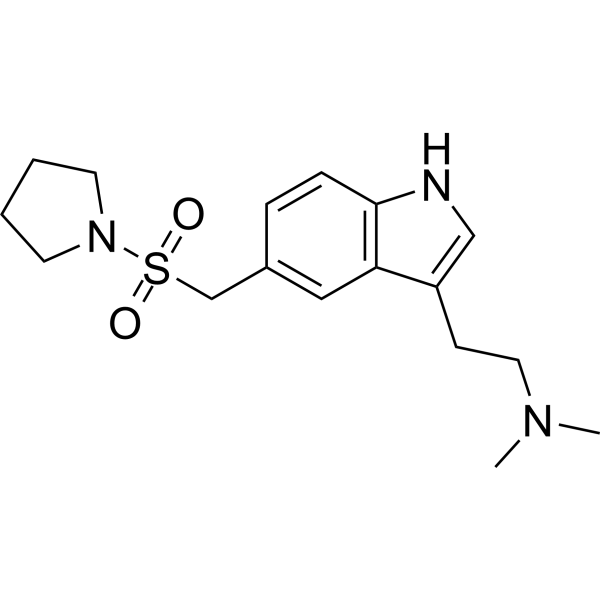
    Almotriptan (PNU180638 free base) is an orally active, highly selective agonist of the 5-HT1B/1D receptor (5-HT1B/1D receptor), with EC50 values of 1.6 nM and 3.1 nM, respectively. Almotriptan shows moderate affinity for the 5-HT1F receptor, and weak affinity for the 5-HT1A, 5-HT6 and 5-HT7 receptors. Almotriptan induces intracranial vasoconstriction, inhibits nociceptive neurotransmission in the trigeminocervical complex, and suppresses the release of vasoactive peptides from trigeminal nerve endings. Almotriptan can be used in research related to migraine .
    Almotriptan
  • HY-171992

    VEGFR Caspase Calcium Channel Cancer
    COX-2-IN-55 (compound 1) is an orally active, Celecoxib (HY-14398)-based analog with broad-spectrum anticancer activity and weak COX-2 inhibition. COX-2-IN-55 specifically inhibits SERCA2, increases caspase-3 cleavage and DR5 levels, thereby activating GRP78 and inhibiting the development of triple-negative breast cancer (TNBC). COX-2-IN-55 can also downregulate the levels of angiogenic markers VEGF-α and IL-8, inhibiting the formation of microvessels .
    COX-2-IN-55
  • HY-W095635

    Biochemical Assay Reagents Others
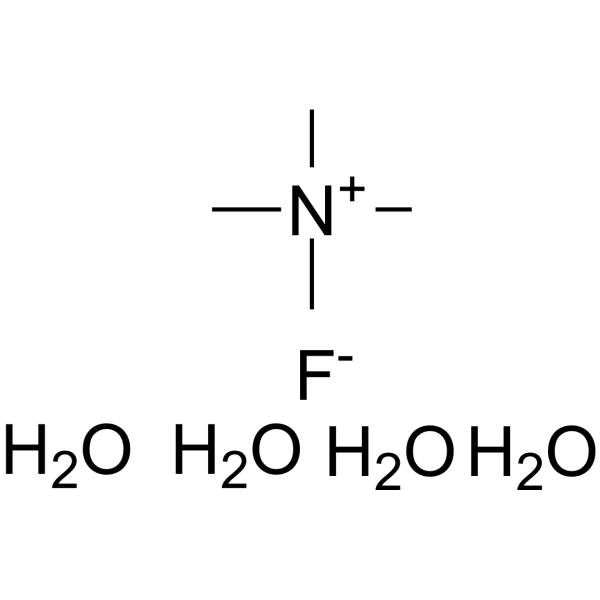
    Tetramethylammonium fluoride tetrahydrate (TMAF) is a quaternary ammonium salt. TMAF is commonly used as a weak base and a source of fluoride ions in various organic reactions, including nucleophilic substitution, functional group deprotection, and ring-opening polymerization. Unlike other fluoride sources, TMAF is compatible with many functional groups, making it a versatile tool in synthetic chemistry. Functional reagents, In addition, TMAF has been used as a fluorinating agent in medicinal chemistry, for the preparation of radiotracers and protein modification in biochemistry, and the tetrahydrate form of TMAF is more stable and easier to handle than the anhydrous form.
    Tetramethylammonium fluoride tetrahydrate
  • HY-12720

    ALO 2145 free base

    Adrenergic Receptor Infection Neurological Disease
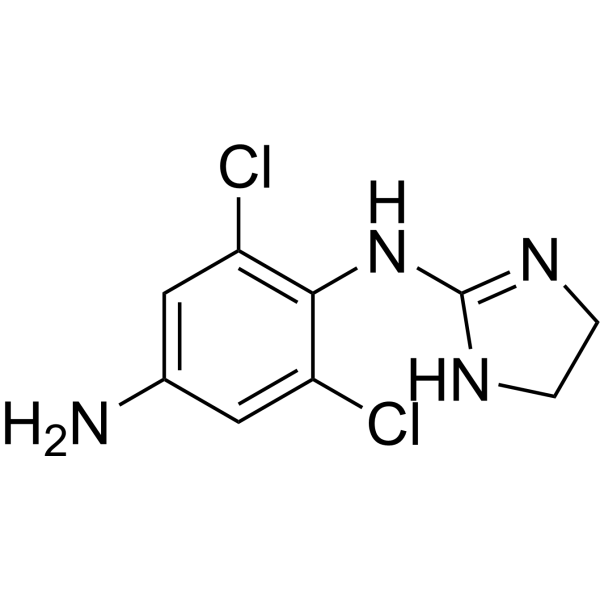
    Apraclonidine (ALO 2145 (free base)), a selective α2 and weak α1 receptor agonist activity, effectively low intraocular pressure (IOP) in human eyes. Apraclonidine hydrochloride is a topical ophthalmic solution .
    Apraclonidine
  • HY-19688B

    WR 6026 tosylate

    Parasite Mitochondrial Metabolism Infection
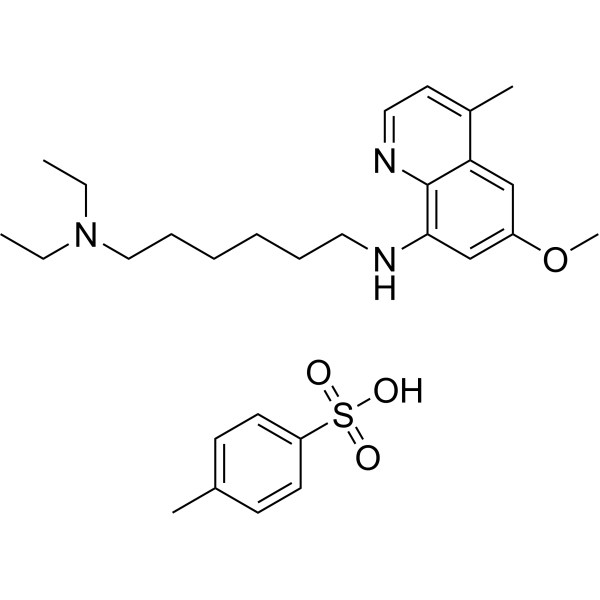
    Sitamaquine (WR6026) tosylate, an orally active 8-aminoquinoline analog, is an antileishmanial agent. Sitamaquine tosylate inhibits mitochondrial complex II (succinate dehydrogenase). Sitamaquine tosylate is a lipophilic weak base that rapidly accumulates in acidic compartments of Leishmania spp., mainly in acidocalcisomes .
    Sitamaquine tosylate
  • HY-12959

    BAY x 3702 free base

    5-HT Receptor Neurological Disease
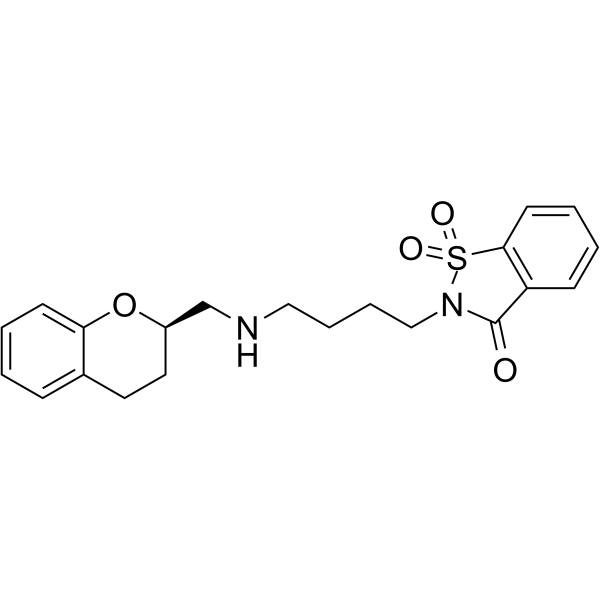
    Repinotan (BAY x 3702 free base) is a potent, selective, brain-penetrant and orally active 5-HT1A receptor agonist, with Ki values of 0.19 nM (calf hippocampus), 0.25 nM (rat and human cortex), and 0.59 nM (rat hippocampus). Repinotan has a weak affinity for other related receptors. Repinotan has pronounced neuroprotective effects .
    Repinotan
  • HY-171807

    nAChR STAT Neurological Disease Inflammation/Immunology
    TC-2559 free base is a α4β2 nicotinic acetylcholine receptor (nAChR) agonists with an EC50 of 0.18 μM. TC-2559 free base shows much weaker potencies on the group of b4-containing nAChR subtypes, α2β4, α4β4 and α3β4 receptors, with EC50s in the range of 10-30 µM. TC-2559 free base can increase the discharge of dopamine cells in the ventral tegmental area (VTA) of rats in vitro, enhancing the excitability and aggressive behavior of VTA dopamine neurons. TC-2559 free base inhibits STAT3 to exert anti-inflammatory properties and relieves mice mechanical allodynia and improve rats cognitive deficits. TC-2559 free base can be used for the study of nerve pain .
    TC-2559 free base
  • HY-N14344

    Bacterial Infection
    Manumycin G has anti-Gram-positive bacteria and Escherichia coli effects, but the effect is very weak against other anti-Gram-negative bacteria, and has no effect on fungi. Manumycin G inhibits RAS Faraday base transfer and has weak cytotoxic activity against human cloned cancer cell lines HCT-116 (IC50 is 15.6 μg/mL) .
    Manumycin G
  • HY-19688A

    WR 6026 hydrochloride

    Parasite Mitochondrial Metabolism Infection
    Sitamaquine (WR6026) hydrochloride, an orally active 8-aminoquinoline analog, is an antileishmanial agent. Sitamaquine hydrochloride inhibits mitochondrial complex II (succinate dehydrogenase). Sitamaquine hydrochloride is a lipophilic weak base that rapidly accumulates in acidic compartments of Leishmania spp., mainly in acidocalcisomes .
    Sitamaquine hydrochloride
  • HY-P2753
    Sucrose phosphorylase
    1 Publications Verification

    SP

    Endogenous Metabolite Others Cancer
    Sucrose phosphorylase is a bacterial transglucosidase that catalyzes the conversion of sucrose and phosphate into α-D-glucose-1-phosphate and D-fructose. The glucosylated Sucrose phosphorylase can also be hydrolyzed into α-D-glucose, or transfer the glucoyl to the hydroxyl group of the receptor, and then decomposed into new α-D-glucoside products. The enzymatic activity of base phosphorylase to substrate and product is weak .
    Sucrose phosphorylase
  • HY-19145

    CI-992

    Renin Cancer
    PD-134672 (CI-992) is a renin inhibitor containing a 2-amino-4-thiazolyl substituent. PD-134672 potently inhibits monkey renin in vitro and only weakly inhibits the related aspartic protease bovine feline hepsin D. The compound exhibits oral hypotensive activity in hyperreninemic normotensive monkeys. Based on its superior efficacy and long-lasting effects in vitro and in the normotensive macaque model, PD-134672 was selected for further evaluation in renal hypertensive monkeys.
    PD-134672
  • HY-B0383AS2

    PNU180638 free base-d3 benzoate

    Isotope-Labeled Compounds 5-HT Receptor Neurological Disease
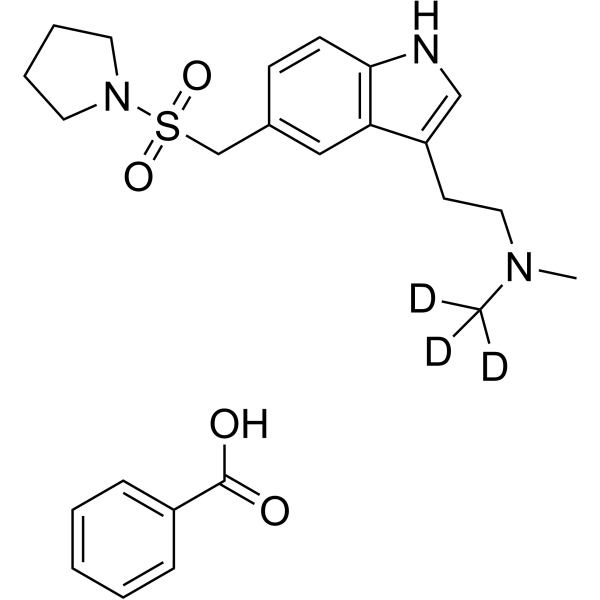
    Almotriptan-d3 benzoate (PNU180638 free base-d3) is deuterated labeled Almotriptan benzoate. Almotriptan benzoate is an orally active, highly selective agonist of the 5-HT1B/1D receptor (5-HT1B/1D receptor), with EC50 values of 1.6 nM and 3.1 nM, respectively. Almotriptan benzoate shows moderate affinity for the 5-HT1F receptor, and weak affinity for the 5-HT1A, 5-HT6 and 5-HT7 receptors. Almotriptan benzoate induces intracranial vasoconstriction, inhibits nociceptive neurotransmission in the trigeminocervical complex, and suppresses the release of vasoactive peptides from trigeminal nerve endings. Almotriptan benzoate can be used in research related to migraine.
    Almotriptan-d3 benzoate
  • HY-N14342

    Bacterial Infection
    Manumycin E has anti-Gram-positive bacteria and Escherichia coli effects, but the effect is very weak against other anti-Gram-negative bacteria, and has no effect on fungi. Manumycin E inhibits RAS Faraday base transfer and has weak cytotoxic activity against human cloned cancer cell lines HCT-116 (IC50 is 15.6 μg/mL) .
    Manumycin E
  • HY-N14343

    Bacterial Infection
    Manumycin F has anti-Gram-positive bacteria and Escherichia coli effects, but the effect is very weak against other anti-Gram-negative bacteria, and has no effect on fungi. Manumycin F inhibits RAS Faraday base transfer and has weak cytotoxic activity against human cloned cancer cell lines HCT-116 (IC50 is 15.6 μg/mL) .
    Manumycin F
  • HY-111259

    Endogenous Metabolite Cardiovascular Disease
    Ro 31-1118 Free base is a compound exhibiting weak antihypertensive activity in patients with mild hypertension. Ro 31-1118 Free base demonstrated a reduction in heart rates and blood pressure post-exercise at varying doses. Ro 31-1118 Free base exhibited linear pharmacokinetics within the 10-80 mg dose range. Ro 31-1118 Free base showed no significant impact on diastolic blood pressure or adverse effects during the study.
    Ro 31-1118 free base
  • HY-105525

    NIH 10908 free base

    Opioid Receptor Neurological Disease
    Sameridine (NIH-10908 free base) is a weak partial agonist of the μ-opioid receptor. Sameridine shows local anesthetic and analgesic properties. Sameridine has minimal respiratory depression at low doses, but can suppress ventilatory response at high doses. Sameridine can be used for the study of analgesic effect .
    Sameridine
  • HY-N15947

    Drug Derivative Metabolic Disease
    Trifunctional sphingosine is a clickable sphingoid base derivative. Trifunctional sphingosine can be used to study the biological function of sphingoid bases. Trifunctional lipids may overcome several challenges in interrogating lipid biology: their fast metabolism, their weak and transient (but functionally important) interactions with proteins, and the difficulty in tagging them without disturbing the cellular location .
    Trifunctional sphingosine
  • HY-W075283

    1-(4-Aminophenyl)-1,2,2-triphenylethene

    Others
    4-(1,2,2-Triphenylvinyl)aniline (1-(4-Aminophenyl)-1,2,2-triphenylethene) is a tetraphenylethene-based aggregation-induced luminescent molecule. 4-(1,2,2-Triphenylvinyl)aniline exhibits weak or no fluorescence in dilute solution/dispersed state, and strong fluorescence with increased quantum yield when aggregated into nanoparticles .
    4-(1,2,2-Triphenylvinyl)aniline
  • HY-182354

    VEGFR FGFR FLT3 PDGFR RET Akt ERK c-Kit Cancer
    VEGFR2-IN-84 is an orally active, multi-targeted tyrosine kinase inhibitor based on a naphthalene ring scaffold. VEGFR2-IN-84 inhibits VEGFR2 with sub-nanomolar affinity and broadly targets kinases including Kit, FGFR, PDGFR, and Ret. By competitively binding to the ATP-binding pocket, VEGFR2-IN-84 blocks the phosphorylation of VEGFR2 and its downstream AKT/ERK signaling pathway, thereby significantly inhibiting endothelial cell proliferation, migration, and tumor angiogenesis. VEGFR2-IN-84 exhibits broad-spectrum antiproliferative activity against various solid tumors such as liver cancer, lung cancer, and renal cancer, shows weak toxicity to normal cells, and has superior potency to Lenvatinib (HY-10981). VEGFR2-IN-84 possesses favorable pharmacokinetic properties and high safety (LD50>2000 mg/kg), and can be used in related studies of various malignant tumors .
    VEGFR2-IN-84

Inquiry Online

Your information is safe with us. * Required Fields.

Salutation


Country or Region *

Applicant Name *


Organization Name *

Department *


Email Address *


Product Name *

Cat. No.


Requested quantity *

Phone Number *


Remarks

Inquiry Online

Inquiry Information

Product Name:
Cat. No.:
Quantity:
MCE Japan Authorized Agent:

