30 Results for "

xerographic photoreceptors

" in MedChemExpress (MCE) Product Catalog:
Products (30)

30 Results for "xerographic photoreceptors" in MCE Product Catalog:

14
14 Publications Verification
Cat. No.: HY-B1218
CAS No.: 526-08-9
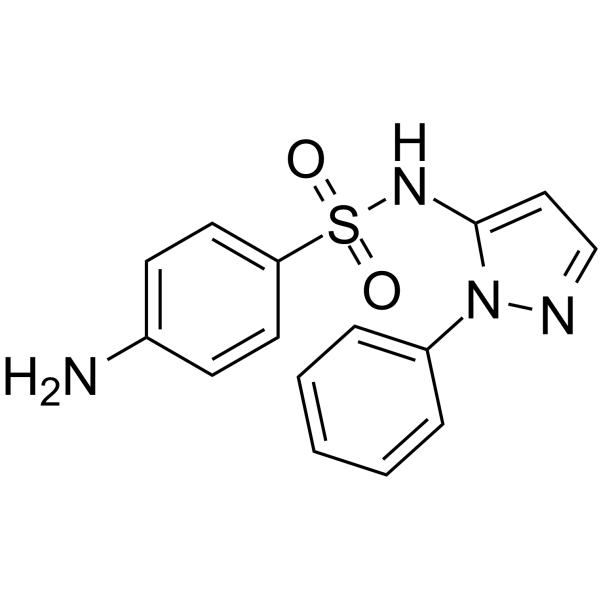
Sulfaphenazole is a selective inhibitor of human cytochrome P450 (CYP) 2C9 enzyme. Sulfaphenazole is a cytoprotective agent against light-induced death of photoreceptors. Sulfaphenazole inhibits light-induced necrosis and mitochondrial stress-initiated apoptosis. Sulfaphenazole is an off patent sulfonamide antibiotic and demonstrates bactericidal activity through enhanced M1 macrophage activity. Sulfaphenazole can significantly reduce infarct size and restore post-ischemic coronary flow following ischemia and reperfusion .
loading...
    loading...
3
3 Cited Publications
Cat. No.: HY-W004500
CAS No.: 116-31-4
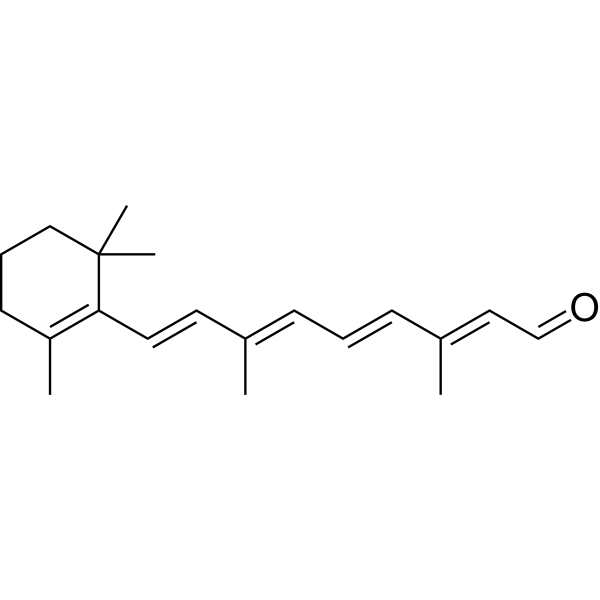
All-trans-retinal is an vitamin A metabolite in the retina, and is produced following photo-isomerization of the visual chromophore 11-cis-Retinal. All-trans-retinal is cleared from photoreceptors by ATP-binding cassette transporter (ABCA4) and all-trans-retinol dehydrogenase (RDH). All-trans-retinal induces Bax activation via DNA damage to mediate retinal cell apoptosis .
loading...
    loading...
2
2 Cited Publications
Cat. No.: HY-P5397A
Target:  

Inhibitory Antibodies

Research Areas:  

Others

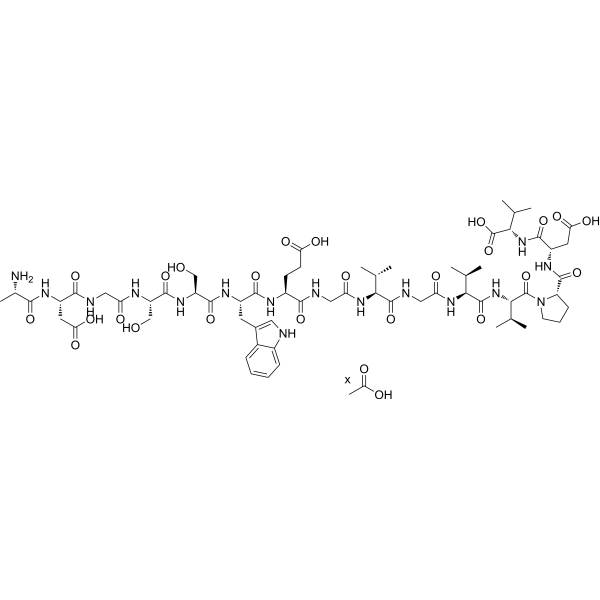
IRBP derived peptide, R16 is a biological active peptide. (R16 is an IRBP (Interphotoreceptor retinoid binding protein) derived peptide. Photoreceptor cell protein is capable of inducing an experimental autoimmune uveitis (EAU) in susceptible animal strains.)
loading...
    loading...
1
1 Cited Publications
Cat. No.: HY-N7137
CAS No.: 6533-00-2
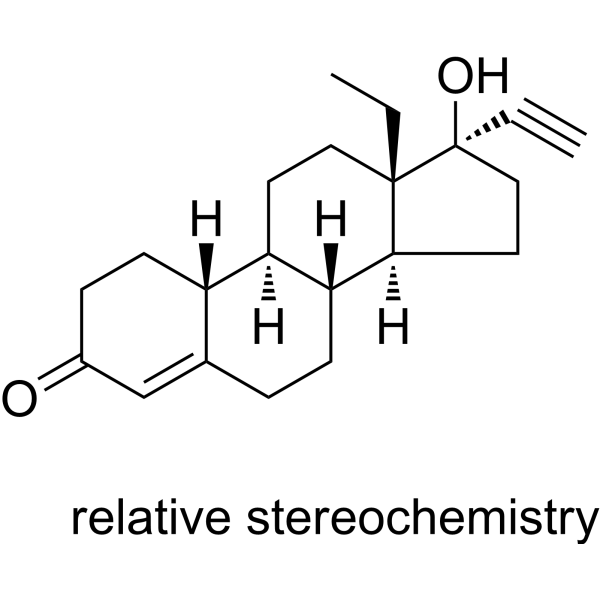
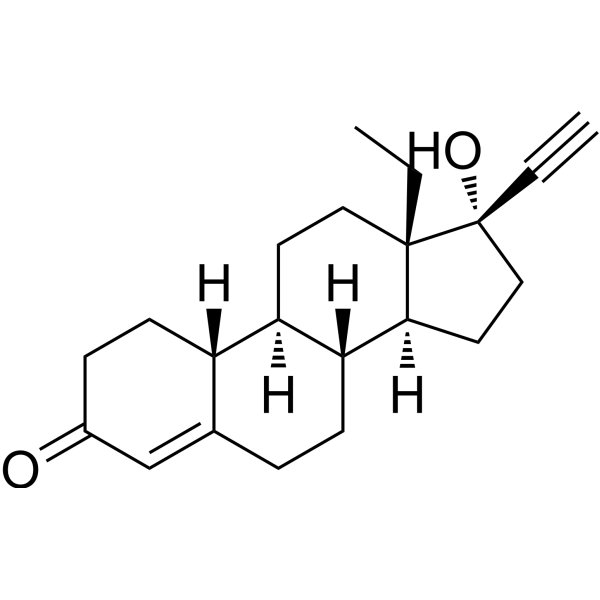
Norgestrel is a synthetic analog of progesterone, a compound commonly found in oral contraceptive pill, and a powerful neuroprotective antioxidant, preventing light-induced ROS in photoreceptor cells, and cell death . Norgestrel is a click chemistry reagent, it contains an Alkyne group and can undergo copper-catalyzed azide-alkyne cycloaddition (CuAAc) with molecules containing Azide groups.
loading...
    loading...
1
1 Cited Publications
Cat. No.: HY-P6440
CAS No.: 1242964-46-0
Target:  

Apoptosis Caspase

Research Areas:  

Others

Met-12 is a small peptide inhibitor of the Fas receptor. Met-12 can inhibit Fas receptor-mediated photoreceptor cell apoptosis, reduce Caspase activation. Met-12 can be used in the research of photoreceptor .
loading...
    loading...
Cat. No.: HY-W009310
CAS No.: 514-85-2
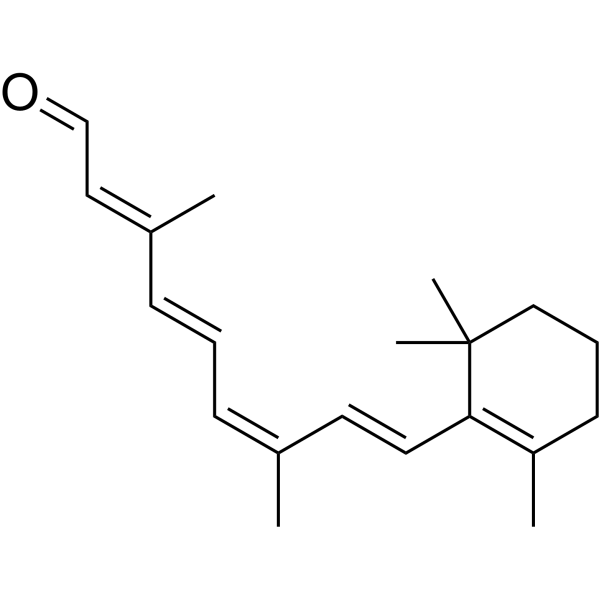
9-cis-Retinal is a natural retinoid. Dietary 9-cis-β-carotene generates 9-cis-retinoids via cleavage into 9-cis-retinal. 9-cis Retinal binds to cellular retinol-binding protein-I (CRBP-I) and CRBP-II with Kds of 8 nM and 5 nM, respectively. 9-cis-Retinal expedites differentiation and maturation of rod photoreceptors in retinal organoids .
loading...
    loading...
Cat. No.: HY-136234
CAS No.: 13312-52-2
Synonyms: 9Z β-Carotene
Target:  

Endogenous Metabolite

Research Areas:  

Others

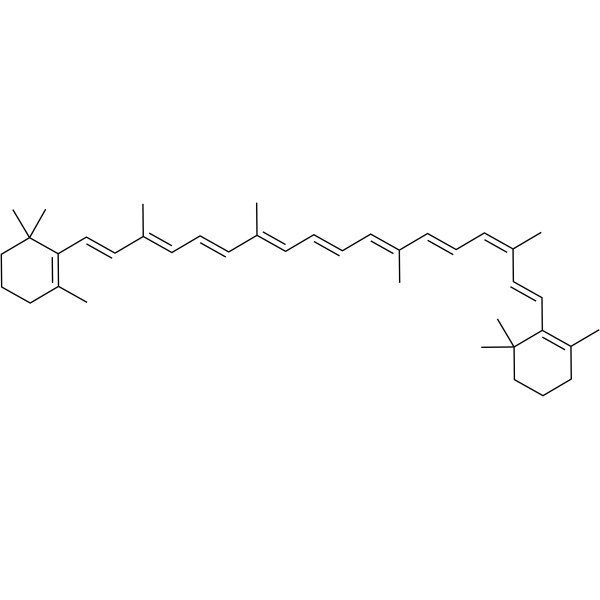
9-cis-β-Carotene, a precursor of retinal, is cleaved by beta-carotene oxygenase 1 (BCMO1) to produce 9-cis-retinal. 9-cis-β-Carotene inhibits photoreceptor degeneration and restores retinal function in vivo. 9-cis-β-Carotene has the potential for the study of congenital stationary night blindness and fundus albipunctatus .
loading...
    loading...
Cat. No.: HY-132893
CAS No.: 2830555-70-7
Target:  

TAM Receptor

Research Areas:  

Neurological Disease Cancer

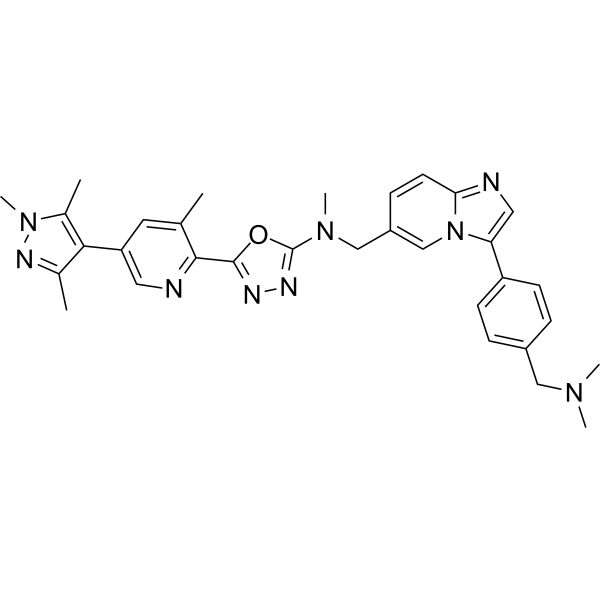
AZ14145845 is an orally active dual-target type 1½ kinase inhibitor of Mer/Axl, which inhibits Mer kinase (pIC50 = 9.0) and Axl kinase (pIC50 = 7.9) with high selectivity over Flt3 and Tyro3. AZ14145845 suppresses Mer- and Axl-dependent proliferation in Ba/F3 cells and inhibits efferocytosis in macrophages. AZ14145845 reduces the phagocytosis of photoreceptor outer segments by polarized human retinal epithelial cells. AZ14145845 inhibits tumor growth and induces tumor regression in vivo, and its combination with anti-PD1 antibody and ionizing radiation improves the survival rate of mice with colorectal cancer. AZ14145845 causes retinal degeneration in mice, with pathological changes similar to those in MERTK loss-of-function models. AZ14145845 can be used in studies related to retinal degeneration, lymphoma and colorectal cancer .
loading...
    loading...
Cat. No.: HY-N7270
CAS No.: 74696-01-8
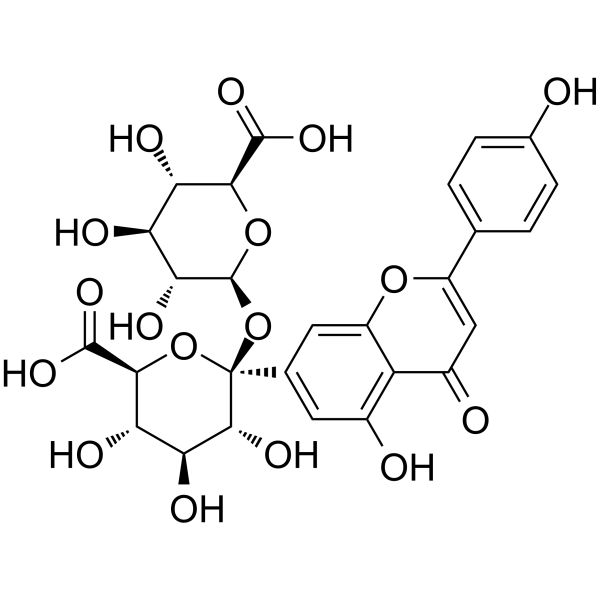
Apigenin-7-diglucuronide is a flavonoid glycoside and is present in an assortment of medicinal plants with anti-inflammatory or ant-oxidant activities. Apigenin-7-diglucuronide protects retinas against bright light-induced photoreceptor degeneration through the inhibition of retinal oxidative stress and inflammation .
loading...
    loading...
Cat. No.: HY-124157
CAS No.: 433690-62-1
Purity:  99.78%
Target:  

Melanopsin Receptor

Research Areas:  

Neurological Disease

AA41612 is a melanopsin (Opn4) inhibitor with an IC50 of 15.8 nM, a Ki of 0.43 nM, and a Kd of 0.28 nM. AA41612 competes with retinal for binding to melanopsin, blocks melanopsin activation, and inhibits melanopsin-mediated phototransduction processes without affecting rod- and cone-mediated responses. AA41612 attenuates light-induced melanopsin photocurrents, reduces light-induced cytoplasmic calcium elevation, and weakens high-irradiance pupillary light reflex in mice with induced classical photoreceptor degeneration. AA41612 can be used in studies related to migraine and photophobia .
loading...
    loading...
Cat. No.: HY-NP0138
Synonyms: PNA (Fluorescein)
Research Areas:  

Infection Inflammation/Immunology

Peanut Agglutinin (PNA) Fluorescein is a fluorescently labeled lectin that specifically binds to glycosylated cells and Haemonchus contortus. Peanut Agglutinin Fluorescein specifically recognizes and binds to the D-Gal-β(1→3)-D-GalNAc disaccharide sequence and terminal D-galactosyl residues on the cell surface; its binding can be inhibited by D-galactose but is not affected by glucose. Peanut Agglutinin Fluorescein specifically labels cone photoreceptor segments and can also be used to distinguish immature thymocytes from lymphocyte subsets, serving as an effective tool for studying cellular glycosylation status and isolating specific cell populations .
loading...
    loading...
Cat. No.: HY-W106762
CAS No.: 81-32-3
Synonyms: 3,4,9,10-Perylenetetracarboxylic acid
Research Areas:  

Others

Perylene-3,4,9,10-tetracarboxylic acid (3,4,9,10-Perylenetetracarboxylic acid) is a chemical intermediate. Derivatives formed from Perylene-3,4,9,10-tetracarboxylic acid can serve as colorimetric and fluorescent chemosensors with selectivity for fluoride ions, and also act as charge generation materials in electrophotographic photoreceptors, organic electrophotographic photoreceptors, optoelectronic and photonic devices .
loading...
    loading...
Cat. No.: HY-N7137R
CAS No.: 6533-00-2
Norgestrel (Standard) is the analytical standard of Norgestrel. This product is intended for research and analytical applications. Norgestrel is a synthetic analog of progesterone, a compound commonly found in oral contraceptive pill, and a powerful neuroprotective antioxidant, preventing light-induced ROS in photoreceptor cells, and cell death .
loading...
    loading...
Cat. No.: HY-161115
CAS No.: 911211-69-3
Research Areas:  

Inflammation/Immunology

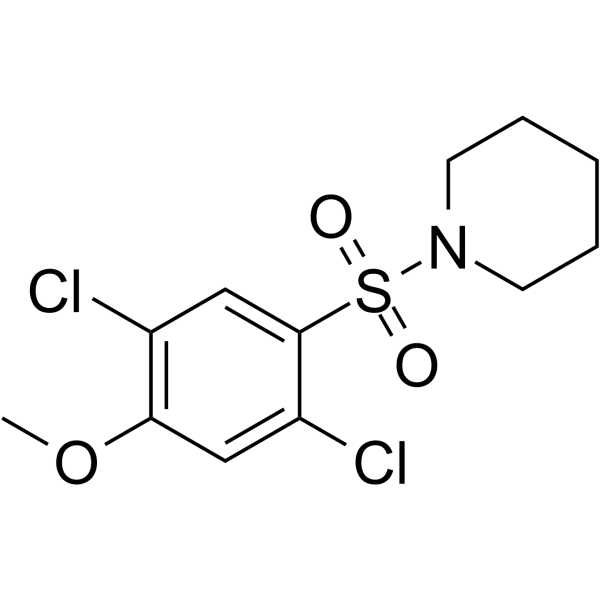
NR2E3 agonist 1 (Compound 11a) is a small molecule agonist of the photoreceptor-specific nuclear receptor (NR2E3) with an EC50 value of less than 200 nM. NR2E3 agonist 1 can be used in retinitis pigmentosa research .
loading...
    loading...
Cat. No.: HY-B1218R
CAS No.: 526-08-9
Sulfaphenazole (Standard) is the analytical standard of Sulfaphenazole. This product is intended for research and analytical applications. Sulfaphenazole is a selective inhibitor of human cytochrome P450 (CYP) 2C9 enzyme. Sulfaphenazole is a cytoprotective agent against light-induced death of photoreceptors. Sulfaphenazole inhibits light-induced necrosis and mitochondrial stress-initiated apoptosis. Sulfaphenazole is an off patent sulfonamide antibiotic and demonstrates bactericidal activity through enhanced M1 macrophage activity. Sulfaphenazole can significantly reduce infarct size and restore post-ischemic coronary flow following ischemia and reperfusion .
loading...
    loading...
Cat. No.: HY-W587784
CAS No.: 542-40-5
Norbixin is an orally active natural product with multiple activities such as retinal protection and oxidative stress regulation. Norbixin scavenges ROS, chelates metal ions, regulates plasmid and genomic DNA breakage, inhibits H2O2-induced mutagenesis, activates PPAR-α, modulates lipid levels, restores or regulates antioxidant enzyme activity, and alters NO levels. Norbixin prevents A2E accumulation and protects photoreceptor cells and retinal pigment epithelial cells. Norbixin is a derivative of Bixin (HY-N6884). Norbixin can be used in research related to diseases such as macular degeneration and diabetes, and also serves as a natural textile dye .
loading...
    loading...
Cat. No.: HY-175671
Research Areas:  

Neurological Disease

LSD1/HDAC-IN-3 is a inhibitor targeting class I HDAC and LSD1 enzymes. LSD1/HDAC-IN-3 inhibits HDAC1, HDAC2, HDAC3, and LSD1 with IC50 values of 1702 nM, 842 nM, 358 nM, and 1074 nM, respectively. LSD1/HDAC-IN-3 exhibits antioxidant effects in H2O2-stressed ARPE-19 and 661W retinal cells, increasing levels of acetylated and methylated histone H3. LSD1/HDAC-IN-3 enhances photoreceptor survival in the rd10 mouse model of retinitis pigmentosa. LSD1/HDAC-IN-3 can be used for the study of inherited retinal diseases such as retinitis pigmentosa (RP) .
loading...
    loading...
Cat. No.: HY-109869
CAS No.: 1003736-23-9
Research Areas:  

Others

Photoregulin1 is a compound with the potential to inhibit retinitis pigmentosa that modulates gene expression in retinal cells and slows the degeneration of photoreceptors in a mouse model.
loading...
    loading...
Cat. No.: HY-P5397
CAS No.: 145821-83-6
Target:  

Inhibitory Antibodies

Research Areas:  

Others

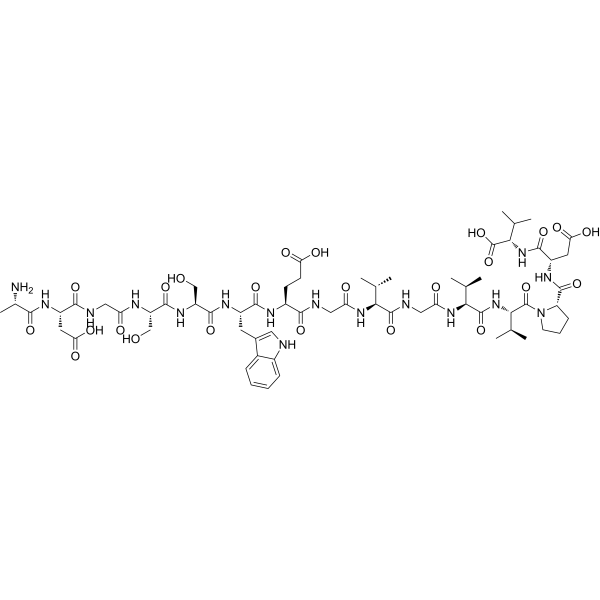
IRBP derived peptide, R16 is a biological active peptide. (R16 is an IRBP (Interphotoreceptor retinoid binding protein) derived peptide. Photoreceptor cell protein is capable of inducing an experimental autoimmune uveitis (EAU) in susceptible animal strains.)
loading...
    loading...
Cat. No.: HY-172232
CAS No.: 1911650-53-7
Target:  

Lipocalin Family

Research Areas:  

Neurological Disease

STG-001 is a retinol binding protein 4 (RBP4) antagonist. STG-001 inhibits RBP4 to reduce the synthesis of retinal and diretinol, thereby preventing photoreceptor degeneration. STG-001 can be used in the study of sexually precocious nephropathy (STGD) .
loading...
    loading...

