



Tolrestat (Standard)

Based on 1 Customer Validation
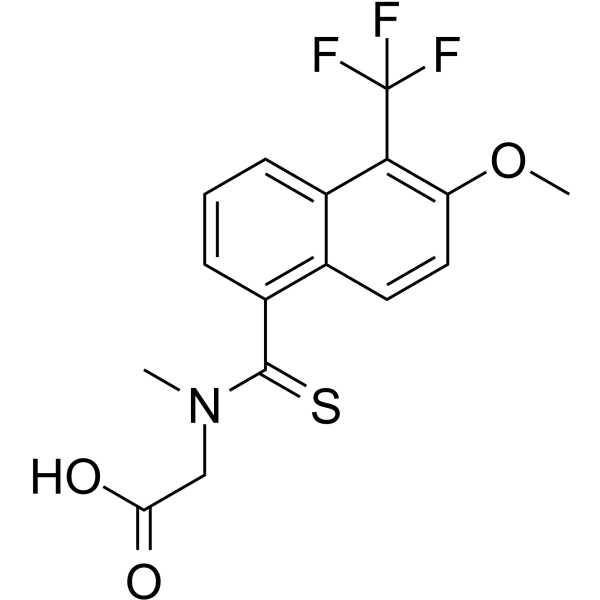
Tolrestat (Standard) is the analytical standard of Tolrestat. This product is intended for research and analytical applications. Tolrestat is a potent, orally active aldose reductase inhibitor with IC50 of 35 nM.
For research use only. We do not sell to patients.
- Purity : 97.28%
- CAS No.: 82964-04-3
- Formula: C16H14F3NO3S
- Molecular Weight:357.35
-
Storage:
Please store the product under the recommended conditions in the Certificate of Analysis.


To place orders, for customer services and technical support, please contact: MedChemExpress USA
Tel: 609-228-6898 E-mail: [email protected] [email protected]


-
 Product Information
-
Chemical Information
- Purity & Documentation
-
 Help & FAQs


-
HY-16500
TolrestatAldose Reductase Inhibitor -
HY-66009
EpalrestatAldose Reductase Inhibitor -
HY-106697
PonalrestatAldose Reductase Inhibitor -
HY-18967
CaficrestatAldose Reductase Inhibitor -
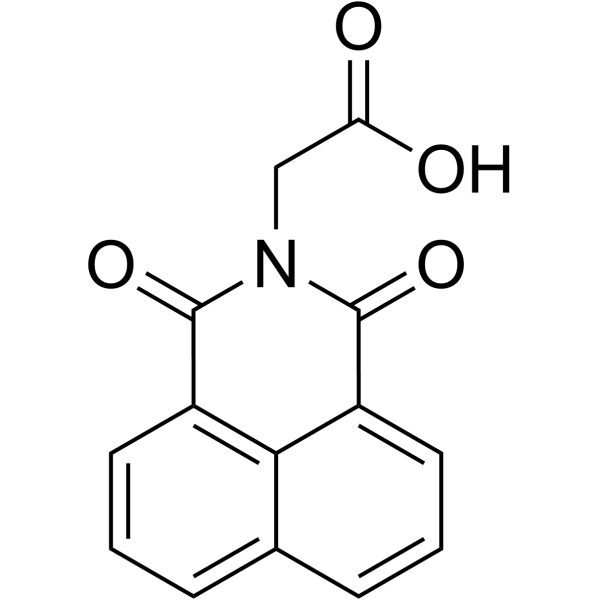
HY-B1202
AlrestatinAldose Reductase Inhibitor -

HY-66009R
Epalrestat (Standard)Aldose Reductase Inhibitor -
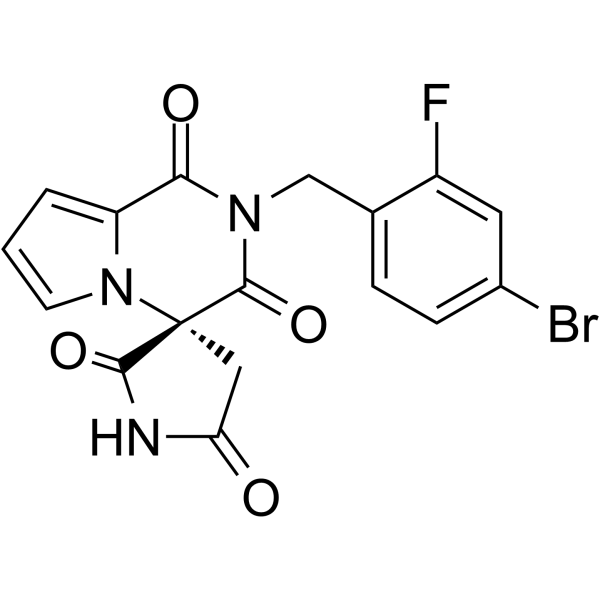
HY-15314
RanirestatAldose Reductase Inhibitor -
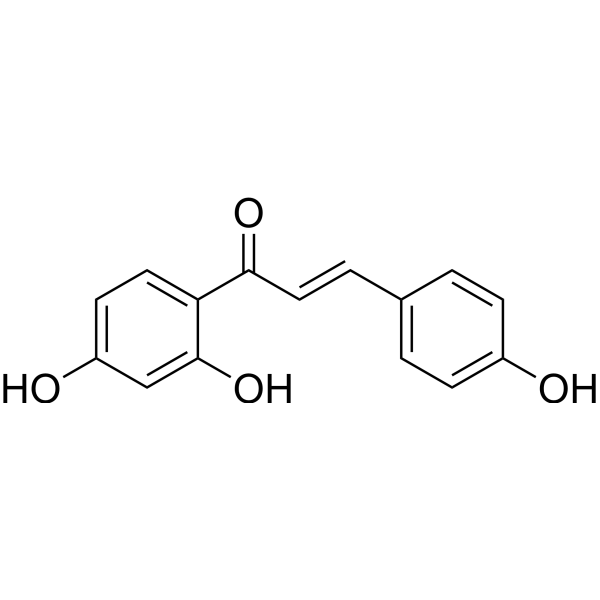
HY-N0102
IsoliquiritigeninAutophagy Inducer -
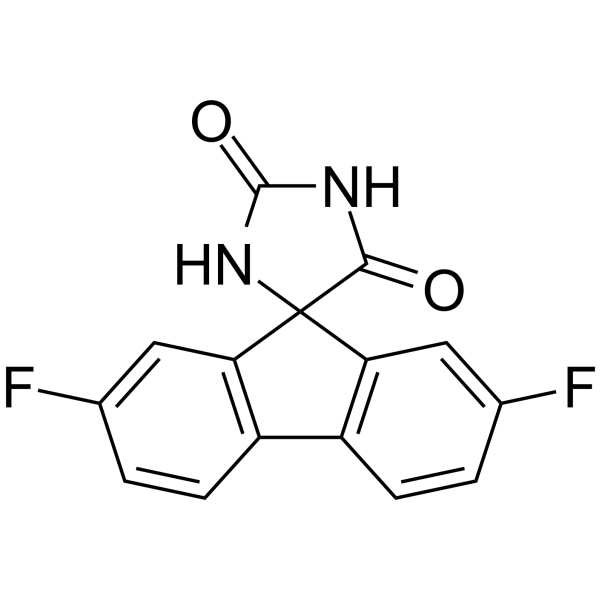
HY-16255
ImirestatAldose Reductase Inhibitor -
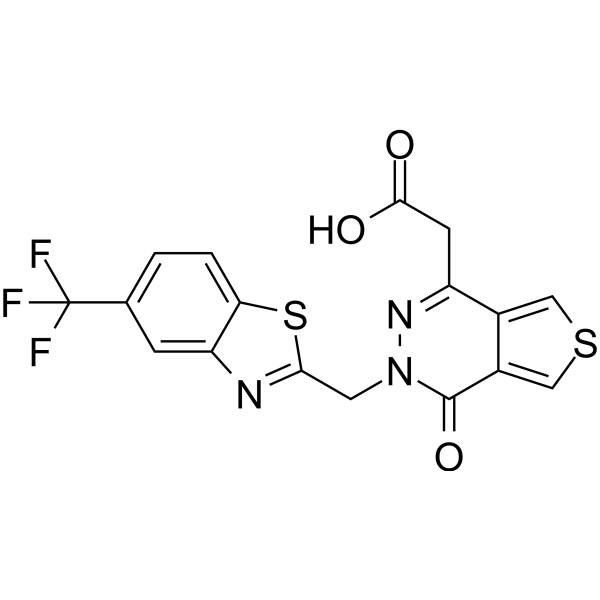
HY-129586
GovorestatAldose Reductase Inhibitor -
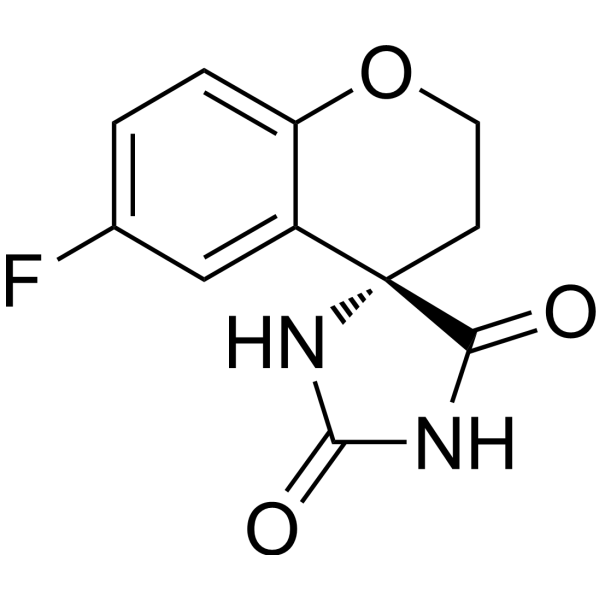
HY-50289
SorbinilAldose Reductase Inhibitor -
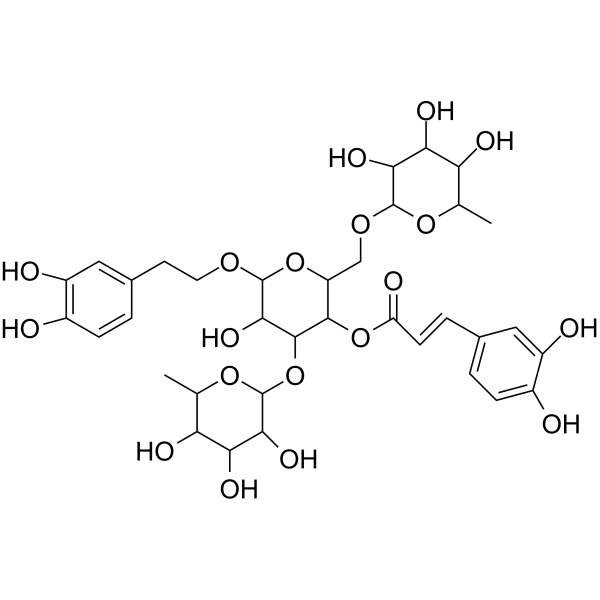
HY-N0033
PoliumosideAldose Reductase Inhibitor


Product Information
Information
Application
The compound is the grade of analytical standard, which is the reference standard supplied assay. It is commonly used in qualitative, quantitative and methodological research experiments in HPLC, GC and MS.


Chemical Information
-
CAS No. 82964-04-3
-
Appearance Solid
-
Molecular Weight 357.35
-
Formula C16H14F3NO3S
-
Color Off-white to light yellow
-
SMILES
O=C(O)CN(C(C1=C2C=CC(OC)=C(C(F)(F)F)C2=CC=C1)=S)C
-
Synonyms
AY-27773 (Standard)
-
Shipping
Room temperature in continental US; may vary elsewhere.
-
Storage
Please store the product under the recommended conditions in the Certificate of Analysis.


Purity & Documentation
-
SDS (393 KB)
- English - EN (393 KB)
- Français - FR (393 KB)
- Deutsch - DE (393 KB)
- Norwegian - NO (393 KB)
- Español - ES (393 KB)
- Swedish - SV (393 KB)
- Italian - IT (393 KB)
- Korean - KR (393 KB)
- Portuguese - PT (393 KB)
-
Handling Instructions (2659 KB)
References
[1]. Sestanj K, et al. N-[5-(trifluoromethyl)-6-methoxy-1-naphthalenyl]thioxomethyl]- N-methylglycine (Tolrestat), a potent, orally active aldose reductase inhibitor. J Med Chem. 1984 Mar;27(3):255-6. [Content Brief]
[2]. Simard-Duquesne N, et al. The effects of a new aldose reductase inhibitor (tolrestat) in galactosemic and diabetic rats. Metabolism. 1985 Oct;34(10):885-92. [Content Brief]
[3]. Srivastava S, et al. Aldose reductase protects against early atherosclerotic lesion formation in apolipoprotein E-null mice. Circ Res. 2009 Oct 9;105(8):793-802. [Content Brief]

Calculators
Concentration (start) × Volume (start) = Concentration (final) × Volume (final)


Tolrestat (Standard) Related Classifications
HY-16500R Related Classifications
 Powered by Bioz