



Trelagliptin
Based on 1 publication(s) in Google Scholar
Trelagliptin (SYR-472) is a potent, orally active and highly selective DPP-4 inhibitor with an IC50 of 4 nM. Trelagliptin succinate improves glycemic control in vivo and can be used for the study of type 2 diabetes mellitus (T2DM).
For research use only. We do not sell to patients.
- Purity : 99.81%
- CAS No.: 865759-25-7
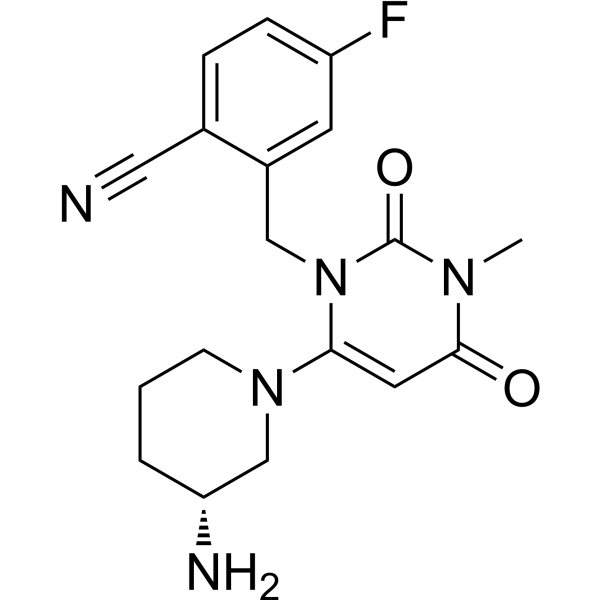
- Formula: C18H20FN5O2
- Molecular Weight:357.38
-
Storage:Powder -20°C, 3 years , 4°C, 2 years ; In solvent -80°C, 2 years , -20°C, 1 year

To place orders, for customer services and technical support, please contact: MedChemExpress USA
Tel: 609-228-6898 E-mail: [email protected] [email protected]


-
 Biological Activity
-
Chemical Information
-
Solvent & Solubility
- Protocols
- Purity & Documentation
- References
-
 Help & FAQs


-
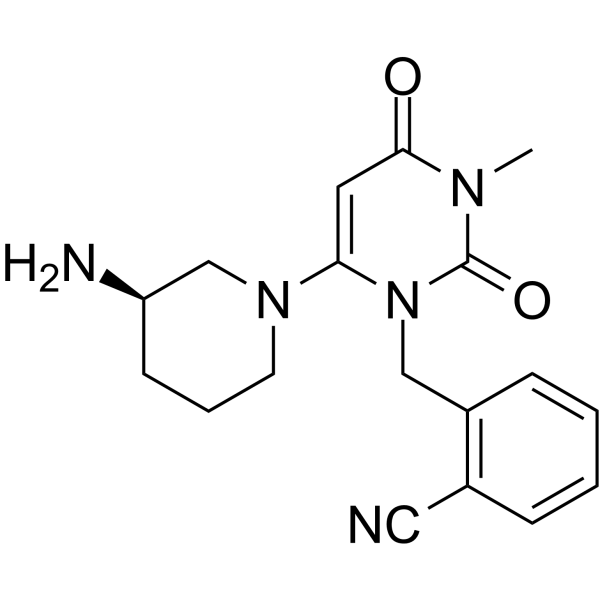
HY-A0023A
AlogliptinDPP-4 Inhibitor -
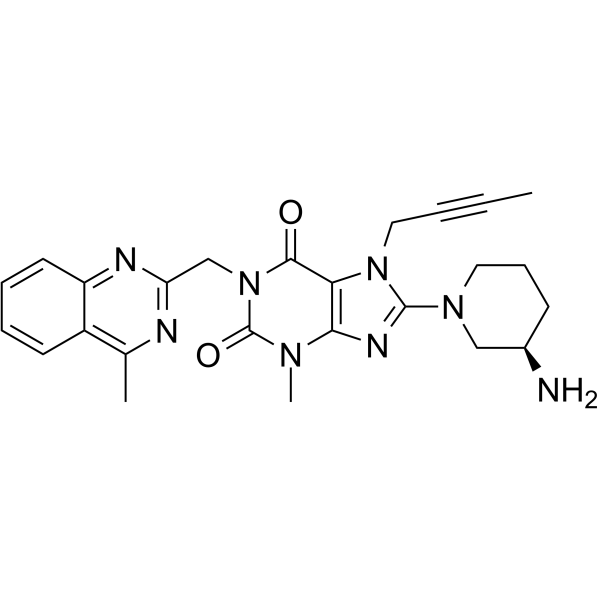
HY-10284
LinagliptinDPP-4 Inhibitor -
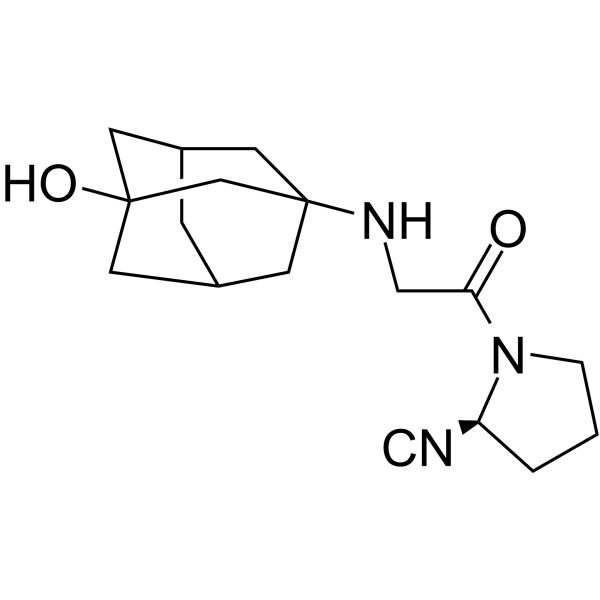
HY-14291
VildagliptinDPP-IV Inhibitor -
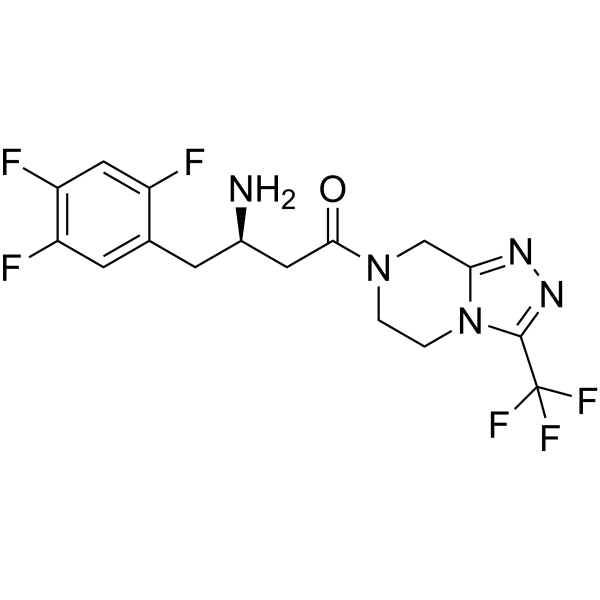
HY-13749
SitagliptinDPP4 Inhibitor -
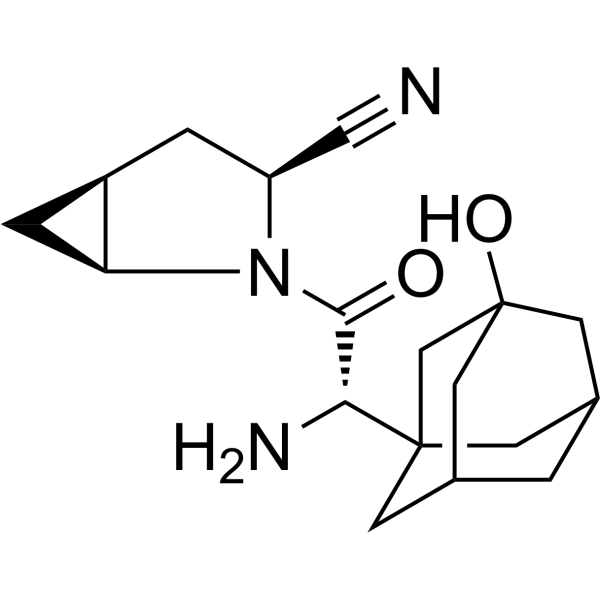
HY-10285
SaxagliptinDPP-4 Inhibitor -
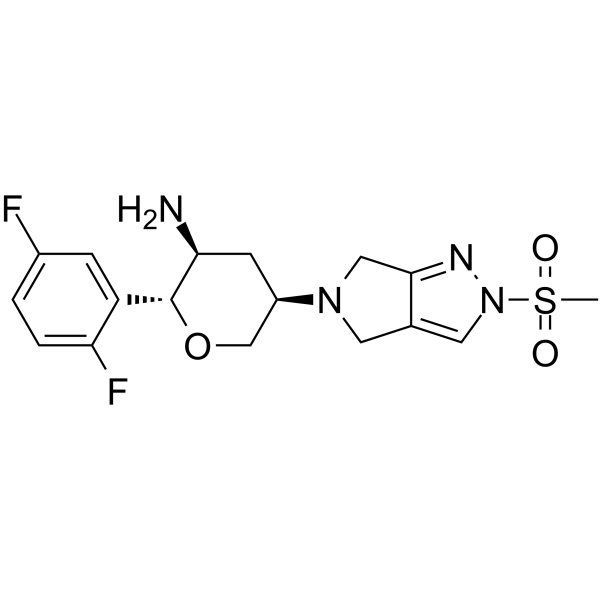
HY-15981
OmarigliptinDPP-4 Inhibitor -
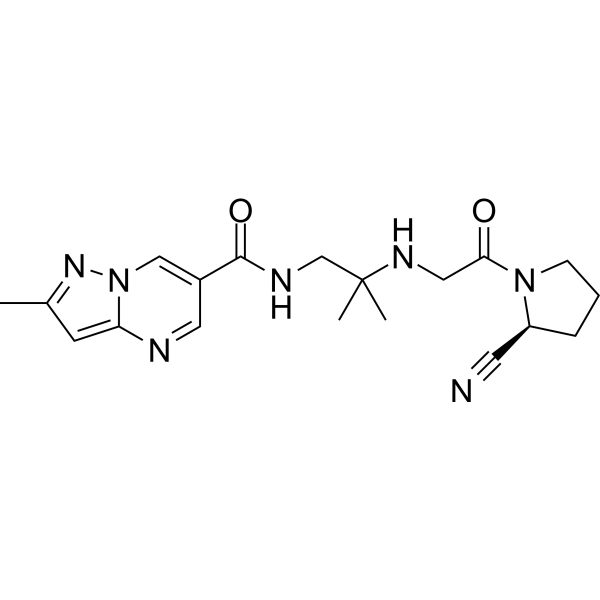
HY-14877
AnagliptinDPP-4 Inhibitor -
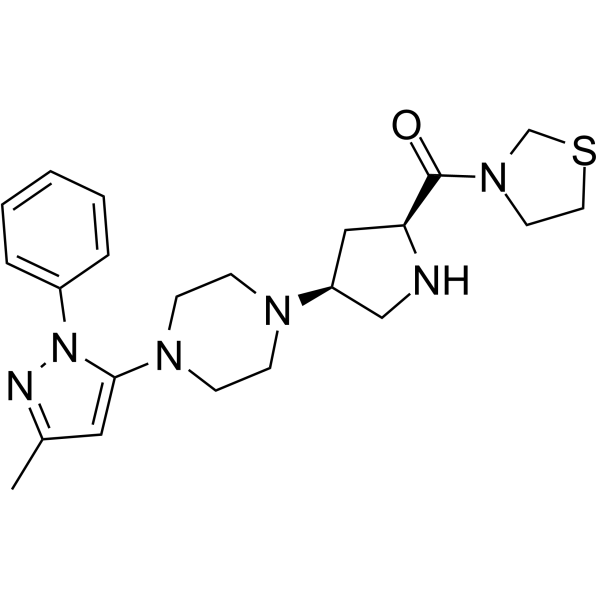
HY-14806
TeneligliptinDPP-4 Inhibitor -
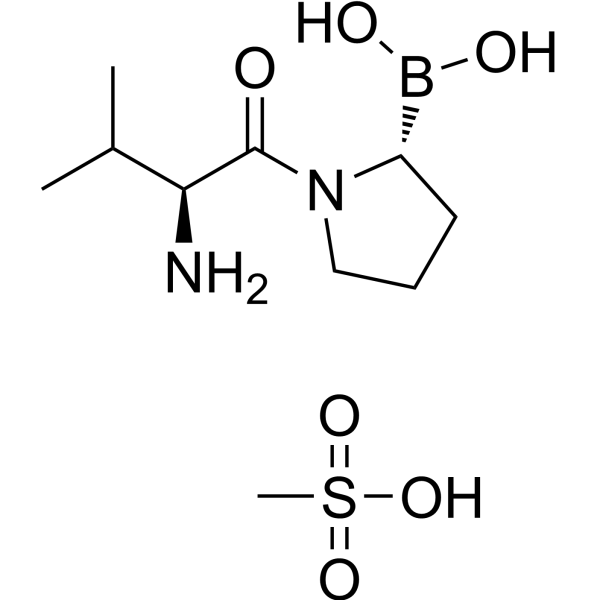
HY-13233A
Talabostat mesylateDipeptidyl Peptidase Inhibitor -
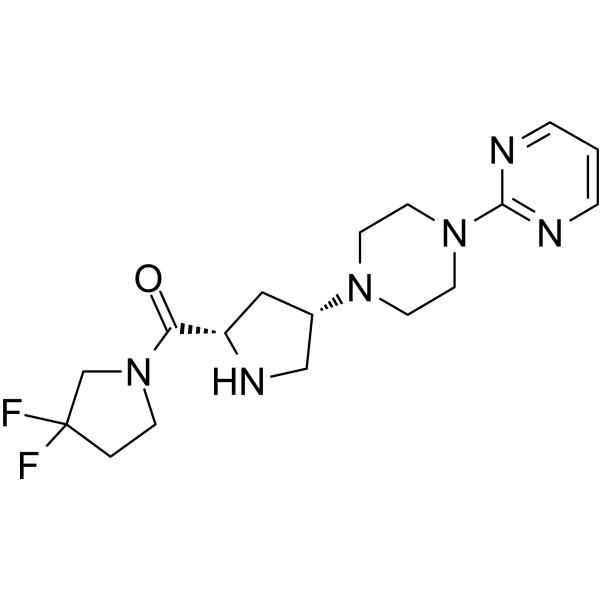
HY-10287
GosogliptinDPP-IV Inhibitor -
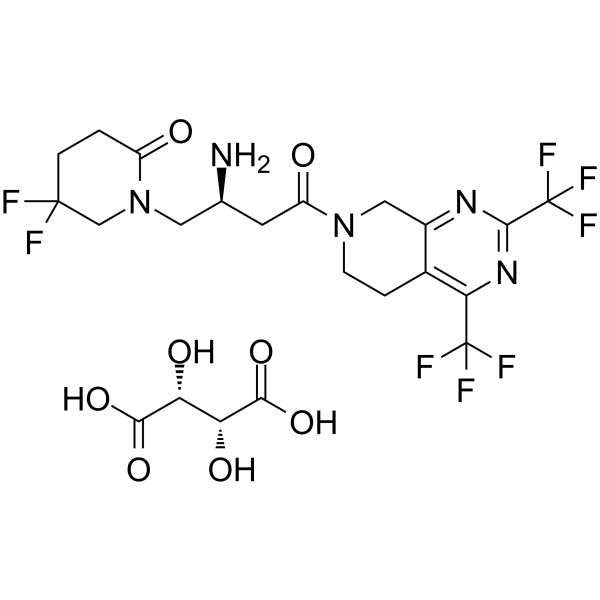
HY-14892A
Gemigliptin tartrateDPP-4 Inhibitor -
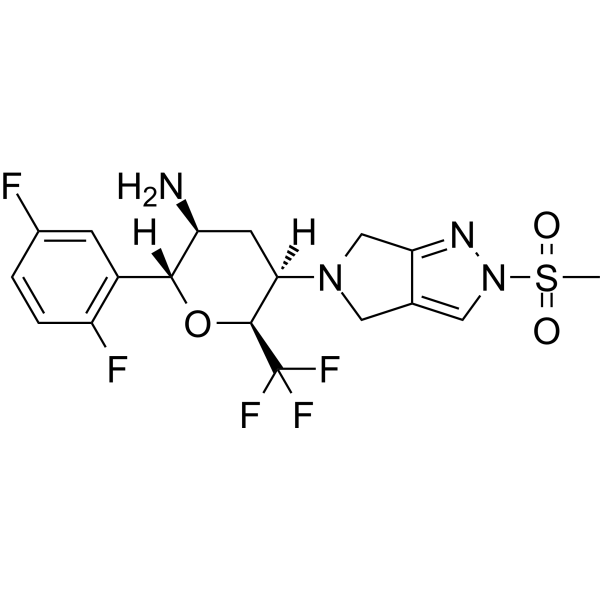
HY-147257
CofrogliptinDPP-4 Inhibitor
Publications Citing Use of MedChemExpress (MCE) Trelagliptin
More

Biological Activity
Description
IC50 & Target
|
DPP-4 |
In Vitro
Dipeptidyl peptidase-4 (DPP-4) is one of the widely explored novel targets for type 2 diabetes mellitus (T2DM)?strategy to preserve the endogenous glucagon like peptide (GLP)-1 activity by inhibiting the DPP-4 action[1].Trelagliptin exhibits potent inhibitory activity toward DPP-4 prepared from Caco-2 cells with an IC50?value of 5.4 nM. Trelagliptin also inhibits human, dog, and rat plasma DPP-4 activity with IC50?values of 4.2 nM, 6.2 nM, and 9.7 nM, respectively[2].Trelagliptin is highly selective for DPP-4 and displays IC50?values >100,000 nM corresponding to >10,000-fold selectivity over DPP-2, DPP-8, DPP-9, PEP and FAPα activities. Trelagliptin shows DPP4 selective about 4- and 12-fold more potent than alogliptin (HY-A0023) and sitagliptin (HY-13749), respectively[2].
MedChemExpress (MCE) has not independently confirmed the accuracy of these methods. They are for reference only.
In Vivo
MedChemExpress (MCE) has not independently confirmed the accuracy of these methods. They are for reference only.
-
Animal Model:ICR ob/ob mice[3]
-
Dosage:10 mg/kg
-
Administration:Oral gavage; 10 mg/kg; once a week; 8 weeks
-
Result:Exerted chronic antidiabetic effects on type 2 diabetic db/db Mice.
Clinical Trial
| NCT Number | Sponsor | Condition | Start Date |
Phase

|
|---|---|---|---|---|
| NCT01329991 | Plexxikon| | 2011-05 | PHASE1 |


Chemical Information
-
CAS No. 865759-25-7
-
Appearance Solid
-
Molecular Weight 357.38
-
Formula C18H20FN5O2
-
Color White to off-white
-
SMILES
N#CC1=CC=C(F)C=C1CN(C(N2C)=O)C(N3C[C@H](N)CCC3)=CC2=O
-
Synonyms
SYR-472
-
Shipping
Room temperature in continental US; may vary elsewhere.
-
Storage
Powder -20°C 3 years 4°C 2 years In solvent -80°C 2 years -20°C 1 year


Publications (1)
-
Journal Impact Factor
-
Most Recent
-
Exp Hematol Oncol
2025 Jul 24;14(1):100. PMID: 40708008


Solvent & Solubility
In Vitro:
DMSO : ≥ 50 mg/mL (139.91 mM; Hygroscopic DMSO has a significant impact on the solubility of product, please use newly opened DMSO)
* "≥" means soluble, but saturation unknown.
Please refer to the solubility information to select the appropriate solvent. Once prepared, please aliquot and store the solution to prevent product inactivation from repeated freeze-thaw cycles.
Storage method and period of stock solution: -80°C, 2 years; -20°C, 1 year. When stored at -80°C, please use it within 2 years. When stored at -20°C, please use it within 1 year.
Please refer to the solubility information to select the appropriate solvent. Once prepared, please aliquot and store the solution to prevent product inactivation from repeated freeze-thaw cycles.
Storage method and period of stock solution: -80°C, 2 years; -20°C, 1 year. When stored at -80°C, please use it within 2 years. When stored at -20°C, please use it within 1 year.
Concentration (start) × Volume (start) = Concentration (final) × Volume (final)
In Vivo:
Select the appropriate dissolution method based on your experimental animal and administration route.
- For the following dissolution methods, please ensure to first prepare a clear stock solution using an In Vitro approach and then sequentially add co-solvents:
- To ensure reliable experimental results, the clarified stock solution can be appropriately stored based on storage conditions. As for the working solution for In Vivo experiments, it is recommended to prepare freshly and use it on the same day.
- The percentages shown for the solvents indicate their volumetric ratio in the final prepared solution. If precipitation or phase separation occurs during preparation, heat and/or sonication can be used to aid dissolution.
Add each solvent one by one: 10% DMSO 40% PEG300 5% Tween-80 45% Saline
Solubility: ≥ 2.5 mg/mL (7.00 mM); Clear solution
This protocol yields a clear solution of ≥ 2.5 mg/mL (saturation unknown).
Taking 1 mL working solution as an example, add 100 μL DMSO stock solution (25.0 mg/mL) to 400 μL PEG300, and mix evenly; then add 50 μL Tween-80 and mix evenly; then add 450 μL Saline to adjust the volume to 1 mL.
Preparation of Saline: Dissolve 0.9 g sodium chloride in ddH₂O and dilute to 100 mL to obtain a clear Saline solution.
Add each solvent one by one: 10% DMSO 90% (20% SBE-β-CD in Saline)
Solubility: ≥ 2.5 mg/mL (7.00 mM); Clear solution
This protocol yields a clear solution of ≥ 2.5 mg/mL (saturation unknown).
Taking 1 mL working solution as an example, add 100 μL DMSO stock solution (25.0 mg/mL) to 900 μL 20% SBE-β-CD in Saline, and mix evenly.
Preparation of 20% SBE-β-CD in Saline (4°C, storage for one week): 2 g SBE-β-CD powder is dissolved in 10 mL Saline, completely dissolve until clear.
In Vivo Dissolution Calculator
Please enter the basic information of animal experiments:
-
-
-
-
Recommended: Prepare an additional quantity of animals to account for potential losses during experiments.
Please enter your animal formula composition:
-
%DMSO +
Recommended: Keep the proportion of DMSO in working solution below 2% if your animal is weak.
-
%+
-
+%Tween-80 + +
-
%Saline +
The co-solvents required include: DMSO, . All of co-solvents are available by MedChemExpress (MCE). , Tween 80. All of co-solvents are available by MedChemExpress (MCE).
Working solution concentration: 0.22 mg/mL
Method for preparing stock solution: mg drug dissolved in μL DMSO. Stock solution concentration: mg/mL.
1. Take μL DMSO stock solution;
2. Add μL .
μL , mix evenly;
3. Then add μL Tween 80, mix evenly;
4. Then add μL
Please ensure that the stock solution in the first step is dissolved to a clear state, and add co-solvents in sequence. You can use ultrasonic heating (ultrasonic cleaner, recommended frequency 20-40 kHz), vortexing, etc. to assist dissolution.


Purity & Documentation
-
Data Sheet (278 KB)
-
SDS (393 KB)
- English - EN (393 KB)
- Français - FR (393 KB)
- Deutsch - DE (393 KB)
- Norwegian - NO (393 KB)
- Español - ES (393 KB)
- Swedish - SV (393 KB)
- Italian - IT (393 KB)
- Korean - KR (393 KB)
- Portuguese - PT (393 KB)
-
Handling Instructions (2659 KB)
References
[1]. Bhumika D Patel, et al. Recent approaches to medicinal chemistry and therapeutic potential of dipeptidyl peptidase-4 (DPP-4) inhibitors. Eur J Med Chem. 2014 Mar 3;74:574-605. [Content Brief]
[2]. Charles E Grimshaw, et al. Trelagliptin (SYR-472, Zafatek), Novel Once-Weekly Treatment for Type 2 Diabetes, Inhibits Dipeptidyl Peptidase-4 (DPP-4) via a Non-Covalent Mechanism. PLoS One. 2016 Jun 21;11(6):e0157509. [Content Brief]
[3]. Shiliang Li, et al. Discovery of a Natural-Product-Derived Preclinical Candidate for Once-Weekly Treatment of Type 2 Diabetes. J Med Chem. 2019 Mar 14;62(5):2348-2361. [Content Brief]


Complete Stock Solution Preparation Table
Please refer to the solubility information to select the appropriate solvent. Once prepared, please aliquot and store the solution to prevent product inactivation from repeated freeze-thaw cycles.
Storage method and period of stock solution: -80°C, 2 years; -20°C, 1 year. When stored at -80°C, please use it within 2 years. When stored at -20°C, please use it within 1 year.
| Optional Solvent | Concentration Solvent Mass | 1 mg | 5 mg | 10 mg | 25 mg |
|---|---|---|---|---|---|
| DMSO | 1 mM | 2.7981 mL | 13.9906 mL | 27.9813 mL | 69.9531 mL |
| 5 mM | 0.5596 mL | 2.7981 mL | 5.5963 mL | 13.9906 mL | |
| 10 mM | 0.2798 mL | 1.3991 mL | 2.7981 mL | 6.9953 mL | |
| 15 mM | 0.1865 mL | 0.9327 mL | 1.8654 mL | 4.6635 mL | |
| 20 mM | 0.1399 mL | 0.6995 mL | 1.3991 mL | 3.4977 mL | |
| 25 mM | 0.1119 mL | 0.5596 mL | 1.1193 mL | 2.7981 mL | |
| 30 mM | 0.0933 mL | 0.4664 mL | 0.9327 mL | 2.3318 mL | |
| 40 mM | 0.0700 mL | 0.3498 mL | 0.6995 mL | 1.7488 mL | |
| 50 mM | 0.0560 mL | 0.2798 mL | 0.5596 mL | 1.3991 mL | |
| 60 mM | 0.0466 mL | 0.2332 mL | 0.4664 mL | 1.1659 mL | |
| 80 mM | 0.0350 mL | 0.1749 mL | 0.3498 mL | 0.8744 mL | |
| 100 mM | 0.0280 mL | 0.1399 mL | 0.2798 mL | 0.6995 mL |


Trelagliptin Related Classifications
HY-15408 Related Classifications
 Powered by Bioz