



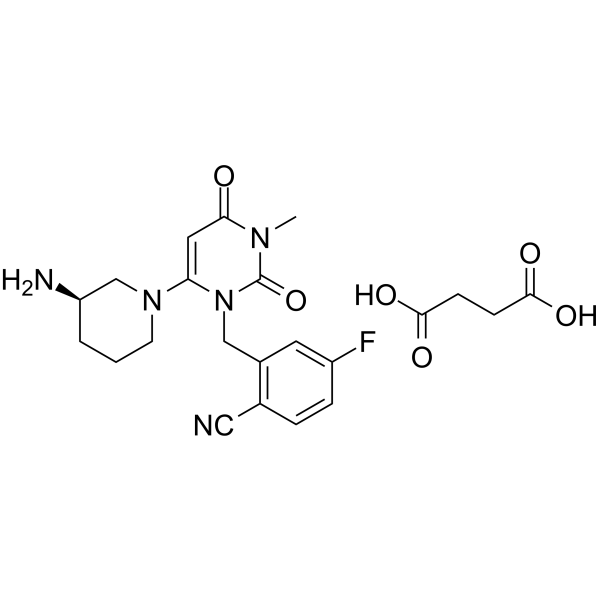
Trelagliptin succinate
Based on 1 publication(s) in Google Scholar
Trelagliptin (SYR-472) succinate is a potent, orally active and highly selective DPP-4 inhibitor with an IC50 of 4 nM. Trelagliptin succinate improves glycemic control in vivo and can be used for the study of type 2 diabetes mellitus (T2DM).
Nos produits utilisent uniquement pour la recherche. Nous ne vendons pas aux patients.
- Pureté : 99.87%
- CAS No.: 1029877-94-8
- Formule: C22H26FN5O6
- Masse moléculaire:475.47
-
Stockage:
4°C, sealed storage, away from moisture
* In solvent : -80°C, 6 months; -20°C, 1 month (sealed storage, away from moisture)

To place orders, for customer services and technical support, please contact: MedChemExpress USA
Tel: 609-228-6898 E-mail: [email protected] [email protected]


-
 Activité biologique
-
Chemical Information
-
Solvant et solubilité
- Protocole
- Pureté et documentation
- Références
-
 Help & FAQs


-
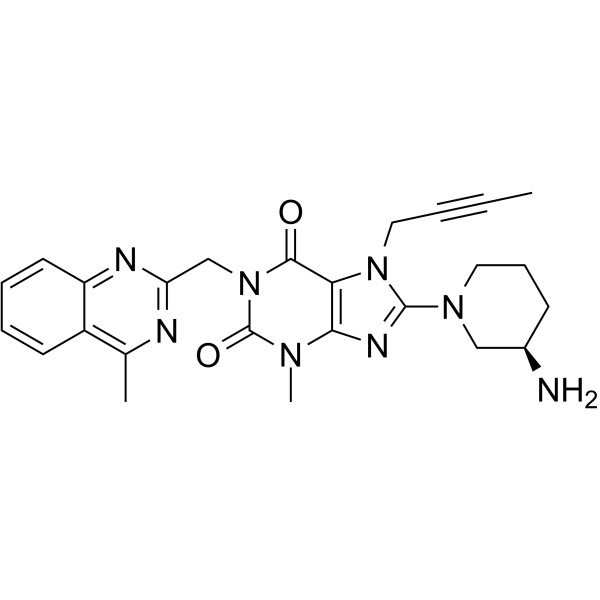
HY-10284
LinagliptinDPP-4 Inhibitor -
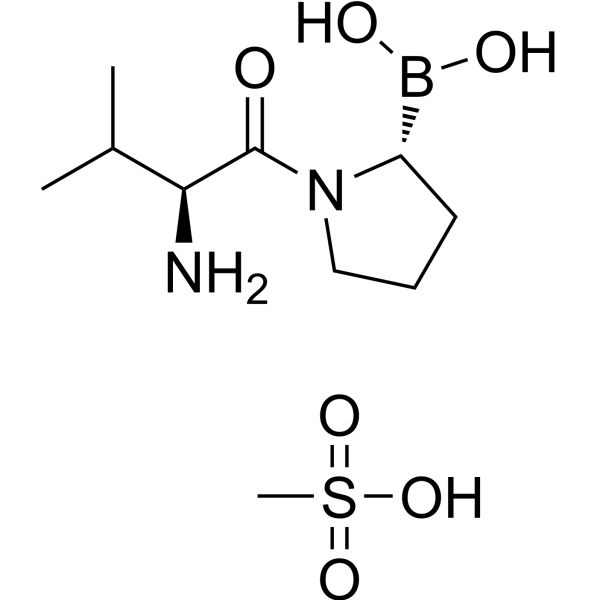
HY-13233A
Talabostat mesylateDipeptidyl Peptidase Inhibitor -
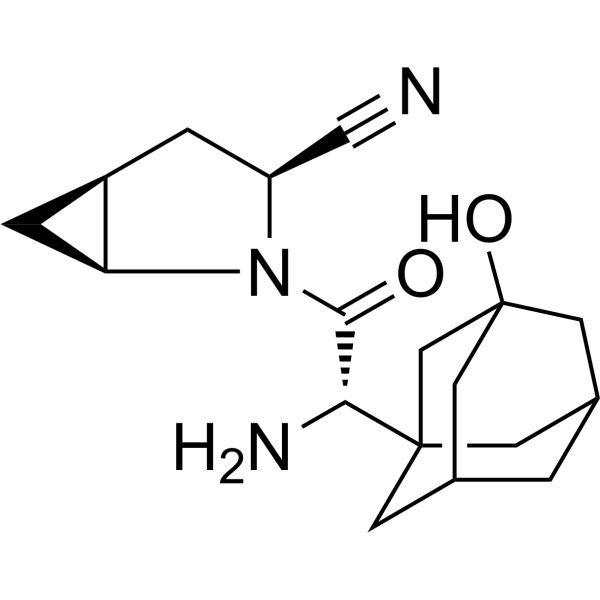
HY-10285
SaxagliptinDPP-4 Inhibitor -
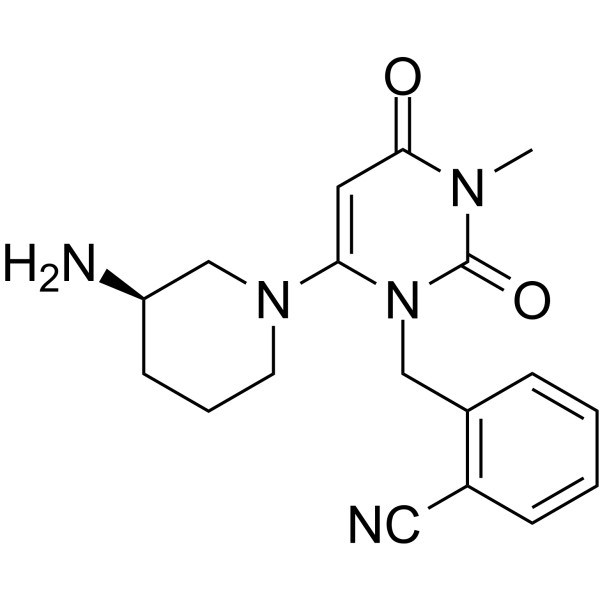
HY-A0023A
AlogliptinDPP-4 Inhibitor -
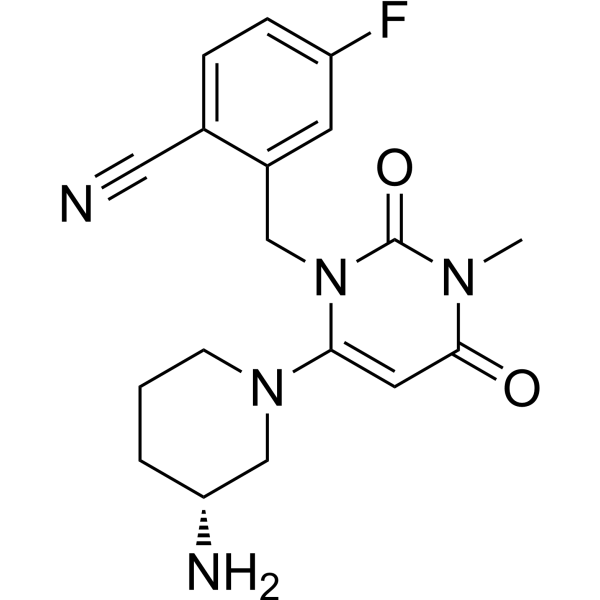
HY-15408
TrelagliptinDPP-4 Inhibitor -
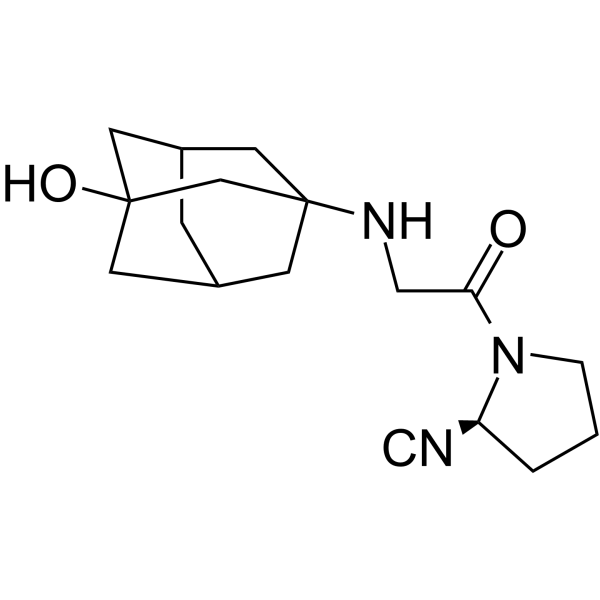
HY-14291
VildagliptinDPP-IV Inhibitor -
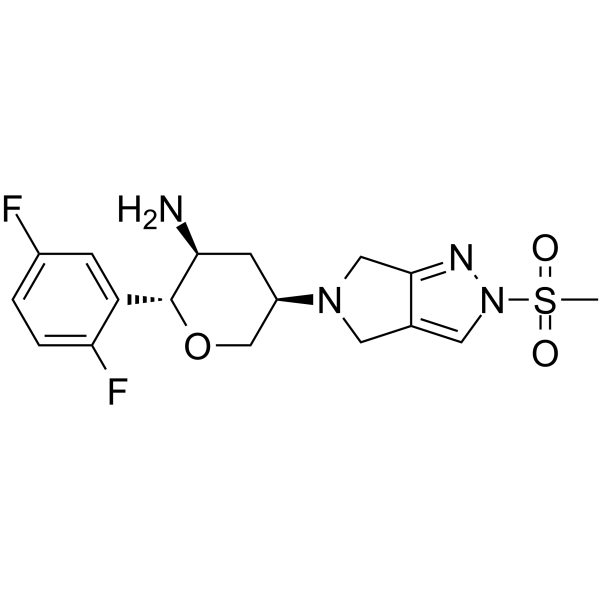
HY-15981
OmarigliptinDPP-4 Inhibitor -
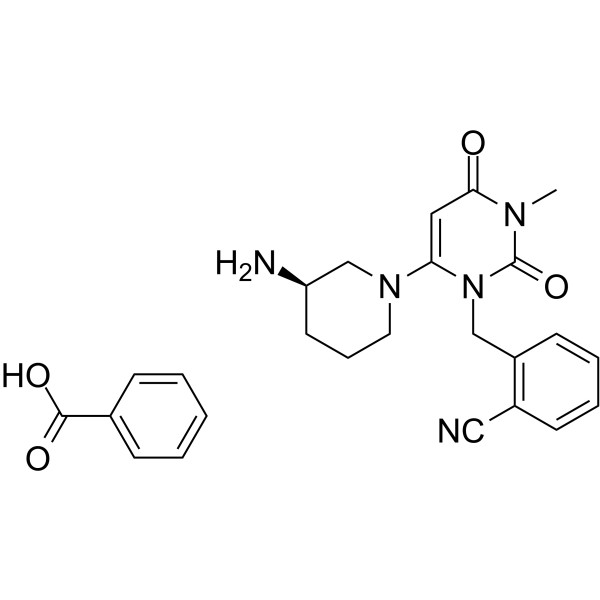
HY-A0023
Alogliptin BenzoateDPP-4 Inhibitor -
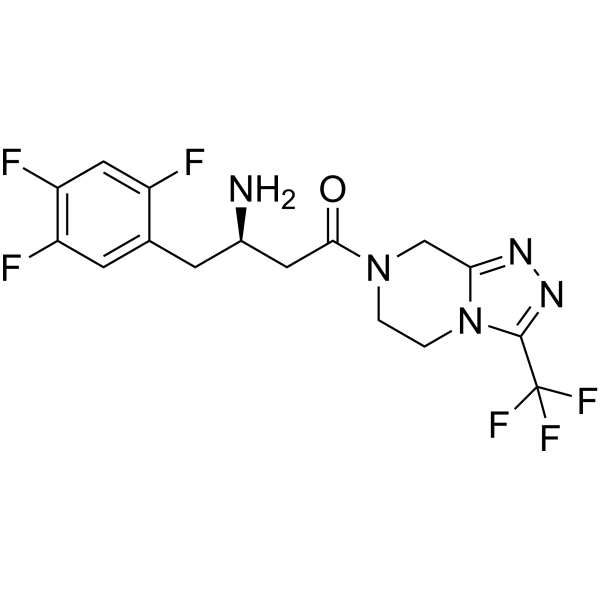
HY-13749
SitagliptinDPP4 Inhibitor -
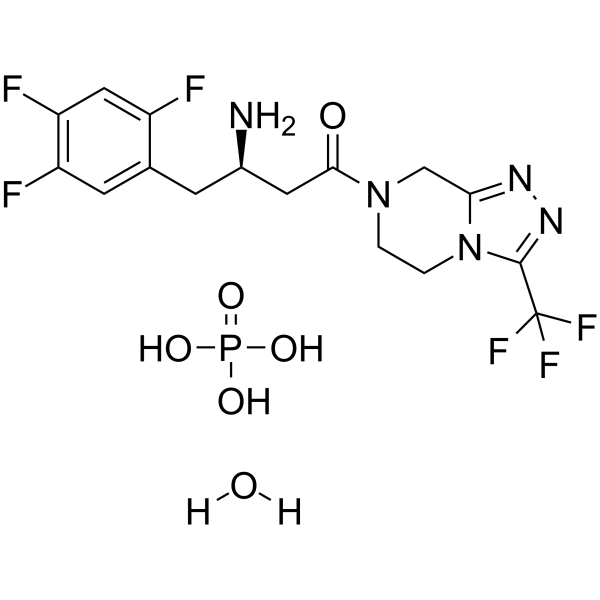
HY-13749B
Sitagliptin phosphate monohydrateDPP4 Inhibitor -
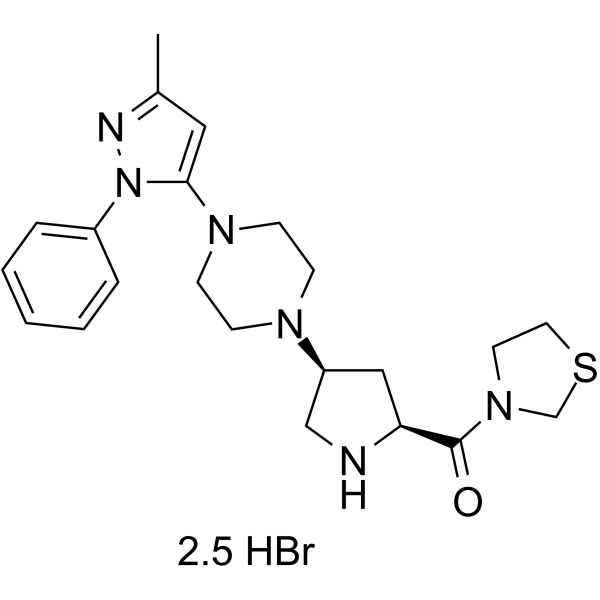
HY-14806A
Teneligliptin hydrobromideDipeptidyl Peptidase Inhibitor -

HY-10285R
Saxagliptin (Standard)DPP-4 Inhibitor
Publications Citing Use of MedChemExpress (MCE) Trelagliptin succinate
More

Activité biologique
Description
IC50 & Target
|
DPP-4 |
In Vitro
Dipeptidyl peptidase-4 (DPP-4) is one of the widely explored novel targets for type 2 diabetes mellitus (T2DM) strategy to preserve the endogenous glucagon like peptide (GLP)-1 activity by inhibiting the DPP-4 action[1].Trelagliptin exhibits potent inhibitory activity toward DPP-4 prepared from Caco-2 cells with an IC50 value of 5.4 nM. Trelagliptin also inhibits human, dog, and rat plasma DPP-4 activity with IC50 values of 4.2 nM, 6.2 nM, and 9.7 nM, respectively[2].Trelagliptin is highly selective for DPP-4 and displays IC50 values >100,000 nM corresponding to >10,000-fold selectivity over DPP-2, DPP-8, DPP-9, PEP and FAPα activities. Trelagliptin shows DPP4 selective about 4- and 12-fold more potent than alogliptin (HY-A0023) and sitagliptin (HY-13749), respectively[2].
MedChemExpress (MCE) has not independently confirmed the accuracy of these methods. They are for reference only. Further protocols information, click here.
In Vivo
MedChemExpress (MCE) has not independently confirmed the accuracy of these methods. They are for reference only.
-
Animal Model:ICR ob/ob mice[3]
-
Dosage:10 mg/kg
-
Administration:Oral gavage; 10 mg/kg; once a week; 8 weeks
-
Result:Exerted chronic antidiabetic effects on type 2 diabetic db/db Mice.


Chemical Information
-
CAS No. 1029877-94-8
-
Appearance Solid
-
Masse moléculaire 475.47
-
Formule C22H26FN5O6
-
Color White to off-white
-
SMILES
O=C(C=C(N1C[C@H](N)CCC1)N2CC3=C(C#N)C=CC(F)=C3)N(C)C2=O.O=C(O)CCC(O)=O
-
Synonyms
SYR-472 succinate
-
Livraison
Room temperature in continental US; may vary elsewhere.
-
Stockage
4°C, sealed storage, away from moisture
* In solvent : -80°C, 6 months; -20°C, 1 month (sealed storage, away from moisture)


Publications (1)
-
Journal Impact Factor
-
Most Recent
-
Exp Hematol Oncol
2025 Jul 24;14(1):100. PMID: 40708008


Solvant et solubilité
In Vitro:
H2O : 100 mg/mL (210.32 mM; Need ultrasonic)
DMSO : ≥ 50 mg/mL (105.16 mM; Hygroscopic DMSO has a significant impact on the solubility of product, please use newly opened DMSO)
* "≥" means soluble, but saturation unknown.
Please refer to the solubility information to select the appropriate solvent. Once prepared, please aliquot and store the solution to prevent product inactivation from repeated freeze-thaw cycles.
Storage method and period of stock solution: -80°C, 6 months; -20°C, 1 month (sealed storage, away from moisture). When stored at -80°C, please use it within 6 months. When stored at -20°C, please use it within 1 month.
* Note: If you choose water as the stock solution, please dilute it to the working solution, then filter and sterilize it with a 0.22 μm filter before use.
Please refer to the solubility information to select the appropriate solvent. Once prepared, please aliquot and store the solution to prevent product inactivation from repeated freeze-thaw cycles.
Storage method and period of stock solution: -80°C, 6 months; -20°C, 1 month (sealed storage, away from moisture). When stored at -80°C, please use it within 6 months. When stored at -20°C, please use it within 1 month.
* Note: If you choose water as the stock solution, please dilute it to the working solution, then filter and sterilize it with a 0.22 μm filter before use.
Concentration (start) × Volume (start) = Concentration (final) × Volume (final)
In Vivo:
Select the appropriate dissolution method based on your experimental animal and administration route.
- For the following dissolution methods, please ensure to first prepare a clear stock solution using an In Vitro approach and then sequentially add co-solvents:
- To ensure reliable experimental results, the clarified stock solution can be appropriately stored based on storage conditions. As for the working solution for In Vivo experiments, it is recommended to prepare freshly and use it on the same day.
- The percentages shown for the solvents indicate their volumetric ratio in the final prepared solution. If precipitation or phase separation occurs during preparation, heat and/or sonication can be used to aid dissolution.
Add each solvent one by one: 10% DMSO 40% PEG300 5% Tween-80 45% Saline
Solubility: ≥ 2.5 mg/mL (5.26 mM); Clear solution
This protocol yields a clear solution of ≥ 2.5 mg/mL (saturation unknown).
Taking 1 mL working solution as an example, add 100 μL DMSO stock solution (25.0 mg/mL) to 400 μL PEG300, and mix evenly; then add 50 μL Tween-80 and mix evenly; then add 450 μL Saline to adjust the volume to 1 mL.
Preparation of Saline: Dissolve 0.9 g sodium chloride in ddH₂O and dilute to 100 mL to obtain a clear Saline solution.
Add each solvent one by one: 10% DMSO 90% (20% SBE-β-CD in Saline)
Solubility: ≥ 2.5 mg/mL (5.26 mM); Clear solution
This protocol yields a clear solution of ≥ 2.5 mg/mL (saturation unknown).
Taking 1 mL working solution as an example, add 100 μL DMSO stock solution (25.0 mg/mL) to 900 μL 20% SBE-β-CD in Saline, and mix evenly.
Preparation of 20% SBE-β-CD in Saline (4°C, storage for one week): 2 g SBE-β-CD powder is dissolved in 10 mL Saline, completely dissolve until clear.
For the following dissolution methods, please prepare the working solution directly:
It is recommended to prepare fresh solutions and use them promptly within a short period of time.
The percentages shown for the solvents indicate their volumetric ratio in the final prepared solution. If precipitation or phase separation occurs during preparation, heat and/or sonication can be used to aid dissolution.
Add each solvent one by one: PBS
Solubility: 50 mg/mL (105.16 mM); Clear solution; Need ultrasonic
In Vivo Dissolution Calculator
Please enter the basic information of animal experiments:
-
-
-
-
Recommended: Prepare an additional quantity of animals to account for potential losses during experiments.
Working solution concentration: 0.22 mg/mL
This product has good water solubility, please refer to the measured solubility data in water/PBS/Saline for details.

Protocole
-
Research Protocol for Metabolic Diseases
AMP-activated protein kinase, AMPK, is a conserved cellular energy sensor that responds to reduced cellular energy status and coordinates metabolism by increasing ATP-generating catabolic pathways while suppressing ATP-consuming anabolic processes. In metabolic disease research, the AMPK pathway is experimentally relevant because it regulates hepatic lipid synthesis, fatty acid oxidation, glucose production, skeletal-muscle glucose disposal, mTORC1-linked biosynthesis, autophagy, mitochondrial homeostasis, and whole-body energy balance. The central pathway logic is that energy stress, metformin, exercise-like stimulation, or direct AMPK activators increase AMPKα Thr172 phosphorylation and downstream substrate phosphorylation, including ACC and RAPTOR. Phosphorylation of ACC suppresses lipogenesis and supports fatty acid oxidation, whereas phosphorylation of RAPTOR suppresses mTORC1 signaling and links cellular energy status to growth and protein synthesis control. The pathway is linked


Pureté et documentation
-
Fiche technique (275 KB)
-
SDS (394 KB)
- English - EN (394 KB)
- Français - FR (394 KB)
- Deutsch - DE (394 KB)
- Norwegian - NO (394 KB)
- Español - ES (394 KB)
- Swedish - SV (394 KB)
- Italian - IT (394 KB)
- Korean - KR (394 KB)
- Portuguese - PT (394 KB)
-
Instruction de manipulation (2659 KB)
Références
[1]. Bhumika D Patel, et al. Recent approaches to medicinal chemistry and therapeutic potential of dipeptidyl peptidase-4 (DPP-4) inhibitors. Eur J Med Chem. 2014 Mar 3;74:574-605. [Content Brief]
[2]. Charles E Grimshaw, et al. Trelagliptin (SYR-472, Zafatek), Novel Once-Weekly Treatment for Type 2 Diabetes, Inhibits Dipeptidyl Peptidase-4 (DPP-4) via a Non-Covalent Mechanism. PLoS One. 2016 Jun 21;11(6):e0157509. [Content Brief]
[3]. Shiliang Li, et al. Discovery of a Natural-Product-Derived Preclinical Candidate for Once-Weekly Treatment of Type 2 Diabetes. J Med Chem. 2019 Mar 14;62(5):2348-2361. [Content Brief]


Complete Stock Solution Preparation Table
Please refer to the solubility information to select the appropriate solvent. Once prepared, please aliquot and store the solution to prevent product inactivation from repeated freeze-thaw cycles.
Storage method and period of stock solution: -80°C, 6 months; -20°C, 1 month (sealed storage, away from moisture). When stored at -80°C, please use it within 6 months. When stored at -20°C, please use it within 1 month.
| Optional Solvent | Concentration Solvent Mass | 1 mg | 5 mg | 10 mg | 25 mg |
|---|---|---|---|---|---|
| DMSO / H2O | 1 mM | 2.1032 mL | 10.5159 mL | 21.0318 mL | 52.5796 mL |
| 5 mM | 0.4206 mL | 2.1032 mL | 4.2064 mL | 10.5159 mL | |
| 10 mM | 0.2103 mL | 1.0516 mL | 2.1032 mL | 5.2580 mL | |
| 15 mM | 0.1402 mL | 0.7011 mL | 1.4021 mL | 3.5053 mL | |
| 20 mM | 0.1052 mL | 0.5258 mL | 1.0516 mL | 2.6290 mL | |
| 25 mM | 0.0841 mL | 0.4206 mL | 0.8413 mL | 2.1032 mL | |
| 30 mM | 0.0701 mL | 0.3505 mL | 0.7011 mL | 1.7527 mL | |
| 40 mM | 0.0526 mL | 0.2629 mL | 0.5258 mL | 1.3145 mL | |
| 50 mM | 0.0421 mL | 0.2103 mL | 0.4206 mL | 1.0516 mL | |
| 60 mM | 0.0351 mL | 0.1753 mL | 0.3505 mL | 0.8763 mL | |
| 80 mM | 0.0263 mL | 0.1314 mL | 0.2629 mL | 0.6572 mL | |
| 100 mM | 0.0210 mL | 0.1052 mL | 0.2103 mL | 0.5258 mL |
* Note: If you choose water as the stock solution, please dilute it to the working solution, then filter and sterilize it with a 0.22 μm filter before use.


Trelagliptin succinate Related Classifications
HY-15408A Related Classifications
 Powered by Bioz