



Trilinolein (Standard)
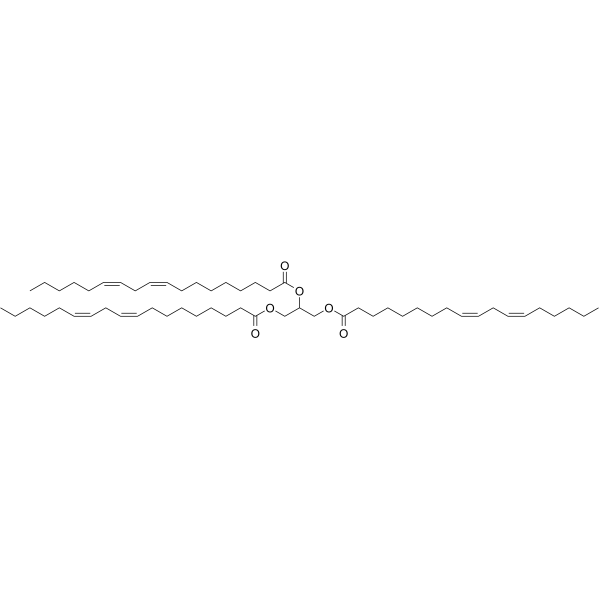
Trilinolein (Standard) is the analytical standard of Trilinolein (HY-128393). This product is intended for research and analytical applications. Trilinolein is an orally active triglyceride that inhibits the PI3K/Akt, Ras/MEK/ERK signaling pathways, and MMP-2. Trilinolein can reduce oxidative stress, induce apoptosis, and inhibit cell migration. Trilinolein can be used in the research fields of cardiovascular disease, cerebrovascular disease (such as cerebral ischemia), and non-small cell lung cancer.
Nur für Forschungszwecke. Wir verkaufen nicht an Patienten.
- CAS. Nr.: 537-40-6
- Formel: C₅₇H₉₈O₆
- Molecular Weight:879.38
-
Speicherung:
Please store the product under the recommended conditions in the Certificate of Analysis.


To place orders, for customer services and technical support, please contact: MedChemExpress USA
Tel: 609-228-6898 E-mail: [email protected] [email protected]


-
 Product Information
-
Chemical Information
- Reinheit & Dokumentation
-
 Help & FAQs


-
HY-128393
TrilinoleinAnticancer Agent -
HY-N1981
TrioleinMonoacid Triglyceride -

HY-N1981R
Triolein (Standard)Monoacid Triglyceride -
HY-126573
TrilaurinNeoplasm Inhibitor -
HY-W013061
Propane-1,2,3-triyl tripalmitateGlycerol Tristearate Lymphatic Transport Promoter -
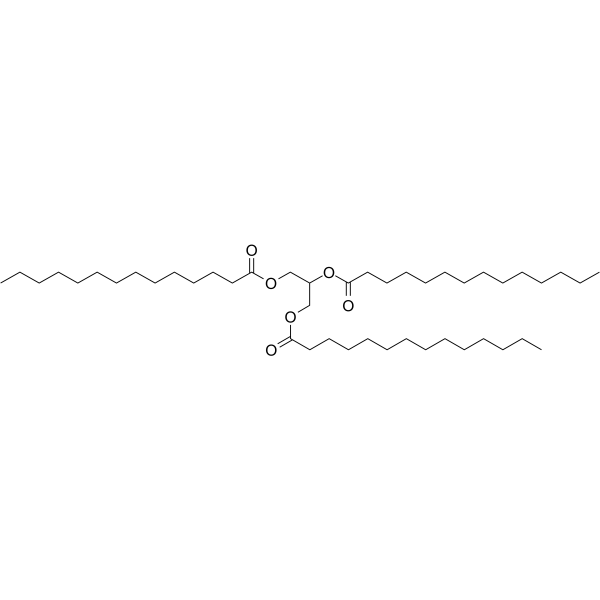
HY-N2511
Trimyristinacetylcholinesterase Inhibitor, acid phosphatase Inhibitor, alkaline phosphatase Inhibitor -
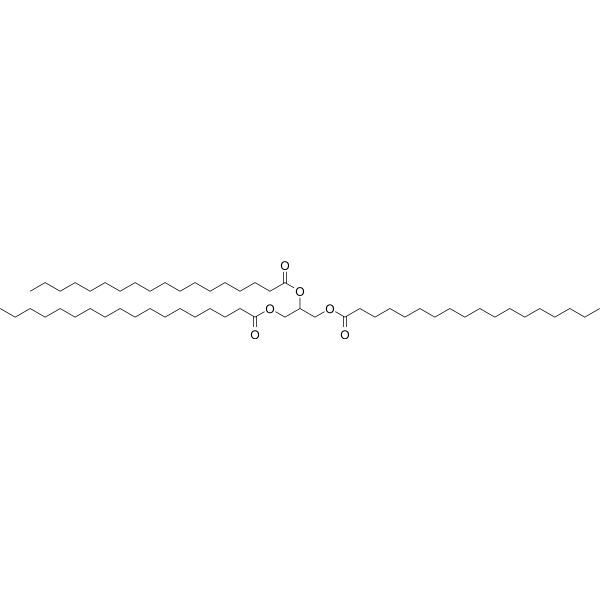
HY-127035
TristearinStearic Acid -
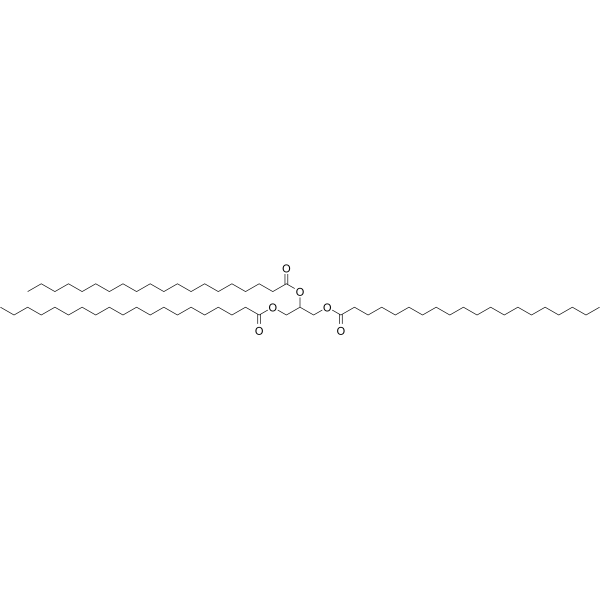
HY-125671
TriarachidinEndogenous Metabolite -

HY-W923355
1,2,3-Trieicosapentaenoyl glycerolGlyceride -
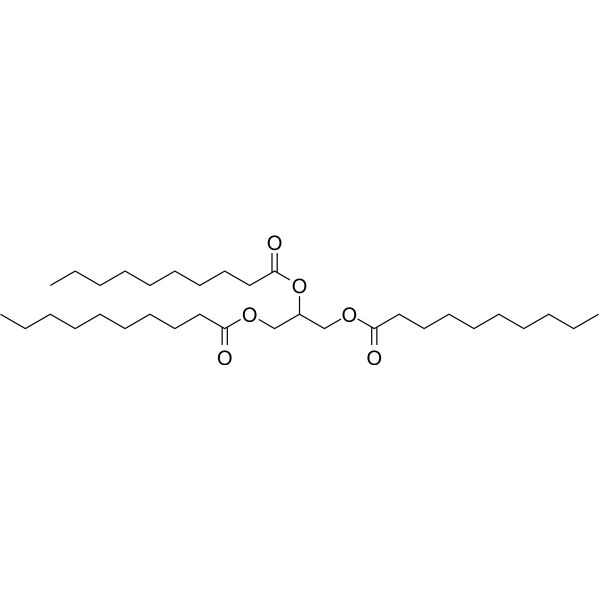
HY-N6660
TrisdecanoinDA Precursor -
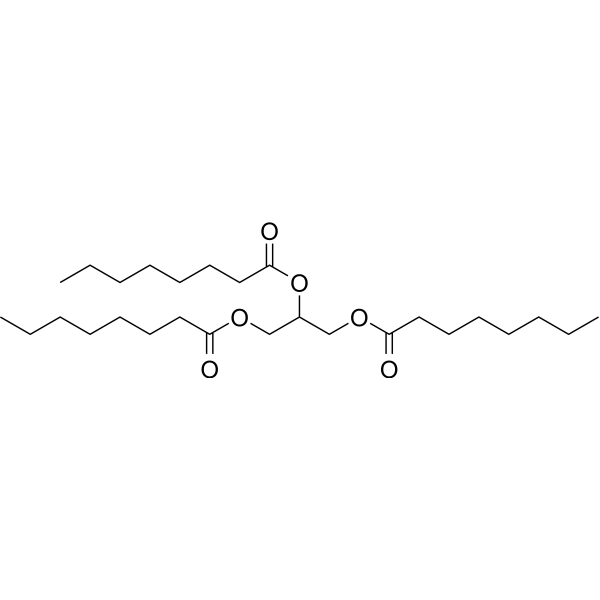
HY-B1804
TricaprilinKetogenic Agent -
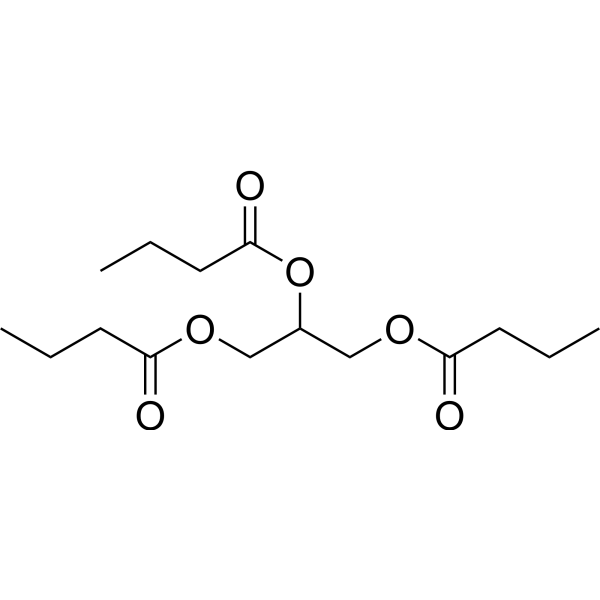
HY-W011404
TributyrinApoptosis Inducer


Product Information
Information
Anwendung
The compound is the grade of analytical standard, which is the reference standard supplied assay. It is commonly used in qualitative, quantitative and methodological research experiments in HPLC, GC and MS.


Chemical Information
-
CAS. Nr. 537-40-6
-
Molecular Weight 879.38
-
Formel C₅₇H₉₈O₆
-
SMILES
CCCCC/C=C\C/C=C\CCCCCCCC(OCC(OC(CCCCCCC/C=C\C/C=C\CCCCC)=O)COC(CCCCCCC/C=C\C/C=C\CCCCC)=O)=O
-
Structure Classification
-
Versand
Room temperature in continental US; may vary elsewhere.
-
Speicherung
Please store the product under the recommended conditions in the Certificate of Analysis.


Reinheit & Dokumentation
Verweise
[1]. Luo T, et al. Triolein and trilinolein ameliorate oxidized low-density lipoprotein-induced oxidative stress in endothelial cells. Lipids. 2014 May;49(5):495-504. [Content Brief]
[2]. Chou PY, et al. Trilinolein inhibits proliferation of human non-small cell lung carcinoma A549 through the modulation of PI3K/Akt pathway. Am J Chin Med. 2011;39(4):803-15. [Content Brief]
[3]. Chen YF, et al. Trilinolein, a Natural Triacylglycerol, Protects Cerebral Ischemia through Inhibition of Neuronal Apoptosis and Ameliorates Intimal Hyperplasia via Attenuation of Migration and Modulation of Matrix Metalloproteinase-2 and RAS/MEK/ERK Signaling Pathway in VSMCs. Int J Mol Sci. 2022 Oct 24;23(21):12820. [Content Brief]

Calculators
Konzentration (Stammlösung) × Volumen (Stammlösung) = Konzentration (Ziellösung) × Volumen (Ziellösung)


Trilinolein (Standard) Related Classifications
HY-128393R Related Classifications
 Powered by Bioz