



Clofibrate
Based on 4 publication(s) in Google Scholar
Clofibrate is an agonist of PPAR, with EC50s of 50 μM, ~500 μM for murine PPARα and PPARγ, and 55 μM, ~500 μM for human PPARα and PPARγ, respectively.
For research use only. We do not sell to patients.
- Purity : 99.53%
- CAS No.: 637-07-0
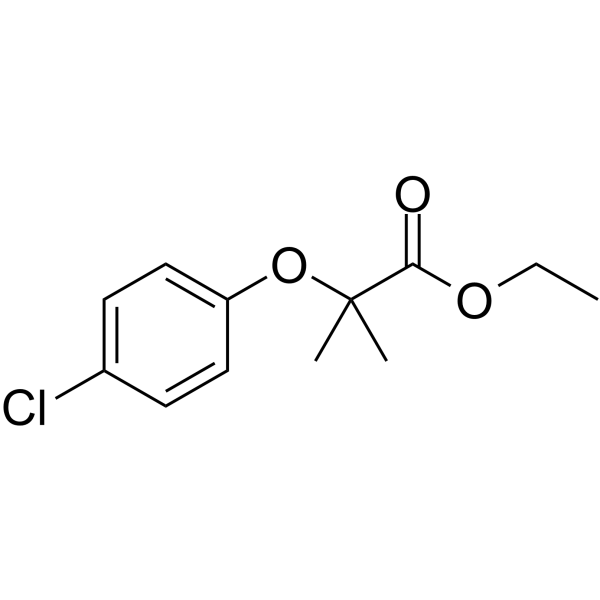
- Formula: C12H15ClO3
- Molecular Weight:242.70
-
Storage:Pure form -20°C, 3 years , 4°C, 2 years ; In solvent -80°C, 6 months , -20°C, 1 month

To place orders, for customer services and technical support, please contact: MedChemExpress USA
Tel: 609-228-6898 E-mail: [email protected] [email protected]


-
 Biological Activity
-
Chemical Information
-
Solvent & Solubility
- Purity & Documentation
- References
-
 Help & FAQs


-
HY-17356
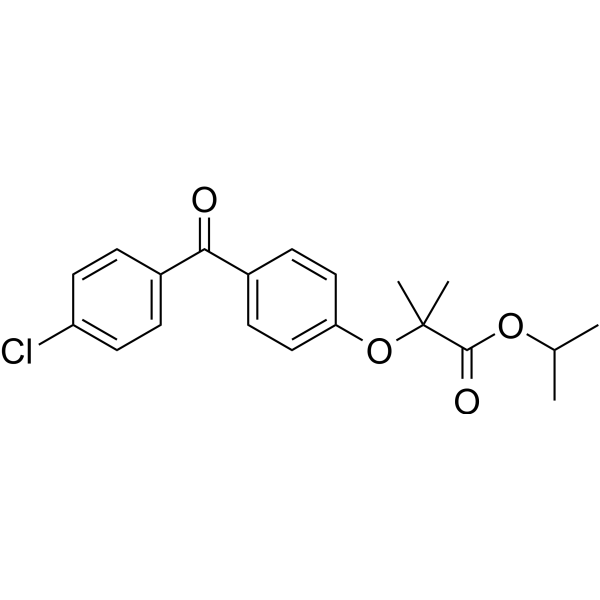
Fenofibrate -
HY-13956
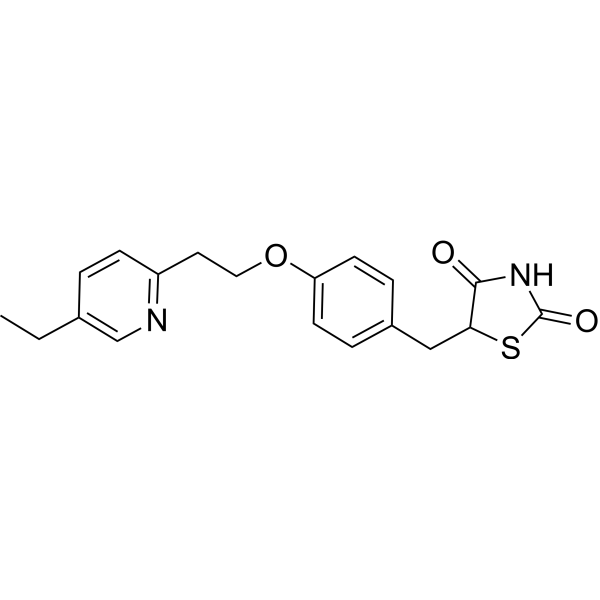
PioglitazonePPARγ Agonist -
HY-17386
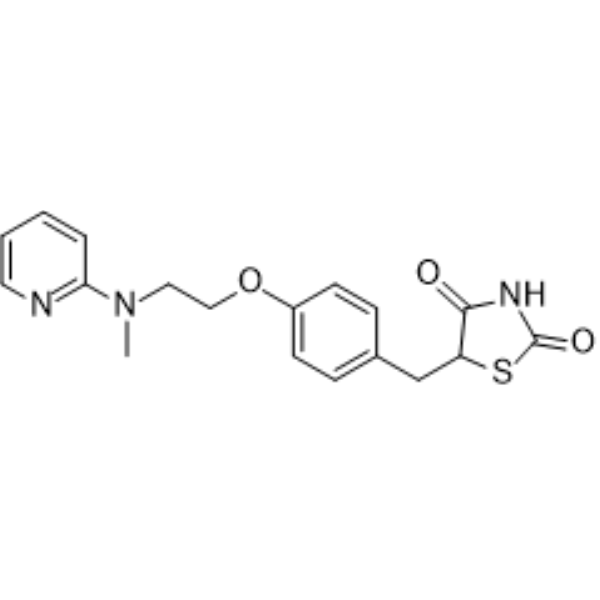
RosiglitazonePPARγ Agonist -
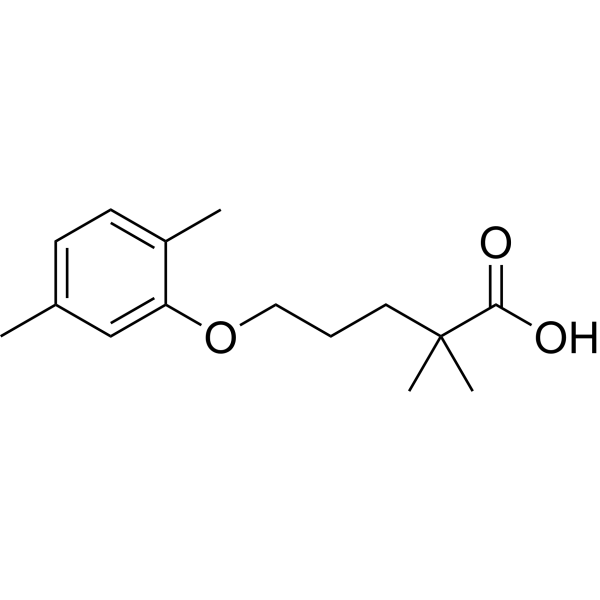
HY-B0258
GemfibrozilCytochrome P450 Inhibitor -
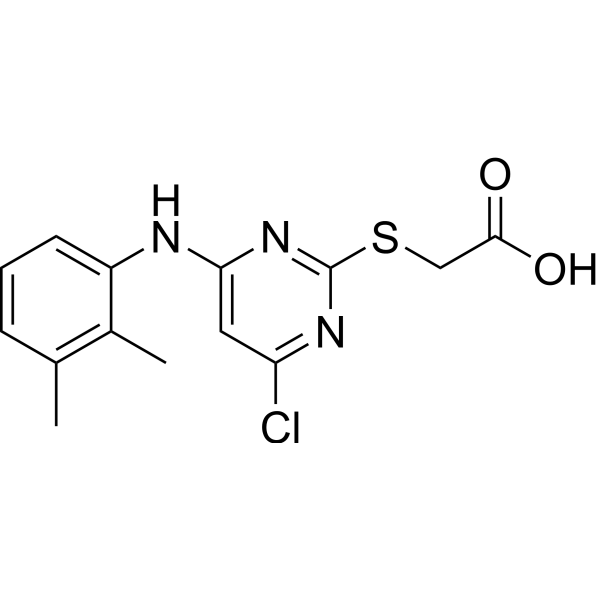
HY-16995
Pirinixic acidPPAR Agonist -
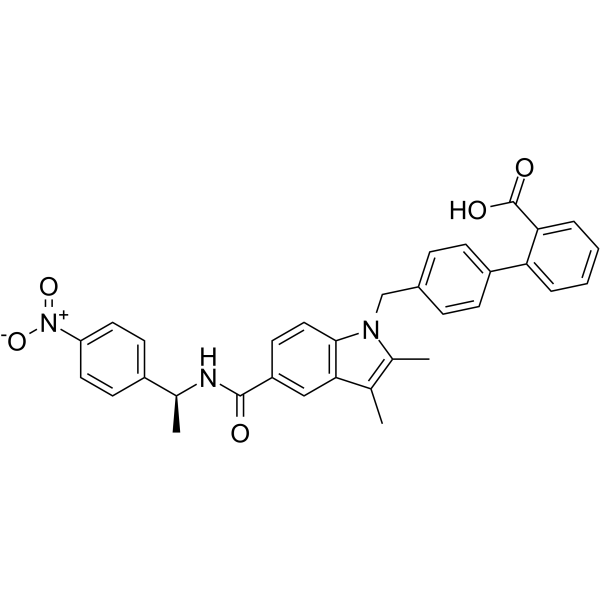
HY-12483
SR1664PPARγ Antagonist -
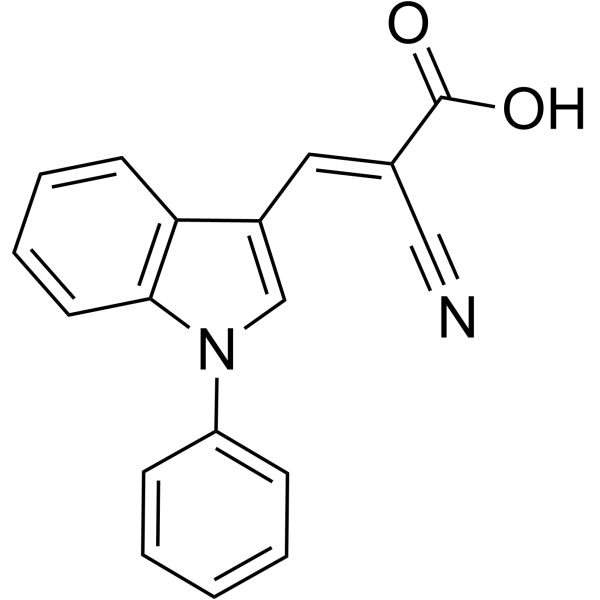
HY-15475
UK-5099Mitochondrial Pyruvate Carrier Inhibitor -
HY-B0287R
Clofibrate (Standard) -
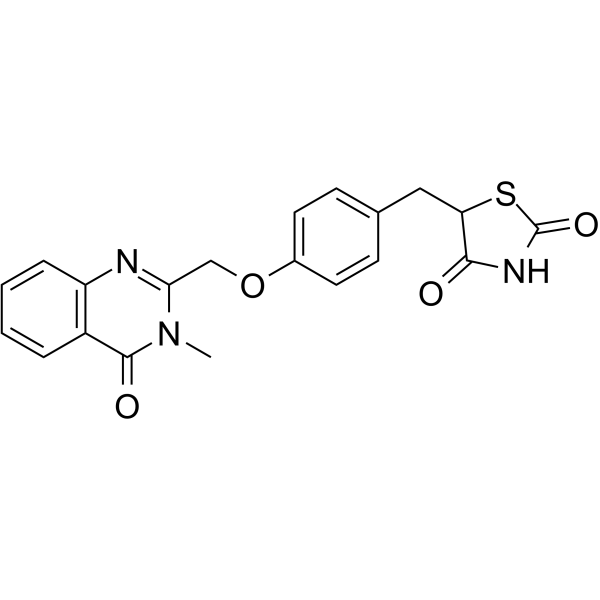
HY-16086
Balaglitazone -
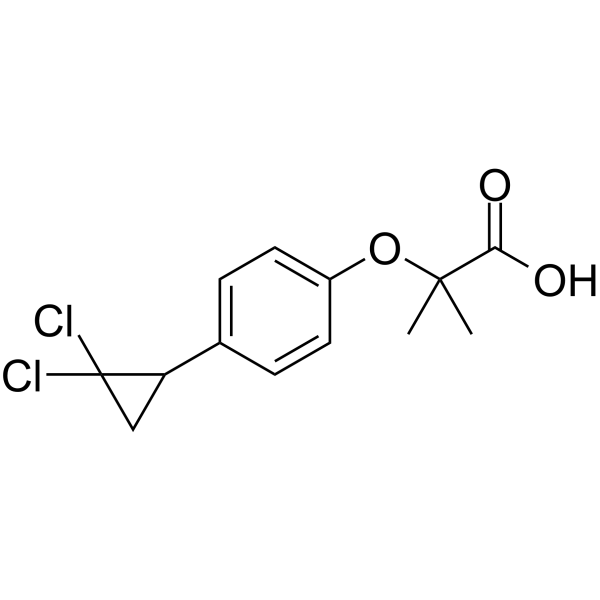
HY-B0664
CiprofibratePeroxisome Proliferator -
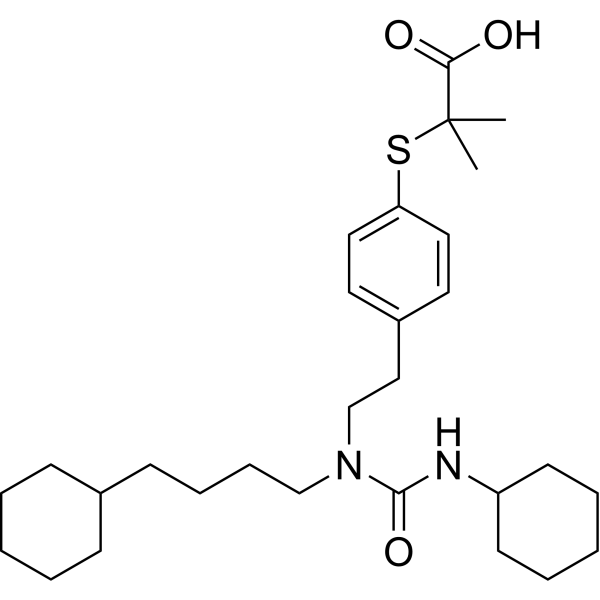
HY-13861
GW7647PPAR Agonist -
HY-B1415
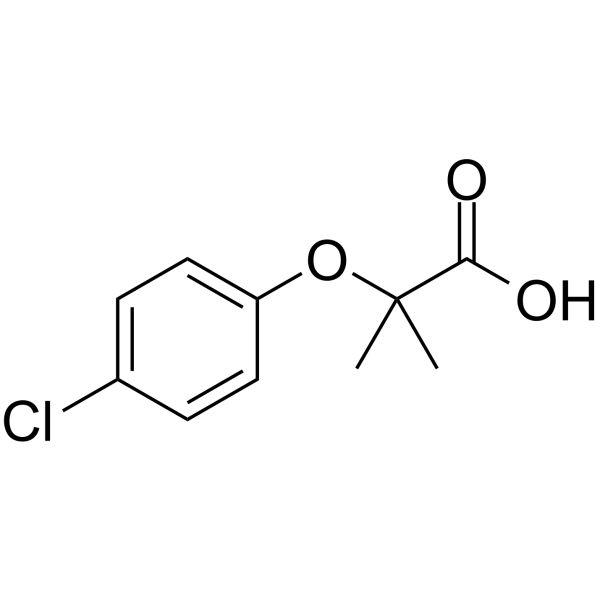
Clofibric acidPPARα Agonist
Publications Citing Use of MedChemExpress (MCE) Clofibrate
More

Biological Activity
Description
IC50 & Target
[1]|
PPARα 50 μM (EC50) |
PPARγ 500 μM (EC50) |
In Vitro
Clofibrate is a PPAR agonist, with E50s of 50 μM, ~500 μM for murine PPARα and PPARγ, and 55 μM, ~500 μM for human PPARα and PPARγ, respectively[1]. Clofibrate (0.5, 1, 2 mM) increases FABP1 expression in two fatty acid (FA)-treated rat hepatoma cells. Clofibrate lowers ROS levels after early treatment, much more than late treatment in FA-treated cells[2].
MedChemExpress (MCE) has not independently confirmed the accuracy of these methods. They are for reference only.
In Vivo
MedChemExpress (MCE) has not independently confirmed the accuracy of these methods. They are for reference only.


Chemical Information
-
CAS No. 637-07-0
-
Appearance Liquid (Density: 1.14 g/cm3 )
-
Molecular Weight 242.70
-
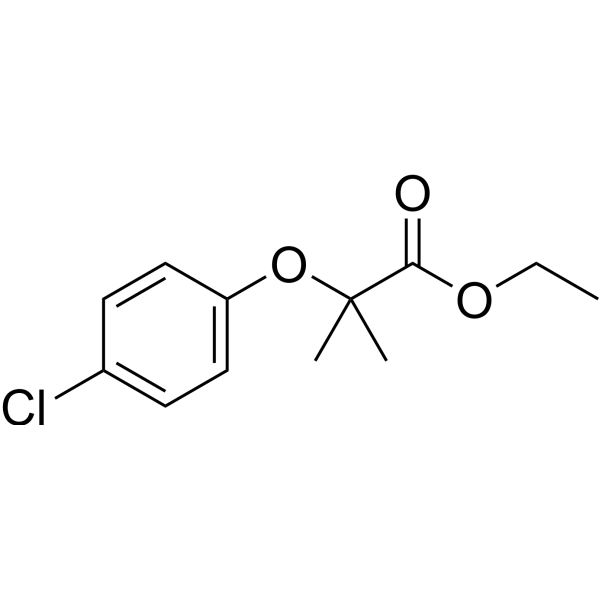
Formula C12H15ClO3
-
Color Colorless to light yellow
-
SMILES
CC(C)(OC1=CC=C(Cl)C=C1)C(OCC)=O
-
Shipping
Room temperature in continental US; may vary elsewhere.
-
Storage
Pure form -20°C 3 years 4°C 2 years In solvent -80°C 6 months -20°C 1 month


Publications (4)
-
Journal Impact Factor
-
Most Recent
-
Biochem Pharmacol
Tazemetostat synergistically combats multidrug resistance by the unique triple inhibition of ABCB1, ABCC1, and ABCG2 efflux transporters in vitro and ex vivo. [Abstract]2023 Oct:216:115769. PMID: 37634597 -
Cell Rep Methods
RECOVER identifies synergistic drug combinations in vitro through sequential model optimization. [Abstract]2023 Oct 23;3(10):100599. PMID: 37797618 -
Eur J Pharmacol
2026 Apr 15:1021:178825. PMID: 41905444 -
Neuroscience
Beyond lipid management: Clofibrate's anti-neuroinflammation role via NF-κB inhibition in ischemic stroke. [Abstract]2025 Jun 21:577:144-153. PMID: 40339898


Solvent & Solubility
In Vitro:
DMSO : ≥ 100 mg/mL (412.03 mM; Hygroscopic DMSO has a significant impact on the solubility of product, please use newly opened DMSO)
H2O : < 0.1 mg/mL (insoluble)
* "≥" means soluble, but saturation unknown.
Please refer to the solubility information to select the appropriate solvent. Once prepared, please aliquot and store the solution to prevent product inactivation from repeated freeze-thaw cycles.
Storage method and period of stock solution: -80°C, 6 months; -20°C, 1 month. When stored at -80°C, please use it within 6 months. When stored at -20°C, please use it within 1 month.
Please refer to the solubility information to select the appropriate solvent. Once prepared, please aliquot and store the solution to prevent product inactivation from repeated freeze-thaw cycles.
Storage method and period of stock solution: -80°C, 6 months; -20°C, 1 month. When stored at -80°C, please use it within 6 months. When stored at -20°C, please use it within 1 month.
Concentration (start) × Volume (start) = Concentration (final) × Volume (final)
In Vivo:
Select the appropriate dissolution method based on your experimental animal and administration route.
- For the following dissolution methods, please ensure to first prepare a clear stock solution using an In Vitro approach and then sequentially add co-solvents:
- To ensure reliable experimental results, the clarified stock solution can be appropriately stored based on storage conditions. As for the working solution for In Vivo experiments, it is recommended to prepare freshly and use it on the same day.
- The percentages shown for the solvents indicate their volumetric ratio in the final prepared solution. If precipitation or phase separation occurs during preparation, heat and/or sonication can be used to aid dissolution.
Add each solvent one by one: 10% DMSO 40% PEG300 5% Tween-80 45% Saline
Solubility: ≥ 2.5 mg/mL (10.30 mM); Clear solution
This protocol yields a clear solution of ≥ 2.5 mg/mL (saturation unknown).
Taking 1 mL working solution as an example, add 100 μL DMSO stock solution (25.0 mg/mL) to 400 μL PEG300, and mix evenly; then add 50 μL Tween-80 and mix evenly; then add 450 μL Saline to adjust the volume to 1 mL.
Preparation of Saline: Dissolve 0.9 g sodium chloride in ddH₂O and dilute to 100 mL to obtain a clear Saline solution.
Add each solvent one by one: 10% DMSO 90% (20% SBE-β-CD in Saline)
Solubility: ≥ 2.5 mg/mL (10.30 mM); Clear solution
This protocol yields a clear solution of ≥ 2.5 mg/mL (saturation unknown).
Taking 1 mL working solution as an example, add 100 μL DMSO stock solution (25.0 mg/mL) to 900 μL 20% SBE-β-CD in Saline, and mix evenly.
Preparation of 20% SBE-β-CD in Saline (4°C, storage for one week): 2 g SBE-β-CD powder is dissolved in 10 mL Saline, completely dissolve until clear.
In Vivo Dissolution Calculator
Please enter the basic information of animal experiments:
-
-
-
-
Recommended: Prepare an additional quantity of animals to account for potential losses during experiments.
Please enter your animal formula composition:
-
%DMSO +
Recommended: Keep the proportion of DMSO in working solution below 2% if your animal is weak.
-
%+
-
+%Tween-80 + +
-
%Saline +
The co-solvents required include: DMSO, . All of co-solvents are available by MedChemExpress (MCE). , Tween 80. All of co-solvents are available by MedChemExpress (MCE).
Working solution concentration: 0.22 mg/mL
Method for preparing stock solution: mg drug dissolved in μL DMSO. Stock solution concentration: mg/mL.
1. Take μL DMSO stock solution;
2. Add μL .
μL , mix evenly;
3. Then add μL Tween 80, mix evenly;
4. Then add μL
Please ensure that the stock solution in the first step is dissolved to a clear state, and add co-solvents in sequence. You can use ultrasonic heating (ultrasonic cleaner, recommended frequency 20-40 kHz), vortexing, etc. to assist dissolution.


Purity & Documentation
-
Data Sheet (279 KB)
-
SDS (555 KB)
- English - EN (555 KB)
- Français - FR (555 KB)
- Deutsch - DE (555 KB)
- Norwegian - NO (555 KB)
- Español - ES (555 KB)
- Swedish - SV (555 KB)
- Italian - IT (555 KB)
- Korean - KR (555 KB)
- Portuguese - PT (555 KB)
-
Handling Instructions (2659 KB)
References
[1]. Willson TM, et al. The PPARs: from orphan receptors to drug discovery. J Med Chem. 2000 Feb 24;43(4):527-50. [Content Brief]
[2]. Chen Y, et al. Clofibrate Attenuates ROS Production by Lipid Overload in Cultured Rat Hepatoma Cells. J Pharm Pharm Sci. 2017;20(0):239-251. [Content Brief]
[3]. Chen SH, et al. Prenatal PPARα activation by clofibrate increases subcutaneous fat browning in male C57BL/6J mice fed a high-fat diet during adulthood. PLoS One. 2017 Nov 2;12(11):e0187507. [Content Brief]


Complete Stock Solution Preparation Table
Please refer to the solubility information to select the appropriate solvent. Once prepared, please aliquot and store the solution to prevent product inactivation from repeated freeze-thaw cycles.
Storage method and period of stock solution: -80°C, 6 months; -20°C, 1 month. When stored at -80°C, please use it within 6 months. When stored at -20°C, please use it within 1 month.
| Optional Solvent | Concentration Solvent Mass | 1 mg | 5 mg | 10 mg | 25 mg |
|---|---|---|---|---|---|
| DMSO | 1 mM | 4.1203 mL | 20.6016 mL | 41.2031 mL | 103.0078 mL |
| 5 mM | 0.8241 mL | 4.1203 mL | 8.2406 mL | 20.6016 mL | |
| 10 mM | 0.4120 mL | 2.0602 mL | 4.1203 mL | 10.3008 mL | |
| 15 mM | 0.2747 mL | 1.3734 mL | 2.7469 mL | 6.8672 mL | |
| 20 mM | 0.2060 mL | 1.0301 mL | 2.0602 mL | 5.1504 mL | |
| 25 mM | 0.1648 mL | 0.8241 mL | 1.6481 mL | 4.1203 mL | |
| 30 mM | 0.1373 mL | 0.6867 mL | 1.3734 mL | 3.4336 mL | |
| 40 mM | 0.1030 mL | 0.5150 mL | 1.0301 mL | 2.5752 mL | |
| 50 mM | 0.0824 mL | 0.4120 mL | 0.8241 mL | 2.0602 mL | |
| 60 mM | 0.0687 mL | 0.3434 mL | 0.6867 mL | 1.7168 mL | |
| 80 mM | 0.0515 mL | 0.2575 mL | 0.5150 mL | 1.2876 mL | |
| 100 mM | 0.0412 mL | 0.2060 mL | 0.4120 mL | 1.0301 mL |


Clofibrate Related Classifications
HY-B0287 Related Classifications
 Powered by Bioz