



Tempone

Based on 1 Customer Validation
Tempone (4-Oxo-Tempo) is a nitroxide radical spin label and ROS scavenger. Tempone induces cytotoxicity in lymphoma cells. Tempone serves as a substrate for intracellular reduction to hydroxylamine, rapidly equilibrates between intracellular and extracellular compartments, reduces nitroxide radical spin labels at the ubiquinol site of the respiratory chain, and acts as an alternative terminal electron acceptor when electron flow to oxygen is blocked. Tempone serves as a superoxide sensor, a T2-weighted MRI contrast agent, and a dynamic nuclear polarization polarizing agent for 13C. Tempone inhibits superoxide and peroxynitrite, hydroxyl radical generation, nitrotyrosine formation, and poly (ADP-ribose) formation, and alleviates renal dysfunction and injury in ischemia/reperfusion and hydrogen peroxide-induced injury. Tempone can be used for research on ischemia-reperfusion injury, acute renal failure, and lymphoma.
For research use only. We do not sell to patients.
- Purity : 97.01%
- CAS No.: 2896-70-0
- Formula: C9H16NO2*
- Molecular Weight:170.23
-
Storage:Powder -20°C, 3 years , 4°C, 2 years ; In solvent -80°C, 6 months , -20°C, 1 month


To place orders, for customer services and technical support, please contact: MedChemExpress USA
Tel: 609-228-6898 E-mail: [email protected] [email protected]


-
 Biological Activity
-
Chemical Information
-
Solvent & Solubility
- Protocols
- Purity & Documentation
- References
-
 Help & FAQs


-
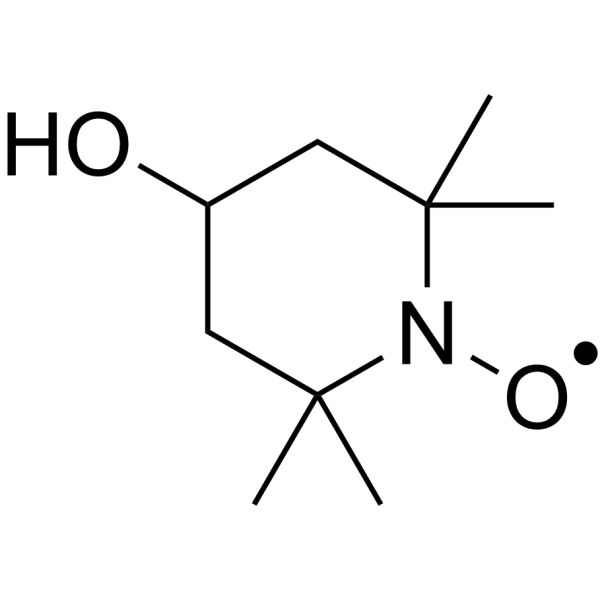
HY-100561
TempolSOD Mimetic Agent -

HY-W002004
4-Amino-TEMPOSpin Label -
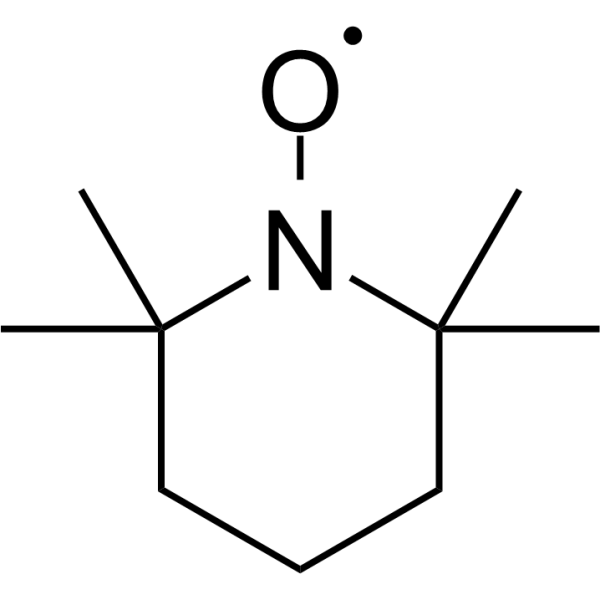
HY-W001187
TempoNitroxide Radical -
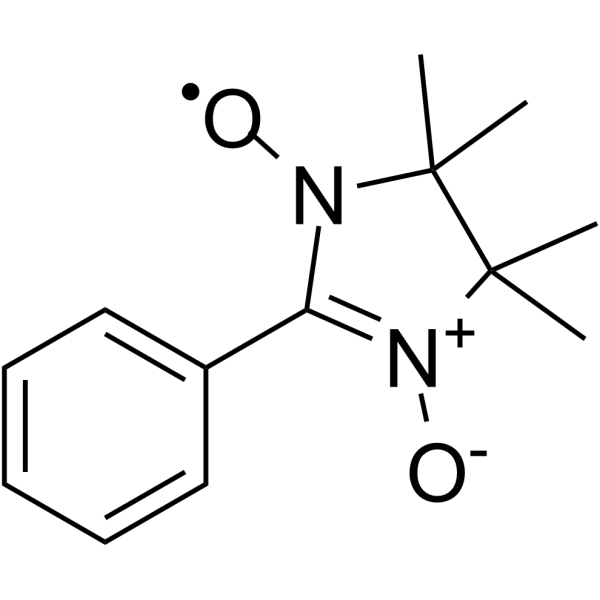
HY-131898
PTIONO Scavenger -

HY-100561R
Tempol (Standard)SOD Mimetic Agent -
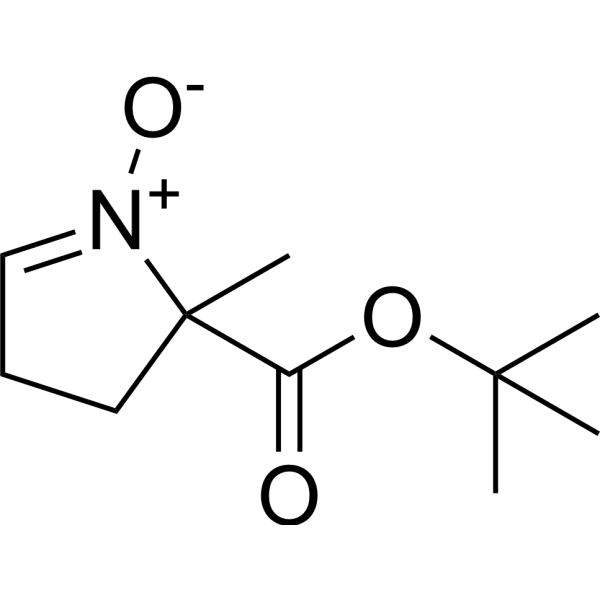
HY-121137
BMPOSpin Trap -
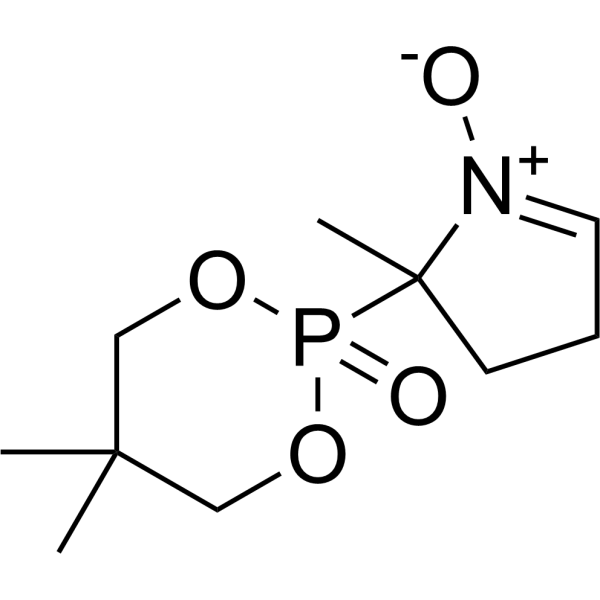
HY-135152
CYPMPOSpin-trapping Reagent -

HY-131898R
PTIO (Standard)NO Scavenger -
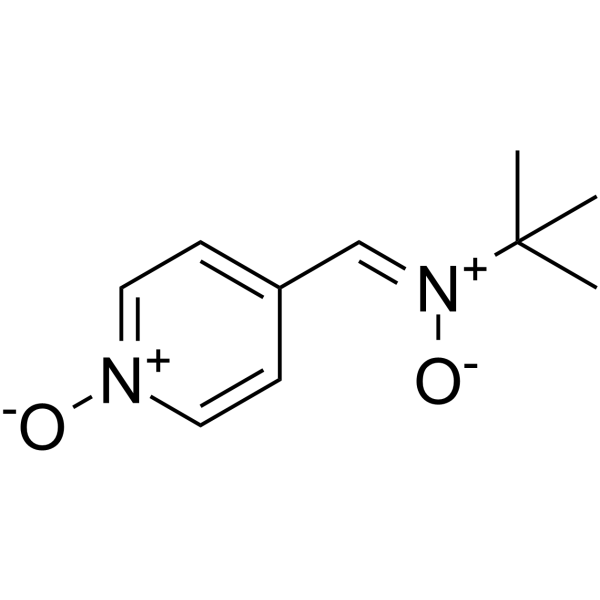
HY-114713
POBNSpin Trap -
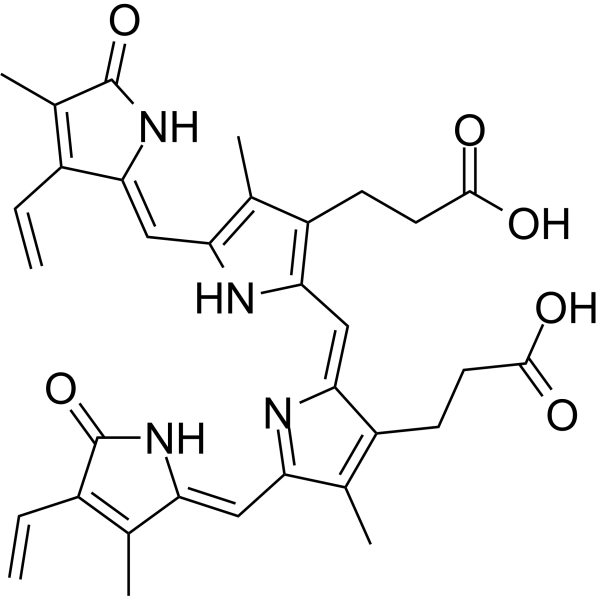
HY-135005A
BiliverdinBile Pigment -
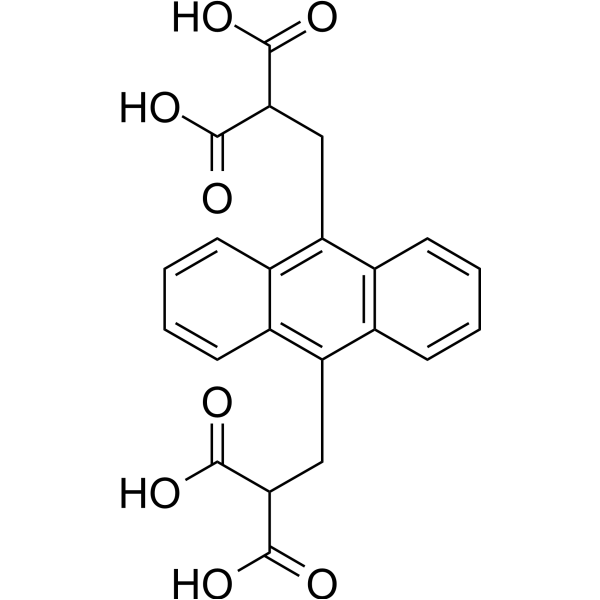
HY-D0034
9,10-Anthracenediyl-bis(methylene)dimalonic acidSinglet Oxygen Indicator -

HY-121641
NitrosobenzeneFree Radical Scavenger


Biological Activity
Description
Cellular Effect
|
Cell Line

|
Type | Value | Description | References |
|---|---|---|---|---|
| L5178Y | IC20 |
1.553 mM
|
Cytotoxicity against mouse L5178Y/Tk+/- -3.7.2C lymphoma cells assessed as reduction in cell viability incubated for 4 hrs by MTS assay.
Cytotoxicity against mouse L5178Y/Tk+/- -3.7.2C lymphoma cells assessed as reduction in cell viability incubated for 4 hrs by MTS assay.
|
29385624 |
| L5178Y | IC20 |
1.950 mM
|
Cytotoxicity against mouse L5178Y/Tk+/- -3.7.2C lymphoma cells assessed as reduction in cell viability incubated for 4 hrs by CellTiter-Blue assay.
Cytotoxicity against mouse L5178Y/Tk+/- -3.7.2C lymphoma cells assessed as reduction in cell viability incubated for 4 hrs by CellTiter-Blue assay.
|
29385624 |
| L5178Y | IC20 |
1.730 mM
|
Cytotoxicity against mouse L5178Y/Tk+/- -3.7.2C lymphoma cells assessed as reduction in cellular ATP incubated for 4 hrs by luminescence assay.
Cytotoxicity against mouse L5178Y/Tk+/- -3.7.2C lymphoma cells assessed as reduction in cellular ATP incubated for 4 hrs by luminescence assay.
|
29385624 |
In Vitro
Tempone (0.5-10 mM; 4 h) exhibited concentration-dependent cytotoxicity in L5178Y mouse lymphoma cells, with similar sensitivity in MTS, CellTiter-Blue, and ATP assays, and IC20 values of 1.553 mM, 1.950 mM, and 1.730 mM, respectively[1].
Tempone (4 h) induced concentration-dependent DNA damage in L5178Y mouse lymphoma cells in the alkaline comet assay, with significant damage beginning at 3 mM and a maximum tail DNA content of 14%[1].
Tempone (4-24 h) showed a clastogenic mode of action in TK6 human lymphoblastoid cells[1].
Tempone (11 days) induced Tk mutants in L5178Y mouse lymphoma cells, and these mutants predominantly showed loss of heterozygosity at the Tk and D11Mit42 loci, indicating that the extent of chromosomal damage was less than 31 Mbp[1].
Tempone was the most mutagenic nitroxide radical in the MLA with and without S9 (BMDL10 of 0.058 and 0.661, respectively), and ranked second for DNA damage in the Comet assay (BMDL10 of 1.114)[1].
Tempone (0.01-10 mM; 10 min) reduces H2O2-mediated cell injury in primary cultures of rat renal proximal tubular cells, with significant protection observed at 3 and 10 mM[7].
MedChemExpress (MCE) has not independently confirmed the accuracy of these methods. They are for reference only.
-
Cell Line:Primary cultures of rat renal proximal tubular (PT) cells
-
Concentration:0.01, 0.03, 0.1, 0.3, 1, 3, 10 mM (TEMPONE preincubation); 1 mM (H2O2); 0.2 mg/mL (MTT)
-
Incubation Time:10 min (TEMPONE); 3 h (H2O2); 1 h (MTT)
-
Result:Reduced H2O2-mediated attenuation of mitochondrial respiration concentration-dependently.
Showed significant protection at 3 mM and 10 mM.
In Vivo
Tempone (30-100 mg/kg bolus; 30 mg/kg/h infusion; i.v.; 45 min ischemia and 6 h reperfusion) attenuates renal I/R-induced renal dysfunction and injury in rats without significantly altering MABP[7].
MedChemExpress (MCE) has not independently confirmed the accuracy of these methods. They are for reference only.
-
Animal Model:Sprague-Dawley rats (male, 200-225 g, T10 contusion spinal cord injury)[2]
-
Dosage:0.05, 0.5, and 1.0 mg/kg
-
Administration:i.t.; single injection; 50 μL at L3-L4 in 10% DMSO/0.9% saline, pH 7.2-7.4
-
Result:Increased paw withdrawal thresholds in the forelimb at 1.0 mg/kg at 30 minutes (13.56 g) and 60 minutes (10.26 g).
Increased paw withdrawal thresholds in the hindlimb at 1.0 mg/kg at 30 minutes (18.15 g), 60 minutes (17.05 g), and 120 minutes (15.07 g).
-
Animal Model:Wistar (Male, 210-390 g)[7]
-
Dosage:30 mg/kg or 100 mg/kg (bolus); 30 mg/kg/h (infusion)
-
Administration:i.v. (bolus); i.v. (continuous infusion); 45 min ischemia and 6 h reperfusion
-
Result:Produced a significantly greater volume of urine compared to Sham+SAL at 100 mg/kg bolus + 30 mg/kg/h infusion.
Produced dose-dependent and significant attenuation of increased serum urea and creatinine levels.
Produced a significantly higher creatinine clearance (C_CL) compared to I/R+SAL at 100 mg/kg bolus + 30 mg/kg/h infusion.
Produced a dose-dependent and significant attenuation of the increase in fractional excretion of Na+ (FE_Na).
Reduced the rise in urinary NAG levels at 100 mg/kg bolus + 30 mg/kg/h infusion.
Produced a dose-dependent and significant attenuation of the increase in serum levels of AST.
Significantly reduced the histological score at 100 mg/kg bolus + 30 mg/kg/h infusion.
Markedly reduced histological features of renal injury, including loss of tubular cells, at 100 mg/kg bolus + 30 mg/kg/h infusion.
Resulted in markedly reduced immunohistochemical staining for nitrotyrosine and PAR in renal sections at 100 mg/kg bolus + 30 mg/kg/h infusion.


Chemical Information
-
CAS No. 2896-70-0
-
Appearance Solid
-
Molecular Weight 170.23
-
Formula C9H16NO2*
-
Color Yellow to orange
-
SMILES
[O]N1C(C)(C)CC(CC1(C)C)=O
-
Synonyms
4-Oxo-Tempo
-
Shipping
Room temperature in continental US; may vary elsewhere.
-
Storage
Powder -20°C 3 years 4°C 2 years In solvent -80°C 6 months -20°C 1 month


Solvent & Solubility
In Vitro:
DMSO : 100 mg/mL (587.44 mM; ultrasonic and warming and heat to 60°C; Hygroscopic DMSO has a significant impact on the solubility of product, please use newly opened DMSO)
Please refer to the solubility information to select the appropriate solvent. Once prepared, please aliquot and store the solution to prevent product inactivation from repeated freeze-thaw cycles.
Storage method and period of stock solution: -80°C, 6 months; -20°C, 1 month. When stored at -80°C, please use it within 6 months. When stored at -20°C, please use it within 1 month.
Please refer to the solubility information to select the appropriate solvent. Once prepared, please aliquot and store the solution to prevent product inactivation from repeated freeze-thaw cycles.
Storage method and period of stock solution: -80°C, 6 months; -20°C, 1 month. When stored at -80°C, please use it within 6 months. When stored at -20°C, please use it within 1 month.
Concentration (start) × Volume (start) = Concentration (final) × Volume (final)


Purity & Documentation
-
Data Sheet (290 KB)
-
SDS (623 KB)
- English - EN (623 KB)
- Français - FR (623 KB)
- Deutsch - DE (623 KB)
- Norwegian - NO (623 KB)
- Español - ES (623 KB)
- Swedish - SV (623 KB)
- Italian - IT (623 KB)
- Korean - KR (623 KB)
- Portuguese - PT (623 KB)
-
Handling Instructions (2659 KB)
References
[1]. Guo X, et al. Comparative Genotoxicity of TEMPO and 3 of Its Derivatives in Mouse Lymphoma Cells. Toxicological sciences : an official journal of the Society of Toxicology. 2018 May 01;163(1):214-225. [Content Brief]
[7]. Patel NS, et al. TEMPONE reduces renal dysfunction and injury mediated by oxidative stress of the rat kidney. Free radical biology & medicine. 2002 Dec 01;33(11):1575-89. [Content Brief]


Complete Stock Solution Preparation Table
Please refer to the solubility information to select the appropriate solvent. Once prepared, please aliquot and store the solution to prevent product inactivation from repeated freeze-thaw cycles.
Storage method and period of stock solution: -80°C, 6 months; -20°C, 1 month. When stored at -80°C, please use it within 6 months. When stored at -20°C, please use it within 1 month.
| Optional Solvent | Concentration Solvent Mass | 1 mg | 5 mg | 10 mg | 25 mg |
|---|---|---|---|---|---|
| DMSO | 1 mM | 5.8744 mL | 29.3720 mL | 58.7441 mL | 146.8601 mL |
| 5 mM | 1.1749 mL | 5.8744 mL | 11.7488 mL | 29.3720 mL | |
| 10 mM | 0.5874 mL | 2.9372 mL | 5.8744 mL | 14.6860 mL | |
| 15 mM | 0.3916 mL | 1.9581 mL | 3.9163 mL | 9.7907 mL | |
| 20 mM | 0.2937 mL | 1.4686 mL | 2.9372 mL | 7.3430 mL | |
| 25 mM | 0.2350 mL | 1.1749 mL | 2.3498 mL | 5.8744 mL | |
| 30 mM | 0.1958 mL | 0.9791 mL | 1.9581 mL | 4.8953 mL | |
| 40 mM | 0.1469 mL | 0.7343 mL | 1.4686 mL | 3.6715 mL | |
| 50 mM | 0.1175 mL | 0.5874 mL | 1.1749 mL | 2.9372 mL | |
| 60 mM | 0.0979 mL | 0.4895 mL | 0.9791 mL | 2.4477 mL | |
| 80 mM | 0.0734 mL | 0.3672 mL | 0.7343 mL | 1.8358 mL | |
| 100 mM | 0.0587 mL | 0.2937 mL | 0.5874 mL | 1.4686 mL |


Tempone Related Classifications
HY-129242 Related Classifications
 Powered by Bioz