



UTL-5g

Based on 1 Customer Validation
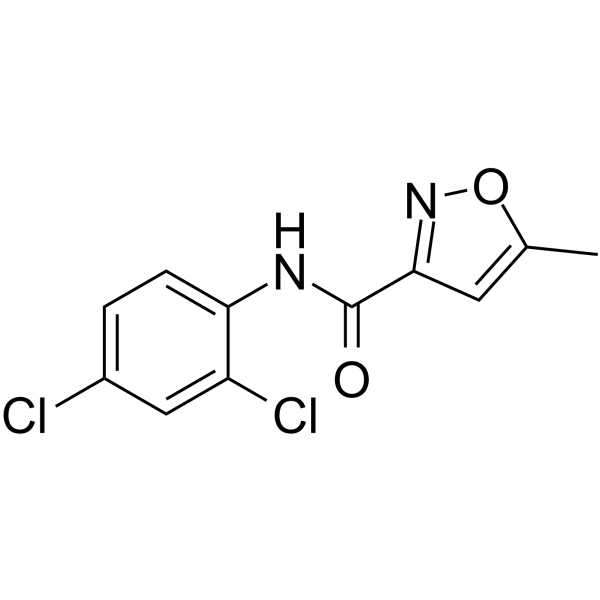
UTL-5g (GBL-5g), an anti-inflammatory TNF-α inhibitor, has chemoprotective and liver radioprotective effects. UTL-5g lowers hepatotoxicity, nephrotoxicity, and myelotoxicity induced by Cisplatin through TNF-α inhibition among other factors.
For research use only. We do not sell to patients.
- Purity : 99.92%
- CAS No.: 646530-37-2
- Formula: C11H8Cl2N2O2
- Molecular Weight:271.10
-
Storage:Powder -20°C, 3 years , 4°C, 2 years ; In solvent -80°C, 6 months , -20°C, 1 month

To place orders, for customer services and technical support, please contact: MedChemExpress USA
Tel: 609-228-6898 E-mail: [email protected] [email protected]


-
 Biological Activity
-
Chemical Information
-
Solvent & Solubility
- Protocols
- Purity & Documentation
- References
-
 Help & FAQs


-
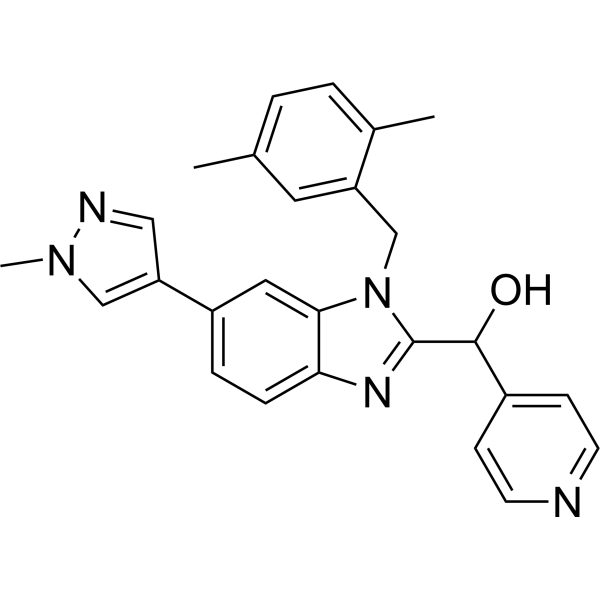
HY-133122
UCB-9260TNF Signaling Inhibitor -
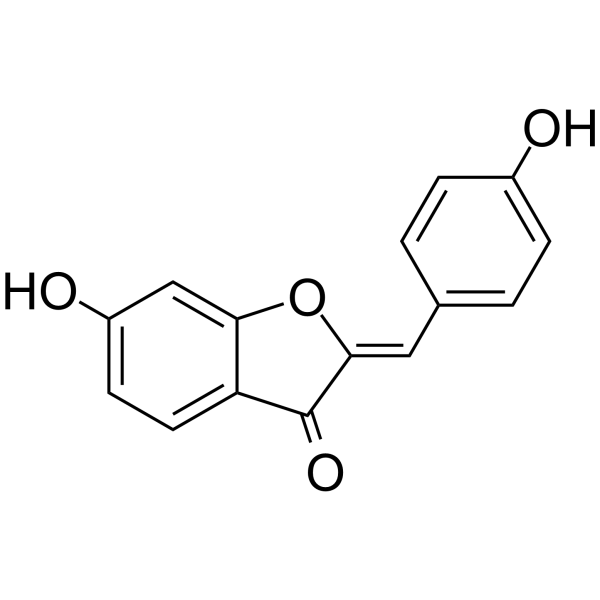
HY-102040
HispidolTNF-α Inhibitor -
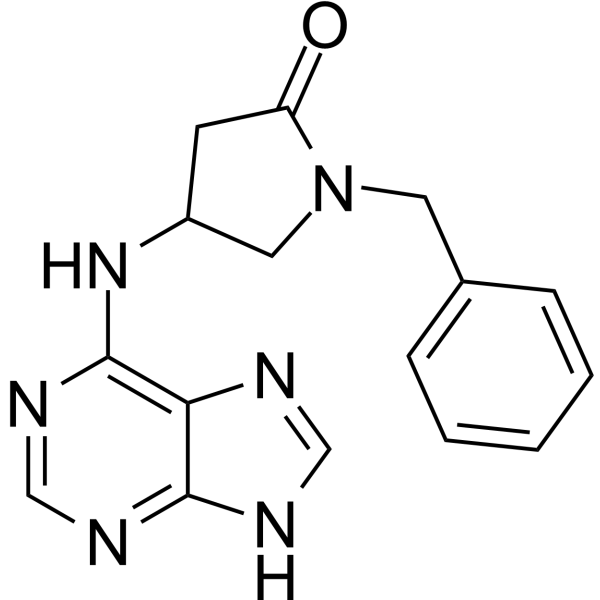
HY-133807A
(Rac)-BenpyrineTNF-α Inhibitor -
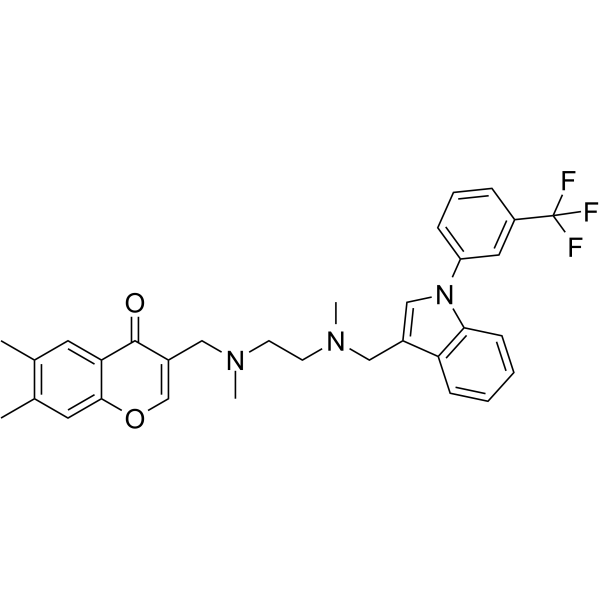
HY-111255
SPD304TNFα Inhibitor -
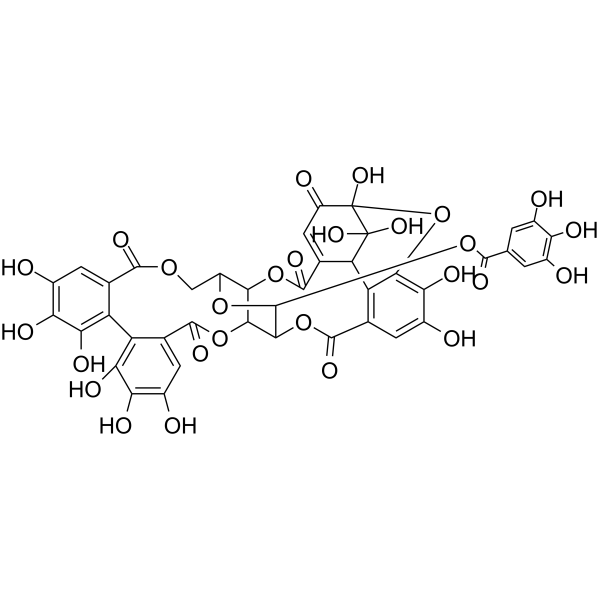
HY-N0472
GeraniinTNF Receptor Inhibitor -
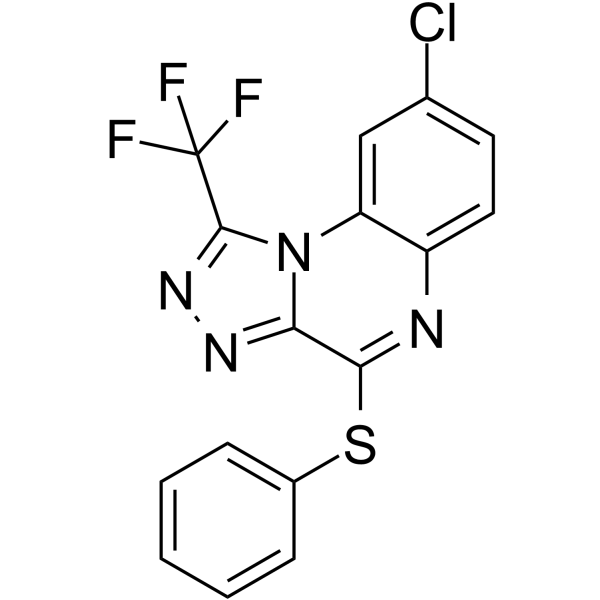
HY-110203
R-7050TNF Receptor Antagonist -
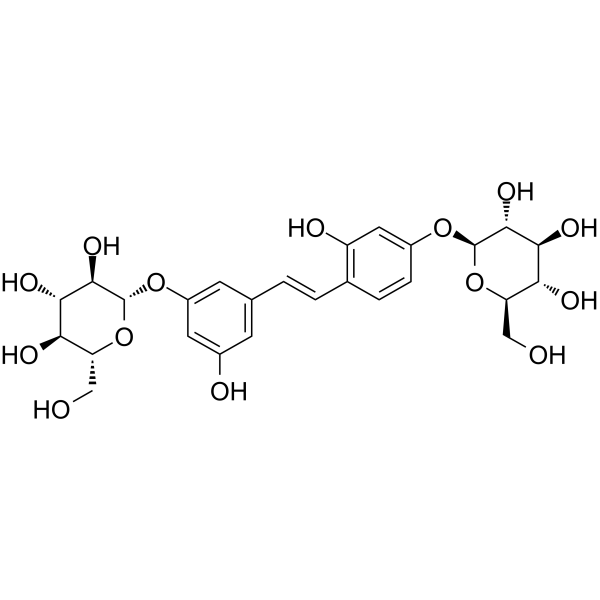
HY-N0619
Mulberroside ATyrosinase Inhibitor -
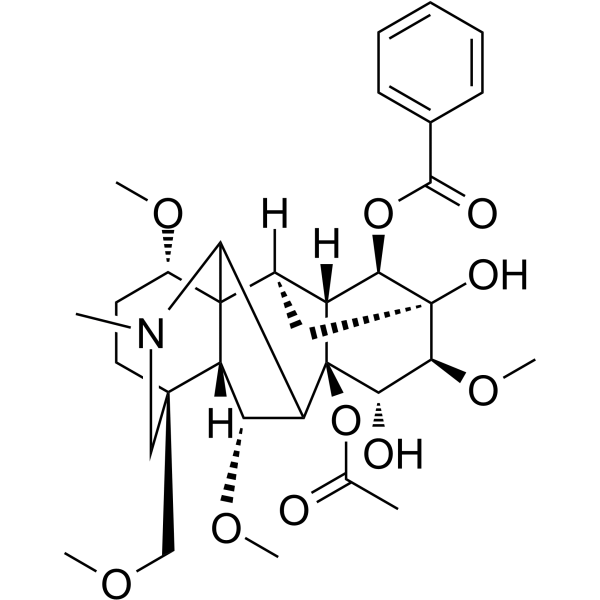
HY-N0267
HypaconitineTNF Receptor Inhibitor -

HY-P9908
AdalimumabTNF-α Inhibitor -
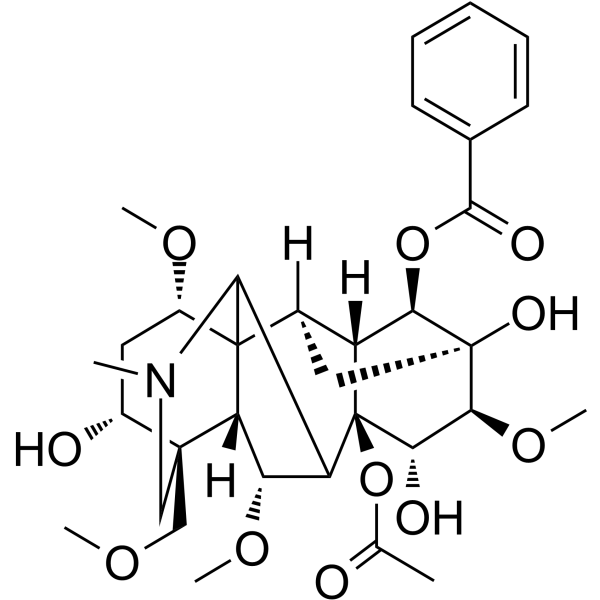
HY-N0724
MesaconitineNitric Oxide Synthase Activator -

HY-102040R
Hispidol (Standard)TNF-α Inhibitor -
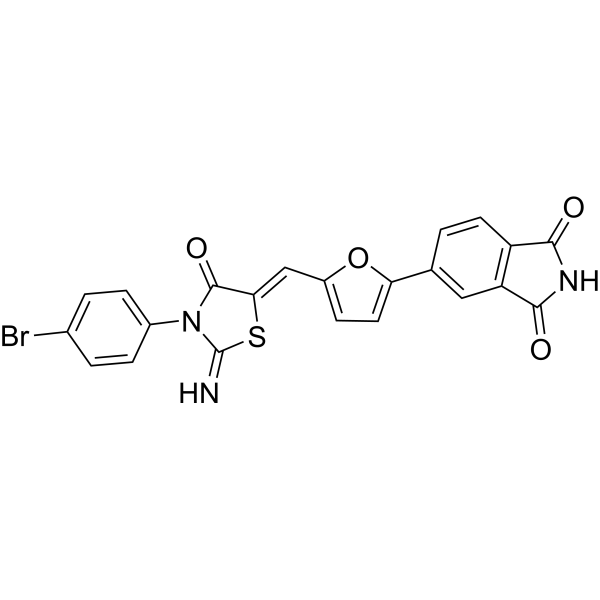
HY-18377
BioymifiDR5 Activator


Biological Activity
Description
In Vitro
RAW 264.7 macrophages are transfected with the respective reporter assay plasmids, pretreated with UTL-5g at 1, 10 or 50 μM for 60 min and then challenged with 100 ng/ml LPS. After a 16 h incubation, transcription factor activity is measured. Transcription factors that shows a UTL-5g dose-dependent decrease in activity in two experiments are categorized as being disrupted by UTL-5g.
MedChemExpress (MCE) has not independently confirmed the accuracy of these methods. They are for reference only. Further protocols information, click here.
In Vivo
UTL-5g (60 mg/kg; p.o.; daily for 4 days) shows positive effects in increasing the survival rates and extending the survival times[3].
MedChemExpress (MCE) has not independently confirmed the accuracy of these methods. They are for reference only.
-
Animal Model:C57BL/6, male mice (8-10 weeks)[1]
-
Dosage:15, 30, and 60 mg/kg
-
Administration:I.p.; before irradiation, daily x 5
-
Result:Blood levels of TGF-β were lowered.
-
Animal Model:BDF1 female mice[3]
-
Dosage:P.o.; daily for 4 days
-
Administration:60 mg/kg (30 min before i.p. injection of Cisplatin at 10, 15, and 20 mg/kg respectively on Day 0)
-
Result:Increased the survival rate and delayed the time to death for mice treated with 150% of the maximum tolerated dose (MTD) of Cisplatin (15 mg/kg). At 200% of the MTD of Cisplatin (20 mg/kg), treatment of UTL-5g increased the survival rate and delayed the time to death.


Chemical Information
-
CAS No. 646530-37-2
-
Appearance Solid
-
Molecular Weight 271.10
-
Formula C11H8Cl2N2O2
-
Color White to off-white
-
SMILES
O=C(C1=NOC(C)=C1)NC2=CC=C(Cl)C=C2Cl
-
Synonyms
GBL-5g
-
Shipping
Room temperature in continental US; may vary elsewhere.
-
Storage
Powder -20°C 3 years 4°C 2 years In solvent -80°C 6 months -20°C 1 month


Solvent & Solubility
In Vitro:
DMSO : 100 mg/mL (368.87 mM; Need ultrasonic; Hygroscopic DMSO has a significant impact on the solubility of product, please use newly opened DMSO)
Please refer to the solubility information to select the appropriate solvent. Once prepared, please aliquot and store the solution to prevent product inactivation from repeated freeze-thaw cycles.
Storage method and period of stock solution: -80°C, 6 months; -20°C, 1 month. When stored at -80°C, please use it within 6 months. When stored at -20°C, please use it within 1 month.
Please refer to the solubility information to select the appropriate solvent. Once prepared, please aliquot and store the solution to prevent product inactivation from repeated freeze-thaw cycles.
Storage method and period of stock solution: -80°C, 6 months; -20°C, 1 month. When stored at -80°C, please use it within 6 months. When stored at -20°C, please use it within 1 month.
Concentration (start) × Volume (start) = Concentration (final) × Volume (final)
In Vivo:
Select the appropriate dissolution method based on your experimental animal and administration route.
- For the following dissolution methods, please ensure to first prepare a clear stock solution using an In Vitro approach and then sequentially add co-solvents:
- To ensure reliable experimental results, the clarified stock solution can be appropriately stored based on storage conditions. As for the working solution for In Vivo experiments, it is recommended to prepare freshly and use it on the same day.
- The percentages shown for the solvents indicate their volumetric ratio in the final prepared solution. If precipitation or phase separation occurs during preparation, heat and/or sonication can be used to aid dissolution.
In Vivo Dissolution Calculator
Please enter the basic information of animal experiments:
-
-
-
-
Recommended: Prepare an additional quantity of animals to account for potential losses during experiments.
Please enter your animal formula composition:
-
%DMSO +
Recommended: Keep the proportion of DMSO in working solution below 2% if your animal is weak.
-
%+
-
+%Tween-80 + +
-
%Saline +
The co-solvents required include: DMSO, . All of co-solvents are available by MedChemExpress (MCE). , Tween 80. All of co-solvents are available by MedChemExpress (MCE).
Working solution concentration: 0.22 mg/mL
Method for preparing stock solution: mg drug dissolved in μL DMSO. Stock solution concentration: mg/mL.
1. Take μL DMSO stock solution;
2. Add μL .
μL , mix evenly;
3. Then add μL Tween 80, mix evenly;
4. Then add μL
Please ensure that the stock solution in the first step is dissolved to a clear state, and add co-solvents in sequence. You can use ultrasonic heating (ultrasonic cleaner, recommended frequency 20-40 kHz), vortexing, etc. to assist dissolution.

Protocols
-
Nephrotoxicity Study
This protocol assesses nephrotoxicity by combining functional kidney injury readouts, urinary/tissue injury biomarkers, and renal histopathology. Serum creatinine and BUN reflect impaired kidney function, while KIM-1, NGAL, clusterin, osteopontin, IL-18, cystatin C, nephrin, Oat5, urinary protein, glucose, and alkaline phosphatase have been used to detect tubular injury in cisplatin-, gentamicin-, and acetaminophen-induced nephrotoxicity models.
-
Research Protocol for Inflammation-related Diseases
The NLRP3 inflammasome is a cytosolic innate immune signaling platform that integrates priming signals and danger-signal activation to promote caspase-1 activation, maturation of IL-1β and IL-18, and gasdermin D-mediated pyroptotic cell death. The core experimental logic is to determine whether inflammatory disease phenotypes are driven by increased NLRP3 expression, ASC-containing inflammasome assembly, caspase-1 cleavage, GSDMD cleavage, and extracellular release of IL-1β/IL-18 rather than by nonspecific cell injury alone. The pathway is strongly linked to inflammation-related disease phenotypes because monosodium urate crystals activate NALP3/NLRP3 inflammasome signaling in gout-like crystal inflammation, cholesterol crystals activate NLRP3 inflammasomes in atherogenesis models, and DSS-induced intestinal inflammation has been reported to involve NLRP3 inflammasome activity. However, experimental colitis studies also show context-dependent protective effects of NLRP3 inflammasome co
-
Hepatotoxicity Study
This protocol evaluates hepatotoxicity using complementary in vivo mouse APAP acute liver injury and in vitro hepatocyte-based cytotoxicity readouts. In vivo APAP injury is assessed by serum ALT/AST, liver histology, hepatic glutathione, protein adducts, necrosis, inflammation, and regeneration-related endpoints. In vitro hepatotoxicity is assessed by loss of viability, leakage of ALT/AST/LDH, oxidative-stress markers, mitochondrial function, nuclear morphology, intracellular calcium, and high-content imaging endpoints.


Purity & Documentation
-
Data Sheet (275 KB)
-
SDS (393 KB)
- English - EN (393 KB)
- Français - FR (393 KB)
- Deutsch - DE (393 KB)
- Norwegian - NO (393 KB)
- Español - ES (393 KB)
- Swedish - SV (393 KB)
- Italian - IT (393 KB)
- Korean - KR (393 KB)
- Portuguese - PT (393 KB)
-
Handling Instructions (2659 KB)
References
[1]. Stephen Brown, et al. UTL-5g Lowers Levels of TGF-β and TNF-α Elevated by Lung Irradiation
[2]. Carruthers NJ, et al. Phosphoproteome and transcription factor activity profiling identify actions of the anti-inflammatory agent UTL-5g in LPS stimulated RAW 264.7 cells including disrupting actin remodeling and STAT-3 activation. Eur J Pharmacol. 2017;811:66-73. [Content Brief]
[3]. Shaw J, et al. The small-molecule TNF-α inhibitor, UTL-5g, delays deaths and increases survival rates for mice treated with high doses of cisplatin. Cancer Chemother Pharmacol. 2013;72(3):703-707. [Content Brief]


Complete Stock Solution Preparation Table
Please refer to the solubility information to select the appropriate solvent. Once prepared, please aliquot and store the solution to prevent product inactivation from repeated freeze-thaw cycles.
Storage method and period of stock solution: -80°C, 6 months; -20°C, 1 month. When stored at -80°C, please use it within 6 months. When stored at -20°C, please use it within 1 month.
| Optional Solvent | Concentration Solvent Mass | 1 mg | 5 mg | 10 mg | 25 mg |
|---|---|---|---|---|---|
| DMSO | 1 mM | 3.6887 mL | 18.4434 mL | 36.8868 mL | 92.2169 mL |
| 5 mM | 0.7377 mL | 3.6887 mL | 7.3774 mL | 18.4434 mL | |
| 10 mM | 0.3689 mL | 1.8443 mL | 3.6887 mL | 9.2217 mL | |
| 15 mM | 0.2459 mL | 1.2296 mL | 2.4591 mL | 6.1478 mL | |
| 20 mM | 0.1844 mL | 0.9222 mL | 1.8443 mL | 4.6108 mL | |
| 25 mM | 0.1475 mL | 0.7377 mL | 1.4755 mL | 3.6887 mL | |
| 30 mM | 0.1230 mL | 0.6148 mL | 1.2296 mL | 3.0739 mL | |
| 40 mM | 0.0922 mL | 0.4611 mL | 0.9222 mL | 2.3054 mL | |
| 50 mM | 0.0738 mL | 0.3689 mL | 0.7377 mL | 1.8443 mL | |
| 60 mM | 0.0615 mL | 0.3074 mL | 0.6148 mL | 1.5369 mL | |
| 80 mM | 0.0461 mL | 0.2305 mL | 0.4611 mL | 1.1527 mL | |
| 100 mM | 0.0369 mL | 0.1844 mL | 0.3689 mL | 0.9222 mL |


UTL-5g Related Classifications
HY-117082 Related Classifications
 Powered by Bioz