



WAY-169916

Based on 1 Customer Validation
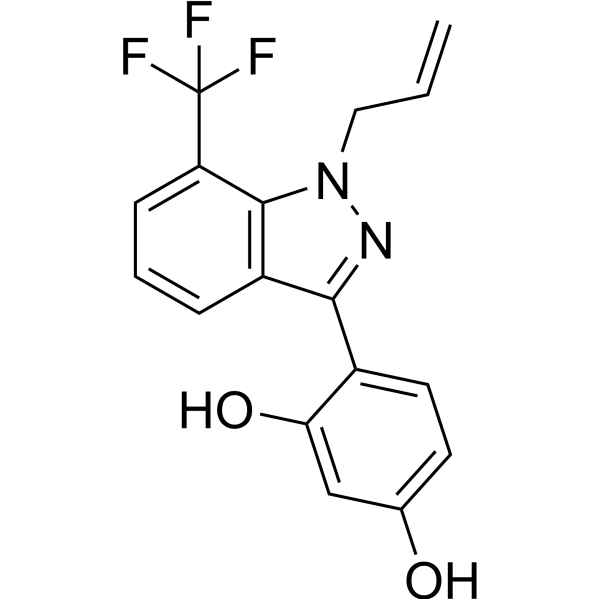
WAY-169916 is a pathway-selective ligand of ER (estrogen receptor) that acts by inhibiting NF-kB transcriptional activity. WAY-169916 has potent anti-inflammatory effect.
For research use only. We do not sell to patients.
- Purity : 99.32%
- CAS No.: 669764-18-5
- Formula: C17H13F3N2O2
- Molecular Weight:334.29
-
Storage:Powder -20°C, 3 years , 4°C, 2 years ; In solvent -80°C, 6 months , -20°C, 1 month

To place orders, for customer services and technical support, please contact: MedChemExpress USA
Tel: 609-228-6898 E-mail: [email protected] [email protected]


-
 Biological Activity
-
Chemical Information
-
Solvent & Solubility
- Protocols
- Purity & Documentation
- References
-
 Help & FAQs


-
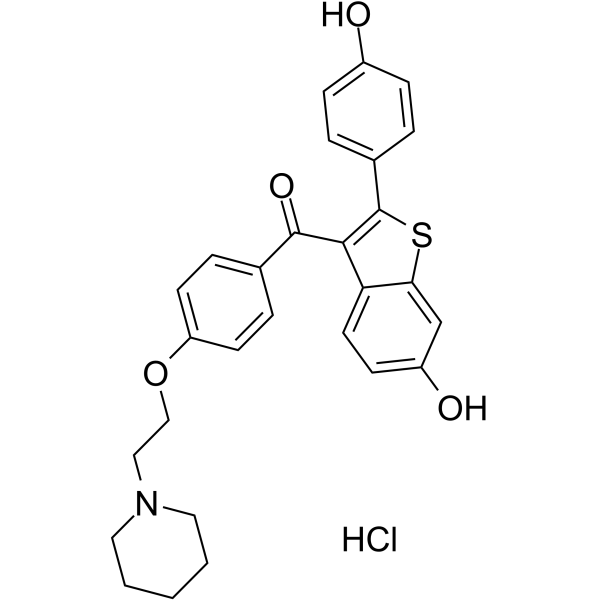
HY-13738A
Raloxifene hydrochlorideEstrogen Receptor Modulator -
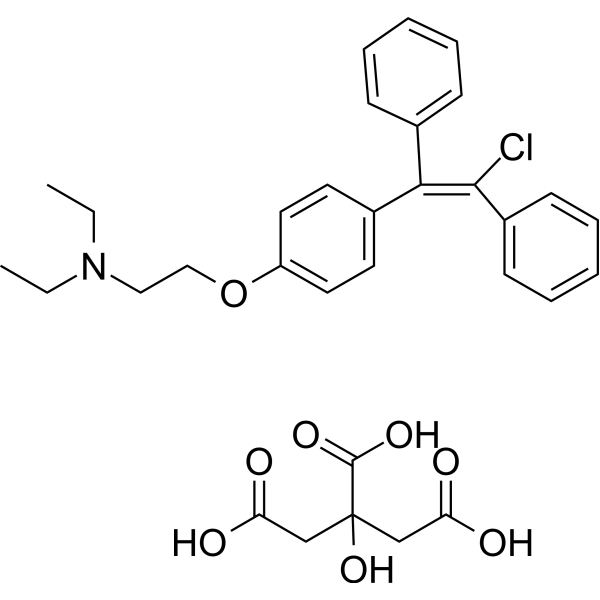
HY-B0463
Clomiphene citrateEstrogen Receptor Modulator -
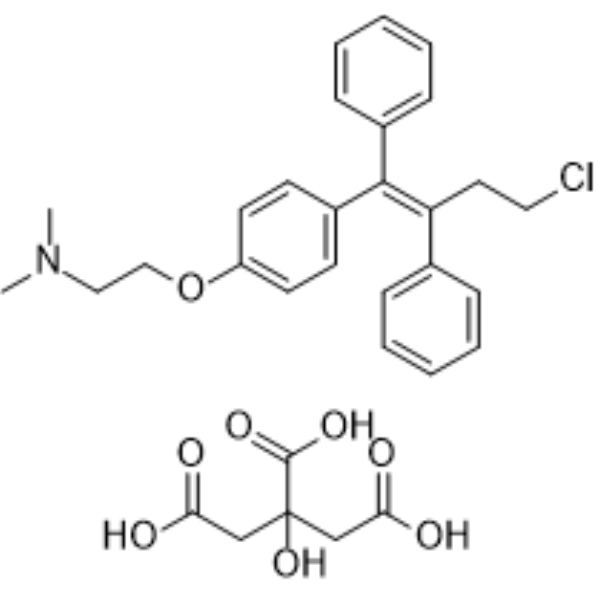
HY-B0005
Toremifene citrateApoptosis Inducer -
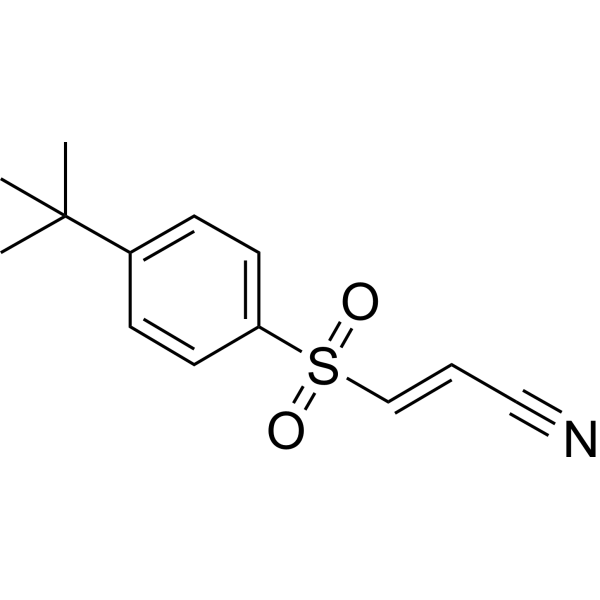
HY-10257
BAY 11-7085NF-κB Activation Inhibitor -
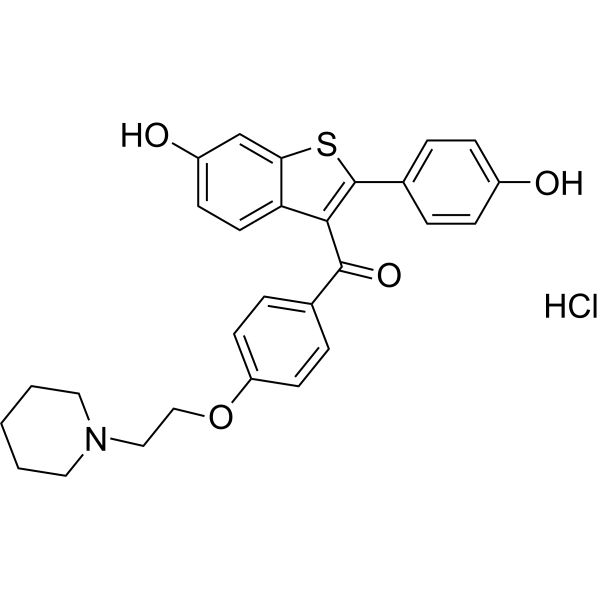
HY-13738AR
Raloxifene hydrochloride (Standard) -
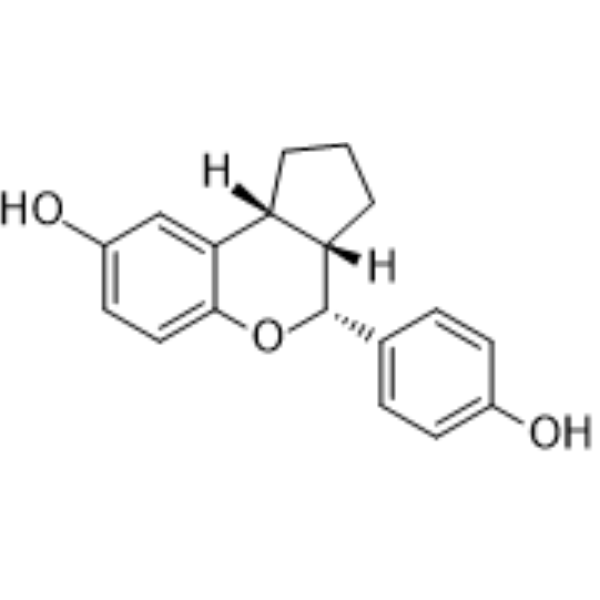
HY-18295
ErteberelEstrogen Receptor/ERR Agonist -
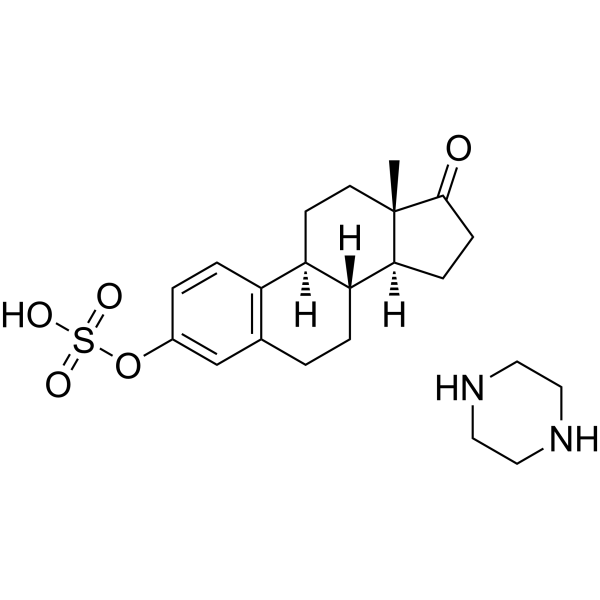
HY-B1361
EstropipateEstrogen Receptor Alpha Activator/OATP1B1 Inhibitor -
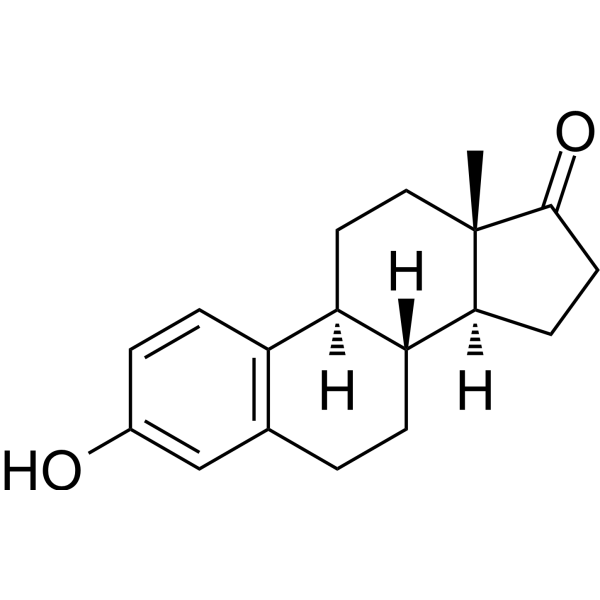
HY-B0234
EstroneEndogenous Metabolite -
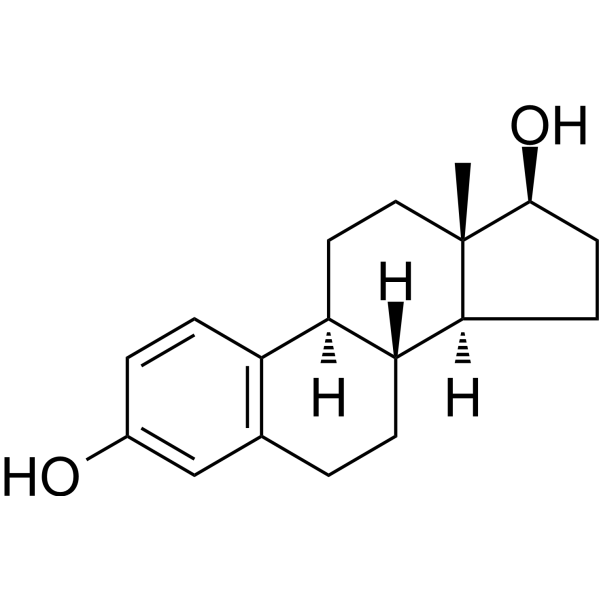
HY-B0141
EstradiolHuman Endogenous Metabolite -
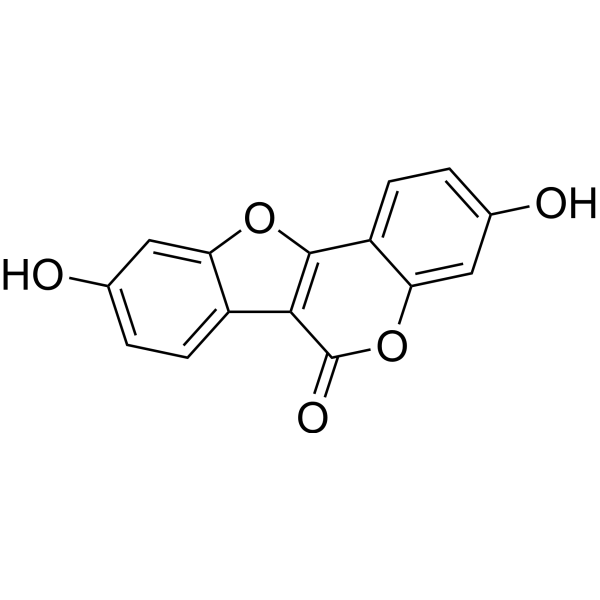
HY-N2335
CoumestrolEstrogen Receptor/ERR Inhibitor -
HY-B0234R
Estrone (Standard) -

HY-B0463R
Clomiphene citrate (Standard)Estrogen Receptor Modulator


Biological Activity
Description


Chemical Information
-
CAS No. 669764-18-5
-
Appearance Solid
-
Molecular Weight 334.29
-
Formula C17H13F3N2O2
-
Color White to off-white
-
SMILES
OC1=CC=C(C(O)=C1)C2=NN(C3=C2C=CC=C3C(F)(F)F)CC=C
-
Shipping
Room temperature in continental US; may vary elsewhere.
-
Storage
Powder -20°C 3 years 4°C 2 years In solvent -80°C 6 months -20°C 1 month


Solvent & Solubility
In Vitro:
DMSO : 125 mg/mL (373.93 mM; Need ultrasonic; Hygroscopic DMSO has a significant impact on the solubility of product, please use newly opened DMSO)
Please refer to the solubility information to select the appropriate solvent. Once prepared, please aliquot and store the solution to prevent product inactivation from repeated freeze-thaw cycles.
Storage method and period of stock solution: -80°C, 6 months; -20°C, 1 month. When stored at -80°C, please use it within 6 months. When stored at -20°C, please use it within 1 month.
Please refer to the solubility information to select the appropriate solvent. Once prepared, please aliquot and store the solution to prevent product inactivation from repeated freeze-thaw cycles.
Storage method and period of stock solution: -80°C, 6 months; -20°C, 1 month. When stored at -80°C, please use it within 6 months. When stored at -20°C, please use it within 1 month.
Concentration (start) × Volume (start) = Concentration (final) × Volume (final)

Protocols
-
Dual Luciferin reporter gene assay
Luciferin reporter gene assay is a reporting system to detect the activity of Firefly Luciferase using luciferin as a substrate, which is often used in the research of miRNA target gene verification and promoter transcriptive activity regulation. Dual luciferase usually refers to Firefly luciferase and Renilla luciferase.
-
Research Protocol for Endocrine Diseases
Endocrine diseases often arise from disrupted hormone production, hormone signaling, or target-tissue responsiveness; for diabetes-focused endocrine disease models, insulin signaling regulates glucose uptake, hepatic glucose output, lipid metabolism, and β-cell compensation. Type 2 diabetes develops through interacting defects in insulin resistance, β-cell dysfunction, adipose inflammation, hepatic glucose overproduction, altered incretin signaling, and ectopic lipid metabolism. A major unresolved question is whether endocrine dysfunction is driven primarily by target-tissue insulin resistance, intrinsic β-cell failure, immune/inflammatory stress, or combined multi-organ failure that differs by disease stage.
-
Research Protocol for Inflammation-related Diseases
The NLRP3 inflammasome is a cytosolic innate immune signaling platform that integrates priming signals and danger-signal activation to promote caspase-1 activation, maturation of IL-1β and IL-18, and gasdermin D-mediated pyroptotic cell death. The core experimental logic is to determine whether inflammatory disease phenotypes are driven by increased NLRP3 expression, ASC-containing inflammasome assembly, caspase-1 cleavage, GSDMD cleavage, and extracellular release of IL-1β/IL-18 rather than by nonspecific cell injury alone. The pathway is strongly linked to inflammation-related disease phenotypes because monosodium urate crystals activate NALP3/NLRP3 inflammasome signaling in gout-like crystal inflammation, cholesterol crystals activate NLRP3 inflammasomes in atherogenesis models, and DSS-induced intestinal inflammation has been reported to involve NLRP3 inflammasome activity. However, experimental colitis studies also show context-dependent protective effects of NLRP3 inflammasome co


Purity & Documentation
-
Data Sheet (272 KB)
-
SDS (251 KB)
- English - EN (251 KB)
- Français - FR (251 KB)
- Deutsch - DE (251 KB)
- Norwegian - NO (251 KB)
- Español - ES (251 KB)
- Swedish - SV (251 KB)
- Italian - IT (251 KB)
- Korean - KR (251 KB)
- Portuguese - PT (251 KB)
-
Handling Instructions (2659 KB)
References


Complete Stock Solution Preparation Table
Please refer to the solubility information to select the appropriate solvent. Once prepared, please aliquot and store the solution to prevent product inactivation from repeated freeze-thaw cycles.
Storage method and period of stock solution: -80°C, 6 months; -20°C, 1 month. When stored at -80°C, please use it within 6 months. When stored at -20°C, please use it within 1 month.
| Optional Solvent | Concentration Solvent Mass | 1 mg | 5 mg | 10 mg | 25 mg |
|---|---|---|---|---|---|
| DMSO | 1 mM | 2.9914 mL | 14.9571 mL | 29.9141 mL | 74.7854 mL |
| 5 mM | 0.5983 mL | 2.9914 mL | 5.9828 mL | 14.9571 mL | |
| 10 mM | 0.2991 mL | 1.4957 mL | 2.9914 mL | 7.4785 mL | |
| 15 mM | 0.1994 mL | 0.9971 mL | 1.9943 mL | 4.9857 mL | |
| 20 mM | 0.1496 mL | 0.7479 mL | 1.4957 mL | 3.7393 mL | |
| 25 mM | 0.1197 mL | 0.5983 mL | 1.1966 mL | 2.9914 mL | |
| 30 mM | 0.0997 mL | 0.4986 mL | 0.9971 mL | 2.4928 mL | |
| 40 mM | 0.0748 mL | 0.3739 mL | 0.7479 mL | 1.8696 mL | |
| 50 mM | 0.0598 mL | 0.2991 mL | 0.5983 mL | 1.4957 mL | |
| 60 mM | 0.0499 mL | 0.2493 mL | 0.4986 mL | 1.2464 mL | |
| 80 mM | 0.0374 mL | 0.1870 mL | 0.3739 mL | 0.9348 mL | |
| 100 mM | 0.0299 mL | 0.1496 mL | 0.2991 mL | 0.7479 mL |


WAY-169916 Related Classifications
HY-117726 Related Classifications
 Powered by Bioz