



Zharp2-1

Based on 1 Customer Validation
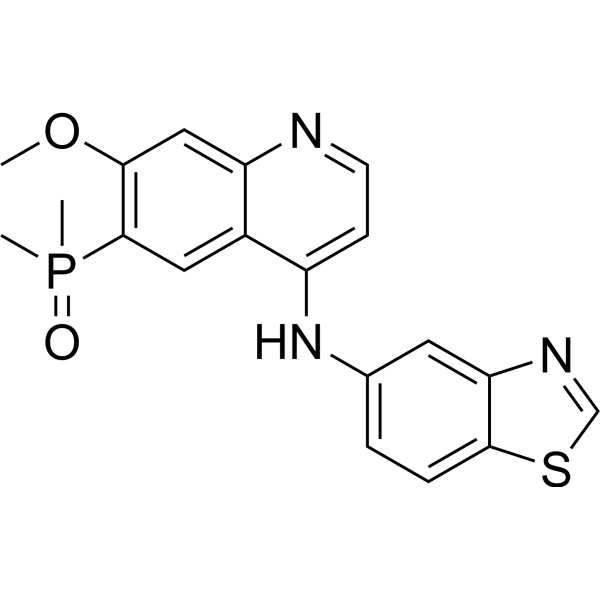
Zharp2-1 is an oral effective RIPK2 inhibitor, highly associated with inflammatory bowel disease (IBD). Zharp2-1 blocker muramyl dipeptide (MDP) induces growth of mononuclear cells and induces inflammatory cell factor infection. Zharp2-1 attenuates MDP-induced small inguinal peritonitis, or ameliorates by DNBS-induced large inguinal conjunctivitis.
For research use only. We do not sell to patients.
- Purity : 99.10%
- CAS No.: 2772600-18-5
- Formula: C19H18N3O2PS
- Molecular Weight:383.40
-
Storage:Powder -20°C, 3 years , 4°C, 2 years ; In solvent -80°C, 6 months , -20°C, 1 month

To place orders, for customer services and technical support, please contact: MedChemExpress USA
Tel: 609-228-6898 E-mail: [email protected] [email protected]


-
 Biological Activity
-
Chemical Information
-
Solvent & Solubility
- Protocols
- Purity & Documentation
- References
-
 Help & FAQs


-
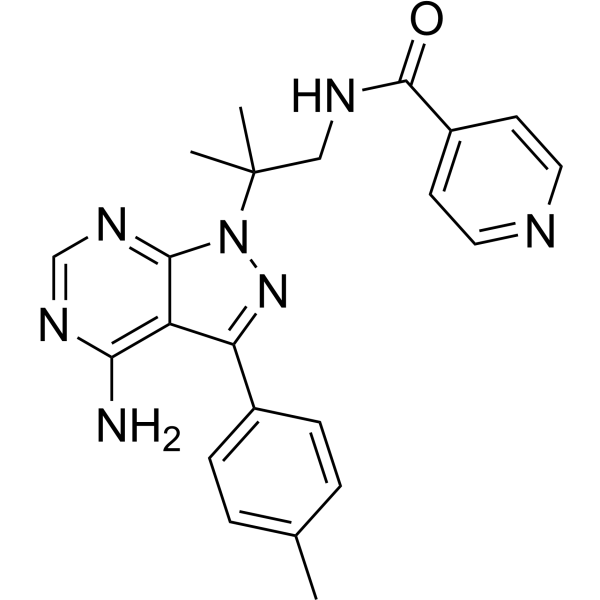
HY-18937
WEHI-345RIPK2 Inhibitor -
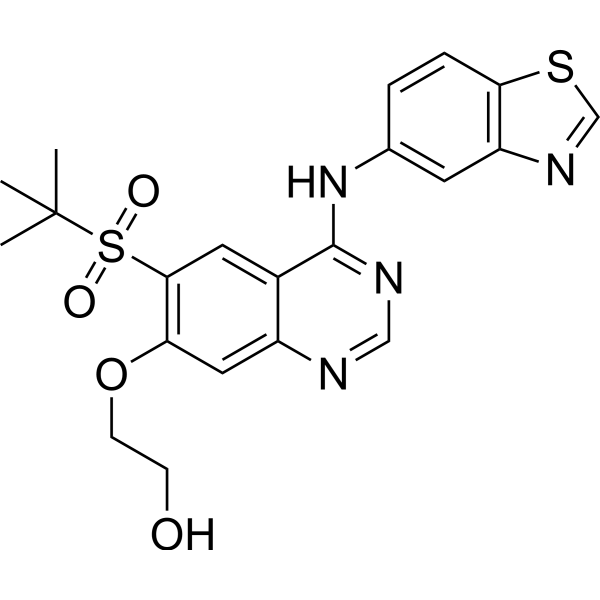
HY-19764
GSK2983559 active metaboliteRIP2 Inhibitor -
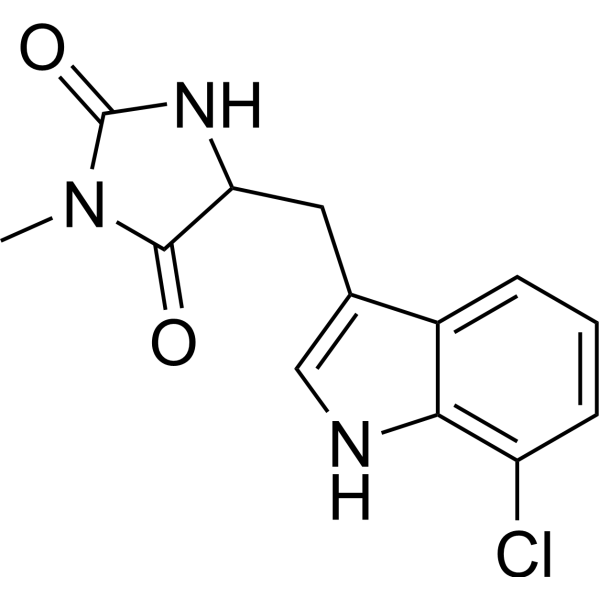
HY-14622A
Necrostatin 2 racemateRIPK1 Inhibitor -
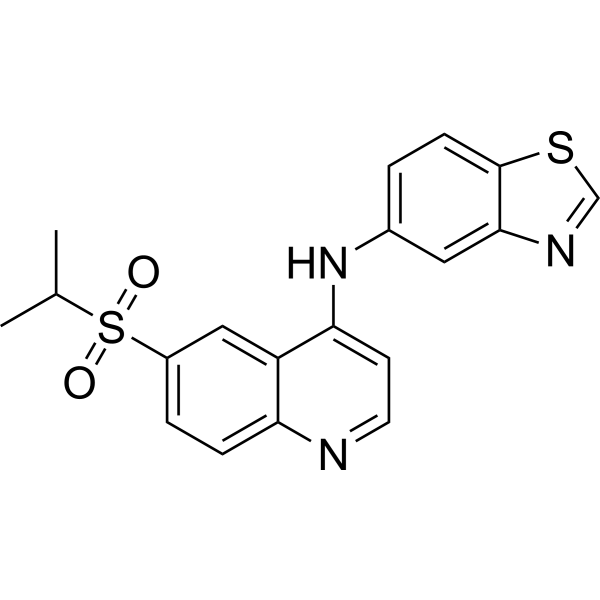
HY-101872
GSK-872RIPK3 Inhibitor -
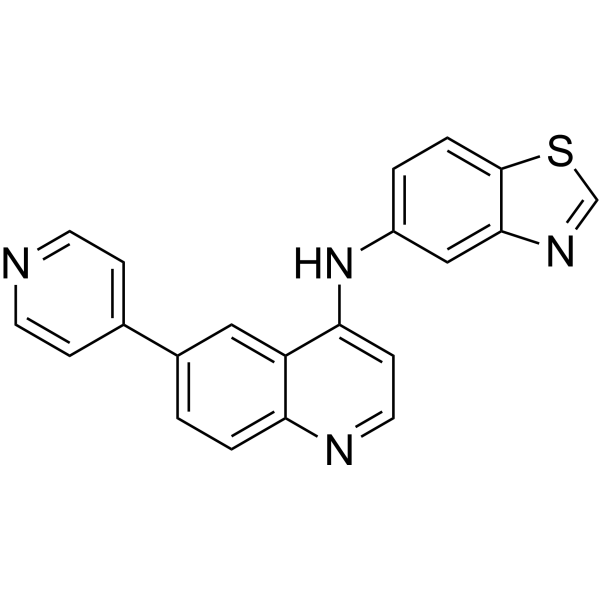
HY-157325
RIPK2-IN-5RIPK2 Inhibitor -
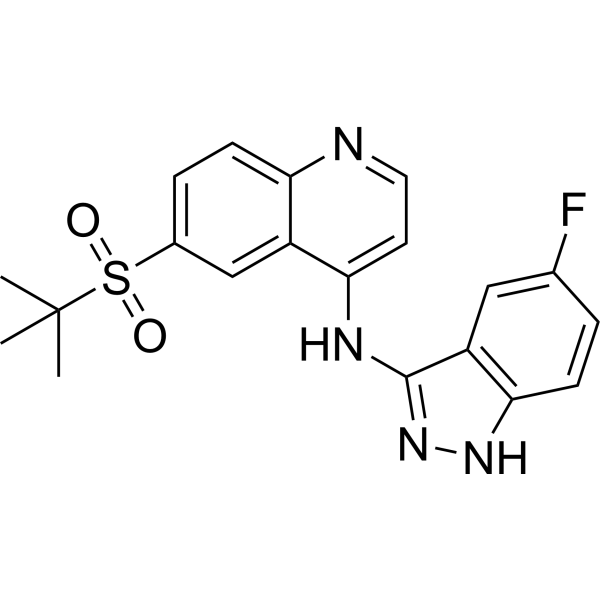
HY-100339
GSK583RIPK2 Inhibitor -
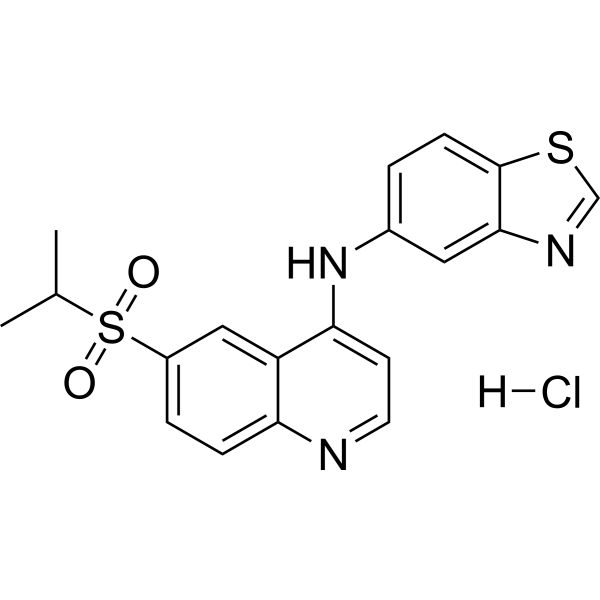
HY-101872A
GSK-872 hydrochlorideRIPK3 Inhibitor -
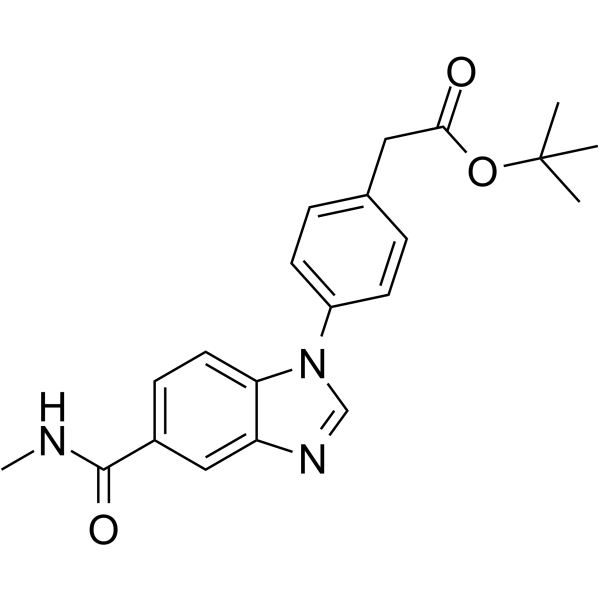
HY-104021
GSK840RIPK3 Inhibitor -
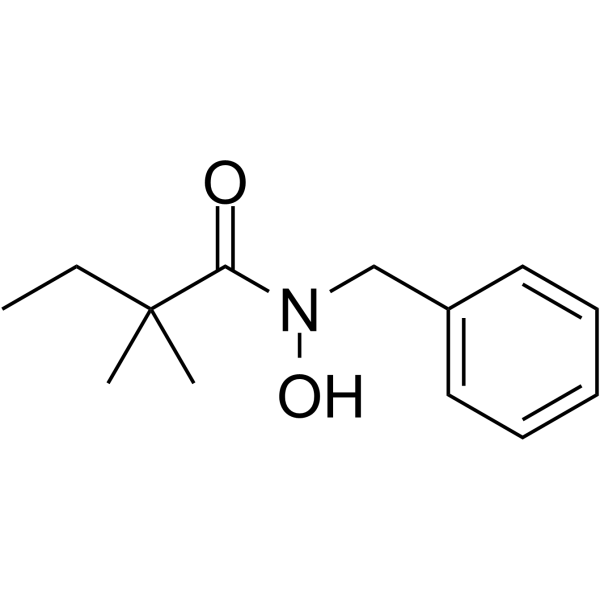
HY-101032
RIPA-56RIP1 Inhibitor -
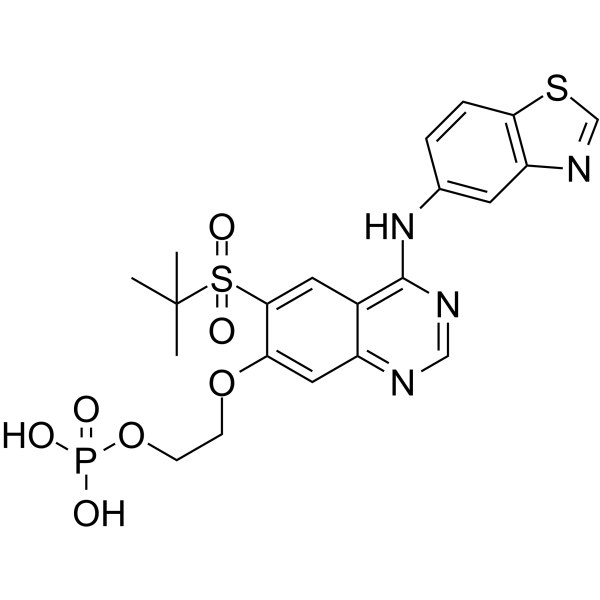
HY-112038
GSK2983559 free acidRIP2 Inhibitor -
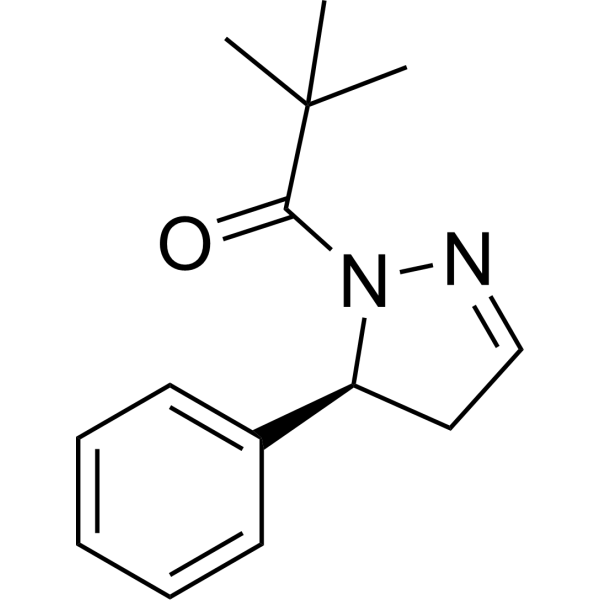
HY-103028A
GSK963RIP1 Kinase Inhibitor -
HY-107978
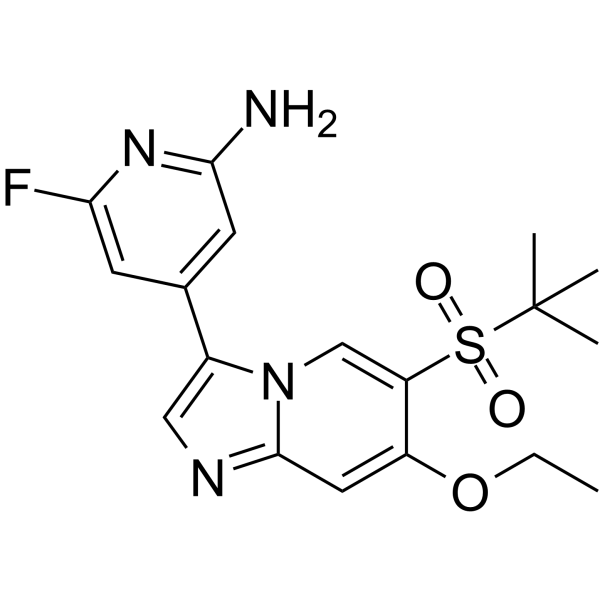
RIPK-IN-4RIPK2 Inhibitor


Biological Activity
Description
IC50 & Target
RIPK2[1]
In Vitro
Zharp2-1 pretreats THP-1 and iBMDM cells for 2 h, and inhibits the release of IL-6 and TNF-α induced by 10 μg/mL MDP or 1 μg/mL L18-MDP for 12 h[1].
Zharp2-1 significantly inhibits MDP-induced cytokine release in PBMCs, with an IC50 of 0.8 nM for IL-8, 8.7 nM for IL-6 and 11.9 nM for TNF-α[1].
MedChemExpress (MCE) has not independently confirmed the accuracy of these methods. They are for reference only.
In Vivo
Pharmacokinetic Analysis[1]
| Route | Dose (mg/kg) | T1/2 (h) | Tmax (h) | Cmax (ng·h/mL) | AUC (ng·h/mL) | Vd (L/kg) | Cl (mL/kg/min) | F (%) | |
| Mouse | iv | 2 | 1.2 | 2989 | 1.1 | 11.1 | |||
| po | 10 | 0.5 | 9610 | 19,236 | 129 | ||||
| Rat | iv | 2 | 1.7 | 7889 | 0.6 | 4.2 | |||
| po | 10 | 3.3 | 3323 | 18,803 | 48 | ||||
| Dog | iv | 1 | 2.1 | 1645 | 1.7 | 9.5 | |||
| po | 5 | 0.7 | 2192 | 10,800 | 131 |
MedChemExpress (MCE) has not independently confirmed the accuracy of these methods. They are for reference only.


Chemical Information
-
CAS No. 2772600-18-5
-
Appearance Solid
-
Molecular Weight 383.40
-
Formula C19H18N3O2PS
-
Color Light yellow to yellow
-
SMILES
O=P(C)(C1=C(OC)C=C2N=CC=C(NC3=CC=C(SC=N4)C4=C3)C2=C1)C
-
Shipping
Room temperature in continental US; may vary elsewhere.
-
Storage
Powder -20°C 3 years 4°C 2 years In solvent -80°C 6 months -20°C 1 month


Solvent & Solubility
In Vitro:
DMSO : 5 mg/mL (13.04 mM; ultrasonic and warming and heat to 60°C; Hygroscopic DMSO has a significant impact on the solubility of product, please use newly opened DMSO)
Please refer to the solubility information to select the appropriate solvent. Once prepared, please aliquot and store the solution to prevent product inactivation from repeated freeze-thaw cycles.
Storage method and period of stock solution: -80°C, 6 months; -20°C, 1 month. When stored at -80°C, please use it within 6 months. When stored at -20°C, please use it within 1 month.
Please refer to the solubility information to select the appropriate solvent. Once prepared, please aliquot and store the solution to prevent product inactivation from repeated freeze-thaw cycles.
Storage method and period of stock solution: -80°C, 6 months; -20°C, 1 month. When stored at -80°C, please use it within 6 months. When stored at -20°C, please use it within 1 month.
Concentration (start) × Volume (start) = Concentration (final) × Volume (final)


Purity & Documentation
-
Data Sheet (276 KB)
-
SDS (251 KB)
- English - EN (251 KB)
- Français - FR (251 KB)
- Deutsch - DE (251 KB)
- Norwegian - NO (251 KB)
- Español - ES (251 KB)
- Swedish - SV (251 KB)
- Italian - IT (251 KB)
- Korean - KR (251 KB)
- Portuguese - PT (251 KB)
-
Handling Instructions (2659 KB)
References


Complete Stock Solution Preparation Table
Please refer to the solubility information to select the appropriate solvent. Once prepared, please aliquot and store the solution to prevent product inactivation from repeated freeze-thaw cycles.
Storage method and period of stock solution: -80°C, 6 months; -20°C, 1 month. When stored at -80°C, please use it within 6 months. When stored at -20°C, please use it within 1 month.
| Optional Solvent | Concentration Solvent Mass | 1 mg | 5 mg | 10 mg | 25 mg |
|---|---|---|---|---|---|
| DMSO | 1 mM | 2.6082 mL | 13.0412 mL | 26.0824 mL | 65.2061 mL |
| 5 mM | 0.5216 mL | 2.6082 mL | 5.2165 mL | 13.0412 mL | |
| 10 mM | 0.2608 mL | 1.3041 mL | 2.6082 mL | 6.5206 mL |


Zharp2-1 Related Classifications
HY-155782 Related Classifications
 Powered by Bioz