



2'-Deoxyguanosine monohydrate
Based on 6 publication(s) in Google Scholar
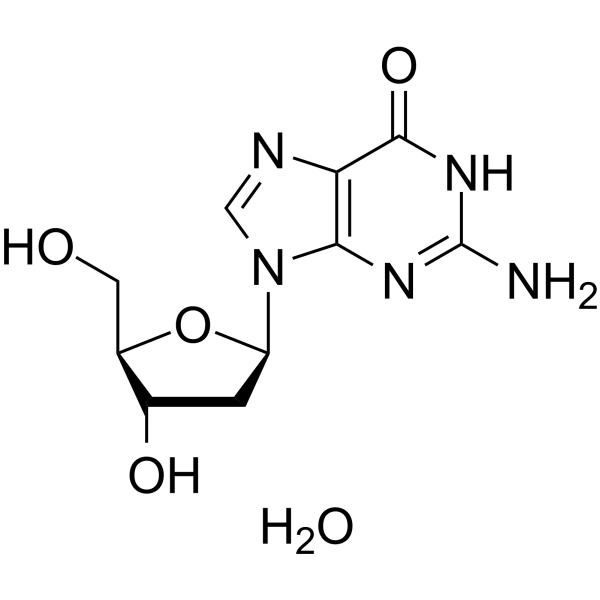
2'-Deoxyguanosine monohydrate is a nucleoside composed of guanine and 2'-deoxyribose, and it is one of the basic structural units of DNA. The oxidation products of 2'-Deoxyguanosine monohydrate may participate in DNA damage, which in turn may affect gene expression or induce cancer.
For research use only. We do not sell to patients.
- Purity : 99.70%
- CAS No.: 312693-72-4
- Formula: C10H15N5O5
- Molecular Weight:285.26
-
Storage:
4°C, sealed storage, away from moisture
* In solvent : -80°C, 6 months; -20°C, 1 month (sealed storage, away from moisture)

To place orders, for customer services and technical support, please contact: MedChemExpress USA
Tel: 609-228-6898 E-mail: [email protected] [email protected]


-
 Biological Activity
-
Chemical Information
-
Solvent & Solubility
- Protocols
- Purity & Documentation
- References
-
 Help & FAQs


-
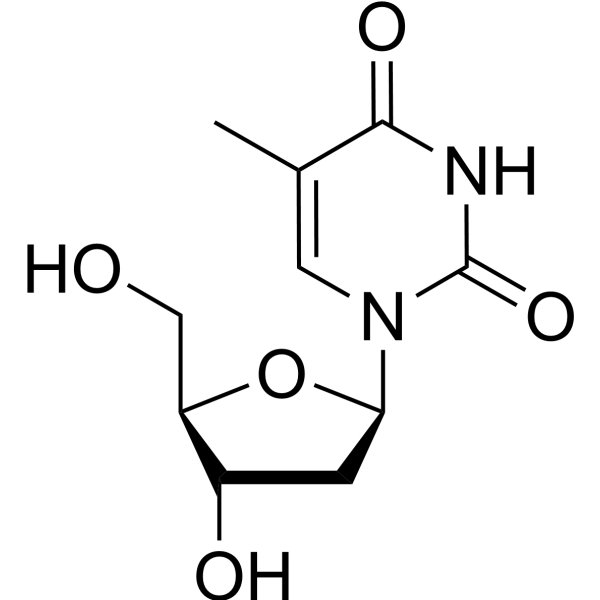
HY-N1150
ThymidineDNA Synthesis Inhibitor -
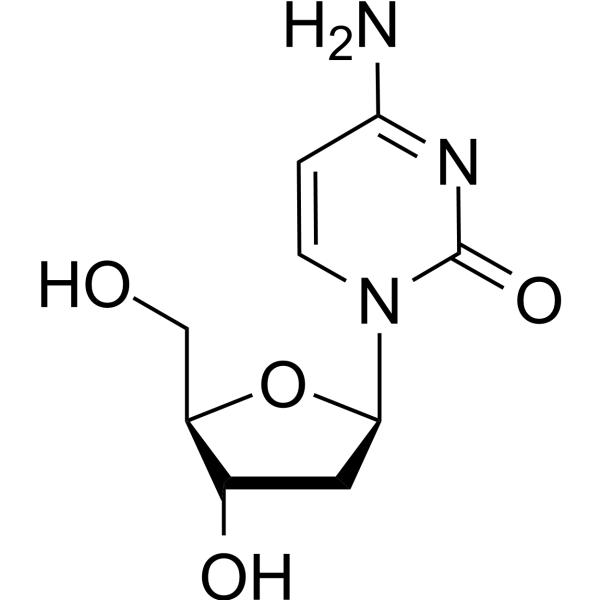
HY-D0184
2'-DeoxycytidineDeoxyribonucleoside -
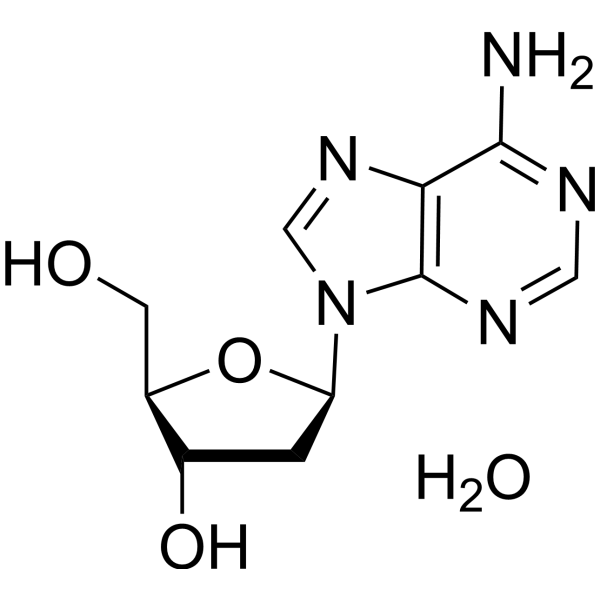
HY-W011683
2'-Deoxyadenosine monohydrateAdenine Nucleoside -
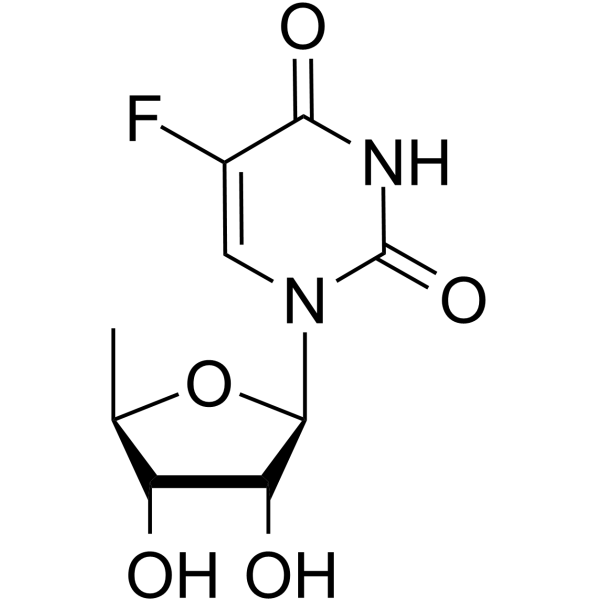
HY-B0021
DoxifluridineNucleoside Antimetabolite/Analog Inhibitor -
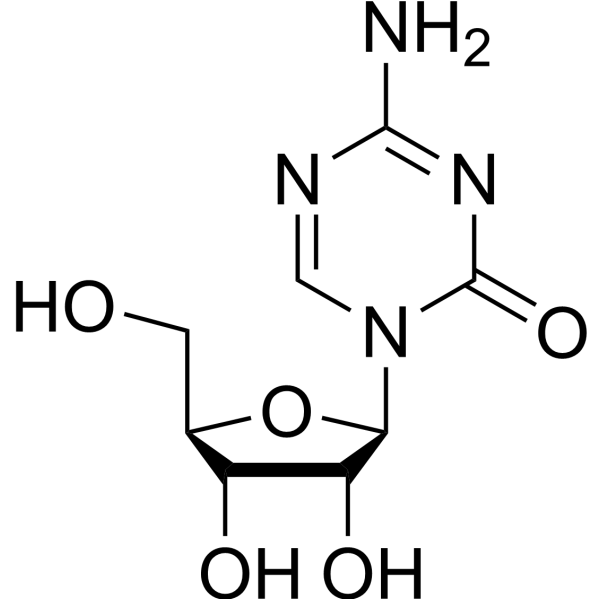
HY-10586
5-AzacytidineDNMT Inhibitor -

HY-D0185R
2'-Deoxyguanosine monohydrate (Standard)Endogenous Metabolite -
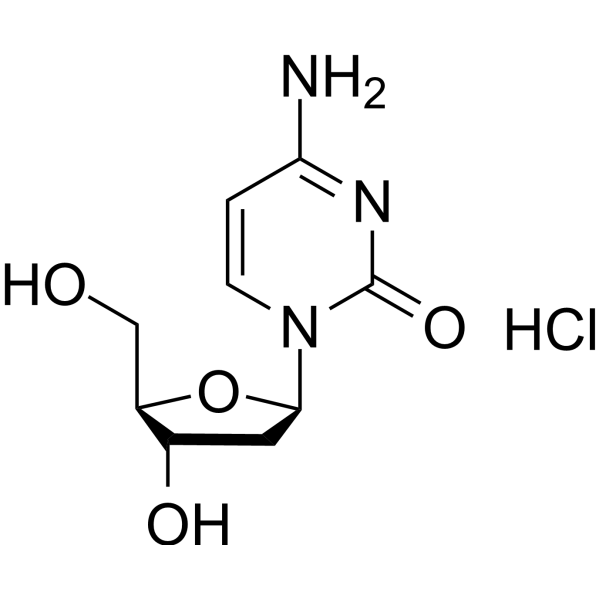
HY-17564
2'-Deoxycytidine (hydrochloride)Nucleic Acid Biosynthesis Enzyme Inhibitor, Nucleoside Transport System Competitor -
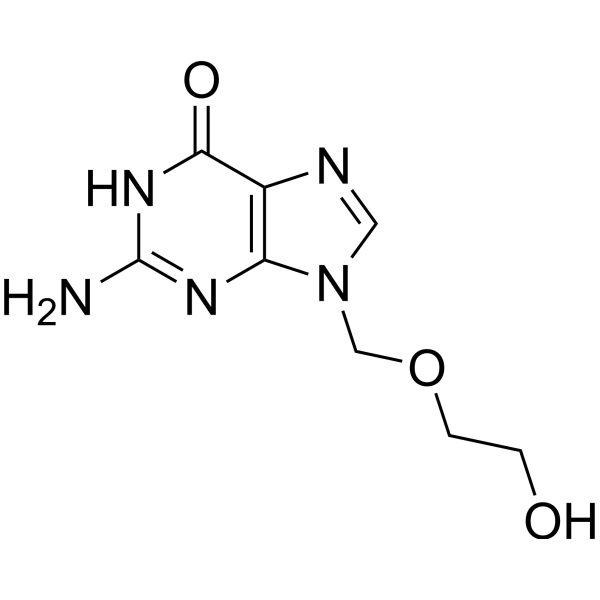
HY-17422
AcyclovirHSV Inhibitor -
HY-B0219
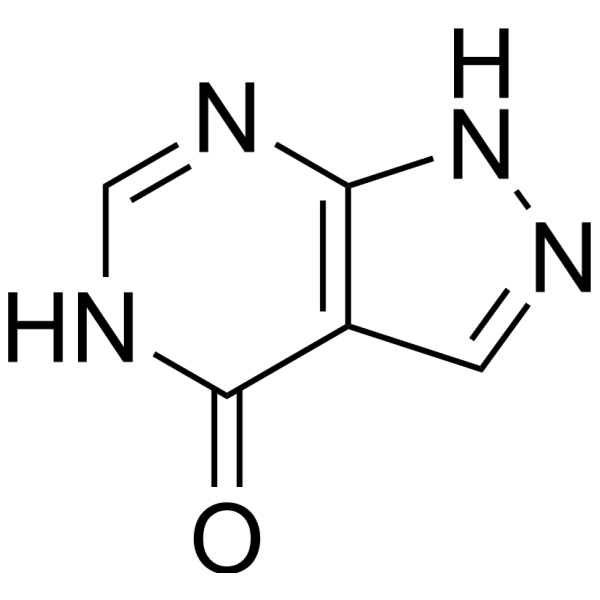
AllopurinolXanthine Oxidase Inhibitor -
HY-13910
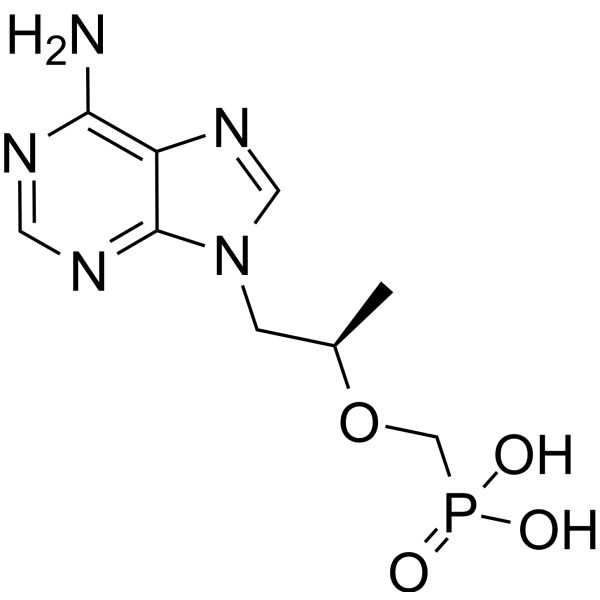
TenofovirNucleotide Reverse Transcriptase Inhibitor -

HY-10586R
5-Azacytidine (Standard)DNMT Inhibitor -
HY-I0626
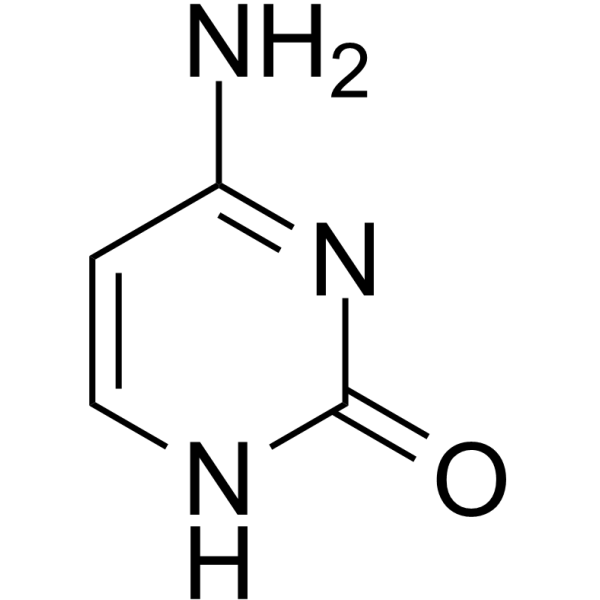
CytosineEndogenous Metabolite
Publications Citing Use of MedChemExpress (MCE) 2'-Deoxyguanosine monohydrate
More Customer Validation & Images

-
Microbiological Assay
-
WB
-
ELISA
All Endogenous Metabolite Isoforms
More

Biological Activity
Description
IC50 & Target
|
Human Endogenous Metabolite |
In Vitro
Oxidation products of 2'-Deoxyguanosine monohydrate may be involved in DNA damage, which in turn may affect gene expression or induce cancer[1].
MedChemExpress (MCE) has not independently confirmed the accuracy of these methods. They are for reference only. Further protocols information, click here.


Chemical Information
-
CAS No. 312693-72-4
-
Appearance Solid
-
Molecular Weight 285.26
-
Formula C10H15N5O5
-
Color White to off-white
-
SMILES
O[C@H]1C[C@H](N2C=NC3=C2N=C(NC3=O)N)O[C@@H]1CO.O
-
Shipping
Room temperature in continental US; may vary elsewhere.
-
Storage
4°C, sealed storage, away from moisture
* In solvent : -80°C, 6 months; -20°C, 1 month (sealed storage, away from moisture)


Publications (6)
-
Journal Impact Factor
-
Most Recent
-
Cell Rep
SAMHD1 Limits the Efficacy of Forodesine in Leukemia by Protecting Cells against the Cytotoxicity of dGTP. [Abstract]2020 May 12;31(6):107640. PMID: 32402273 -
Cell Rep
SFTSV Infection Induces BAK/BAX-Dependent Mitochondrial DNA Release to Trigger NLRP3 Inflammasome Activation. [Abstract]2020 Mar 31;30(13):4370-4385.e7. PMID: 32234474
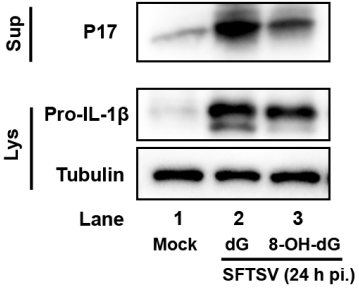
2'-Deoxyguanosine monohydrate purchased from MedChemExpress. Usage Cited in: Cell Rep. 2020 Mar 31;30(13):4370-4385.e7. [Abstract]
THP-1PMA 167 cells were infected by SFTSV (MOI = 10) for 24 hours in the presence of 2'-Deoxyguanosine (dG) or 8-OH-dG. P17 in the supernatants or pro-IL-1β in the cell lysate was determined by western blot.
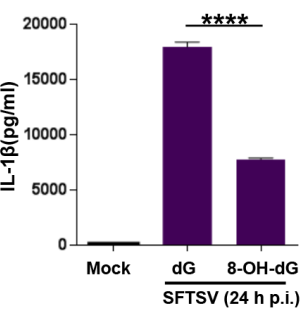
2'-Deoxyguanosine monohydrate purchased from MedChemExpress. Usage Cited in: Cell Rep. 2020 Mar 31;30(13):4370-4385.e7. [Abstract]
THP-1PMA 167 cells were infected by SFTSV (MOI = 10) for 24 hours in the presence of 2'-Deoxyguanosine (dG) or 8-OH-dG. IL-1β levels in the supernatants were determined by ELISA.
-
Anal Chem
Ultrahigh Flow Regulated Discharge Coupling with Targeted Mass Spectrometry Analysis: Real Time Capturing Biomolecules in Exhaled Breath. [Abstract]2025 May 13;97(18):9827-9835. PMID: 40302637 -
Talanta
A simple, rapid and sensitive HILIC LC-MS/MS method for simultaneous determination of 16 purine metabolites in plasma and urine. [Abstract]2024 Jan 15:267:125171. PMID: 37696233 -
PLoS Genet
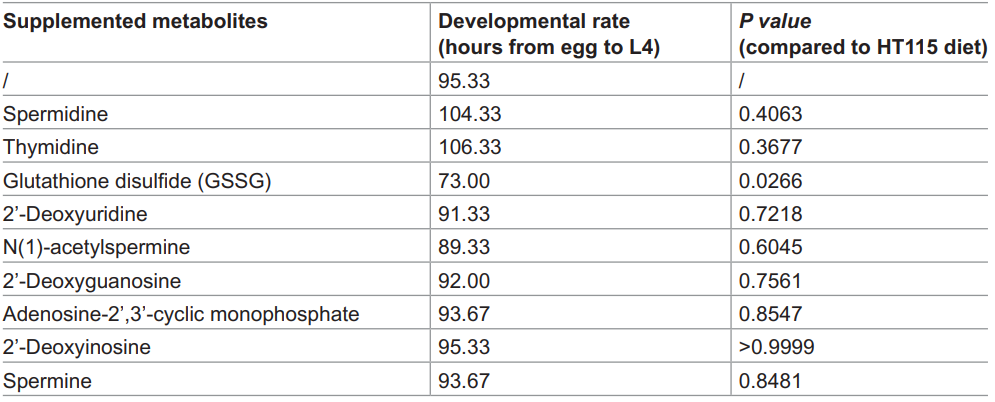
A C. elegans model of copper deficiency: Dietary interventions rescue CTR1/CHCA-1 copper transporter mutant phenotype. [Abstract]2026 Jan 23;22(1):e1012013. PMID: 41575937
2'-Deoxyguanosine monohydrate purchased from MedChemExpress. Usage Cited in: PLoS Genet. 2026 Jan 23;22(1):e1012013. [Abstract]
The effect of supplementing OP50-enriched metabolites to HT115 diet on the developmental rate of chca-1 mutant worms. Each metabolite was added to HT115 and seeded on NGM plates at 20 mM or their saturating concentration (final concentration: 20 mM spermidine, 6 mM thymidine, 20 mM GSSG, 20 mM 2’-deoxyuridine, 6 mM N(1)-acetylspermine, 4 mM 2’-Deoxyguanosine, 6 mM adenosine-2’,3’-cyclic monophosphate, 1 mM 2’-deoxyinosine, 20 mM spermine). Synchronized eggs were seeded on the prepared plates to record developmental rate.
-


Solvent & Solubility
In Vitro:
DMSO : 25 mg/mL (87.64 mM; Need ultrasonic; Hygroscopic DMSO has a significant impact on the solubility of product, please use newly opened DMSO)
Please refer to the solubility information to select the appropriate solvent. Once prepared, please aliquot and store the solution to prevent product inactivation from repeated freeze-thaw cycles.
Storage method and period of stock solution: -80°C, 6 months; -20°C, 1 month (sealed storage, away from moisture). When stored at -80°C, please use it within 6 months. When stored at -20°C, please use it within 1 month.
Please refer to the solubility information to select the appropriate solvent. Once prepared, please aliquot and store the solution to prevent product inactivation from repeated freeze-thaw cycles.
Storage method and period of stock solution: -80°C, 6 months; -20°C, 1 month (sealed storage, away from moisture). When stored at -80°C, please use it within 6 months. When stored at -20°C, please use it within 1 month.
Concentration (start) × Volume (start) = Concentration (final) × Volume (final)
In Vivo:
Select the appropriate dissolution method based on your experimental animal and administration route.
- For the following dissolution methods, please ensure to first prepare a clear stock solution using an In Vitro approach and then sequentially add co-solvents:
- To ensure reliable experimental results, the clarified stock solution can be appropriately stored based on storage conditions. As for the working solution for In Vivo experiments, it is recommended to prepare freshly and use it on the same day.
- The percentages shown for the solvents indicate their volumetric ratio in the final prepared solution. If precipitation or phase separation occurs during preparation, heat and/or sonication can be used to aid dissolution.
Add each solvent one by one: 10% DMSO 40% PEG300 5% Tween-80 45% Saline
Solubility: ≥ 1.25 mg/mL (4.38 mM); Clear solution
This protocol yields a clear solution of ≥ 1.25 mg/mL (saturation unknown).
Taking 1 mL working solution as an example, add 100 μL DMSO stock solution (12.5 mg/mL) to 400 μL PEG300, and mix evenly; then add 50 μL Tween-80 and mix evenly; then add 450 μL Saline to adjust the volume to 1 mL.
Preparation of Saline: Dissolve 0.9 g sodium chloride in ddH₂O and dilute to 100 mL to obtain a clear Saline solution.
Add each solvent one by one: 10% DMSO 90% (20% SBE-β-CD in Saline)
Solubility: ≥ 1.25 mg/mL (4.38 mM); Clear solution
This protocol yields a clear solution of ≥ 1.25 mg/mL (saturation unknown).
Taking 1 mL working solution as an example, add 100 μL DMSO stock solution (12.5 mg/mL) to 900 μL 20% SBE-β-CD in Saline, and mix evenly.
Preparation of 20% SBE-β-CD in Saline (4°C, storage for one week): 2 g SBE-β-CD powder is dissolved in 10 mL Saline, completely dissolve until clear.
In Vivo Dissolution Calculator
Please enter the basic information of animal experiments:
-
-
-
-
Recommended: Prepare an additional quantity of animals to account for potential losses during experiments.
Please enter your animal formula composition:
-
%DMSO +
Recommended: Keep the proportion of DMSO in working solution below 2% if your animal is weak.
-
%+
-
+%Tween-80 + +
-
%Saline +
The co-solvents required include: DMSO, . All of co-solvents are available by MedChemExpress (MCE). , Tween 80. All of co-solvents are available by MedChemExpress (MCE).
Working solution concentration: 0.22 mg/mL
Method for preparing stock solution: mg drug dissolved in μL DMSO. Stock solution concentration: mg/mL. * In solvent : -80°C, 6 months; -20°C, 1 month (sealed storage, away from moisture)
1. Take μL DMSO stock solution;
2. Add μL .
μL , mix evenly;
3. Then add μL Tween 80, mix evenly;
4. Then add μL
Please ensure that the stock solution in the first step is dissolved to a clear state, and add co-solvents in sequence. You can use ultrasonic heating (ultrasonic cleaner, recommended frequency 20-40 kHz), vortexing, etc. to assist dissolution.

Protocols
-
RT-PCR
Reverse transcription technology uses RNA as a template to synthesize DNA. RT-PCR is simple, specific and sensitive, and can be used to detect gene expression levels and expression differences in cells; detect RNA virus content; clone cDNA sequences of specific genes.
-
RNA extraction experimental
By lysing cells, releasing RNA, and removing impurities such as proteins and DNA, high-purity RNA products are finally obtained. The commonly used traditional method is the guanidine isothiocyanate/phenol/chloroform method (Trizol), which is suitable for a variety of animal materials including animal tissues, microorganisms, cultured cells, etc., and most plant materials.
-
Genotoxicity/Mutagenicity Study
The bacterial reverse mutation assay detects point mutations that restore amino-acid prototrophy in auxotrophic Salmonella typhimurium or Escherichia coli tester strains; after exposure to a test article, mutagenic activity is read out as an increased number of revertant colonies on minimal agar compared with the vehicle control. The assay uses tester strains with different mutation targets so that base-substitution and frameshift mutagens can be detected, and testing is performed with and without exogenous mammalian metabolic activation because some chemicals require biotransformation to become mutagenic.
-
Real Time qPCR (Q-PCR)
Real-time quantitative PCR (qPCR) quantifies an amplifiable nucleic-acid target by monitoring fluorescence during PCR cycling rather than measuring product only after amplification. The increase in fluorescence tracks accumulation of PCR product, and the quantification cycle (Cq; historically also Ct/CP) is related to the initial amount of target: samples containing more starting target generally reach the defined fluorescence threshold in fewer cycles.


Purity & Documentation
-
Data Sheet (275 KB)
-
SDS (394 KB)
- English - EN (394 KB)
- Français - FR (394 KB)
- Deutsch - DE (394 KB)
- Norwegian - NO (394 KB)
- Español - ES (394 KB)
- Swedish - SV (394 KB)
- Italian - IT (394 KB)
- Korean - KR (394 KB)
- Portuguese - PT (394 KB)
-
Handling Instructions (2659 KB)
References


Complete Stock Solution Preparation Table
Please refer to the solubility information to select the appropriate solvent. Once prepared, please aliquot and store the solution to prevent product inactivation from repeated freeze-thaw cycles.
Storage method and period of stock solution: -80°C, 6 months; -20°C, 1 month (sealed storage, away from moisture). When stored at -80°C, please use it within 6 months. When stored at -20°C, please use it within 1 month.
| Optional Solvent | Concentration Solvent Mass | 1 mg | 5 mg | 10 mg | 25 mg |
|---|---|---|---|---|---|
| DMSO | 1 mM | 3.5056 mL | 17.5279 mL | 35.0557 mL | 87.6393 mL |
| 5 mM | 0.7011 mL | 3.5056 mL | 7.0111 mL | 17.5279 mL | |
| 10 mM | 0.3506 mL | 1.7528 mL | 3.5056 mL | 8.7639 mL | |
| 15 mM | 0.2337 mL | 1.1685 mL | 2.3370 mL | 5.8426 mL | |
| 20 mM | 0.1753 mL | 0.8764 mL | 1.7528 mL | 4.3820 mL | |
| 25 mM | 0.1402 mL | 0.7011 mL | 1.4022 mL | 3.5056 mL | |
| 30 mM | 0.1169 mL | 0.5843 mL | 1.1685 mL | 2.9213 mL | |
| 40 mM | 0.0876 mL | 0.4382 mL | 0.8764 mL | 2.1910 mL | |
| 50 mM | 0.0701 mL | 0.3506 mL | 0.7011 mL | 1.7528 mL | |
| 60 mM | 0.0584 mL | 0.2921 mL | 0.5843 mL | 1.4607 mL | |
| 80 mM | 0.0438 mL | 0.2191 mL | 0.4382 mL | 1.0955 mL |


2'-Deoxyguanosine monohydrate Related Classifications
HY-D0185 Related Classifications
 Powered by Bioz