



2-Thenoyltrifluoroacetone
Based on 8 publication(s) in Google Scholar
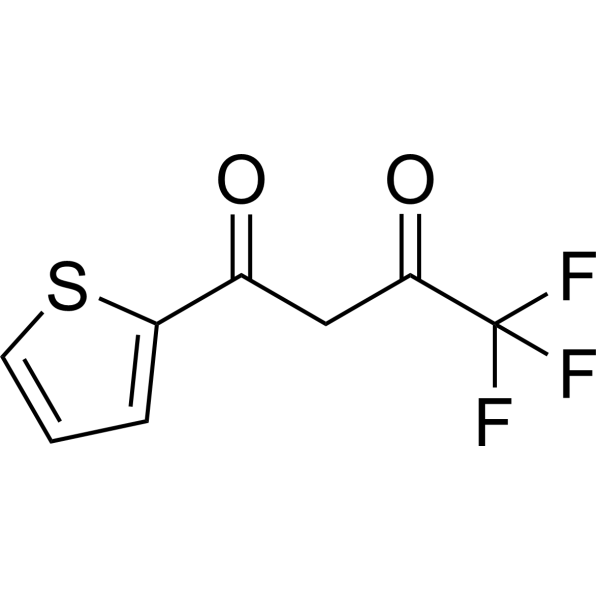
2-Theoyltrifluoroacetone is a chelating agent and mitochondrial electron transfer chain inhibitor, with a IC50 value of 51.5 μM. 2-Thermoyltrifluoroacetone can chelate with various metal ions and has cytotoxicity and anti-tumor activity, which is expected to play an important role in the treatment of mitochondrial dysfunction related diseases.
For research use only. We do not sell to patients.
- Purity : 99.94%
- CAS No.: 326-91-0
- Formula: C8H5F3O2S
- Molecular Weight:222.19
-
Storage:
4°C, protect from light, stored under nitrogen
* In solvent : -80°C, 6 months; -20°C, 1 month (protect from light, stored under nitrogen)

To place orders, for customer services and technical support, please contact: MedChemExpress USA
Tel: 609-228-6898 E-mail: [email protected] [email protected]


-
 Biological Activity
-
Chemical Information
-
Solvent & Solubility
- Purity & Documentation
- References
-
 Help & FAQs


-
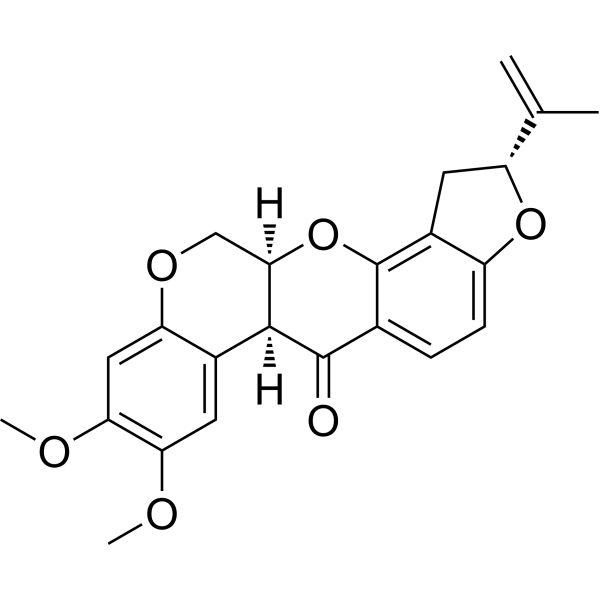
HY-B1756
Rotenone -

HY-N6782
Oligomycin -
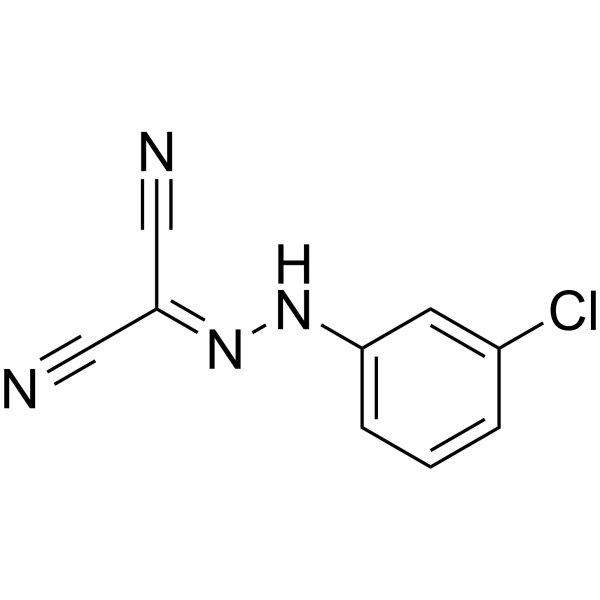
HY-100941
CCCP -
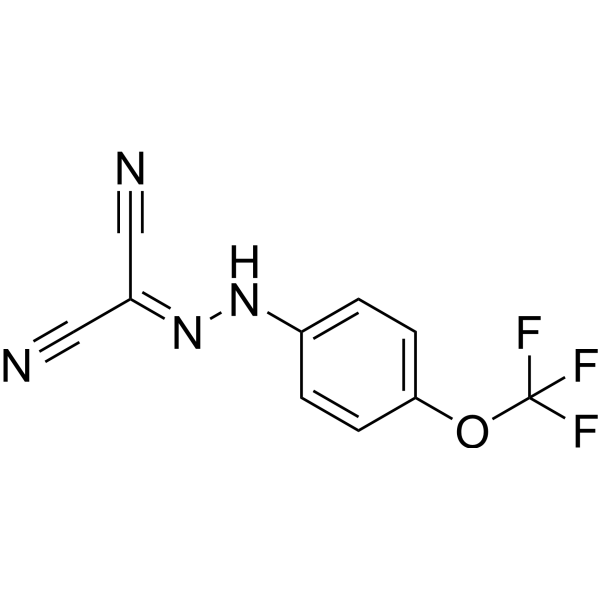
HY-100410
FCCP -
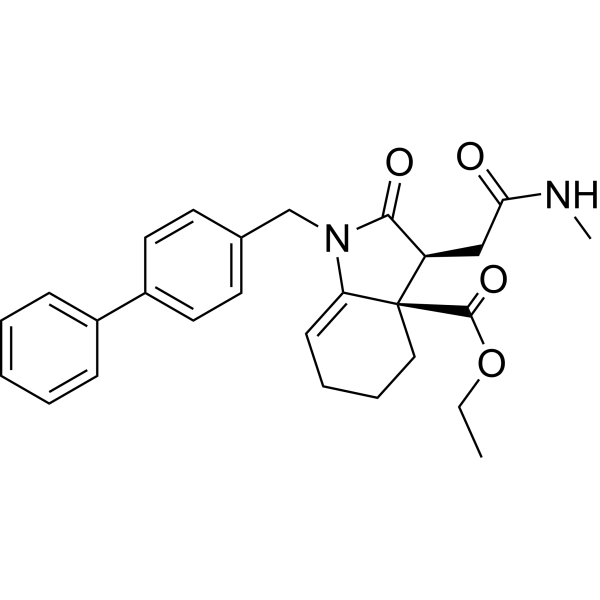
HY-100004
Fumarate hydratase-IN-1 -
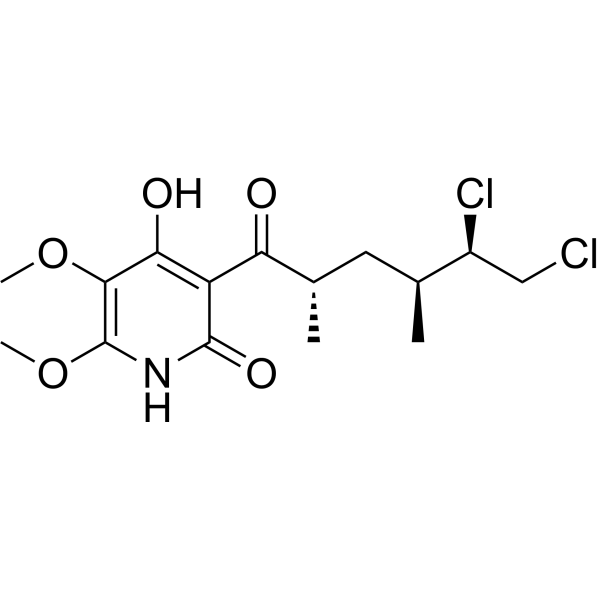
HY-126653
Atpenin A5 -
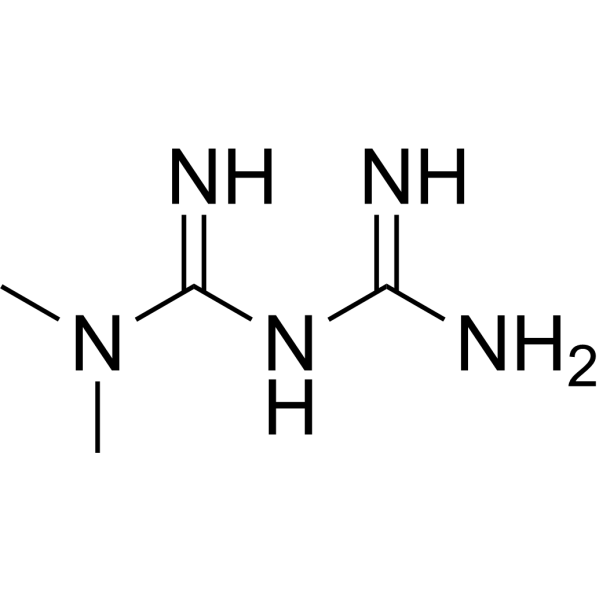
HY-B0627
Metformin -
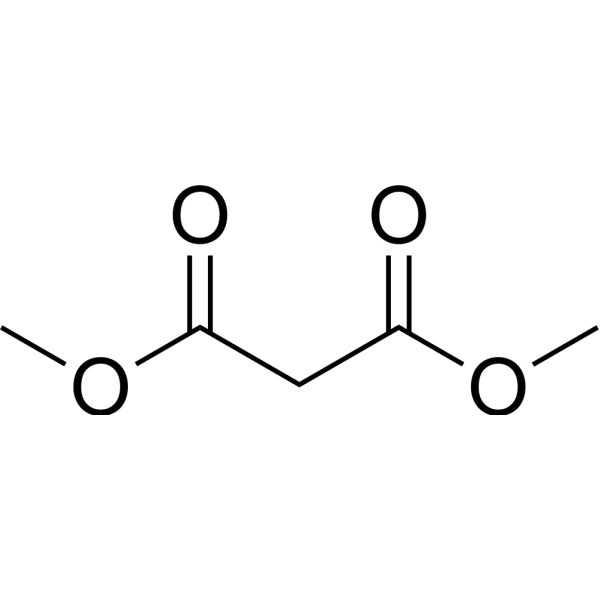
HY-Y1787
Dimethyl malonate -
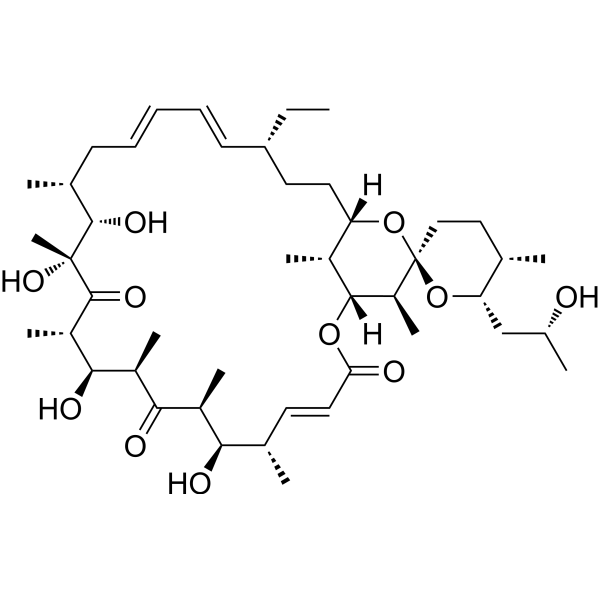
HY-16589
Oligomycin A -
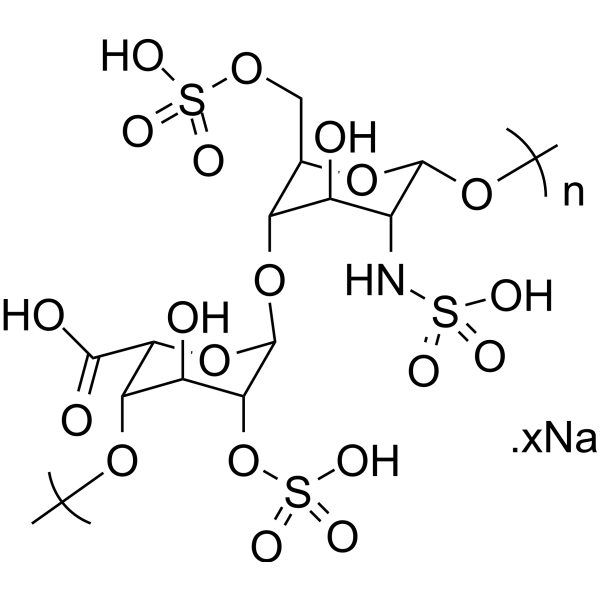
HY-17567A
Heparin sodium salt -
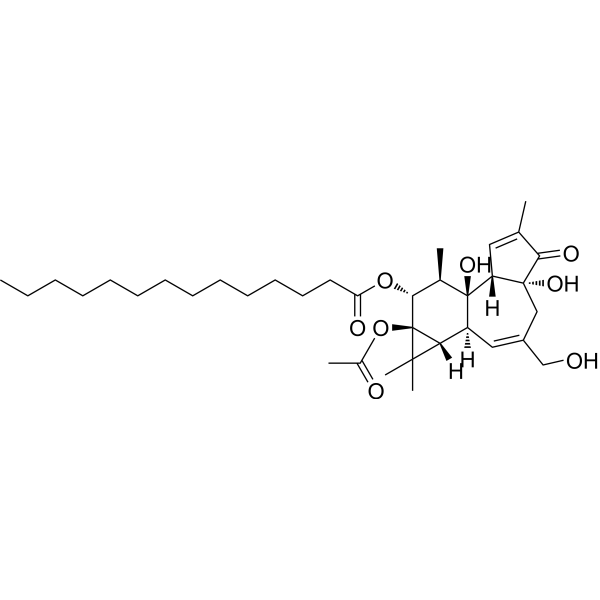
HY-18739
Phorbol 12-myristate 13-acetate -
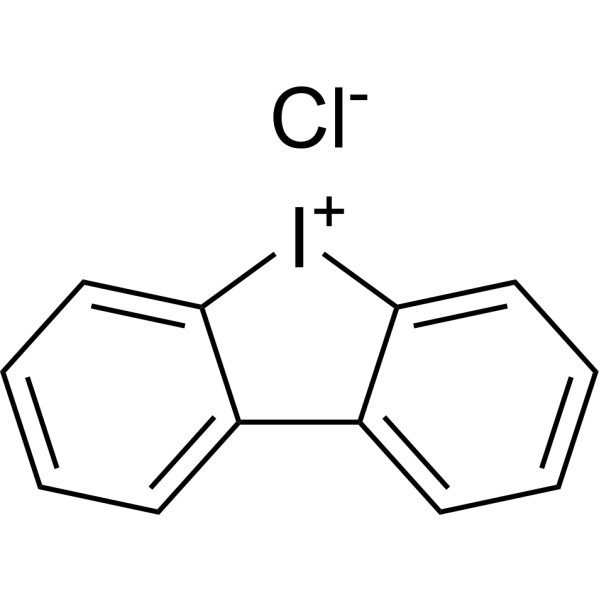
HY-100965
Diphenyleneiodonium chloride
Publications Citing Use of MedChemExpress (MCE) 2-Thenoyltrifluoroacetone
More- Signal Transduct Target Ther. 2025 Dec 17;10(1):413. [Abstract]
- Immunity. 2023 Nov 14;56(11):2523-2541.e8. [Abstract]
- Cancer Lett. 2026 May 24:218621. [Abstract]
- Virol Sin. 2025 Nov 21:S1995-820X(25)00161-0. [Abstract]
- Nutr Cancer. 2020;72(4):696-707. [Abstract]
- Oral Sci Homeost Med. 2026 Apr 29.
- bioRxiv. 2025 Nov 4.
- Sci Total Environ. 2024 Oct 10:946:174246. [Abstract]
 Customer Validation & Images

-
Apoptosis Analysis

-
RT-PCR

-
Cell Proliferation/Viability Assay

-
2D/3D Cell Culture and Differentiation

-
Cell Proliferation/Viability Assay


Biological Activity
Description
IC50 & Target
IC50: 51.5 μM (mitochondrial electron transport chain)[1].
IC50: 0.54 μM (carboxylesterase)[4].
In Vitro
2-Thenoyltrifluoroacetone (100-1000μM, 24 h) increases mitochondrial ROS production and induces microglial cell activation by inhibiting mitochondrial electron transport chain[1]. 2-Thenoyltrifluoroacetone (28.2-51.5 μM, 72 h) exhibits cytotoxicity and anticancer activity on K562 cells by forming a complex with copper (II) [2]. 2-Thenoyltrifluoroacetone (500, 750, 1000 ng/mL, 24, 48, 72 h) exhibits cytotoxicity and anti-tumor activity against MCF-7 and MKN-45 cells by forming a complex with zinc (II) [3]. 2-Thenoyltrifluoroacetone (1-25 μM, 20 min) significantly inhibits carboxylesterase activity in rat plasma and mitochondria [4].
MedChemExpress (MCE) has not independently confirmed the accuracy of these methods. They are for reference only.
-
Cell Line:microglial cell
-
Concentration:100-1000 μM
-
Incubation Time:24 h
-
Result:Activated microglial cell within a certain concentration range [1].
-
Cell Line:K562 cell
-
Concentration:28.2-51.5 μM
-
Incubation Time:72 h
-
Result:Improved the cytotoxic activity in the K562 cells[2].
-
Cell Line:MCF-7 cell, MKN-45 cell
-
Concentration:500, 750, 1000 ng/mL
-
Incubation Time:24, 48, 72 h
-
Result:Improved the cytotoxic activity in the MCF-7 and MKN-45 cells
Clinical Trial
| NCT Number | Sponsor | Condition | Start Date |
Phase

|
|---|---|---|---|---|
| NCT01329991 | Plexxikon| | 2011-05 | PHASE1 |


Chemical Information
-
CAS No. 326-91-0
-
Appearance Solid
-
Molecular Weight 222.19
-
Formula C8H5F3O2S
-
Color White to light yellow
-
SMILES
O=C(C1=CC=CS1)CC(C(F)(F)F)=O
-
Synonyms
HTTA; TTA; TTFA
-
Shipping
Room temperature in continental US; may vary elsewhere.
-
Storage
4°C, protect from light, stored under nitrogen
* In solvent : -80°C, 6 months; -20°C, 1 month (protect from light, stored under nitrogen)


Publications (8)
-
Journal Impact Factor
-
Most Recent
-
Signal Transduct Target Ther
Disruption of heme homeostasis by nuclear receptor Nur77 induces pyroptosis through granzyme B-dependent GSDMC cleavage. [Abstract]2025 Dec 17;10(1):413. PMID: 41407678
2-Thenoyltrifluoroacetone purchased from MedChemExpress. Usage Cited in: Signal Transduct Target Ther. 2025 Dec 17;10(1):413. [Abstract]
Cells were cotreated with DBM (1 mM) or TTFA (2-Thenoyltrifluoroacetone, 100 μM pretreatment for 2 h + co-incubation with DdBIC for 4 h (mito-ROS detection) or 8 h (pyroptosis analysis)) and DdBIC to detect pyroptotic features and mito-ROS levels. Only the addition of a Complex II inhibitor, TTFA, effectively inhibited pyroptosis and downregulated the level of DdBIC-induced mito-ROS.
-
Immunity
Gasdermin D permeabilization of mitochondrial inner and outer membranes accelerates and enhances pyroptosis. [Abstract]2023 Nov 14;56(11):2523-2541.e8. PMID: 37924812 -
Cancer Lett
Repurposing the Neurokinin-1 receptor antagonist Aprepitant to eradicate relapsed/refractory acute lymphoblastic leukemia via mitochondria-driven necroptosis. [Abstract]2026 May 24:218621. PMID: 42184918 -
Virol Sin
Thapsigargin suppresses porcine hemagglutinating encephalomyelitis virus replication by disrupting host energy metabolism. [Abstract]2025 Nov 21:S1995-820X(25)00161-0. PMID: 41276220
2-Thenoyltrifluoroacetone purchased from MedChemExpress. Usage Cited in: Virol Sin. 2025 Nov 21:S1995-820X(25)00161-0. [Abstract]
Viral load determination was quantified by qRT-PCR in N2a cells pretreated with TTFA (2-Thenoyltrifluoroacetone; 50-200 μM; 1 h pretreatment), inoculated with PHEV, and cultured for another 24 h in fresh medium. TTFA significantly reduced PHEV N mRNA levels.
2-Thenoyltrifluoroacetone purchased from MedChemExpress. Usage Cited in: Virol Sin. 2025 Nov 21:S1995-820X(25)00161-0. [Abstract]
Cell viability was assessed by a CCK-8 assay in N2a cells treated with TTFA (2-Thenoyltrifluoroacetone; 50-200 μM) for 1 h. TTFA did not significantly affect N2a cell viability.
-
Nutr Cancer
Metabolic Alterations Induced by Kudingcha Lead to Cancer Cell Apoptosis and Metastasis Inhibition. [Abstract]2020;72(4):696-707. PMID: 31352802 -
-
2-Thenoyltrifluoroacetone purchased from MedChemExpress. Usage Cited in: bioRxiv. 2025 Nov 4.
Cells were cultured with M-CSF for 3 days and then stimulated with IL-4 and GM-CSF in the presence of TTFA (2-Thenoyltrifluoroacetone; 100 μM) for 1-2 days, followed by Giemsa staining to assess multinucleated giant cell formation. TTFA impaired multinucleated giant cell development compared with the DMSO control.
-
Sci Total Environ
Voltage-dependent anion channel 1 mediates mitochondrial fission and glucose metabolic reprogramming in response to ionizing radiation. [Abstract]2024 Oct 10:946:174246. PMID: 38955266
2-Thenoyltrifluoroacetone purchased from MedChemExpress. Usage Cited in: Sci Total Environ. 2024 Oct 10:946:174246. [Abstract]
Cell viability was measured by the CCK-8 assay in HeLa and MCF7 cells treated with TTFA (2-Thenoyltrifluoroacetone; 2.5 μM; 24-72 h), 8 Gy γ-ray irradiation, or their combination. TTFA further reduced the viability of HeLa and MCF7 cells after 8 Gy γ-ray irradiation.


Solvent & Solubility
In Vitro:
DMSO : 100 mg/mL (450.07 mM; Need ultrasonic; Hygroscopic DMSO has a significant impact on the solubility of product, please use newly opened DMSO)
Please refer to the solubility information to select the appropriate solvent. Once prepared, please aliquot and store the solution to prevent product inactivation from repeated freeze-thaw cycles.
Storage method and period of stock solution: -80°C, 6 months; -20°C, 1 month (protect from light, stored under nitrogen). When stored at -80°C, please use it within 6 months. When stored at -20°C, please use it within 1 month.
Please refer to the solubility information to select the appropriate solvent. Once prepared, please aliquot and store the solution to prevent product inactivation from repeated freeze-thaw cycles.
Storage method and period of stock solution: -80°C, 6 months; -20°C, 1 month (protect from light, stored under nitrogen). When stored at -80°C, please use it within 6 months. When stored at -20°C, please use it within 1 month.
Concentration (start) × Volume (start) = Concentration (final) × Volume (final)
In Vivo:
Select the appropriate dissolution method based on your experimental animal and administration route.
- For the following dissolution methods, please ensure to first prepare a clear stock solution using an In Vitro approach and then sequentially add co-solvents:
- To ensure reliable experimental results, the clarified stock solution can be appropriately stored based on storage conditions. As for the working solution for In Vivo experiments, it is recommended to prepare freshly and use it on the same day.
- The percentages shown for the solvents indicate their volumetric ratio in the final prepared solution. If precipitation or phase separation occurs during preparation, heat and/or sonication can be used to aid dissolution.
Add each solvent one by one: 10% DMSO 40% PEG300 5% Tween-80 45% Saline
Solubility: ≥ 2.5 mg/mL (11.25 mM); Clear solution
This protocol yields a clear solution of ≥ 2.5 mg/mL (saturation unknown).
Taking 1 mL working solution as an example, add 100 μL DMSO stock solution (25.0 mg/mL) to 400 μL PEG300, and mix evenly; then add 50 μL Tween-80 and mix evenly; then add 450 μL Saline to adjust the volume to 1 mL.
Preparation of Saline: Dissolve 0.9 g sodium chloride in ddH₂O and dilute to 100 mL to obtain a clear Saline solution.
Add each solvent one by one: 10% DMSO 90% (20% SBE-β-CD in Saline)
Solubility: ≥ 2.5 mg/mL (11.25 mM); Clear solution
This protocol yields a clear solution of ≥ 2.5 mg/mL (saturation unknown).
Taking 1 mL working solution as an example, add 100 μL DMSO stock solution (25.0 mg/mL) to 900 μL 20% SBE-β-CD in Saline, and mix evenly.
Preparation of 20% SBE-β-CD in Saline (4°C, storage for one week): 2 g SBE-β-CD powder is dissolved in 10 mL Saline, completely dissolve until clear.
In Vivo Dissolution Calculator
Please enter the basic information of animal experiments:
-
-
-
-
Recommended: Prepare an additional quantity of animals to account for potential losses during experiments.
Please enter your animal formula composition:
-
%DMSO +
Recommended: Keep the proportion of DMSO in working solution below 2% if your animal is weak.
-
%+
-
+%Tween-80 + +
-
%Saline +
The co-solvents required include: DMSO, . All of co-solvents are available by MedChemExpress (MCE). , Tween 80. All of co-solvents are available by MedChemExpress (MCE).
Working solution concentration: 0.22 mg/mL
Method for preparing stock solution: mg drug dissolved in μL DMSO. Stock solution concentration: mg/mL. * In solvent : -80°C, 6 months; -20°C, 1 month (protect from light, stored under nitrogen)
1. Take μL DMSO stock solution;
2. Add μL .
μL , mix evenly;
3. Then add μL Tween 80, mix evenly;
4. Then add μL
Please ensure that the stock solution in the first step is dissolved to a clear state, and add co-solvents in sequence. You can use ultrasonic heating (ultrasonic cleaner, recommended frequency 20-40 kHz), vortexing, etc. to assist dissolution.


Purity & Documentation
-
Data Sheet (288 KB)
-
SDS (396 KB)
- English - EN (396 KB)
- Français - FR (396 KB)
- Deutsch - DE (396 KB)
- Norwegian - NO (396 KB)
- Español - ES (396 KB)
- Swedish - SV (396 KB)
- Italian - IT (396 KB)
- Korean - KR (396 KB)
- Portuguese - PT (396 KB)
-
Handling Instructions (2659 KB)
References
[1]. Ye J, et al. Electron transport chain inhibitors induce microglia activation through enhancing mitochondrial reactive oxygen species production. Exp Cell Res. 2016 Jan 15;340(2):315-26. [Content Brief]
[4]. Zhang JG, et al. Thenoyltrifluoroacetone, a potent inhibitor of carboxylesterase activity. Biochem Pharmacol. 2002 Feb 15;63(4):751-4. [Content Brief]


Complete Stock Solution Preparation Table
Please refer to the solubility information to select the appropriate solvent. Once prepared, please aliquot and store the solution to prevent product inactivation from repeated freeze-thaw cycles.
Storage method and period of stock solution: -80°C, 6 months; -20°C, 1 month (protect from light, stored under nitrogen). When stored at -80°C, please use it within 6 months. When stored at -20°C, please use it within 1 month.
| Optional Solvent | Concentration Solvent Mass | 1 mg | 5 mg | 10 mg | 25 mg |
|---|---|---|---|---|---|
| DMSO | 1 mM | 4.5007 mL | 22.5033 mL | 45.0065 mL | 112.5163 mL |
| 5 mM | 0.9001 mL | 4.5007 mL | 9.0013 mL | 22.5033 mL | |
| 10 mM | 0.4501 mL | 2.2503 mL | 4.5007 mL | 11.2516 mL | |
| 15 mM | 0.3000 mL | 1.5002 mL | 3.0004 mL | 7.5011 mL | |
| 20 mM | 0.2250 mL | 1.1252 mL | 2.2503 mL | 5.6258 mL | |
| 25 mM | 0.1800 mL | 0.9001 mL | 1.8003 mL | 4.5007 mL | |
| 30 mM | 0.1500 mL | 0.7501 mL | 1.5002 mL | 3.7505 mL | |
| 40 mM | 0.1125 mL | 0.5626 mL | 1.1252 mL | 2.8129 mL | |
| 50 mM | 0.0900 mL | 0.4501 mL | 0.9001 mL | 2.2503 mL | |
| 60 mM | 0.0750 mL | 0.3751 mL | 0.7501 mL | 1.8753 mL | |
| 80 mM | 0.0563 mL | 0.2813 mL | 0.5626 mL | 1.4065 mL | |
| 100 mM | 0.0450 mL | 0.2250 mL | 0.4501 mL | 1.1252 mL |


2-Thenoyltrifluoroacetone Related Classifications
HY-D0190 Related Classifications
 Powered by Bioz