



5-Amino-8-hydroxyquinoline

Based on 1 Customer Validation
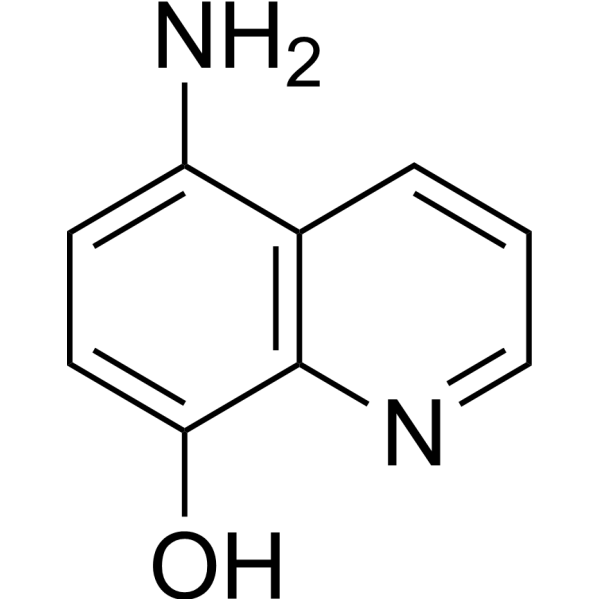
5-Amino-8-hydroxyquinoline (5A8HQ; 5AHQ) is an orally active non-competitive 20S proteasome inhibitor. 5-Amino-8-hydroxyquinoline can inhibit NF-κB activity and induce cancer cells death and shows low cytotoxicity towards normal hematopoietic cells. 5-Amino-8-hydroxyquinoline can be used for the research of cancer, such as leukemia.
Nur für Forschungszwecke. Wir verkaufen nicht an Patienten.
- Reinheit : 95.0%
- CAS. Nr.: 13207-66-4
- Formel: C9H8N2O
- Molecular Weight:160.18
-
Speicherung:
4°C, protect from light
* In solvent : -80°C, 6 months; -20°C, 1 month (protect from light)

To place orders, for customer services and technical support, please contact: MedChemExpress USA
Tel: 609-228-6898 E-mail: [email protected] [email protected]


-
 Biologische Aktivität
-
Chemical Information
-
Lösungsmittel & Löslichkeit
- Protokoll
- Reinheit & Dokumentation
- Verweise
-
 Help & FAQs


-
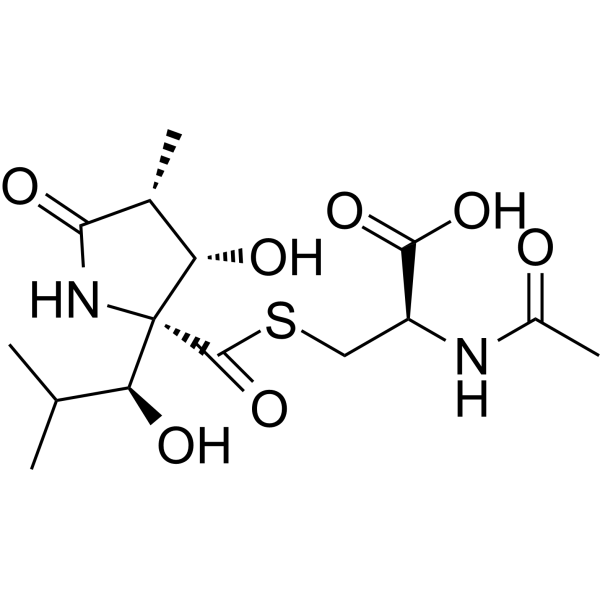
HY-16594
LactacystinProteasome Inhibitor -
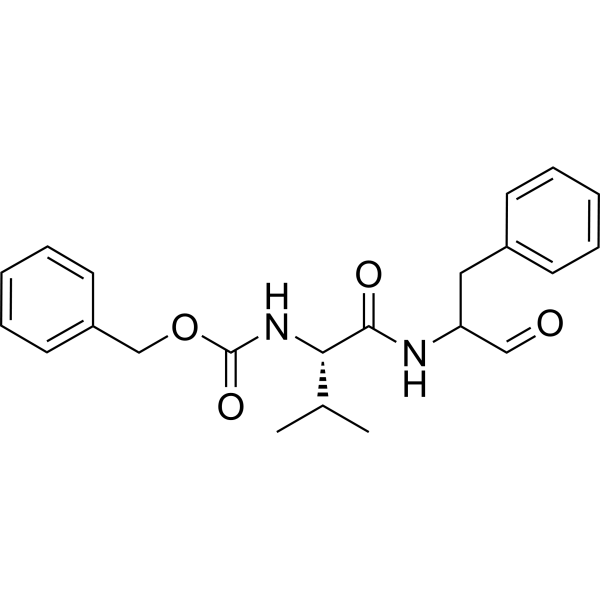
HY-18236
MDL-28170Calpain Inhibitor -
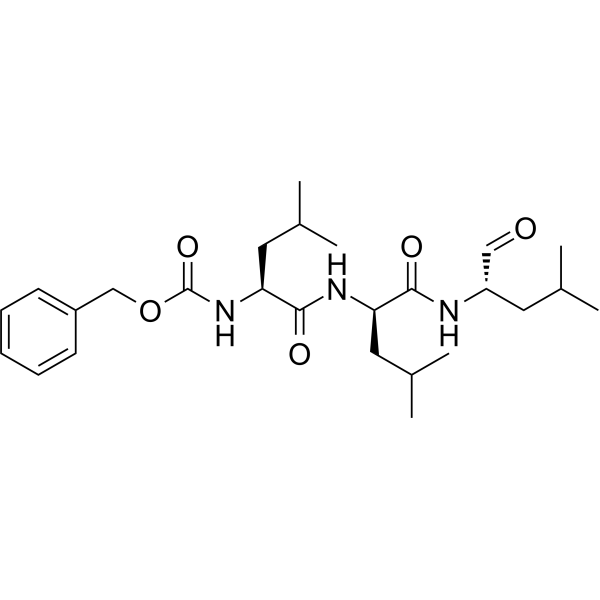
HY-13259C
(R)-MG-132Proteasome Inhibitor -
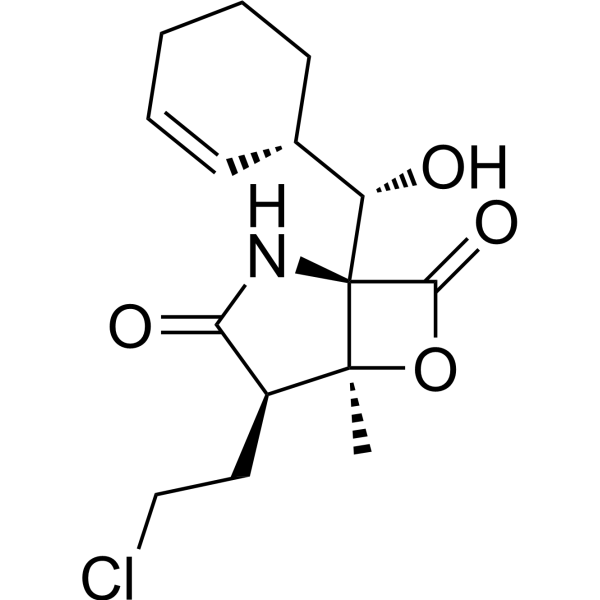
HY-10985
MarizomibProteasome Inhibitor -
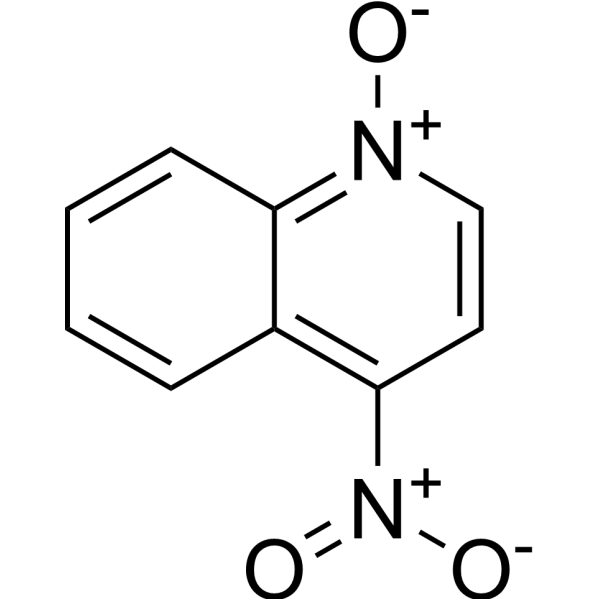
HY-33354
NitrochinChemical Carcinogen -
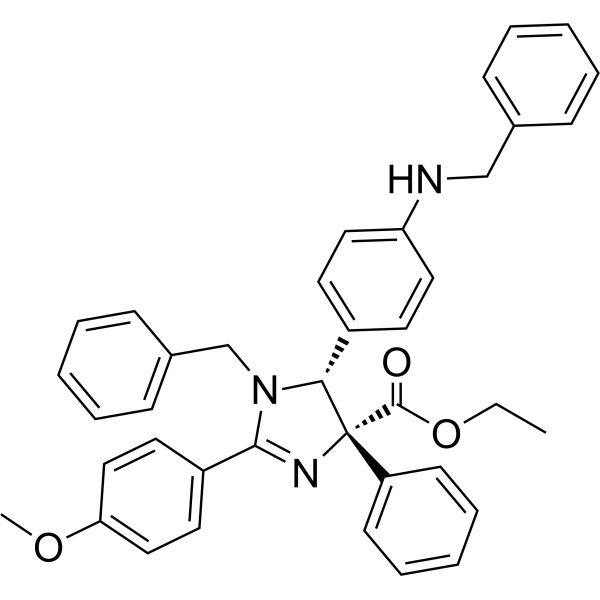
HY-120722
TCH-165Proteasome Assembly Modulator -
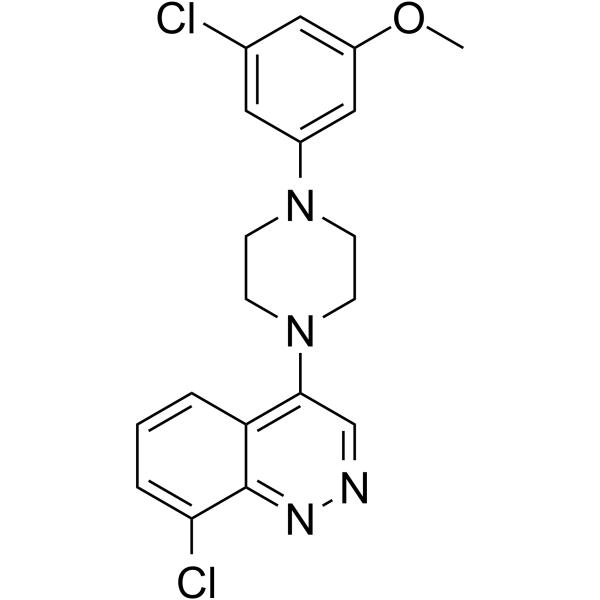
HY-151424
Vimentin-IN-1Vimentin Inhibitor -
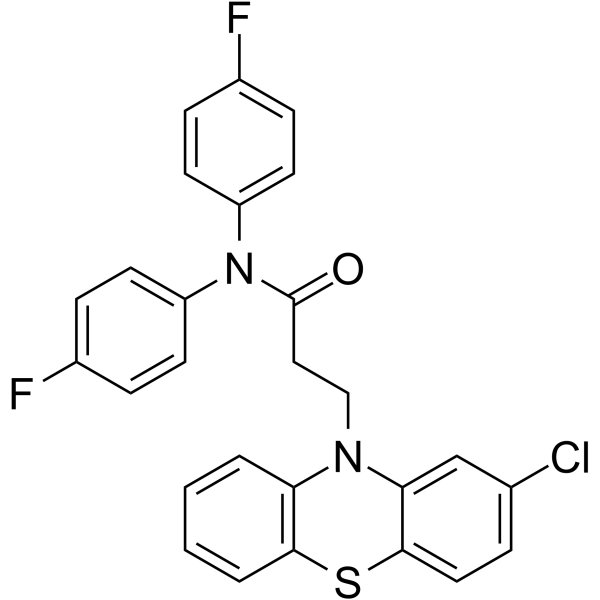
HY-150602
20S Proteasome activator 120S Proteasome Activator -
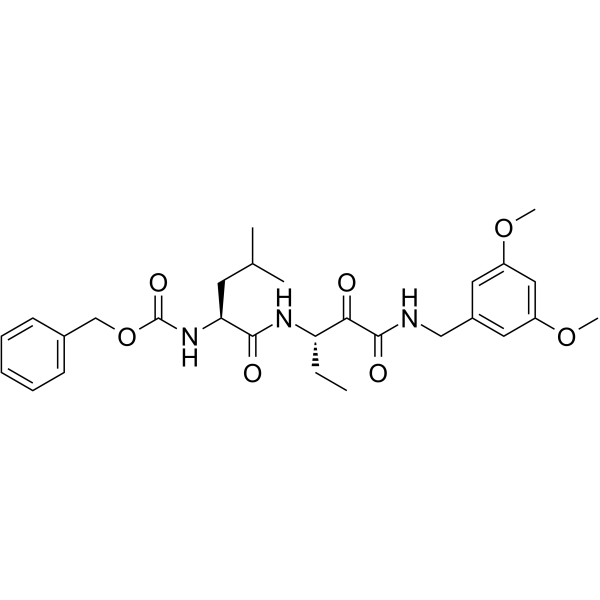
HY-145155
Calpain-2-IN-1Calpain-2 Inhibitor -
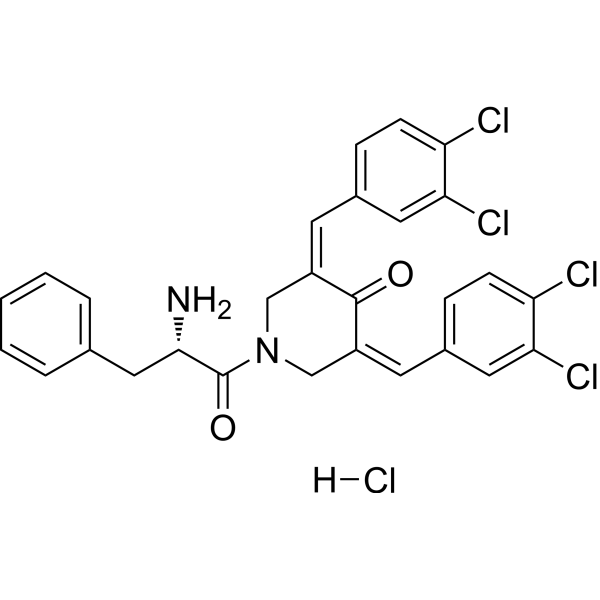
HY-100739
RA190RPN13 Inhibitor -
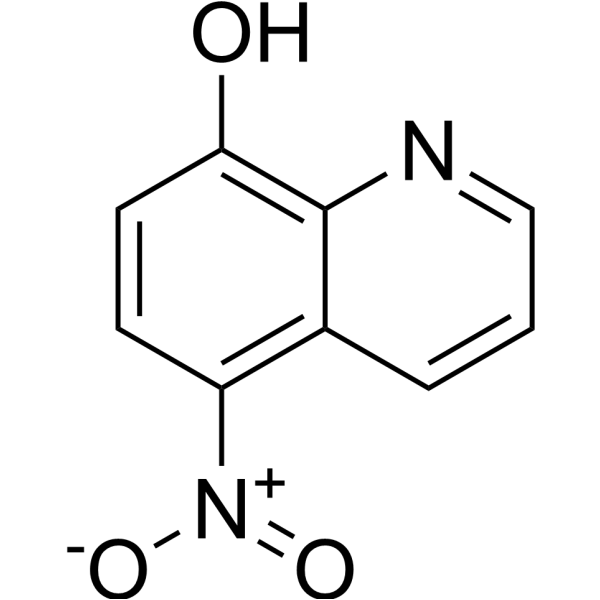
HY-B1159
NitroxolineAntibiofilm Agent -
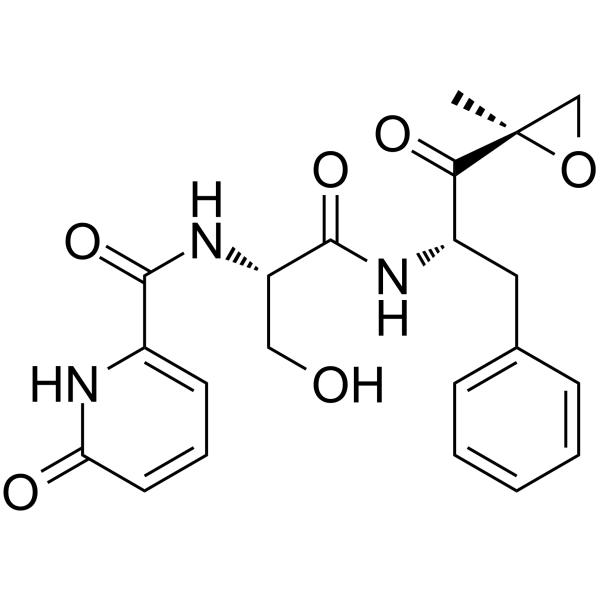
HY-101786
KZR-504LMP2 Inhibitor


Biologische Aktivität
Beschreibung
Cellular Effect
|
Cell Line

|
Type | Value | Description | References |
|---|---|---|---|---|
| A549 | IC50 |
>50 μM
Compound: 8
|
Cytotoxicity against human A549 cells after 48 hrs by MTT assay
Cytotoxicity against human A549 cells after 48 hrs by MTT assay
|
[PMID: 26276433] |
| HL-60 | IC50 |
13.8 μM
Compound: 8
|
Cytotoxicity against human HL60 cells after 48 hrs by MTT assay
Cytotoxicity against human HL60 cells after 48 hrs by MTT assay
|
[PMID: 26276433] |
| K562 | IC50 |
0.6 μM
Compound: 5-AHQ
|
Inhibition of human 20S proteasome chymotryptic-like activity using Suc-LLVY-AMC as substrate expressed in human K562 cells assessed as free 7-amino-4-methylcoumarin release preincubated for 22 hrs followed by substrate addition by fluorescent spectrophot
Inhibition of human 20S proteasome chymotryptic-like activity using Suc-LLVY-AMC as substrate expressed in human K562 cells assessed as free 7-amino-4-methylcoumarin release preincubated for 22 hrs followed by substrate addition by fluorescent spectrophot
|
[PMID: 27112450] |
| L02 | IC50 |
>50 μM
Compound: 8
|
Cytotoxicity against human HL7702 cells after 48 hrs by MTT assay
Cytotoxicity against human HL7702 cells after 48 hrs by MTT assay
|
[PMID: 26276433] |
| MDAY-D2 | IC50 |
0.6 μM
Compound: 5-AHQ
|
Inhibition of human 20S proteasome chymotryptic-like activity using Suc-LLVY-AMC as substrate expressed in human MDAY-D2 cells assessed as free 7-amino-4-methylcoumarin release preincubated for 22 hrs followed by substrate addition by fluorescent spectrop
Inhibition of human 20S proteasome chymotryptic-like activity using Suc-LLVY-AMC as substrate expressed in human MDAY-D2 cells assessed as free 7-amino-4-methylcoumarin release preincubated for 22 hrs followed by substrate addition by fluorescent spectrop
|
[PMID: 27112450] |
| NB-4 | IC50 |
0.6 μM
Compound: 5-AHQ
|
Inhibition of human 20S proteasome chymotryptic-like activity using Suc-LLVY-AMC as substrate expressed in human NB4 cells assessed as free 7-amino-4-methylcoumarin release preincubated for 22 hrs followed by substrate addition by fluorescent spectrophoto
Inhibition of human 20S proteasome chymotryptic-like activity using Suc-LLVY-AMC as substrate expressed in human NB4 cells assessed as free 7-amino-4-methylcoumarin release preincubated for 22 hrs followed by substrate addition by fluorescent spectrophoto
|
[PMID: 27112450] |
| OCI-AML2 | IC50 |
0.6 μM
Compound: 5-AHQ
|
Inhibition of human 20S proteasome chymotryptic-like activity using Suc-LLVY-AMC as substrate expressed in human OCI-AML2 cells assessed as free 7-amino-4-methylcoumarin release preincubated for 22 hrs followed by substrate addition by fluorescent spectro
Inhibition of human 20S proteasome chymotryptic-like activity using Suc-LLVY-AMC as substrate expressed in human OCI-AML2 cells assessed as free 7-amino-4-methylcoumarin release preincubated for 22 hrs followed by substrate addition by fluorescent spectro
|
[PMID: 27112450] |
| SMMC-7721 | IC50 |
>50 μM
Compound: 8
|
Cytotoxicity against human SMMC7721 cells after 48 hrs by MTT assay
Cytotoxicity against human SMMC7721 cells after 48 hrs by MTT assay
|
[PMID: 26276433] |
| SW480 | IC50 |
>50 μM
Compound: 8
|
Cytotoxicity against human SW480 cells after 48 hrs by MTT assay
Cytotoxicity against human SW480 cells after 48 hrs by MTT assay
|
[PMID: 26276433] |
In Vivo
MedChemExpress (MCE) has not independently confirmed the accuracy of these methods. They are for reference only.


Chemical Information
-
CAS. Nr. 13207-66-4
-
Appearance Solid
-
Molecular Weight 160.18
-
Formel C9H8N2O
-
Color Brown to black
-
SMILES
NC1=C2C=CC=NC2=C(O)C=C1
-
Synonyms
5A8HQ; 5AHQ
-
Versand
Room temperature in continental US; may vary elsewhere.
-
Speicherung
4°C, protect from light
* In solvent : -80°C, 6 months; -20°C, 1 month (protect from light)


Lösungsmittel & Löslichkeit
In Vitro:
DMSO : 100 mg/mL (624.30 mM; Need ultrasonic; Hygroscopic DMSO has a significant impact on the solubility of product, please use newly opened DMSO)
Please refer to the solubility information to select the appropriate solvent. Once prepared, please aliquot and store the solution to prevent product inactivation from repeated freeze-thaw cycles.
Storage method and period of stock solution: -80°C, 6 months; -20°C, 1 month (protect from light). When stored at -80°C, please use it within 6 months. When stored at -20°C, please use it within 1 month.
Please refer to the solubility information to select the appropriate solvent. Once prepared, please aliquot and store the solution to prevent product inactivation from repeated freeze-thaw cycles.
Storage method and period of stock solution: -80°C, 6 months; -20°C, 1 month (protect from light). When stored at -80°C, please use it within 6 months. When stored at -20°C, please use it within 1 month.
Konzentration (Stammlösung) × Volumen (Stammlösung) = Konzentration (Ziellösung) × Volumen (Ziellösung)

Protokoll
-
Cell Cytotoxicity Assay
Cytotoxicity assays are usually based on the assessment of cell membrane damage, which can also be indirectly detected by measuring cell viability. Detection methods include MTT assay, CKK-8 assay, LDH assay and ATP assay, etc.
-
Mammalian live/dead viability and cytotoxicity staining
Live/dead viability and cytotoxicity staining assays are based on the simultaneous detection of intracellular esterase activity in metabolically active (viable) cells and membrane integrity loss in non-viable cells. In commonly used dual-staining approaches, membrane-permeant fluorogenic substrates are converted by intracellular esterases into fluorescent products in live cells, while impermeant DNA-binding dyes selectively enter cells with compromised plasma membranes and label nucleic acids in dead or dying cells, enabling discrimination between viable and non-viable populations by fluorescence microscopy or flow cytometry.
-
Research Protocol for Inflammation-related Diseases
The NLRP3 inflammasome is a cytosolic innate immune signaling platform that integrates priming signals and danger-signal activation to promote caspase-1 activation, maturation of IL-1β and IL-18, and gasdermin D-mediated pyroptotic cell death. The core experimental logic is to determine whether inflammatory disease phenotypes are driven by increased NLRP3 expression, ASC-containing inflammasome assembly, caspase-1 cleavage, GSDMD cleavage, and extracellular release of IL-1β/IL-18 rather than by nonspecific cell injury alone. The pathway is strongly linked to inflammation-related disease phenotypes because monosodium urate crystals activate NALP3/NLRP3 inflammasome signaling in gout-like crystal inflammation, cholesterol crystals activate NLRP3 inflammasomes in atherogenesis models, and DSS-induced intestinal inflammation has been reported to involve NLRP3 inflammasome activity. However, experimental colitis studies also show context-dependent protective effects of NLRP3 inflammasome co
-
Cell Viability Determination by MTT Colorimetric Assay
The following protocol uses the MTT colorimetric assay as a classic literature-established method for assessing cell viability/metabolic activity in cultured mammalian cells. MTT[3-(4,5-dimethylthiazol-2-yl)-2,5-diphenyltetrazolium bromide] is reduced by metabolically active cells to a colored formazan product; the amount of formazan is quantified spectrophotometrically and provides an indirect measure of metabolically active viable cells. Importantly, MTT reduction reflects cellular oxidoreductase/metabolic activity rather than an absolute direct count of living cells, so changes in cellular metabolism can alter the signal independently of cell number.


Reinheit & Dokumentation
-
Data Sheet (274 KB)
-
SDS (393 KB)
- English - EN (393 KB)
- Français - FR (393 KB)
- Deutsch - DE (393 KB)
- Norwegian - NO (393 KB)
- Español - ES (393 KB)
- Swedish - SV (393 KB)
- Italian - IT (393 KB)
- Korean - KR (393 KB)
- Portuguese - PT (393 KB)
-
Handling Instructions (2659 KB)
Verweise


Complete Stock Solution Preparation Table
Please refer to the solubility information to select the appropriate solvent. Once prepared, please aliquot and store the solution to prevent product inactivation from repeated freeze-thaw cycles.
Storage method and period of stock solution: -80°C, 6 months; -20°C, 1 month (protect from light). When stored at -80°C, please use it within 6 months. When stored at -20°C, please use it within 1 month.
| Optional Solvent | Concentration Solvent Mass | 1 mg | 5 mg | 10 mg | 25 mg |
|---|---|---|---|---|---|
| DMSO | 1 mM | 6.2430 mL | 31.2149 mL | 62.4298 mL | 156.0744 mL |
| 5 mM | 1.2486 mL | 6.2430 mL | 12.4860 mL | 31.2149 mL | |
| 10 mM | 0.6243 mL | 3.1215 mL | 6.2430 mL | 15.6074 mL | |
| 15 mM | 0.4162 mL | 2.0810 mL | 4.1620 mL | 10.4050 mL | |
| 20 mM | 0.3121 mL | 1.5607 mL | 3.1215 mL | 7.8037 mL | |
| 25 mM | 0.2497 mL | 1.2486 mL | 2.4972 mL | 6.2430 mL | |
| 30 mM | 0.2081 mL | 1.0405 mL | 2.0810 mL | 5.2025 mL | |
| 40 mM | 0.1561 mL | 0.7804 mL | 1.5607 mL | 3.9019 mL | |
| 50 mM | 0.1249 mL | 0.6243 mL | 1.2486 mL | 3.1215 mL | |
| 60 mM | 0.1040 mL | 0.5202 mL | 1.0405 mL | 2.6012 mL | |
| 80 mM | 0.0780 mL | 0.3902 mL | 0.7804 mL | 1.9509 mL | |
| 100 mM | 0.0624 mL | 0.3121 mL | 0.6243 mL | 1.5607 mL |


5-Amino-8-hydroxyquinoline Related Classifications
HY-W001023 Related Classifications
 Powered by Bioz