



BIO-acetoxime
Based on 2 publication(s) in Google Scholar
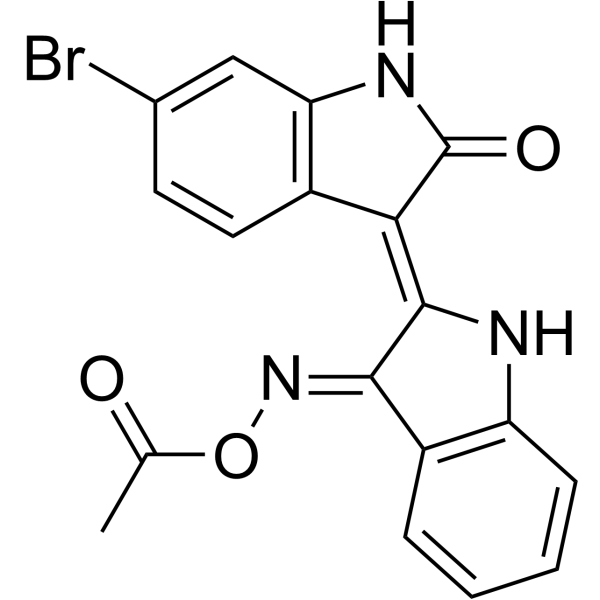
BIO-acetoxime (BIA) is a potent and selective GSK-3 inhibitor, with IC50s of both 10 nM for GSK-3α/β. BIO-acetoxime has anticonvulsant and anti-infection activity.
For research use only. We do not sell to patients.
- Purity : 98.0%
- CAS No.: 667463-85-6
- Formula: C18H12BrN3O3
- Molecular Weight:398.21
-
Storage:Powder -20°C, 3 years , 4°C, 2 years ; In solvent -80°C, 2 years , -20°C, 1 year

To place orders, for customer services and technical support, please contact: MedChemExpress USA
Tel: 609-228-6898 E-mail: [email protected] [email protected]


-
 Biological Activity
-
Chemical Information
-
Solvent & Solubility
- Protocols
- Purity & Documentation
- References
-
 Help & FAQs


-
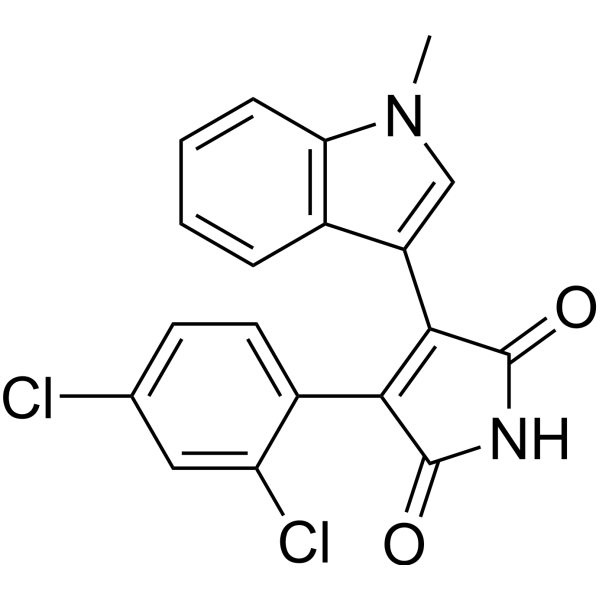
HY-12012
SB 216763Autophagy Inducer -
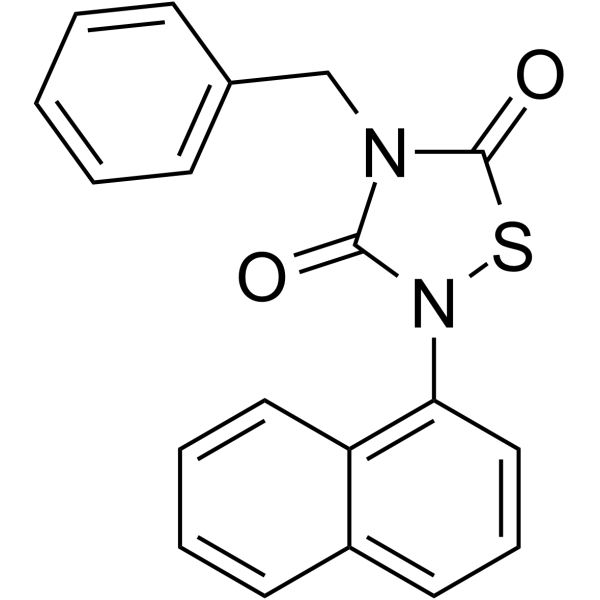
HY-14872
TideglusibGSK-3 Inhibitor -
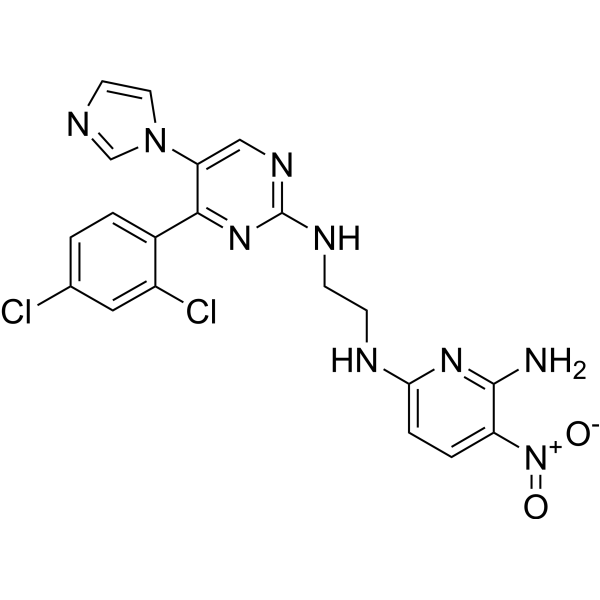
HY-13076
CHIR-98014GSK-3 Inhibitor -
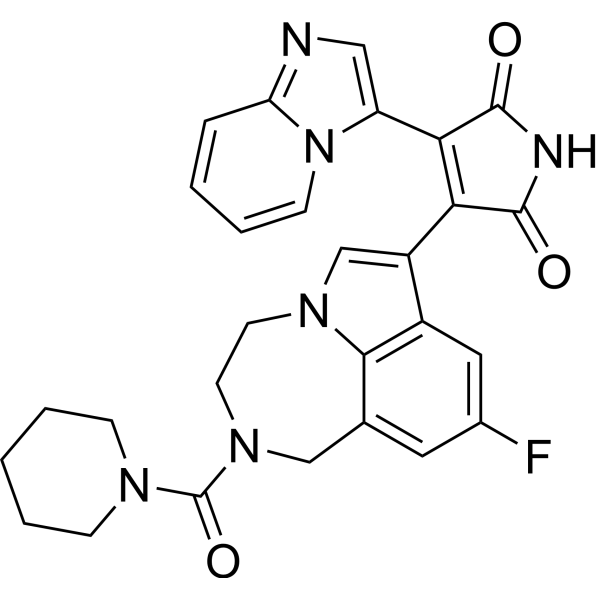
HY-16294
LY2090314GSK-3 Inhibitor -
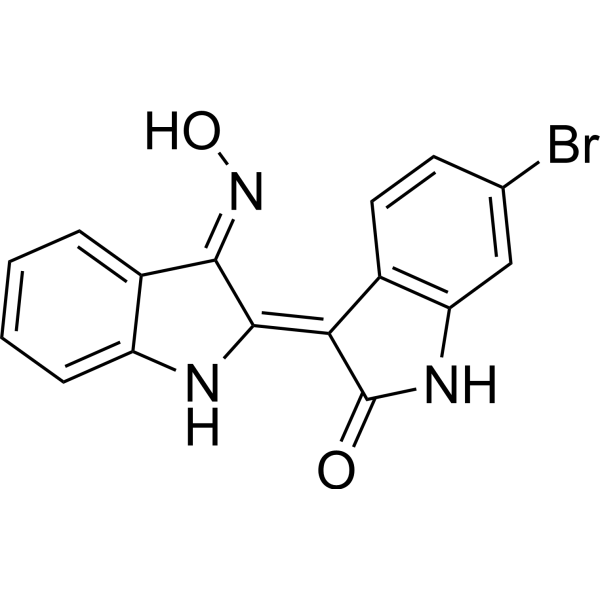
HY-10580
GSK 3 Inhibitor IXATP-Competitive Inhibitor -
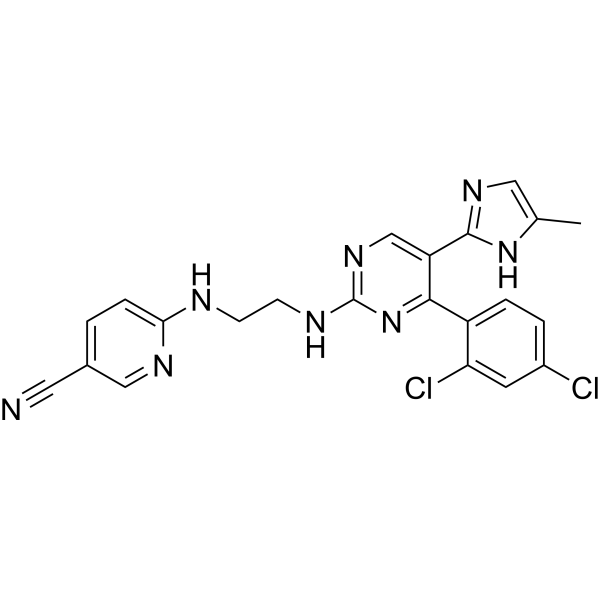
HY-10182
LaduviglusibGSK-3 Inhibitor -
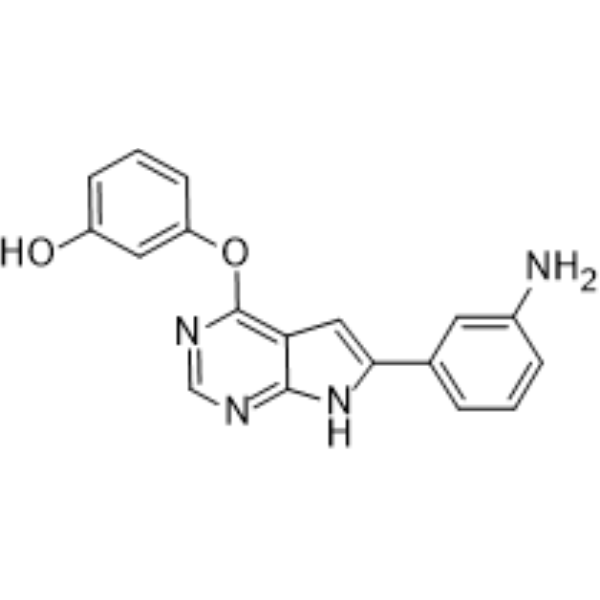
HY-10590
TWS119GSK-3β Inhibitor -
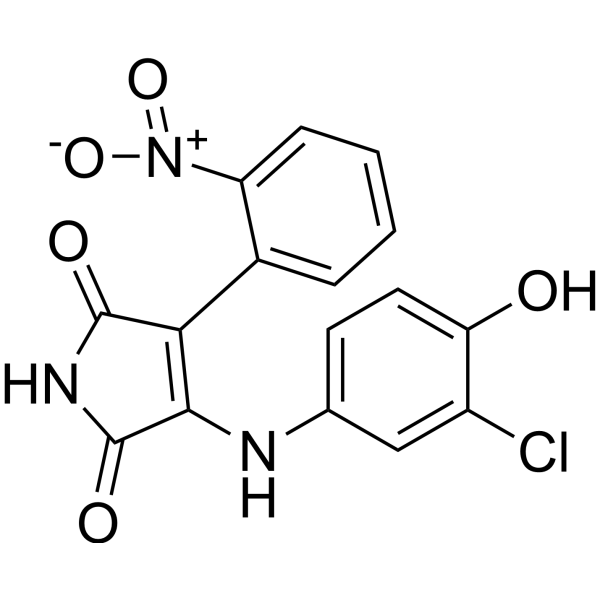
HY-15438
SB 415286Apoptosis Inducer -
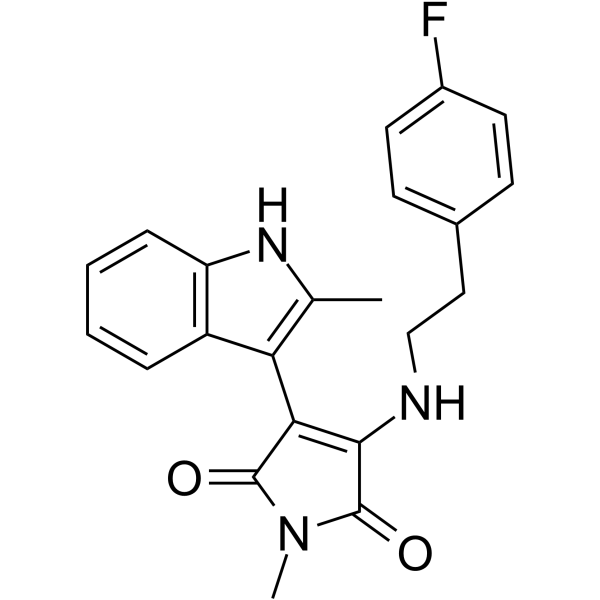
HY-12292
IM-12GSK-3β Inhibitor -
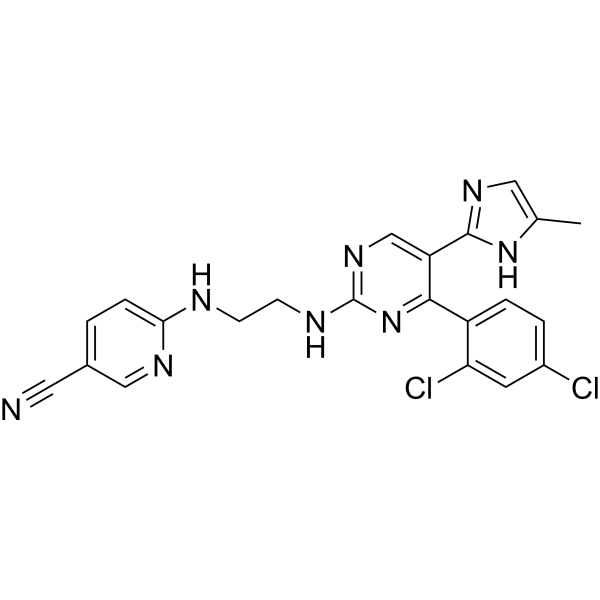
HY-10182G
Laduviglusib (GMP)GSK-3α/β Inhibitor (GMP) -
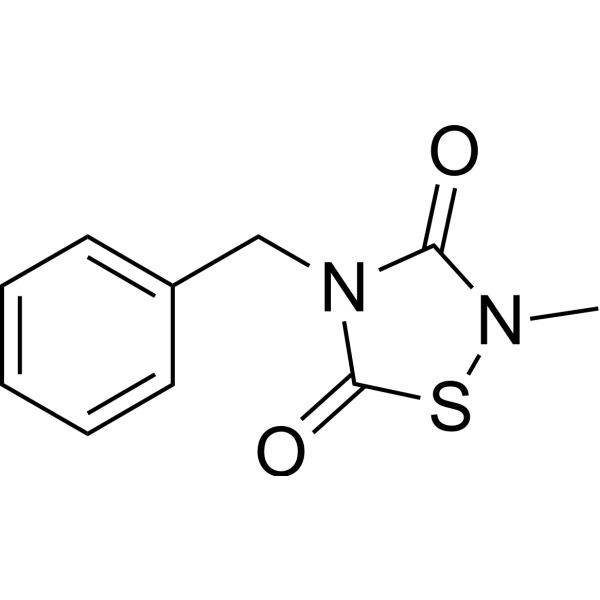
HY-11012
TDZD-8GSK-3 Inhibitor -
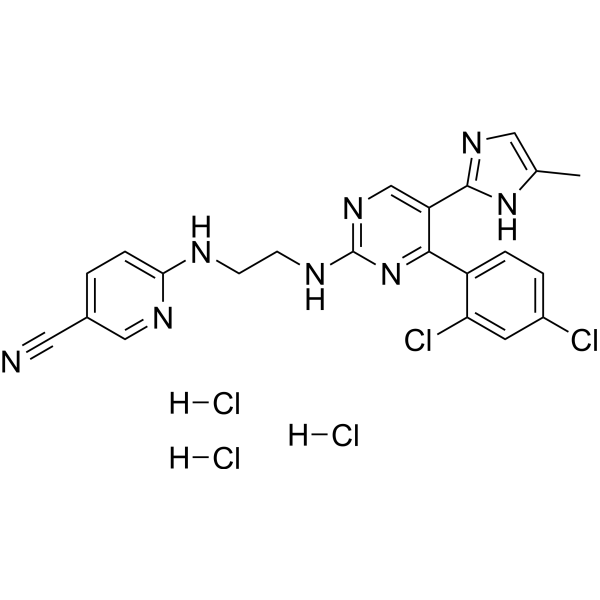
HY-10182B
Laduviglusib trihydrochlorideGSK-3α/β Inhibitor
Publications Citing Use of MedChemExpress (MCE) BIO-acetoxime
More

Biological Activity
Description
IC50 & Target
[1]|
HSV-1 |
GSK-3α 10 nM (IC50) |
GSK-3β 10 nM (IC50) |
CDK5/p35 2.4 μM (IC50) |
CDK2/cyclin A 4.3 μM (IC50) |
CDK1/cyclin B 63 μM (IC50) |
Cellular Effect
|
Cell Line

|
Type | Value | Description | References |
|---|---|---|---|---|
| A2058 | IC50 |
0.361 μM
Compound: Chemical probe : BIA
|
Antiproliferative activity against human A2058 cells harboring BRAF V600E/PTEN null mutation assessed as reduction in cell viability incubated for 72 hrs by CellTitre-Glo assay
Antiproliferative activity against human A2058 cells harboring BRAF V600E/PTEN null mutation assessed as reduction in cell viability incubated for 72 hrs by CellTitre-Glo assay
|
[PMID: 25915038] |
| A-375 | IC50 |
0.914 μM
Compound: Chemical probe : BIA
|
Antiproliferative activity against human A-375 cells harboring BRAF V600E mutation assessed as reduction in cell viability incubated for 72 hrs by CellTitre-Glo assay
Antiproliferative activity against human A-375 cells harboring BRAF V600E mutation assessed as reduction in cell viability incubated for 72 hrs by CellTitre-Glo assay
|
[PMID: 25915038] |
| CHL-1 | IC50 |
1.458 μM
Compound: Chemical probe : BIA
|
Antiproliferative activity against human CHL-1 cells assessed as reduction in cell viability incubated for 72 hrs by CellTitre-Glo assay
Antiproliferative activity against human CHL-1 cells assessed as reduction in cell viability incubated for 72 hrs by CellTitre-Glo assay
|
[PMID: 25915038] |
| M14 | IC50 |
0.646 μM
Compound: Chemical probe : BIA
|
Antiproliferative activity against human M14 cells harboring BRAF V600E mutation assessed as reduction in cell viability incubated for 72 hrs by CellTitre-Glo assay
Antiproliferative activity against human M14 cells harboring BRAF V600E mutation assessed as reduction in cell viability incubated for 72 hrs by CellTitre-Glo assay
|
[PMID: 25915038] |
| Oocyte | IC50 |
63 μM
Compound: 6-bromoindirubin-3'-acetoxime
|
Inhibitory activity against cyclin dependent kinase 1-cyclinB from starfish (Marthasterias glacialis) oocytes
Inhibitory activity against cyclin dependent kinase 1-cyclinB from starfish (Marthasterias glacialis) oocytes
|
[PMID: 14761195] |
| SK-MEL-2 | IC50 |
0.942 μM
Compound: Chemical probe : BIA
|
Antiproliferative activity against human SK-MEL-2 cells harboring NRAS Q61R mutation assessed as reduction in cell viability incubated for 72 hrs by CellTitre-Glo assay
Antiproliferative activity against human SK-MEL-2 cells harboring NRAS Q61R mutation assessed as reduction in cell viability incubated for 72 hrs by CellTitre-Glo assay
|
[PMID: 25915038] |
| SK-MEL-28 | IC50 |
>5 μM
Compound: Chemical probe : BIA
|
Antiproliferative activity against human SK-MEL-28 cells harboring BRAF V600E mutation assessed as reduction in cell viability incubated for 72 hrs by CellTitre-Glo assay
Antiproliferative activity against human SK-MEL-28 cells harboring BRAF V600E mutation assessed as reduction in cell viability incubated for 72 hrs by CellTitre-Glo assay
|
[PMID: 25915038] |
In Vitro
BIO-acetoxime (BIA; Compound 13) is a potent and selective GSK-3α/β inhibitor, with IC50s of both 10 nM. BIO-acetoxime (BIA) shows weak effect on CDK5/p35 (IC50, 2.4 μM), CDK2/cyclin A (IC50, 4.3 μM), and CDK1/cyclin B (IC50, 63 μM)[1]. BIO-acetoxime (BIA) (5 μM and 10 μM) increases the viability of HSV-1-infected cells but shows little effect on morphology and viability of mockin-fected cells. Moreover, BIO-acetoxime (BIA) (0.625, 1.25, 2.5, 5, and 10 μM) significantly reduces the release of HSV-1 particles in OC3 cells, with an EC50 of 0.68 ± 0.28 μM. BIO-acetoxime (BIA) inhibits the expression of HSV-1 genes, and may not affect the nuclear targeting of HSV-1 capsids. In addition, delayed addition of BIO-acetoxime (BIA) also inhibits HSV-1 infection[2].
MedChemExpress (MCE) has not independently confirmed the accuracy of these methods. They are for reference only. Further protocols information, click here.
In Vivo
MedChemExpress (MCE) has not independently confirmed the accuracy of these methods. They are for reference only.


Chemical Information
-
CAS No. 667463-85-6
-
Appearance Solid
-
Molecular Weight 398.21
-
Formula C18H12BrN3O3
-
Color Pale purple to purple
-
SMILES
O=C1NC2=C(C=CC(Br)=C2)/C1=C3NC4=C(C=CC=C4)C/3=N\OC(C)=O
-
Synonyms
BIA
-
Shipping
Room temperature in continental US; may vary elsewhere.
-
Storage
Powder -20°C 3 years 4°C 2 years In solvent -80°C 2 years -20°C 1 year


Publications (2)
-
Journal Impact Factor
-
Most Recent
-
Anal Chem
Exposome-Scale Investigation of Cl-/Br-Containing Chemicals Using High-Resolution Mass Spectrometry, Multistage Machine Learning, and Cloud Computing. [Abstract]2025 Jun 3;97(21):11099-11109. PMID: 40401576 -


Solvent & Solubility
In Vitro:
DMSO : 14 mg/mL (35.16 mM; ultrasonic and warming and heat to 60°C; Hygroscopic DMSO has a significant impact on the solubility of product, please use newly opened DMSO)
H2O : < 0.1 mg/mL (insoluble)
Please refer to the solubility information to select the appropriate solvent. Once prepared, please aliquot and store the solution to prevent product inactivation from repeated freeze-thaw cycles.
Storage method and period of stock solution: -80°C, 2 years; -20°C, 1 year. When stored at -80°C, please use it within 2 years. When stored at -20°C, please use it within 1 year.
Please refer to the solubility information to select the appropriate solvent. Once prepared, please aliquot and store the solution to prevent product inactivation from repeated freeze-thaw cycles.
Storage method and period of stock solution: -80°C, 2 years; -20°C, 1 year. When stored at -80°C, please use it within 2 years. When stored at -20°C, please use it within 1 year.
Concentration (start) × Volume (start) = Concentration (final) × Volume (final)
In Vivo:
Select the appropriate dissolution method based on your experimental animal and administration route.
- For the following dissolution methods, please ensure to first prepare a clear stock solution using an In Vitro approach and then sequentially add co-solvents:
- To ensure reliable experimental results, the clarified stock solution can be appropriately stored based on storage conditions. As for the working solution for In Vivo experiments, it is recommended to prepare freshly and use it on the same day.
- The percentages shown for the solvents indicate their volumetric ratio in the final prepared solution. If precipitation or phase separation occurs during preparation, heat and/or sonication can be used to aid dissolution.
Add each solvent one by one: 10% DMSO 40% PEG300 5% Tween-80 45% Saline
Solubility: ≥ 2.08 mg/mL (5.22 mM); Clear solution
This protocol yields a clear solution of ≥ 2.08 mg/mL (saturation unknown).
Taking 1 mL working solution as an example, add 100 μL DMSO stock solution (20.8 mg/mL) to 400 μL PEG300, and mix evenly; then add 50 μL Tween-80 and mix evenly; then add 450 μL Saline to adjust the volume to 1 mL.
Preparation of Saline: Dissolve 0.9 g sodium chloride in ddH₂O and dilute to 100 mL to obtain a clear Saline solution.
Add each solvent one by one: 10% DMSO 90% (20% SBE-β-CD in Saline)
Solubility: 2.08 mg/mL (5.22 mM); Suspended solution; Need ultrasonic
This protocol yields a suspended solution of 2.08 mg/mL. Suspended solution can be used for oral and intraperitoneal injection.
Taking 1 mL working solution as an example, add 100 μL DMSO stock solution (20.8 mg/mL) to 900 μL 20% SBE-β-CD in Saline, and mix evenly.
Preparation of 20% SBE-β-CD in Saline (4°C, storage for one week): 2 g SBE-β-CD powder is dissolved in 10 mL Saline, completely dissolve until clear.
In Vivo Dissolution Calculator
Please enter the basic information of animal experiments:
-
-
-
-
Recommended: Prepare an additional quantity of animals to account for potential losses during experiments.
Please enter your animal formula composition:
-
%DMSO +
Recommended: Keep the proportion of DMSO in working solution below 2% if your animal is weak.
-
%+
-
+%Tween-80 + +
-
%Saline +
The co-solvents required include: DMSO, . All of co-solvents are available by MedChemExpress (MCE). , Tween 80. All of co-solvents are available by MedChemExpress (MCE).
Working solution concentration: 0.22 mg/mL
Method for preparing stock solution: mg drug dissolved in μL DMSO. Stock solution concentration: mg/mL.
1. Take μL DMSO stock solution;
2. Add μL .
μL , mix evenly;
3. Then add μL Tween 80, mix evenly;
4. Then add μL
Please ensure that the stock solution in the first step is dissolved to a clear state, and add co-solvents in sequence. You can use ultrasonic heating (ultrasonic cleaner, recommended frequency 20-40 kHz), vortexing, etc. to assist dissolution.

Protocols
-
Research Protocol for Infectious Diseases
Infectious-disease experiments test how pathogens interact with host barriers, innate immune receptors, inflammatory signaling, pathogen replication, and tissue injury; pattern-recognition receptors such as TLRs, RIG-I-like receptors, NOD-like receptors, and inflammasomes detect microbial molecules and activate NF-κB, interferon, and cytokine responses. The central hypothesis is that infection severity reflects the balance between pathogen burden and host response: protective inflammation restricts pathogen growth, whereas excessive or mislocalized inflammation contributes to tissue damage and disease phenotype. Unresolved questions include which host pathways are protective versus pathogenic, why some infection models fail to translate to human disease, and which combined readouts best predict clinically relevant infection outcomes.


Purity & Documentation
-
Data Sheet (290 KB)
-
SDS (597 KB)
- English - EN (597 KB)
- Français - FR (597 KB)
- Deutsch - DE (597 KB)
- Norwegian - NO (597 KB)
- Español - ES (597 KB)
- Swedish - SV (597 KB)
- Italian - IT (597 KB)
- Korean - KR (597 KB)
- Portuguese - PT (597 KB)
-
Handling Instructions (2659 KB)
References
[1]. Meijer L, et al. GSK-3-selective inhibitors derived from Tyrian purple indirubins. Chem Biol. 2003 Dec;10(12):1255-66. [Content Brief]
[2]. Hsu MJ, et al. Antiherpetic potential of 6-bromoindirubin-3'-acetoxime (BIO-acetoxime) in human oral epithelial cells. Arch Virol. 2013 Jun;158(6):1287-96. [Content Brief]
[3]. Aourz N, et al. Identification of GSK-3 as a Potential Therapeutic Entry Point for Epilepsy. ACS Chem Neurosci. 2018 Nov 6. [Content Brief]


Complete Stock Solution Preparation Table
Please refer to the solubility information to select the appropriate solvent. Once prepared, please aliquot and store the solution to prevent product inactivation from repeated freeze-thaw cycles.
Storage method and period of stock solution: -80°C, 2 years; -20°C, 1 year. When stored at -80°C, please use it within 2 years. When stored at -20°C, please use it within 1 year.
| Optional Solvent | Concentration Solvent Mass | 1 mg | 5 mg | 10 mg | 25 mg |
|---|---|---|---|---|---|
| DMSO | 1 mM | 2.5112 mL | 12.5562 mL | 25.1124 mL | 62.7809 mL |
| 5 mM | 0.5022 mL | 2.5112 mL | 5.0225 mL | 12.5562 mL | |
| 10 mM | 0.2511 mL | 1.2556 mL | 2.5112 mL | 6.2781 mL | |
| 15 mM | 0.1674 mL | 0.8371 mL | 1.6742 mL | 4.1854 mL | |
| 20 mM | 0.1256 mL | 0.6278 mL | 1.2556 mL | 3.1390 mL | |
| 25 mM | 0.1004 mL | 0.5022 mL | 1.0045 mL | 2.5112 mL | |
| 30 mM | 0.0837 mL | 0.4185 mL | 0.8371 mL | 2.0927 mL |


BIO-acetoxime Related Classifications
HY-15356 Related Classifications
 Powered by Bioz