



Bucladesine sodium
Based on 52 publication(s) in Google Scholar
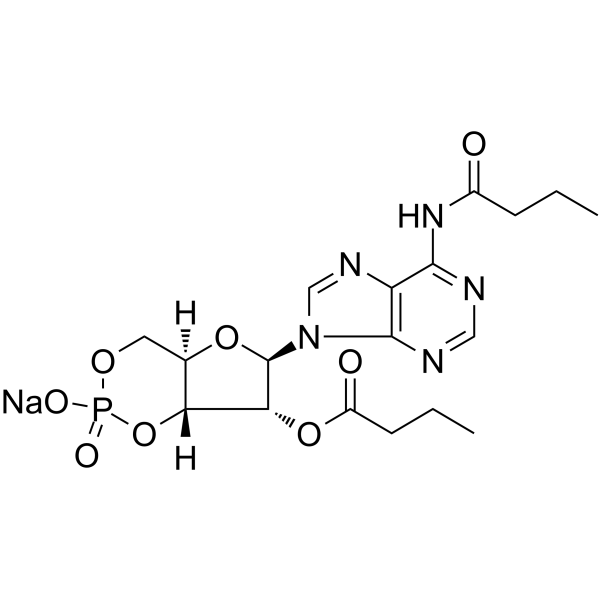
Bucladesine (Dibutyryl cAMP; DBcAMP) sodium is a membrane-permeable 3′, 5′-cyclic adenosine monophosphate (cAMP) analog. Bucladesine selectively activates cAMP dependent protein kinase (PKA) by increasing the intracellular level of cAMP. Bucladesine significantly attenuates MDMA-induced increases in hippocampal mitochondrial ROS formation, mitochondrial outer membrane damage, cytochrome c release, and hippocampal ADP/ATP ratio, thereby improving spatial learning and memory impairments. Bucladesine exhibit anti-nociceptive and anti-inflammation effect. Bucladesine can inhibit cancer cells proliferation, induce apoptosis. Bucladesine can be used for the researches of neurological disease, cancer, inflammation.
For research use only. We do not sell to patients.
- Purity : 99.88%
- CAS No.: 16980-89-5
- Formula: C18H23N5NaO8P
- Molecular Weight:491.37
-
Storage:
4°C, sealed storage, away from moisture
* In solvent : -80°C, 6 months; -20°C, 1 month (sealed storage, away from moisture)

To place orders, for customer services and technical support, please contact: MedChemExpress USA
Tel: 609-228-6898 E-mail: [email protected] [email protected]


-
 Biological Activity
-
Chemical Information
-
Solvent & Solubility
- Protocols
- Purity & Documentation
- References
-
 Help & FAQs


-
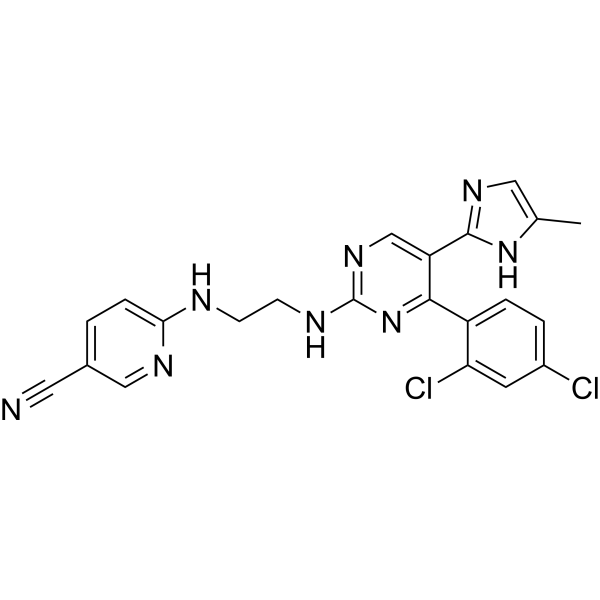
HY-10182
LaduviglusibGSK-3 Inhibitor -
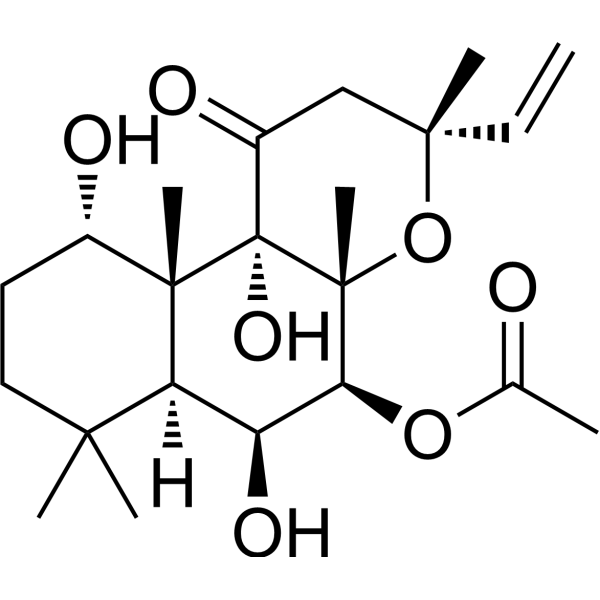
HY-15371
ForskolinAdenylate Cyclase Activator -
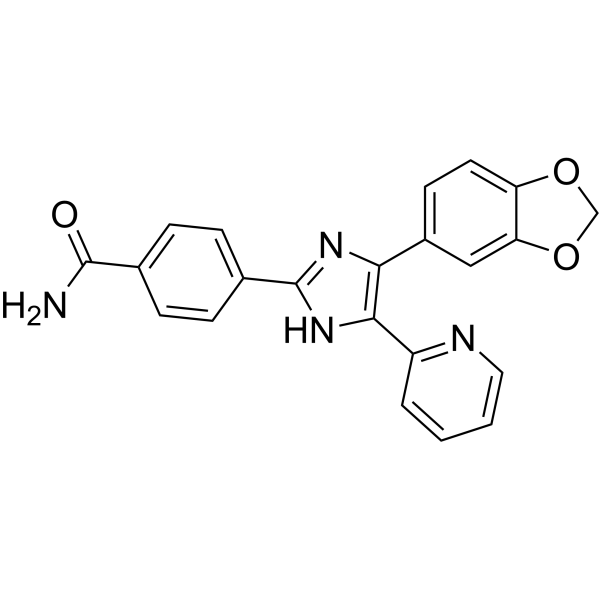
HY-10431
SB-431542TGF-β Receptor Kinase Inhibitor -
HY-13027
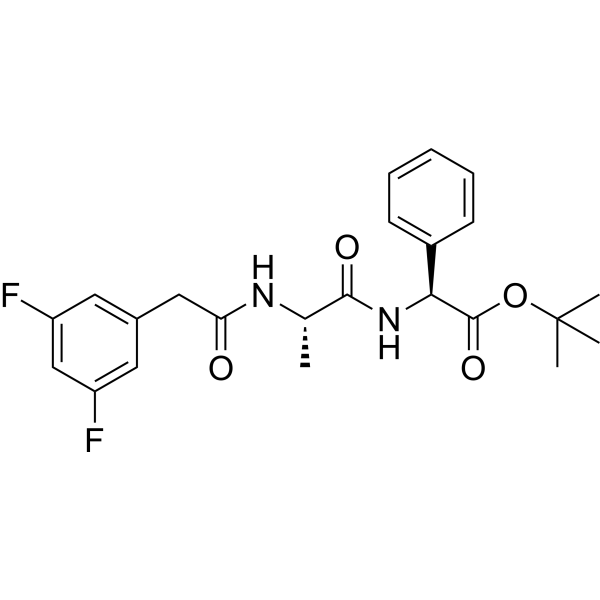
DAPTγ-secretase Inhibitor -
HY-12306
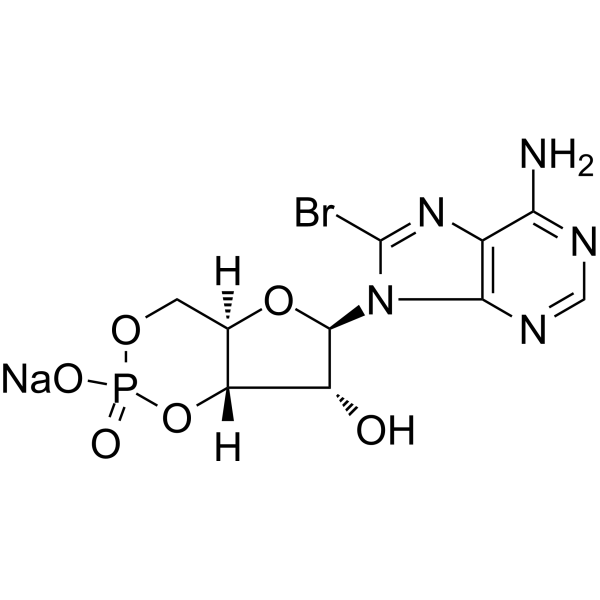
8-Bromo-cAMP sodium saltPKA Activator -
HY-B0166
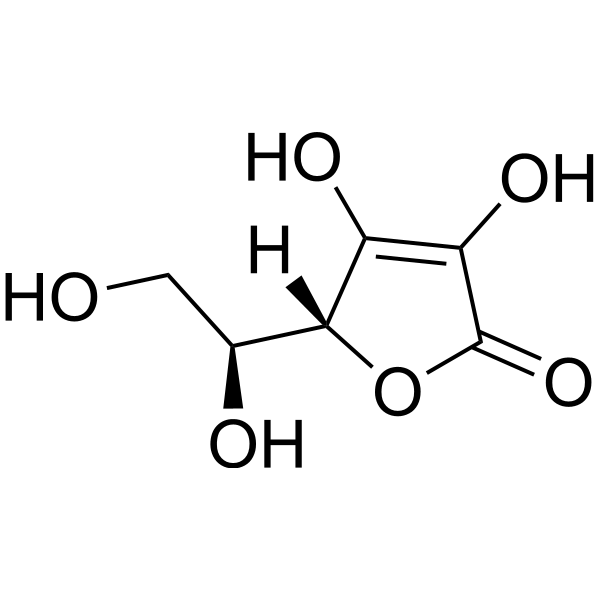
L-Ascorbic acidAntioxidant -
HY-14649
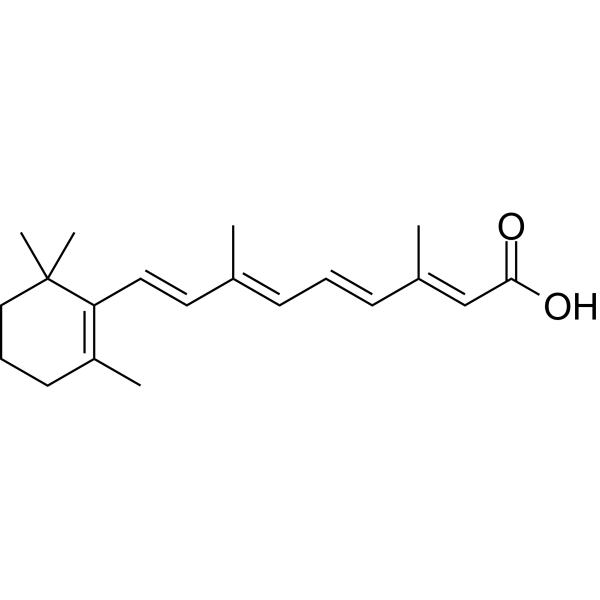
Retinoic acidRAR Agonist -
HY-B0469
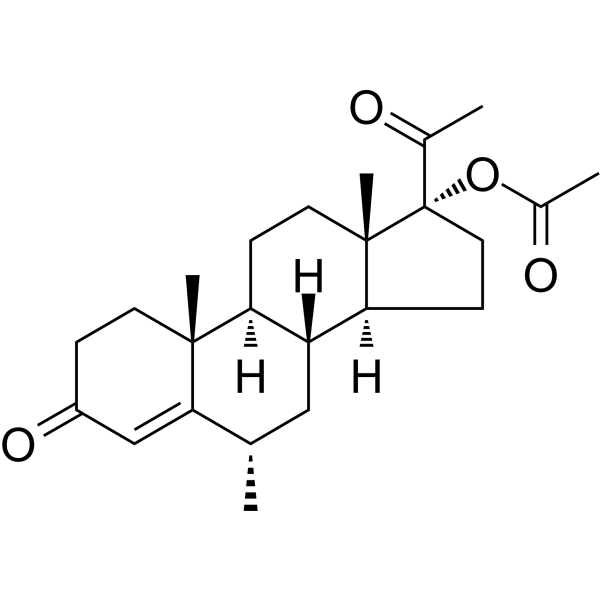
Medroxyprogesterone acetateProgesterone Receptor Agonist -
HY-10071
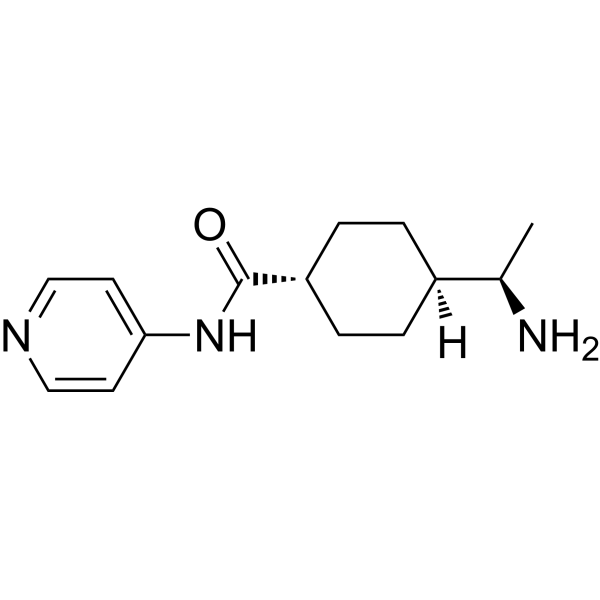
Y-27632ROCK Inhibitor -
HY-15147
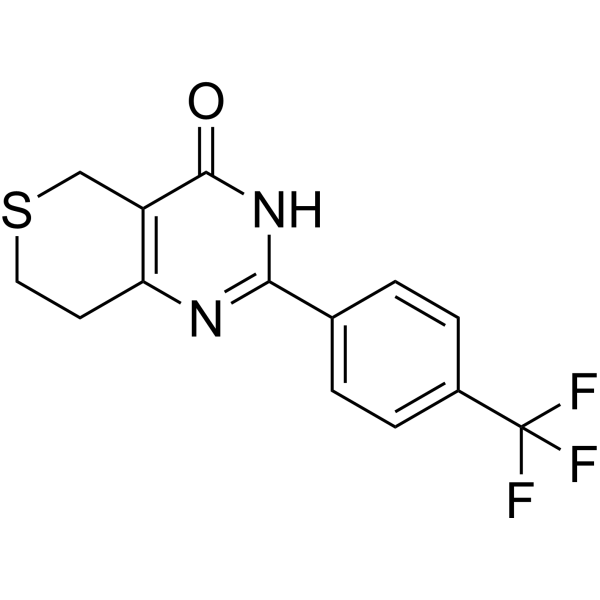
XAV-939Tankyrase Inhibitor -
HY-12848
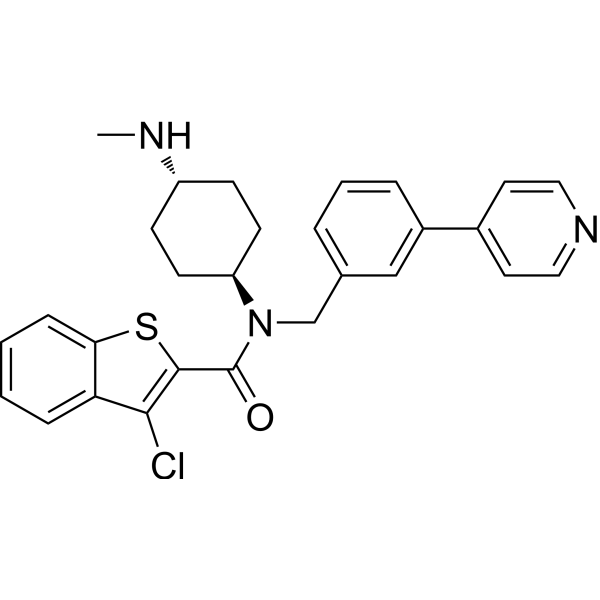
SAGSmoothened Agonist -
HY-12071
LDN193189ALK2/3 Inhibitor
Publications Citing Use of MedChemExpress (MCE) Bucladesine sodium
More- Cell. 2026 Jul 23;189(15):4685-4705.e10. [Abstract]
- Cell Stem Cell. 2021 Aug 5;28(8):1362-1379.e7. [Abstract]
- Autophagy. 2026 Jun 3:1-31. [Abstract]
- Mol Cell. 2026 Jun 12:S1097-2765(26)00344-8. [Abstract]
- Adv Sci (Weinh). 2025 May;12(20):e2409837. [Abstract]
- Adv Sci (Weinh). 2021 Dec;8(24):e2100808. [Abstract]
- Int J Biol Sci. 2024 Aug 19;20(11):4476-4495. [Abstract]
- Cell Commun Signal. 2022 Apr 12;20(1):52. [Abstract]
- Dev Cell. 2025 Sep 3:S1534-5807(25)00530-1. [Abstract]
- Cell Rep. 2026 May 28;45(6):117450. [Abstract]
- Hum Reprod. 2026 Jul 9:deag103. [Abstract]
- J Ethnopharmacol. 2026 May 23:363:121413. [Abstract]
- Ecotoxicol Environ Saf. 2022 Sep 15:243:113982. [Abstract]
- Biochem Pharmacol. 2026 May 16:118078. [Abstract]
- Life Sci. 2025 Oct 14:382:124022. [Abstract]
- Neurobiol Dis. 2026 Apr 27:107426. [Abstract]
- Cells. 2024 Jul 26;13(15):1260. [Abstract]
- Front Microbiol. 2021 Aug 17;12:692693. [Abstract]
- Front Endocrinol. 2025 Feb 19:16:1570284. [Abstract]
- Eur J Pharmacol. 2022 Oct 15:932:175231. [Abstract]
- J Endocrinol. 2019 Dec;243(3):229-242. [Abstract]
- Int J Mol Sci. 2023 Mar 7;24(6):5111. [Abstract]
- Int J Mol Sci. 2023 Feb 8;24(4):3398. [Abstract]
- Int J Mol Sci. 2022 Oct 20;23(20):12595. [Abstract]
- Chem Biol Interact. 2025 Sep 20:111749. [Abstract]
- Toxicology. 2025 Feb:511:154069. [Abstract]
- Sci Rep. 2026 May 6;16(1):20905. [Abstract]
- Plants. 2023 Oct 24;12(21):3666. [Abstract]
- J Neurochem. 2026 Feb;170(2):e70363. [Abstract]
- ASN Neuro. 2026;18(1):2696821. [Abstract]
- FASEB J. 2024 May 15;38(9):e23622. [Abstract]
- FASEB J. 2020 Oct;34(10):13376-13395. [Abstract]
- J Cell Physiol. 2025 Dec;240(12):e70118. [Abstract]
- Toxins. 2021 Aug 22;13(8):585. [Abstract]
- Genomics. 2025 Jan 21;117(2):111002. [Abstract]
- Pigment Cell Melanoma Res. 2024 Jan;37(1):21-35. [Abstract]
- Mol Cell Endocrinol. 2025 Sep 1:606:112581. [Abstract]
- Reproduction. 2021 May 27;162(1):33-45. [Abstract]
- J Steroid Biochem Mol Biol. 2023 Jan:225:106192. [Abstract]
- Cell Tissue Res. 2022 May;388(2):453-469. [Abstract]
- FEBS Lett. 2021 Nov;595(22):2829-2843. [Abstract]
- J Bone Miner Metab. 2021 Sep;39(5):748-756. [Abstract]
- J Assist Reprod Genet. 2024 Jun;41(6):1669-1685. [Abstract]
- Biochem Biophys Res Commun. 2025 Sep 19:785:152676. [Abstract]
- Exp Ther Med. 2022 Apr;23(4):248. [Abstract]
- bioRxiv. 2026 Jul 21.
- bioRxiv. 2026 Jun 16.
- SSRN. 2025 Jan 27.
- Res Sq. 2024 Jun 11.
- bioRxiv. 2024 Mar 31.
- protocols.io. 2024 Jan 12.
- Proteome Sci. 2023 Oct 11;21(1):16. [Abstract]
 Customer Validation & Images

-
WB
-
WB
-
WB
-
Cell Proliferation/Viability Assay
-
Cell Proliferation/Viability Assay


Biological Activity
Description
IC50 & Target
[5]|
PKA |
PDE |
In Vitro
Bucladesine causes significant growth delay in multicellular tumor spheroids derived directly from human malignant brain tumors[1].
Bucladesine augments differentiation therapy (in combination with Sodium butyrate (HY-B0350A) and hyperthermia) in human and canine brain tumor cells in vitro[1].
Bucladesine suppresses the mitogenic effects of platelet-derived growth factor (PDGF), basic fibroblast growth factor (bFGF), and epidermal growth factor (EGF) on human astrocytoma cells; bucladesine alone neither potentiates nor inhibits human astrocytoma cell growth[1].
Bucladesine suppresses proliferation, enhances cytoplasmic process formation, increases cytoplasmic glial fibrillary acidic protein (GFAP) levels, and suppresses malignant glioma invasion by decreasing CD44 isoform expression in cultured malignant glioma cells, inducing biochemical and morphological changes[1].
Bucladesine decreases Bcl-2 levels and enhances SNAP-induced p53-sensitive cell death and MPP+-induced cell death, sensitizing human neuroblastoma cells to apoptosis[1].
Bucladesine inhibits proliferation and induces morphological differentiation of astrocytes in vitro via a cyclic adenosine monophosphate-dependent protein kinase pathway[1].
MedChemExpress (MCE) has not independently confirmed the accuracy of these methods. They are for reference only. Further protocols information, click here.
In Vivo
Bucladesine (50-300 nM/mouse; i.p.; single dose) exerts a biphasic anti-nociceptive effect on thermal-induced acute pain in male albino mice, with significant activity at 50 and 100 nM/mouse doses, no significant effect at 300 nM/mouse[3].
Bucladesine (0.5-1.5% cream, 5% solution; topical; single or two doses) produces a statistically significant reduction in Arachidonic acid (HY-109590)-induced acute skin inflammation in Mus musculus, with single administration of 1.5% cream yielding a 28% reduction in ear swelling and two administrations yielding a 24% reduction[4].
MedChemExpress (MCE) has not independently confirmed the accuracy of these methods. They are for reference only.


Chemical Information
-
CAS No. 16980-89-5
-
Appearance Solid
-
Molecular Weight 491.37
-
Formula C18H23N5NaO8P
-
Color White to off-white
-
SMILES
O=C(CCC)O[C@H]1[C@H](N2C(N=CN=C3NC(CCC)=O)=C3N=C2)O[C@@](CO4)([H])[C@@]1([H])OP4(O[Na])=O
-
Synonyms
Dibutyryl cAMP sodium; DBcAMP sodium
-
Shipping
Room temperature in continental US; may vary elsewhere.
-
Storage
4°C, sealed storage, away from moisture
* In solvent : -80°C, 6 months; -20°C, 1 month (sealed storage, away from moisture)


Publications (52)
-
Journal Impact Factor
-
Most Recent
-
Cell
Two distinct causes contribute to the low efficiency of human pre-implantation development. [Abstract]2026 Jul 23;189(15):4685-4705.e10. PMID: 42276044 -
Cell Stem Cell
Organoid modeling of Zika and herpes simplex virus 1 infections reveals virus-specific responses leading to microcephaly. [Abstract]2021 Aug 5;28(8):1362-1379.e7. PMID: 33838105 -
Autophagy
WNT2B impairs endosomal trafficking via WASHC5 to inhibit autophagy: a novel non-secretory WNT pathway. [Abstract]2026 Jun 3:1-31. PMID: 42233622 -
Mol Cell
Distinct associations of pioneer factor Ascl1-E12a with nucleosomes drive changes in cell fate. [Abstract]2026 Jun 12:S1097-2765(26)00344-8. PMID: 42285106 -
Adv Sci (Weinh)
Microbiota-Derived Inosine Suppresses Systemic Autoimmunity via Restriction of B Cell Differentiation and Migration. [Abstract]2025 May;12(20):e2409837. PMID: 40289872 -
Adv Sci (Weinh)
2021 Dec;8(24):e2100808. PMID: 34719888 -
Int J Biol Sci
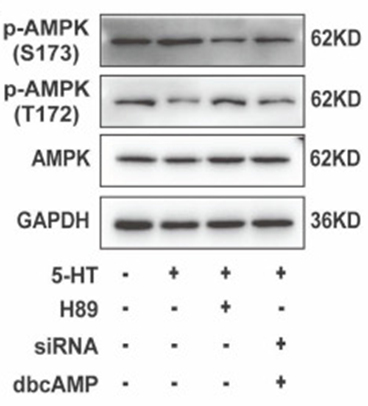
Chronic Stress-induced Serotonin Impairs Intestinal Epithelial Cell Mitochondrial Biogenesis via the AMPK-PGC-1α Axis. [Abstract]2024 Aug 19;20(11):4476-4495. PMID: 39247815
Bucladesine sodium purchased from MedChemExpress. Usage Cited in: Int J Biol Sci. 2024 Aug 19;20(11):4476-4495. [Abstract]
The protein expression of p-AMPK (S173), p-AMPK (T172) and AMPK of HT-29 cells treated with 5-HT, either alone or in combination with H-89 (1 μM) and dbcAMP (1 μM).
-
Cell Commun Signal
Receptor activity-modifying protein 1 regulates mouse skin fibroblast proliferation via the Gαi3-PKA-CREB-YAP axis. [Abstract]2022 Apr 12;20(1):52. PMID: 35413847 -
Dev Cell
A pathological role of O-GlcNAcylation-driven TR11B production and function in lung adenocarcinoma. [Abstract]2025 Sep 3:S1534-5807(25)00530-1. PMID: 40930100 -
Cell Rep
Targeting EP2/EP4-driven expansion of suppressive VSIG4high macrophages overcomes immunotherapy resistance in colorectal cancer. [Abstract]2026 May 28;45(6):117450. PMID: 42213779 -
Hum Reprod
PAPSS2-mediated BMPR1A sulfation in stromal cells regulating endometrial decidualization via autophagy. [Abstract]2026 Jul 9:deag103. PMID: 42421304 -
J Ethnopharmacol
Targeting hypoxia: the role of ethanolic extract of Coptis chinensis Franch. in modulating HIF-1α/IL-17 axis in oropharyngeal candidiasis. [Abstract]2026 May 23:363:121413. PMID: 41747790 -
Ecotoxicol Environ Saf
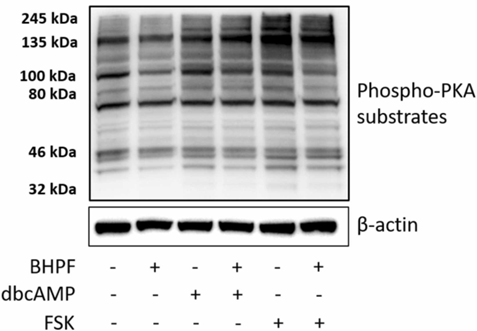
Fluorene-9-bisphenol regulates steroidogenic hormone synthesis in H295R cells through the AC/cAMP/PKA signaling pathway. [Abstract]2022 Sep 15:243:113982. PMID: 35987080
Bucladesine sodium purchased from MedChemExpress. Usage Cited in: Ecotoxicol Environ Saf. 2022 Sep 15:243:113982. [Abstract]
H295R cells were treated with 30 μM BHPF in the absence or presence of 10 μM forskolin (FSK) or 100 μM dbcAMP for 48 h and evaluated by Western blotting.
-
Biochem Pharmacol
Sotorasib induces intestinal epithelial injury through suppression of the cAMP/PKA/CREB signaling axis. [Abstract]2026 May 16:118078. PMID: 42144204 -
Life Sci
Targeting Epac1 to protect the blood brain barrier from inflammation-induced dysfunction: Evidence from an in vitro model. [Abstract]2025 Oct 14:382:124022. PMID: 41101634 -
Neurobiol Dis
Modulation of dendritic development by the neuronal hemoglobin: Role of beta-hemoglobin deficit in mediating prenatal stress-related affective disorders. [Abstract]2026 Apr 27:107426. PMID: 42055258 -
Cells
From Young to Old: Mimicking Neuronal Aging in Directly Converted Neurons from Young Donors. [Abstract]2024 Jul 26;13(15):1260. PMID: 39120291 -
Front Microbiol
Antifungal Activity and Potential Mechanism of 6,7, 4'-O-Triacetylscutellarein Combined With Fluconazole Against Drug-Resistant C. albicans. [Abstract]2021 Aug 17;12:692693. PMID: 34484140 -
Front Endocrinol
2025 Feb 19:16:1570284. PMID: 40046876 -
Eur J Pharmacol
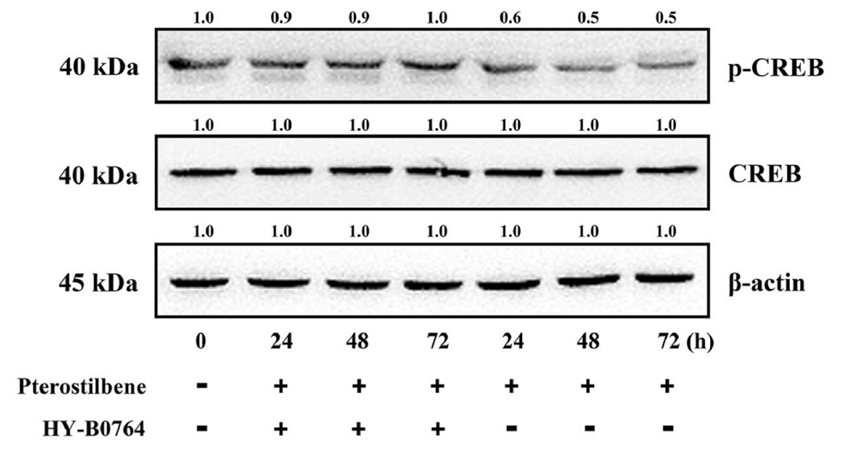
Pterostilbene inhibits melanogenesis, melanocyte dendricity and melanosome transport through cAMP/PKA/CREB pathway. [Abstract]2022 Oct 15:932:175231. PMID: 36038012
Bucladesine sodium purchased from MedChemExpress. Usage Cited in: Eur J Pharmacol. 2022 Oct 15:932:175231. [Abstract]
B16F10 cells was pretreated or not with 3 μM Bucladesine sodium for 1 h before pterostilbene was applied for 24 h, 48h or 72 h at 3 μM. The CREB and p-CREB protein expression levels were detected by WB.
Bucladesine sodium purchased from MedChemExpress. Usage Cited in: Eur J Pharmacol. 2022 Oct 15:932:175231. [Abstract]
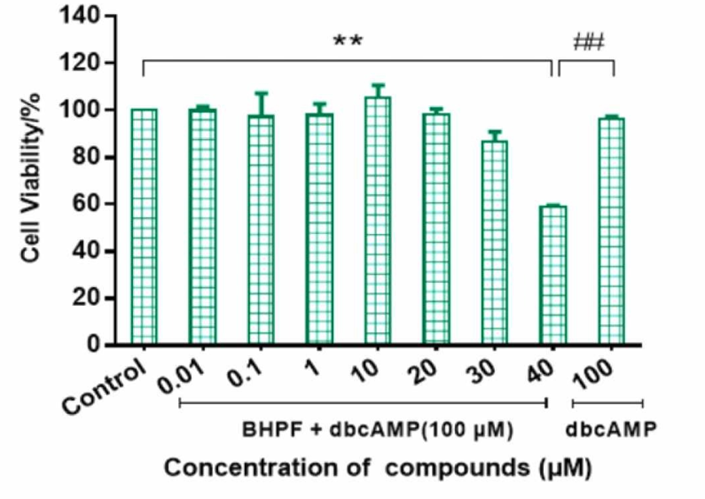
Cell viability of H295R cells exposed to 0–40 μM BHPF in the presence of 100 μM dbcAMP for 48 h.
Bucladesine sodium purchased from MedChemExpress. Usage Cited in: Eur J Pharmacol. 2022 Oct 15:932:175231. [Abstract]
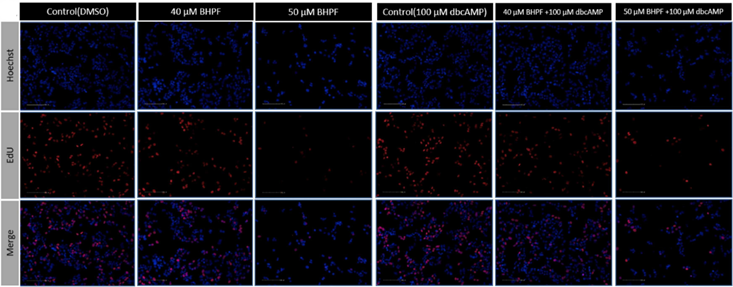
Micrographs presenting the incorporation of EdU in H295R cells exposed to BHPF or combined with 100 μM dbcAMP for 48 h. Red: the EdU positive cells; blue: the cell nuclei (Hoechst).
-
J Endocrinol
2019 Dec;243(3):229-242. PMID: 31518992 -
Int J Mol Sci
The Enzyme 15-Hydroxyprostaglandin Dehydrogenase Inhibits a Shift to the Mesenchymal Pattern of Trophoblasts and Decidual Stromal Cells Accompanied by Prostaglandin Transporter in Preeclampsia. [Abstract]2023 Mar 7;24(6):5111. PMID: 36982197 -
Int J Mol Sci
Galangin Rescues Alzheimer's Amyloid-β Induced Mitophagy and Brain Organoid Growth Impairment. [Abstract]2023 Feb 8;24(4):3398. PMID: 36834819 -
Int J Mol Sci
Asprosin in the Paraventricular Nucleus Induces Sympathetic Activation and Pressor Responses via cAMP-Dependent ROS Production. [Abstract]2022 Oct 20;23(20):12595. PMID: 36293450 -
Chem Biol Interact
Phytosphingosine suppresses gastric cancer through SFRP4/β-catenin axis-mediated Wnt signaling pathway inhibition. [Abstract]2025 Sep 20:111749. PMID: 40983245 -
Toxicology
Cadmium induces spontaneous abortion by impairing endometrial stromal cell decidualization. [Abstract]2025 Feb:511:154069. PMID: 39892737 -
Sci Rep
2026 May 6;16(1):20905. PMID: 42092124 -
Plants
Anti-Melanogenic Effects of Lilium lancifolium Root Extract via Downregulation of PKA/CREB and MAPK/CREB Signaling Pathways in B16F10 Cells. [Abstract]2023 Oct 24;12(21):3666. PMID: 37960022 -
J Neurochem
Zinc-Mediated Lysosomal Destabilization Links Mitochondrial Damage to Neuronal Death in a Cellular MPP+ Model of Parkinson's Disease. [Abstract]2026 Feb;170(2):e70363. PMID: 41622607 -
ASN Neuro
Hijacking Sodium-Glucose Cotransporters: Fructose Drives Neuronal and Microglial Dysfunction. [Abstract]2026;18(1):2696821. PMID: 42429375 -
FASEB J
Long noncoding RNA BMPR1B-AS1 stability regulated by IGF2BP2 affects the decidualization in endometriosis patients through the SMAD1/5/9 pathway. [Abstract]2024 May 15;38(9):e23622. PMID: 38703029 -
FASEB J
Morinda officinalis oligosaccharides ameliorate depressive-like behaviors in poststroke rats through upregulating GLUT3 to improve synaptic activity. [Abstract]2020 Oct;34(10):13376-13395. PMID: 32812265 -
J Cell Physiol
Telomere Attrition-Induced Senescence in Human Pluripotent Stem Cell-Derived Astrocytes: Distinct Cellular and Functional Characteristics. [Abstract]2025 Dec;240(12):e70118. PMID: 41340457 -
Toxins
2021 Aug 22;13(8):585. PMID: 34437455 -
Genomics
2025 Jan 21;117(2):111002. PMID: 39848478 -
Pigment Cell Melanoma Res
Modeling of pigmentation disorders associated with MITF mutation in Waardenburg syndrome revealed an impaired melanogenesis pathway in iPS-derived melanocytes. [Abstract]2024 Jan;37(1):21-35. PMID: 37559350 -
Mol Cell Endocrinol
Embryo-derived human chorionic gonadotropin promotes human decidualization through activating epithelial prostaglandin F2α secretion. [Abstract]2025 Sep 1:606:112581. PMID: 40398806 -
Reproduction
2021 May 27;162(1):33-45. PMID: 34044364 -
J Steroid Biochem Mol Biol
Nonclassic Adrenal Hyperplasia (NCAH) due to 21-hydroxylase deficiency: A cohort of 78 patients. [Abstract]2023 Jan:225:106192. PMID: 36167262 -
Cell Tissue Res
MAX deficiency impairs human endometrial decidualization through down-regulating OSR2 in women with recurrent spontaneous abortion. [Abstract]2022 May;388(2):453-469. PMID: 35146559 -
FEBS Lett
miR-221/222 suppression induced by activation of the cAMP/PKA/CREB1 pathway is required for cAMP-induced bidirectional differentiation of glioma cells. [Abstract]2021 Nov;595(22):2829-2843. PMID: 34687039 -
J Bone Miner Metab
2021 Sep;39(5):748-756. PMID: 33829324 -
J Assist Reprod Genet
2024 Jun;41(6):1669-1685. PMID: 38526774 -
Biochem Biophys Res Commun
Glucose transports in the ileum: mechanism, regulation and physiological role of ileal glucose absorption. [Abstract]2025 Sep 19:785:152676. PMID: 41005286 -
Exp Ther Med
Melatonin alleviates traumatic brain injury-induced anxiety-like behaviors in rats: Roles of the protein kinase A/cAMP-response element binding signaling pathway. [Abstract]2022 Apr;23(4):248. PMID: 35261620
Bucladesine sodium purchased from MedChemExpress. Usage Cited in: Exp Ther Med. 2022 Apr;23(4):248. [Abstract]
Bucladesine hemicalcium (dbcAMP). Representative results of immunoblotting of PKA, p-PKA, CREB, p-CREB, NF-κB and p-NF-κB in the amygdala tissue.
-
-
-
-
-
-
-
Proteome Sci
Proteomic analysis of neonatal mouse hearts shows PKA functions as a cardiomyocyte replication regulator. [Abstract]2023 Oct 11;21(1):16. PMID: 37821903


Solvent & Solubility
In Vitro:
H2O : ≥ 100 mg/mL (203.51 mM)
DMSO : 100 mg/mL (203.51 mM; Need ultrasonic; Hygroscopic DMSO has a significant impact on the solubility of product, please use newly opened DMSO)
* "≥" means soluble, but saturation unknown.
Please refer to the solubility information to select the appropriate solvent. Once prepared, please aliquot and store the solution to prevent product inactivation from repeated freeze-thaw cycles.
Storage method and period of stock solution: -80°C, 6 months; -20°C, 1 month (sealed storage, away from moisture). When stored at -80°C, please use it within 6 months. When stored at -20°C, please use it within 1 month.
* Note: If you choose water as the stock solution, please dilute it to the working solution, then filter and sterilize it with a 0.22 μm filter before use.
Please refer to the solubility information to select the appropriate solvent. Once prepared, please aliquot and store the solution to prevent product inactivation from repeated freeze-thaw cycles.
Storage method and period of stock solution: -80°C, 6 months; -20°C, 1 month (sealed storage, away from moisture). When stored at -80°C, please use it within 6 months. When stored at -20°C, please use it within 1 month.
* Note: If you choose water as the stock solution, please dilute it to the working solution, then filter and sterilize it with a 0.22 μm filter before use.
Concentration (start) × Volume (start) = Concentration (final) × Volume (final)

Protocols
-
Protocol for Shuttle Box Test (TDPA)
The Shuttle Box Test for TDPA, or temporally dissociated passive avoidance, measures hippocampus-dependent associative learning by testing whether a rodent avoids entering a dark compartment that was previously paired with foot shock after a temporal delay between dark-compartment entry and shock delivery. The main behavioral readout is crossover or step-through latency from the light chamber into the dark chamber; increased latency across training or retention trials reflects learned avoidance memory rather than motor performance alone.
-
Apoptosis
Apoptosis, also called programmed cell death, is generally characterized by distinct morphological characteristics.
-
TUNEL staining for apoptotic DNA fragmentation
TUNEL staining detects DNA strand breaks by using terminal deoxynucleotidyl transferase to add labeled nucleotides to exposed 3′-OH DNA termini, generating either microscopic staining in fixed cells or tissue sections, or fluorescence/cytometric signal in cell suspensions. TUNEL positivity reflects DNA fragmentation but should not be interpreted alone as definitive apoptosis, because TUNEL can also label necrotic, autolytic, mechanically damaged, or DNA-repair-associated DNA breaks.
-
Annexin V plus membrane-impermeant dye apoptosis staining
Annexin V-based apoptosis assays rely on the detection of phosphatidylserine (PS) externalization from the inner leaflet of the plasma membrane to the outer leaflet, an early biochemical hallmark of apoptosis. Fluorescently labeled Annexin V binds PS in a calcium-dependent manner, enabling identification of early apoptotic cells by flow cytometry or fluorescence microscopy. When combined with a membrane-impermeant DNA-binding dye (e. g. , propidium iodide), this approach allows discrimination between viable (Annexin V−/dye−), early apoptotic (Annexin V+/dye−), and late apoptotic or necrotic (Annexin V+/dye+) cell populations by assessing membrane integrity and PS exposure.
-
ROS/oxidative-stress fluorescent staining
ROS/oxidative-stress fluorescent staining uses cell-permeant fluorogenic probes that become fluorescent after oxidation inside cells or tissues; commonly used examples include DCFH-DA/DCFDA for broad cellular oxidant detection, DHE for superoxide-related signal detection, MitoSOX for mitochondrial superoxide-related signal detection, and CellROX probes for oxidative-stress-associated fluorescence readouts. The assay detects probe oxidation rather than a single ROS species unless the probe and analysis method have been chemically validated for that species. DCFH-DA enters cells, is deacetylated by intracellular esterases to DCFH, and produces fluorescent DCF after oxidation, so the readout is used as an operational measure of total cellular oxidative stress rather than a species-specific ROS measurement. DHE and MitoSOX can report superoxide-related oxidation, but red fluorescence alone can include non-specific ethidium-like oxidation products; HPLC or optimized spectral approaches are
-
Protocol for Water Maze
The Morris Water Maze is a rodent spatial learning and memory assay in which a mouse or rat swims in opaque water to find an escape platform; in the hidden-platform version, the animal cannot see the platform and must use distal extra-maze cues to learn its fixed spatial location. The assay primarily measures hippocampus-dependent spatial learning during acquisition trials and spatial reference memory during probe trials after platform removal; readouts include escape latency, swim path length, swim speed, quadrant occupancy, platform-site crossings, and proximity to the former platform location.
-
Apoptosis Solutions
Apoptosis is a regulated, generally non-lytic cell-death pathway that removes unwanted, damaged, infected, or abnormal cells through coordinated morphological changes, caspase activation, DNA fragmentation, and membrane remodeling. The intrinsic apoptosis pathway is controlled mainly by mitochondrial outer membrane permeabilization, BCL-2 family proteins, cytochrome c release, apoptosome formation, caspase-9 activation, and downstream executioner caspase-3/7 activation. The extrinsic apoptosis pathway is initiated by death receptors such as Fas, TNFR, and TRAIL receptors, which recruit adaptor proteins and activate caspase-8 before engaging executioner caspases or mitochondrial amplification through BID cleavage. Apoptosis is linked to many phenotypes, including cancer cell killing, tissue homeostasis, immune regulation, neurodegeneration, infection response, and treatment-induced cytotoxicity; unresolved questions include how apoptosis interacts with necroptosis, pyroptosis, ferroptos
-
Research Protocol for Inflammation-related Diseases
The NLRP3 inflammasome is a cytosolic innate immune signaling platform that integrates priming signals and danger-signal activation to promote caspase-1 activation, maturation of IL-1β and IL-18, and gasdermin D-mediated pyroptotic cell death. The core experimental logic is to determine whether inflammatory disease phenotypes are driven by increased NLRP3 expression, ASC-containing inflammasome assembly, caspase-1 cleavage, GSDMD cleavage, and extracellular release of IL-1β/IL-18 rather than by nonspecific cell injury alone. The pathway is strongly linked to inflammation-related disease phenotypes because monosodium urate crystals activate NALP3/NLRP3 inflammasome signaling in gout-like crystal inflammation, cholesterol crystals activate NLRP3 inflammasomes in atherogenesis models, and DSS-induced intestinal inflammation has been reported to involve NLRP3 inflammasome activity. However, experimental colitis studies also show context-dependent protective effects of NLRP3 inflammasome co
-
Research Protocol for Neurological Diseases
PINK1/Parkin-mediated mitophagy pathway is a mitochondrial quality-control signaling axis in which mitochondrial depolarization stabilizes PINK1 on damaged mitochondria, activates Parkin recruitment and E3 ubiquitin ligase activity, promotes ubiquitination of outer mitochondrial membrane proteins, recruits selective autophagy adaptors, and drives lysosomal degradation of damaged mitochondria. In neurological disease research, this pathway is experimentally important because neurons, especially dopaminergic neurons, are highly dependent on mitochondrial integrity, and defective mitochondrial turnover can lead to mitochondrial dysfunction, oxidative stress, impaired neuronal survival, α-synuclein accumulation, and neuroinflammatory damage-associated signals. The genetic disease link is strongest in Parkinson’s disease because mutations in PRKN/parkin cause autosomal recessive juvenile parkinsonism, mutations in PINK1 cause hereditary early-onset Parkinson’s disease, and Drosophila studie
-
Cell Viability Determination by MTT Colorimetric Assay
The following protocol uses the MTT colorimetric assay as a classic literature-established method for assessing cell viability/metabolic activity in cultured mammalian cells. MTT[3-(4,5-dimethylthiazol-2-yl)-2,5-diphenyltetrazolium bromide] is reduced by metabolically active cells to a colored formazan product; the amount of formazan is quantified spectrophotometrically and provides an indirect measure of metabolically active viable cells. Importantly, MTT reduction reflects cellular oxidoreductase/metabolic activity rather than an absolute direct count of living cells, so changes in cellular metabolism can alter the signal independently of cell number.


Purity & Documentation
-
Data Sheet (279 KB)
-
SDS (397 KB)
- English - EN (397 KB)
- Français - FR (397 KB)
- Deutsch - DE (397 KB)
- Norwegian - NO (397 KB)
- Español - ES (397 KB)
- Swedish - SV (397 KB)
- Italian - IT (397 KB)
- Korean - KR (397 KB)
- Portuguese - PT (397 KB)
-
Handling Instructions (2659 KB)
References
[1]. Dalbasti T, et al. Local interstitial chemotherapy with sustained release bucladesine in de novo glioblastoma multiforme: a preliminary study. J Neurooncol. 2002;56(2):167-174. [Content Brief]
[2]. Dalbasti T, et al. Local interstitial chemotherapy with sustained release bucladesine in de novo glioblastoma multiforme: a preliminary study. J Neurooncol. 2002;56(2):167-174. [Content Brief]
[3]. Salehi F, et al. Effect of bucladesine, pentoxifylline, and H-89 as cyclic adenosine monophosphate analog, phosphodiesterase, and protein kinase A inhibitor on acute pain. Fundam Clin Pharmacol. 2017;31(4):411-419. [Content Brief]
[4]. Rundfeldt C, et al. The stable cyclic adenosine monophosphate analogue, dibutyryl cyclo-adenosine monophosphate (bucladesine), is active in a model of acute skin inflammation. Arch Dermatol Res. 2012;304(4):313-317. [Content Brief]


Complete Stock Solution Preparation Table
Please refer to the solubility information to select the appropriate solvent. Once prepared, please aliquot and store the solution to prevent product inactivation from repeated freeze-thaw cycles.
Storage method and period of stock solution: -80°C, 6 months; -20°C, 1 month (sealed storage, away from moisture). When stored at -80°C, please use it within 6 months. When stored at -20°C, please use it within 1 month.
| Optional Solvent | Concentration Solvent Mass | 1 mg | 5 mg | 10 mg | 25 mg |
|---|---|---|---|---|---|
| H2O / DMSO | 1 mM | 2.0351 mL | 10.1756 mL | 20.3513 mL | 50.8782 mL |
| 5 mM | 0.4070 mL | 2.0351 mL | 4.0703 mL | 10.1756 mL | |
| 10 mM | 0.2035 mL | 1.0176 mL | 2.0351 mL | 5.0878 mL | |
| 15 mM | 0.1357 mL | 0.6784 mL | 1.3568 mL | 3.3919 mL | |
| 20 mM | 0.1018 mL | 0.5088 mL | 1.0176 mL | 2.5439 mL | |
| 25 mM | 0.0814 mL | 0.4070 mL | 0.8141 mL | 2.0351 mL | |
| 30 mM | 0.0678 mL | 0.3392 mL | 0.6784 mL | 1.6959 mL | |
| 40 mM | 0.0509 mL | 0.2544 mL | 0.5088 mL | 1.2720 mL | |
| 50 mM | 0.0407 mL | 0.2035 mL | 0.4070 mL | 1.0176 mL | |
| 60 mM | 0.0339 mL | 0.1696 mL | 0.3392 mL | 0.8480 mL | |
| 80 mM | 0.0254 mL | 0.1272 mL | 0.2544 mL | 0.6360 mL | |
| 100 mM | 0.0204 mL | 0.1018 mL | 0.2035 mL | 0.5088 mL |
* Note: If you choose water as the stock solution, please dilute it to the working solution, then filter and sterilize it with a 0.22 μm filter before use.


Bucladesine sodium Related Classifications
HY-B0764 Related Classifications
 Powered by Bioz