



Cecropin A
Based on 2 publication(s) in Google Scholar
Cecropin A is a linear 37-residue antimicrobial polypeptide, with anticancer and anti-inflammatory activity.
For research use only. We do not sell to patients.
- Purity : 99.62%
- CAS No.: 80451-04-3
- Formula: C184H313N53O46
- Molecular Weight:4003.78
-
Storage:
Sealed storage, away from moisture.
Powder -80°C, 2 years , -20°C, 1 year* In solvent : -80°C, 6 months; -20°C, 1 month (sealed storage, away from moisture)

To place orders, for customer services and technical support, please contact: MedChemExpress USA
Tel: 609-228-6898 E-mail: [email protected] [email protected]


-
 Biological Activity
-
Chemical Information
-
Solvent & Solubility
- Protocols
- Purity & Documentation
- References
-
 Help & FAQs


-

HY-P0269
Magainin 1Antimicrobial Peptide -
HY-P1222
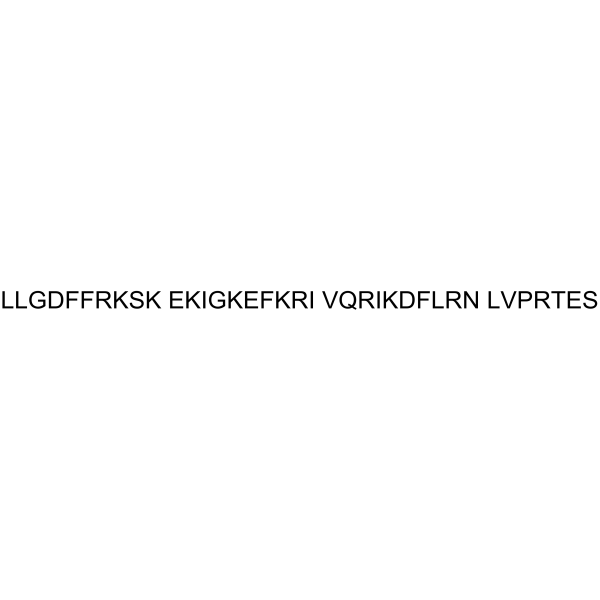
LL-37, humanAntimicrobial Peptide -
HY-P0092
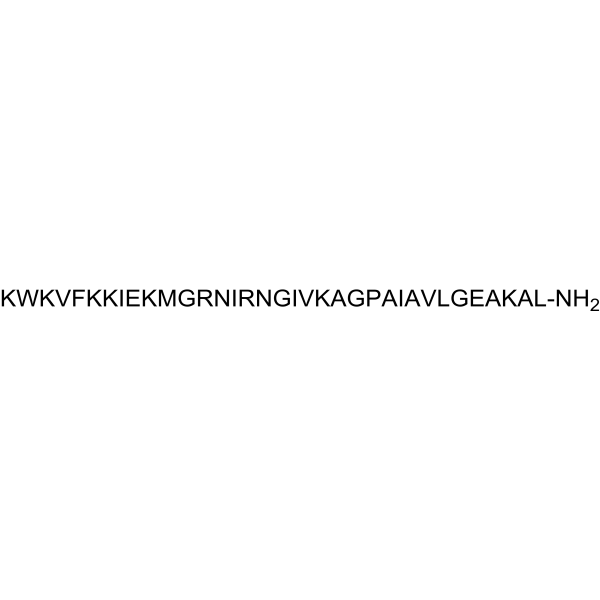
Cecropin BCytochrome P450 Inhibitor -

HY-P0270
Magainin 2Antimicrobial Peptide -
HY-106783
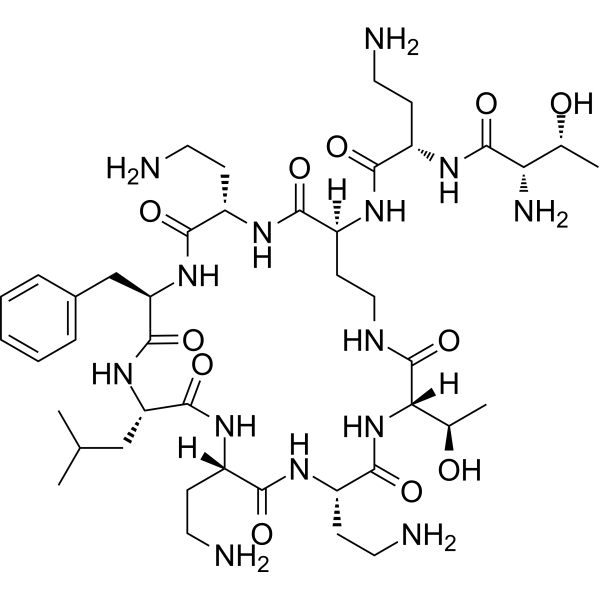
Polymyxin B nonapeptideAntibiotic -
HY-P0263
DermaseptinAntimicrobial Agent -
HY-13223
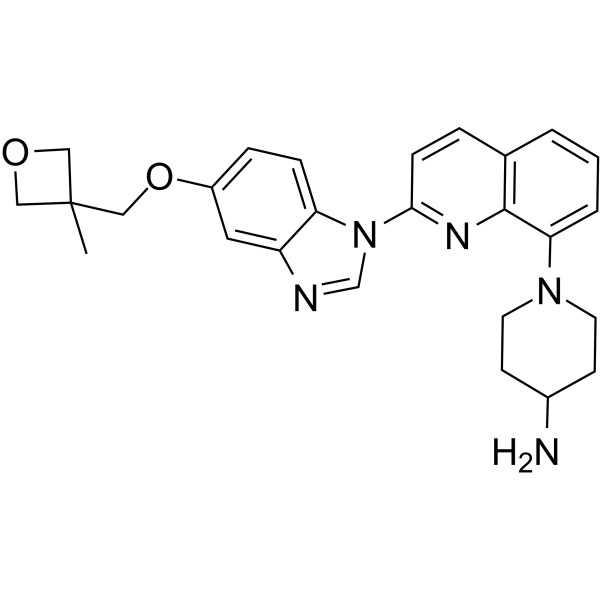
CrenolanibFLT3 Inhibitor -
HY-P0233
MelittinPLA2 Activator -
HY-K0201
Anti-HA Magnetic Beads -

HY-P70610
IFN-gamma Protein, Human (HEK293) -
HY-P1938
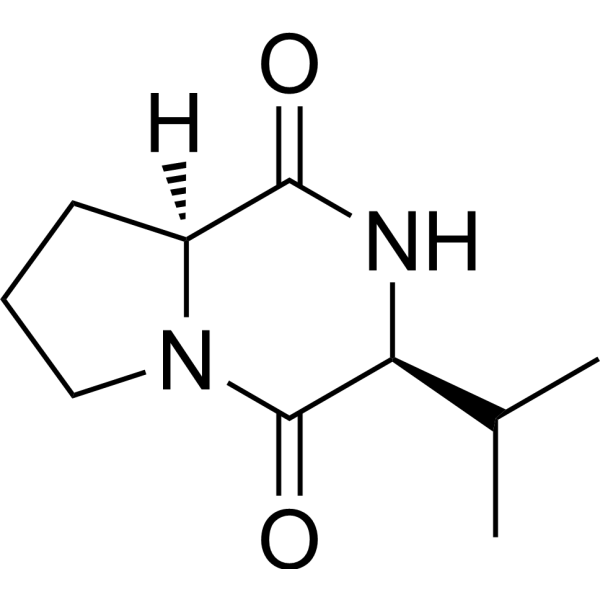
Cyclo(L-Pro-L-Val)Bacterial Inhibitor/Anti-inflammatory Agent -
HY-P3914
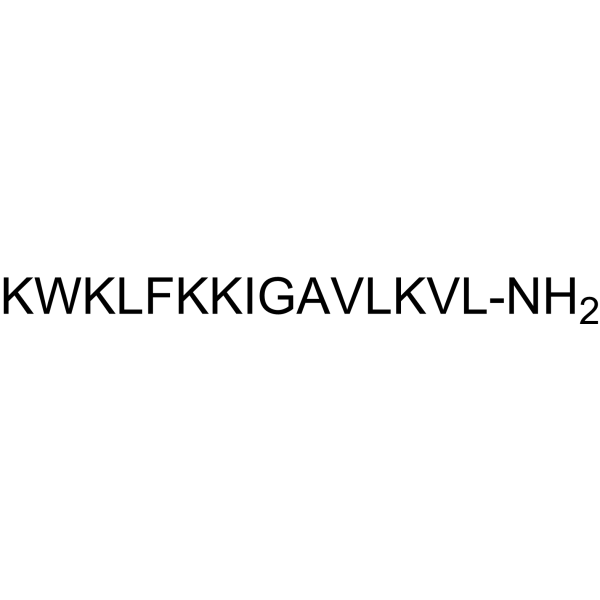
Cecropin A (1-7)-Melittin A (2-9)Antibacterial Peptide
Publications Citing Use of MedChemExpress (MCE) Cecropin A
MoreAll Antibiotic Isoforms
More

Biological Activity
Description
IC50 & Target
Bacterial[2]
In Vitro
Cecropin A shows anticancer activity. Cecropin A (10-50 μM) dose-dependently reduces the viability of HL-60 cells. Cecropin A (30 μM) promotes ROS production, causes mitochondrial membrane potential (Δψm) collapse, and generates morphological changes in nuclear chromatin in HL-60 cells. Cecropin A (30 μM) also leads to an early apoptosis and cuases caspase-independent cell death in HL-60 cells[1]. Cecropin A has cytotoxicity on gram negative bacteria, including A. baumanii (CCARM 12005, CCARM 12035, CCARM 12036, CCARM 12037) with minimal inhibitory concentration (MIC) of 0.5-1 μM. Cecropin A (25 μM) significantly blocks the expression of mTNF-α, mIL-1β, and mMIP-2 mRNA and slightly inhibited the expression of mMIP-1 mRNA in RAW264.7 cells. Cecropin A (0.1, 0.25, 0.5, 1, 2.5, 5 μM) also inhibits NO production and reduces mTNF-α cytokine levels in LPS-stimulated RAW264.7 cells, and exihibits anti-inflammatory activity[2].
MedChemExpress (MCE) has not independently confirmed the accuracy of these methods. They are for reference only. Further protocols information, click here.


Chemical Information
-
CAS No. 80451-04-3
-
Appearance Solid
-
Molecular Weight 4003.78
-
Formula C184H313N53O46
-
Color White to off-white
-
Sequence
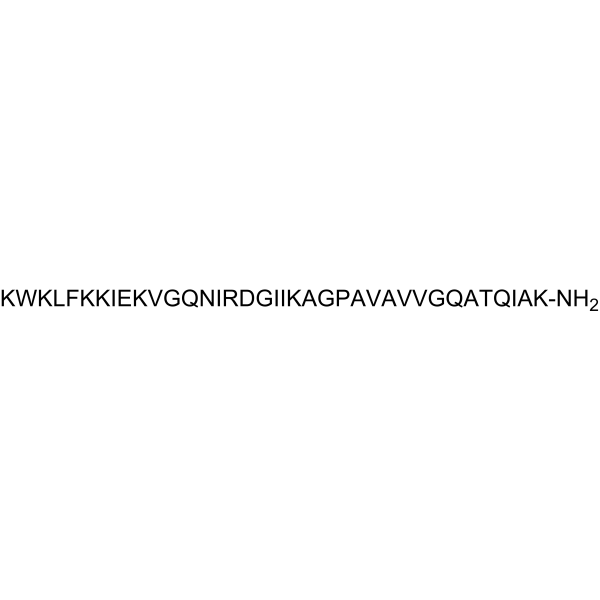
Lys-Trp-Lys-Leu-Phe-Lys-Lys-Ile-Glu-Lys-Val-Gly-Gln-Asn-Ile-Arg-Asp-Gly-Ile-Ile-Lys-Ala-Gly-Pro-Ala-Val-Ala-Val-Val-Gly-Gln-Ala-Thr-Gln-Ile-Ala-Lys-NH2
-
Sequence Shortening
KWKLFKKIEKVGQNIRDGIIKAGPAVAVVGQATQIAK-NH2
-
Shipping
Room temperature in continental US; may vary elsewhere.
-
Storage
Sealed storage, away from moisture
Powder -80°C 2 years -20°C 1 year * In solvent : -80°C, 6 months; -20°C, 1 month (sealed storage, away from moisture)


Publications (2)
-
Journal Impact Factor
-
Most Recent
-
Cell Rep
Barceloneic acid A enables Metarhizium robertsii to establish parasitism in insects and mutualism in plants by inhibiting farnesyltransferase. [Abstract]2026 May 28;45(6):117371. PMID: 42213785 -
Probiotics Antimicrob Proteins
The Efficacy of Cecropin Against Multidrug-Resistant Bacteria Is Linked to the Destabilization of Outer Membrane Structure LPS of Gram-Negative Bacteria. [Abstract]2024 Dec 21. PMID: 39708190


Solvent & Solubility
In Vitro:
H2O : 20 mg/mL (5.00 mM; ultrasonic and adjust pH to 5 with HCl)
Please refer to the solubility information to select the appropriate solvent. Once prepared, please aliquot and store the solution to prevent product inactivation from repeated freeze-thaw cycles.
Storage method and period of stock solution: -80°C, 6 months; -20°C, 1 month (sealed storage, away from moisture). When stored at -80°C, please use it within 6 months. When stored at -20°C, please use it within 1 month.
* Note: If you choose water as the stock solution, please dilute it to the working solution, then filter and sterilize it with a 0.22 μm filter before use.
Please refer to the solubility information to select the appropriate solvent. Once prepared, please aliquot and store the solution to prevent product inactivation from repeated freeze-thaw cycles.
Storage method and period of stock solution: -80°C, 6 months; -20°C, 1 month (sealed storage, away from moisture). When stored at -80°C, please use it within 6 months. When stored at -20°C, please use it within 1 month.
* Note: If you choose water as the stock solution, please dilute it to the working solution, then filter and sterilize it with a 0.22 μm filter before use.
Concentration (start) × Volume (start) = Concentration (final) × Volume (final)

Protocols
-
Research Protocol for Infectious Diseases
Infectious-disease experiments test how pathogens interact with host barriers, innate immune receptors, inflammatory signaling, pathogen replication, and tissue injury; pattern-recognition receptors such as TLRs, RIG-I-like receptors, NOD-like receptors, and inflammasomes detect microbial molecules and activate NF-κB, interferon, and cytokine responses. The central hypothesis is that infection severity reflects the balance between pathogen burden and host response: protective inflammation restricts pathogen growth, whereas excessive or mislocalized inflammation contributes to tissue damage and disease phenotype. Unresolved questions include which host pathways are protective versus pathogenic, why some infection models fail to translate to human disease, and which combined readouts best predict clinically relevant infection outcomes.
-
Cotton Pellet Granuloma
Cotton pellet granuloma is a classical in vivo chronic inflammation model used to evaluate the anti-inflammatory potential of test substances by measuring their ability to inhibit granuloma tissue formation around an implanted foreign body (cotton pellet) in rodents. The method is based on the biological response to a sterile implanted material, which induces proliferative phase inflammation characterized by fibroblast proliferation and collagen-rich granuloma formation, and the final readout reflects the extent of chronic inflammatory tissue growth surrounding the pellet. In multiple preclinical pharmacological evaluations, inhibition of cotton pellet-induced granuloma formation has been used as an indicator of anti-inflammatory activity in both synthetic and natural product screening contexts.
-
Carrageenan-Induced Paw Edema
Carrageenan-induced paw edema is an acute inflammation model in which intraplantar injection of carrageenan induces localized inflammatory swelling characterized by vascular permeability, leukocyte infiltration, and production of inflammatory mediators such as prostaglandins and cytokines, making it widely used to evaluate anti-inflammatory agents in vivo. The resulting paw volume or thickness increase is quantified over time as a direct readout of inflammatory intensity and drug efficacy, typically reflecting cyclooxygenase-mediated prostaglandin-driven edema formation and immune cell recruitment in peripheral tissue[20].
-
Research Protocol for Inflammation-related Diseases
The NLRP3 inflammasome is a cytosolic innate immune signaling platform that integrates priming signals and danger-signal activation to promote caspase-1 activation, maturation of IL-1β and IL-18, and gasdermin D-mediated pyroptotic cell death. The core experimental logic is to determine whether inflammatory disease phenotypes are driven by increased NLRP3 expression, ASC-containing inflammasome assembly, caspase-1 cleavage, GSDMD cleavage, and extracellular release of IL-1β/IL-18 rather than by nonspecific cell injury alone. The pathway is strongly linked to inflammation-related disease phenotypes because monosodium urate crystals activate NALP3/NLRP3 inflammasome signaling in gout-like crystal inflammation, cholesterol crystals activate NLRP3 inflammasomes in atherogenesis models, and DSS-induced intestinal inflammation has been reported to involve NLRP3 inflammasome activity. However, experimental colitis studies also show context-dependent protective effects of NLRP3 inflammasome co


Purity & Documentation
-
Data Sheet (286 KB)
-
SDS (254 KB)
- English - EN (254 KB)
- Français - FR (254 KB)
- Deutsch - DE (254 KB)
- Norwegian - NO (254 KB)
- Español - ES (254 KB)
- Swedish - SV (254 KB)
- Italian - IT (254 KB)
- Korean - KR (254 KB)
- Portuguese - PT (254 KB)
-
Handling Instructions (2659 KB)
References
[1]. Cerón JM, et al. The antimicrobial peptide cecropin A induces caspase-independent cell death in human promyelocytic leukemia cells. Peptides. 2010 Aug;31(8):1494-503. [Content Brief]
[2]. Lee E, et al. Anti-inflammatory activities of cecropin A and its mechanism of action. Arch Insect Biochem Physiol. 2015 Jan;88(1):31-44. [Content Brief]


Complete Stock Solution Preparation Table
Please refer to the solubility information to select the appropriate solvent. Once prepared, please aliquot and store the solution to prevent product inactivation from repeated freeze-thaw cycles.
Storage method and period of stock solution: -80°C, 6 months; -20°C, 1 month (sealed storage, away from moisture). When stored at -80°C, please use it within 6 months. When stored at -20°C, please use it within 1 month.
| Optional Solvent | Concentration Solvent Mass | 1 mg | 5 mg | 10 mg | 25 mg |
|---|---|---|---|---|---|
| H2O | 1 mM | 0.2498 mL | 1.2488 mL | 2.4976 mL | 6.2441 mL |
* Note: If you choose water as the stock solution, please dilute it to the working solution, then filter and sterilize it with a 0.22 μm filter before use.


Cecropin A Related Classifications
HY-P1539 Related Classifications
 Powered by Bioz