



FIPI
Based on 5 publication(s) in Google Scholar
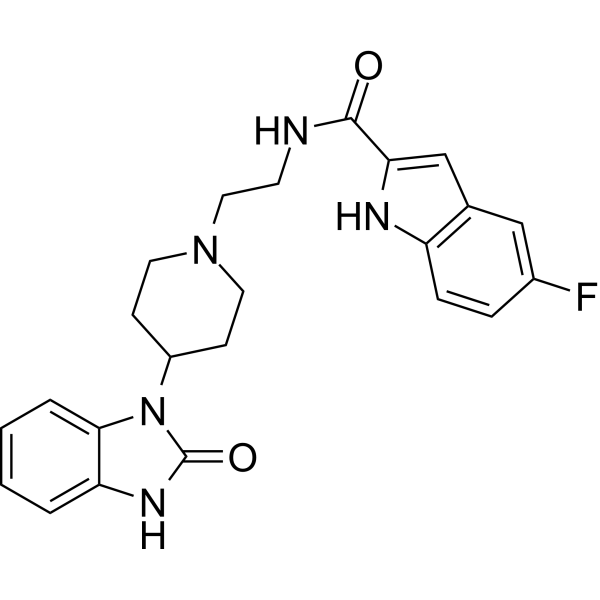
FIPI is a phospholipase D (PLD) inhibitor with an IC50 for PLD1 and PLD2 of about 25 nM. FIPI regulates cytoskeletal recombination, cell diffusion and chemotaxis. FIPI can be used in cancer research. In addition, FIPI can enhance the secretion and aggregation of platelet dense particles, inhibit thrombosis, reduce ischemic stroke infarct volume and improve nerve function.
For research use only. We do not sell to patients.
- Purity : 98.00%
- CAS No.: 939055-18-2
- Formula: C23H24FN5O2
- Molecular Weight:421.47
-
Storage:Powder -20°C, 3 years , 4°C, 2 years ; In solvent -80°C, 2 years , -20°C, 1 year

To place orders, for customer services and technical support, please contact: MedChemExpress USA
Tel: 609-228-6898 E-mail: [email protected] [email protected]


-
 Biological Activity
-
Chemical Information
-
Solvent & Solubility
- Protocols
- Purity & Documentation
- References
-
 Help & FAQs


-
HY-13419
U-73122Phospholipase C Inhibitor -
HY-108612
VU0155069PLD1 Selective Inhibitor -
HY-70072
D609PC-PLC Inhibitor -
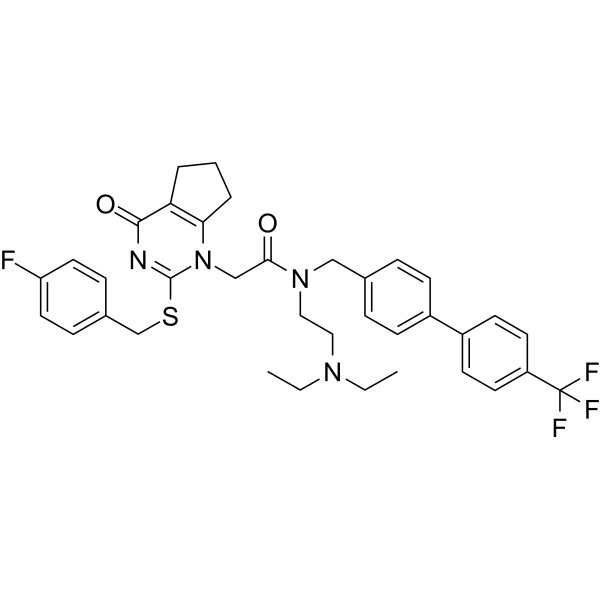
HY-10521
DarapladibLp-PLA2 Inhibitor -
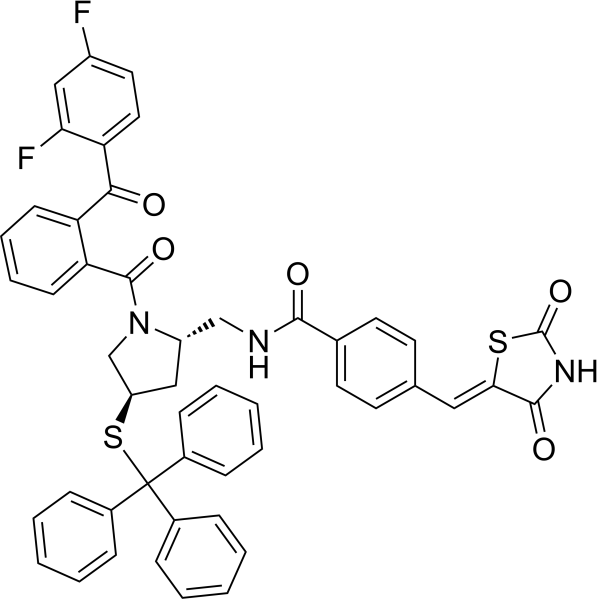
HY-111376
PyrrophenonePLA2 Inhibitor -
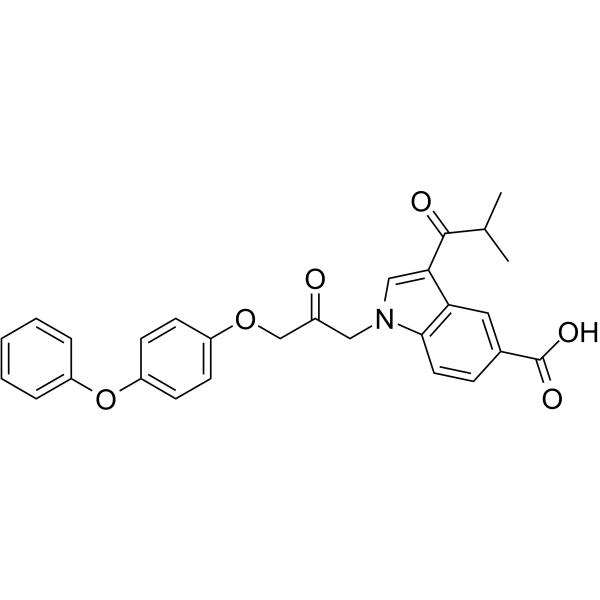
HY-10801
CAY10650cPLA2α Inhibitor -
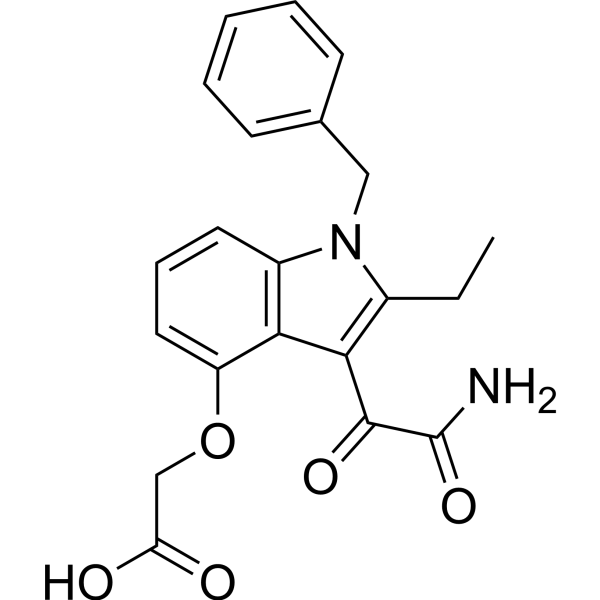
HY-13402
VarespladibsPLA2 Inhibitor -
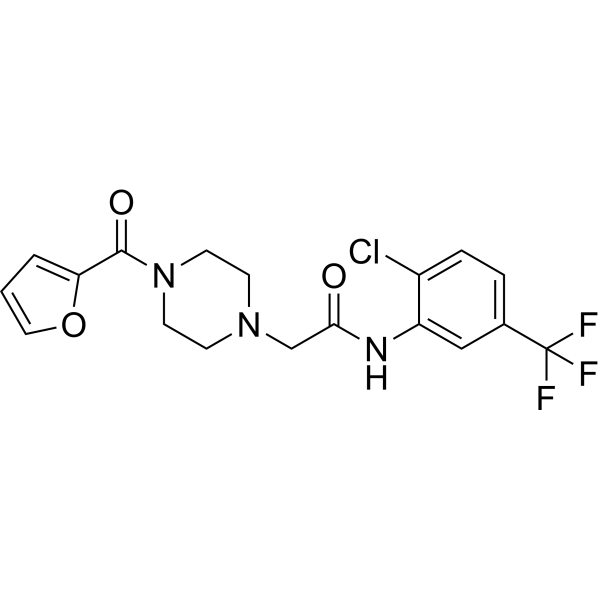
HY-100736
ML348APT1/LYPLA1 Inhibitor -
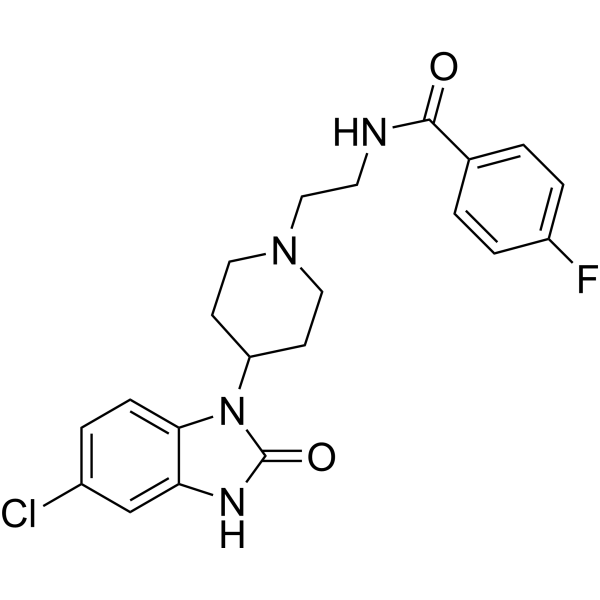
HY-119093
HalopemidePhospholipase D Inhibitor -
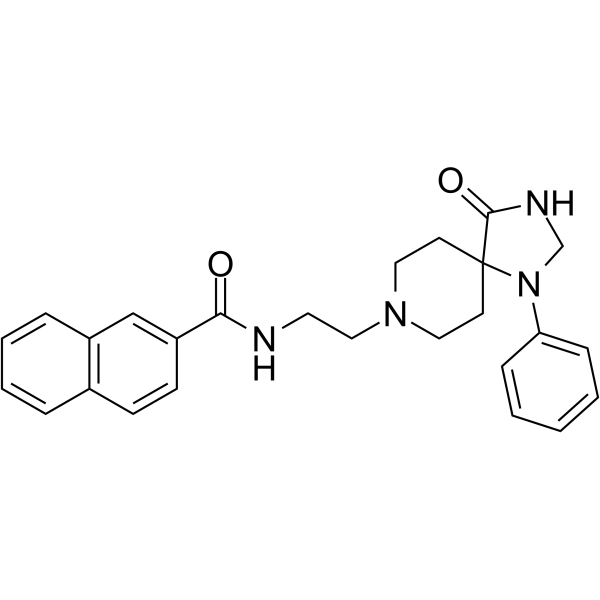
HY-121983
CAY10594PLD2 Inhibitor -
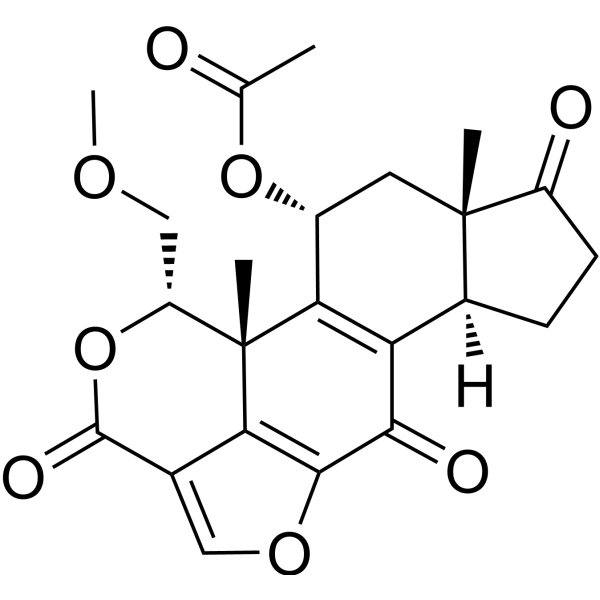
HY-10197
WortmanninPI3K Inhibitor -
HY-13735A
Quinacrine dihydrochlorideAntimalarial Agent
Publications Citing Use of MedChemExpress (MCE) FIPI
More Customer Validation & Images

-
Cell Proliferation/Viability Assay

-
Cell Migration/Invasion Assay

-
Cell Migration/Invasion Assay

-
Cell Migration/Invasion Assay

-
IF
All Phospholipase Isoforms
More

Biological Activity
Description
IC50 & Target
[1]|
PLD1 |
PLD2 |
Cellular Effect
|
Cell Line

|
Type | Value | Description | References |
|---|---|---|---|---|
| Calu-1 | IC50 |
1 nM
Compound: 14
|
Inhibition of PLD1 in human Calu-1 cells assessed as decrease in phosphatidylbutanol-[d9] production after 30 mins by mass spectrometric analysis
Inhibition of PLD1 in human Calu-1 cells assessed as decrease in phosphatidylbutanol-[d9] production after 30 mins by mass spectrometric analysis
|
[PMID: 19136975] |
| HEK293 | IC50 |
300 nM
Compound: 14
|
Inhibition of GFP-tagged human PLD2 expressed in human HEK293 cells assessed as decrease in phosphatidylbutanol-[d9] production after 30 mins by mass spectrometric analysis
Inhibition of GFP-tagged human PLD2 expressed in human HEK293 cells assessed as decrease in phosphatidylbutanol-[d9] production after 30 mins by mass spectrometric analysis
|
[PMID: 19136975] |
In Vitro
FIPI (750 nM; 30 min) effectively blocks the production of phosphatidic acid by PLD stimulated by PMA (HY-18739) in HEK293 cells[1].
FIPI (750 nM; 1-4 h) promotes the diffusion of CHO cells and inhibits the chemotaxis of neutrophils[1].
FIPI (1-100 nM; 1-45 min) inhibits cell migration and calcium release in EGF-induced MDA-MB-468-NEO (EGFR positive) and MDA-MB-468-HER2 (EGFR and HER2 positive)[2].
FIPI (10 μM; 2.5 min) enhances the secretion and aggregation of dense particles in platelets, and increases the phosphorylation of protein kinase C substrate Pleckstrin[3].
MedChemExpress (MCE) has not independently confirmed the accuracy of these methods. They are for reference only. Further protocols information, click here.
In Vivo
MedChemExpress (MCE) has not independently confirmed the accuracy of these methods. They are for reference only.
-
Animal Model:Ferric chloride (HY-Y0266) or transient middle cerebral artery occlusion treated mice[4]
-
Dosage:3 mg/kg
-
Administration:Intraperitoneal injection (i.p.); 2 times, 12 h apart
-
Result:Delayed the thrombus formation and only 3 of 9 vessels occluded during the 30-minute observation period in arterial thrombosis models.
Reduced the infarct volumes, improved motor and overall nerve function and did not impair normal hemostasis in ischemic stroke models.


Chemical Information
-
CAS No. 939055-18-2
-
Appearance Solid
-
Molecular Weight 421.47
-
Formula C23H24FN5O2
-
Color Light yellow to khaki
-
SMILES
O=C(NCCN1CCC(CC1)N2C3=CC=CC=C3NC2=O)C4=CC5=C(C=CC(F)=C5)N4
-
Synonyms
5-Fluoro-2-indolyl deschlorohalopemide
-
Shipping
Room temperature in continental US; may vary elsewhere.
-
Storage
Powder -20°C 3 years 4°C 2 years In solvent -80°C 2 years -20°C 1 year


Publications (5)
-
Journal Impact Factor
-
Most Recent
-
Anal Chem
Phospholipid-Tailored Titanium Carbide Nanosheets as a Novel Fluorescent Nanoprobe for Activity Assay and Imaging of Phospholipase D. [Abstract]2018 Jun 5;90(11):6742-6748. PMID: 29737155
FIPI purchased from MedChemExpress. Usage Cited in: Anal Chem. 2018 Jun 5;90(11):6742-6748. [Abstract]
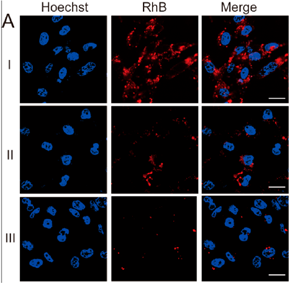
Typical CSLM images of MDA-MB-231 cells incubated with 50 μg/mL RhB-PL-Ti3C2 for 4 h at 37°C in the absence (I) and presence of 1.0 mg/mL FIPI (II), and CSLM images of MCF-7 cells (III) incubated with 50 μg/mL RhB-PL-Ti3C2 for 4 h at 37°C.
-
Biochem Pharmacol
Phospholipase D2 regulation by transcription factor FOXA1 promotes the drug resistance of vemurafenib in melanoma cells. [Abstract]2025 Dec;242(Pt 4):117434. PMID: 41110487 -
J Cell Sci
The protein kinase D1-mediated classical protein secretory pathway regulates the Ras oncogene-induced senescence response. [Abstract]2018 Mar 16;131(6):jcs207217. PMID: 29420297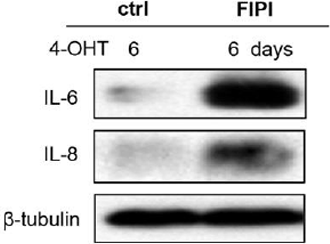
FIPI purchased from MedChemExpress. Usage Cited in: J Cell Sci. 2018 Mar 16;131(6):jcs207217. [Abstract]
ER:Ras IMR90 cells are treated with solvent or FIPI (250 nM, 2h).Western blotting are performed.
-
-
Nanoscale Res Lett
Preparation and Evaluation of Liposomes Co-Loaded with Doxorubicin, Phospholipase D Inhibitor 5-Fluoro-2-Indolyl Deschlorohalopemide (FIPI) and D-Alpha Tocopheryl Acid Succinate (α-TOS) for Anti-Metastasis. [Abstract]2019 Apr 18;14(1):138. PMID: 31001703
FIPI purchased from MedChemExpress. Usage Cited in: Nanoscale Res Lett. 2019 Apr 18;14(1):138. [Abstract]
Cell viability of MDA-MB-231 cells incubated with Blank-lip, FIPI-lip, DF-lip, DT-lip, and DFT-lip for 7 h or 24 h at a concentration of 2 μM FIPI, respectively.
FIPI purchased from MedChemExpress. Usage Cited in: Nanoscale Res Lett. 2019 Apr 18;14(1):138. [Abstract]
Inhibition effects on the cell motility in vitro. Images of MDA-MB-231 cells wound edge after incubation with control, Blank-lip, FIPI-lip, DF-lip, DT-lip, and DFT-lip for 48 h, respectively (magnification, × 100).
FIPI purchased from MedChemExpress. Usage Cited in: Nanoscale Res Lett. 2019 Apr 18;14(1):138. [Abstract]
Inhibition effects on cell migration. Images of MDA-MB-231 cell migration after incubation with control, Blank-lip, FIPI-lip, DF-lip, DT-lip, and DFT-lip for 7 h at a concentration of 2 μM FIPI.
FIPI purchased from MedChemExpress. Usage Cited in: Nanoscale Res Lett. 2019 Apr 18;14(1):138. [Abstract]
Inhibition effects on the cell invasion. Images of MDA-MB-231 cell invasion after incubation with control, Blank-lip, FIPI-lip, DF-lip, DT-lip, and DFT-lip for 24 h a concentration of 2 μM FIPI (magnification, × 100).


Solvent & Solubility
In Vitro:
DMSO : 3.33 mg/mL (7.90 mM; Need ultrasonic; Hygroscopic DMSO has a significant impact on the solubility of product, please use newly opened DMSO)
Please refer to the solubility information to select the appropriate solvent. Once prepared, please aliquot and store the solution to prevent product inactivation from repeated freeze-thaw cycles.
Storage method and period of stock solution: -80°C, 2 years; -20°C, 1 year. When stored at -80°C, please use it within 2 years. When stored at -20°C, please use it within 1 year.
Please refer to the solubility information to select the appropriate solvent. Once prepared, please aliquot and store the solution to prevent product inactivation from repeated freeze-thaw cycles.
Storage method and period of stock solution: -80°C, 2 years; -20°C, 1 year. When stored at -80°C, please use it within 2 years. When stored at -20°C, please use it within 1 year.
Concentration (start) × Volume (start) = Concentration (final) × Volume (final)

Protocols
-
Cell Cytotoxicity Assay
Cytotoxicity assays are usually based on the assessment of cell membrane damage, which can also be indirectly detected by measuring cell viability. Detection methods include MTT assay, CKK-8 assay, LDH assay and ATP assay, etc.
-
Cell migration
Cell migration is a method that plays an important role in wound healing, cell differentiation, embryonic development, etc.
-
Chemotaxis Gradient Chamber Assay 1
The chemotaxis gradient chamber assay is based on the principle of observing directional cell migration in response to a stable, linear or quasi-linear concentration gradient of a chemoattractant formed between two fluid reservoirs separated by a narrow observation chamber. Cells placed within the chamber respond to the gradient by polarized movement toward higher chemoattractant concentrations, allowing quantification of chemotactic behavior in real time under microscopy. The classic Zigmond chamber design enables simultaneous visualization of gradient formation and individual cell trajectories, making it suitable for studying leukocyte chemotaxis and other motile cell types in vitro.
-
Under-Agarose Cell Migration Assay
The under-agarose cell migration assay is a classical in vitro chemotaxis method designed to evaluate directed cell movement through a semi-solid agarose matrix toward soluble chemoattractant gradients, enabling visualization and quantification of leukocyte or motile cell migration in a confined 2D-like environment. In this system, cells and chemoattractants are placed in separate wells cut into an agarose gel, allowing diffusion-driven gradient formation that guides directional migration, which is typically assessed by measuring migration distance, cell morphology changes, and accumulation toward the chemoattractant source. This assay has been widely used to study neutrophil and leukocyte chemotaxis as a simple alternative to filter-based migration systems and allows direct microscopic observation of migrating cells under near-physiological confinement conditions.
-
Transwell/Boyden Chamber Migration Assay
The Transwell/Boyden chamber migration assay measures cell movement through a porous membrane separating an upper and lower chamber, usually after a chemoattractant gradient is established by placing cells in the upper chamber and chemoattractant-containing medium in the lower chamber. The readout is generated by quantifying cells that traverse the membrane and appear on the lower membrane surface or in the lower chamber, depending on whether the cell type is adherent or non-adherent. This assay reflects chemotactic or haptotactic migration rather than matrix invasion unless an extracellular-matrix barrier is added to the membrane.
-
Chemotaxis Gradient Chamber Assay 2
Chemotaxis gradient chamber assays measure directional cell migration in response to a soluble chemical gradient by imaging cells as they move across a defined observation region; the readout is generated from time-lapse cell trajectories, displacement toward the gradient, forward migration index, trajectory plots, rose/polar plots, and statistical tests of non-random directionality. The Dunn chamber is a direct-viewing glass chamber in which cells migrate across a bridge between control and chemoattractant wells, allowing observation of cells in a linear concentration gradient; related direct-viewing formats include the Insall chamber, which supports defined unidirectional gradients and high numerical-aperture microscopy, and the μ-Slide Chemotaxis chamber, which supports long-term live-cell imaging and gradient characterization with fluorescent dye.
-
Phalloidin F-actin cytoskeleton staining
Phalloidin F-actin staining detects polymerized filamentous actin in fixed and permeabilized specimens by using fluorescent phalloidin or phalloidin-derived phallotoxins that bind actin filaments and generate a fluorescence microscopy readout corresponding to F-actin organization, including stress fibers, cortical actin, filament bundles, and tissue-specific actin networks. Phalloidin stabilizes F-actin by reducing actin subunit dissociation from filament ends, and fluorescent phallotoxins were established as tools for visualizing actin-containing structures in eukaryotic cells.


Purity & Documentation
-
Data Sheet (278 KB)
-
SDS (252 KB)
- English - EN (252 KB)
- Français - FR (252 KB)
- Deutsch - DE (252 KB)
- Norwegian - NO (252 KB)
- Español - ES (252 KB)
- Swedish - SV (252 KB)
- Italian - IT (252 KB)
- Korean - KR (252 KB)
- Portuguese - PT (252 KB)
-
Handling Instructions (2659 KB)
References
[1]. Su W, et al. 5-Fluoro-2-indolyl des-chlorohalopemide (FIPI), a phospholipase D pharmacological inhibitor that alters cell spreading and inhibits chemotaxis. Mol Pharmacol. 2009 Mar;75(3):437-46. [Content Brief]
[2]. Stricker HM, et al. The phospholipase D inhibitor FIPI potently blocks EGF-induced calcium signaling in human breast cancer cells. Cell Commun Signal. 2021 Apr 8;19(1):43. [Content Brief]
[3]. Elvers M, et al. A novel role for phospholipase D as an endogenous negative regulator of platelet sensitivity. Cell Signal. 2012 Sep;24(9):1743-52. [Content Brief]
[4]. Stegner D, et al. Pharmacological inhibition of phospholipase D protects mice from occlusive thrombus formation and ischemic stroke--brief report. Arterioscler Thromb Vasc Biol. 2013 Sep;33(9):2212-7. [Content Brief]


Complete Stock Solution Preparation Table
Please refer to the solubility information to select the appropriate solvent. Once prepared, please aliquot and store the solution to prevent product inactivation from repeated freeze-thaw cycles.
Storage method and period of stock solution: -80°C, 2 years; -20°C, 1 year. When stored at -80°C, please use it within 2 years. When stored at -20°C, please use it within 1 year.
| Optional Solvent | Concentration Solvent Mass | 1 mg | 5 mg | 10 mg | 25 mg |
|---|---|---|---|---|---|
| DMSO | 1 mM | 2.3726 mL | 11.8632 mL | 23.7265 mL | 59.3162 mL |
| 5 mM | 0.4745 mL | 2.3726 mL | 4.7453 mL | 11.8632 mL |


FIPI Related Classifications
HY-12807 Related Classifications
 Powered by Bioz