



QNZ46
Based on 1 publication(s) in Google Scholar
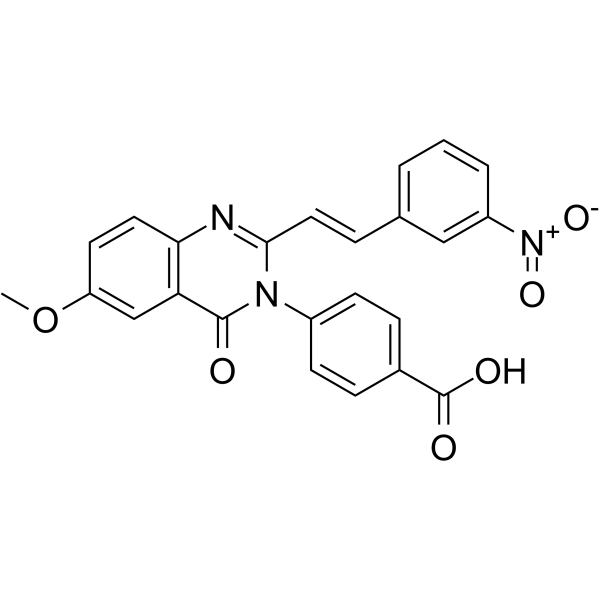
QNZ46 is a highly selective noncompetitive NMDA receptor antagonist targeting GluN2C/D (IC50=3.9 μM), GluN1/GluN2C (IC50=7.1 μM), and GluN1/GluN2D (IC50=182 μM) subunits. QNZ46 inhibits glutamate-mediated calcium influx, thereby blocking excitotoxicity. QNZ46 is membrane permeable and can cross the blood-brain barrier, where it inhibits myelin damage and axonal degeneration.
商品は「研究用試薬」です。人や動物の医療用・臨床診断用・食品用の製品ではありません。
研究用途以外に使用した場合、当社は一切の責任を負いかねます。
- 純度 : 99.46%
- CAS 番号: 1237744-13-6
- 分子式: C24H17N3O6
- 分子量:443.41
-
保管条件:Powder -20°C, 3 years , 4°C, 2 years ; In solvent -80°C, 2 years , -20°C, 1 year

To place orders, for customer services and technical support, please contact: MedChemExpress USA
Tel: 609-228-6898 E-mail: [email protected] [email protected]


-
 生物活性
生物活性
-
化学情報
-
溶剤 & 溶解度
- プロトコル
- 純度とドキュメンテーション
- 参考文献
-
 Help & FAQs


-
HY-17001
Flupirtine MaleatePotassium Channel Opener -
HY-13457
TCN 201NMDA Receptor Antagonist -
HY-100807
Quinolinic acidNMDA Receptor Agonist -
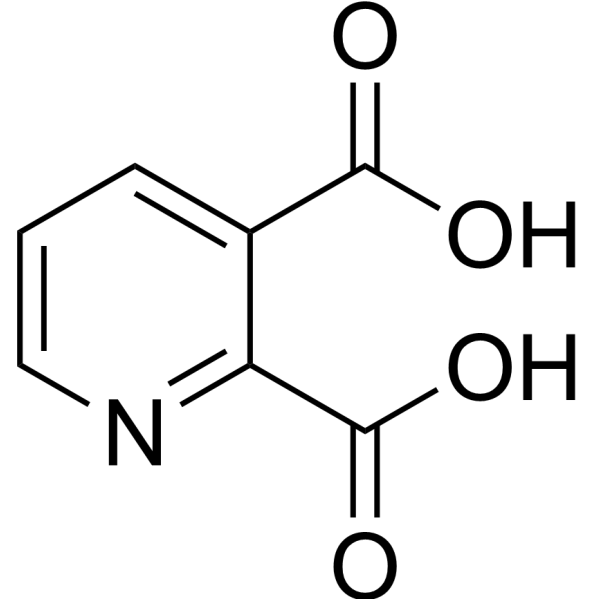
HY-100807R
Quinolinic acid (Standard)Standard of Quinolinic acid -
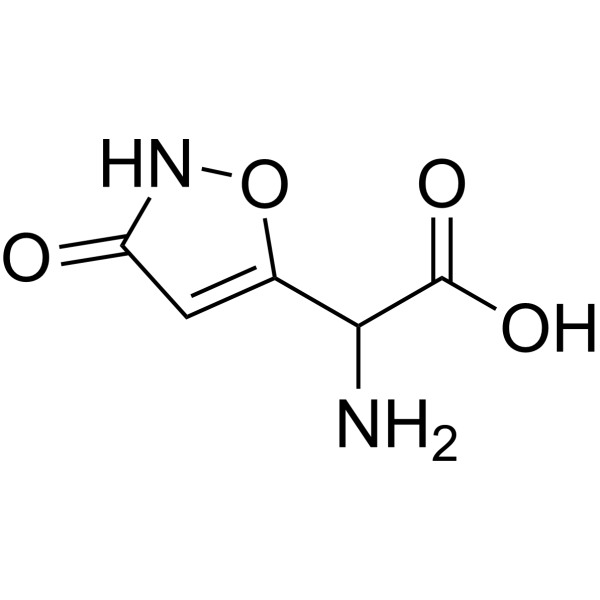
HY-N2311
Ibotenic acidiGluR Agonist -
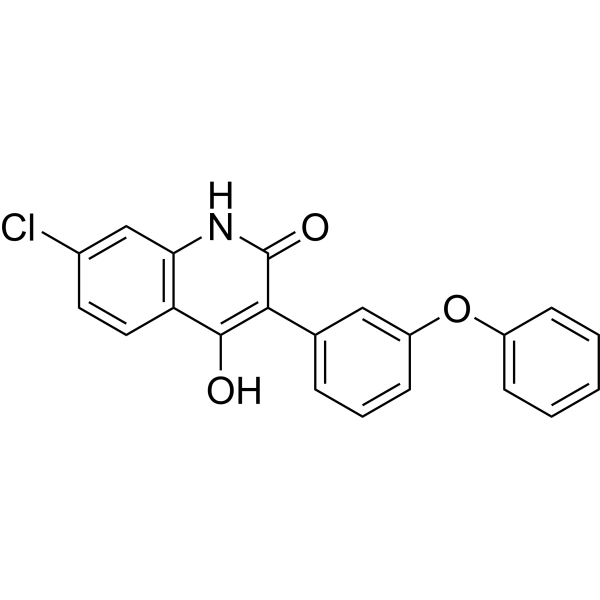
HY-18698
L-701324NMDA Receptor Antagonist -
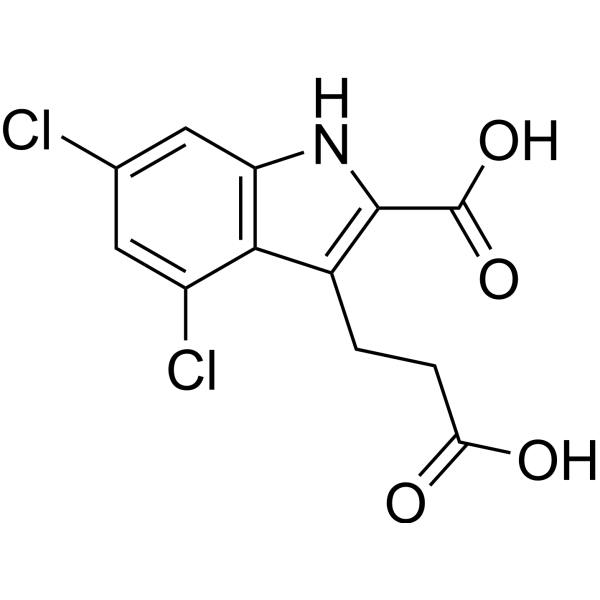
HY-16312
MDL-29951nMDA Receptor Antagonist -
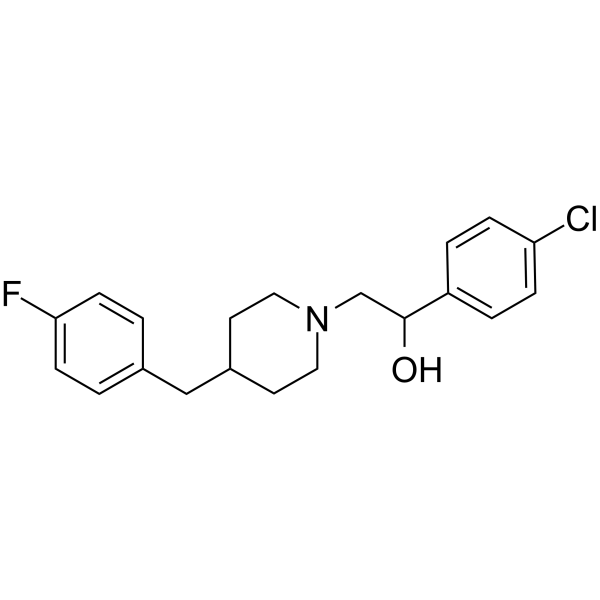
HY-12881
EliprodilNR2B-NMDA Inhibitor -
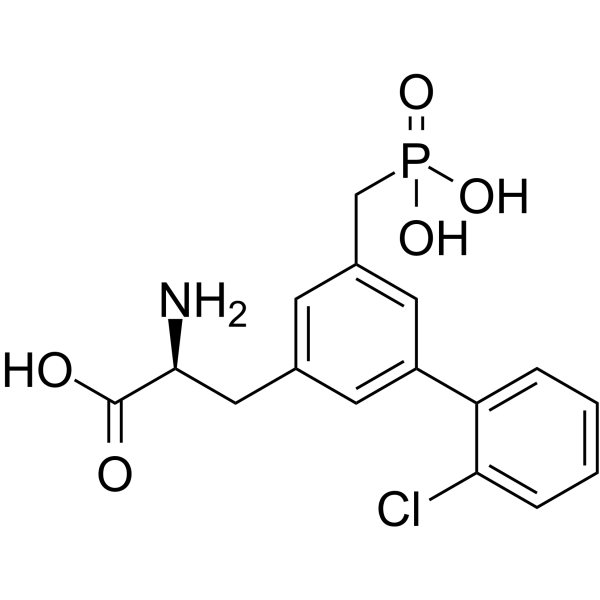
HY-13059
SDZ 220-581NMDA Receptor Antagonist -
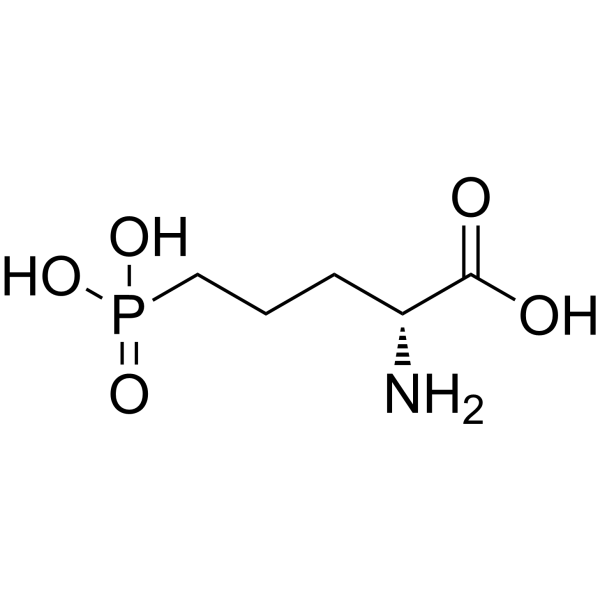
HY-100714A
D-AP5NMDA Antagonist -
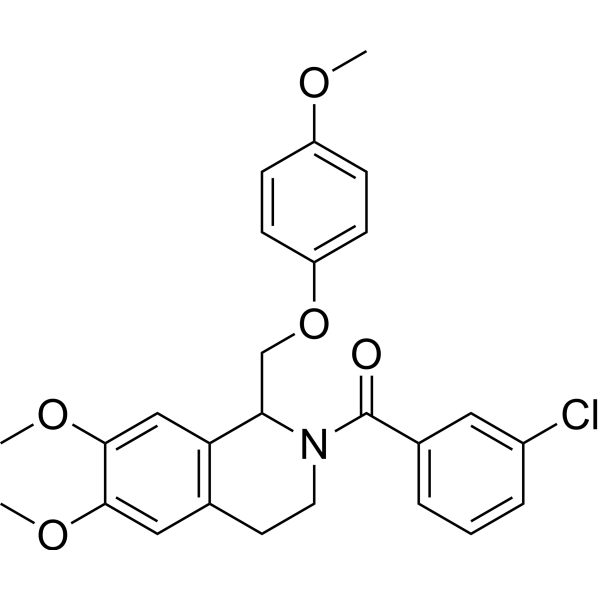
HY-18699
CIQiGluR Activator -

HY-N2311R
Ibotenic acid (Standard)iGluR Agonist
MedChemExpress(MCE)の使用を引用している文献 QNZ46
MoreiGluR アイソフォーム固有の製品をすべて表示
More

生物活性
製品説明
IC50 & Target
|
NMDA Receptor |
Cellular Effect
|
Cell Line

|
Type | Value | Description | References |
|---|---|---|---|---|
| Oocyte | IC50 |
>300 μM
Compound: 46
|
Antagonist activity at rat recombinant GLuR1 expressed in Xenopus oocytes assessed as inhibition of glutamate-induced current by two-electrode voltage-clamp electrophysiology
Antagonist activity at rat recombinant GLuR1 expressed in Xenopus oocytes assessed as inhibition of glutamate-induced current by two-electrode voltage-clamp electrophysiology
|
[PMID: 20684595] |
| Oocyte | IC50 |
>300 μM
Compound: 46
|
Antagonist activity at rat recombinant NR1-NR2B receptor expressed in Xenopus oocytes at holding potential of -40mV by two-electrode voltage-clamp electrophysiology
Antagonist activity at rat recombinant NR1-NR2B receptor expressed in Xenopus oocytes at holding potential of -40mV by two-electrode voltage-clamp electrophysiology
|
[PMID: 20684595] |
| Oocyte | IC50 |
229 μM
Compound: 46
|
Antagonist activity at rat recombinant NR1-NR2A receptor expressed in Xenopus oocytes at holding potential of -40mV by two-electrode voltage-clamp electrophysiology
Antagonist activity at rat recombinant NR1-NR2A receptor expressed in Xenopus oocytes at holding potential of -40mV by two-electrode voltage-clamp electrophysiology
|
[PMID: 20684595] |
| Oocyte | IC50 |
3 μM
Compound: 46
|
Antagonist activity at rat recombinant NR1-NR2D receptor expressed in Xenopus oocytes at holding potential of -40mV by two-electrode voltage-clamp electrophysiology
Antagonist activity at rat recombinant NR1-NR2D receptor expressed in Xenopus oocytes at holding potential of -40mV by two-electrode voltage-clamp electrophysiology
|
[PMID: 20684595] |
| Oocyte | IC50 |
6 μM
Compound: 46
|
Antagonist activity at rat recombinant NR1-NR2C receptor expressed in Xenopus oocytes at holding potential of -40mV by two-electrode voltage-clamp electrophysiology
Antagonist activity at rat recombinant NR1-NR2C receptor expressed in Xenopus oocytes at holding potential of -40mV by two-electrode voltage-clamp electrophysiology
|
[PMID: 20684595] |
体外実験
Cell viability assay: QNZ46 (1-20 μM; 48 h) significantly reduces neuronal cell viability, and the inhibition rate was positively correlated with the concentration[2].
Immunofluorescence assay: QNZ46 (50 μM; 2 h) reduces myelin swelling in the myelin injury model and protected structural integrity[2].
WB assay: QNZ46 (10 μM; 24 h) decreases MLKL phosphorylation and RIP1 expression, may cause suppression of necroptosis pathways[2].
MedChemExpress (MCE) has not independently confirmed the accuracy of these methods. They are for reference only.
-
Cell Line:HEK293 cells expressing GluN1/GluN2D receptors
-
Concentration:1-20 μM
-
Incubation Time:48 h
-
Result:Reduced cell viability by 23-88% (IC50=3.9 μM), consistent with noncompetitive NMDA receptor inhibition.
-
Cell Line:Primary oligodendrocytes
-
Concentration:50 μM
-
Incubation Time:24 h
-
Result:Reduced ischemic injury-induced myelin decompaction (G-ratio increase from 0.67 to 0.90 μm) and preserved FluoroMyelin Red staining intensity.
-
Cell Line:Rat optic nerve (RON)
-
Concentration:10 μM
-
Incubation Time:24 h
-
Result:Decreased phosphorylated MLKL (30% reduction) and RIP1 expression (40% reduction), indicating suppression of necroptosis pathways[2].
体内実験
EAE model: QNZ46 (2 mg/kg+1 mg/kg CP465022; i.p.; once a day for 28 days) significantly reduces clinical scores in experimental autoimmune encephalomyelitis (EAE) mice and protected small-diameter myelinated axons in the spinal cord[3].
MedChemExpress (MCE) has not independently confirmed the accuracy of these methods. They are for reference only.
-
Animal Model:C57BL/6 mice (male, 25-30 g, 8-12 weeks) + transient middle cerebral artery occlusion (tMCAO)[2]
-
Dosage:20 mg/kg (50% DMSO/β-cyclodextrin)
-
Administration:Single i.p. injection 120 min prior to ischemia
-
Result:Reduced infarct volume by 68%, preserved myelinated axons in the external capsule, and improved neurological performance.
-
Animal Model:Animal Model: . C57BL/6 mice (female, 20-22 g, 8-12 weeks) + experimental autoimmune encephalomyelitis (EAE)[3]
-
Dosage:2 mg/kg QNZ46 + 1 mg/kg CP465022 (0.5% methyl cellulose)
-
Administration:Daily i.p. injections from day 0 to day 28 post-immunization
-
Result:Combined QNZ46/CP465022 treatment reduced clinical severity and preserved small-diameter myelinated axons in spinal cord.


化学情報
-
CAS 番号 1237744-13-6
-
性状 Solid
-
分子量 443.41
-
分子式 C24H17N3O6
-
Color White to off-white
-
SMILES
O=C(O)C1=CC=C(N2C(/C=C/C3=CC=CC([N+]([O-])=O)=C3)=NC4=C(C=C(OC)C=C4)C2=O)C=C1
-
輸送条件
Room temperature in continental US; may vary elsewhere.
-
保管条件
Powder -20°C 3 years 4°C 2 years In solvent -80°C 2 years -20°C 1 year


Publications (1)
-
Journal Impact Factor
-
Most Recent
-
Neuropharmacology
Ketamine activated glutamatergic neurotransmission by GABAergic disinhibition in the medial prefrontal cortex. [Abstract]2021 Aug 15:194:108382. PMID: 33144117


溶剤 & 溶解度
体外:
DMSO : 4 mg/mL (9.02 mM; ultrasonic and warming and heat to 60°C; Hygroscopic DMSO has a significant impact on the solubility of product, please use newly opened DMSO)
Please refer to the solubility information to select the appropriate solvent. Once prepared, please aliquot and store the solution to prevent product inactivation from repeated freeze-thaw cycles.
Storage method and period of stock solution: -80°C, 2 years; -20°C, 1 year. When stored at -80°C, please use it within 2 years. When stored at -20°C, please use it within 1 year.
Please refer to the solubility information to select the appropriate solvent. Once prepared, please aliquot and store the solution to prevent product inactivation from repeated freeze-thaw cycles.
Storage method and period of stock solution: -80°C, 2 years; -20°C, 1 year. When stored at -80°C, please use it within 2 years. When stored at -20°C, please use it within 1 year.
濃度 (開始) × 体積 (開始) = 濃度 (終了) × 体積 (終了)


純度とドキュメンテーション
-
データシート (280 KB)
-
SDS (393 KB)
- English - EN (393 KB)
- Français - FR (393 KB)
- Deutsch - DE (393 KB)
- Norwegian - NO (393 KB)
- Español - ES (393 KB)
- Swedish - SV (393 KB)
- Italian - IT (393 KB)
- Korean - KR (393 KB)
- Portuguese - PT (393 KB)
-
取扱説明書 (2659 KB)
参考文献
[1]. Hansen KB, et al. Structural and mechanistic determinants of a novel site for noncompetitive inhibition of GluN2D-containing NMDA receptors. J Neurosci. 2011 Mar 9;31(10):3650-3661. [Content Brief]
[2]. Doyle S, et al. Vesicular glutamate release from central axons contributes to myelin damage. Nat Commun. 2018 Mar 12;9(1):1032. [Content Brief]
[3]. Guo F, et al. Sevoflurane acts as an antidepressant by suppression of GluN2D-containing NMDA receptors on interneurons. Br J Pharmacol. 2024 Sep;181(18):3483-3502. [Content Brief]


Complete Stock Solution Preparation Table
Please refer to the solubility information to select the appropriate solvent. Once prepared, please aliquot and store the solution to prevent product inactivation from repeated freeze-thaw cycles.
Storage method and period of stock solution: -80°C, 2 years; -20°C, 1 year. When stored at -80°C, please use it within 2 years. When stored at -20°C, please use it within 1 year.
| Optional Solvent | Concentration Solvent Mass | 1 mg | 5 mg | 10 mg | 25 mg |
|---|---|---|---|---|---|
| DMSO | 1 mM | 2.2552 mL | 11.2762 mL | 22.5525 mL | 56.3812 mL |
| 5 mM | 0.4510 mL | 2.2552 mL | 4.5105 mL | 11.2762 mL |


QNZ46 関連分類
HY-15703 関連分類
 Powered by Bioz