



Cancer Targeted Therapy
Cancer targeted therapy is the foundation of precision medicine; it uses drugs or other substances to target specific genes and proteins that control cancer cells’ growth, division and spreading. Compared to traditional chemotherapy drugs, targeted-drugs can specifically act on cancer cells with high efficacy without damaging normal cells. Drugs used in cancer targeted therapy mainly includes small molecules and macromolecules (e.g., monoclonal antibodies), which can target cancer cells and constituents in the tumor microenvironment to activate the immune system. Anti-angiogenesis drugs, such as those targeting vascular endothelial growth factor (VEGF), epidermal growth factor receptor (EGFR), transforming growth factor (TGF)-α, TGF-β, Tumor necrosis factor (TNF)-α, and platelet-derived endothelial growth factor (PDGFR) inhibit the proliferation and metastasis of cancer cells. In recent years, the proportion of antibody drugs in cancer treatment has gradually become prominent. Antibody-drug conjugates (ADCs) are a new type of targeted drugs that are composed of monoclonal antibody, cytotoxic drug and linker. ADCs can deliver drugs to tumor cells and minimize the toxicity to normal tissues. Proteolysis-targeting chimera (PROTAC) is a useful technology for targeted protein degradation. PROTAC exploits the ubiquitin-proteasome system and forms a ternary complex with a hijacked E3 ubiquitin ligase and target protein, leading to polyubiquitination and degradation of the target protein.
Targeted therapy is a useful strategy in treatment of cancer either alone or in combination with standard chemotherapy. At present, targeted therapy has proved significant clinical success in the treatment of many types of cancer, including breast cancer, colorectal cancer, leukemia, ovarian cancer and lung cancer.
-
hsa-miR-1825 antagomir
 0 ImagesCat. No.: HY-RI00338A
hsa-miR-1825 antagomirs are chemically-modified oligonucleotides that hybridize with mature miRNAs. The miRNA antagomirs have 2 phosphorothioates at the 5' end, 4 phosphorothioates at the 3' end, 1 cholesterol group at the 3' end, and full-length nucleotide 2'-methoxy modification. The miRNA antagomirs strongly compete with mature miRNAs to prevent the complementary pairing of miRNAs and their target genes, thereby inhibiting miRNAs from functioning. Stability of miRNA antagomirs appears to be significantly higher than miRNA inhibitors, they exhibits enhanced cellular uptake, stability and regulatory activity in vivo.
-
hsa-miR-4280 antagomir
 0 ImagesCat. No.: HY-RI00959A
hsa-miR-4280 antagomirs are chemically-modified oligonucleotides that hybridize with mature miRNAs. The miRNA antagomirs have 2 phosphorothioates at the 5' end, 4 phosphorothioates at the 3' end, 1 cholesterol group at the 3' end, and full-length nucleotide 2'-methoxy modification. The miRNA antagomirs strongly compete with mature miRNAs to prevent the complementary pairing of miRNAs and their target genes, thereby inhibiting miRNAs from functioning. Stability of miRNA antagomirs appears to be significantly higher than miRNA inhibitors, they exhibits enhanced cellular uptake, stability and regulatory activity in vivo.
-
hsa-miR-5194 inhibitor
 0 ImagesCat. No.: HY-RI01580
hsa-miR-5194 inhibitors are chemically-modified oligonucleotides that hybridize with mature miRNAs. The miRNA inhibitors have full-length nucleotide 2'-methoxy modification. The miRNA inhibitors strongly compete with mature miRNAs to prevent the complementary pairing of miRNAs and their target genes, thereby inhibiting miRNAs from functioning.
-
(S,R)-CFT8634
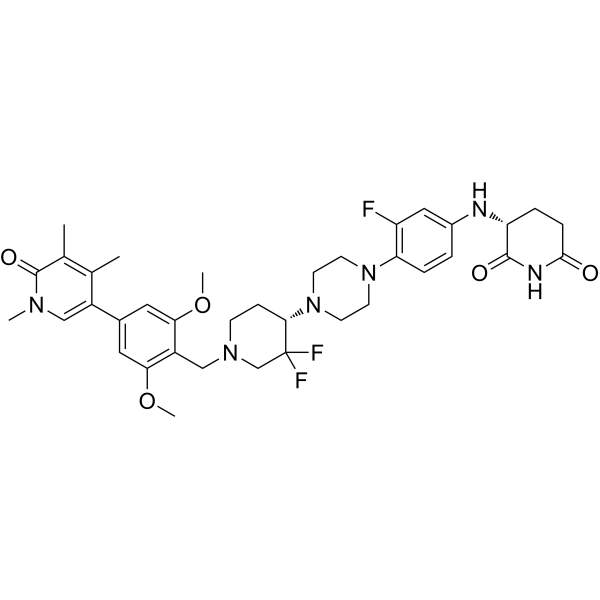 0 ImagesCat. No.: HY-145925CCAS No.: 2704617-95-6
(S,R)-CFT8634 is a BRD9 PROTAC degrader that exerts activity via the ubiquitin-proteasome pathway. (S,R)-CFT8634 can be used in the research of acute myeloid leukemia, malignant rhabdoid tumor, synovial sarcoma, and multiple myeloma.
-
IHMT-IDH1-053
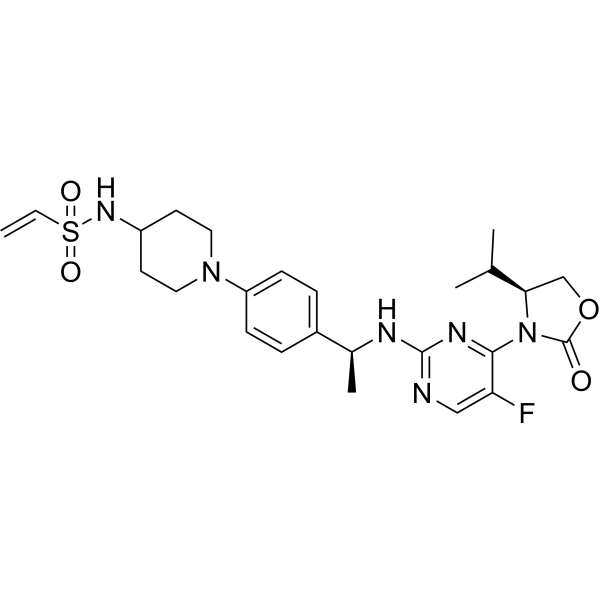 0 ImagesCat. No.: HY-149359CAS No.: 3049485-80-2
IHMT-IDH1-053 (compound 16) is a highly selectivity and irreversible IDH1-mutant inhibitor with an IC50 of 4.7 nM for IDH1 R132H. IHMT-IDH1-053 displays high selectivity against IDH1 mutants over IDH1 wt and IDH2 wt/mutants. IHMT-IDH1-053 inhibits 2-hydroxyglutarate (2-HG) production in IDH1 R132H mutant transfected 293T cells (IC50=28 nM). IHMT-IDH1-053 binds to the IDH1 R132H protein in the allosteric pocket adjacent to the NAPDH binding pocket through a covalent bond with residue Cys269. IHMT-IDH1-053 inhibits the proliferation of HT1080 cell line and primary AML cells which both bear IDH1 R132 mutants.
-
Tyrosine Protein Kinase JAK 2 (Phospho-Tyr8, 9)
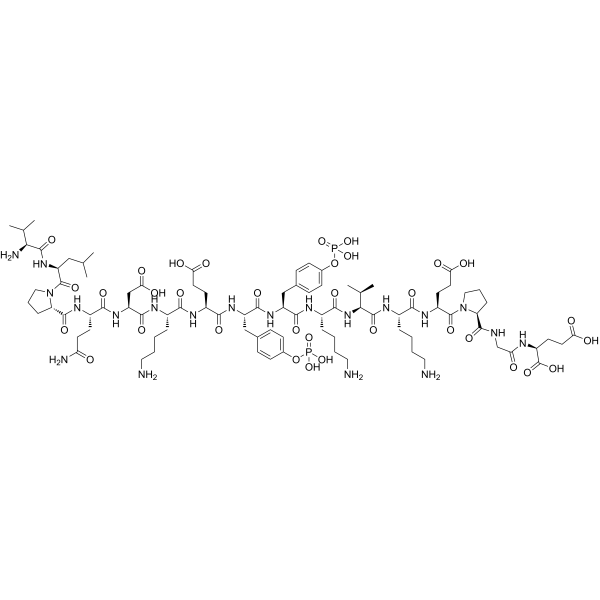 0 ImagesCat. No.: HY-P1590CAS No.: 247171-44-4
Tyrosine Protein Kinase JAK 2 (Phospho-Tyr8, 9) is a peptide corresponding to amino acids 475 to 491 of mouse JAK2.
-
CYP17-IN-1
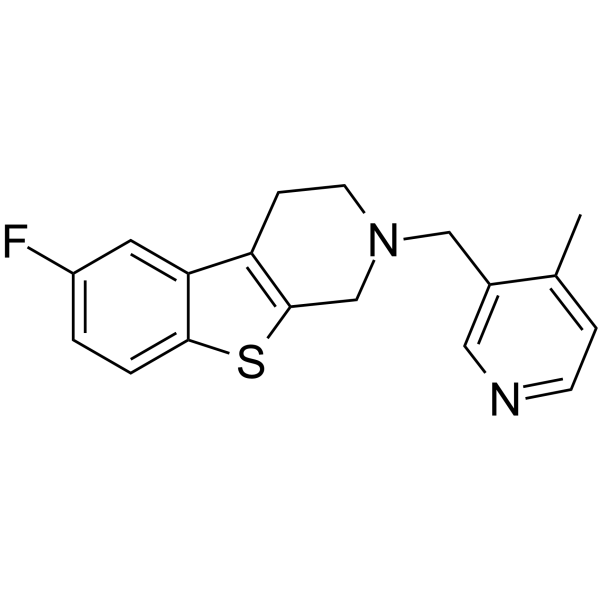 0 ImagesCat. No.: HY-101516CAS No.: 2093317-51-0
-
FTI-2148
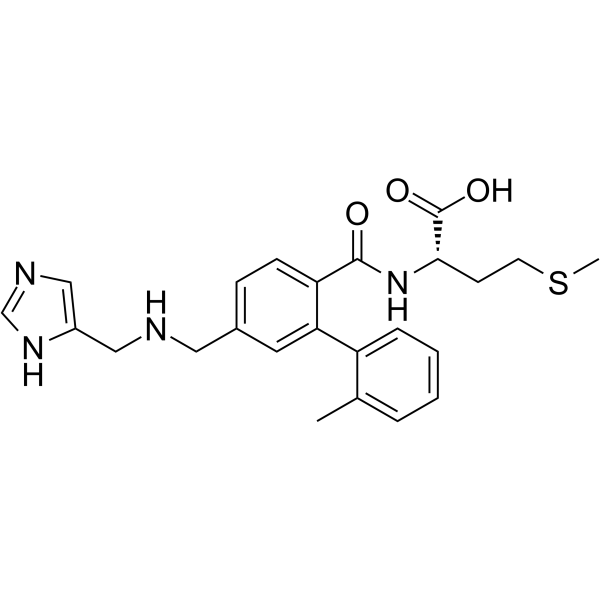 0 ImagesCat. No.: HY-118916CAS No.: 251577-09-0
FTI-2148 is a RAS C-terminal mimetic dual farnesyl transferase (FT-1) and geranylgeranyl transferase-1 (GGT-1) inhibitor with IC50s of 1.4 nM and 1.7 μM, respectively.
-
hsa-miR-761 antagomir
 0 ImagesCat. No.: HY-RI02408A
hsa-miR-761 antagomirs are chemically-modified oligonucleotides that hybridize with mature miRNAs. The miRNA antagomirs have 2 phosphorothioates at the 5' end, 4 phosphorothioates at the 3' end, 1 cholesterol group at the 3' end, and full-length nucleotide 2'-methoxy modification. The miRNA antagomirs strongly compete with mature miRNAs to prevent the complementary pairing of miRNAs and their target genes, thereby inhibiting miRNAs from functioning. Stability of miRNA antagomirs appears to be significantly higher than miRNA inhibitors, they exhibits enhanced cellular uptake, stability and regulatory activity in vivo.
-
LRRK2-IN-17
 0 ImagesCat. No.: HY-172952CAS No.: 2101821-86-5
LRRK2-IN-17 (Compound 6) is an orally active LRRK2 inhibitor (IC50: 3.5 and 3.3 nM for WT and G2019S, respectively). LRRK2-IN-17 inhibits RET kinase (IC50: 59 nM). LRRK2-IN-17 can be used in cancer and Parkinson's disease (PD) research.


-
mmu-miR-467c-3p antagomir
 0 ImagesCat. No.: HY-RI03198A
mmu-miR-467c-3p antagomirs are chemically-modified oligonucleotides that hybridize with mature miRNAs. The miRNA antagomirs have 2 phosphorothioates at the 5' end, 4 phosphorothioates at the 3' end, 1 cholesterol group at the 3' end, and full-length nucleotide 2'-methoxy modification. The miRNA antagomirs strongly compete with mature miRNAs to prevent the complementary pairing of miRNAs and their target genes, thereby inhibiting miRNAs from functioning. Stability of miRNA antagomirs appears to be significantly higher than miRNA inhibitors, they exhibits enhanced cellular uptake, stability and regulatory activity in vivo.
-
mmu-miR-7040-5p antagomir
 0 ImagesCat. No.: HY-RI03823A
mmu-miR-7040-5p antagomirs are chemically-modified oligonucleotides that hybridize with mature miRNAs. The miRNA antagomirs have 2 phosphorothioates at the 5' end, 4 phosphorothioates at the 3' end, 1 cholesterol group at the 3' end, and full-length nucleotide 2'-methoxy modification. The miRNA antagomirs strongly compete with mature miRNAs to prevent the complementary pairing of miRNAs and their target genes, thereby inhibiting miRNAs from functioning. Stability of miRNA antagomirs appears to be significantly higher than miRNA inhibitors, they exhibits enhanced cellular uptake, stability and regulatory activity in vivo.
-
rno-miR-365-5p antagomir
 0 ImagesCat. No.: HY-RI04444A
rno-miR-365-5p antagomirs are chemically-modified oligonucleotides that hybridize with mature miRNAs. The miRNA antagomirs have 2 phosphorothioates at the 5' end, 4 phosphorothioates at the 3' end, 1 cholesterol group at the 3' end, and full-length nucleotide 2'-methoxy modification. The miRNA antagomirs strongly compete with mature miRNAs to prevent the complementary pairing of miRNAs and their target genes, thereby inhibiting miRNAs from functioning. Stability of miRNA antagomirs appears to be significantly higher than miRNA inhibitors, they exhibits enhanced cellular uptake, stability and regulatory activity in vivo.
-
EGFR G719C Recombinant Human Active Protein Kinase
 0 ImagesCat. No.: HY-E70704
EGFR is a driver of tumorigenesis. EGFR is mainly found in an auto-inhibited, dimerization-incompetent, state at the plasma membrane (PM). Ligand binding promotes receptor dimerization, which determines a series of structural rearrangements that are conveyed to the cytoplasmic domain allowing the formation of asymmetric dimers between the two juxtaposed catalytic domains. EGFR has multiple mutants. EGFR G719C Recombinant Human Active Protein Kinase is a recombinant EGFR G719C protein that can be used to study EGFR G719C-related functions.
-
Delamanid-d4-1
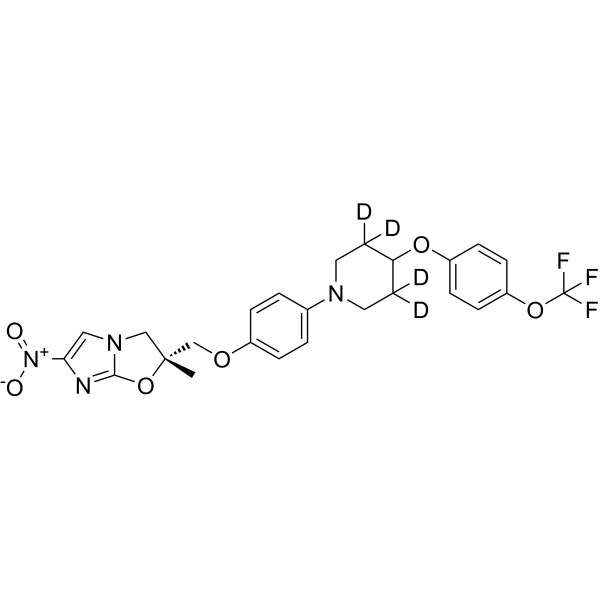 0 ImagesCat. No.: HY-10846S1CAS No.: 2673270-27-2Synonyms: OPC-67683-d4-1
Delamanid-d4-1 is deuterated labeled Delamanid.Delamanid, a newer mycobacterial cell wall synthesis inhibitor, inhibits the synthesisi of mucolic acids.
-
ZINC08792355
 0 ImagesCat. No.: HY-126904CAS No.: 904513-52-6
-
Ranolazine-d8 dihydrochloride
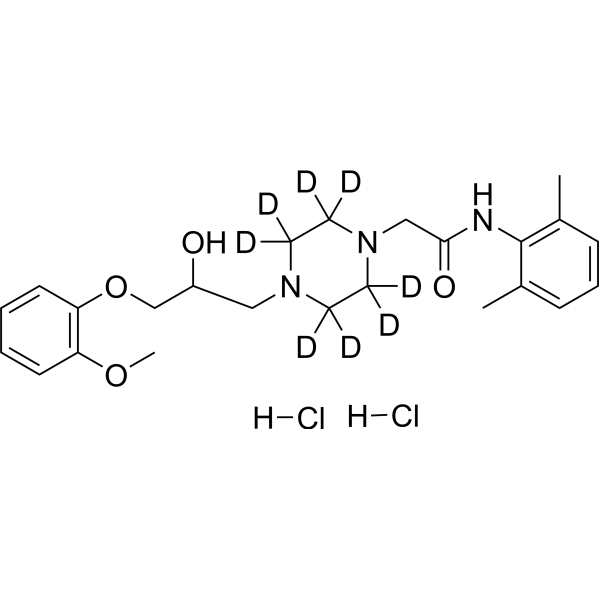 0 ImagesSynonyms: CVT 303-d8 dihydrochloride; RS 43285-d8
Ranolazine-d8 (dihydrochloride) is the deuterium labeled Ranolazine dihydrochloride. Ranolazine dihydrochloride (CVT 303 dihydrochloride) is an anti-angina agent that achieves its effects by inhibiting the late phase of inward sodium current (INa and IKr with IC50 values of 6 μM and 12 μM, respectively) without affecting heart rate or blood pressure (BP). Ranolazine dihydrochloride is also a partial fatty acid oxidation inhibitor.



