



Cancer Targeted Therapy
Cancer targeted therapy is the foundation of precision medicine; it uses drugs or other substances to target specific genes and proteins that control cancer cells’ growth, division and spreading. Compared to traditional chemotherapy drugs, targeted-drugs can specifically act on cancer cells with high efficacy without damaging normal cells. Drugs used in cancer targeted therapy mainly includes small molecules and macromolecules (e.g., monoclonal antibodies), which can target cancer cells and constituents in the tumor microenvironment to activate the immune system. Anti-angiogenesis drugs, such as those targeting vascular endothelial growth factor (VEGF), epidermal growth factor receptor (EGFR), transforming growth factor (TGF)-α, TGF-β, Tumor necrosis factor (TNF)-α, and platelet-derived endothelial growth factor (PDGFR) inhibit the proliferation and metastasis of cancer cells. In recent years, the proportion of antibody drugs in cancer treatment has gradually become prominent. Antibody-drug conjugates (ADCs) are a new type of targeted drugs that are composed of monoclonal antibody, cytotoxic drug and linker. ADCs can deliver drugs to tumor cells and minimize the toxicity to normal tissues. Proteolysis-targeting chimera (PROTAC) is a useful technology for targeted protein degradation. PROTAC exploits the ubiquitin-proteasome system and forms a ternary complex with a hijacked E3 ubiquitin ligase and target protein, leading to polyubiquitination and degradation of the target protein.
Targeted therapy is a useful strategy in treatment of cancer either alone or in combination with standard chemotherapy. At present, targeted therapy has proved significant clinical success in the treatment of many types of cancer, including breast cancer, colorectal cancer, leukemia, ovarian cancer and lung cancer.
-
hsa-miR-520a-5p inhibitor
 0 ImagesCat. No.: HY-RI01596
hsa-miR-520a-5p inhibitors are chemically-modified oligonucleotides that hybridize with mature miRNAs. The miRNA inhibitors have full-length nucleotide 2'-methoxy modification. The miRNA inhibitors strongly compete with mature miRNAs to prevent the complementary pairing of miRNAs and their target genes, thereby inhibiting miRNAs from functioning.
-
Cyclopropane-(S,R,S)-AHPC
 0 ImagesCat. No.: HY-159547CAS No.: 2502205-74-3
-
EX05
 0 ImagesCat. No.: HY-162667CAS No.: 2892307-20-7
EX05 is a potent KIF18A inhibitor with an IC50 value of 8.2 nM. EX05 has the potential for the research of cancer.
-
DSPE-PEG5000-CREKA
 0 ImagesCat. No.: HY-172498
DSPE-PEG5000-CREKA is a PEG compound which composed of DSPE and a fibrin-targeting peptide (CREKA). CREKA peptide can be used to target tumor cells and tumor vasculature, exhibiting antitumor activity. DSPE-PEG5000-CREKA can be used for drug delivery.
-
Sarkomycin
 0 Images
Sarkomycin is a glutathione-targeting cytotoxic agent and antibacterial agent. Sarkomycin forms an addition product with glutathione, thereby reducing intracellular glutathione levels. Sarkomycin can induce cytoplasmic vacuolation, mitochondrial damage, cytoplasmic deformation, metaphase arrest, chromosomal abnormalities, nuclear degeneration, and nuclear fragmentation; it also modulates amino acid metabolism. Sarkomycin also inhibits anaerobic fermentation in affected cells in mice and inhibits cell growth in tissue culture, leading to the disappearance of mitotic cells, cell degeneration, and cell detachment from the glass surface. Sarkomycin can be used in research related to Yoshida ascites tumor, Ehrlich ascites tumor, Ehrlich carcinoma, and Yoshida rat sarcoma.
-
PF-06747143
 0 ImagesCat. No.: HY-P992439
PF-06747143 is recombinant anti-human antibody targeting CXCR4. PF-06747143 blocks CXCL12-induced calcium flux, F-actin polymerization, chemotaxis, cell migration, and leukemic cell bone marrow homing. PF-06747143 reduces tumor burden and improves survival in mouse models of hematologic malignancies. PF-06747143 can be used for the research of chronic lymphocytic leukemia, acute myeloid leukemia, and hematologic malignancies.
-
hsa-miR-197-3p antagomir
 0 ImagesCat. No.: HY-RI00394A
hsa-miR-197-3p antagomirs are chemically-modified oligonucleotides that hybridize with mature miRNAs. The miRNA antagomirs have 2 phosphorothioates at the 5' end, 4 phosphorothioates at the 3' end, 1 cholesterol group at the 3' end, and full-length nucleotide 2'-methoxy modification. The miRNA antagomirs strongly compete with mature miRNAs to prevent the complementary pairing of miRNAs and their target genes, thereby inhibiting miRNAs from functioning. Stability of miRNA antagomirs appears to be significantly higher than miRNA inhibitors, they exhibits enhanced cellular uptake, stability and regulatory activity in vivo.
-
hsa-miR-433-3p antagomir
 0 ImagesCat. No.: HY-RI01015A
hsa-miR-433-3p antagomirs are chemically-modified oligonucleotides that hybridize with mature miRNAs. The miRNA antagomirs have 2 phosphorothioates at the 5' end, 4 phosphorothioates at the 3' end, 1 cholesterol group at the 3' end, and full-length nucleotide 2'-methoxy modification. The miRNA antagomirs strongly compete with mature miRNAs to prevent the complementary pairing of miRNAs and their target genes, thereby inhibiting miRNAs from functioning. Stability of miRNA antagomirs appears to be significantly higher than miRNA inhibitors, they exhibits enhanced cellular uptake, stability and regulatory activity in vivo.
-
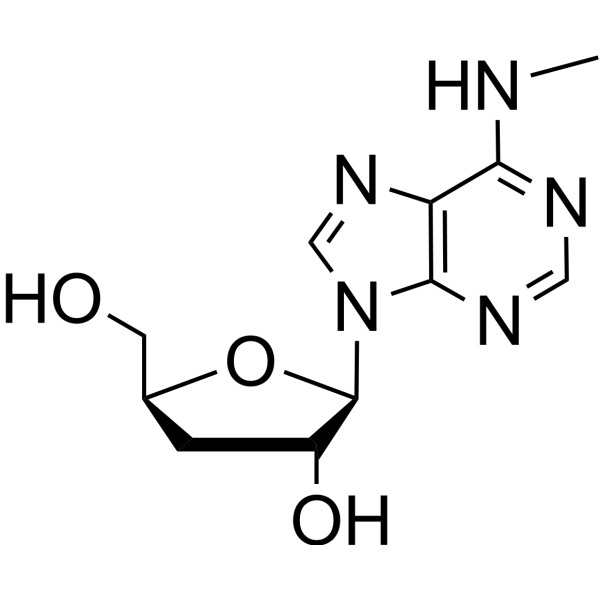
3’-Deoxy-N6-methyladenosine
 0 Images
3’-Deoxy-N6-methyladenosine is a purine nucleoside analog. Purine nucleoside analogs have broad antitumor activity targeting indolent lymphoid malignancies. Anticancer mechanisms in this process rely on inhibition of DNA synthesis, induction of apoptosis, etc.
-
PROTAC BRD4 Degrader-22
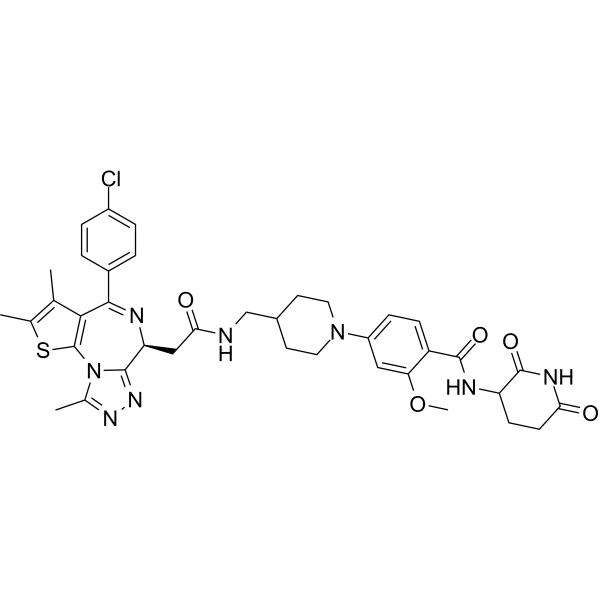 0 ImagesCat. No.: HY-155393CAS No.: 3032850-37-3
-
PROTAC Bcl-xL degrader-4
 0 ImagesCat. No.: HY-176740CAS No.: 2930759-37-6
PROTAC Bcl-xL degrader-4 is a Bcl-xL PROTAC degrader. PROTAC Bcl-xL degrader-4 exhibits cytotoxicity against hepatocellular carcinoma cells, inhibits their migration and colony formation, and shows low cytotoxicity toward normal cells. PROTAC Bcl-xL degrader-4 induces apoptosis by reducing mitochondrial membrane potential and activating the MAPK signaling pathway. PROTAC Bcl-xL degrader-4 significantly suppresses tumor growth in xenograft tumor mouse models. PROTAC Bcl-xL degrader-4 can be used in hepatocellular carcinoma-related research.
-
PROTAC EZH2 Degrader-45
 0 ImagesCat. No.: HY-181414CAS No.: 3093642-26-0
PROTAC EZH2 Degrader-45 (compound 61) is a PROTAC protein degrader targeting EZH2 with an IC50 of 22.97 μM in SU-DHL-6 cells. PROTAC EZH2 Degrader-45 can be used for the research of diffuse large b-cell lymphoma.
-
Trastuzumab-DM4
 0 ImagesCat. No.: HY-185718
Trastuzumab-DM4 is an antibody-drug conjugate (ADC) formed by conjugating Trastuzumab (HY-P9907) with DM4 (sulfo-SPDB-DM4) (HY-101141) via a cleavable linker. DM4 is a tubulin inhibitor that suppresses cell division. Trastuzumab-DM4 significantly inhibits tumor growth in Trastuzumab-resistant HER2 xenograft tumor models. Trastuzumab-DM4 can be used for the research of HER2-positive breast cancer.
-
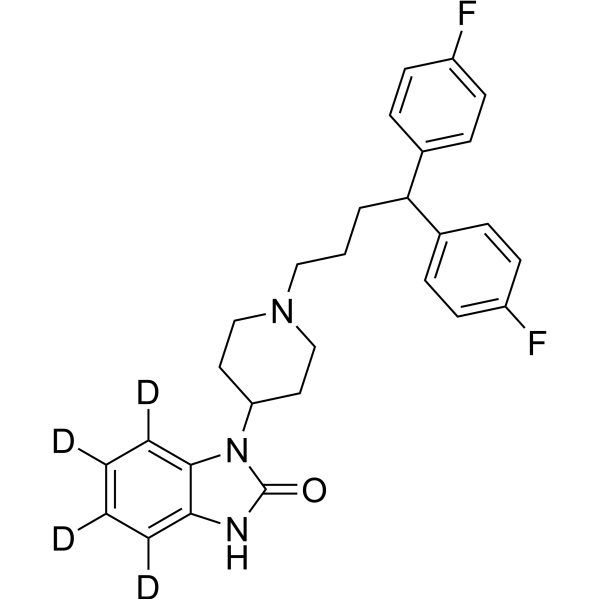
Pimozide-d4-1
 0 ImagesCat. No.: HY-12987S2Synonyms: R6238-d4-1
Pimozide-d4-1 is the deuterium labeled Pimozide. Pimozide is a dopamine receptor antagonist, with Kis of 1.4 nM, 2.5 nM and 588 nM for dopamine D2, D3 and D1 receptors, respectively, and also has affinity at α1-adrenoceptor, with a Ki of 39 nM; Pimozide also inhibits STAT3 and STAT5.
-
hsa-miR-7844-5p antagomir
 0 ImagesCat. No.: HY-RI02424A
hsa-miR-7844-5p antagomirs are chemically-modified oligonucleotides that hybridize with mature miRNAs. The miRNA antagomirs have 2 phosphorothioates at the 5' end, 4 phosphorothioates at the 3' end, 1 cholesterol group at the 3' end, and full-length nucleotide 2'-methoxy modification. The miRNA antagomirs strongly compete with mature miRNAs to prevent the complementary pairing of miRNAs and their target genes, thereby inhibiting miRNAs from functioning. Stability of miRNA antagomirs appears to be significantly higher than miRNA inhibitors, they exhibits enhanced cellular uptake, stability and regulatory activity in vivo.
-
mmu-miR-344d-2-5p antagomir
 0 ImagesCat. No.: HY-RI03046A
mmu-miR-344d-2-5p antagomirs are chemically-modified oligonucleotides that hybridize with mature miRNAs. The miRNA antagomirs have 2 phosphorothioates at the 5' end, 4 phosphorothioates at the 3' end, 1 cholesterol group at the 3' end, and full-length nucleotide 2'-methoxy modification. The miRNA antagomirs strongly compete with mature miRNAs to prevent the complementary pairing of miRNAs and their target genes, thereby inhibiting miRNAs from functioning. Stability of miRNA antagomirs appears to be significantly higher than miRNA inhibitors, they exhibits enhanced cellular uptake, stability and regulatory activity in vivo.
-
mmu-miR-6971-5p antagomir
 0 ImagesCat. No.: HY-RI03671A
mmu-miR-6971-5p antagomirs are chemically-modified oligonucleotides that hybridize with mature miRNAs. The miRNA antagomirs have 2 phosphorothioates at the 5' end, 4 phosphorothioates at the 3' end, 1 cholesterol group at the 3' end, and full-length nucleotide 2'-methoxy modification. The miRNA antagomirs strongly compete with mature miRNAs to prevent the complementary pairing of miRNAs and their target genes, thereby inhibiting miRNAs from functioning. Stability of miRNA antagomirs appears to be significantly higher than miRNA inhibitors, they exhibits enhanced cellular uptake, stability and regulatory activity in vivo.
-
rno-miR-205 antagomir
 0 ImagesCat. No.: HY-RI04292A
rno-miR-205 antagomirs are chemically-modified oligonucleotides that hybridize with mature miRNAs. The miRNA antagomirs have 2 phosphorothioates at the 5' end, 4 phosphorothioates at the 3' end, 1 cholesterol group at the 3' end, and full-length nucleotide 2'-methoxy modification. The miRNA antagomirs strongly compete with mature miRNAs to prevent the complementary pairing of miRNAs and their target genes, thereby inhibiting miRNAs from functioning. Stability of miRNA antagomirs appears to be significantly higher than miRNA inhibitors, they exhibits enhanced cellular uptake, stability and regulatory activity in vivo.
-
CK2/PIM1-IN-1
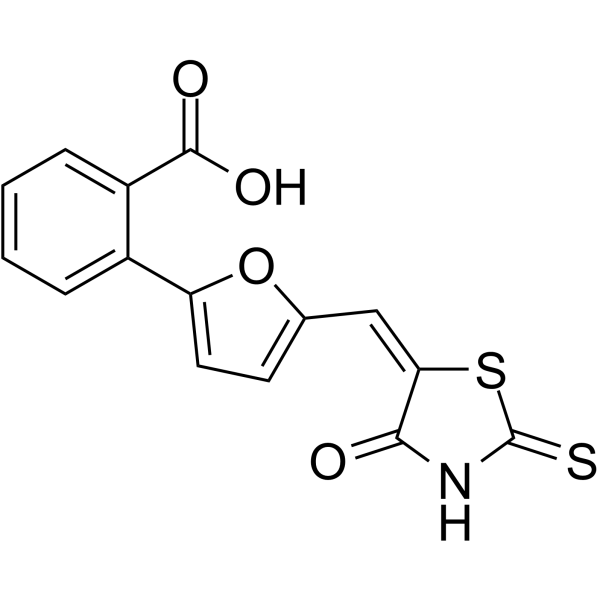 0 ImagesCat. No.: HY-135816CAS No.: 292640-28-9
CK2/PIM1-IN-1 is an inhibitor of CK2 and PIM1, with IC50s of 3.787 μM and 4.327 μM for CK2 and PIM1, respectively. CK2/PIM1-IN-1 is developed for the research of proliferative disorders such as cancer, as well as other kinase-associated conditions including inflammation, pain, vascular disorders, pathogenic infections and certain immunological disorders.



