



Cancer Targeted Therapy
Cancer targeted therapy is the foundation of precision medicine; it uses drugs or other substances to target specific genes and proteins that control cancer cells’ growth, division and spreading. Compared to traditional chemotherapy drugs, targeted-drugs can specifically act on cancer cells with high efficacy without damaging normal cells. Drugs used in cancer targeted therapy mainly includes small molecules and macromolecules (e.g., monoclonal antibodies), which can target cancer cells and constituents in the tumor microenvironment to activate the immune system. Anti-angiogenesis drugs, such as those targeting vascular endothelial growth factor (VEGF), epidermal growth factor receptor (EGFR), transforming growth factor (TGF)-α, TGF-β, Tumor necrosis factor (TNF)-α, and platelet-derived endothelial growth factor (PDGFR) inhibit the proliferation and metastasis of cancer cells. In recent years, the proportion of antibody drugs in cancer treatment has gradually become prominent. Antibody-drug conjugates (ADCs) are a new type of targeted drugs that are composed of monoclonal antibody, cytotoxic drug and linker. ADCs can deliver drugs to tumor cells and minimize the toxicity to normal tissues. Proteolysis-targeting chimera (PROTAC) is a useful technology for targeted protein degradation. PROTAC exploits the ubiquitin-proteasome system and forms a ternary complex with a hijacked E3 ubiquitin ligase and target protein, leading to polyubiquitination and degradation of the target protein.
Targeted therapy is a useful strategy in treatment of cancer either alone or in combination with standard chemotherapy. At present, targeted therapy has proved significant clinical success in the treatment of many types of cancer, including breast cancer, colorectal cancer, leukemia, ovarian cancer and lung cancer.
-
Boc-Pip-alkyne-Ph-COOH
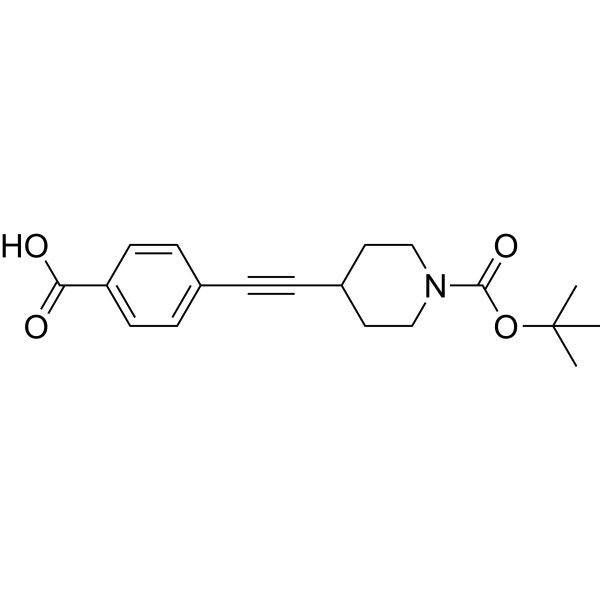 0 ImagesCat. No.: HY-133044CAS No.: 2581824-70-4
Boc-Pip-alkyne-Ph-COOH is a PROTAC linker, which refers to the alkyl/ether composition. Boc-Pip-alkyne-Ph-COOH can be used in the synthesis of a series of PROTACs, such as ARD-266 (HY-133020). ARD-266 effectively induces degradation of androgen receptor (AR) protein in AR-positive LNCaP, VCaP, and 22Rv1 prostate cancer cell lines with DC50 values of 0.2-1 nM. Boc-Pip-alkyne-Ph-COOH is a click chemistry reagent, it contains an Alkyne group and can undergo copper-catalyzed azide-alkyne cycloaddition (CuAAc) with molecules containing Azide groups.
-
hsa-miR-6786-3p antagomir
 0 ImagesCat. No.: HY-RI02136A
hsa-miR-6786-3p antagomirs are chemically-modified oligonucleotides that hybridize with mature miRNAs. The miRNA antagomirs have 2 phosphorothioates at the 5' end, 4 phosphorothioates at the 3' end, 1 cholesterol group at the 3' end, and full-length nucleotide 2'-methoxy modification. The miRNA antagomirs strongly compete with mature miRNAs to prevent the complementary pairing of miRNAs and their target genes, thereby inhibiting miRNAs from functioning. Stability of miRNA antagomirs appears to be significantly higher than miRNA inhibitors, they exhibits enhanced cellular uptake, stability and regulatory activity in vivo.
-
mmu-miR-1942 antagomir
 0 ImagesCat. No.: HY-RI02758A
mmu-miR-1942 antagomirs are chemically-modified oligonucleotides that hybridize with mature miRNAs. The miRNA antagomirs have 2 phosphorothioates at the 5' end, 4 phosphorothioates at the 3' end, 1 cholesterol group at the 3' end, and full-length nucleotide 2'-methoxy modification. The miRNA antagomirs strongly compete with mature miRNAs to prevent the complementary pairing of miRNAs and their target genes, thereby inhibiting miRNAs from functioning. Stability of miRNA antagomirs appears to be significantly higher than miRNA inhibitors, they exhibits enhanced cellular uptake, stability and regulatory activity in vivo.
-
mmu-miR-6373 inhibitor
 0 ImagesCat. No.: HY-RI03379
mmu-miR-6373 inhibitors are chemically-modified oligonucleotides that hybridize with mature miRNAs. The miRNA inhibitors have full-length nucleotide 2'-methoxy modification. The miRNA inhibitors strongly compete with mature miRNAs to prevent the complementary pairing of miRNAs and their target genes, thereby inhibiting miRNAs from functioning.
-
mmu-miR-7233-5p antagomir
 0 ImagesCat. No.: HY-RI04004A
mmu-miR-7233-5p antagomirs are chemically-modified oligonucleotides that hybridize with mature miRNAs. The miRNA antagomirs have 2 phosphorothioates at the 5' end, 4 phosphorothioates at the 3' end, 1 cholesterol group at the 3' end, and full-length nucleotide 2'-methoxy modification. The miRNA antagomirs strongly compete with mature miRNAs to prevent the complementary pairing of miRNAs and their target genes, thereby inhibiting miRNAs from functioning. Stability of miRNA antagomirs appears to be significantly higher than miRNA inhibitors, they exhibits enhanced cellular uptake, stability and regulatory activity in vivo.
-
Galbacin
 0 Images
Galbacin ((3S)-Zuonin A), the epimer of (-)-Zuonin A (HY-N7394A), is a AMPK activator. Galbacin can be isolated from Myristica fragrans (nutmeg). Galbacin stimulates AMPK enzyme in differentiated C2C12 cells. Galbacin also has anticancer activity, and inhibits the proliferation of lymphocyte and tumor cells. Galbacin prevents weight gain in diet-induced mice model. Galbacin can be used for metabolic syndrome (including obesity and type-2 diabetes) and caners research.
-
hsa-miR-10399-3p inhibitor
 0 ImagesCat. No.: HY-RI00036
hsa-miR-10399-3p inhibitors are chemically-modified oligonucleotides that hybridize with mature miRNAs. The miRNA inhibitors have full-length nucleotide 2'-methoxy modification. The miRNA inhibitors strongly compete with mature miRNAs to prevent the complementary pairing of miRNAs and their target genes, thereby inhibiting miRNAs from functioning.
-
hsa-miR-3192-5p antagomir
 0 ImagesCat. No.: HY-RI00658A
hsa-miR-3192-5p antagomirs are chemically-modified oligonucleotides that hybridize with mature miRNAs. The miRNA antagomirs have 2 phosphorothioates at the 5' end, 4 phosphorothioates at the 3' end, 1 cholesterol group at the 3' end, and full-length nucleotide 2'-methoxy modification. The miRNA antagomirs strongly compete with mature miRNAs to prevent the complementary pairing of miRNAs and their target genes, thereby inhibiting miRNAs from functioning. Stability of miRNA antagomirs appears to be significantly higher than miRNA inhibitors, they exhibits enhanced cellular uptake, stability and regulatory activity in vivo.
-
hsa-miR-4699-5p antagomir
 0 ImagesCat. No.: HY-RI01279A
hsa-miR-4699-5p antagomirs are chemically-modified oligonucleotides that hybridize with mature miRNAs. The miRNA antagomirs have 2 phosphorothioates at the 5' end, 4 phosphorothioates at the 3' end, 1 cholesterol group at the 3' end, and full-length nucleotide 2'-methoxy modification. The miRNA antagomirs strongly compete with mature miRNAs to prevent the complementary pairing of miRNAs and their target genes, thereby inhibiting miRNAs from functioning. Stability of miRNA antagomirs appears to be significantly higher than miRNA inhibitors, they exhibits enhanced cellular uptake, stability and regulatory activity in vivo.
-
hsa-miR-628-3p inhibitor
 0 ImagesCat. No.: HY-RI01900
hsa-miR-628-3p inhibitors are chemically-modified oligonucleotides that hybridize with mature miRNAs. The miRNA inhibitors have full-length nucleotide 2'-methoxy modification. The miRNA inhibitors strongly compete with mature miRNAs to prevent the complementary pairing of miRNAs and their target genes, thereby inhibiting miRNAs from functioning.
-
NSC 641396
 0 ImagesCat. No.: HY-164497CAS No.: 605685-94-7
NSC 641396 is a ribonucleotide reductase (RNR) inhibitor with an IC50 value of 1.2 μM. NSC 641396 is also a protein arginine N-methyltransferase 9 (PRMT9) inhibitor. NSC 641396 has antitumor activity.
-
Tubulin-IN-60
 0 ImagesCat. No.: HY-179159
Tubulin-IN-60 (Compound 4) is a tubulin polymerization inhibitor, with an IC50 of 0.19 μM. Tubulin-IN-60 has anti-cancer activity against colorectal, pancreatic, T-cell acute lymphoblastic leukemia cancer.
-
EGFR/PARP-1-IN-1
 0 ImagesCat. No.: HY-183373
EGFR/PARP-1-IN-1 is a dual EGFR and PARP-1 inhibitor with IC50 values of 64 nM and 12 nM, respectively. EGFR/PARP-1-IN-1 binds to the ATP-binding pocket of EGFR and interacts with the catalytic domain of PARP-1, inhibiting kinase and enzymatic activity via hydrogen bond formation with key residues in both targets. EGFR/PARP-1-IN-1 induces apoptosis through the endogenous mitochondrial pathway, arrests the cell cycle at the G2 phase, and inhibits cell proliferation. EGFR/PARP-1-IN-1 can be used for research on triple-negative breast cancer.
-
PI3K-IN-35
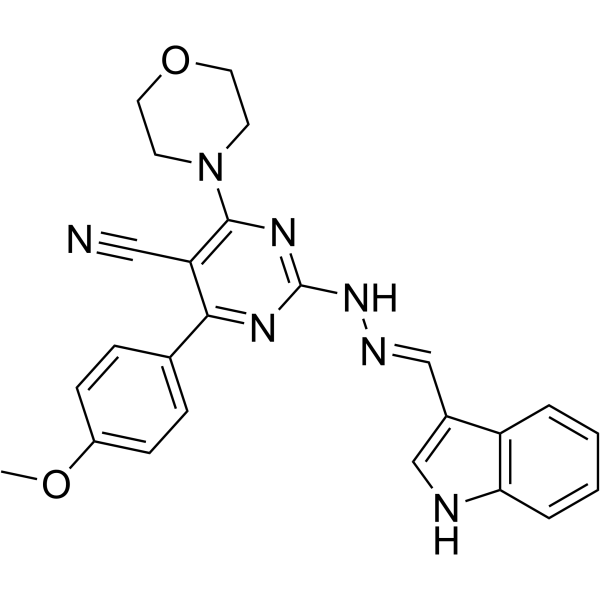 0 ImagesCat. No.: HY-147900CAS No.: 2458163-99-8
-
2’-Deoxy-2’-fluoro-4’-thio-a-D-arabinouridine
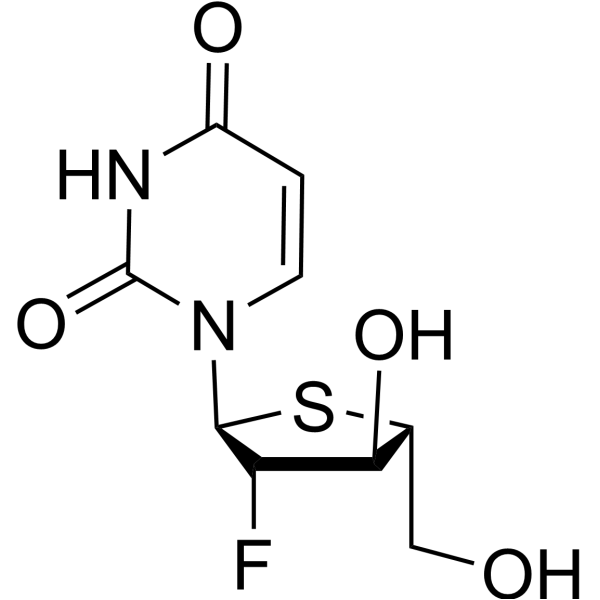 0 ImagesCat. No.: HY-154612
2’-Deoxy-2’-fluoro-4’-thio-a-D-arabinouridine is a purine nucleoside analog. Purine nucleoside analogs have broad antitumor activity targeting indolent lymphoid malignancies. Anticancer mechanisms in this process rely on inhibition of DNA synthesis, induction of apoptosis, etc.
-
E3 ligase Ligand-Linker Conjugate 42
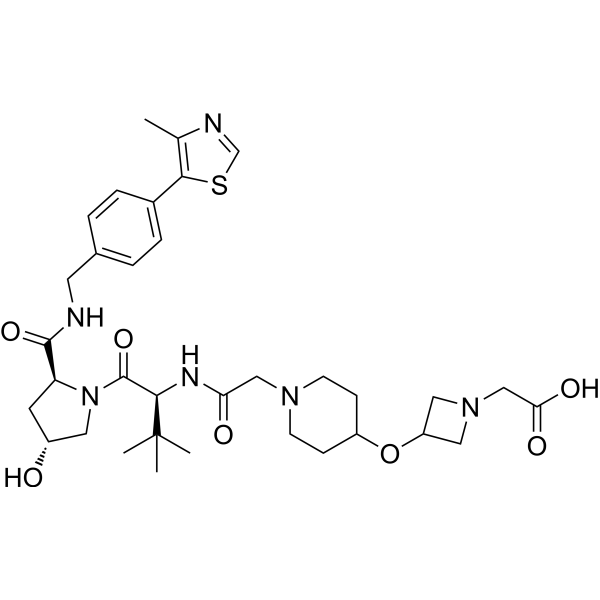 0 ImagesCat. No.: HY-157597
E3 ligase Ligand-Linker Conjugate 42 is a conjugate of E3 ligase ligand and linker, consisting of (S,R,S)-AHPC (HY-125845) and the corresponding Linker. (S,R,S)-AHPC is a VH032-based von Hippel-Lindau (VHL) ligand that recruits VHL proteins. E3 ligase Ligand-Linker Conjugate 42 can be used as a key intermediate for the synthesis of complete PROTAC molecules.
-
PLK1-IN-10
 0 ImagesCat. No.: HY-161521CAS No.: 2991469-21-5
PLK1-IN-10 (Compound 4Bb) is an orally active PLK1 PBD (polo-box domain) inhibitor. PLK1-IN-10 blocks the interaction of PLK1 with the cell division regulator protein 1 (PRC1) and decreases the protein expression of the CDK1-Cyclin B1 complex. PLK1-IN-10 reacts with glutathione (GSH) to increase cellular oxidative stress, ultimately leading to cell death.
-
T-3256336
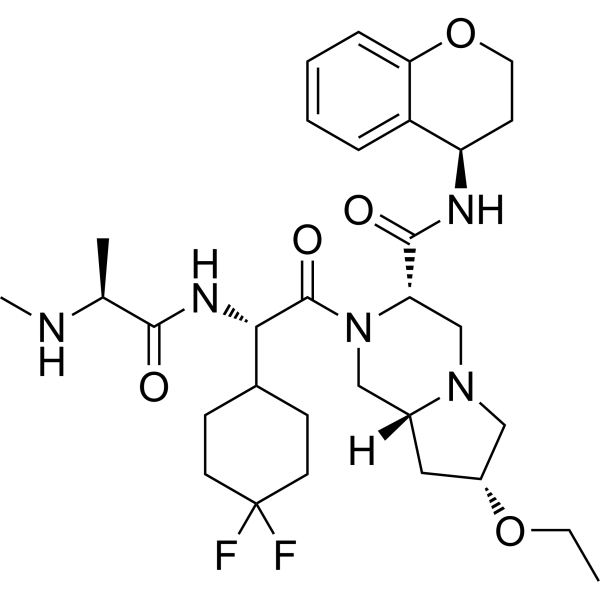 0 ImagesCat. No.: HY-100682CAS No.: 1266227-69-3
-
Dde Biotin-PEG4-Picolyl azide
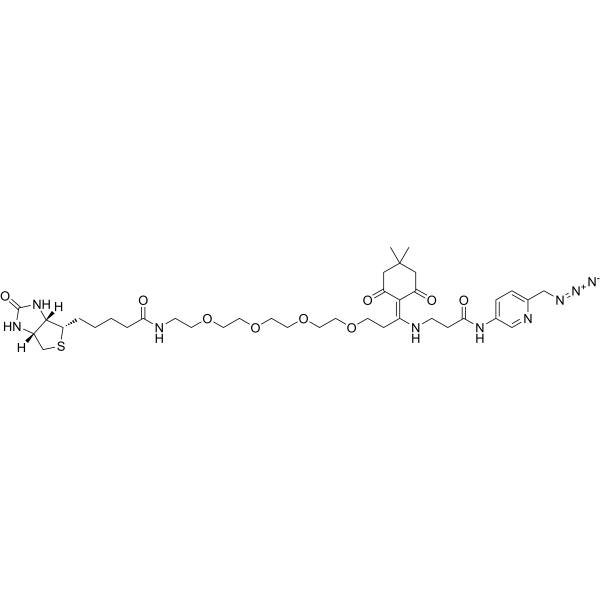 0 ImagesCat. No.: HY-140917CAS No.: 2055048-42-3
Dde Biotin-PEG4-Picolyl azide is a PEG-based PROTAC linker that can be used in the synthesis of PROTACs. Dde Biotin-PEG4-Picolyl azide is a click chemistry reagent, it contains an Azide group and can undergo copper-catalyzed azide-alkyne cycloaddition reaction (CuAAc) with molecules containing Alkyne groups. It can also undergo strain-promoted alkyne-azide cycloaddition (SPAAC) reactions with molecules containing DBCO or BCN groups.
-
Carbonic anhydrase inhibitor 9
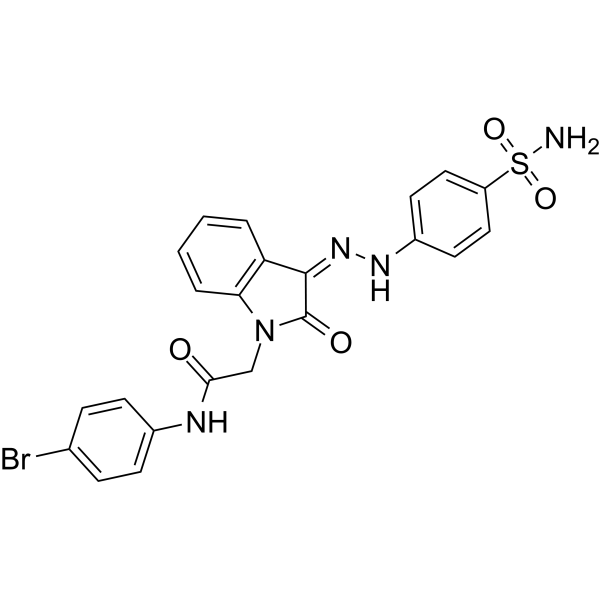 0 ImagesCat. No.: HY-144807CAS No.: 3033042-50-8
Carbonic anhydrase inhibitor 9 is a potent carbonic anhydrase (CA) inhibitor with Kis of 56.4 and 56.9 nM for hCA II and IX, respectively. Antiproliferative activity.



