



T338C Src-IN-2

Based on 1 Customer Validation
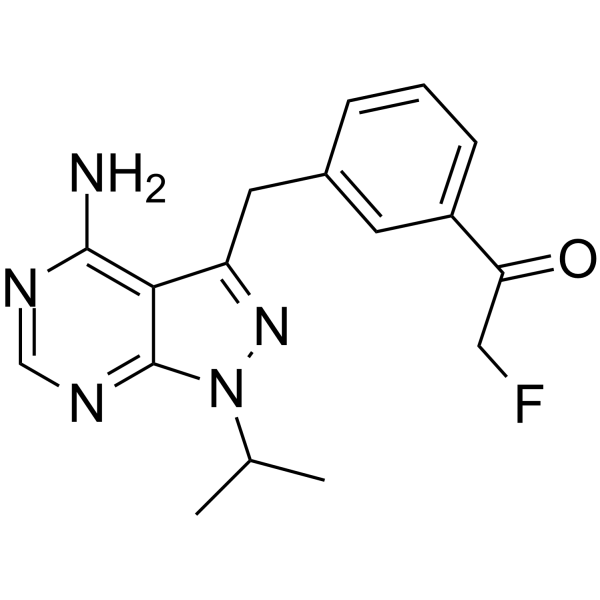
T338C Src-IN-2 is a mutant c-Src kinase inhibitor, with an IC50 of 317 nM against T338C c-Src, 57 nM against T338C/V323A c-Src, and 19 nM against T338C/V323S c-Src. T338C Src-IN-2 inhibits the kinase activity of endogenous cysteine gatekeeper MOK. T338C Src-IN-2 reduces global phosphotyrosine levels in v-Src-ES1-transformed NIH-3T3 cells.
For research use only. We do not sell to patients.
- Purity : 98.41%
- CAS No.: 1351927-00-8
- Formula: C17H18FN5O
- Molecular Weight:327.36
-
Storage:
4°C, stored under nitrogen
* In solvent : -80°C, 6 months; -20°C, 1 month (stored under nitrogen)

To place orders, for customer services and technical support, please contact: MedChemExpress USA
Tel: 609-228-6898 E-mail: [email protected] [email protected]


-
 Biological Activity
-
Chemical Information
- Protocols
- Purity & Documentation
- References
-
 Help & FAQs


-

HY-101053
Src Inhibitor 1Src Inhibitor -
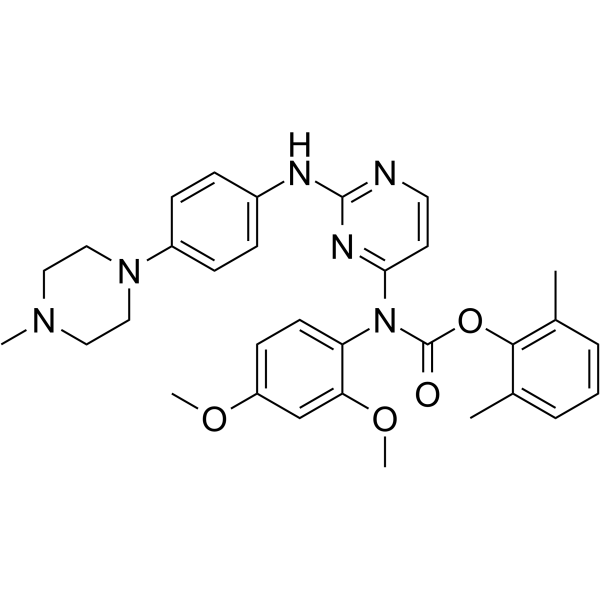
HY-12299
WH-4-023Src Inhibitor -
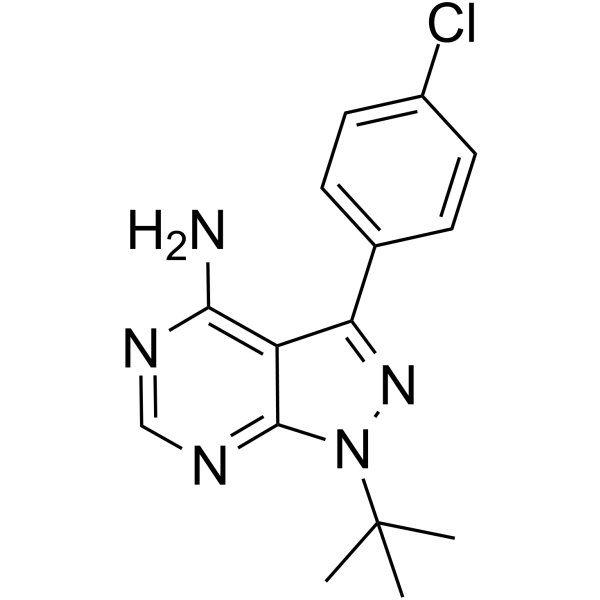
HY-13805
PP2Src Inhibitor -
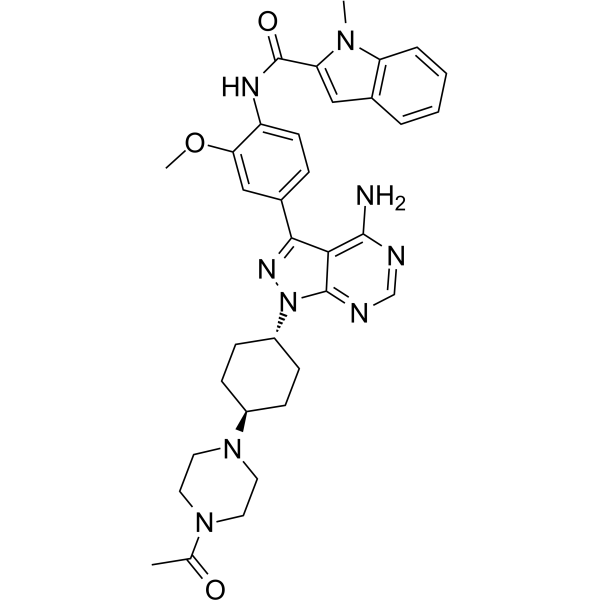
HY-11011
A-770041Lck Inhibitor -
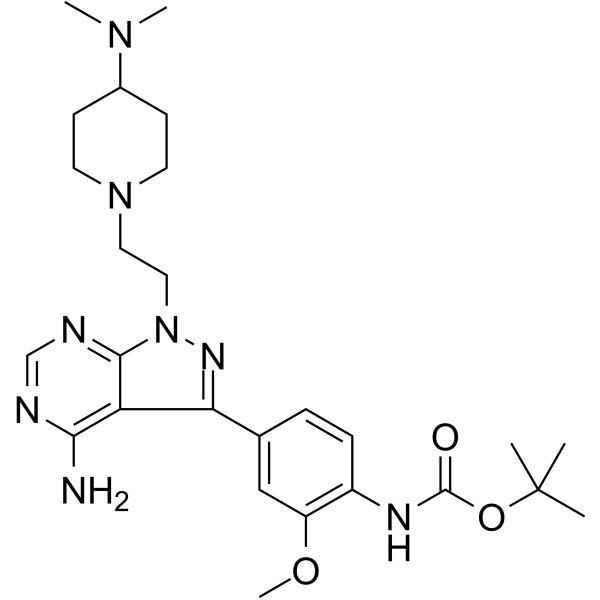
HY-112096
eCF506YES1/SRC inhibitor -
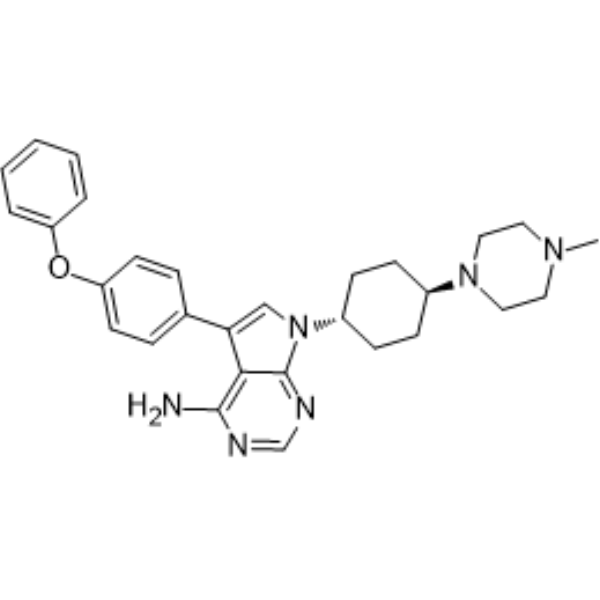
HY-15764
A 419259Src Inhibitor -
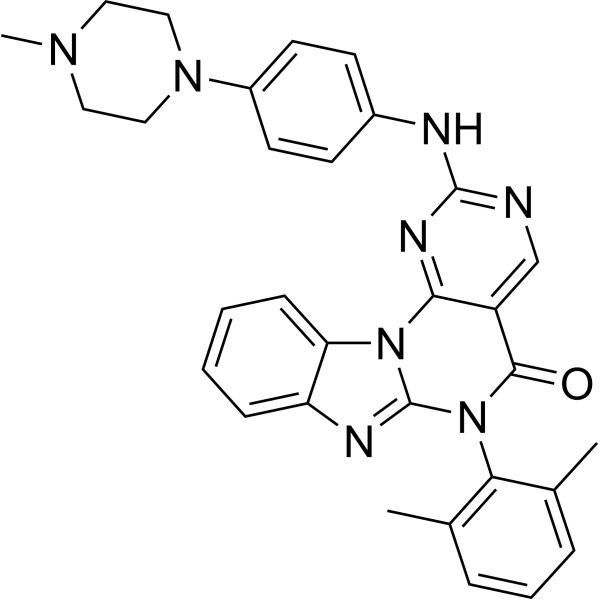
HY-12072
Lck InhibitorLck Inhibitor -
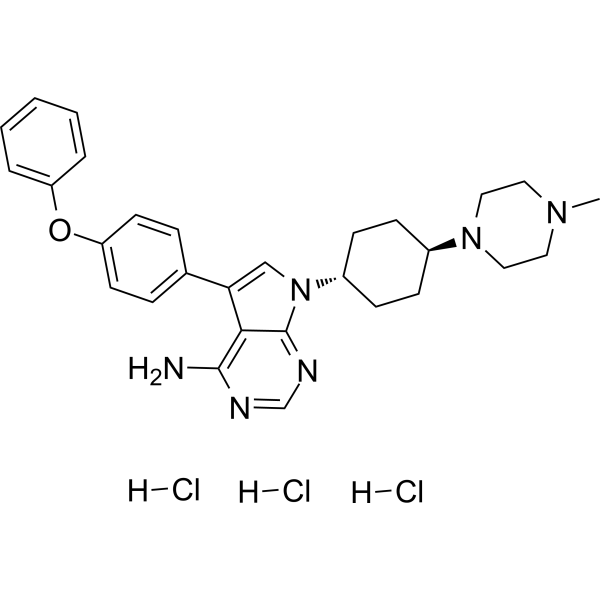
HY-15764A
A 419259 trihydrochlorideSrc Inhibitor -
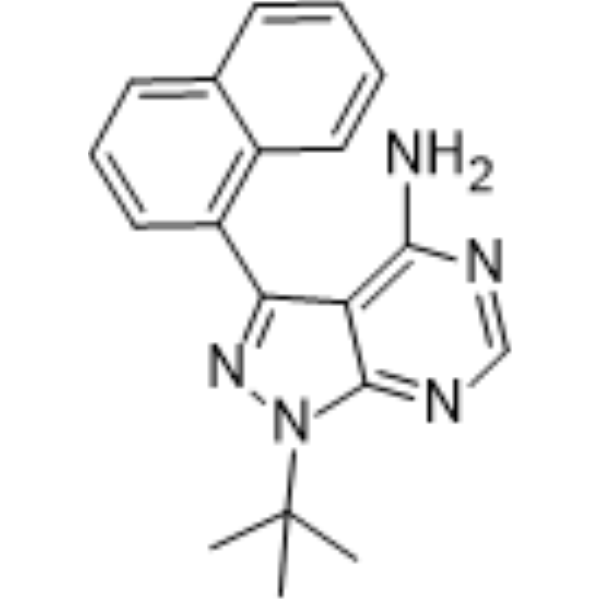
HY-13941
1-Naphthyl PP1Src Inhibitor -
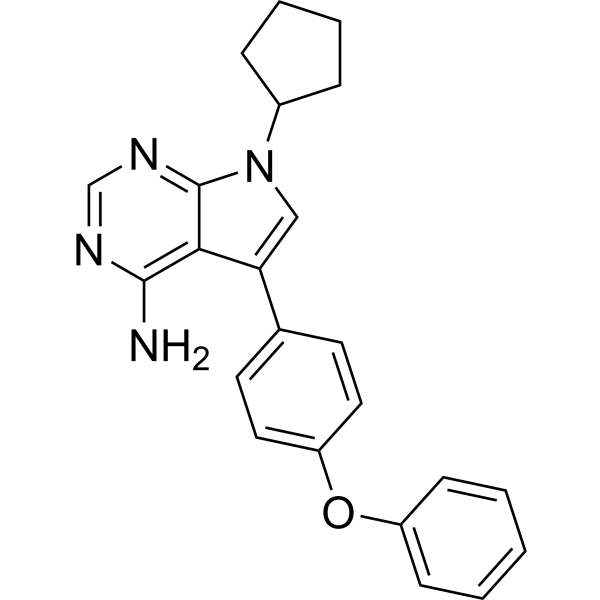
HY-108318
RK-24466Lck Inhibitor -

HY-N6596
7-Hydroxy-4H-chromen-4-oneSrc Inhibitor -
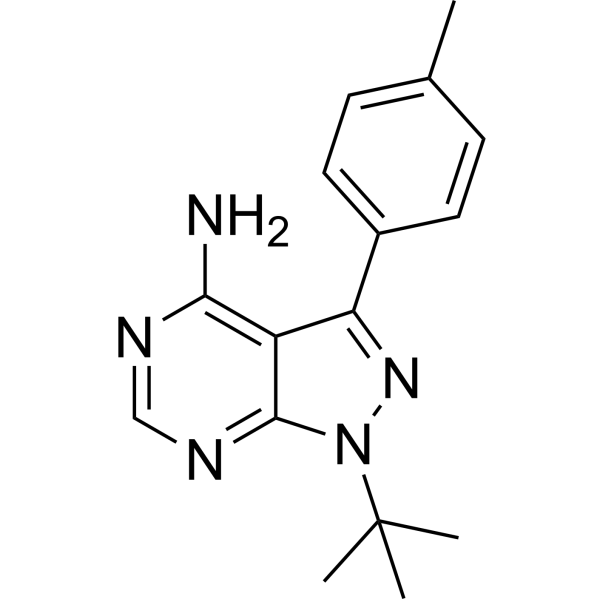
HY-13804
PP1Src Inhibitor


Biological Activity
Description
In Vitro
T338C Src-IN-2 (Compound 13) (1 μM) potently inhibits immunoprecipitated MOK at a concentration of 1 μM, reducing kinase activity to near-background levels[1].
T338C Src-IN-2 (0-10 μM; 1 h) selectively inhibits v-Src-ES1 (v-SrcI338C) in NIH-3T3 cells in a dose-dependent manner in vitro, and shows no activity against v-SrcI338T at concentrations up to 10 μM[1].
T338C Src-IN-2 (10 min) exhibits enhanced potency against the double mutants c-Src-ES2T338C/V323A and c-Src-ES3T338C/V323S, with IC50 values of 57 nM and 19 nM, respectively, representing 6-fold and 17-fold increases in activity compared to that against c-Src-ES1[1].
MedChemExpress (MCE) has not independently confirmed the accuracy of these methods. They are for reference only. Further protocols information, click here.
-
Cell Line:NIH-3T3 cells
-
Concentration:0, 1.25, 2.5, 5, 10 μM
-
Incubation Time:1 h
-
Result:Inhibited v-Src-ES1 (v-SrcI338C) in NIH-3T3 cells, and showed no activity against v-SrcI338T at concentrations up to 10 μM.


Chemical Information
-
CAS No. 1351927-00-8
-
Appearance Solid
-
Molecular Weight 327.36
-
Formula C17H18FN5O
-
Color White to off-white
-
SMILES
NC1=C2C(N(C(C)C)N=C2CC3=CC(C(CF)=O)=CC=C3)=NC=N1
-
Shipping
Room temperature in continental US; may vary elsewhere.
-
Storage
4°C, stored under nitrogen
* In solvent : -80°C, 6 months; -20°C, 1 month (stored under nitrogen)

Protocols
-
Kinase activity and phosphorylation assays
Kinase activity assays measure the ability of kinases to transfer phosphate groups from ATP to specific substrates, while phosphorylation assays detect the presence and levels of phosphorylated proteins. Common methods include radiolabeled ATP incorporation (e. g. ,), ADP release detection via bioluminescence (e. g. ,[3]), enzyme-linked immunosorbent assays (ELISA) for phospho-specific epitopes (e. g. ,[6]), and microtiter-based formats for high-throughput screening (e. g. ,[8]). The ADP-Glo assay quantifies kinase activity by measuring ADP produced during phosphorylation using a luciferase-based system. Radiometric assays involve autoradiography or scintillation counting after incorporation of 32P-labeled ATP into substrate proteins. ELISA-based approaches rely on phospho-specific antibodies to detect activated kinases in cell lysates or purified samples.
-
Cell Cytotoxicity Assay
Cytotoxicity assays are usually based on the assessment of cell membrane damage, which can also be indirectly detected by measuring cell viability. Detection methods include MTT assay, CKK-8 assay, LDH assay and ATP assay, etc.
-
Protocol for Kinase activity and phosphorylation assays
Kinase activity assays measure transfer of phosphate from ATP to a protein or peptide substrate, generating phosphorylated substrate, ADP, or incorporated radiolabeled phosphate as the readout; phosphorylation assays measure site-specific phosphorylation in cells or tissues as a proxy for kinase-pathway activation, inhibition, or substrate regulation. Phosphorylation can be detected by phospho-specific Western blot, immunoprecipitation kinase assay, phospho-immunofluorescence, phospho-flow cytometry, luminescent ADP detection, radiolabeled ATP incorporation, or reporter-based pathway assays, and these readouts can be applied to cancer cells, primary neurons, mouse tumors, organoids, inflammatory macrophages, ferroptosis studies, and mitophagy studies when the kinase target is biologically relevant.


Purity & Documentation
-
Data Sheet (275 KB)
-
SDS (252 KB)
- English - EN (252 KB)
- Français - FR (252 KB)
- Deutsch - DE (252 KB)
- Norwegian - NO (252 KB)
- Español - ES (252 KB)
- Swedish - SV (252 KB)
- Italian - IT (252 KB)
- Korean - KR (252 KB)
- Portuguese - PT (252 KB)
-
Handling Instructions (2659 KB)
References

Calculators
Concentration (start) × Volume (start) = Concentration (final) × Volume (final)


T338C Src-IN-2 Related Classifications
HY-16906 Related Classifications
 Powered by Bioz