



α-synuclein Inhibitor
-
2N4R Tau/α-Syn against-1
 0 ImagesCat. No.: HY-173049
2N4R Tau/α-Syn against-1 (Compound 4d) targets α-synuclein and tau protein, inhibits the fibrillation and oligomer formation of α-synuclein and tau proteins, exhibits disaggregation activity on Aβ fibers. 2N4R Tau/α-Syn against-1 can be used in research of Parkinson's disease and Alzheimer's disease.
-
Sycosterol A
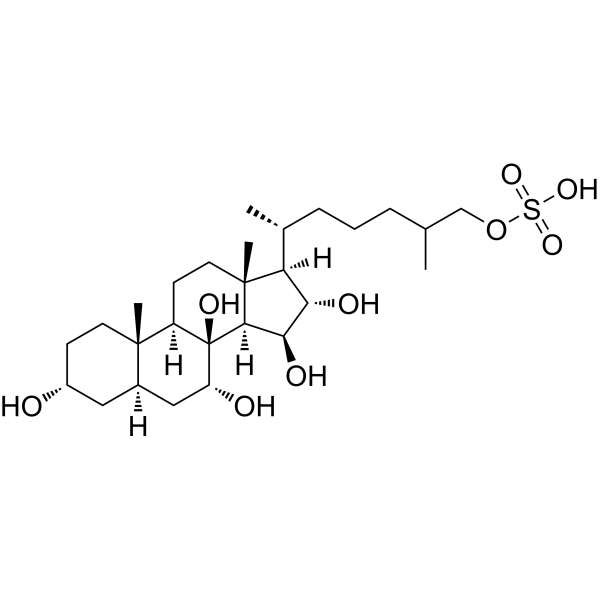 0 ImagesCat. No.: HY-N10306CAS No.: 3034046-94-8
Sycosterol A is a sterol-based α-synuclein (α-syn) inhibitor that targets α-synuclein aggregates and inhibits α-synuclein aggregation. Sycosterol A can be used in the study of anti-neurodegenerative diseases.
-
tau-0N4R-IN-1
 0 ImagesCat. No.: HY-159941CAS No.: 2200453-71-8
tau-0N4R-IN-1 (Compound 6T) is an BBB-penetrable inhibitor of tau 0N4R oligomerization. tau-0N4R-IN-1 effectively inhibits the fibrosis of tau 0N4R, 2N3R, and 2N4R, exhibits an anti-seeding effect on tau in vitro, reduces the oligomerization of α-syn dose-dependently, and prevents formation of α-syn inclusions. tau-0N4R-IN-1 is stable in mouse microsomes and reduces Aβ plaques in brain tissues from AD patients. tau-0N4R-IN-1 has good pharmacokinetic properties in mice.
-
Dopal-d5
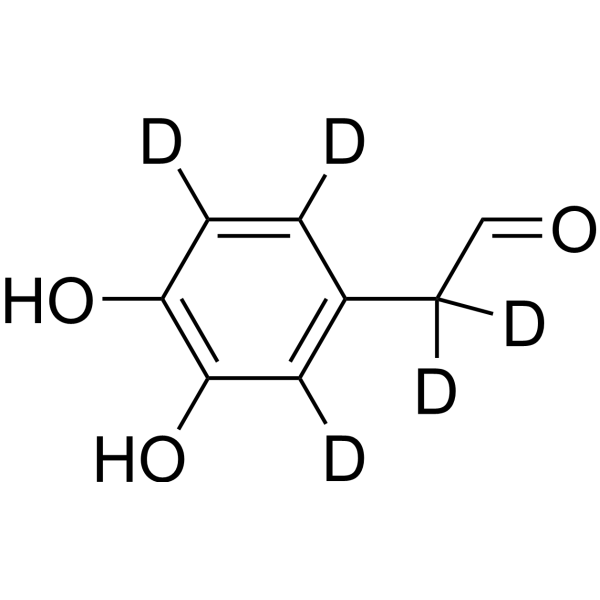 0 ImagesCat. No.: HY-121252S
Dopal-d5 is the deuterium labeled Dopal (HY-121252). Dopal is a metabolite and aldehyde neurotoxin of Dopamine (HY-B0451). Dopal exhibits cytotoxicity, induces α-synuclein oligomerization and aggregation, and is closely associated with the pathogenesis of Parkinson's disease. Dopal can be used in research related to Parkinson's disease.

-
Carveol (Standard)
 0 ImagesCat. No.: HY-W017370RCAS No.: 99-48-9
Carveol (Standard) is the analytical standard of Carveol. This product is intended for research and analytical applications. Carveol is an orally active monoterpenoid alcohol with neuroprotective, antioxidant, anti-inflammatory, anticonvulsant, antidiabetic, hypolipidemic and hepatoprotective activities. Carveol upregulates the expression of Bcl2, downregulates the expression of caspase-3, TNF-α, IL1β and IL6, activates the Nrf2/HO-1 antioxidant signaling pathway, inhibits the RAGE/NF-κB signaling pathway, and suppresses neuroinflammation and neuronal apoptosis. Carveol inhibits α-synuclein aggregation, improves cognitive ability, and inhibits α-amylase activity. Carveol exerts neuroprotective effects in a rat model of Parkinson's disease. Carveol exhibits antidiabetic effects in alloxan-induced diabetic rats. Carveol alleviates PTZ-induced seizures in rats. Carveol can be used in research related to Parkinson's disease, epilepsy, diabetes and ischemic stroke.
-
Brazilin-7-acetate
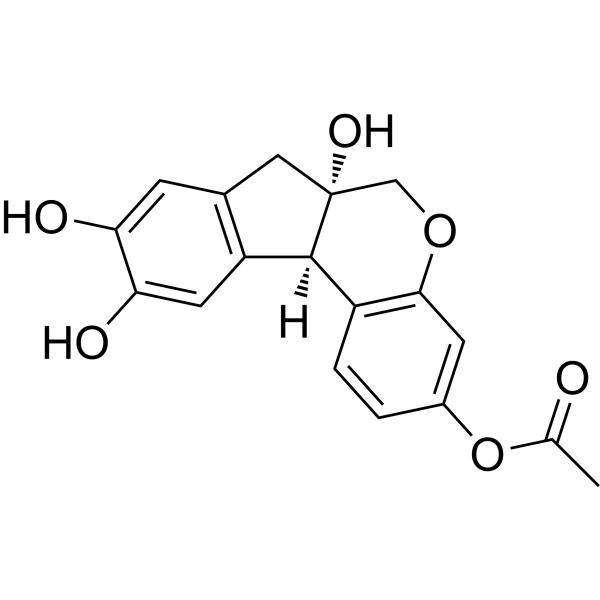 0 ImagesCat. No.: HY-157225CAS No.: 3040318-36-0
Brazilin-7-acetate (B-7-A) is an inhibitor of α-synuclein (α-Syn) aggregates. Brazilin-7-acetate inhibits the formation of α-synuclein fibril, mitigates cytotoxicity, and decreases oxidative stress. Brazilin-7-acetate can be used in the research of Parkinson's disease.
-
Tambulin
 0 Images
Tambulin is an orally active flavonol compound found in Zanthoxylum armatum. Tambulin can inhibit cell proliferation, induce apoptosis and inhibit ROS production. Tambulin upregulates cleaved caspase-3, cleaved caspase-9, and Bax, downregulates Bcl-2 levels. Tambulin can stimulate glucose-dependent insulin secretion and induce endothelium-independent vasorelaxation. Tambulin binds to succinate dehydrogenase (SDH) (Ki = 11.02 μM) and shows significant ferric reducing power. Tambulin can enhances oxidative stress resistance, reduces, lipofuscin deposits, lipid levels, α-synuclein levels, improves locomotary behavior, and dopamine levels in in age-synchronized L1 hermaphrodite Caenorhabditis elegans models of ageing and Parkinson's disease. Tambulin can be used for the researches of Parkinson's disease, lung squamous cell carcinoma, and diabetes.
-
PBT434 free base
 0 ImagesCat. No.: HY-120475BCAS No.: 1232840-87-7Synonyms: ATH434 free base
PBT434 (ATH434) free base is a potent, orally active and cross the blood-brain barrier α-synuclein aggregation inhibitor. PBT434 free base can be used as a iron chelator and modulates transcellular iron trafficking. PBT434 free base inhibits iron-mediated redox activity and iron-mediated aggregation of α-synuclein. PBT434 free base prevents the loss of substantia nigra pars compacta neurons (SNpc). PBT434 free base has the potential for the research of Parkinson’s disease (PD).
-
HUP-46
 0 ImagesCat. No.: HY-176749CAS No.: 3007689-83-7
-
α-Synuclein inhibitor 4
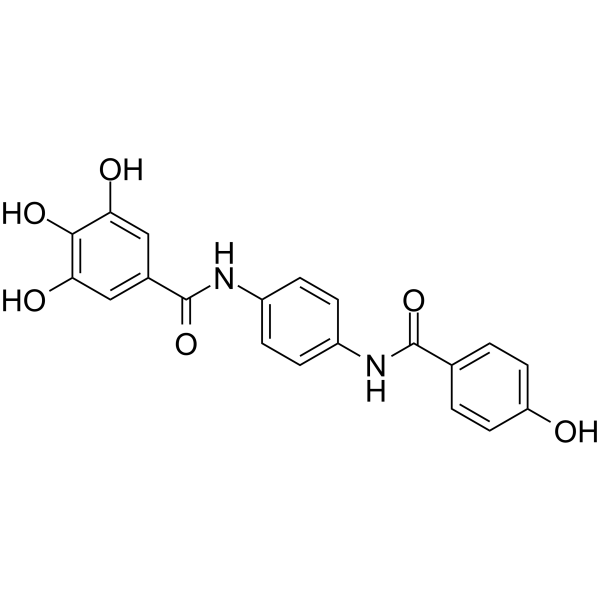 0 ImagesCat. No.: HY-147666CAS No.: 2489813-08-1
α-Synuclein inhibitor 4 (compound 3gh) is a potent and BBB-penetrated inhibitor of α-Synuclein (α-Syn) aggregation, with an IC50 of 0.98 μM and inhibition ratio at 30 μM of 91.2%.
-
Corynoxine B (Standard)
 0 ImagesCat. No.: HY-N0901ARCAS No.: 17391-18-3
Corynoxine B Standard is an analytical standard for Corynoxine B. This product is intended for research and analytical applications. Corynoxine B is an alkaloid-type autophagy inducer and α-synuclein aggregation inhibitor that ameliorates Mn-induced dysregulation of autophagy and enhances the clearance of α-synuclein (α-syn) in Parkinson's disease mice.
-
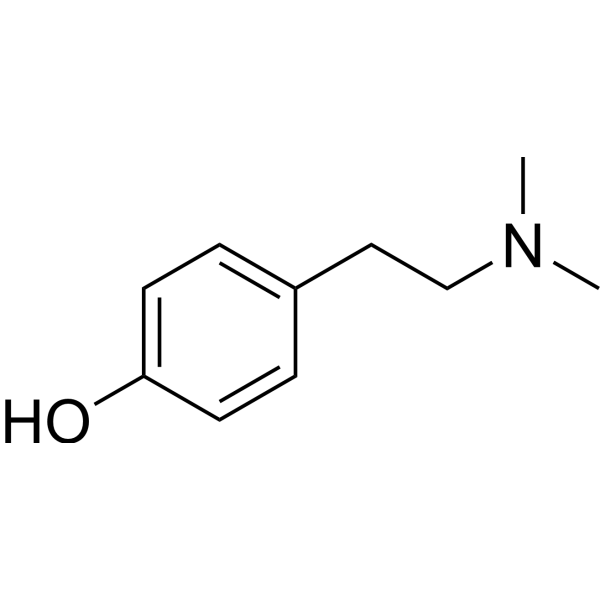
Hordenine (Standard)
 0 ImagesSynonyms: Ordenina (Standard); Peyocactine (Standard)
Hordenine (Standard) (Ordenina (Standard); Peyocactine (Standard)) is the analytical standard of Hordenine (HY-N0113). This product is intended for research and analytical applications. Hordenine (Ordenina; Peyocactine) is a multifunctional alkaloid with oral activity and blood-brain barrier penetration. Hordenine inhibits LPS-induced phosphorylation of p38, JNK, ERK1/2, p65, IκB, and AKT, prevents p65 nuclear translocation, and suppresses inflammatory cytokines and mediators. Hordenine promotes M2 macrophage polarization, restores blood-milk barrier integrity, alleviates oxidative stress by reducing ROS and MDA, and attenuates LPS-induced lung injury and pulmonary edema. Hordenine inhibits cAMP production, CREB phosphorylation, and MITF expression, thereby suppressing melanin synthesis in melanocytes and reconstructed epidermis. Hordenine activates the Wnt/β-catenin signaling pathway, promotes dermal papilla cell proliferation and hair shaft elongation, and accelerates hair regeneration. Hordenine activates DRD2, acts as a D3R partial agonist, α2A-AR full agonist, and 5-HT2A-R antagonist, and inhibits SERT and DAT. Hordenine inhibits α-synuclein accumulation and ameliorates motor deficits in Parkinson's disease models. Hordenine limits alcohol intake, reduces relapse drinking behavior, and modulates alcohol-induced conditioned place preference. Hordenine can be used for research on mastitis, skin pigmentation, acute lung injury, foodborne diseases, hair loss, Parkinson's disease, bacterial infections, and alcohol use disorder.
-
FTY720-C2
 0 Images
FTY720-C2 is a derivative of FTY72 (HY-12005). FTY720-C2 promotes the expression of brain-derived neurotrophic factor (BDNF) and glial cell-derived neurotrophic factor (GDNF) in multiple system atrophy (MSA) models, without causing immunosuppression. FTY720-C2 improves motor dysfunction and reduces the levels of insoluble alpha-synuclein (αSyn) in MSA mouse models. FTY720-C2 is blood-brain barrier penetrate.
-
Synucleozid-2.0
 0 Images
Synucleozid-2.0 is a blood-brain barrier-permeable inhibitor that binds to the IRE of SNCA mRNA, with a EC50 of 2.9 µM and a Kd value of 1.8 µM. Synucleozid-2.0 selectively binds to and stabilizes the A bulge and adjacent closed base pairs in the 5' UTR IRE of SNCA mRNA, blocks the translation process and reduces intracellular levels of α-synuclein. Synucleozid-2.0 exerts cytoprotective effects against cytotoxicity induced by α-synuclein preformed fibrils. Synucleozid-2.0 is applicable to the research of Parkinson's disease.
-
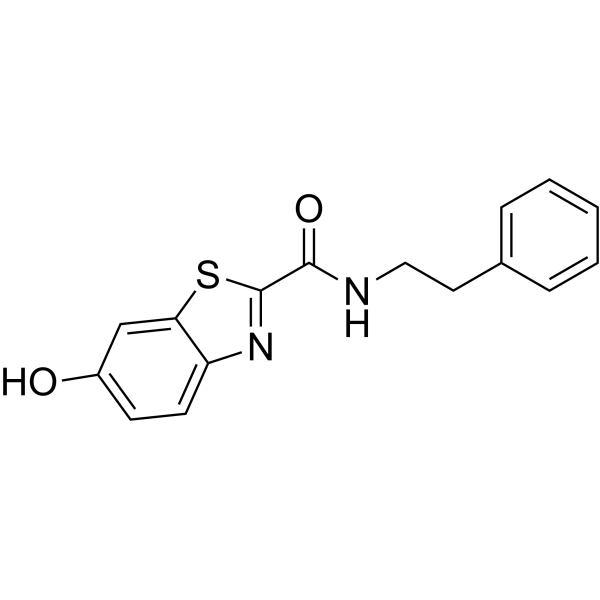
MAO-B-IN-31
 0 ImagesCat. No.: HY-161328
MAO-B-IN-31 (Compound 30) is an effective and selective inhibitor of monoamine oxidase B (monoamine oxidase B). The IC50 value is 41 nM. MAO-B-IN-31 also inhibits α-syn and tau aggregation. MAO-B-IN-31 has neuroprotective activity.
-
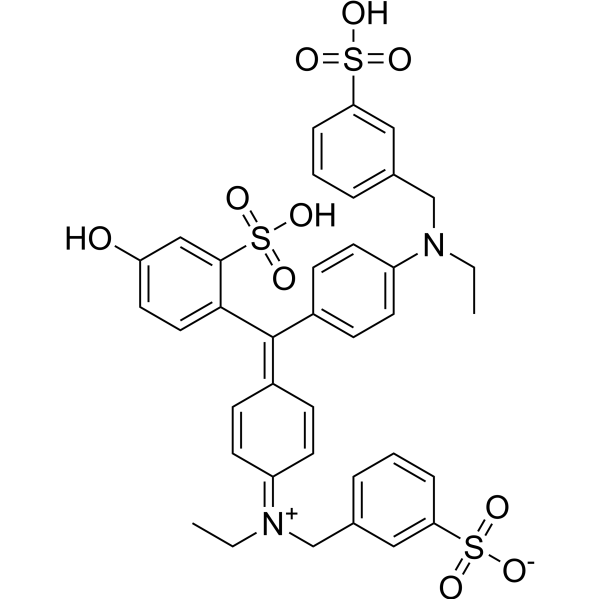
Fast green FCF free acid
 0 ImagesCat. No.: HY-D0914ACAS No.: 25738-40-3
Fast green FCF free acid is a dye that is acid-resistant. Fast Green FCF free acid inhibits α-synuclein aggregation, as well as Aβ, P2X4 receptor and TLR4/Myd88/NF-κB. Fast Green FCF free acid is widely used as a staining agent like quantitative stain for histones at alkaline pH after acid extraction of DNA, and as a protein stain in electrophoresis. Fast Green FCF free acid improves cognitive impairment, depression, relieves pain allergies, and promotes reproductive function.
-
Hordenine hydrochloride (Standard)
 0 ImagesSynonyms: Ordenina hydrochloride (Standard); Peyocactine hydrochloride (Standard)
Hordenine hydrochloride (Standard) (Ordenina hydrochloride (Standard); Peyocactine hydrochloride (Standard)) is the analytical standard of Hordenine hydrochloride (HY-N0113B). This product is intended for research and analytical applications. Hordenine hydrochloride (Ordenina hydrochloride; Peyocactine hydrochloride) is a multifunctional alkaloid with oral activity and blood-brain barrier penetration. Hordenine hydrochloride inhibits LPS-induced phosphorylation of p38, JNK, ERK1/2, p65, IκB, and AKT, prevents p65 nuclear translocation, and suppresses inflammatory cytokines and mediators. Hordenine hydrochloride inhibits melanin synthesis in melanocytes and reconstructed epidermis. Hordenine hydrochloride activates the Wnt/β-catenin signaling pathway. Hordenine hydrochloride activates DRD2, acts as a D3R partial agonist, α2A-AR full agonist, and 5-HT2A-R antagonist, and inhibits SERT and DAT. Hordenine hydrochloride inhibits α-synuclein accumulation and ameliorates motor deficits in Parkinson's disease models. Hordenine hydrochloride limits alcohol intake, reduces relapse drinking behavior. Hordenine hydrochloride can be used for research on mastitis, skin pigmentation, acute lung injury, foodborne diseases, hair loss, Parkinson's disease, bacterial infections, and alcohol use disorder.
-
PQK7
 0 ImagesCat. No.: HY-P11908
PQK7 is an α-synuclein (α-synuclein) binder with a Kd value of 4 μM. PQK7 binds to key residues in the NAC region of ⍺-Syn, enhances the fluctuation of ⍺-Syn, reduces β-sheet content, maintains the solubility of ⍺-Syn monomers, and preserves the normal function of the protein. PQK7 reduces the toxicity of ⍺-Syn aggregates, restores cell cycle progression, decreases apoptosis (apoptosis), and inhibits ROS production. PQK7 can be used for the research of Parkinson's disease.
-
NP7r
 0 ImagesCat. No.: HY-184558CAS No.: 2641092-28-4
NP7r is an antioxidant and neuroprotective agent. NP7r regulates oxidative stress, upregulates downstream antioxidant genes, reduces mitochondrial ROS, initiates Autophagy and clears α-synuclein aggregates. NP7r alleviates dopaminergic neuron degeneration, restores fat content, reduces lipid peroxidation, and improves motor impairment and abnormal food perception. NP7r is applicable to the research of Parkinson's disease.



