



Amyloid-β
β-amyloid peptide; Aβ; Abeta
Amyloid-β (Aβ) denotes peptides of 36–43 amino acids that are crucially involved in Alzheimer's disease as the main component of theamyloid plaques found in the brains of Alzheimer patients. The peptides result from the amyloid precursor protein (APP), which is being cut by certain enzymes to yield Aβ. Amyloid-β molecules can aggregate to form flexible soluble oligomers which may exist in several forms. Amyloid-β peptide is due to overproduction of Aβ and/or the failure of clearance mechanisms. Amyloid-β self-aggregates into oligomers, which can be of various sizes, and forms diffuse and neuritic plaques in the parenchyma and blood vessels. Amyloid-β oligomers and plaques are potent synaptotoxins, block proteasome function, inhibit mitochondrial activity, alter intracellular Ca2+levels and stimulate inflammatory processes. Loss of the normal physiological functions of Aβ is also thought to contribute to neuronal dysfunction.
All Product Categories
-
Amyloid-β Inhibitors
(494)
View all products
-
Amyloid-β Agonists
(2)
View all products
-
Amyloid-β Antagonists
(5)
View all products
-
Amyloid-β Activators
(5)
View all products
-
Amyloid-β Modulators
(4)
View all products
-
Amyloid-β Chemicals
(7)
View all products
-
Amyloid-β Inducers
(5)
View all products
-
Amyloid-β Degraders
(6)
View all products
-
Amyloid-β Controls
(3)
View all products
-
Amyloid-β Substrate
(1)
View all products
-
Amyloid-β Ligands
(11)
View all products
-
Amyloid-β Related Products (773)
Related Products (773)

-
Antibodies (9)
-
Amyloid β-Protein (3-42)
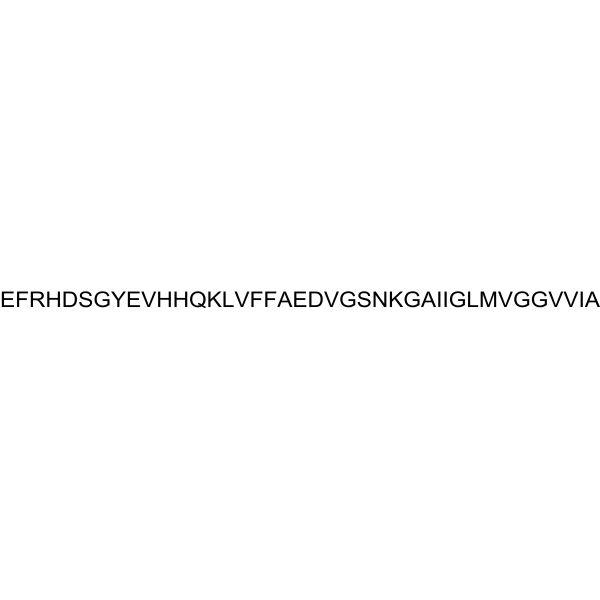 0 ImagesCat. No.: HY-P4886CAS No.: 157884-74-7Amyloid β-Protein (3-42) is the precursor of Pyr peptide. Pyroglutamate-modified Aβ (pEAβ) (3-42) is the core of the amyloid template block in Alzheimer's disease. pEAβ(3-42) accelerated the aggregation of Aβ(1-42), while Aβ(1-42) significantly slowed the primary and secondary nucleation of pEAβ(3-42).
-
Merinetug
 0 ImagesCat. No.: HY-P991702CAS No.: 3024381-10-7
-
MG-H1
 0 ImagesCat. No.: HY-156049CAS No.: 149204-50-2MG-H1 is a RAGE ligand, advanced glycation end product cross-link, and pathogenic mediator with relevance to diabetic vasculopathy. MG-H1 binds to RAGE and competes with CM1 for RAGE binding on endothelial cells. MG-H1 is implicated in diabetic vasculopathy pathogenesis. MG-H1 can be used for the research of diabetic vasculopathy.
-
Aβ1-14-εK-KKK-MvF5 Th acetate
 0 ImagesCat. No.: HY-P5333APurity: 99.93%Synonyms: UB311 immunogen I acetateAβ1-14-εK-KKK-MvF5 Th acetate is the acetate salt form of Aβ1-14-εK-KKK-MvF5 Th (HY-P5333). Aβ1-14-εK-KKK-MvF5 Th acetate is part of UB-311 vaccine, that targets the amyloid-beta (Aβ) protein, and ameliorates the Alzheimer’s disease.
-
β-Amyloid (12-20)
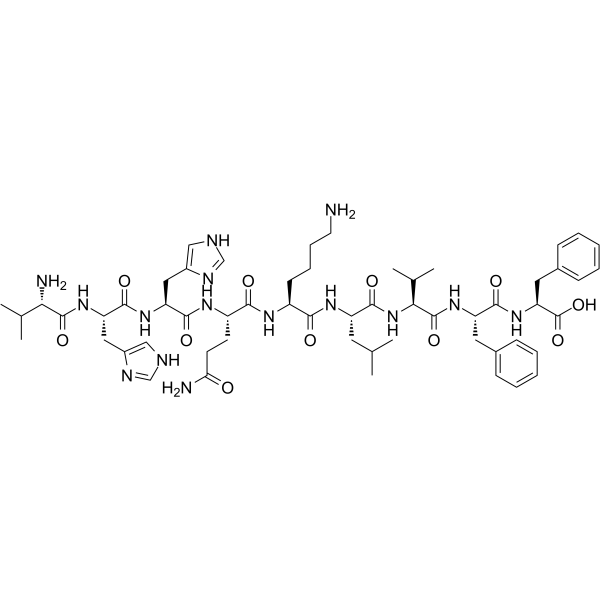 0 Imagesβ-Amyloid (12-20) is a peptide fragment of β-Amyloid.
-
MK-3328
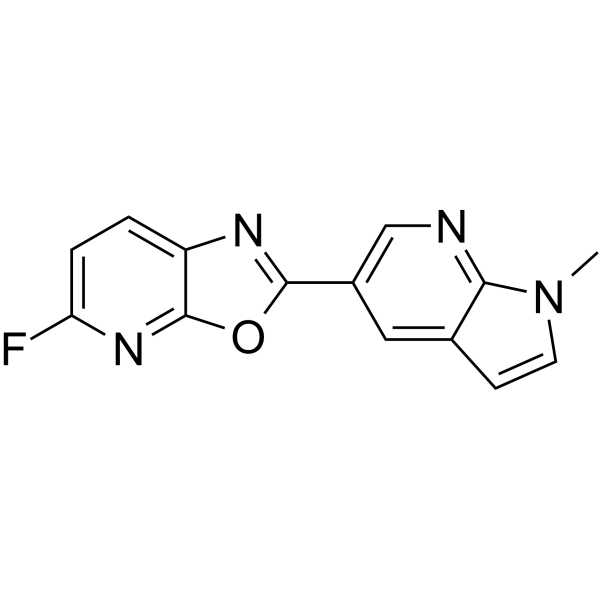 0 ImagesMK-3328 is a β-Amyloid ligand, which exhibits high binding potency with an IC50 of 10.5 nM. MK-3328 is capable of being labelled with 18F for positron emission tomography (PET) imaging.
-
RI-OR2-TAT
 0 ImagesCat. No.: HY-P10824CAS No.: 1430219-69-4RI-OR2-TAT is a brain-penetrant inhibitor of β-Amyloid oligomerization, which is produced by adding the HIV protein transduction domain TAT to RI-OR2. RI-OR2-TAT binds to Aβ42 fibrils with a Kd value of 58-125 nM. RI-OR2-TAT reduces Aβ aggregation and plaque levels, reduces activation of microglia and oxidative damage, and increases the number of young neurons in the dentate gyrus.
-
4-Sulfocalix[4]arene
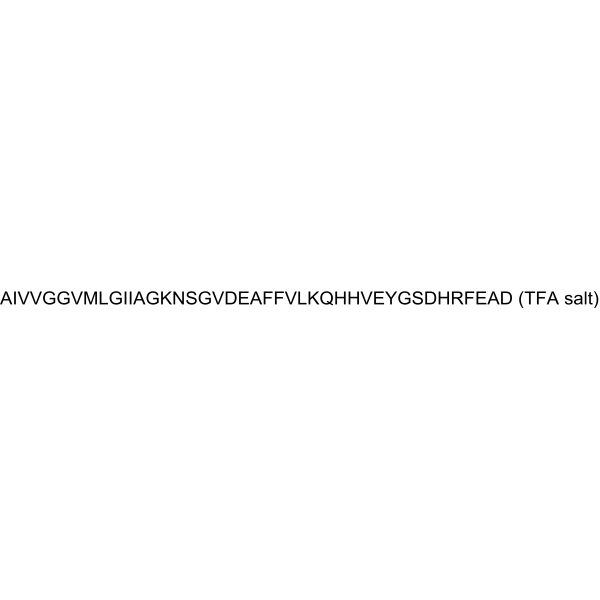
![4-Sulfocalix[4]arene](https://file.medchemexpress.com/product_pic/hy-w440555.gif "Click to View 4-Sulfocalix[4]arene Product Detail") 0 ImagesCat. No.: HY-W440555CAS No.: 112269-92-8Synonyms: para-Sulfonatocalix[n]arene4-Sulfocalix[4]arene (para-Sulfonatocalix[n]arene) is a amyloid-beta 42 binder with a Kd of 5.39 M. 4-Sulfocalix[4]arene can inhibit amyloid β-peptide fibrillation and reduce amyloid cytotoxicity.
0 ImagesCat. No.: HY-W440555CAS No.: 112269-92-8Synonyms: para-Sulfonatocalix[n]arene4-Sulfocalix[4]arene (para-Sulfonatocalix[n]arene) is a amyloid-beta 42 binder with a Kd of 5.39 M. 4-Sulfocalix[4]arene can inhibit amyloid β-peptide fibrillation and reduce amyloid cytotoxicity.
-
Anti-amyloid agent-1
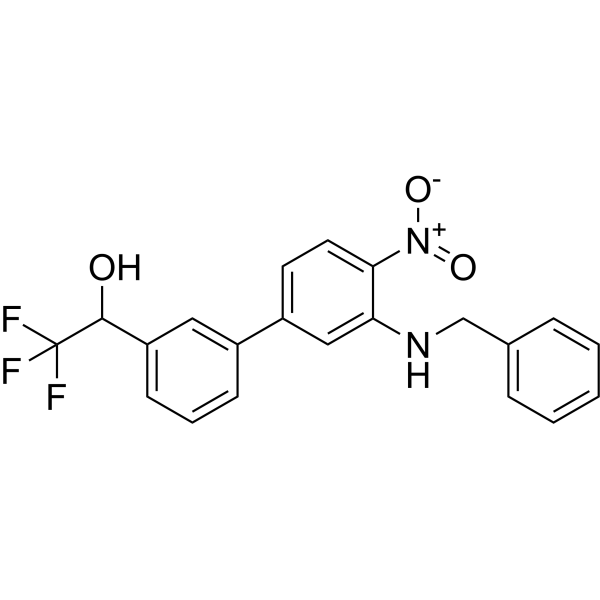 0 ImagesAnti-amyloid agent-1 (ex1140) is a potent anti-amyloid compound and inhibits amyloid aggregation, provides a useful method for amyloidosis research.
-
FITC-β-Ala-Amyloid β-Protein (1-42)
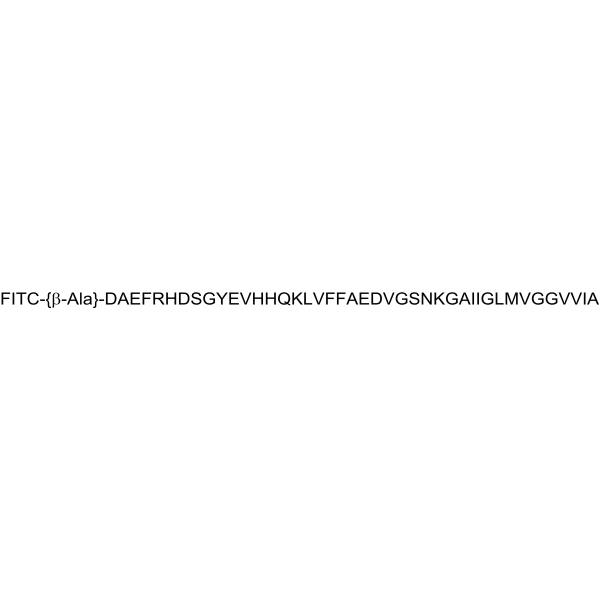 0 ImagesCat. No.: HY-P5096CAS No.: 1802087-77-9FITC-β-Ala-Amyloid β-Protein (1-42) is a FITC tagged Aβ1-42 peptide. Aβ1-42 plays a key role in the pathogenesis of Alzheimer’s disease.
-
2-O-Acetyl-20-hydroxyecdysone
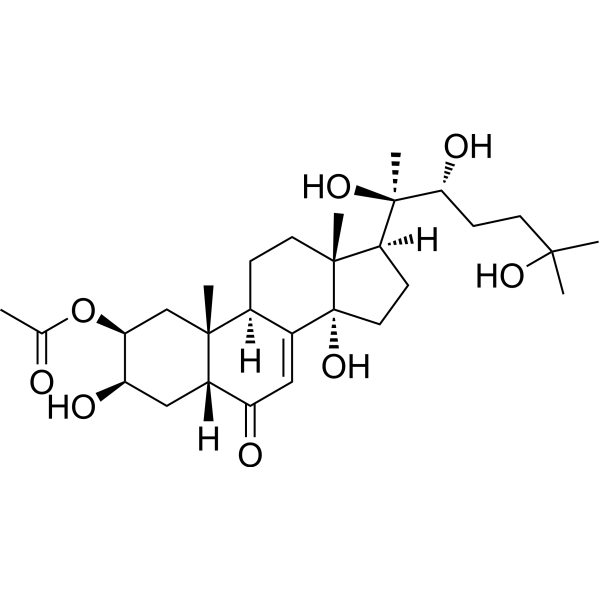 0 ImagesSynonyms: 20-Hydroxyeedysone 2-acetate
-
4-(6-Bromo-2-benzothiazolyl)-N-methylbenzenamine
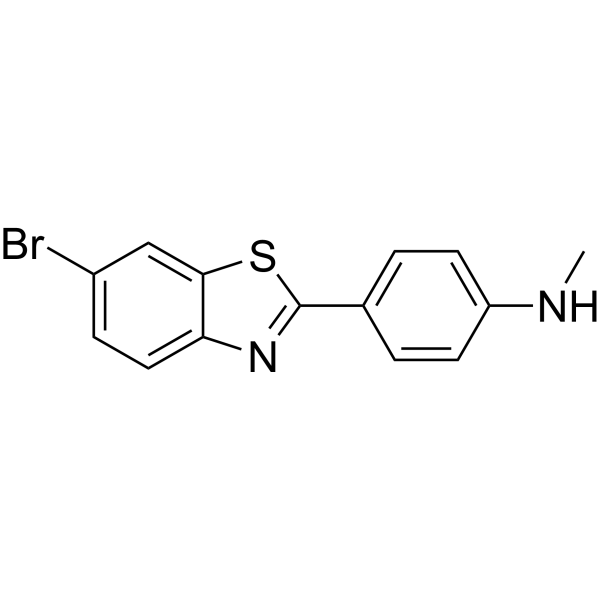 0 ImagesCat. No.: HY-111513CAS No.: 566169-98-04-(6-Bromo-2-benzothiazolyl)-N-methylbenzenamine is a potent amyloid imaging agent which binds to Amyloid-β (1-40) with a KD of 1.7 nM.
-
Liensinine perchlorate
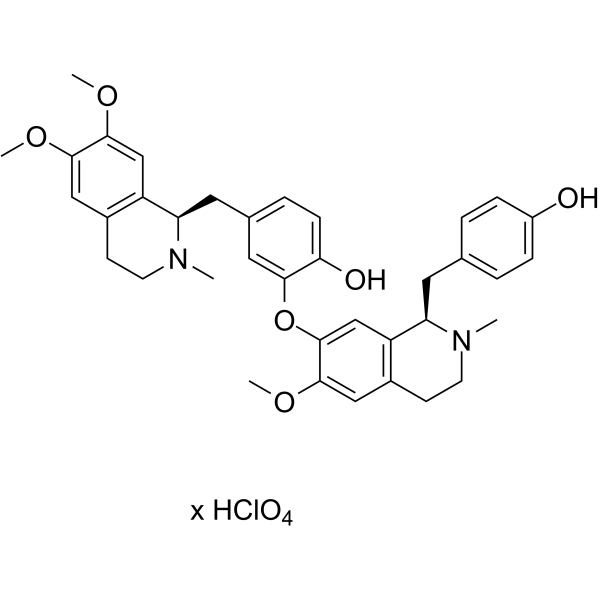 0 ImagesLiensinine perchlorate is a bisbenzylisoquinoline alkaloid. By inhibiting the PI3K/AKT and JNK/p38-MAPK signaling pathways, Liensinine perchlorate suppresses autophagy and apoptosis, clears Aβ, and exerts anti-inflammatory, antioxidant and neuroprotective effects. Liensinine perchlorate activates AMPK and inhibits the expression of HIF-1α and VEGF, thereby suppressing angiogenesis. Liensinine perchlorate exerts anti-tumor effects through ROS-mediated inhibition of the JAK2/STAT3 signaling pathway. Liensinine perchlorate can be used for the research of diseases such as Alzheimer's disease, hepatocellular carcinoma, osteosarcoma, sepsis-induced organ injury and stroke.
-
THK-523
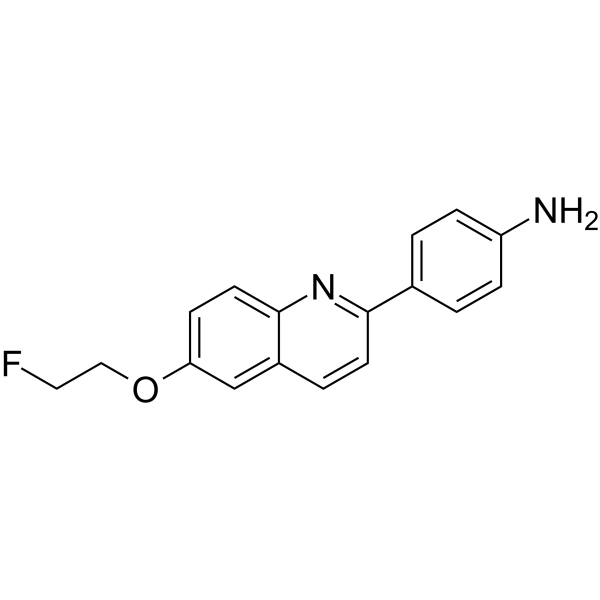 0 ImagesTHK-523 has demonstrated its high affinity and selectivity for tau pathology both in vitro and in vivo. 18F-THK523 is a potent tau imaging radiotracer. 18F-THK523 is a potent in vivo tau imaging ligand for Alzheimer's disease.
-
FITC-Ahx-β-Amyloid (1-42), (rat/mouse) tris
 0 ImagesCat. No.: HY-P1388FSynonyms: FITC-Ahx-Amyloid β-peptide (1-42) (rat/mouse) trisFITC-Ahx-β-Amyloid (1-42), (rat/mouse) (tris) (FITC-Ahx-Amyloid β-peptide (1-42) (rat/mouse) (tris)) is a fluorescently labeled (FITC) form of β-Amyloid (1-42), (rat/mouse) (HY-P1388), which can be used in Alzheimer's disease-related research, such as aggregation, fiber formation, cellular uptake or imaging experiments. This product is provided in the form of Tris salt.
-
β-Amyloid (1-20) acetate
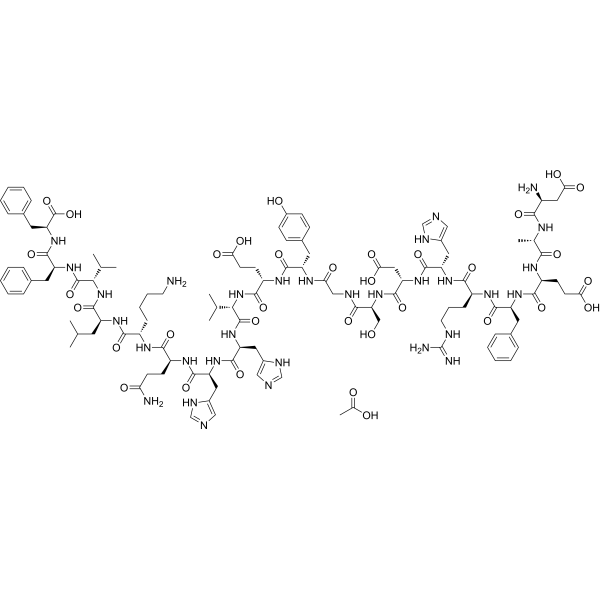 0 ImagesCat. No.: HY-P1850Aβ-Amyloid (1-20) acetate is the acetate form of β-Amyloid (1-20),which consists of amino acids 1 to 20 of beta amyloid protein.
-
GSK 3039294
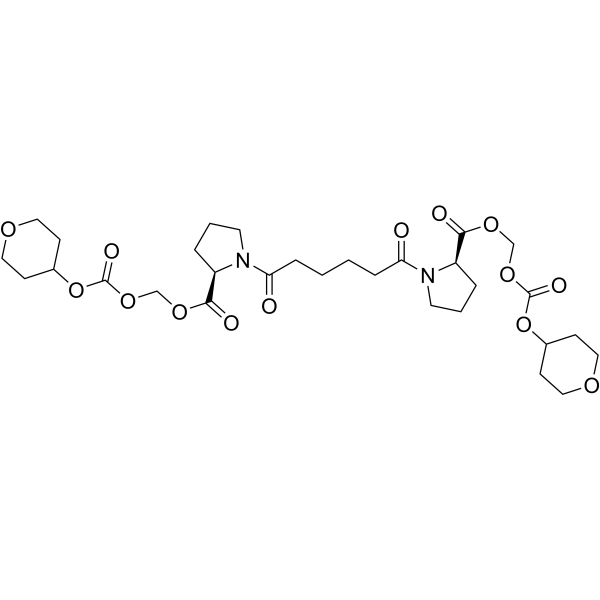 0 ImagesSynonyms: GSK294; amyloid P-IN-1
-
AO-365/43472821
 0 ImagesAO-365/43472821 is a selective, brain-penetrant Dual-specificity tyrosine phosphorylation-regulated kinase 1A (DYRK1A) inhibitor (IC50 = 0.29 μM) and shows a significant inhibitory effect on (CDC-like kinase 1) CLK1 (IC50 = 0.08 μM). AO-365/43472821 could protect the human neuroblastoma cell line SH-SY5Y from Okadaic acid (HY-N6785) (OA)-induced injury. AO-365/43472821 decreased tau (pSer396)/tau and Aβ1-42 protein expression. AO-365/43472821 can be used for the study of Alzheimer's disease.




