



Amyloid-β
β-amyloid peptide; Aβ; Abeta
Amyloid-β (Aβ) denotes peptides of 36–43 amino acids that are crucially involved in Alzheimer's disease as the main component of theamyloid plaques found in the brains of Alzheimer patients. The peptides result from the amyloid precursor protein (APP), which is being cut by certain enzymes to yield Aβ. Amyloid-β molecules can aggregate to form flexible soluble oligomers which may exist in several forms. Amyloid-β peptide is due to overproduction of Aβ and/or the failure of clearance mechanisms. Amyloid-β self-aggregates into oligomers, which can be of various sizes, and forms diffuse and neuritic plaques in the parenchyma and blood vessels. Amyloid-β oligomers and plaques are potent synaptotoxins, block proteasome function, inhibit mitochondrial activity, alter intracellular Ca2+levels and stimulate inflammatory processes. Loss of the normal physiological functions of Aβ is also thought to contribute to neuronal dysfunction.
All Product Categories
-
Amyloid-β Inhibitors
(492)
View all products
-
Amyloid-β Agonists
(2)
View all products
-
Amyloid-β Antagonists
(5)
View all products
-
Amyloid-β Activators
(5)
View all products
-
Amyloid-β Modulators
(4)
View all products
-
Amyloid-β Chemicals
(7)
View all products
-
Amyloid-β Inducers
(5)
View all products
-
Amyloid-β Degraders
(6)
View all products
-
Amyloid-β Controls
(3)
View all products
-
Amyloid-β Substrate
(1)
View all products
-
Amyloid-β Ligands
(11)
View all products
-
Amyloid-β Related Products (771)
Related Products (771)

-
Antibodies (9)
-
Silybin B-d3
 0 ImagesCat. No.: HY-N7046SSynonyms: Silibinin B-d3Silybin B-d3 (Silibinin B-d3) is a deuterated Silybin B (HY-N7046). Silybin B (Silibinin B) is an orally active amyloid-β aggregation inhibitor and ATR pathway activator, that can cross the blood-brain barrier. Silybin B inhibits Aβ fibril formation and promotes amorphous aggregate formation, while activating the ATR-mediated DNA damage repair pathway and inhibiting JNK/p38 MAPK signaling. Silybin B can reduce Cisplatin (HY-17394)-induced neuronal DNA damage and apoptosis. Silybin B has anti-oxidative stress, cell cycle regulation and neuroprotective activities. Silybin B is mainly used in the study of Alzheimer's disease and Cisplatin chemotherapy-related neurotoxicity.
-
FEFEFKFK
 0 ImagesCat. No.: HY-P10494CAS No.: 883746-83-6FEFEFKFK is an octapeptide that self-assembles into fibrillar structures. FEFEFKFK is able to form gels at concentrations greater than about 7 mg/mL. The self-assembly and gelation properties of FEFEFKFK help to understand the mechanism of amyloid fibril formation in protein misfolding diseases such as Alzheimer's disease and Parkinson's disease.
-
Thiethylperazine (Standard)
 0 ImagesThiethylperazine (Standard) is the analytical standard of Thiethylperazine. This product is intended for research and analytical applications. Thiethylperazine, a phenothiazine derivate, is an orally active and potent dopamine D2-receptor and histamine H1-receptor antagonist. Thiethylperazine is also a selective ABCC1activator that reduces amyloid-β (Aβ) load in mice. Thiethylperazine has anti-emetic, antipsychotic and antimicrobial effects.
-
TH-237A (Standard)
 0 ImagesCat. No.: HY-11054RCAS No.: 935467-97-3Synonyms: meso-GS 164 (Standard)
-
APP modulator-1
 0 ImagesCat. No.: HY-180856CAS No.: 299420-64-7APP modulator-1 is an APP modulator.
-
4,5-Di-O-caffeoylquinic acid
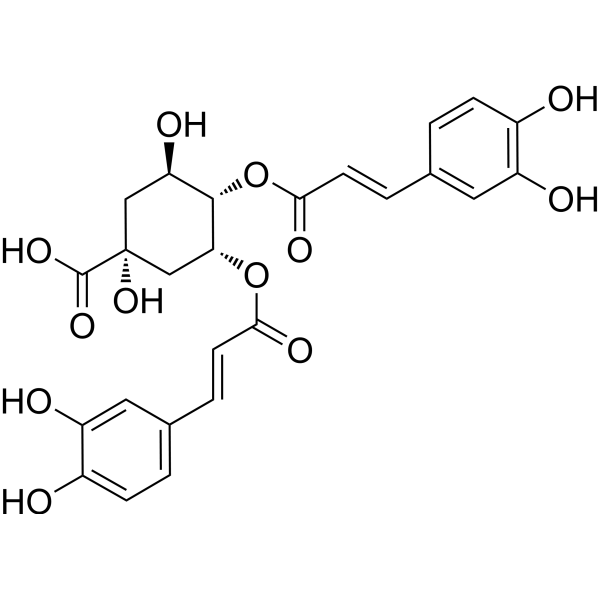 0 ImagesSynonyms: 4,5-di-O-CQA4,5-Di-O-caffeoylquinic acid (4,5-di-O-CQA) is a natural product with multiple activities including anti-inflammatory, antioxidant, and antibacterial properties. 4,5-Di-O-caffeoylquinic acid induces intracellular Ca2+ influx, and inhibits hypoxia-induced COX-2 expression and cell migration via the TRPV1-mediated pathway. 4,5-Di-O-caffeoylquinic acid scavenges DPPH free radicals, inhibits Cu2+-mediated LDL oxidation, and reduces the production of TBARS. 4,5-Di-O-caffeoylquinic acid promotes intracellular ATP production, inhibits Aβ42 aggregation and β-sheet conversion, and protects neuroblastoma cells. 4,5-Di-O-caffeoylquinic acid inhibits the growth of Bacillus shigae. 4,5-Di-O-caffeoylquinic acid can be used in studies related to atherosclerosis, Alzheimer's disease, and bacterial infections.
-
Liensinine (Standard)
 0 ImagesLiensinine (Standard) is the analytical standard of Liensinine (HY-N0484). This product is intended for research and analytical applications. Liensinine is a bisbenzylisoquinoline alkaloid. By inhibiting the PI3K/AKT and JNK/p38-MAPK signaling pathways, Liensinine suppresses autophagy and apoptosis, clears Aβ, and exerts anti-inflammatory, antioxidant and neuroprotective effects. Liensinine activates AMPK and inhibits the expression of HIF-1α and VEGF, thereby suppressing angiogenesis. Liensinine exerts anti-tumor effects through ROS-mediated inhibition of the JAK2/STAT3 signaling pathway. Liensinine can be used for the research of diseases such as Alzheimer's disease, hepatocellular carcinoma, osteosarcoma, sepsis-induced organ injury and stroke.
-
Sulfiram
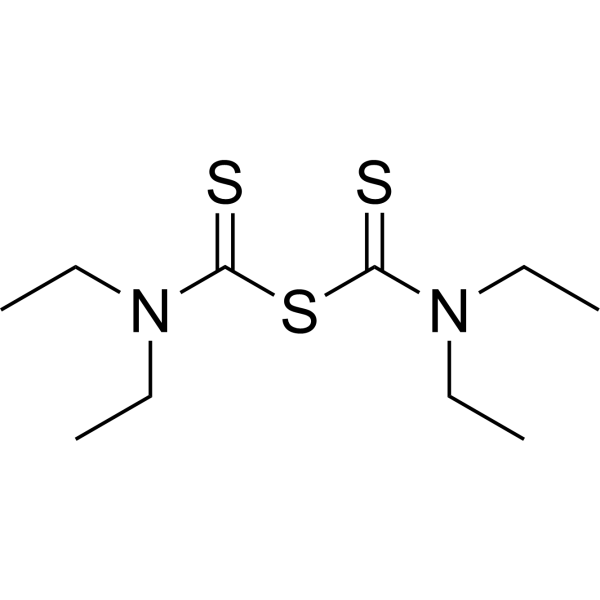 0 ImagesSulfiram is a very weak aldehyde dehydrogenase (ALDH) inhibitor, with an IC50 value of 413 μM against Saccharomyces cerevisiae ALDH. As a photochemical precursor, Sulfiram undergoes photoconversion to form Disulfiram (HY-B0240), a potent ALDH inhibitor. Sulfiram inhibits the dimerization of the extracellular domain fragment (amino acid residues 230-624) of amyloid precursor protein (APP), alters the monomer-dimer equilibrium, induces conformational changes in the fragment, and enhances the production of sAPPα via α-cleavage of APP. Sulfiram can be used in research related to scabies and Alzheimer's disease.
-
Sequoiaflavone
 0 ImagesCat. No.: HY-119416CAS No.: 21763-71-3Sequoiaflavone is a biflavonoid compound with multiple activities. Sequoiaflavone suppresses hepatic CYP1A1/(7-Ethoxycoumarin O-deethylase) ECOD, prevents Aβ1-42 fibrillization (IC50 = 0.29 μM) and disaggregates amyloid fibrils (EC50 = 2.04 μM), inhibits Alternaria alternata and inhibits human recombinant PDE5A1 overexpressed in COS-7 cells (IC50 = 19.9 μM) to exert NO-independent vasodilation. Sequoiaflavone can be used in Alzheimer's disease, peripheral circulatory disorder, and antifungal research.
-
10-Undecenoic acid (copper)
 0 ImagesCat. No.: HY-B0914BCAS No.: 35322-29-3Synonyms: Undecylenic acid (copper)10-Undecenoic acid copper (Undecylenic acid copper) is an antifungal agent. 10-Undecenoic acid copper inhibits Aβ oligomerization, scavenges ROS and inhibits μ-calpain activity. 10-Undecenoic acid copper has neuroprotective effects. 10-Undecenoic acid copper has anticancer effects on a variety of tumors. 10-Undecenoic acid copper inhibits C. albicans biofilm formation and MRSA infection. 10-Undecenoic acid copper inhibits quorum sensing signals of Bacillus subtilis and Pseudomonas aeruginosa.
-
TAE-1
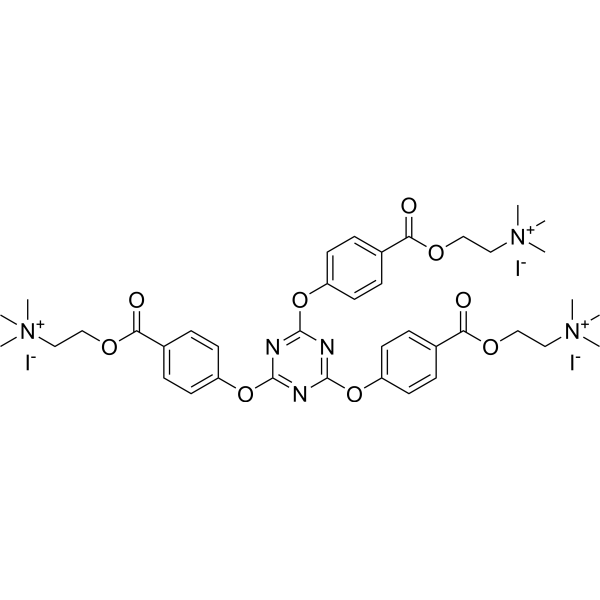 0 ImagesCat. No.: HY-115650CAS No.: 1414469-59-2TAE-1 is a potent inhibitor of AChE and BuChE. TAE-1 also inhibits Aβ fibril formation and aggregation. TAE-1 can be used for the researches of Alzheimer's disease.




