



Apoptosis Inducer
-
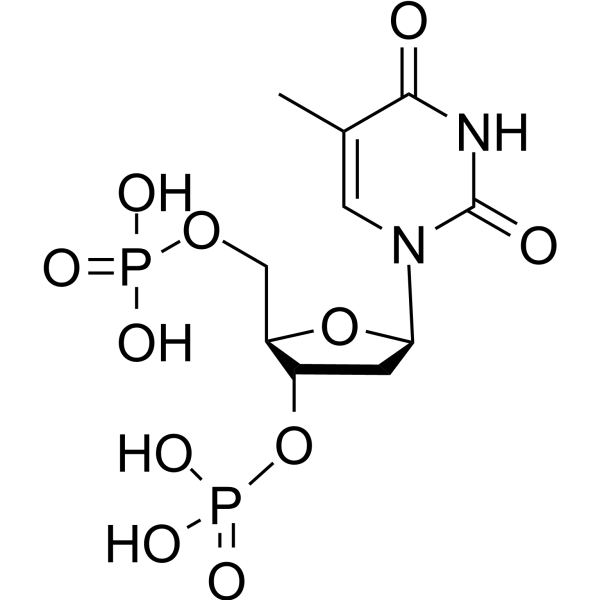
Thymidine 3',5'-disphosphate
 0 Images
Thymidine 3',5'-disphosphate (Deoxythymidine 3′,5′-diphosphate; pdTp) is a selective small molecule inhibitor of staphylococcal nuclease and tudor domain containing 1 (SND1, the miRNA regulatory complex RISC subunit) and inhibits SND1 activity. Thymidine 3',5'-disphosphate exhibits anti-tumor efficacy in vivo.
-
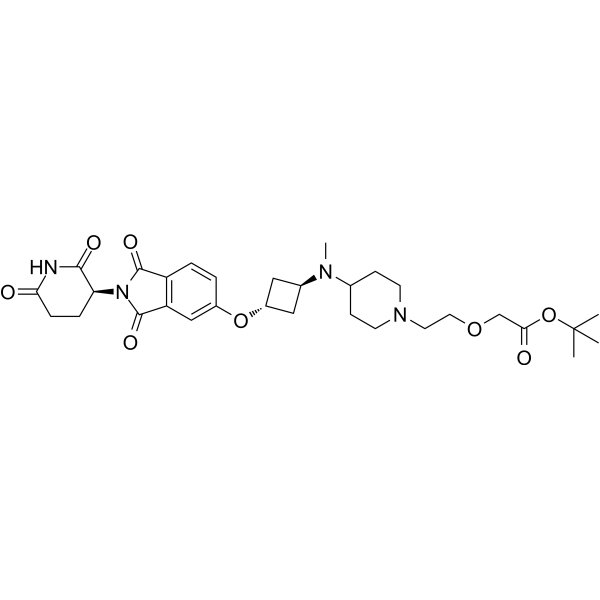
(S)-Thalidomide-O-(1S,3r)-C4H4-N(Me)-Pip-C2-O-C-boc
 0 ImagesCat. No.: HY-161183
(S)-Thalidomide-O-(1S,3r)-C4H4-N(Me)-Pip-C2-O-C-boc is a conjugate of E3 ligase ligand and linker, consisting of Thalidomide (HY-14658) and the corresponding Linker. (S)-Thalidomide-O-(1S,3r)-C4H4-N(Me)-Pip-C2-O-C-boc can serve as a Cereblon ligand to recruit CRBN protein and serve as a key intermediate for the synthesis of complete PROTAC molecules.
-
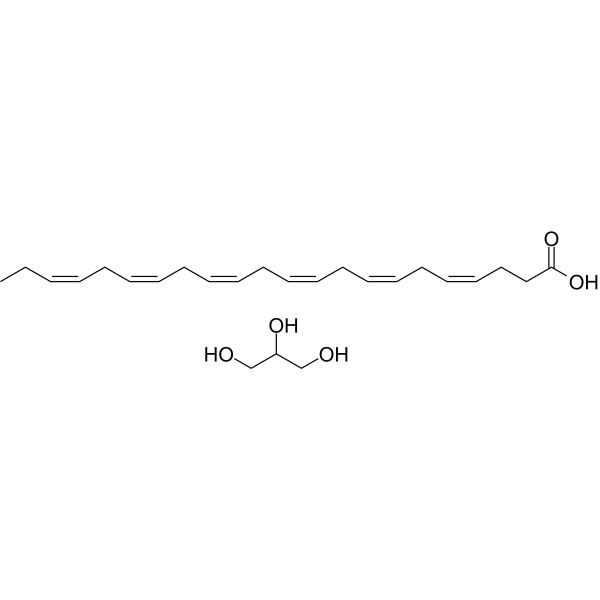
Didocosahexaenoin
 0 ImagesCat. No.: HY-148944CAS No.: 124538-05-2
Didocosahexaenoin, an omega-3 derivative, is a diglyceride of DHA and can be synthesised from DHA triglycerides. Didocosahexaenoin causes significant loss of mitochondrial membrane potential and induces ROS production. Didocosahexaenoin induces apoptosis. Didocosahexaenoin induces stronger cytotoxicity than DHA in human prostate carcinoma cells.
-
VEGFR-2-IN-74
 0 ImagesCat. No.: HY-178453
VEGFR-2-IN-74 (compound 55) is a potent VEGFR-2 inhibitor (IC50 = 0.035 µM). VEGFR-2-IN-74 exhibits good anti proliferative activity and can induce apoptosis in various cancer cells, such as A549 (IC50 = 2.67 µM) and HCT116 (IC50 = 10.87 µM) cells. VEGFR-2-IN-74 has low toxicity to normal cells. VEGFR-2-IN-74 shows significant anti angiogenic effects in chicken embryo models. VEGFR-2-IN-74 can be used in the research of cancer.
-
MLS-2384 free base
 0 ImagesCat. No.: HY-125718CAS No.: 1067884-45-0
MLS-2384 free base is a dual JAK/Src kinase inhibitor. MLS-2384 free base downregulates STAT3 downstream proteins c-Myc and Mcl-1. MLS-2384 free base induces Apoptosis. MLS-2384 free base exhibits anticancer activity against prostate cancer, breast cancer, skin cancer, ovarian cancer, lung cancer, and liver cancer.
-
HDAC6-IN-87
 0 ImagesCat. No.: HY-189296CAS No.: 3122437-17-3
HDAC6-IN-87 is a selective HDAC6 inhibitor (IC50 = 4.29 nM). HDAC6-IN-87 weakly inhibits HDAC1 (IC50 = 749.59 nM), HDAC3 (IC50 = 813.09 nM), and HDAC10 (IC50 = 679.25 nM). HDAC6-IN-87 exhibits broad-spectrum antitumor activity, elevates α-tubulin acetylation levels without affecting histone H3 acetylation, and induces cell cycle arrest and apoptosis. HDAC6-IN-87 can be used for cancer-related research.
-
PARP1-IN-14
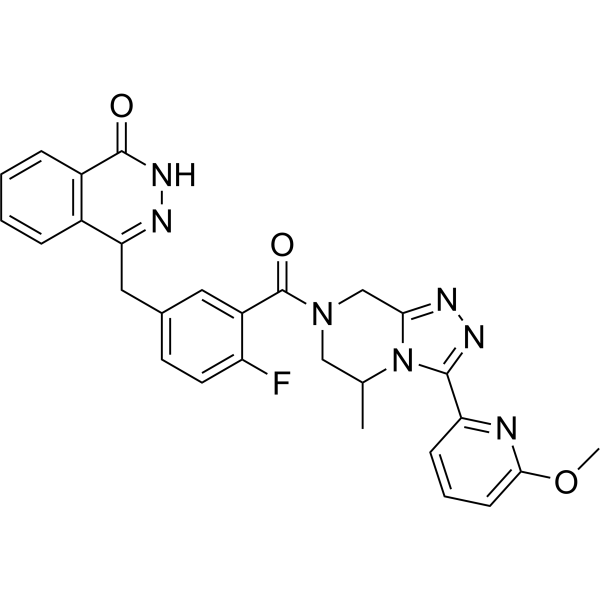 0 ImagesCat. No.: HY-155766CAS No.: 2098639-70-2
PARP1-IN-14 (compound 19k) is a potent PARP1 inhibitor, with an IC50 of 0.6 ± 0.1 nM. PARP1-IN-14 exhibits antiproliferative effect against both MDA-MB-436 (BRCA1−/−) and Capan-1 (BRCA2−/−) cells with IC50 values below 0.3 nM.
-
Tubeimoside I (Standard)
 0 ImagesSynonyms: Tubeimoside-1 (Standard); Lobatoside-H (Standard)
Tubeimoside I (Standard) is the analytical standard of Tubeimoside I. This product is intended for research and analytical applications. Tubeimoside I is an orally active HSPD1 inhibitor. Tubeimoside I inhibits NF-κB, MAPK, as well as regulates eNOS-VEGF. Tubeimoside I induces cytoprotective Autophagy via an Akt-mediated pathway. Tubeimoside I inhibits proinflammatory cytokine (IL-6 and IL-1β) production. Tubeimoside I exhibits anti-inflammatory activities. Tubeimoside I promotes angiogenesis and improves sepsis symptoms. Tubeimoside I is used in the research of inflammatory diseases, various cancers, sepsis and ischemic diseases.
-
Top/HDAC-IN-2
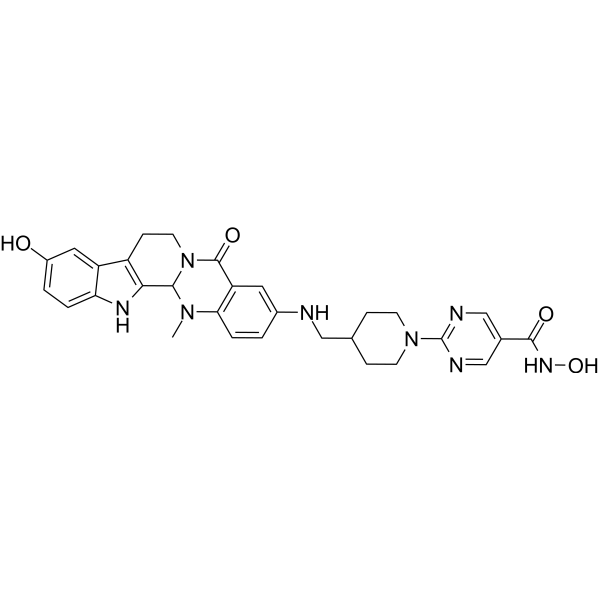 0 ImagesCat. No.: HY-145852CAS No.: 2775446-64-3
-
HDAC-IN-63
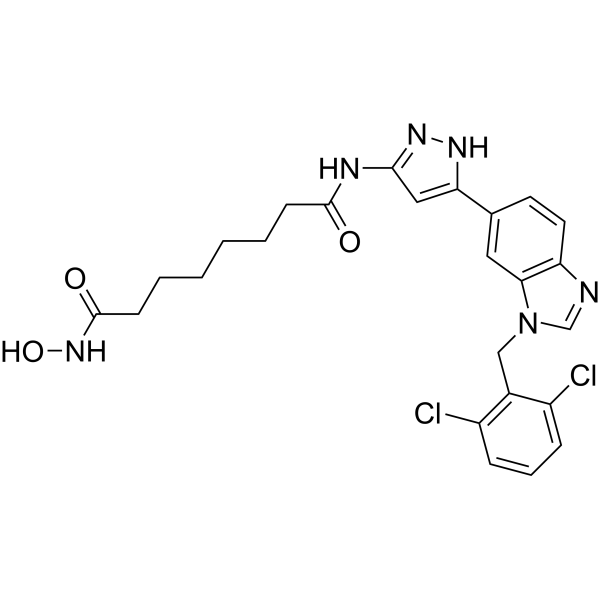 0 ImagesCat. No.: HY-149474CAS No.: 2920046-95-1
HDAC-IN-63 (Compound 63) is a dual FLT3/HDAC inhibitor (IC50: 0.844 and 30.0 nM for FLT3 and HDAC1 respectively). HDAC-IN-63 inhibits MV4-11 cell proliferation (IC50: 92 nM. HDAC-IN-63 induces apoptosis and arrests cell cycle in MV4-11 cells. HDAC-IN-63 can be used for research of acute myeloid leukemia (AML).
-
PI3K-IN-58
 0 ImagesCat. No.: HY-172886CAS No.: 3067572-78-2
PI3K-IN-58 (Compound 17f) is a PI3Kα inhibitor (IC50: 0.039 μM). PI3K-IN-58 exhibits significant antiproliferative effects on PC-3, 22RV1, MDA-MB-231 and MDA-MB-453 cell lines with IC50s of 3.48 μM, 1.06 μM, 2.21 μM and 0.93 μM, respectively. PI3K-IN-58 induces apoptosis by downregulating the expression levels of anti-apoptotic proteins Bcl-XL and Bcl-2 and upregulating the expression of anti-apoptosis protein BAX. PI3K-IN-58 can be used in PI3K-targeted cancer research.
-
Tubulin polymerization-IN-80
 0 ImagesCat. No.: HY-176201
Tubulin polymerization-IN-80 (Compound 32) is a potent tubulin polymerization inhibitor with antiproliferative activity. Tubulin polymerization-IN-80 disrupts microtubule formation and leads to cell cycle arrest and apoptosis. Tubulin polymerization-IN-80 is promising for research of cancers.
-
Apoptosis inducer 43
 0 ImagesCat. No.: HY-175332
Apoptosis inducer 43 is an apoptosis inducer. Apoptosis inducer 43 can induce apoptosis, SubG0-G1 cell cycle arrest, secondary necrosis, and upregulate caspase-3, p53, and Bax/Bcl-2 expression in HCT116 cells. Apoptosis inducer 43 can inhibit tumor growth in a solid Ehrlich carcinoma (SEC) mouse model. Apoptosis inducer 43 can be used to study cancers such as colon cancer, leukemia, and non-small cell lung cancer.
-
TRF2-IN-1
 0 Images
TRF2-IN-1 (compound F2) is a potent telomere repeat-binding factor 2 (TRF2) inhibitor. TRF2-IN-1 shows antiproliferative activity. TRF2-IN-1 induces apoptosis. TRF2-IN-1 directly bind to the TRF2TRFH domain and selectively inhibits TRF2 protein expression and telomeric localization. TRF2-IN-1 shows anticancer activity. TRF2-IN-1 has the potential for the research of osteosarcoma.
-
Menin-MLL inhibitor MI-2 dihydrochloride
 0 ImagesCat. No.: HY-15222A
Menin-MLL inhibitor MI-2 dihydrochloride is a competitive and selective Menin-MLL interaction inhibitor with an IC50 value of 446 nM and a Ki value of 158 nM. Menin-MLL inhibitor MI-2 dihydrochloride downregulates the expression of target genes such as HOXA9 and MEIS1, inhibits proliferation of leukemia cells and induces apoptosis and differentiation. Menin-MLL inhibitor MI-2 dihydrochloride is proming for rasearch of MLL-rearranged acute leukemias (e.g., AML, ALL).
-
Tubulin-IN-64
 0 ImagesCat. No.: HY-181491
Tubulin-IN-64 is a sulfonated styrylquinazoline derivative with high selectivity antitumor activity. Tubulin-IN-64 targets tubulin, inhibits the EGFR/Akt/mTOR and EGFR/Ras signaling pathways, induces cell cycle arrest, apoptosis and autophagy. Tubulin-IN-64 exhibits significant antitumor efficacy in the zebrafish GBM xenograft model. Tubulin-IN-64 can be used for the research on glioblastoma and leukemia.
-
Thalidomide-5-O-C7-NH2 hydrochloride
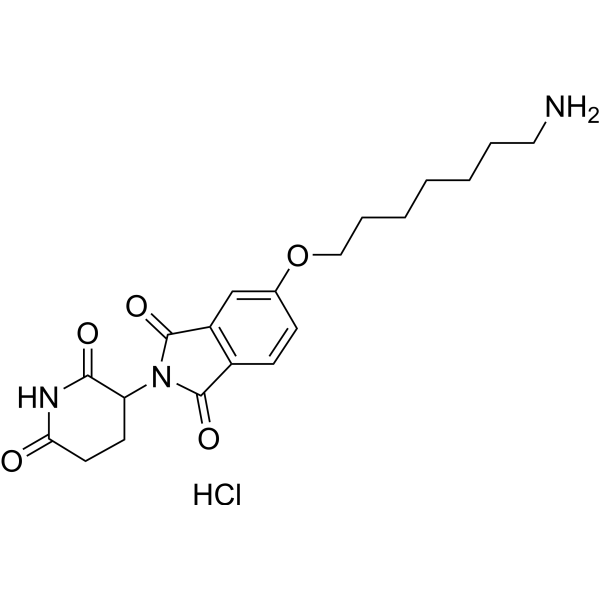 0 ImagesCat. No.: HY-149564Purity: 98.13%
Thalidomide-5-O-C7-NH2 hydrochloride is the Thalidomide (HY-10984)-based cereblon ligand used in the recruitment of CRBN protein.Thalidomide-5-O-C7-NH2 hydrochloride can be connected to the ligand for protein by a linker to form PROTACs.
-
Sterigmatocystine-13C18
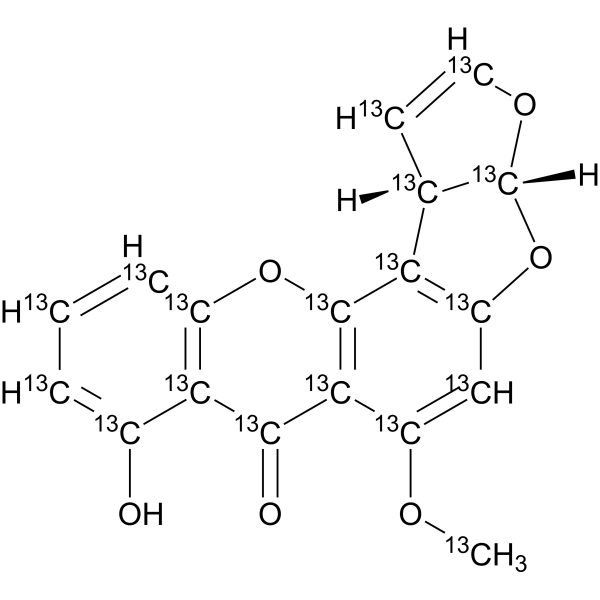 0 ImagesCat. No.: HY-N6725S
Sterigmatocystine-13C18 is 13C labeled 2,6-Dimethoxyphenol (HY-W003972). 2,6-Dimethoxyphenol is a phenolic compound that is extensively used for the measurement of laccase activity.



